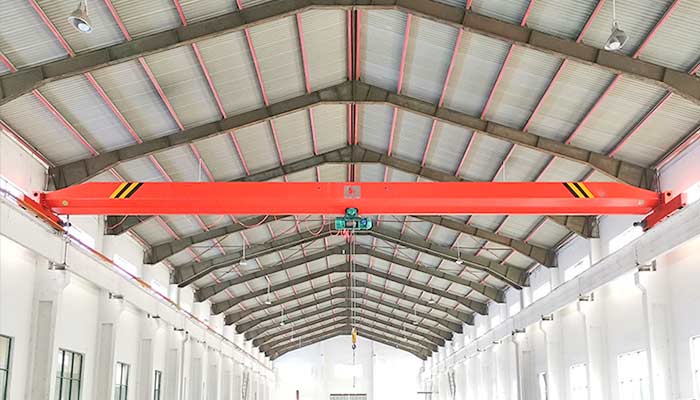
Chemical Industry
Explosion proof cranes and explosion proof hoist systems are required for chemical industry for handling chemical , acids, lyes , chemical compounds & petrochemical in the chemical processing factory and in the refinery of a petrochemical plant, etc. With the requirements of hazardous environment, the chemical industry cranes are required to be with high safety and reliability to ensure the material handling efficient and smooth in the section of storage, production and transportation, etc. With tailored explosion proof overhead crane system & hoist system to meet specific needs and setups, we provide for safe and efficient in-house material handling & logistics.
Industrial challenges
Due to the hazardous environment, the overhead equipment used in the chemical industry is required to be explosion proof but also to be ensured with durability. The aggressive & hazardous chemicals include acids, lyes and chemical compounds. To select the right electric overhead crane equipment is very important to prevent corrosion damage to ensure durability.
Material handling in explosive atmospheres has a wide different requirements for lifting equipment, ranging from general use overhead travelling cranes and hoist equipment to highly advanced crane with process crane designs to meet different needs of your specific and unique applications and lifting requirements.
Explosion Proof Protection in Chemical Industry
Explosion proof cranes and hoists are critical in chemical workshops and petrochemical plants where flammable gases, dusts, or liquids are handled. Proper ventilation, flameproof enclosures, and specialized hoist components ensure safety while lifting and transporting chemicals, heavy equipment, and process vessels.
How can explosion proof cranes prevent fires and explosions in chemical plants?
By avoiding the creation of explosive atmospheres and controlling potential ignition sources, explosion proof cranes minimize the risk of fire or explosion in hazardous chemical environments.
Providing effective ventilation or enclosing processes prevents the accumulation of dangerous gases or dust.
Limiting surface temperatures and using spark-resistant materials reduce ignition risk.
Specialized hoist parts and electrical components are designed to meet chemical industry standards.
Regular monitoring and maintenance ensure ongoing compliance and operational safety in chemical workshops and petrochemical plants.
What are typical applications of explosion proof hoists in chemical industries?
Explosion proof hoists handle tasks like moving chemical drums, loading reaction vessels, and lifting processing equipment safely in hazardous environments.
Used in workshops handling flammable liquids, solvents, powders, and corrosive chemicals.
Load capacities typically range from 500kg up to 20 tons depending on the hoist type and workspace.
Common setups include single girder overhead cranes for medium loads and jib cranes for frequent small lifts.
Also applied in chemical storage areas, filling stations, and laboratory-scale production lines for safe material handling.
What measures are used to control the effects of potential explosions?
The effects of explosions are reduced by isolating ignition sources and using flameproof enclosures around hoist equipment.
Explosion proof hoists are installed with enclosures and monitoring systems to detect gas leaks or sparks.
The crane's electrical systems and mechanical components are sealed to prevent flame or spark emission.
In chemical plants, additional safety measures include interlocks, emergency stops, and proper grounding.
Redundant safety protocols ensure minimal impact even in case of a hazardous incident.
Where are explosion proof cranes most commonly used in chemical sectors?
They are widely used in chemical processing plants, laboratories, and storage facilities to lift flammable or reactive materials safely.
Handling of solvent tanks, chemical drums, pressure reactors, and large-scale mixers.
Used for maintenance tasks and transfer of equipment in areas with flammable gases, powders, or vapors.
Outdoor and indoor explosion proof cranes support chemical production units, bottling lines, and packaging workshops.
Typical capacities for industrial chemical operations range from 0.5 ton to 20 tons depending on the specific lifting requirement.
How do explosion proof cranes integrate into chemical plant operations?
They are integrated into production and maintenance workflows to ensure safe lifting and handling of hazardous substances.
Crane routes are planned to minimize exposure to high-risk zones.
Hoists are used to move equipment between processing areas, storage tanks, and laboratory setups.
Operators follow strict protocols for load handling, chemical compatibility, and emergency shutdowns.
Continuous inspection and maintenance guarantee that all explosion proof standards are met while supporting smooth plant operations.
Industrial cranes for chemical industry
Our series of explosion-proof cranes and components are designed and processed particularly for hazardous and explosion environment widely used in the chemical and petrochemical plants, oil refineries, gas power plants, waste-water treatment plants, paint shops and other industrial sites. The hazardous environment lifting equipment includes the industrial overhead cranes, gantry cranes, light duty jib cranes, and manual cranes, as well as electric and manual rope hoists & chain hoists with lifting capacities range from 500kg to 180 tons.
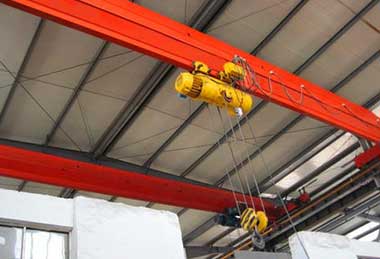
Explosion Proof Crane - Single Girder Design
Single girder explosion proof overhead cranes are ideal for indoor chemical workshops, refinery units, and petrochemical plants.
Typical lifting capacity: 2–20 tons.
Typical loads handled: chemical drums, small reactors, storage tanks, piping components.
Application examples: handling hazardous chemical containers, moving acid tanks, transferring materials in paint shops, and indoor assembly of small equipment in flammable environments.
Zones: suitable for Zone 1 & Zone 2 hazardous areas.
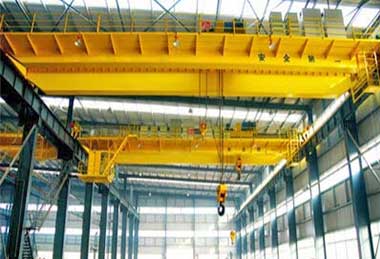
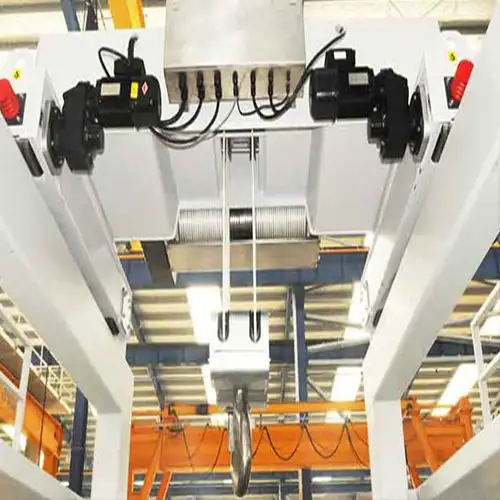
Explosion Proof Crane - Double Girder Design
Double girder overhead cranes are widely used for heavy-duty chemical processing and refinery operations.
Typical lifting capacity: 10–80 tons.
Typical loads handled: large chemical reactors, heat exchangers, storage vessels, heavy pumps.
Application examples: assembly of reactor components, maintenance of heavy machinery, moving flammable liquid tanks, loading/unloading large chemical vessels.
Zones: suitable for Zone 1 & Zone 2 hazardous areas.
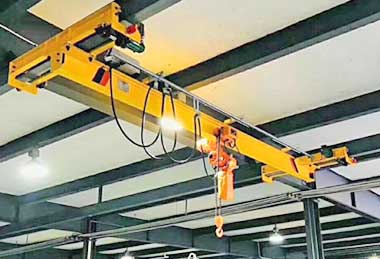
Suspension Single Girder Crane
Suspension cranes are used in chemical plants where floor space is limited.
Typical lifting capacity: 0.5–10 tons.
Typical loads handled: lighter vessels, pumps, pipes, small reactors.
Application examples: transferring hazardous material containers, light equipment assembly, moving small chemical vessels safely above production lines.
Zones: suitable for Zone 1 & Zone 2 hazardous areas.
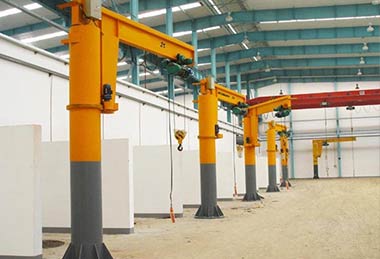
Explosion Proof Jib Crane
Jib cranes are ideal for localized lifting in chemical workshops and paint shops.
Typical lifting capacity: 0.5–5 tons.
Typical loads handled: barrels, containers, small reactors, chemical drums.
Application examples: loading/unloading materials near workstations, transferring small hazardous containers, lifting paint mixing tanks, moving process tools safely.
Zones: suitable for Zone 1 & Zone 2 hazardous areas.
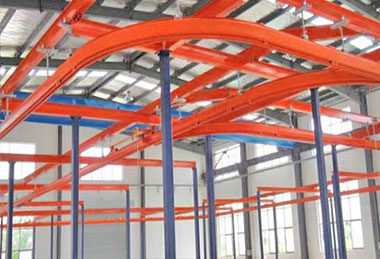
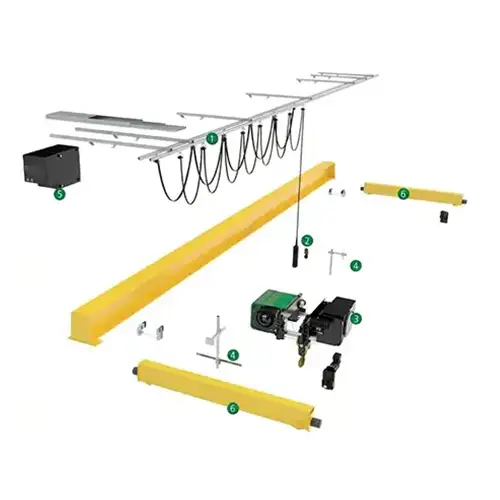
Overhead KBK Crane
Overhead KBK cranes are modular and flexible, used in chemical production lines and hazardous workshops.
Typical lifting capacity: 0.5–10 tons.
Typical loads handled: tanks, vessels, medium-size equipment.
Application examples: assembly of production lines, transferring hazardous containers, flexible handling of corrosive material, maintenance in compact hazardous areas.
Zones: suitable for Zone 1 & Zone 2 hazardous areas.
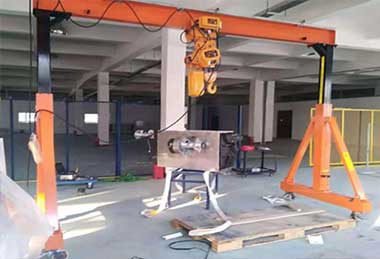
Portable Gantry Crane
Portable gantry cranes are used for flexible lifting in chemical plants and refineries.
Typical lifting capacity: 1–20 tons.
Typical loads handled: reactors, storage drums, intermediate products.
Application examples: transferring reactors between workshops, temporary maintenance lifting, moving hazardous material safely, flexible assembly of chemical vessels.
Zones: suitable for Zone 1 & Zone 2 hazardous areas.
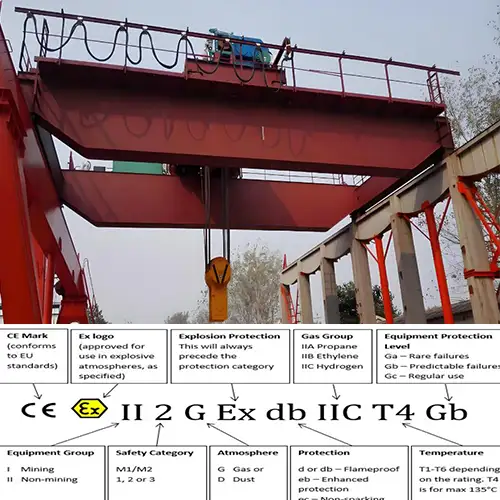
All of our explosion proof cranes and hoists are with the Certification of Conformity of An Instrument for Explosive Atmosphere with the signs of Exd II BT4 and Exd II CT4. All of the hazardous environment used explosion proof overhead crane and hoists are available with different lifting capacities and customization designs with OEM services. Contact us to get more information on the explosion proof crane and hoists
For chemicals storage and transportation
The raw materials for chemical production includes the granulate and chemical primary products which need to be stored and transported temporarily usually within big bags or similar facilities. Our overhead travelling crane, suspension crane and slewing jib cranes can perform these tasks pleasantly, precisely and reliably.
Explosion proof cranes for hazardous applications
The series of explosion-proof cranes and components are designed and processed particularly for hazardous and explosion environment widely used in the chemical and petrochemical plants, oil refineries, gas power plants, waste-water treatment plants, paint shops and other industrial sites
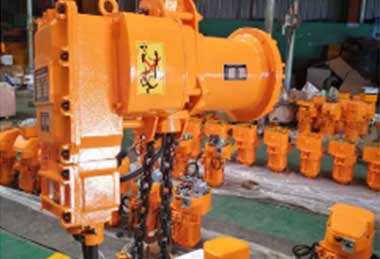
Explosion Proof Electric Chain Hoist
Electric chain hoists mounted on hook, lug, manual, or electric hoist trolley.
Typical lifting capacity: 500kg, 5 tons, 10 tons, 32 tons.
Typical loads handled: chemical drums, small reactors, barrels, containers.
Application examples: lifting flammable liquid containers, transferring hazardous materials in chemical plants, paint shops, and refinery workshops.
Zones: suitable for Zone 1 & Zone 2 hazardous areas.
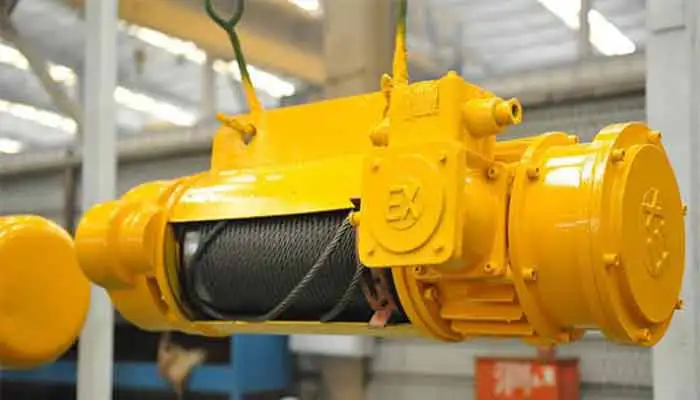
Explosion Proof Wire Rope Hoist
Wire rope hoists with explosion proof, flame proof, and spark-resistant design.
Typical lifting capacity: 1–32 tons.
Typical loads handled: large chemical containers, intermediate vessels, heavy drums.
Application examples: maintenance of reactors, moving heavy tanks in chemical plants, and handling flammable materials safely.
Zones: suitable for Zone 1 & Zone 2 hazardous areas.
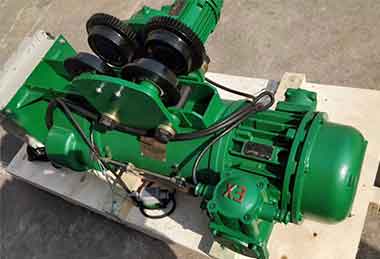

Explosion Proof Manual Hoist
Explosion-proof manual hoists widely adopted in hazardous environments with potential fire and explosion risk.
Typical lifting capacity: 0.5–5 tons.
Typical loads handled: chemical drums, petroleum containers, gas cylinders, and small equipment.
Application examples: petroleum depots, petrochemical plants, gas stations, chemical workshops, electric power stations, and mining operations.
Zones: suitable for Zone 1 & Zone 2 hazardous areas.
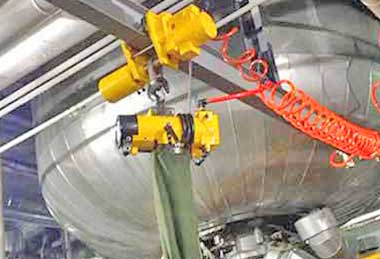
Explosion Proof Air Hoist
Air hoist & pneumatic hoist powered by compressed air with explosion-proof design.
Typical lifting capacity: 0.5–10 tons.
Typical loads handled: chemical containers, medium-size vessels, maintenance equipment.
Application examples: safe lifting in flammable chemical areas, paint shops, and hazardous workshops.
Zones: suitable for Zone 1 & Zone 2 hazardous areas.
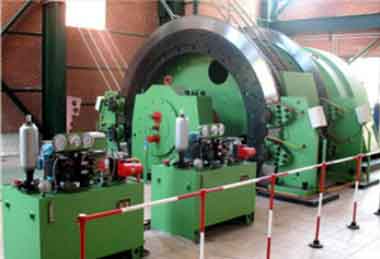
Explosion Proof Pulling & Hoisting Winch
Mining winches and explosion-proof hoisting winches for chemical, mining, and refinery applications.
Typical lifting capacity: 1–20 tons.
Typical loads handled: reactors, tanks, heavy vessels, mining equipment.
Application examples: underground chemical processing, transfer of heavy hazardous materials, refinery operations, and temporary lifting of industrial equipment.
Zones: suitable for Zone 1 & Zone 2 hazardous areas.
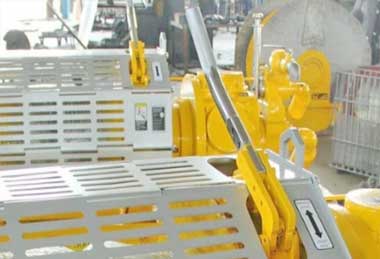
Explosion Proof Air Winch
Air powered pneumatic winches for safe pulling & hoisting.
Typical lifting capacity: 0.5–10 tons.
Typical loads handled: chemical drums, medium-size tanks, containers, vessels.
Application examples: chemical plants, flammable workshops, refinery maintenance, and temporary lifting in hazardous areas.
Zones: suitable for Zone 1 & Zone 2 hazardous areas.
Material Handling Cranes in Chemical Industry
Explore practical guidance and FAQs for choosing, operating, and maintaining overhead cranes, gantry cranes, jib cranes, and hoists in chemical and petrochemical environments. Covers typical capacities, loads, applications, and hazardous area considerations.
What type of cranes are safest for handling chemicals in hazardous environments?
Explosion-proof overhead and gantry cranes are the safest for chemical handling in hazardous zones.
- Designed for Zone 1 and Zone 2 hazardous areas.
- Suitable for flammable liquids, corrosive chemicals, and solvents.
- Available as single girder, double girder, or jib cranes.
- Typical lifting capacity: 500 kg to 20 tons.
- Ideal for indoor workshops, chemical storage areas, and refinery units.
What lifting capacities are typical for chemical plant cranes?
Cranes in chemical plants usually range from 1 ton to 20 tons depending on application.
- Light-duty jib cranes handle drums, small tanks, and containers (~0.5–5 tons).
- Overhead travelling cranes lift heavy reactors, pressure vessels, and intermediate tanks (5–20 tons).
- Capacity depends on chemical, vessel, or equipment weight.
- Hoists can be integrated for flexible handling of smaller loads.
Can chemical industry cranes handle corrosive or flammable materials safely?
Yes, explosion-proof and corrosion-resistant cranes are specifically built for hazardous materials.
- Components coated with epoxy, stainless steel, or galvanization.
- Flameproof motors and spark-free mechanisms prevent ignition.
- Suitable for paint shops, solvent storage, and petrochemical process units.
- Monitoring systems detect hazardous atmospheres continuously.
What types of hoists are commonly used with chemical plant cranes?
Electric chain hoists, wire rope hoists, air hoists, and manual hoists are common choices.
- Electric chain hoists: 500 kg–10 tons, ideal for drums and small containers.
- Wire rope hoists: 1–32 tons, for heavy reactors and tanks.
- Air/pneumatic hoists: 0.5–10 tons, for flammable environments.
- Manual hoists: up to 5 tons, for smaller workshops or occasional lifting.
What typical loads are handled in chemical plant workshops?
Cranes handle drums, reactors, intermediate bulk containers, pressure vessels, and small equipment.
- Drum lifting and relocation for paints, solvents, and chemicals.
- Reactor or tank installation and maintenance.
- Transfer of hazardous materials between process areas.
- Lifting filters, pumps, and auxiliary equipment in chemical units.
Are there cranes suitable for small, confined chemical workshops?
Yes, light-duty jib cranes and portable gantry cranes are ideal for limited spaces.
- Ceiling-mounted or wall-mounted jib cranes save floor space.
- Portable gantry cranes can be repositioned easily.
- Typical capacities: 0.5–5 tons for drums and small vessels.
- Useful for maintenance, laboratory handling, and localized lifting tasks.
Get Your Tailor-Made Material Handling Crane Solutions Today
Explore frequently asked questions about overhead cranes and material handling solutions designed for chemical plants, including customization options, load capacities, hazardous area compliance, and specialized applications.
Whether you need an overhead crane, jib crane, gantry crane, or specialized explosion-proof hoist for your chemical plant, our team can design and deliver solutions that perfectly match your operational requirements, load capacities, and safety standards.
Contact us on WhatsApp:+ 86 151 3871 1597 now to discuss your project, get a quotation, or explore how our custom cranes can improve efficiency and safety in your facility.
Can overhead cranes be customized for specific chemical plant requirements?
Yes, overhead cranes for chemical plants can be fully customized to meet safety, capacity, and environmental requirements.
- Customized lifting capacities ranging from 500 kg for small containers to 50 tons for heavy reactors.
- Explosion-proof and flameproof designs for Zone 1 and Zone 2 hazardous areas.
- Special coatings, such as epoxy or stainless steel, for corrosive chemical environments.
- Adaptable mounting: ceiling, wall, or free-standing, depending on workshop layout.
- Integration with electric chain hoists, wire rope hoists, or air hoists for handling specific materials.
What custom features can be added to cranes for chemical processing workshops?
Cranes can be customized with features that improve safety, efficiency, and suitability for chemical handling.
- Anti-corrosion paint, galvanization, or stainless steel components for acid, alkali, and solvent handling.
- Explosion-proof motors, controls, and spark-free components.
- Remote control or pendant control for operator safety in hazardous zones.
- Variable speed drives for precise handling of delicate chemical containers.
- End stops, overload protection, and load monitoring for compliance with safety standards.
Can overhead cranes be designed for unusual load types or confined chemical plants?
Yes, cranes can be tailored for irregular loads or limited spaces commonly found in chemical workshops.
- Custom hook, lug, or spreader beam arrangements for irregular-shaped tanks or vessels.
- Short-span or compact single-girder designs for narrow or crowded workshops.
- Wall-mounted or cantilever jib cranes for minimal floor space use.
- Portable gantry cranes for flexible positioning in multiple chemical units.
- Designed to handle specific weights like 200 kg drums up to 20 tonne reactors safely.
Are cranes for chemical plants adaptable to different handling tasks?
Yes, chemical plant cranes can be designed for multiple handling tasks, from light containers to heavy vessels.
- Multi-purpose cranes handle drums, IBCs, tanks, pumps, and process vessels.
- Optional hoist combinations for handling small loads with chain hoists and heavy loads with wire rope hoists.
- Rotating trolleys or slewing jib cranes allow precise positioning over multiple process areas.
- Adaptable travel speeds for delicate chemical operations or fast material transfer.
How can overhead cranes be customized for maintenance and repair in chemical workshops?
Customized cranes can facilitate maintenance, repair, and safe movement of equipment in chemical plants.
- Long-span cranes to access multiple machines or reactors in one pass.
- Adjustable hoist heights to lift large equipment out of tanks or process lines.
- Integration with platforms or scaffolding for safe access.
- Removable or modular crane components for workshops with evolving layouts.
- Durable design for repeated use in corrosive or solvent-laden environments.

Article by Bella ,who has been in the hoist and crane field since 2016. Bella provides overhead crane & gantry crane consultation services for clients who need a customized overhead travelling crane solution.Contact her to get free consultation.
Related Products
Yuantai Cranes
Overhead Crane Manufacturer with CE, ISO, SGS, CNEX Certificates.
- Main Specifications - Capacity: 0.5–550 tons | Span: up to 40m | Speed: 0.8–12 m/min | Duty: A3–A7 | Power: 380–690V, 50/60Hz | Control: pendant/remote/cabin
- Full engineering: FEA/PLC/VFD + in-house build + global delivery + on-site support, for workshops, factories, EPC contractors, industrial projects, etc.
- Support: design, manufacturing, testing, service – end-to-end, customized lifting solutions worldwide.
How to Get an Accurate Crane Price for Your Application?
Tips: Copy the spec list, fill in your details, and paste it into the form on the right/ down-below for a quick price.
- Crane type:_____ . (e.g., overhead crane, gantry crane, jib crane)
- Max weight to lift:_____ tons. (e.g., 2t, 5t, 10t, 20t, 50t)
- Lifting height:_____ m. (How high does the hook need to reach?
- Workshop width (span):_____ m . (Distance between the two crane rails)
- Travel distance:_____ m . (How long does the crane need to move along the runway?)
- Control type:_____. (Pendant / remote / cabin Control)
- Power supply:_____. (Local voltage & frequency – e.g., 380V, 50Hz, 3-phase)
- What will it be used for?_____ (e.g., steel fabrication, concrete products, mold handling, general manufacturing, etc.)
- Any special requirements?_____ (e.g., extreme temperature, dusty or explosive environment, special paint color, etc.)
Just leave a message via the contact form and our hoist and crane engineer will contact you with in 24working hours.
Get Your Custom Quote–Quick & Easy
Fill in what you know. Skip what you don't – we'll help.Any question will be reply with 24 working hours