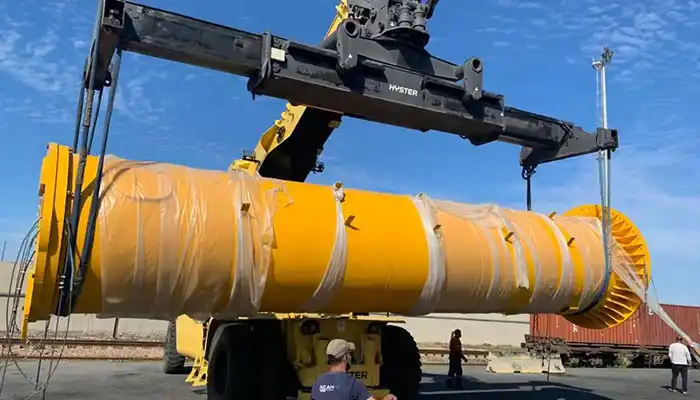
15 Ton Jib Crane & 5 Ton Electric Winch for Port Yard in Morocco
Content Quick Link
15 Ton Jib Crane & 5 Ton Electric Winch for Moroccan Port Project
Executive Summary
This project involves the supply of a 15-ton column-mounted jib crane and a 5-ton electric winch with 100 m rope length to a government port in Morocco. The solution is designed for practical, day-to-day lifting tasks in port operations—especially where space is limited and quick handling is required.
What is the main advantage of this setup?
Unlike large gantry or mobile cranes, this setup provides a fixed and reliable lifting point that operators can use anytime. It helps reduce waiting time, improve workflow, and handle routine lifting more efficiently.
Project Overview
The equipment was selected based on actual working conditions at the port. The goal is not just lifting capacity, but matching the crane to real tasks on site.
- Equipment supplied:15-ton jib crane (column-mounted, rotating),5-ton electric winch (100 m rope length)
- Installation location: Government port facility in Morocco
- Application scope: Cargo handling, Steel pipe lifting, Maintenance and auxiliary operations
Purpose of the Equipment
This solution focuses on improving efficiency and flexibility in port material handling. It supports both regular operations and occasional lifting needs.
- Handle loading and unloading of steel pipes and general cargo
- Support maintenance lifting tasks near quay or storage areas
- Provide a dedicated lifting station for frequent or small-batch handling
- Reduce dependency on large shared cranes or mobile equipment
In simple terms, it fills the gap between heavy-duty cranes and manual handling.
Project Background
This project was carried out for the Government Port Authority in Morocco. The main goal was to improve port operations with equipment that is safe, reliable, and easy to use.
Client Needs
The port had specific requirements to handle daily operations efficiently:
- Reliable Material Handling – Equipment must safely manage cargo and reduce downtime.
- Heavy Load Lifting – Capable of lifting steel pipes, containers, and machinery.
- Smooth Integration – Must work alongside existing cranes, storage areas, and dock layouts.
The focus was on providing practical solutions that fit real operational needs rather than over-designed systems.
Key Challenges
Harsh Port Environment
- High humidity and salt exposure
- Risk of corrosion on exposed steel surfaces
Space Constraints
- Limited area for crane installation
- Equipment needed to operate without blocking other port activities
Tight Timeline
- Delivery and installation had to meet strict deadlines
- Minimal disruption to ongoing port operations
Equipment Overview
This section provides a detailed look at the main equipment supplied for the project: the jib crane and the electric winch. Both are selected to meet the port’s lifting needs while ensuring safety, durability, and operational efficiency.
Jib Crane
The 15-ton BZ series slewing jib crane is designed for medium to heavy lifting tasks in a port environment. It offers flexibility and reliability for daily cargo handling.
Specifications:
- Lifting Capacity: 15 tons
- Span & Height: 7.5 m height; 9.4 m + 2.5 m reach
- Power Supply: 400V, 50Hz, 3-phase
- Type: Column-mounted, slewing BZ series jib crane
Key Features:
Slewing/Rotating Capability
- Allows operators to move loads within a wide working radius without repositioning the crane
- Reduces the need for multiple fixed lifting points
Heavy-Duty Steel Construction
- Durable enough to handle steel pipes, containers, and other port materials
- Built to withstand outdoor port conditions including wind, humidity, and moderate corrosion
Main Parts of BZC 15-Ton Jib Crane
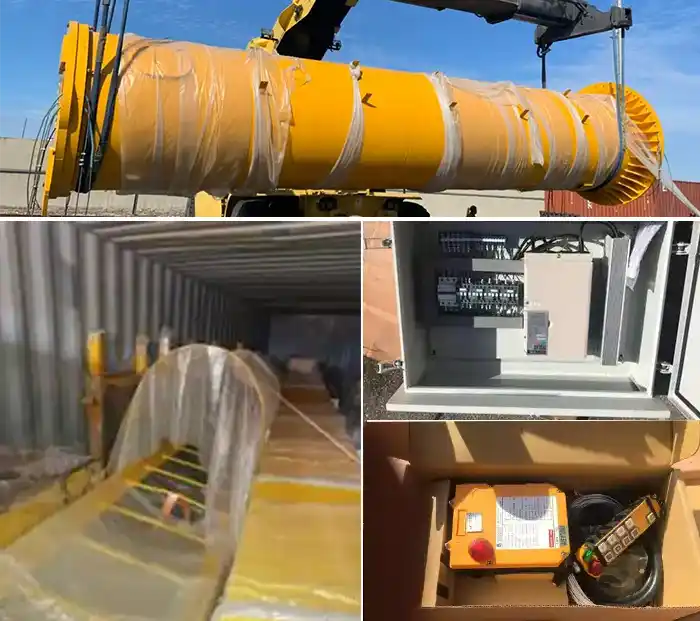
| No. | Part | Size (L × W × H, m) |
|---|---|---|
| 1 | Jib Arm | 10.1 × 1.5 × 1.4 |
| 2 | Column | 10.5 × 2.7 × 2.7 |
| 3 | Slewing Mechanism | 2.3 × 2.3 × 2 |
| 4 | Electric Hoist | 2 × 1.6 × 0.8 |
| 5 | Ladder Platform | 3 × 1.2 × 1 |
| 6 | Electrical Panel | 1 × 1 × 1 |
| 7 | Anchor Bolts | 2 × 0.5 × 0.3 |
Electric Winch
The 5-ton electric wire rope winch complements the jib crane by providing long-reach lifting and precise load handling, especially useful for high stacking or extended lifting tasks at the port.
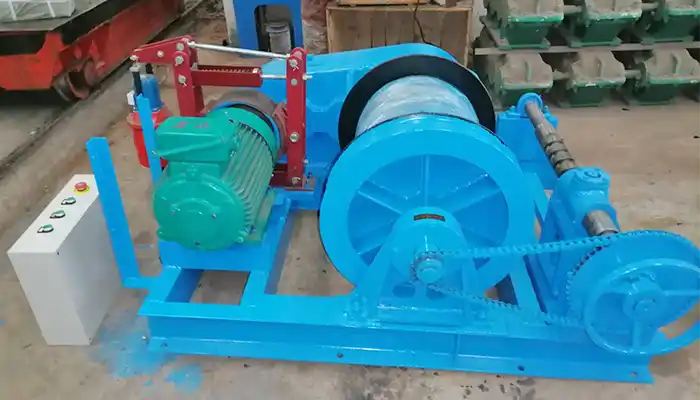
Specifications:
- Lifting Capacity: 5 tons
- Lifting Height: 100 meters
- Type: Electric wire rope winch
Key Features:
Extended Lifting Reach
- Ideal for containers, high stacks, or positions where the jib crane cannot reach
- Supports long-distance pulling and material positioning
Smooth and Reliable Operation
- Designed for consistent performance during frequent use
- Reduces wear on both the rope and mechanical components
Integrated Safety Mechanisms
- Emergency stop for instant halt in critical situations
- Overload protection to prevent damage to the winch and load
This winch adds flexibility and precision to port operations, ensuring that heavy loads can be lifted and positioned safely, even in constrained or hard-to-reach areas.
Challenges & Solutions
This project faced several practical challenges that required thoughtful solutions. Each issue was addressed with a focused, hands-on approach to ensure the cranes and winch could operate safely and efficiently in the port environment.
Challenge 1: Tight Project Schedule
Problem: The project had a strict timeline, and delays could disrupt port operations.
Solution:
- Parallel preparation of steel components while the hoist and jib crane systems were being manufactured
- Pre-assembly checks to reduce installation time on site
- Efficient logistics planning to ensure timely delivery
This approach allowed installation and commissioning to happen quickly without compromising safety.
Challenge 2: Environmental Corrosion Risk
Problem: Ports are exposed to high humidity and salt, which can damage steel structures over time.
Solution:
- Anti-corrosion treatment applied to all steel components
- Use of corrosion-resistant materials for key parts exposed to weather
- Regular maintenance planning to extend the lifespan of the equipment
This ensured the cranes and winch remain durable even in harsh port conditions.
Challenge 3: Limited Space at Port
Problem: The port had restricted areas for installing new cranes.
Solution:
- Compact jib crane design to fit tight working zones
- Optimized slewing radius to cover maximum working area without interfering with other equipment
- Column-mounted configuration to save floor space while maintaining operational flexibility
These solutions allowed safe and efficient operation within the limited space available.
Lessons Learned / Best Practices
This project highlighted several practical insights that can improve the efficiency, reliability, and longevity of port crane installations. Each lesson focuses on actions that save time, reduce risks, and keep equipment operating smoothly.
Pre-order Critical Components
Ordering essential components early makes a big difference. Key parts like hoists and slewing bearings often have long lead times, so having them ready before assembly starts avoids unnecessary delays.
- Hoist, slewing bearings, and other key parts should be pre-ordered
- Reduces the risk of project delays caused by supply shortages
- Ensures all critical components are on hand when assembly begins
Align Steel Delivery with Production Workflow
Coordinating steel deliveries with the assembly schedule helps the project run efficiently. It prevents storage issues and ensures the production line keeps moving without interruptions.
- Schedule steel delivery to match assembly sequence
- Avoids bottlenecks at the port or on-site storage issues
- Keeps the project on track and reduces handling time
Modular Assembly Saves Time On-site
Using modular or pre-fabricated components significantly speeds up installation. It also makes transportation easier and reduces labor requirements.
- Pre-fabricated sections allow for quick on-site assembly
- Minimizes installation time and labor costs
- Simplifies handling and transport of large crane parts
Regular Inspection and Preventive Maintenance
Port environments are harsh, and regular maintenance is key. Checking for corrosion, mechanical wear, and other issues ensures the equipment stays safe and operational.
- Schedule regular inspections to detect wear early
- Perform preventive maintenance to extend equipment life
- Helps maintain continuous and safe operation under harsh conditions
FAQ – 15-Ton Jib Crane (Port Applications)
Answers to common questions about 15-ton jib cranes for port operations, covering selection, installation, and operational considerations.
Q1: What should I consider when choosing a jib crane for a port environment?
A: Focus on lifting capacity, reach, slewing range, and corrosion protection.
- The crane must handle the heaviest loads like steel pipes or containers.
- Ports are exposed to humidity and saltwater, so anti-corrosion coatings or stainless steel components are essential.
- Ensure the crane's rotation radius fits your yard layout to avoid interference with other equipment.
Q2: How do I determine the right capacity for a jib crane?
A: Base it on the maximum weight of your typical cargo plus a safety margin.
- Always add 20–30% extra to account for dynamic loads or future heavier items.
- Consider both individual item weight and bundled loads when planning crane capacity.
Q3: Can a 15-ton jib crane handle steel pipes or containers safely?
A: Yes, if the load doesn't exceed the rated capacity and proper lifting attachments are used.
- Use suitable grabs, slings, or clamps for your material.
- Ensure the lifting height and slewing radius match the handling requirements in your yard.
Q4: Are these cranes suitable for outdoor port applications?
A: Yes, with proper protective coatings and weather-resistant components.
- Salt spray, humidity, and occasional rain are common at ports.
- Ensure electrical enclosures and motors are rated for outdoor or marine environments.
Q5: Can I install a 15-ton jib crane in a facility with limited space?
A: Yes, but careful planning of the slewing radius and hoist path is needed.
- Side-mounted or compact jib cranes can operate efficiently in tight yards.
- Consider reach, height, and rotation to avoid conflicts with structures or other equipment.
Q6: How long does it take to install and commission a jib crane?
A: Typically one to two weeks for assembly and testing, depending on site conditions.
- Pre-fabrication of steel structures reduces on-site welding time.
- Electrical and hoist systems need careful alignment and testing to meet safety standards.
Q7: What factors affect the cost of a jib crane?
A: Capacity, span, materials, environmental protection, and additional safety features.
- Outdoor or marine-grade materials increase cost.
- Optional accessories like remote control or anti-corrosion treatment also affect pricing.
Q8: Do these cranes require specialized operators or training?
A: Basic training is sufficient, but operators should understand load limits and safety rules.
- Operators need to know hoist controls, emergency stops, and inspection routines.
- Familiarity with site layout ensures smooth and safe handling of materials.
FAQ – 5-Ton Electric Winch (Port Applications)
Answers to common questions about 5-ton electric winches for port operations, covering capacity, safety, and installation considerations.
Q1: How do I determine the right winch capacity for my port operations?
A: Select a winch that handles your heaviest load plus a safety margin.
- Consider both the weight and length of the lift, especially for long-height operations.
- Overload protection is critical for operator safety and equipment longevity.
Q2: Can a 5-ton winch lift cargo 100 meters high?
A: Yes, if it's designed with the appropriate wire rope length and motor power.
- Longer lifts generate more tension, so choose a winch rated for both capacity and height.
- Check that the facility's power supply supports continuous operation over long lifts.
Q3: How do I ensure safe operation with a 100-meter electric winch?
A: Use limit switches, overload protection, and regular inspections.
- Safety devices prevent accidents caused by over-lifting or rope slippage.
- Regular maintenance of ropes, pulleys, and brakes ensures reliable operation.
Q4: Can the winch operate outdoors in port environments?
A: Yes, with proper weatherproofing and corrosion-resistant materials.
- Electric components must be rated for humid, salty conditions.
- Anti-corrosion coatings on steel parts prevent premature wear.
Q5: What kind of power supply is required for the winch?
A: A stable 3-phase, 400V, 50Hz supply is typical for this type of equipment.
- Voltage compatibility ensures smooth operation and avoids motor overheating.
- Check local electrical infrastructure to determine if transformers or wiring upgrades are needed.
Q6: How do I compare different winch options for long-lift applications?
A: Compare lifting capacity, hoist height, operational speed, durability, and maintenance requirements.
- Short-term costs include purchase and installation; long-term costs include energy use and downtime.
- Modular designs or winches with variable speed controls may offer more flexibility for port operations.
Q7: What typical loads can a 5-ton electric winch handle?
A: Smaller cargo items, machinery components, or long-height steel bundles.
- Designed for medium-weight lifts over long distances.
- Ensure proper attachments and stable rigging to prevent load swinging.
Conclusion
The project successfully delivered and assembled a 15-ton jib crane along with a 5-ton electric winch at the Moroccan government port. Both pieces of equipment were tailored to meet the specific operational needs of the port, providing reliable lifting solutions where space and efficiency are critical.
The installation demonstrated practical efficiency, safety, and durability in a real-world port environment. Operators were able to handle heavy cargo, steel pipes, and containers with minimal disruption to daily activities.
This project also highlights Yuantai Crane’s ability to provide complete, customized, and dependable solutions for port operations, from equipment design and delivery to installation and commissioning. It shows that with careful planning and practical design, port material handling can be made safer and more efficient.

Article by Bella ,who has been in the hoist and crane field since 2016. Bella provides overhead crane & gantry crane consultation services for clients who need a customized overhead travelling crane solution.Contact her to get free consultation.