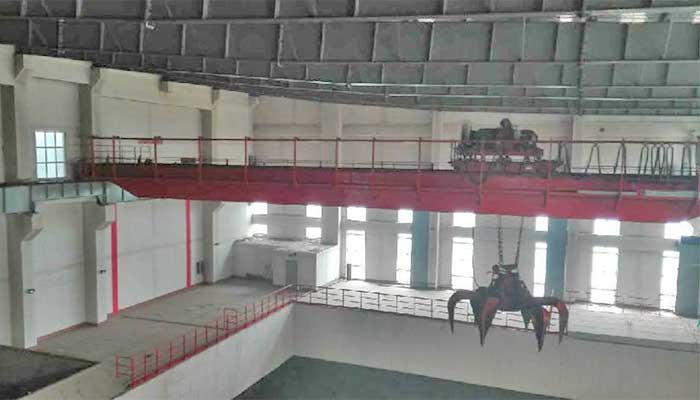
Reducing Environmental Impact with Cleaner Waste Handling Equipment
menu_open
Content Quick Link
Introduction
Waste handling operations often bring environmental challenges. Dust clouds, material spillage, and contamination can spread beyond the site, affecting the surrounding land, water, and air. These issues not only harm the environment but also create health and safety concerns for workers and nearby communities.
Choosing cleaner and greener equipment is a practical step toward reducing these problems. Modern machines can handle waste more precisely and with less mess. This helps keep the site cleaner and minimizes pollution.
Key reasons why cleaner equipment matters:
- Reduces dust released during material handling
- Limits accidental spills that contaminate soil and water
- Lowers the risk of hazardous substances spreading
- Improves safety for operators and workers
- Helps comply with environmental regulations
In this guide, we will focus on how equipment choices like remote grabs and jib cranes contribute to a cleaner waste site. The aim is to explore practical ways to cut down spillage, dust, and contamination through smarter equipment decisions.
Environmental Challenges in Waste Handling
Understanding environmental risks and pressures in waste handling, including spillage, dust, contamination, and regulatory compliance.
Common Environmental Issues
- Spillage: Loose scraps, liquids, or powders can spill onto the ground, causing soil pollution and potential water contamination. Cleanup is costly and time-consuming.
- Dust Pollution: Waste handling can generate dust, reducing air quality and carrying harmful particles that affect workers and nearby residents. Dust can also settle on vegetation and water.
- Contamination of Soil and Water: Hazardous or organic waste can leach into soil or groundwater if not contained, affecting wildlife and ecosystems while creating long-term remediation costs.
Impact of Traditional Waste Handling Equipment
- Manual grabs may drop material or cause uneven loads that spill easily.
- Open handling without dust control allows airborne particles to spread freely.
- Older equipment may lack sealed or enclosed systems, increasing contamination risks.
- Machines powered by diesel or outdated engines contribute to air pollution through emissions.
These limitations make older equipment less suitable for today's environmental standards.
Regulatory Pressures and Community Expectations
Governments worldwide are enforcing stricter rules on dust, spillage, and containment. Operators must comply with monitoring and reporting requirements or risk fines and legal actions.
Communities near waste facilities expect reduced noise, dust, and pollution. Public pressure can lead to stricter local regulations or opposition if environmental standards are not met.
In short: Waste handling sites cannot ignore environmental challenges. Upgrading equipment is essential for legal compliance, responsible operation, and maintaining positive community relations.
Cleaner Equipment Options for Waste Handling
Equipment designed to minimize spillage, dust, and hazards in modern waste handling operations.
Remote-Controlled Grab Buckets Overview
Remote-controlled grab buckets offer greater control and precision compared to traditional manual grabs. They are especially useful for messy, hazardous, or fine waste materials.
Features
- Precision Handling: Smooth operation reduces sudden drops or spills, keeping waste contained during lifting and moving.
- Reduced Manual Intervention: Operators remain in safer locations, away from dust and hazards, requiring fewer personnel to handle the waste.
- Versatile Designs: Different types are available depending on waste type, including hydraulic orange peel grabs for bulky scrap and electro-hydraulic grabs for mixed or fine materials.
Benefits
- Minimized Spillage: Precise control reduces material loss during transfers, keeping sites cleaner and lowering contamination risks.
- Less Dust Generation: Smooth grab movement minimizes disturbance of dust-prone waste, helping in dry or windy conditions.
- Improved Operator Safety: Remote operation protects operators from dust, noise, and dangerous materials.
Common Types of Remote-Controlled Grab Buckets
- Hydraulic Orange Peel Grabs: Multi-fingered grabs that close tightly for bulky or heavy scrap, providing strong grip and minimal material slipping.
- Electro-Hydraulic Grabs: Combine electric and hydraulic power for smooth control and efficient handling of mixed, fine, or dusty waste materials.
Jib Cranes with Integrated Dust Control
Compact jib cranes designed for precise handling and dust reduction in confined or urban waste facilities.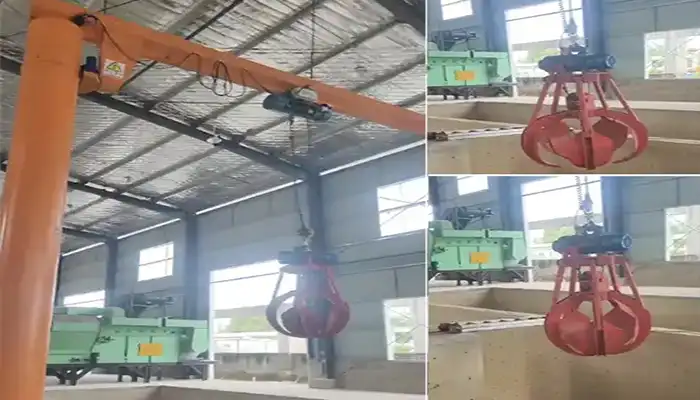
Grab bucket jib crane for waste handling
Key Features
- Compact and Flexible Design: Horizontal boom on vertical mast or wall allows coverage of small to medium radius with minimal floor space, ideal for cramped locations.
- Integrated Dust Control Options: Attachments like water mist nozzles or localized extraction systems capture dust at the source during lifting or dumping.
Benefits
- Controlled Material Handling: Precise movement reduces accidental dropping or scattering of waste, keeping the site cleaner.
- Reduced Material Drop and Dust Release: Careful lifting and placement limit dust clouds and loose material falling.
- Improved Site Cleanliness: Compact design combined with dust control reduces cleanup needs and environmental contamination.
Integration Possibilities
- Water mist or spray systems: Activated during material handling to settle airborne dust.
- Vacuum or extraction hoods: Positioned near the load to capture dust at the source.
- Enclosed grab buckets or covers: Limit dust escape during transport.
These integrated options work together to significantly reduce dust levels and improve environmental conditions on site.
Other Equipment Innovations
Modern equipment designed to reduce environmental impact, improve efficiency, and control dust and spillage in waste handling.
Enclosed Conveyor Systems
- Dust containment: Prevents dust and debris from escaping into the air, reducing site pollution.
- Spillage reduction: Enclosures keep materials on the belt, minimizing waste loss and cleanup.
- Weather protection: Shields materials from rain or wind, preventing contamination or degradation.
Vacuum-Assisted Material Handling
- Effective dust control: Captures dust at the source, preventing spread.
- Cleaner handling: Reduces airborne particles for safer, cleaner work areas.
- Flexible use: Can be mounted on cranes, vehicles, or stationary stations for various waste types.
Automated Sorting and Handling Machinery
- Improved sorting accuracy: Separates waste cleanly, reducing cross-contamination.
- Consistent material flow: Smooth operation minimizes accidental spills and dust.
- Remote operation: Limits worker exposure to dust and hazardous materials, enhancing safety.
These innovations complement traditional equipment, giving waste sites more tools to improve environmental performance and reduce pollution.
How Equipment Choices Reduce Environmental Impact
Selecting the right waste handling equipment can significantly reduce spillage, dust, contamination, and emissions on-site.
Precise Material Handling Reduces Accidental Spillage and Waste Loss
- Less waste ends up outside designated areas
- Fewer costly cleanups and delays caused by spills
- Reduced risk of harmful substances leaking into soil or water
Remote-controlled grabs and jib cranes with fine control help operators handle waste gently but firmly, cutting down on accidents.
Minimizing Dust Generation Through Controlled Grabs and Crane Operations
- Avoiding sudden drops or jolts that kick up particles
- Using enclosed or covered grabs to keep material contained
- Integrating dust suppression systems like sprays or vacuums at the handling point
This results in cleaner air on-site and less dust carried to nearby neighborhoods.
Prevention of Contamination by Reducing Material Exposure to Open Air and Ground
- Using enclosed conveyors and sealed grabs to keep materials contained during transport
- Preventing waste from touching soil where it can leach chemicals
- Limiting the time materials sit uncovered, cutting down contamination risks
Better containment keeps waste off the ground and reduces the chance of harmful runoff.
Lower Emissions from Electric or Hybrid-Powered Handling Equipment
- Cutting down greenhouse gas emissions at the site
- Reducing noise pollution, benefiting workers and nearby communities
- Often improving operational efficiency and lowering fuel costs
Choosing greener power options supports cleaner air and aligns with increasing environmental regulations.
Case Studies for Your Reference
Real-world examples show how cleaner waste handling equipment can reduce environmental impact while improving efficiency and safety.
Remote Grabs Reducing Dust by 40% at a Recycling Facility
At a medium-sized recycling site, switching from manual grabs to remote-controlled hydraulic orange peel grabs cut dust emissions by nearly 40%. Operators reported fewer airborne particles during material transfers, improving on-site air quality and safety.
- Dust suppression was enhanced by integrating water mist systems with the grabs.
- Reduction in complaints from nearby residents about dust pollution.
- Cleanup costs decreased due to less spillage and dust settling on equipment and surfaces.
Jib Crane Installation Improving Site Cleanliness at a Waste Transfer Station
A busy waste transfer station installed jib cranes with dust suppression nozzles in confined loading areas. Precise control reduced material drops and debris spread. As a result:
- The loading dock area stayed cleaner, requiring less frequent sweeping and washing.
- Spill-related soil contamination decreased noticeably.
- Worker exposure to dust and debris was minimized, improving safety.
Comparative Data: Cleaner Equipment vs. Traditional Handling
A study comparing two similar waste sites found:
- Sites using enclosed conveyors and vacuum-assisted grabs had 30% less material spillage than sites with open conveyors and manual grabs.
- Electric-powered cranes reduced on-site emissions by ~25%, improving air quality and lowering noise levels.
- Automated sorting machines increased sorting accuracy by 15%, reducing cross-contamination of waste streams.
These cases show that investing in cleaner equipment protects the environment while boosting efficiency and worker safety.
Benefits Beyond Environmental Impact
Cleaner waste handling equipment offers operational, safety, regulatory, and business advantages beyond just protecting the environment.
Improved Workplace Safety and Health for Operators and Workers
Cleaner equipment often means less dust, fewer spills, and reduced exposure to hazardous materials, leading to:
- Healthier working conditions with fewer respiratory issues from dust and fumes
- Lower risk of accidents from slipping on spilled materials or handling unstable loads
- Reduced noise levels with electric or hybrid machines, protecting hearing and lowering stress
Better safety and health also boost worker morale and reduce downtime caused by illness or injury.
Compliance with Stricter Environmental Regulations and Permits
Equipment designed to minimize environmental impact helps facilities:
- Meet or exceed legal requirements without costly retrofits or fines
- Simplify reporting and monitoring by controlling dust and spills at the source
- Stay ahead of future regulations by investing in greener technology today
This reduces the risk of operational disruptions and legal headaches.
Enhanced Corporate Social Responsibility and Positive Public Image
Companies that actively reduce their environmental footprint demonstrate commitment to sustainability, resulting in:
- Better relationships with local residents and authorities
- Positive media coverage and brand reputation boosts
- A stronger foundation for long-term business growth
Being seen as environmentally responsible can open doors to new business opportunities.
Attraction of Responsible Buyers and Investors Valuing Sustainability
Companies using cleaner equipment can appeal to buyers, contractors, and investors who prioritize sustainability:
- Win contracts where green credentials are part of the selection criteria
- Access funding or incentives aimed at sustainable projects
- Differentiate in a competitive market by showcasing commitment to reducing pollution
In today's market, sustainability is often a key factor in business success.
Choosing the Right Cleaner Waste Handling Equipment
Selecting the appropriate equipment involves considering site conditions, waste type, operational goals, and environmental performance. Proper choices improve efficiency and sustainability.
Key Considerations: Site Conditions, Waste Type, Operational Goals
Before investing in equipment, assess:
- Site Layout and Space: Compact equipment like jib cranes suits tight or cramped areas, while larger sites can accommodate overhead cranes or conveyors.
- Type of Waste: Bulky scrap needs grabs for heavy, irregular shapes; dusty or fine materials require enclosed or vacuum-assisted handling systems.
- Operational Priorities: Identify whether your focus is reducing dust, preventing spills, speeding up sorting, or a combination of these goals.
Evaluating Equipment Features for Environmental Performance
Examine how equipment addresses key environmental concerns:
- Dust Control: Built-in dust suppression or integration capability.
- Spillage Prevention: Smooth lifting and placement to avoid material drops.
- Containment: Enclosed or sealed conveyors and grabs to prevent escape of waste.
- Power Source: Electric or hybrid options reduce emissions and improve sustainability.
Request detailed specifications and case studies to verify real-world performance.
Collaboration with Equipment Suppliers for Customized Green Solutions
Working closely with suppliers can help tailor solutions for your site:
- Customize equipment features to address site-specific challenges
- Recommend and integrate dust suppression or containment systems
- Provide operator training for optimal clean handling practices
- Assist with maintenance planning to ensure efficiency and environmental compliance
Custom solutions often outperform off-the-shelf options by fitting your exact operational needs.
Conclusion
Choosing cleaner waste handling equipment isn’t just a nice-to-have—it’s a smart and necessary step for any modern waste operation. The right machines directly reduce spillage, cut down on dust, and prevent contamination, making your site safer, cleaner, and more efficient.
With environmental concerns rising and regulations tightening, there’s a growing demand for waste facilities that operate responsibly. Buyers, regulators, and communities all expect greener practices, and investing in cleaner equipment helps meet those expectations.
If you manage or operate a waste site, now is the time to think about upgrading your equipment. By choosing smarter, more environmentally friendly solutions, you’re not only protecting the planet—you’re also setting your business up for long-term success. Don’t wait—talk to your equipment supplier today and explore how greener options can work for you.

Article by Bella ,who has been in the hoist and crane field since 2016. Bella provides overhead crane & gantry crane consultation services for clients who need a customized overhead travelling crane solution.Contact her to get free consultation.