Hydraulic Orange Peel Grab Buckets: Choosing the Right Tine Design
menu_open
Content Quick Link
Hydraulic Orange Peel Grab Buckets: How to Choose the Right Tine Design for Scrap Handling
Introduction
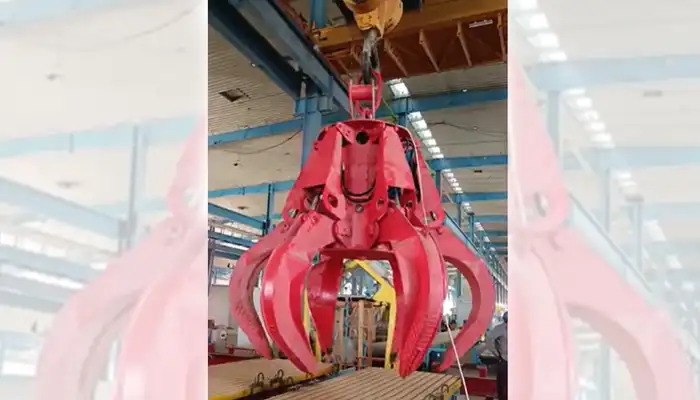
Hydraulic orange peel grab buckets for smart grab bucket overhead cranes are widely used in scrap yards, recycling facilities, and steel mills to lift, move, and load irregular or bulk scrap materials. What makes them special is their petal-like claws—also known as tines—that close around the scrap like an orange peel.
But here’s something that often gets overlooked: not all orange peel grabs are built the same. The number of tines, the shape of their tips, and whether they are open or closed can make a real difference in how well the grab performs. It’s not just about strength—it’s about matching the right grab to the right type of scrap.
This section aims to give you practical guidance on selecting the right tine design. Whether you handle shredded steel, bulky vehicle parts, or mixed scrap, choosing the correct configuration can improve work speed, reduce wear, and even lower your operating costs.
Why Tine Design Matters
Poorly matched tine design can lead to inefficient gripping, dropped material, or even damage to the grab. On the flip side, a well-matched grab does the job faster and cleaner. Here’s what proper tine selection affects:
- Grip efficiency – How securely the scrap is held
- Cycle time – How fast a load can be picked, moved, and released
- Maintenance needs – The wear and tear on hydraulic systems and tines
- Operator ease – How easy it is to work without needing constant repositioning
This guide will help you understand how tine count, tooth shape, and tine style (open or closed) relate directly to the scrap you're handling—and how to make the smartest choice for your operation.
Orange Peel Grab Buckets
If you've ever watched a claw at a scrap yard grab onto twisted metal, old car parts, or piles of rebar, chances are you've seen an orange peel grab bucket in action. It's called "orange peel" because its tines—or claws—open and close like the skin of a peeled orange.
These hydraulic tools are specifically designed for irregular, heavy, and often unpredictable materials that traditional buckets or magnets can't easily handle. They don't just scoop—they grip and dig into the load, offering a much tighter hold.
What Is an Orange Peel Grab?
An orange peel grab is a type of lifting attachment mounted on a crane or excavator, designed to grip and move loose, bulky, or irregular scrap. Unlike a traditional clamshell or bucket, the tines (also called petals) work independently or in pairs to grab objects from multiple angles. This design allows the grab to "bite" into a pile of scrap and hold it tightly while lifting.
- Used for gripping, not scooping
- Ideal for materials that are uneven, sharp, or awkwardly shaped
- Commonly seen handling scrap metal, shredded materials, and construction debris
Key Components
The effectiveness of an orange peel grab comes down to a few important parts:
- Hydraulic System: Provides the force to open and close the tines. Typically powered by the crane or carrier machine's hydraulic circuit.
- Tines (Petals): Usually 4 to 8 curved steel arms that form the grab. Their shape, count, and closing pattern determine how well the grab performs.
- Teeth or Tips: Located at the end of each tine to help dig into scrap material. They can be sharp, blunt, or serrated depending on the scrap type.
- Rotation Function (Optional): Some models have a 360° rotating head, allowing the operator to reposition the grab easily without moving the crane. Useful in tight or irregular loading spaces.
Application Areas
Orange peel grab buckets are workhorses in industries that deal with messy, tangled, or heavy material. You'll typically find them in:
- Scrap Yards: For moving ferrous and non-ferrous metals, including beams, engine blocks, and appliance carcasses.
- Recycling Centers: Especially those handling metal recycling, where materials need to be sorted and loaded into shredders or containers.
- Steel Mills: To handle steel waste, scrap returns, and to feed furnaces or conveyors with raw scrap.
In short, if the material is rough, heavy, or comes in uneven shapes, the orange peel grab is often the most practical and efficient choice. Understanding how it works is the first step to choosing the right design for your operation.
Key Factors in Tine Design Selection
Choosing the right orange peel grab bucket isn't just about getting the right lifting capacity—it's about understanding how the tine design affects how the grab works with the material you're handling. Here's a closer look at the three main elements: tine count, tooth shape, and tine style.
Tine Count (Petal Number)
The number of tines on an orange peel grab is more than just a design choice—it directly affects how the grab grips, lifts, and releases different types of scrap. You'll commonly see 4, 5, 6, or even 8 tines, and each has its place depending on what you're moving.
Common Options: 4 tines, 5 tines, 6 tines, 8 tines
Pros and Cons of Fewer vs. More Tines:
Fewer tines (4 or 5)
- Pros: Stronger individual grip, better for large, irregular items
- Cons: Less contact area, may not hold smaller pieces securely
More tines (6 or 8)
- Pros: Increased surface coverage, better for fine or loose scrap
- Cons: Heavier, slightly slower closing time, more hydraulic demand
Matching Tine Count with Scrap Density and Size:
- 4-tine grabs – Best for bulky and irregular scrap like vehicle bodies or large structural pieces
- 5-tine grabs – A general-purpose choice, ideal for most scrap yards handling mixed materials
- 6/8-tine grabs – Great for fine, shredded, or loose scrap like aluminum cuttings or shredded steel
Tooth Shape and Tip Style
Not all tines are equal—what's at the end of each tine matters just as much. The tooth style can affect how well the grab penetrates material, how much it holds, and how long it lasts before needing replacement.
Types of Tooth Tips: Pointed, Blunt, Serrated
Effects on Performance:
Pointed tips
- Offer better penetration into tightly packed or compacted scrap
- Help dig into scrap piles with minimal effort
Blunt tips
- More durable, suitable for tangled, softer scrap
- Reduced risk of piercing or damaging lighter materials
Serrated tips
- Provide extra grip, especially on thin or flat-edged pieces
- Useful when handling sheared steel or sharp, slippery scrap
How to Choose Based on Scrap Type:
- Pointed: Use for densely packed or compressed scrap (e.g., baled steel, engine blocks)
- Blunt: Choose for soft, entangled materials (e.g., copper wire, light mixed scrap)
- Serrated: Ideal for thin or sharp scrap (e.g., cut sheet metal, aluminum cans)
Open vs. Closed Tine Styles
The physical structure of the tine—whether it's open or closed—affects how material is held inside the grab. This is especially important when you're working with scrap that might spill, drop, or get stuck.
Open Tine Design
- Lighter weight, leading to faster operation
- Less resistance when digging into compact piles
Best for:
- Large, dry, and irregular scrap (like thick steel parts or auto shells)
- Outdoor yards where some material loss isn't a big issue
Closed Tine Design
- Creates an enclosed grip, minimizing the chance of material loss
- Better suited for finer or dustier materials
Best for:
- Loose, shredded, or dusty scrap (like steel chips or aluminum shavings)
- Environments where clean material transfer is important
Choosing Based on Operating Conditions:
- If you're lifting chunky, heavy pieces outdoors, go for an open tine.
- If you're dealing with fine material indoors or near sensitive machinery, a closed tine helps reduce spills and cleanup.
In practice, there's no one-size-fits-all. A grab designed for car shells won't work well with shredded aluminum, and vice versa. That's why understanding these three key factors helps ensure you get a tool that fits your exact job—not just any job.
Application-Based Recommendations
Now that we've covered the key design elements, let's apply them to real-world scrap handling scenarios. Different types of scrap require different grab configurations for the best performance. The right combination of tine count, tooth shape, and tine style will improve your lifting efficiency, reduce spillage, and extend the life of your equipment. Use the following guide to help match the grab bucket design to the type of scrap material you typically handle.
Heavy Metal Scrap
This includes large, dense items like steel beams, engine blocks, and solid forged parts. These materials are heavy, tightly packed, and require strong gripping force.
Suggested Tine Count: 4–5 tines
Tooth Style: Pointed (for deep penetration into compacted or solid scrap piles)
Open/Closed Tines: Open
Why: A lower number of strong tines helps concentrate the gripping force and makes it easier to bite into heavy, uneven scrap. Open tines allow faster release and better handling of bulky materials.
Shredded Steel
Fine, loose scrap such as shredded cars, cut steel sheets, or recycling output that tends to scatter easily.
Suggested Tine Count: 6–8 tines
Tooth Style: Serrated (for gripping thin or flat fragments)
Open/Closed Tines: Closed
Why: A higher number of tines helps trap loose material, and serrated tips increase grip. Closed tines are essential to prevent material from slipping through during lifting.
Vehicle Bodies
Crushed or semi-crushed vehicles, typically large in size but relatively light, sometimes containing residual parts like wires or soft components.
Suggested Tine Count: 4–5 tines
Tooth Style: Blunt (to avoid excessive puncturing and entanglement)
Open/Closed Tines: Open
Why: Bulky materials like vehicle shells require an open tine design for easy release. Blunt teeth minimize damage and reduce the chance of the grab getting stuck in cavities.
Aluminum or Light Scrap
Includes light profiles, frames, sheet scraps, and non-ferrous materials. These tend to be sharp, lightweight, and may shift during handling.
Suggested Tine Count: 6–8 tines
Tooth Style: Serrated (to prevent slipping and increase holding ability)
Open/Closed Tines: Closed
Why: More tines and a closed design are necessary to hold light and slippery materials securely. Serrated teeth provide the needed grip on flat or thin surfaces.
Mixed Scrap
A combination of different scrap types—heavy, light, fine, and irregular—often unpredictable in each load.
Suggested Tine Count: 5–6 tines
Tooth Style: Versatile or hybrid (depending on your mix)
Open/Closed Tines: Depends on material mix
Why: When dealing with a broad mix of materials, a balanced tine count offers flexibility. Some users opt for modular grab buckets with interchangeable tips or adjust the tine spacing to adapt to daily operations.
When you're deciding on a grab bucket, always ask yourself: What am I lifting most often, and how does it behave when picked up? That one question can help narrow down your choice and ensure your grab performs the way you need it to—consistently and reliably.
| Scrap Type | Suggested Tine Count | Tooth Style | Open/Closed Tines |
|---|---|---|---|
| Heavy Metal Scrap | 4–5 | Pointed | Open |
| Shredded Steel | 6–8 | Serrated | Closed |
| Vehicle Bodies | 4–5 | Blunt | Open |
| Aluminum or Light Scrap | 6–8 | Serrated | Closed |
| Mixed Scrap | 5–6 | Versatile | Depends on mix |
Additional Considerations
Beyond tine count and tooth style, there are several practical details that should not be overlooked when choosing a hydraulic orange peel grab bucket. These factors often affect long-term performance, maintenance needs, and day-to-day safety—yet they're easy to miss during the initial purchase stage.
Working Conditions
Where and how the grab will be used has a direct impact on the type of grab you should select.
- Indoor vs. Outdoor Use: Outdoor grabs should have rust-resistant components and sealed hydraulic systems to protect against rain, dust, and moisture. Indoor setups may be less exposed, but can still face high humidity or heat.
- Operating Temperature: In very cold or hot environments, ensure seals and hydraulic hoses are rated for extreme temperatures to avoid cracking or fluid thinning.
- Material Contamination: If the scrap is oily, wet, or mixed with non-metallic debris (like plastic or rubber), it's better to choose a grab with closed tines and easy-to-clean surfaces to reduce buildup and jamming.
Hydraulic System Compatibility
Not all grabs fit every crane or carrier. Always check compatibility with your existing hydraulic system.
- Flow and Pressure Requirements: Make sure the grab's hydraulic circuit matches the available pressure and flow of your crane. Operating outside these limits will lead to slow response or mechanical failure.
- Connection Type: Confirm the hydraulic connection sizes and types (e.g., quick couplers vs. threaded) to avoid mismatched fittings during installation.
- Electrical Controls: Some grabs require solenoid valves or rotation control. Verify if your crane's control panel supports these functions or needs upgrades.
Maintenance and Replacement Frequency
A grab bucket is a hard-working tool. It lifts, twists, and slams thousands of times a week—so maintenance should be planned from the start.
- Wear Parts: Tips, bushings, pins, and seals should be regularly inspected. Consider choosing grabs with bolt-on tips or modular tines to simplify replacement.
- Lubrication Points: Look for easy-access greasing points to reduce downtime.
- Cycle Life: If the grab is expected to operate continuously (multiple shifts per day), invest in a heavy-duty model with higher-grade steel and reinforced tines.
Safety Standards and Operator Visibility
Safety isn't optional—especially when lifting heavy and irregular scrap.
- Operator Visibility: The grab should be designed to allow a clear view of the load when open and during closing. A poor field of view increases the chance of misloading or hitting nearby structures.
- Built-In Safety Valves: Hydraulic grabs should include load-holding valves to prevent accidental dropping in case of pressure loss or hose damage.
- Certifications: Look for grabs that comply with CE, ISO, or other regional safety standards. This is especially important if you plan to use the equipment in regulated industries or public environments.
Taking the time to review these additional factors will save you more than just repair costs—it can prevent lost time, workplace accidents, and compatibility headaches later down the line. The grab you choose should not only suit the scrap but also the conditions and systems that surround it.
Conclusion
Choosing the right tine design for your hydraulic orange peel grab bucket is more than just a technical detail—it directly impacts your daily productivity, equipment wear, and operational safety. When the tine configuration matches the scrap you're handling, everything runs smoother: you get a firmer grip, faster load cycles, and less strain on your crane and hydraulic system.
Right Tine Design = Smarter Work
- Better Gripping – Fewer dropped loads and better control, even with irregular or fine scrap.
- Faster Cycles – Proper tine shape and count means fewer adjustments, faster closing, and quicker turnaround.
- Longer Tool Life – When the grab isn't forced to do the wrong job, it lasts longer and breaks down less.
Final Advice Before You Buy
- Know Your Scrap: The material you handle most often should be the main driver of your tine selection.
- Understand Your Workload: Frequent, heavy use calls for more robust designs and better wear protection.
- Talk to Your Grab Supplier: Share your site conditions, crane specs, and lifting needs—they can often suggest a better-suited model or configuration.
When in Doubt, Customize
If your operation deals with mixed or unusual scrap materials, customization is worth considering. A grab bucket that’s fine-tuned to your needs—whether it's interchangeable tips, hybrid tines, or specific hydraulic controls—can make a big difference in long-term performance.
At the end of the day, it’s not just about lifting—it’s about lifting smarter, safer, and more efficiently. The right grab makes that happen.

Article by Bella ,who has been in the hoist and crane field since 2016. Bella provides overhead crane & gantry crane consultation services for clients who need a customized overhead travelling crane solution.Contact her to get free consultation.