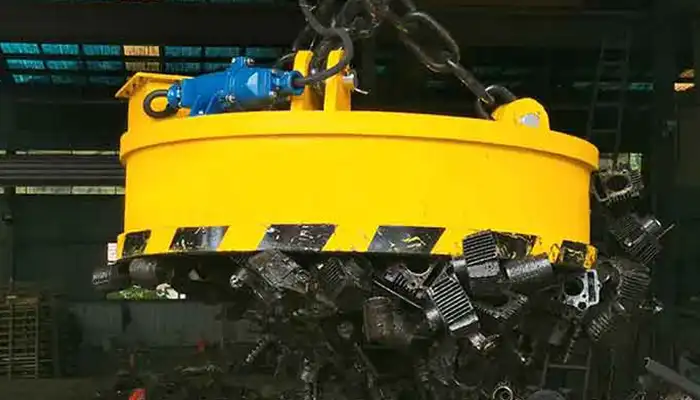
How to Choose the Right Magnetic Chuck for Scrap Handling
menu_open
Content Quick Link
How to Choose the Right Magnetic Chuck for Your Scrap Handling Crane
Introduction
Why Magnetic Chucks Are Key in Scrap Handling Cranes
Why Magnetic Chucks Are Key in Scrap Handling Cranes
In scrap handling, the magnetic chuck is the part that actually grabs and holds onto metal pieces. Think of it as the "hand" of the crane—it needs to be strong, reliable, and suited for the job. Without the right magnetic chuck, lifting scrap safely and quickly becomes a real challenge.
- Holds scrap securely during lifting and moving
- Directly affects load stability and operator safety
- Influences overall efficiency of scrap handling operations
Why Choosing the Right Magnetic Chuck Matters
Not all magnetic chucks are made equal. Picking the wrong one can slow down your work, increase electricity bills, or worse, cause scrap to slip and fall. That means potential damage to equipment, injury risk, and costly downtime.
- Matching chuck capacity to load weight avoids overload
- Proper chuck type fits different scrap shapes and sizes
- Efficient magnetic control saves power and reduces wear
- Enhances safety by minimizing load drops and accidents
What This Article Covers
This article dives deep into the magnetic chuck itself, so you can make smarter buying choices. We'll cover:
- The main types of magnetic chucks and how they differ
- How to understand and choose the right lifting power
- Control options to suit your crane setup and site conditions
- Practical tips for handling different scrap shapes safely and efficiently
By focusing on these points, you'll get a clearer picture of this crucial component and be better prepared to pick the right magnetic chuck for your scrap handling crane.
Magnetic Chucks: What Are They?
What Is a Magnetic Chuck and Why Is It Important?
What Is a Magnetic Chuck and Why Is It Important?
A magnetic chuck is a device attached to a crane that uses magnetic force to pick up and hold scrap metal. Instead of using hooks, chains, or clamps, it relies on magnetism to grip the load securely. This makes it especially useful for handling loose, irregularly shaped metal scrap, like steel pieces, that would be tricky to grab otherwise.
- Acts as the gripping "hand" of the crane
- Designed specifically for ferrous (magnetic) materials like steel and iron scrap
- Common in scrap yards, recycling centers, and metal processing plants
How Does a Magnetic Chuck Work?
At its core, a magnetic chuck creates a strong magnetic field that pulls the scrap toward it and holds it tightly during lifting and moving. This magnetic force is generated either by permanent magnets or electromagnets, depending on the chuck type.
- When activated, the magnetic field magnetizes the scrap pieces
- This creates a strong bond between the chuck surface and the load
- The load stays attached until the magnetic field is switched off or reduced
The strength of this magnetic force is what determines how much weight the chuck can safely lift. The better the contact between the chuck and scrap surface, the stronger the grip.
How Are Magnetic Chucks Different from Other Lifting Devices?
Magnetic chucks for magnetic cranes work differently than mechanical lifting tools like hooks, chains, grabs, or clamps. Each method has its pros and cons, but magnetic chucks offer some distinct advantages for scrap handling.
- Hooks and Chains: Require attaching to a specific point or bundle; can be slow and unsafe with irregular scrap
- Mechanical Grabs: Use jaws or tines to grab scrap; good for bulky pieces but can damage materials or require precise positioning
- Magnetic Chucks: Grip multiple scrap pieces at once, no physical clamp needed, faster load cycles, less wear and tear
But magnetic chucks only work on ferrous metals, and their efficiency depends on scrap shape and surface condition. So, understanding their strengths and limitations helps you decide when they're the best tool for the job.
Types of Magnetic Chucks
Permanent, Electromagnetic, and Electro-Permanent Magnetic Chucks
Permanent Magnetic Chucks
Permanent magnetic chucks use strong magnets made from materials like neodymium or ferrite. These magnets generate a magnetic field without needing any power supply, which means they don't consume electricity during operation.
- Features: No external power needed, simple on/off operation by rotating or moving internal components to engage/disengage the magnetic field
- Pros: Low operating cost, reliable in areas without electricity, minimal maintenance
- Cons: Limited lifting power compared to electromagnetic types, switching on/off can be manual and less flexible, harder to control remotely
Typical applications:
- Handling medium to light scrap loads
- Situations where power supply is unreliable or unavailable
- Scrap pieces with relatively uniform shapes and sizes
Electromagnetic Chucks
Electromagnetic chucks rely on electric current to generate a magnetic field. When powered on, the electromagnet pulls the scrap metal to the chuck surface, and when power is off, the magnetic field disappears, releasing the load.
- Features: Requires continuous power during use, quick on/off control, usually operated remotely
- Pros: Adjustable magnetic force, quick response, better control over load release
- Cons: Higher energy consumption, risk of power failure causing accidental load drop unless backup power is used, more complex maintenance
Power and control advantages:
- Can be integrated into crane control systems for safer operation
- Emergency power backup systems can keep magnet energized during outages
- Allows precise lifting and placement with operator control
Electro-Permanent Magnetic Chucks
Electro-permanent magnetic chucks combine the benefits of both permanent magnets and electromagnets. They use a short electrical pulse to switch the magnetic field on or off but don't require continuous power to hold the load.
How it works: A brief electric current changes the magnetization state of internal magnets, maintaining the magnetic force without ongoing power.
Benefits:
- Low energy use since power is only needed to switch states
- Safer—if power is lost, the magnet stays engaged and won't drop the load
- Easy remote control like an electromagnet, but with the reliability of permanent magnets
Quick Comparison: Key Features and Best Uses
| Type | Power Requirement | Control | Lifting Power | Typical Use Case |
|---|---|---|---|---|
| Permanent Magnetic | None | Manual on/off | Moderate | Medium/light scrap, no power sites |
| Electromagnetic | Continuous power | Remote, adjustable | High | Heavy scrap, precise control needed |
| Electro-Permanent | Power pulse only | Remote, safe hold | Moderate to high | Energy-efficient, safe in power cuts |
This breakdown helps you see which magnetic chuck fits your scrap type, site conditions, and crane setup best.

Key Factors in Choosing Magnetic Chuck Lifting Power
Rated Capacity, Safety Factors, and Scrap Load Matching
| Key Factor | Details | Practical Tips |
|---|---|---|
| Rated Lifting Capacity vs. Actual Load | Rated capacity = max weight under perfect conditions. Scrap is rarely ideal— shapes, surfaces vary a lot. Efficiency drops with uneven or dirty loads. | Always add a safety buffer. Account for rust, scale, sharp edges, or loose pieces. Don't work near max capacity every lift. |
| Safety Factors and Regulations | Safety factor: 25–2x actual working load. Required by most lifting safety codes. Certification matters. | Check local rules first. Buy certified equipment. Don't rely on sales claims— ask for test reports or compliance documents. |
| Chuck Size and Shape Matching | Size affects grip strength. Bigger chucks = more contact area. Small chucks may slip on uneven scrap. | Fit chuck to average scrap size. Use multiple magnets for mixed shapes. Avoid oversized magnets in tight spaces. |
| Scrap Weight Variability | Scrap weight changes— not every load is the same. Mixed density, thickness, or batch types can spike the load suddenly. | Choose adjustable-force chucks when possible. Monitor load changes regularly. Plan for the heaviest cases, not the average. |
Rated Lifting Capacity vs. Actual Operational Load
When picking a magnetic chuck, don't just look at the rated lifting capacity printed on the spec sheet. The real-world load your chuck will handle often varies, sometimes quite a bit. The rated capacity tells you the maximum weight the chuck can hold under ideal conditions. But scrap loads are rarely perfect.
- Scrap pieces might be uneven, rusted, or covered in scale, reducing effective grip
- Actual loads often shift or move, so you need a chuck with some extra margin
- Always factor in a safety buffer beyond the expected maximum load
Safety Factors and Regulatory Standards
Safety isn't negotiable when lifting heavy scrap. Industry standards and local regulations usually require applying a safety factor to the lifting capacity. This means choosing a chuck rated higher than your heaviest expected load.
- Typical safety factors range from 25 to 2 times the maximum load
- Check relevant crane and lifting regulations in your country or region
- Ensure your chuck's certification meets required safety standards for your operation
Matching Chuck Size and Shape to Scrap Load Dimensions
The size and shape of the magnetic chuck need to complement the scrap pieces you handle. A chuck that's too small won't provide enough contact area, weakening the magnetic grip. Too large, and it may be inefficient or hard to maneuver.
- Larger chucks increase contact area, improving grip on flat or bulky scrap
- For irregular or mixed shapes, multiple smaller magnets or modular chucks might work better
- Consider scrap geometry: flat sheets, bundles, or uneven piles all need different chuck designs
Considering Scrap Weight Variability and Load Consistency
Scrap loads rarely weigh exactly the same every time. You might have a mix of thick and thin pieces, varying density, or different scrap types on different days. Your magnetic chuck should handle this variability without risking load drops.
- Choose a chuck with enough margin to handle the heaviest expected loads
- If scrap weight fluctuates widely, consider adjustable magnetic force options like electromagnets
- Regularly review your scrap characteristics and adjust chuck choice or operation as needed
Taking these factors into account will help you avoid overloads, improve safety, and keep your scrap handling running smoothly.
Control Options and Operation Modes
Manual, Remote, Power Supply, and Safety Control Systems
Manual vs. Remote Control Operations
How you control the magnetic chuck makes a big difference in both convenience and safety. Some setups still rely on manual switches, but remote control has become the standard for modern scrap handling cranes.
Manual control:
- Usually located near the crane cab or on a local switch box
- Cheaper, but slower and riskier—especially in outdoor or high-traffic yards
- Not ideal for quick cycle times or remote lifting
Remote control:
- Operator can activate or deactivate the chuck from a safe distance
- Often combined with crane radio control systems
- Reduces risk during lifting and load release
- Speeds up scrap handling cycles and improves productivity
Power Supply Considerations for Electromagnetic Chucks
Electromagnetic chucks require a stable and sufficient power source to function. Unlike permanent magnets, they need continuous power to hold onto scrap.
Typical power sources:
- 220V or 380V AC, converted to DC via magnet controller
- Portable generators used in remote yards
- Battery backup systems for safety during outages
What to check:
- Make sure your yard's power setup matches the chuck's requirements
- Use proper wiring and fuses to avoid overheating
- Choose a controller with overload protection and voltage regulation
Emergency Stop and Fail-Safe Mechanisms
Safety systems built into the chuck controller are essential. In case something goes wrong—like a sudden power cut or miscommunication between the crane and the chuck—you need immediate control.
Must-have features:
- Emergency stop button in easy reach of the operator
- Discharge delay to hold the scrap briefly after power loss
- Backup battery or capacitor system for load-holding during power failure
Why it matters:
- Prevents dropped loads during outages or emergency stops
- Gives the operator time to lower or reposition the load safely
- Reduces accident risks in busy or hazardous work zones
Integration with Crane Controls and Automation
Modern crane systems often integrate the magnetic chuck controls into the main operating system. This can make operation smoother and enable advanced features like load monitoring or semi-automation.
Integration options:
- Control via crane's joystick or central panel
- Programmable logic controllers (PLCs) for custom automation sequences
- Safety interlocks to prevent releasing load mid-air
Benefits of integration:
- One control system for both crane and chuck
- Improved operator focus and workflow
- Easier troubleshooting and maintenance planning
Best Practices for Handling Different Scrap Shapes and Materials
Scrap Shape, Placement, Protection, and Slippage Prevention
Challenges of Irregular Scrap, Mixed Metals, and Uneven Density
Scrap doesn't come in neat, stackable shapes. You're often dealing with twisted metal, jagged edges, mixed materials, and inconsistent weights—all of which affect how well a magnetic chuck performs.
- Flat steel plates lift easily—twisted rebar, not so much
- Rust, paint, oil, or gaps between pieces reduce magnetic contact
- Some yards handle mixed batches: ferrous with non-ferrous—magnets won't grip non-magnetic metals
- Uneven loads can shift suddenly if magnet contact is weak
Chuck Placement and Using Multiple Magnets
Proper chuck positioning is key. A single magnet may not provide full coverage or stability. Using more than one magnet—or spreading them out—can drastically improve grip and balance.
- Center the chuck over the load's densest point when possible
- For wide or long scrap, use twin magnets on a beam or spreader
- Adjust placement based on scrap pile height and shape
- Avoid lifting from edges—aim for flat, central contact areas
Protective Covers and Shields for Fragile Scrap
Not all scrap is heavy-duty. Some materials—like thin metal sheets or processed scrap parts—can bend, scratch, or dent easily.
- Use rubber or polymer shields over the chuck surface to reduce damage
- Install covers when handling thin-gauge or delicate scrap
- Protective layers can also reduce sparking or arcing if materials are sharp
Preventing Scrap Slippage and Maximizing Contact
A good lift starts with proper contact. If the scrap isn't fully touching the magnet, grip strength drops—sometimes enough to cause slippage mid-air.
- Clean the magnet face regularly—remove rust, scale, or oil
- Flatten out piles before lifting to increase surface contact
- For lumpy or uneven piles, do shorter, smaller lifts instead of grabbing too much at once
- Consider using magnets with grooved or contoured surfaces to better grip certain shapes
Maintenance and Safety Tips for Magnetic Chucks
Inspection, Strength Monitoring, Safe Operation, and Troubleshooting
Routine Inspection and Cleaning
Daily wear and tear on magnetic chucks is unavoidable, especially in harsh scrap environments. A quick inspection and cleaning schedule can prevent most issues before they become costly failures.
- Wipe off debris, dust, and oil from the magnet surface
- Check for dents, cracks, or corrosion on the magnet housing
- Clean control cables and connectors to avoid short circuits or misfires
Monitoring Magnetic Field Strength and Wear
Magnets do weaken over time, especially under heavy-duty use or overheating. Regularly checking the magnetic field strength ensures you're still lifting within safe limits.
- Use a magnet strength meter if available
- Keep track of load behavior—if loads feel looser than usual, test immediately
- Watch for signs like slower pickup or scrap dropping before full release
Safe Operation and Operator Training
Most accidents happen not from equipment failure—but from poor handling or lack of training. Operators should know more than just "on" and "off."
- Train operators on proper load centering and safe lifting heights
- Emphasize slow, steady movements when engaging or releasing loads
- Review emergency procedures regularly—especially for power loss situations
Troubleshooting Common Issues
Not every issue requires a technician. Sometimes it's just a loose wire or dirty contact point. Here's what to check first:
- Weak lift? Check power source, controller settings, and chuck surface
- No magnet response? Inspect the control cable, fuse, or magnet controller
- Overheating? Clean ventilation, reduce duty cycle, check for internal short circuits
- Load won't release? Debris stuck between magnet and scrap, or power cutoff malfunction
Case Examples and Application Scenarios
Real-world use cases for different magnetic chuck types
Handling Bulky Steel Scrap with a Permanent Magnetic Chuck
A medium-sized recycling yard in Eastern Europe handles mainly large, clean-cut steel plates and offcuts from fabrication shops. They don't always have reliable power on site, and their crane system is relatively simple—no advanced controls.
So, they use a permanent magnetic chuck. It fits their operation well because:
- The scrap pieces are flat and consistent in size
- No need for external power during lifting
- Operators manually engage and release the magnet with a lever mechanism
- Very low maintenance and minimal operating cost
Result: Despite its limited lifting force compared to powered magnets, the permanent magnet works reliably and safely. For flat steel and straightforward lifting tasks, it's a solid, low-cost solution.
Mixed Metal Scrap Yard Using Electro-Permanent Magnetic Chuck
In a busy port-side scrap yard in Southeast Asia, scrap comes in from different sources—construction waste, shipbreaking, and industrial returns. The mix includes heavy ferrous scrap, twisted rebars, and occasionally some thin steel sheets.
They opted for an electro-permanent magnetic chuck on their overhead gantry crane. Why?
- It gives the energy-saving benefit of a permanent magnet
- Only needs brief power pulses to switch on/off
- Holds the load even during brief power outages—critical for safety
- Can handle varied scrap shapes and sizes with reliable grip
Result: They've reduced electricity use, improved load security, and simplified control for operators. The yard can operate confidently even during unstable power conditions.
Remote-Controlled Magnetic Chuck on a High-Capacity Crane
A large steel mill in the Middle East upgraded its scrap handling crane to a 25-ton capacity gantry system, operating in a harsh, dusty outdoor yard. Operators needed a fast, safe way to load massive steel bundles into melting furnaces.
They installed a high-capacity electromagnetic chuck with remote control integration.
- Magnet is operated entirely via radio remote, no manual contact needed
- Built-in backup battery holds load for 10–15 seconds in case of power cut
- Variable power settings allow grip adjustment for different scrap loads
- Daily maintenance is logged via the crane control system
Result: Cycle time has improved, and safety has gone up. Remote control keeps the operator at a safe distance, while the automation-friendly setup integrates well with their high-volume workflow.
Conclusion
Why the Right Magnetic Chuck Matters
In scrap handling, the magnetic chuck isn’t just an accessory—it’s the critical connection between your crane and the load. Choosing the wrong type can lead to dropped scrap, wasted time, or even dangerous situations. On the other hand, selecting the right magnetic chuck—one that fits your load type, work environment, and control setup—makes daily operations smoother and safer.
What a Good Magnetic Chuck Can Do for You
A well-matched magnetic chuck does more than just lift metal. It:
- Boosts your lifting efficiency with faster cycle times
- Reduces power waste and unnecessary wear
- Keeps your loads more stable, even when conditions aren’t perfect
- Helps your operators work faster, smarter, and with fewer risks
When the chuck performs well, the whole crane system benefits.
Final Tip: Don’t Guess—Ask
If you're unsure what type or size of magnetic chuck to use, don’t guess. The best choice depends on your specific scrap material, lifting frequency, and site conditions.
- Talk to equipment suppliers who understand scrap handling
- Share your scrap sizes, average load weight, and lifting method
- Ask for technical drawings or lifting test data when possible
The more tailored your magnet is to your application, the better it will perform—and the less likely you'll be dealing with avoidable problems down the line.

Article by Bella ,who has been in the hoist and crane field since 2016. Bella provides overhead crane & gantry crane consultation services for clients who need a customized overhead travelling crane solution.Contact her to get free consultation.