SS316 vs Galvanized Wire Rope Hoists: China Market Guide
menu_open
Content Quick Link
SS316 Stainless Steel vs. Galvanized Wire Rope Hoists: Life-Cycle Cost & Chinese Market Insights for Offshore and Corrosive Lifting
Introduction: Why Wire Rope Choice Matters for Hoists, Cranes, and Offshore Lifting
Wire rope is the backbone of every crane and hoist. It carries the load, ensures safety, and directly affects the equipment's lifespan. Choosing the wrong rope isn't just a maintenance issue—it can lead to production delays, unexpected replacements, and even accidents.
In lifting operations, especially for offshore, coastal, or chemical plant environments, life-cycle performance matters far more than upfront cost. This is particularly true in China, where industrial and coastal conditions vary widely.
The Critical Role of Wire Rope in Lifting Operations
Every crane or hoist depends on its wire rope. A few things to keep in mind:
- Load-bearing: The wire rope carries the entire weight of the lifted load.
- Safety factor: Corrosion or wear reduces strength, which can quickly become a safety hazard.
- Longevity: A high-quality wire rope extends equipment life and reduces downtime.
Choosing the right material is essential. For example:
- 316L stainless steel wire ropes offer unmatched corrosion resistance in offshore and high-salt environments.
- Galvanized steel ropes are more common and affordable, but they wear faster in harsh conditions.
Life-Cycle Cost vs. Initial Price
Many buyers focus on price alone. That's a mistake. In corrosive or offshore conditions, the true cost of a rope is much more than what you pay initially. Consider:
- Maintenance costs: Galvanized ropes require frequent inspection, lubrication, and occasional replacement.
- Downtime impact: Every rope replacement or unexpected failure halts operations, adding indirect costs.
- Long-term savings: Investing in 316L stainless steel may seem expensive at first, but it reduces maintenance and replacement over the life of the hoist.
Why the Chinese Market Requires Extra Attention
China's lifting equipment market has unique factors that affect your rope choice:
- Availability: 316L stainless steel wire rope hoists are rare. Most suppliers stock 304 stainless or galvanized options.
- Customization: Full 316L hoists usually require custom orders. You must confirm that all components—wire rope, hooks, and housings—are stainless.
- Regulations and inspections: Many Chinese ports, offshore facilities, and chemical plants require certified corrosion-resistant materials. Compliance is essential.
- Regional service access: Some areas may lack specialized maintenance for 316L hoists. Planning ahead is critical, especially for southern coastal industrial hubs.
Key Takeaways
- Wire rope selection is not just a material decision—it's a safety and operational decision.
- Life-cycle cost often outweighs the initial price, especially in corrosive or offshore environments.
- In China, 316L stainless steel hoists are rare, so buyers must plan ahead and verify material certifications.
Wire Rope Options for Hoists and Cranes in China
Selecting the right wire rope in China is not just about choosing steel. It's about matching the rope to your environment, equipment, and maintenance capabilities. Wire ropes fall mainly into two categories: galvanized steel and 316L stainless steel, each with its own strengths and limitations.
Galvanized Wire Rope – Widely Available and Practical
Galvanized wire ropes are the most common choice for Chinese hoists and cranes, thanks to their availability and cost-effectiveness. They are suitable for a broad range of standard industrial applications.
Highlights:
- Availability: Stocked by most domestic hoist and crane manufacturers.
- Cost: Low initial investment, ideal for budget-sensitive projects.
- Maintenance: Needs regular inspections and lubrication; replacement frequency increases in humid or coastal areas.
Typical Applications in China:
- Workshop EOT cranes
- Standard gantry cranes
- Light- to medium-duty overhead hoists
Best fit: Indoor or mildly corrosive environments where high corrosion resistance is not critical.
316L Stainless Steel Wire Rope – Rare but Essential for Corrosive Conditions
316L stainless steel wire ropes are hard to find in China. They are usually only available via custom orders from specialized manufacturers. These ropes are designed for harsh, corrosive environments such as offshore sites, chemical plants, or coastal facilities.
Highlights:
- Corrosion resistance: Excellent against salt spray, seawater, acids, and alkalis.
- Longevity: Longer service life reduces maintenance and replacement costs.
- Availability: Limited; requires consultation with specialized stainless steel hoist manufacturers.
Typical Applications in China:
- Offshore and port cranes
- Chemical and pharmaceutical plant hoists
- Food processing lines requiring high hygiene standards
- Coastal construction and marine cranes
Important tip: Ensure all critical components—including hooks and housings—are certified full 316L stainless steel. Partial stainless construction may compromise durability.
Typical Crane and Hoist Applications in China
Wire rope selection depends heavily on the type of crane and its environment:
| Crane/Hoist Type | Common Rope Material | Notes for Chinese Market |
|---|---|---|
| EOT Cranes | Galvanized | Standard indoor workshops; stainless only if exposed to coastal humidity |
| Gantry Cranes | Galvanized / Stainless | Outdoor or port use may require 316L for corrosion protection |
| Offshore & Marine Cranes | 316L Stainless | Constant exposure to seawater and harsh weather; galvanized not recommended |
| Chemical / Pharmaceutical Hoists | 316L Stainless | High corrosion or hygiene requirements; rare in domestic stock |
| Food Processing Hoists | 316L Stainless | High hygiene, moisture, and chemical resistance required |
Practical Takeaways for Buyers in China:
- Galvanized wire ropes are easy to source, affordable, and suitable for general industrial use.
- 316L stainless steel ropes are rare, custom, and expensive, but necessary in offshore, coastal, or chemically aggressive environments.
- Always verify material certification for all load-bearing components if ordering 316L in China.
- Lead times may be longer, especially for fully stainless hoists, so planning ahead is critical.
Initial Investment vs. Operational Reality
When deciding between 316L stainless steel and galvanized wire ropes for hoists and cranes in China, the first thing most buyers notice is the price. And yes, 316L hoists are expensive—often 3 to 6 times the cost of a standard galvanized hoist. On top of that, domestic stock is limited, meaning longer lead times for delivery.
At first glance, galvanized wire ropes seem like the obvious choice. They're cheaper, easier to source, and widely available. But here's where reality hits: the true cost goes far beyond the purchase price.
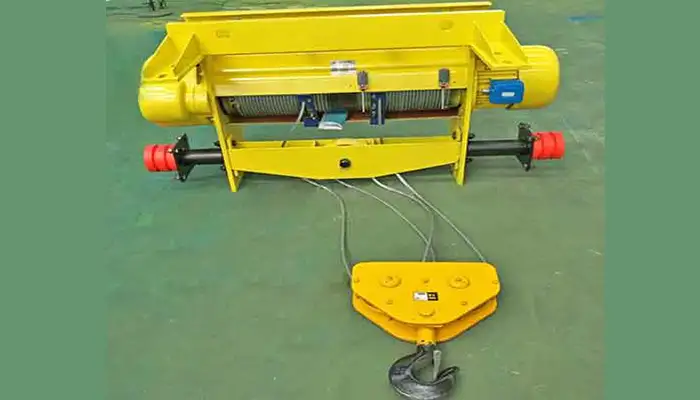 anti-corrosion wire rope electric hoist
Hidden Costs of Choosing Galvanized Wire Ropes
Using cheaper galvanized ropes can lead to several unexpected expenses, especially in corrosive or humid environments common in China:
- Shortened service life: In coastal cities like Guangzhou or Shanghai, or in chemical plants in the Yangtze River Delta, galvanized ropes corrode faster. You'll need replacements sooner than expected.
- Frequent downtime: Every rope replacement requires crane shutdown, which interrupts production schedules. Downtime can cost more than the rope itself.
- Increased maintenance labor: Galvanized ropes require regular inspections, lubrication, and sometimes minor repairs. In southern China's humid regions, maintenance demands can be higher than in drier areas.
Why 316L Stainless Steel Hoists Can Save Money Long-Term
Although 316L hoists are rare and expensive in China, they offer advantages that pay off over time:
- Longer lifespan: Resistant to salt spray, chemical exposure, and high humidity. Less frequent replacement is needed.
- Reduced maintenance: Minimal inspection and lubrication requirements.
- Operational continuity: Fewer shutdowns mean more consistent productivity.
- Compliance and safety: Meets stricter standards for offshore, marine, and chemical lifting operations.
Practical Advice for Chinese Buyers
- Don't just compare purchase prices—consider total life-cycle cost (TCO).
- For coastal, offshore, or chemically aggressive environments, 316L often becomes more economical over the crane's life.
- Plan ahead for lead times if ordering 316L from specialized manufacturers, as domestic stock is limited.
- Always check that all critical components—wire rope, hooks, housings—are truly stainless, not just partially.
Corrosion Performance in Offshore and Industrial Environments
When it comes to wire ropes for hoists and cranes, corrosion is one of the biggest hidden risks. In China, environmental conditions vary widely, and the choice of rope can make a huge difference in safety, maintenance, and lifespan.
316L Stainless Steel Wire Rope – Built for Harsh Conditions
316L stainless steel wire ropes are designed to withstand the toughest environments. Their corrosion resistance makes them the preferred choice for offshore, coastal, and chemical plant lifting operations.
Key Advantages:
- Saltwater and salt spray resistance: Perfect for ports, coastal construction, and offshore platforms.
- Chemical resistance: Handles exposure to acids, alkalis, and industrial chemical vapors without rapid degradation.
- Humidity tolerance: Performs well even in southern China's hot and humid regions, where galvanized ropes degrade faster.
- Longevity: Far longer service life than galvanized alternatives in corrosive conditions, reducing replacement and downtime.
Practical insight: If your hoist or crane is operating near the Yangtze River Delta, Pearl River Delta, or offshore wind farms, investing in 316L wire rope is often the most reliable and cost-effective long-term choice.
Galvanized Wire Rope – Suitable for Mild Environments
Galvanized wire ropes are more affordable and widely available, but their corrosion resistance depends heavily on the thickness and quality of the zinc coating.
Key Points:
- Works well in indoor or dry environments with low humidity.
- Shorter lifespan in coastal or chemically aggressive locations.
- Requires regular inspection and maintenance, especially in southern China's humid climate or near chemical plants.
Practical insight: For workshops, warehouses, or temporary outdoor projects in dry areas, galvanized ropes can be a practical and cost-effective option.
Environmental Factors in China That Affect Wire Rope Performance
China's diverse industrial and coastal environments mean that not all ropes are suitable for every location. Some critical factors include:
- Southern coastal regions: High humidity, salt-laden air, and frequent rain accelerate corrosion.
- Chemical industrial clusters: Yangtze River Delta and Pearl River Delta have concentrated chemical plants; acid or alkali vapors can quickly degrade standard ropes.
- Shipyards and offshore platforms: Constant exposure to seawater, wind, and waves demands corrosion-resistant materials like 316L stainless steel.
- Temperature and humidity variations: Even inland, high-humidity or seasonal environments affect galvanized rope longevity.
Takeaway: Selecting the right rope requires matching material to environment, not just considering cost. In harsh coastal, chemical, or offshore settings, 316L stainless steel wire ropes are almost always the safer and more durable choice.
Service Life & Replacement Frequency
When planning lifting operations, one of the most overlooked factors is how long your wire rope will actually last. This directly impacts maintenance schedules, operational downtime, and total cost. In China, environmental conditions can drastically affect rope lifespan, especially in coastal, offshore, and chemical plant applications.
316L Stainless Steel Wire Rope – Long-Term Reliability
316L stainless steel hoist ropes are built to last in the harshest conditions. Their corrosion resistance makes them the preferred choice for ports, shipyards, and coastal or chemical facilities.
Key Points:
- Extremely long lifespan: Can be several times longer than galvanized wire ropes when exposed to salt spray, seawater, or chemical vapors.
- Minimal maintenance: Less frequent inspection and lubrication are required.
- Reduced operational disruption: Fewer replacements mean fewer shutdowns and more continuous productivity.
Practical insight for China: Many industrial and offshore clients in southern coastal regions have started specifying 316L stainless steel hoists for long-term reliability, even if initial costs are higher.
Galvanized Wire Rope – Shorter Lifespan and Frequent Replacements
Galvanized wire ropes are more affordable, but their lifespan is highly dependent on the environment.
Key Points:
- Frequent replacement needed: Salt spray, coastal humidity, or chemical exposure accelerates wear.
- Higher operational disruption: Each replacement requires crane downtime, inspection, and labor.
- Maintenance-intensive: Regular lubrication and anti-corrosion checks are necessary to avoid premature failure.
Practical insight for China: In inland workshops or dry environments, galvanized ropes may last long enough to be cost-effective. But in southern coastal ports or offshore projects, repeated replacements quickly offset any initial savings.
Chinese Case Studies
Several Chinese industrial and offshore projects have already recognized the benefits of 316L stainless steel wire ropes:
- Ports in Guangdong and Shanghai: Custom 316L hoists are now used for heavy-duty container handling to reduce maintenance cycles.
- Offshore wind farm construction: Chinese contractors specify 316L wire ropes for cranes and hoists to ensure safety and continuous operation in saltwater conditions.
- Chemical and pharmaceutical plants: 316L hoists prevent corrosion from acid, alkali, and chemical vapors, improving long-term reliability and safety compliance.
Takeaway: In corrosive environments, investing in 316L stainless steel hoist ropes not only increases lifespan but also reduces total cost of ownership and operational disruption.
Maintenance Requirements for Hoists & Cranes
Proper maintenance is key to ensuring safety, reliability, and the long-term performance of cranes and hoists. In China, the type of wire rope directly influences maintenance frequency and complexity, especially in coastal, offshore, or chemical plant environments.
Galvanized Wire Rope – Maintenance-Intensive but Accessible
Galvanized wire ropes are widely used, which makes their maintenance easier to arrange, but they do require consistent care to avoid early corrosion and failure.
Key Maintenance Tasks:
- Regular inspection: Check for broken strands, corrosion, or abrasion.
- Lubrication: Apply oil or grease to reduce friction and prevent rust.
- Anti-corrosion checks: Monitor coating wear, especially in southern China's humid or coastal regions.
- Replacement scheduling: Plan replacements before the rope shows critical wear to avoid downtime.
Practical insight: Because galvanized ropes are common in China, local service providers and maintenance teams are widely available, making upkeep more convenient.
316L Stainless Steel Wire Rope – Near Maintenance-Free
316L stainless steel ropes offer a major advantage: they are almost maintenance-free. This is especially valuable for high-rise cranes, offshore platforms, and remote installations where frequent maintenance is challenging or costly.
Key Advantages:
- Minimal inspection and lubrication: Resistant to salt spray, chemical exposure, and industrial humidity.
- Long-term reliability: Reduces downtime and operational disruption.
- High safety margin: Corrosion resistance ensures the rope maintains strength over years of use.
Practical insight for China: Specialized 316L maintenance services are not as common, so choosing this rope reduces reliance on local service providers, particularly outside major industrial clusters.
Local Availability of Maintenance Services
- Galvanized ropes: Easy to service anywhere in China, including inland workshops, industrial parks, and construction sites.
- 316L stainless steel ropes: Maintenance expertise and parts may be limited to major industrial hubs, such as coastal ports, chemical clusters, or offshore project sites.
- Planning tip: When installing 316L hoists outside large industrial centers, ensure you have access to manufacturer guidance or trained service personnel.
Takeaway: If your project involves remote, offshore, or high-risk environments, 316L stainless steel wire ropes offer a clear maintenance advantage. For standard industrial or inland applications, galvanized ropes remain a practical and serviceable option.
Life-Cycle Cost Analysis (China-Specific)
When choosing wire ropes for hoists and cranes, total cost over the rope's life often matters more than the upfront purchase price. In China, environmental conditions and operational demands make this particularly true for coastal, offshore, and chemical plant applications.
Understanding Life-Cycle Cost (TCO)
The total cost of ownership (TCO) can be calculated using a simple formula:
TCO = Initial Cost + (Maintenance Cost × Years of Operation) + (Replacement Cost × Frequency of Replacement)
This formula highlights that cheaper ropes with shorter lifespans may end up costing more over time due to repeated replacements and increased maintenance.
Why 316L Stainless Steel Often Wins in Harsh Environments
In southern China, industrial environments can be extremely corrosive:
- Southern coastal ports: High salt exposure accelerates wear on galvanized ropes.
- Offshore construction sites: Constant wind, waves, and salt spray demand maximum corrosion resistance.
- Chemical plants: Acidic and alkaline vapors shorten the life of standard galvanized wire ropes.
Key insight: Even though 316L stainless steel hoists are rare and expensive in China, a single 316L rope may last several times longer than multiple galvanized replacements, making it more economical over the long term.
Example from China
Some Chinese ports and offshore construction companies have shifted toward custom 316L hoists, despite higher upfront costs. Why?
- Avoid recurring downtime from frequent rope replacements.
- Reduce maintenance labor and inspection costs.
- Ensure reliable operations in harsh coastal and industrial conditions.
Practical takeaway: When planning for long-term operations in southern coastal, offshore, or chemical environments, factoring in TCO often justifies investing in the rare 316L stainless steel hoists available from specialized manufacturers.
Safety, Reliability, and Risk Considerations
When it comes to lifting operations, safety isn't negotiable. Wire rope failures due to corrosion or wear can cause serious accidents, equipment damage, and costly downtime. In China, where industrial environments range from coastal ports to chemical plants, choosing the right rope is directly linked to operational safety.
Corrosion-Induced Failures Are a Major Risk
- Salt, humidity, chemical vapors, and acids can weaken galvanized wire ropes faster than expected.
- Corrosion may lead to strand breakage, load imbalance, or sudden rope failure, especially in high-risk lifting applications.
- Even small failures can have major safety and financial consequences, including production delays and regulatory penalties.
Practical insight: Don't underestimate environmental impact. In southern China's coastal regions or chemical clusters, corrosion is a constant threat.
High-Reliability Applications Often Require Stainless Steel
Certain lifting scenarios cannot tolerate failure. In China, these include:
- Offshore platforms and marine cranes: Continuous exposure to seawater and spray demands 316L stainless steel wire ropes.
- Port cranes and container handling: Heavy loads and outdoor conditions require ropes that maintain strength under stress.
- High-altitude hoists and construction cranes: Worker safety is paramount; rope failure is not an option.
Key takeaway: For critical lifting, stainless steel wire ropes are often mandated, not optional.
Local Standards and Inspections
Chinese regulatory and industry standards sometimes favor fully stainless or corrosion-resistant solutions, especially in:
- Chemical plants: To prevent accidents from acid or alkali exposure.
- Food processing facilities: For hygiene and corrosion control.
- Marine and offshore operations: To comply with port and maritime inspection requirements.
Practical advice: Confirm with local regulations and inspection authorities if your hoist will operate in regulated environments. Choosing 316L or fully corrosion-resistant hoists can simplify compliance and reduce inspection issues.
Summary for Risk Management
- Safety risk rises sharply when wire ropes are exposed to corrosive or harsh conditions.
- Stainless steel hoists provide peace of mind in high-risk, critical lifting operations.
- Considering China-specific environments and inspection requirements ensures both compliance and operational reliability.
Market Reality in China: Rarity and Customization of 316L Hoists
In the Chinese market, 316L stainless steel wire rope hoists are not common. Unlike galvanized or 304 stainless hoists, you won't find them widely stocked by standard suppliers. For most buyers, obtaining a full 316L hoist requires planning, customization, and working with specialized manufacturers.
Availability and Lead Times
- Rare in stock: Standard Chinese hoist and crane suppliers rarely keep 316L hoists on hand.
- Customization required: Most 316L hoists are available only through custom orders, tailored to the environment and application.
- Long lead times: Expect weeks to months for delivery, depending on manufacturer capacity and project complexity.
Practical tip: Factor in lead time early in project planning to avoid delays, especially for offshore or port installations.
Key Considerations for Chinese Buyers
When sourcing 316L hoists in China, buyers must take several steps to ensure quality and compliance:
- Specify full 316L construction: Confirm that all critical components—wire rope, hooks, housings, and drum—are stainless steel. Partial stainless construction may compromise corrosion resistance.
- Verify material certification: Request official reports and material certificates from the manufacturer for all load-bearing components.
- Evaluate local vs. export suppliers: Compare price, quality, and delivery times. Some Chinese exporters may offer faster shipping, while local specialized manufacturers may provide better customization and support.
Practical Insight for China-Specific Applications
- Ports and offshore projects: Custom 316L hoists are increasingly requested to ensure long-term reliability under saltwater exposure.
- Chemical and pharmaceutical plants: Full 316L construction reduces corrosion risk and meets stricter hygiene and safety regulations.
- High-humidity or coastal regions: Even inland buyers sometimes opt for custom 316L hoists for projects near the southern coast or in chemical clusters.
Takeaway: 316L stainless steel wire rope hoists in China are rare, high-value items. Buyers must plan carefully, work with reputable manufacturers, and verify full material compliance to ensure safety, longevity, and operational reliability.
Application-Based Selection Guide (China-Focused)
Choosing the right wire rope for hoists and cranes in China isn't just about price—it's about matching material to environment, operational risk, and maintenance capacity. Here's a practical guide based on real-world applications.
When to Choose 316L Stainless Steel Hoist Ropes
316L stainless steel ropes are rare and costly, but they offer long-term reliability and minimal maintenance in harsh environments. Opt for 316L when your project involves:
- Offshore platforms, ports, and shipyards: Constant exposure to seawater, spray, and salt-laden winds.
- Coastal chemical plants and pharmaceutical facilities: Protection against acids, alkalis, and chemical vapors.
- Long-term, high-risk lifting operations: Projects where rope replacement or inspection is difficult or dangerous.
Practical tip: Even though 316L hoists are custom and have long lead times in China, they can save costs and downtime over the full lifecycle in corrosive or hard-to-access environments.
When to Choose Galvanized Wire Ropes
Galvanized ropes are widely available, affordable, and easy to service, making them suitable for less demanding applications:
- Indoor workshops, dry warehouses, or temporary industrial projects: Minimal exposure to humidity, salt, or chemicals.
- Low-corrosion or cost-sensitive projects: Where initial investment needs to stay low.
- Environments with accessible maintenance services: Frequent inspections, lubrication, and replacement are feasible.
Practical tip: For standard industrial lifting in southern or inland China, galvanized ropes often provide the best balance of cost, availability, and performance.
Summary Table for Quick Reference
| Environment / Application | Recommended Rope | Key Considerations |
|---|---|---|
| Offshore platforms & shipyards | 316L stainless steel | Long-term corrosion resistance, minimal maintenance, high safety |
| Coastal chemical/pharma plants | 316L stainless steel | Resistant to chemical vapors, salt spray, and humidity |
| High-risk, hard-to-access lifts | 316L stainless steel | Reduces downtime and inspection needs |
| Indoor workshops & dry warehouses | Galvanized | Affordable, easily maintained, readily available |
| Temporary projects or low-corrosion areas | Galvanized | Cost-effective, replacement and maintenance manageable |
Recommendations for Chinese Buyers and Engineers
Selecting the right wire rope for hoists and cranes is more than picking a "stainless steel" label. In China's diverse industrial and coastal environments, matching the material to actual conditions ensures safety, reliability, and cost efficiency.
Match Material to Environmental Exposure
- Don't assume all stainless steel ropes perform the same. 316L offers superior corrosion resistance compared to standard 304 or partially stainless hoists.
- Evaluate the specific environment: coastal, offshore, chemical plant, pharmaceutical, or inland industrial.
- Choose galvanized ropes only for low-corrosion or easily maintainable environments.
Plan for Lead Times and Availability
- 316L stainless steel hoists are rare in China and usually require custom orders.
- Expect longer lead times, especially for offshore or specialized industrial applications.
- Start procurement early to avoid project delays.
Verify Material Certification and Construction
- Always request full 316L construction for critical lifting applications—this includes wire rope, hooks, drum, and housings.
- Ask for official material certificates to ensure compliance with industry and safety standards.
- Partial stainless hoists may compromise corrosion resistance and long-term reliability.
Consider Total Life-Cycle Cost (TCO)
Don't focus only on upfront purchase price. Factor in:
- Maintenance frequency and cost
- Rope replacement cycles
- Downtime and operational disruption
In harsh coastal or chemical environments, 316L hoists often become more economical over the full service life than cheaper galvanized alternatives.
Practical Advice for Chinese Buyers
- For offshore platforms, ports, coastal chemical plants, or high-risk lifts, prioritize 316L stainless steel hoists.
- For inland workshops, warehouses, or temporary industrial projects, galvanized ropes provide a cost-effective, easily serviced solution.
- Work with reputable local or export manufacturers to ensure quality, certification, and timely delivery.
Conclusion: Making the Right Wire Rope Choice in China
When selecting wire ropes for hoists and cranes, the environment is the primary factor. Corrosive conditions—such as salt spray in southern coastal regions, offshore platforms, or chemical plants—directly affect the rope's lifespan. And as the rope's lifespan goes, so goes the total cost of ownership (TCO).
316L Stainless Steel Wire Ropes: Long-Term Reliability
- Best choice for harsh environments: Offshore, coastal, or chemically aggressive locations in China.
- Durable and low-maintenance: 316L reduces downtime, frequent inspections, and replacement cycles.
- Economical over the full life cycle: Despite higher upfront cost, fewer replacements and lower maintenance make it cost-effective.
Practical takeaway: Investing in custom 316L hoists may seem expensive initially, but it safeguards operational continuity and worker safety.
Galvanized Wire Ropes: Practical for Mild Conditions
- Ideal for indoor workshops, dry warehouses, or low-corrosion industrial projects.
- Widely available and easier to maintain in most parts of China.
- Cost-effective if maintenance and replacement are manageable, and exposure to corrosive elements is minimal.
Key Lessons for Chinese Buyers and Engineers
- Match material to the actual environment, not just a "stainless steel" label.
- Verify full construction and material certificates for 316L hoists.
- Factor in total life-cycle cost, including maintenance, downtime, and replacement frequency.
- Plan ahead for long lead times if sourcing rare 316L stainless steel hoists from specialized Chinese manufacturers.
Final Thought: Choosing the right wire rope ensures safe lifting, reliable crane operation, and cost-effective performance. For critical applications in China's coastal, offshore, or chemical environments, the rare 316L stainless steel wire rope hoist is often the smartest investment for long-term reliability.

Article by Bella ,who has been in the hoist and crane field since 2016. Bella provides overhead crane & gantry crane consultation services for clients who need a customized overhead travelling crane solution.Contact her to get free consultation.