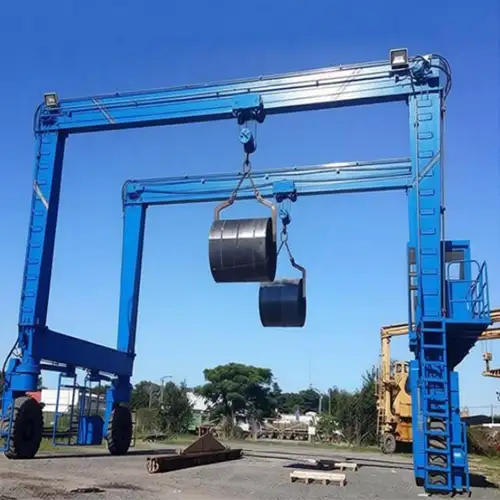
RTG Gantry Crane 10-500 Ton for Steel Industry Material Handling
10 ton to 500 ton heavy-duty rubber tyred gantry cranes for steel coils, slabs, billets, beams, pipes, & oversized steel structures. Get your rtg crane!
| Crane Type | Rubber Tyred Wheeled RTG Gantry Cranes - Heavy-duty rubber-tyred gantry crane, typically double-girder for higher-capacity applications; 10–500 ton capacity; wire rope hoist or open winch;with diesel-electric or hybrid RTG options available. |
| Crane Capacity | 10–500 ton; higher capacities available for specialized heavy steel handling and oversized structures. |
| Span Length | Typically 10–35 m; customized according to yard width, storage layout, roadway arrangement, and required handling coverage. |
| Lifting Height | Typically 6–20 m; customized according to material stacking height, vehicle loading requirements, and site clearance. |
| Coverage Area Type | Steel yards, coil and billet storage areas, fabrication yards, loading zones, production areas, warehouses, and open-air material storage zones. |
| Application | Steel coil, slab, billet, beam, pipe, plate, scrap steel, machinery, and oversized steel structure handling in steel mills, yards, fabrication plants, warehouses, and outdoor storage areas. |
| Certifications | CE / ISO / SGS / Other third-party inspection |
| Customization | Customized capacity, span, lift, duty class, single- or double-girder structure, wire rope hoist or open winch, diesel-electric or electric drive, controls, and lifting devices, ie., C-hooks, clamps, magnets, grabs, and spreaders. ISO A4–A8 / FEM 2M–5M ; |
Crane Manufacturer: Yuantai Cranes – 30+ Years Professional Crane Manufacturer from China
Category: Steel
Tags: steelmillcrane,rtgcrane
Your Trusted RTG Gantry Crane Manufacturer & Supplier
Rubber Tyred Gantry Crane (RTG Crane)
for Steel Industry Material Handling
10 Ton to 500 Ton +Heavy-Duty Yard Crane Solutions for Steel Coils, Slabs, Billets, Beams, Pipes & Oversized Steel Structures
Heavy-duty rubber tyred gantry crane (RTG crane) for steel industry material handling. Ideal for steel coils, slabs, billets, beams, pipes, and oversized steel structures. Typical capacity ranges from 10 to 500+ tons for flexible and efficient steel yard logistics.
Core Selling Points of RTG Cranes for Steel Handling
Rail-Free Flexible Movement
The RTG crane moves on rubber tires, so it does not need fixed rails. This allows the crane to move freely around steel yards, storage areas, and fabrication plants. It also reduces installation costs and makes yard layout changes easier in the future.
Heavy-Duty Steel Handling
RTG cranes are built for lifting heavy steel materials such as steel coils, slabs, billets, beams, pipes, and large steel structures. The strong steel structure and stable lifting system make them suitable for continuous heavy-duty operation.
Designed for Outdoor Steel Yards
RTG cranes work well in outdoor environments such as steel storage yards and fabrication areas. They can transport materials over long distances and cover large working areas efficiently. Optional windproof and anti-corrosion protection are available for harsh environments.
Flexible Multi-Directional Steering
The crane can move in different directions, including straight travel, 90-degree steering, diagonal movement, and 360-degree rotation. This helps improve movement flexibility, especially when handling long steel products in limited spaces.
Customized for Different Steel Handling Needs
Each RTG crane can be customized based on your lifting capacity, span, lifting height, steering mode, power supply, and working environment. Different lifting tools such as coil clamps, C-hooks, spreader beams, and magnets can also be provided for different steel products.
Your Trusted Rubber Tyred Gantry Crane Manufacturer & Supplier
RTG Gantry Cranes for Sale
TYPES OF RUBBER TYRED GANTRY CRANES FOR STEEL HANDLING
Common Types of RTG Gantry Cranes
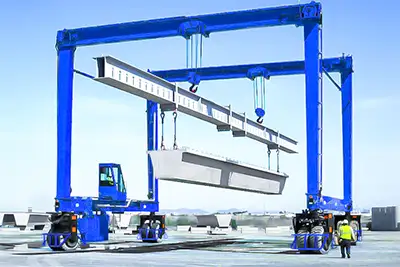
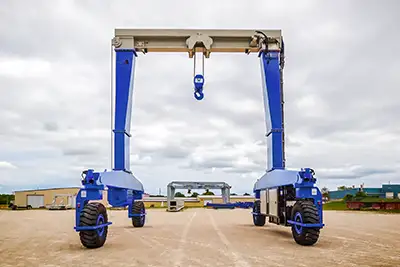
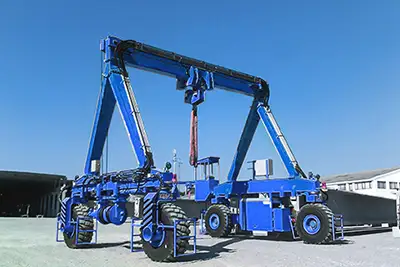
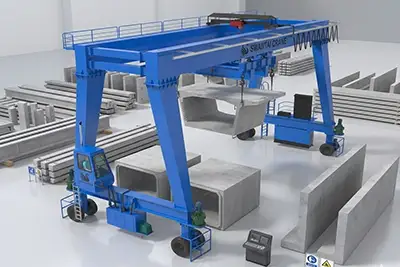
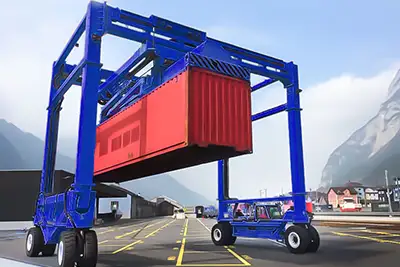
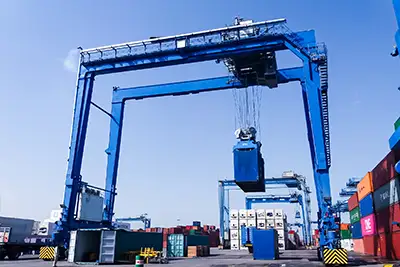
HOT Sale Types of RTG Gantry Cranes
Rubber tyred gantry cranes (RTG cranes) used in steel yards are not one fixed design. They are built in different structures depending on lifting weight, material type, yard space, and working conditions. In steel plants, choosing the right RTG crane type is important because each layout has different handling needs.
Single Girder RTG Crane
A single girder RTG crane uses one main beam structure. It is a simpler design, usually applied in light to medium steel handling tasks where extreme lifting capacity is not required.
This type is often chosen by smaller steel yards or workshops that handle moderate volumes of steel materials and want a more economical solution.
Best For
- Light-duty steel handling work
- Small or medium-sized steel storage yards
- Projects with limited budget
- Short-distance material transfer
- Basic loading and unloading operations
Capacity Range
- 5 ton to 32 ton
- Suitable for light steel coils, small bundles, and general fabrication materials
Advantages
- Lower initial investment cost
- Simple structure and easier installation
- Less maintenance effort required
- Suitable for basic steel yard operations
- Flexible for small-scale material handling
Double Girder RTG Crane
A double girder RTG crane uses two main beams, which provides higher strength and better stability. It is widely used in steel mills and large fabrication yards where heavy materials and continuous operation are required.
This type is the most common choice for industrial steel handling applications.
Best For
- Heavy-duty steel handling operations
- Large steel storage yards
- High working frequency environments
- Long-distance yard transport
- Large-scale steel production facilities
Capacity Range
- 32 ton to 500 ton+
- Suitable for steel coils, slabs, beams, pipes, and large structural components
Advantages
- Higher lifting capacity for heavy steel products
- Improved structural stability during operation
- Better load distribution for large materials
- Larger lifting height options available
- Suitable for continuous industrial use
U-Type RTG Crane
The U-type RTG crane is designed with a large clearance space between the legs. This allows long or oversized steel materials to pass through the crane structure without obstruction.
It is often used in steel yards where pipe bundles, beams, or long structural materials are handled frequently.
Best For
- Long steel product handling
- Pipe and beam transport
- Oversized steel structures
- Yard areas requiring vehicle or load pass-through
- Flexible material movement zones
Features
- Large open clearance under the crane
- Wide working and transport space
- Suitable for long and irregular materials
- Easier handling of bundled or extended loads
- Improved yard accessibility
A-Type RTG Crane
The A-type RTG crane is a general-purpose design commonly used in steel yards. Its structure is simpler compared to U-type or double girder designs, but it still provides stable performance for everyday steel handling tasks.
It is often used in outdoor storage areas where flexibility and cost efficiency are important.
Best For
- General steel yard operations
- Outdoor material handling
- Multi-purpose lifting tasks
- Steel storage and dispatch yards
- Standard fabrication plant use
Features
- Stable and balanced structure
- Simple and practical design
- Cost-effective manufacturing and installation
- Reliable performance for general use
- Easy to maintain in daily operation
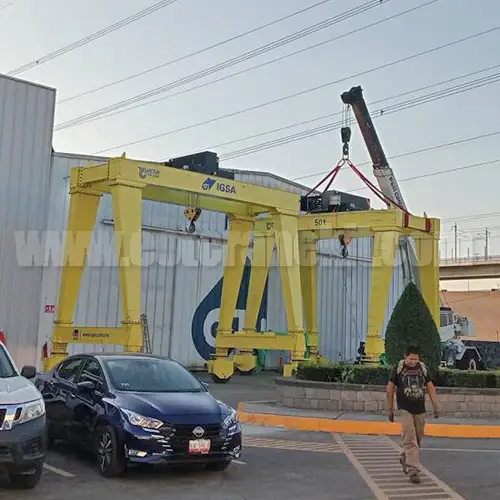
Suggested Technical Specification Table
| Item | Typical Range |
|---|---|
| Capacity | 5 ton – 500 ton |
| Span | 10m – 40m |
| Lifting Height | 6m – 30m |
| Travel Speed | Customized |
| Steering Type | Straight / 90° / 360° |
| Power Supply | Diesel / cable reel / hybrid |
| Working Duty | A5 – A8 |
| Control Method | Cabin / remote / automatic |
Your Trusted Rubber Tyred Gantry Crane Manufacturer & Supplier
RTG Gantry Crane for Sale
WHY RTG CRANES ARE USED IN THE STEEL INDUSTRY
Steel Industry Material Handling Challenges
Steel mills and steel fabrication plants handle some of the heaviest and longest materials used in industrial production. Daily material movement is not just about lifting weight. The real challenge is moving steel products safely, efficiently, and continuously across large working areas. In many steel plants, materials move between cutting lines, rolling mills, storage yards, welding stations, loading areas, and outdoor stock zones all day long. Sometimes the transport distance is short. Sometimes it is several hundred meters across the yard. That is where the handling system becomes very important.
Extremely Heavy Steel Loads
Steel products are often lifted in large quantities or oversized sections. A single steel coil, slab, or fabricated structure can easily weigh tens of tons.
Common heavy materials include:
- Steel coils
- Steel slabs
- Billets and blooms
- Structural steel beams
- Pipe bundles
- Bridge steel sections
- Large fabricated steel modules
In some steel yards, handling equipment may operate continuously under full load conditions. Because of this, the crane structure, wheel system, lifting mechanism, and steering system all need to support high working duty operation.
Long and Oversized Material Dimensions
Many steel products are not only heavy but also very long. This creates additional transport and lifting challenges.
For example:
- Long steel beams may require stable synchronized movement
- Pipe bundles can swing during transport
- Large fabricated structures need wide clearance space
- Long steel plates may bend if lifting points are not properly designed
Handling long materials inside narrow steel yards can be difficult. Turning space is often limited. Fixed rail systems may not provide enough movement flexibility.
Outdoor Steel Yard Environments
A large part of steel storage and transfer work takes place outdoors. Materials are stored in open yards before processing, shipment, or fabrication.
Outdoor operation means the equipment must handle:
- Rain and humidity
- Wind loads
- Dust and dirt
- Uneven ground conditions
- High and low temperatures
- Long travel distances
In coastal or humid areas, corrosion protection also becomes an important factor for steel handling equipment.
Frequent Material Transfer Between Work Areas
Steel products are usually moved many times during production.
For example:
- From raw material storage to processing lines
- From rolling mills to cooling areas
- From fabrication workshops to outdoor yards
- From storage areas to trucks or trailers
This creates high-frequency handling requirements. The crane may need to operate continuously throughout the shift with minimal downtime.
For many steel plants, slow material transfer directly affects production efficiency.
Need for Flexible Transport Routes
Steel yards do not always have fixed transport paths. Storage layouts often change depending on production schedules, project size, or material type.
Some yards may handle:
- Long steel beams one day
- Pipe bundles the next day
- Large fabricated structures the following week
Because of this, many steel plants need flexible movement instead of fixed rail systems.
Limited Yard Space
Steel fabrication plants and storage yards often try to maximize storage capacity within limited ground space.
This creates challenges such as:
- Narrow transport lanes
- Limited turning areas
- Closely stacked materials
- Shared vehicle and crane movement zones
Large steel products still need to move safely through these areas without damaging nearby materials.
High Working Duty Requirements
Steel production is rarely low-frequency work. Material handling equipment often runs for long hours every day.
Typical operating conditions may include:
- Multiple lifting cycles per hour
- Continuous outdoor movement
- Heavy-load transport
- Repetitive loading and unloading
- Multi-shift operation
This requires a heavy material handling crane with stable travel performance and reliable mechanical systems.
Why Choose Rubber Tyred Gantry Cranes for Steel Handling
A rubber tyred gantry crane, also called an RTG crane, is widely used in steel yards because it provides flexible movement without the need for fixed rails. Compared with rail-mounted systems, the rubber tyred gantry crane can move more freely across different work areas. This is especially useful for steel plants where yard layouts and material storage positions change regularly.
Flexible Movement for Complex Steel Yards
An RTG crane moves on rubber tires instead of rail tracks. The crane can travel directly to different storage zones, loading areas, and fabrication sections.
This helps improve material transfer efficiency in large steel yards.
Depending on the design, the crane may support:
- Straight travel
- 90-degree steering
- Diagonal movement
- Multi-directional steering
- 360-degree rotation
This flexibility is useful when handling long steel beams, pipe bundles, and oversized fabricated structures.
For steel plants with changing layouts, a mobile gantry crane for steel handling is often easier to use than a fixed rail system.
Reduced Infrastructure Cost
Rail-mounted cranes require rail installation, foundation work, alignment adjustment, and long travel track construction.
A rubber tyred gantry crane for steel yard operation does not require this type of fixed infrastructure.
This can help reduce:
- Civil construction work
- Rail installation cost
- Foundation preparation
- Future modification expenses
For outdoor steel yards, especially large storage areas, this can simplify project planning.
Easier Expansion of Steel Storage Yards
Steel production capacity often changes over time. Storage areas may expand as the business grows.
A wheel mounted gantry crane provides more flexibility for future yard expansion because the crane is not limited by fixed rails.
New storage areas can usually be added more easily without rebuilding an entire rail system.
Better Adaptation to Changing Plant Layouts
In steel fabrication plants, material flow may change depending on production requirements.
For example:
- New welding stations may be added
- Storage locations may shift
- Transport routes may be adjusted
- Different steel products may require different handling paths
A steel handling gantry crane with rubber tires can adapt more easily to these layout changes.
That is one reason why many steel plants use RTG cranes for outdoor steel logistics and material transfer.
Suitable for Long and Oversized Steel Products
Long steel products are difficult to transport using fixed lifting systems alone.
An outdoor steel yard crane with flexible steering can handle:
- Long structural beams
- Pipe bundles
- Large fabricated steel sections
- Bridge components
- Heavy steel frames
The crane can move materials across the yard while maintaining stable lifting and transport performance.
For many heavy-duty applications, the RTG crane works as both a lifting system and a mobile yard crane for steel logistics.
Your Trusted Rubber Tyred Gantry Crane Manufacturer & Supplier
RTG Gantry Crane for Sale
STEEL PRODUCTS HANDLED BY RTG CRANES
RTG Crane for Steel Coil Handling
Steel coils are one of the most common materials handled in steel mills, service centers, and steel storage yards. These coils are heavy, compact, and often stored in large outdoor areas where flexible movement is important. A steel coil handling RTG crane is widely used for transporting coils between storage zones, processing workshops, truck loading areas, and production lines. Compared with fixed rail systems, the rubber tyred gantry crane provides more flexibility for changing yard layouts and different coil storage arrangements. In many steel plants, coils may need to be moved several times before final shipment. So the crane is not only lifting the load. It also plays an important role in daily steel yard logistics.
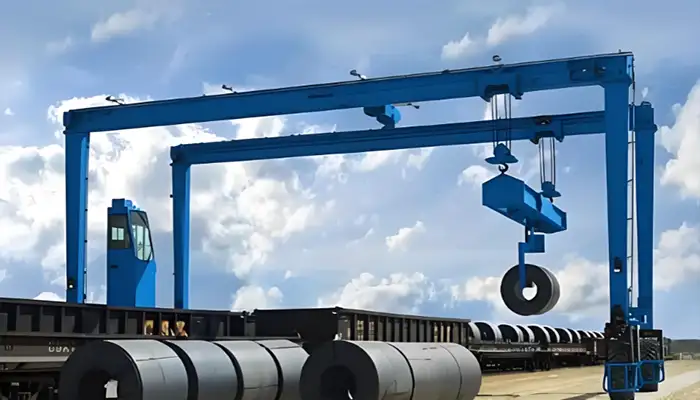
Common Applications of RTG Cranes for Steel Coil Handling
RTG cranes are commonly used in both indoor and outdoor coil handling areas. The crane can travel across large storage yards while carrying heavy steel coils safely and efficiently.
Typical applications include:
- Steel coil storage yards
- Outdoor coil stock areas
- Coil transfer between workshops
- Coil loading and unloading operations
- Truck and trailer loading
- Railway cargo handling
- Coil stacking operations
- Steel service centers
- Coil processing plants
In some facilities, the RTG crane also works together with forklifts, transfer carts, or automated warehouse systems to improve material flow efficiency.
Typical Coil Handling Methods
Different steel coils require different lifting tools depending on the coil size, surface condition, weight, and storage method.
C-Hook Lifting
C-hooks are widely used for horizontal coil handling. They are suitable for fast lifting operations and frequent material transfer.
Advantages include:
- Fast loading and unloading
- Simple structure
- Good lifting efficiency
- Suitable for large coil quantities
Coil Clamps
Coil clamps are used when surface protection and stable gripping are important.
They are often selected for:
- Cold rolled steel coils
- Coated steel coils
- Stainless steel coils
- High-value steel products
An RTG crane with coil clamp can help reduce coil surface damage during lifting and transport.
Electromagnetic Lifting Devices
Electromagnetic lifting systems are sometimes used for certain steel coil applications where quick attachment and release are needed.
They are more common in:
- Hot rolled coil handling
- High-frequency transfer operations
- Automated steel yard systems
However, power supply stability and safety backup systems are usually important considerations when using electromagnetic lifting devices.
Operational Challenges in Steel Coil Handling
Handling steel coils is not always simple. Even though the load shape looks compact, coil handling creates several practical operational challenges.
Preventing Coil Surface Damage
Many steel coils, especially coated or finished products, require careful handling to avoid scratches, dents, or edge damage.
The lifting attachment, travel speed, and crane stability all affect product protection.
Important factors include:
- Smooth lifting and lowering
- Stable travel movement
- Proper clamp pressure
- Anti-sway control
- Accurate positioning
For high-value steel products, surface protection can directly affect product quality.
Maintaining Stable Transport
Steel coils are heavy concentrated loads. During movement, sudden acceleration or uneven ground conditions may create load swing or unstable travel.
A rubber tyred gantry crane for steel coil transport usually requires:
- Stable wheel drive systems
- Smooth steering control
- Variable frequency drive (VFD) systems
- Anti-sway technology
- Proper load balancing
This becomes more important when transporting coils across long outdoor travel routes.
Narrow Aisle Movement in Coil Yards
Many coil yards try to maximize storage capacity. As a result, the travel lanes between stored materials may become narrow.
A mobile gantry crane for coil handling helps improve movement flexibility because it can operate without fixed rails.
Depending on the design, the crane may support:
- Straight travel
- 90-degree steering
- Multi-directional movement
- Diagonal travel
This helps improve maneuverability in limited working areas.
Heavy Coil Handling Requirements
Steel coils can range from a few tons to several dozen tons per coil. In large steel mills, handling equipment may operate continuously throughout the day.
Because of this, the RTG crane structure and travel system need to support:
- High working duty
- Continuous operation
- Heavy-load travel
- Frequent lifting cycles
- Outdoor steel yard conditions
For heavy-duty steel logistics, many plants choose a double girder rubber tyred gantry crane for better lifting stability and larger capacity ranges.
RTG Crane for Steel Slab Handling
Steel slabs are among the heaviest and most demanding materials handled in steel mills. They are usually produced in hot rolling processes and then transferred to storage yards or downstream processing areas. In many plants, slabs are not only heavy but also still carry high temperatures during handling, which places additional requirements on the lifting equipment. A slab handling RTG crane is commonly used in steel yards where flexibility, high load capacity, and stable movement are required. Compared with fixed rail systems, the rubber tyred gantry crane allows easier movement across large outdoor slab storage areas and adapts better to changing production flow. In daily operation, slab handling is usually continuous and time-sensitive. Smooth transport between rolling mills, cooling zones, and storage yards directly affects overall production efficiency.
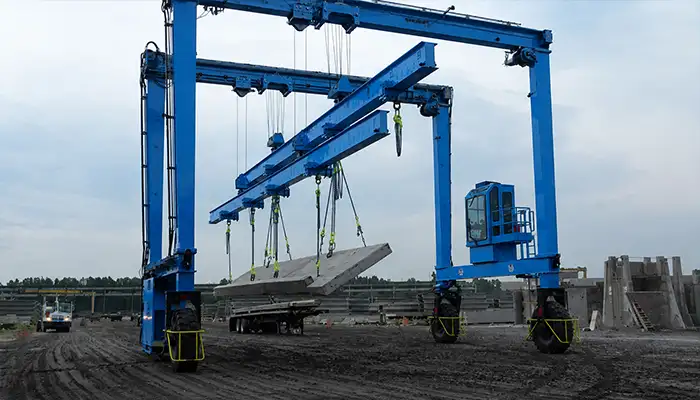
Common Applications of RTG Cranes for Slab Handling
RTG cranes are widely used in steel production facilities where slabs need to be moved quickly and safely across different working zones.
Typical applications include:
- Hot slab storage yards
- Slab transfer from rolling mills
- Cooling bed to storage transport
- Outdoor slab stacking operations
- Slab loading for shipping or further processing
- Heavy slab movement between production stages
- Large steel mill yard logistics
In many steel plants, slabs are stored in large open yards. The RTG crane helps organize storage space and improves movement between different slab batches.
Operational Requirements for Steel Slab Handling
Handling steel slabs is different from general material handling. The load is extremely heavy, and in many cases, the slab temperature is still high after production. This requires a more stable and robust crane system.
High Load Capacity Requirement
Steel slabs can weigh several tons each, and in some large steel mills, a single slab may reach very high tonnage levels.
Because of this, a steel slab gantry crane must be designed for:
- High lifting capacity
- Stable structural support
- Strong wheel load distribution
- Continuous heavy-duty operation
In many cases, heavy-duty RTG cranes for slab handling are selected to ensure safe and stable performance under full load conditions.
Heat-Resistant Working Design
In hot rolling mills, slabs may still be at elevated temperatures during transfer. Even during cooling stages, residual heat can affect nearby equipment.
A rubber tyred gantry crane for steel slabs may include:
- Heat-resistant steel components
- High-temperature protective coatings
- Heat insulation for electrical systems
- Safe distance control between slab and crane structure
This helps ensure stable operation in metallurgical environments.
Stable Lifting and Transport
Slabs have large surface areas and heavy weight distribution. Any instability during lifting or movement can affect safety and material quality.
Key requirements include:
- Smooth lifting and lowering motion
- Anti-sway control system
- Accurate positioning during stacking
- Stable braking system during travel
- Controlled acceleration and deceleration
Stable handling is especially important when moving slabs between storage rows or loading areas.
Long-Distance Movement in Steel Yards
Steel slab yards are often large and open, with long travel distances between storage zones, production lines, and shipping areas.
An outdoor slab yard crane must be able to:
- Travel long distances across the yard
- Handle uneven material distribution
- Operate in open-air environments
- Maintain stable performance over repeated cycles
This is where a mobile gantry crane design becomes practical, especially when flexibility is needed in yard planning or expansion.
RTG Crane for Billet & Bloom Handling
Billets and blooms are semi-finished steel products that move directly from casting to rolling mills or storage yards. In many steel plants, they are handled in large quantities and require fast, repeated transfer between different production stages. The handling process is continuous, and delays can easily affect downstream rolling operations. A billet handling RTG crane is commonly used in steel yards and rolling mill areas where materials need to be moved quickly and repeatedly. Compared with fixed rail systems, the rubber tyred gantry crane gives more freedom to adjust movement paths and storage layouts, especially when production schedules change. In real steel production flow, billets and blooms are often handled in batches. This means the crane must support frequent lifting cycles with stable and consistent performance.
Common Applications of RTG Cranes for Billet & Bloom Handling
RTG cranes are widely used in steel plants where semi-finished steel products are stored, transferred, and prepared for rolling processes.
Typical applications include:
- Billet storage yards
- Bloom storage and transfer areas
- Rolling mill feeding operations
- Continuous casting to storage transport
- Billet bundle stacking and sorting
- Bloom loading for downstream processing
- Inter-yard material transfer in steel mills
In many steel plants, billets are grouped in bundles, which increases handling efficiency but also requires stable lifting and careful positioning during transport.
Operational Requirements for Billet & Bloom Handling
Billet and bloom handling is not only about lifting weight. The main challenge is keeping materials stable during repeated and fast transport cycles.
High-Frequency Operation
In rolling mills, billets and blooms are handled continuously throughout the production shift. The crane often operates in repetitive cycles with short intervals between lifts.
This requires:
- Stable drive system for continuous movement
- Fast lifting and lowering response
- Reliable braking performance
- Low maintenance downtime
- Smooth operation under frequent start-stop conditions
A mobile gantry crane for blooms is often preferred in such environments because it can move quickly between storage and feeding areas.
Long Material Stability
Although billets are smaller than slabs, they are often handled in bundles or long stacked groups. Blooms can also be long and unstable during transport if not properly balanced.
Key stability requirements include:
- Secure lifting attachment (hooks or clamps)
- Balanced load distribution during lifting
- Controlled movement speed
- Anti-sway protection during travel
- Proper stacking alignment in storage yards
Even small movement instability can cause misalignment or safety risks during stacking operations.
Fast Transfer Efficiency in Steel Rolling Mills
Steel rolling mills depend on a continuous supply of billets and blooms. Any delay in material transfer can slow down production lines.
An RTG crane for billet transport is expected to:
- Move materials quickly between zones
- Reduce waiting time between production steps
- Improve yard-to-mill feeding efficiency
- Support continuous rolling operations
This is especially important in high-output steel plants where production runs 24 hours with minimal interruption.
RTG Crane for Structural Steel & Beam Handling
Structural steel and long beams are widely used in construction, bridge projects, and large fabrication works. These materials are usually long, heavy, and difficult to move in tight yard spaces. In many fabrication plants, they are also stored outdoors before delivery to job sites, which makes flexible handling equipment very important. A beam handling RTG crane is commonly used in steel fabrication yards where long structural members need to be moved between cutting, welding, assembly, and storage areas. The rubber tyred gantry crane allows operators to transport these long materials across different zones without being restricted by fixed rail paths. In practical operation, structural steel handling is not only about lifting weight. It is also about keeping long materials stable during movement and positioning them accurately for assembly or shipment.
Common Applications of RTG Cranes for Structural Steel & Beam Handling
RTG cranes are widely used in fabrication and construction-related steel processing facilities where long and oversized steel components are handled every day.
Typical applications include:
- Structural steel fabrication plants
- Bridge beam handling and storage yards
- Long steel section transfer between workshops
- Heavy steel frame assembly areas
- Prefabricated building structure handling
- Steel column and girder movement
- Outdoor storage and dispatch yards
In many projects, steel beams are transported multiple times during fabrication. The RTG crane helps reduce manual handling and improves movement efficiency across large working areas.
Handling Challenges in Structural Steel Transport
Structural steel is different from compact loads like coils or billets. The main difficulty is not only weight, but also length and balance.
Long Load Stability
Steel beams and structural sections can be several meters long. During lifting and transport, even small movement can create swinging or bending stress.
To handle this properly, the crane must ensure:
- Even lifting point distribution
- Stable travel speed control
- Anti-sway operation during movement
- Proper support for long load center balance
- Careful placement during stacking or loading
A mobile gantry crane for long steel handling is often preferred because it provides better control during movement across wide yards.
Synchronized Lifting for Large Steel Structures
Some structural steel components require lifting at multiple points at the same time, especially when handling large frames or bridge sections.
This requires:
- Dual or multi-hook lifting systems
- Synchronized hoisting control
- Balanced load distribution between lifting points
- Precise coordination during lifting and lowering
In fabrication plants, this helps reduce deformation risk and improves assembly accuracy.
Large-Span Transport Requirements
Structural steel handling often involves long travel distances across fabrication yards. Materials may need to move between cutting areas, welding stations, assembly zones, and storage yards.
A structural steel gantry crane is designed to:
- Cover wide working spans
- Move long materials across multiple zones
- Operate in outdoor and semi-outdoor environments
- Handle irregular yard layouts
This flexibility is important in large fabrication facilities where production flow changes based on project demand.
Outdoor Handling Conditions
Many structural steel components are stored or processed outdoors due to their size. This exposes the crane to environmental conditions such as wind, rain, and temperature changes.
Key requirements include:
- Strong wind resistance design
- Corrosion protection for steel structures
- Stable travel performance on outdoor ground
- Reliable braking system for sloped or uneven surfaces
These features help ensure stable operation in real fabrication yard environments.
RTG Crane for Pipe & Tube Handling
Steel pipes and tubes are widely used in construction, energy projects, shipbuilding, and infrastructure works. They are usually stored in long bundles or stacked layers, which makes handling more complex than compact materials. The main difficulty is not only lifting the weight, but also keeping the pipes stable during movement. A pipe handling RTG crane is commonly used in pipe manufacturing plants and steel storage yards where long pipe bundles need to be moved between storage areas, loading zones, and processing lines. The rubber tyred gantry crane is especially useful here because it can travel freely across large yards without being limited by fixed rails. In many pipe yards, materials are frequently loaded and unloaded for shipment. So the crane needs to support stable, repeated, and safe transport throughout the day.
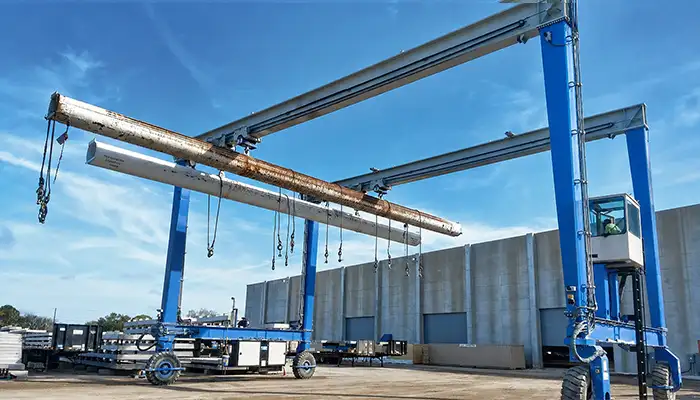
Common Applications of RTG Cranes for Pipe & Tube Handling
RTG cranes are widely used in facilities where steel pipes and tubes are produced, stored, and shipped in bulk quantities.
Typical applications include:
- Steel pipe storage yards
- Pipe manufacturing plants
- Tube production and processing areas
- Pipe bundle transport between workshops
- Truck loading and unloading operations
- Port and logistics pipe handling yards
- Outdoor pipe stacking and sorting areas
In many steel pipe factories, materials are stored in layers or bundles. This requires careful lifting and controlled movement to avoid damage or deformation.
Operational Challenges in Pipe & Tube Handling
Pipe handling is different from block or coil handling. Because pipes are long and cylindrical, they can roll, shift, or become unstable during lifting if not properly controlled.
Pipe Rolling Prevention
One of the main challenges is preventing pipes from rolling during transport or storage.
To handle this properly, the system must ensure:
- Stable gripping or bundling before lifting
- Proper lifting point alignment
- Controlled movement without sudden acceleration
- Use of pipe-specific lifting attachments or slings
- Secure stacking methods in storage areas
A tube handling gantry crane is often equipped with special lifting tools to help keep pipes stable during transport.
Long Load Balance Control
Steel pipes are long and relatively flexible compared to solid steel blocks. During lifting, uneven force can cause bending or swinging.
To improve balance, the RTG crane system should provide:
- Multi-point lifting support for long bundles
- Smooth acceleration and deceleration
- Anti-sway control during travel
- Stable wheel drive system for long-distance movement
- Accurate positioning when placing materials
A mobile gantry crane for steel pipe transport is often used in large yards because it can maintain better control while moving across uneven or wide areas.
Bundle Stability During Transport
In most pipe yards, pipes are not handled individually. They are usually grouped into bundles, which increases efficiency but also creates stability challenges.
During handling, it is important to maintain:
- Tight and secure bundling before lifting
- Even weight distribution across the bundle
- Proper support points to avoid slipping
- Stable lowering during stacking operations
- Careful alignment when placing bundles on racks or ground supports
Even small movement imbalance can affect safety and cause material damage, especially in high-volume pipe handling operations.
MAIN ADVANTAGES OF RTG CRANES IN STEEL YARDS
Rubber tyred gantry cranes are widely used in steel yards because they fit real working conditions, not just fixed layouts. Steel plants often deal with changing storage positions, different material types, and long transport distances. In this kind of environment, flexibility matters as much as lifting capacity. Below are the main practical advantages observed in steel handling operations.
Rail-Free Flexible Operation
In many steel yards, storage layouts are not fixed. Materials may be moved depending on production schedules, shipment plans, or available space. A rail-free gantry crane allows the operator to adjust movement routes without being tied to permanent tracks.
This type of system moves freely across the yard, which makes it easier to handle different working zones in one operation. When storage areas change or expand, the crane can continue working without major structural modification. It simply adapts to the new layout.
In real steel yard operation, this flexibility is often the reason many plants choose a mobile RTG crane instead of a rail-based system.
Lower Infrastructure Cost
Steel projects often involve high construction costs, especially when installing fixed rail systems across large outdoor yards. Rail foundations, alignment work, and long track installation all add to the initial investment.
A no rail gantry crane avoids most of this infrastructure work. It runs directly on rubber tires over prepared ground, which reduces civil engineering requirements and shortens installation time.
For many steel plants, this also means easier future expansion. If the yard grows, new areas can be added without rebuilding the entire transport system. This makes it a practical option for projects that expect long-term development or changing layouts.
Large Outdoor Coverage Area
Steel storage yards are usually wide and open, sometimes covering several working zones at once. A rubber tyred gantry crane is designed to travel across these large areas and handle materials in different positions without interruption.
Instead of being limited to a fixed rail line, the crane can move between storage rows, loading zones, and processing areas. This improves material circulation in daily operations and helps reduce unnecessary handling steps.
In outdoor steel yard operations, this type of system is often used as the main yard handling equipment because it can cover wide working ranges and support continuous material transfer.
Handling Long & Oversized Steel Products
Steel materials are not always compact. Many products, such as beams, pipes, and structural sections, are long and difficult to move using standard lifting equipment. In some cases, the load length is more challenging than the weight itself.
A mobile gantry crane is commonly used for these situations because it can travel with the load across open yard space while keeping movement stable. It is suitable for transporting long beams between fabrication areas or moving pipe bundles to storage zones.
The system is also used for oversized steel structures where balanced lifting and controlled transport are required. This helps reduce handling risk and improves overall yard efficiency, especially when dealing with mixed steel product types.
Multi-Directional Steering Capability
Steel yards are not always designed with straight transport paths. Storage racks, material stacks, and working zones can create narrow or complex movement routes. A flexible steering system helps the crane operate in these conditions.
Depending on the configuration, the crane can move in different directions, including straight travel, turning at angles, diagonal movement, or full rotation on site. This allows operators to adjust movement according to real yard conditions instead of being limited by a fixed path.
In practice, a steering gantry crane is especially useful in busy steel yards where multiple materials and vehicles share the same working space. It improves maneuverability and helps the crane reach different areas without additional handling equipment.
TECHNICAL FEATURES OF STEEL HANDLING RTG CRANES
Steel yard RTG cranes are not simple lifting machines. They work in outdoor yards, under heavy loads, and often for long hours every day. So the design is focused on one thing: stable work in real operating conditions. Below is a clearer breakdown of the main technical systems and what they actually do in daily use.
Heavy-Duty Steel Structure
This is the "body" of the crane. It carries everything.
- The main beams are made stronger with reinforced steel design
- Box girder structure is used to support heavy and long loads
- The structure is designed to reduce bending after long-term use
It is built to lift heavy steel every day without losing stability over time.
Hydraulic Steering System
This system controls how the crane turns and moves in the yard.
- Helps the crane turn smoothly in different directions
- Makes positioning easier when placing steel materials
- Allows tighter turning in narrow storage areas
It lets the crane move like a vehicle, not just straight lines.
Multi-Wheel Drive System
The crane runs on many wheels, not just a few.
- Load is shared across multiple wheels
- Reduces pressure on the ground surface
- Improves grip on outdoor yard conditions
- Keeps movement stable under heavy loads
Heavy steel is spread evenly, so the crane moves more smoothly and safely.
Variable Frequency Drive (VFD)
This system controls speed during movement.
- Starts and stops smoothly
- Controls acceleration step by step
- Reduces sudden load swing
- Saves energy during operation
The crane does not jerk. It moves and stops in a controlled way.
Anti-Sway System
Steel loads can swing during movement, especially long or heavy ones.
- Reduces load swinging during travel
- Helps improve placement accuracy
- Makes lifting safer in busy steel yards
It keeps the load steady while the crane is moving.
Remote Control & Cabin Operation
Cabin Operation
- Operator sits in an elevated cabin
- Better view of large steel materials
- Useful for complex yard layouts
Remote Control
- Operator controls from the ground
- More flexible and mobile operation
- Reduces exposure to outdoor conditions
You can either drive it from above or control it from the ground.
Outdoor Protection Design
Steel yards are outdoor working environments, so protection matters.
- Strong wind-resistant structure
- Anti-corrosion treatment for long service life
- Rainproof electrical system design
- Suitable for dust and changing weather
It is made to work outside, not only in clean factory spaces.
High Temperature Protection
Some steel products are still hot during handling.
- Heat-resistant components in key areas
- Protection for electrical systems
- Suitable for steel mills and rolling mills
- Stable operation near high-temperature materials
It can work near hot steel without damage or interruption.
Your Trusted Rubber Tyred Gantry Crane Manufacturer & Supplier
RTG Gantry Crane for Sale
RTG CRANE APPLICATIONS IN THE STEEL INDUSTRY
Rubber tyred gantry cranes are used across different steel sectors, but each plant works in a different way. Some focus on continuous rolling production, some on storage and dispatch, and some on large fabrication or assembly work.
Because of this, RTG crane selection is never "one standard model." Buyers usually decide based on material type, lifting weight, yard layout, and daily handling frequency.
Below is a more practical, buyer-focused breakdown showing how RTG cranes are actually used in each sector, what matters in daily operation, and what configuration is commonly selected.
Steel Rolling Mills
Steel rolling mills run in a continuous flow. Materials move from casting → cooling → rolling → storage. The crane must keep up with this rhythm without delay.
What the RTG crane actually does
- Moves billets and blooms from casting bay to storage yard
- Transfers hot slabs to cooling or staging zones
- Feeds rolling lines when needed
- Clears finished semi-products quickly for next batch
In real operation, timing matters more than anything. If the crane is slow, the production line slows down. The RTG crane becomes part of the production rhythm, not just a lifting tool.
What steel mill buyers usually care about
- Can it handle hot materials safely?
- Can it work continuously in multiple shifts?
- Is travel speed stable over long distance yards?
- Will it support future production expansion?
In most steel mills, buyers are not only selecting a crane. They are selecting a long-term production support system that must stay reliable under constant load conditions.
Typical RTG crane configuration
- Double girder RTG crane (heavy industrial type)
- High duty class (A6–A8) for continuous work
- Cabin + remote control (dual operation for flexibility)
- Hydraulic or electric steering system
- Heat protection package for slab/billet areas
- Anti-sway control for stable long travel
This configuration is commonly used in steel rolling environments where high-frequency lifting and long travel distances are required. It is designed for stability first, then speed.
Typical capacity range
- 50–200 tons (general rolling mills)
- 200–300+ tons (large slab yards and heavy steel plants)
Capacity selection is usually based on the heaviest single piece plus future production growth margin, not just current daily needs.
Steel Coil Storage Yards
Coil yards are more about organization and fast movement, not just heavy lifting. Many coils are high-value products, so surface protection is important.
What the RTG crane actually does
- Loads and unloads trucks
- Transfers coils between storage rows
- Sorts coils by size, grade, or order
- Feeds processing lines or service centers
The crane may move hundreds of coils per day in busy yards. In this environment, speed, accuracy, and surface protection all work together to maintain production efficiency.
What coil yard buyers usually care about
- Will the coil surface be damaged during lifting?
- Can it work in narrow storage lanes?
- Is handling fast enough for high turnover?
- Can one crane handle different coil sizes?
For coil yard buyers, the key focus is not only capacity, but also control precision and product protection during every movement cycle.
Typical RTG crane configuration
- Single or double girder RTG crane
- Coil clamp system or C-hook lifting device
- VFD control for smooth start/stop
- Anti-sway system (very important for coils)
- Remote control operation (common in coil yards)
- Compact steering design for narrow aisles
This configuration helps reduce coil damage risk while maintaining fast and stable material flow in high-frequency storage and dispatch operations.
Typical capacity range
- 20–80 tons (standard coil yards)
- 80–120 tons (heavy coil service centers)
Capacity is usually selected based on maximum coil weight plus handling method (C-hook or clamp), and future expansion requirements of the coil yard.
Structural Steel Fabrication Plants
Fabrication plants deal with long and irregular steel pieces. The challenge is not only weight, but also length and balance.
What the RTG crane actually does
- Moves steel beams between cutting and welding stations
- Transfers fabricated structures to assembly zones
- Loads finished steel frames for transport
- Handles mixed-size structural components
In many plants, materials change daily based on project orders. The crane must therefore adapt quickly to different load sizes, shapes, and handling routes.
What fabrication buyers usually care about
- Can it handle long beams without swinging?
- Is positioning accurate for assembly work?
- Can it adapt to different project layouts?
- Will it support outdoor + indoor movement?
For fabrication buyers, accuracy is as important as capacity. Even small positioning errors can affect welding alignment and final assembly quality.
Typical RTG crane configuration
- Double girder RTG crane with wide span
- Multi-point lifting beam (for long structures)
- Anti-sway system (essential for beam stability)
- Synchronized lifting control option
- Cabin + remote operation
- Flexible yard travel steering system
This configuration supports both precision handling and wide-area movement, especially in large fabrication yards with constantly changing project requirements.
Typical capacity range
- 50–200 tons (standard fabrication plants)
- 200–300+ tons (bridge steel or large structure projects)
Capacity selection depends on the longest and heaviest structural component, not only average daily workload, especially in bridge and heavy construction projects.
Pipe Manufacturing Plants
Pipe plants work with long cylindrical materials, usually grouped into bundles. Stability is the key concern.
What the RTG crane actually does
- Transfers pipe bundles from production line to yard
- Loads trucks or rail wagons
- Sorts pipes by diameter and specification
- Organizes storage stacks in outdoor yards
In pipe manufacturing plants, material flow is continuous and high-volume, so the crane must support fast turnover while keeping bundles stable during every transfer cycle.
What pipe plant buyers usually care about
- Will pipes roll during lifting?
- Can bundle lifting stay stable?
- Is movement smooth for long loads?
- Can it handle large batch production?
For pipe plant buyers, safety and stability are more important than speed alone, because pipe bundles can easily shift if handling is not properly controlled.
Typical RTG crane configuration
- Double girder RTG crane
- Pipe bundle lifting sling or clamp system
- Stable VFD control system
- Multi-wheel drive for even load distribution
- Remote control for flexible operation
- Optional anti-rolling guides
This configuration is designed to maintain balance during long-distance transport and reduce pipe rolling risk in outdoor yard operations.
Typical capacity range
- 30–100 tons (standard pipe plants)
- 100–150 tons (large diameter pipe production)
Capacity is usually determined by maximum bundle weight and pipe length, especially in high-output pipe manufacturing lines where multiple bundles may be handled per cycle.
Shipyard Steel Storage Areas
Shipyards handle extremely large steel plates and welded sections. Conditions are harsh and loads are irregular.
What the RTG crane actually does
- Moves large steel plates
- Transfers ship sections and blocks
- Supplies assembly docks
- Handles outdoor storage logistics
In shipyards, materials are often oversized and irregular, so the crane must support both heavy lifting and precise positioning for assembly operations near docks and fabrication zones.
What shipyard buyers usually care about
- Can it resist coastal corrosion?
- Can it handle very large irregular shapes?
- Is wind resistance strong enough for open yards?
- Can it operate safely near water environments?
For shipyard buyers, environmental durability is as important as lifting capacity, since equipment must operate in coastal humidity, wind exposure, and long outdoor working cycles.
Typical RTG crane configuration
- Heavy-duty double girder RTG crane
- Strong anti-corrosion coating system
- High wind resistance structure
- Large span for oversized components
- Cabin operation for better visibility
- Heavy-duty braking system
This configuration is designed for harsh marine environments where stability, safety, and long-term corrosion resistance are critical requirements.
Typical capacity range
- 80–300 tons (standard shipyards)
- 300–500 tons (large shipbuilding yards)
Capacity selection in shipyards is driven by maximum block or section weight, plus additional safety margin for wind load and irregular lifting conditions.
Bridge Steel Component Handling
Bridge construction uses long girders and large prefabricated steel sections. Precision is very important. In real project conditions, these components are not only heavy but also extremely long, which makes stability and alignment control critical during every lifting and movement stage.
What the RTG crane actually does
- Moves bridge girders in fabrication yards
- Loads long steel sections for transport
- Handles assembly stage components
- Temporary storage of bridge structures
In bridge projects, components often pass through multiple handling stages before final installation. The RTG crane ensures smooth transfer between fabrication, staging, and loading areas without damaging structural alignment.
What bridge project buyers usually care about
- Can it lift long beams without bending stress?
- Is synchronized lifting available?
- Can it position accurately for assembly?
- Is safety control reliable for heavy components?
For bridge construction buyers, precision is as important as lifting capacity. Even small deflection or misalignment can affect installation accuracy and structural safety during assembly.
Typical RTG crane configuration
- Heavy-duty double girder RTG crane
- Multi-point lifting beam system
- Synchronized hoisting control
- Anti-sway + precision positioning system
- Wide span and long travel design
- Dual control mode (cabin + remote)
This configuration is designed to support long-span lifting with strict positioning accuracy, especially in bridge fabrication yards where assembly tolerance is very limited.
Typical capacity range
- 100–400 tons (standard bridge projects)
- 400–500+ tons (large infrastructure projects)
Capacity selection is based on the heaviest bridge girder segment plus safety margin for lifting dynamics, wind load, and multi-point lifting configuration requirements.
Outdoor Steel Warehouses
Steel warehouses are focused on storage and fast dispatch. Many different steel types are handled in one place. In real operation, efficiency and organization are more important than complex lifting modes, because materials must be constantly received, sorted, and shipped.
What the RTG crane actually does
- Loads and unloads incoming steel deliveries
- Sorts mixed steel materials
- Stacks products efficiently in storage areas
- Prepares materials for shipping
The crane supports continuous logistics flow in the warehouse, helping reduce manual handling and improving turnaround speed for incoming and outgoing steel shipments.
What warehouse buyers usually care about
- Can one crane handle multiple steel types?
- Is operation fast enough for daily dispatch?
- Can it adapt to changing storage layouts?
- Is maintenance simple for continuous use?
For warehouse operators, flexibility and uptime are critical. The crane must remain reliable under frequent start-stop cycles and changing material types.
Typical RTG crane configuration
- Single or double girder RTG crane
- General-purpose lifting attachments
- Moderate duty class (A5–A6)
- Remote control operation
- Flexible steering system for yard movement
This configuration is designed for high-frequency material handling in general steel warehouse environments where different product types are handled daily.
Typical capacity range
- 20–100 tons
Capacity selection depends on the maximum expected single lift weight and warehouse turnover requirements, especially when handling mixed steel inventories.
Modular Steel Structure Plants
These plants produce large prefabricated steel modules used in buildings, industrial units, and infrastructure projects. In real production environments, modules are often oversized, partially assembled, and irregular in shape, which makes stable lifting and precise positioning especially important.
What the RTG crane actually does
- Moves large prefabricated modules
- Transfers assembled steel frames
- Supports production line flow
- Loads finished modules for transport
The RTG crane plays a key role in keeping modular production continuous, ensuring that large assembled units move smoothly between fabrication, staging, and dispatch areas.
What modular plant buyers usually care about
- Can it handle very large assembled units?
- Is lifting stable for uneven loads?
- Can it match flexible production layout?
- Is precision enough for assembly alignment?
For modular plant buyers, stability and precision are critical because even small positioning errors can affect assembly accuracy of large prefabricated structures.
Typical RTG crane configuration
- Heavy-duty double girder RTG crane
- Wide span + long travel design
- Multi-point lifting system
- Anti-sway + positioning control
- Cabin + remote dual operation
- High stability structure for large modules
This configuration is designed to support oversized modular handling where both structural stability and positioning accuracy are required during lifting and installation preparation.
Typical capacity range
- 100–300 tons (standard modular plants)
- 300–500 tons (large construction module production)
Capacity is determined by the heaviest assembled module plus safety margin for uneven load distribution and multi-point lifting requirements.
COMMON STEEL HANDLING PROBLEMS SOLVED BY RTG CRANES (FAQ)
In real steel yard and steel plant operations, most handling problems are not only about lifting capacity. They are related to layout limitations, material type differences, long transport distances, and continuous production flow. The following FAQs explain how RTG cranes solve these practical problems in daily steel handling work.
Q: How to transport steel materials without rail tracks in a steel yard?
A: A rubber tyred gantry crane can move freely in the yard without any rail installation.
In many steel storage yards and fabrication sites, buyers often ask how to manage material flow when there is no rail-mounted system or fixed track layout. A mobile RTG crane runs directly on rubber tires, so it can travel between storage zones, loading bays, and workshop areas without relying on rails or embedded ground infrastructure.
- No need for rail-mounted gantry crane installation or civil rail foundation work
- Flexible movement across outdoor steel yard handling zones
- Easy to adjust routes when storage layout changes or expands
- Suitable for steel logistics where material flow is not fixed
Q: How to improve steel yard logistics efficiency in real operation?
A: RTG cranes improve steel yard logistics by reducing repeated handling steps and allowing direct transfer between working areas.
In many steel plants, materials often move too many times between storage, processing, and loading zones. A yard handling RTG crane reduces this problem by combining lifting and transport functions in one system.
- Direct transfer between steel coil, slab, or beam storage areas
- Faster loading and unloading for trucks and trailers
- Fewer handling stages compared to forklift-based systems
- Better flow in steel material handling crane operations across large yards
Q: How to handle oversized steel structures safely during lifting and transport?
A: RTG cranes use stable lifting control and anti-sway systems to safely move oversized steel structures like beams and frames.
Oversized steel loads require controlled movement because even small swing can affect safety and alignment accuracy during transport.
- Multi-point lifting support for long steel structures and beams
- Anti-sway control during travel across uneven yard paths
- Stable positioning when handling large fabricated steel components
- Suitable for heavy-duty RTG crane applications in structural steel yards
Q: How to reduce steel material transfer costs in steel plant operations?
A: RTG cranes reduce material transfer cost by replacing multiple handling machines with one mobile lifting system.
Instead of using forklifts or multiple transfer systems, a rubber tyred gantry crane can cover the full yard area and complete both lifting and transport in one operation.
- One mobile gantry crane replaces multiple transfer vehicles
- Fewer intermediate handling steps in steel yard operations
- Reduced labor coordination in daily steel logistics work
- More efficient movement in coil, slab, and pipe handling areas
Q: How to improve outdoor steel storage handling in changing weather conditions?
A: RTG cranes are designed for outdoor steel yard operation with protection systems for wind, rain, and corrosion.
Steel yard environments are often exposed to changing weather conditions, so equipment reliability is essential for continuous operation.
- Wind-resistant structure for open yard steel storage areas
- Anti-corrosion treatment for long-term outdoor use
- Weather-protected electrical system for stable operation
- Suitable for outdoor steel warehouse handling and logistics yards
Q: How to move long steel beams in narrow spaces inside fabrication yards?
A: A steering RTG crane can move long steel beams safely even in narrow or complex yard layouts.
Flexible steering systems allow the crane to operate in tight spaces where fixed rail cranes or straight-line systems cannot perform efficiently.
- Multi-directional steering for narrow aisle movement
- Tight turning capability for congested steel fabrication yards
- Stable transport for long beams and structural steel sections
- Better positioning accuracy during stacking and loading operations
RTG CRANE VS RAIL MOUNTED GANTRY CRANE (RMG)
In steel handling projects, buyers often compare a rubber tyred gantry crane (RTG crane) with a rail mounted gantry crane (RMG crane). Both can handle heavy steel materials, but the working logic is very different. The key difference is simple: one moves freely in the yard, the other follows fixed rails.
For steel mills, fabrication plants, and outdoor storage yards, this choice directly affects future flexibility, expansion cost, and daily logistics efficiency.
RTG Crane vs RMG Crane – Practical Comparison
| Feature | RTG Crane | RMG Crane |
|---|---|---|
| Mobility | Can move freely across steel yards and storage zones | Moves only along fixed rail tracks |
| Infrastructure Cost | Lower, no rail construction needed | Higher due to rail installation and foundation work |
| Yard Flexibility | Very flexible for changing steel yard layouts | Limited to fixed rail routes |
| Expansion Capability | Easy to expand or modify storage areas | Difficult, requires rail extension or redesign |
| Outdoor Adaptability | Well suited for outdoor steel yard operation | Also suitable, but depends on rail system design |
| Route Flexibility | High, can adjust working paths anytime | Fixed movement path, no route change possible |
What this means in real steel yard operation
In many steel handling projects, the choice is not only about lifting capacity. It is more about how the yard will be used in the next 5–10 years.
An RTG crane is often selected when:
- The steel yard layout changes frequently
- Materials like coils, slabs, beams, or pipes are stored in different zones
- Outdoor steel logistics requires flexible transport routes
- Future expansion of storage area is expected
- One crane needs to serve multiple working areas
An RMG crane is usually selected when:
- The material flow is fixed and repetitive
- The yard is fully planned with rail-based logistics
- High automation systems are integrated into a fixed route
- Long-term infrastructure is stable without layout changes
Key takeaway for steel buyers
In real steel projects, RTG cranes are chosen more often for flexible steel yard handling, while RMG cranes are preferred for fixed-route, structured logistics systems.
For steel coil yards, slab storage areas, pipe handling zones, and fabrication plants with changing layouts, the rubber tyred gantry crane usually offers more practical working flexibility without increasing infrastructure complexity.
RTG CRANE PROJECT CASES FOR STEEL INDUSTRY
In real steel handling projects, rubber tyred gantry cranes are usually customized based on yard size, steel product type, and working conditions. Below are typical project cases that reflect how RTG cranes are applied in different steel industries around the world. These cases show how the same crane concept is adapted to very different steel logistics environments.
Project 1: 100 Ton RTG Crane for Steel Slab Yard in Saudi Arabia
This project was designed for a steel plant handling heavy hot-rolled slabs in an outdoor storage yard.
- Country: Saudi Arabia
- Capacity: 100 tons
- Span: 22–26 meters
- Steel product handled: Steel slabs and semi-finished billets
- Steering type: Multi-directional steering with 90-degree turning capability
- Power system: Diesel generator set for outdoor operation
Customer requirements:
The client needed a heavy-duty steel handling RTG crane for long-distance slab transport between cooling area and storage yard. The operation required stable movement under high temperature conditions and continuous production flow.
Operational benefits:
The crane improved slab transfer speed between production and storage zones and reduced waiting time at the rolling mill discharge area. It also helped organize slab stacking in a more structured yard layout.
Project 2: U-Type RTG Crane for Pipe Handling in UAE
This project was designed for a steel pipe manufacturer handling long pipe bundles in an outdoor storage yard.
- Country: United Arab Emirates
- Capacity: 60 tons
- Span: 20–24 meters
- Steel product handled: Steel pipe bundles and tubes
- Steering type: Hydraulic steering with tight turning radius
- Power system: Diesel-electric hybrid system
Customer requirements:
The client required a U frame RTG crane for pipe yard operation where long pipe bundles needed to pass through the crane legs. The system also had to support stable handling in narrow storage lanes.
Operational benefits:
The crane improved pipe bundle transport efficiency and reduced manual repositioning in the yard. It also helped prevent pipe rolling issues during movement and stacking.
Project 3: Double Girder RTG Crane for Steel Coil Storage in Vietnam
This project was implemented in a steel service center focusing on coil storage and distribution.
- Country: Vietnam
- Capacity: 80 tons
- Span: 18–22 meters
- Steel product handled: Hot rolled and cold rolled steel coils
- Steering type: Standard straight + 90-degree steering
- Power system: Cable reel power supply system
Customer requirements:
The customer needed a double girder RTG crane for high-frequency coil handling with strict surface protection requirements. The system had to support fast truck loading and efficient yard organization.
Operational benefits:
The crane improved coil turnover speed and reduced handling damage during storage and dispatch. It also optimized yard space utilization by allowing precise stacking in narrow coil rows.
Project 4: Mobile Gantry Crane for Structural Steel Plant in Malaysia
This project was designed for a fabrication plant producing long structural steel beams and welded components.
- Country: Malaysia
- Capacity: 50 tons
- Span: 16–20 meters
- Steel product handled: Structural beams, fabricated steel frames
- Steering type: Multi-directional steering system
- Power system: Diesel-powered mobile system
Customer requirements:
The client required a mobile gantry crane for steel beam handling that could move freely across different fabrication zones without rail installation. The crane needed to handle long steel sections with stable movement.
Operational benefits:
The system improved internal logistics between cutting, welding, and assembly areas. It reduced dependence on forklifts and improved safety during long beam transport inside the plant.
Key Takeaway from RTG Crane Project Cases
Across different steel industries, the main reason for choosing a rubber tyred gantry crane is not only lifting capacity, but also flexible movement across changing yard layouts.
Whether it is steel slab handling in heavy mills, coil storage in service centers, pipe transport in manufacturing plants, or beam movement in fabrication workshops, RTG cranes are selected because they can adapt to real working conditions without fixed rail limitations.
FAQ — RTG CRANE FOR STEEL HANDLING
This section summarizes the most common questions from steel plant buyers regarding rubber tyred gantry cranes. The answers focus on real operating conditions in steel yards, including lifting capacity, application range, yard flexibility, and configuration options.
Q: What is an RTG crane used for in steel plants?
A: An RTG crane is used to lift and transport heavy steel materials across storage yards, workshops, and loading areas.
In steel plants, it is commonly used for moving steel coils, slabs, billets, beams, pipes, and fabricated structures between different working zones. Instead of relying on multiple transfer machines, a rubber tyred gantry crane can handle both lifting and yard transport in one system.
- Steel coil storage and dispatch
- Slab and billet yard transfer
- Structural steel and beam movement
- Pipe bundle handling in outdoor yards
Q: Why use a rubber tyred gantry crane instead of rail-mounted cranes?
A: A rubber tyred gantry crane is chosen because it can move freely in the steel yard without fixed rail tracks.
Unlike rail-mounted systems, a mobile RTG crane allows flexible route changes and easier yard expansion. This is especially useful in steel logistics where storage layouts often change based on production and shipment demand.
- No rail installation or foundation work required
- Flexible steel yard handling across multiple zones
- Easier adaptation to changing storage layouts
- Lower infrastructure dependence compared to fixed rail systems
Q: What capacity RTG crane is needed for steel handling?
A: The capacity depends on the steel product type and weight, typically ranging from 20 tons to 500+ tons.
Different steel operations require different lifting ranges. Selection is based on the heaviest single load plus working safety margin.
- Coil yards: 20–120 tons
- Pipe and beam handling: 30–150 tons
- Steel slabs and heavy mill yards: 100–300+ tons
- Large industrial steel projects: up to 500 tons
Q: Can RTG cranes handle steel coils and slabs?
A: Yes, RTG cranes are widely used for both steel coil and steel slab handling in steel plants.
Different lifting tools are used depending on the material type, ensuring safe and stable transport in both storage and production areas.
- Steel coil lifting with clamps or C-hooks
- Steel slab transport in rolling mill yards
- Stable handling for heavy concentrated loads
- Suitable for both storage and production areas
Q: Are RTG cranes suitable for outdoor steel yards?
A: Yes, RTG cranes are specifically designed for outdoor steel yard operation.
They are built to handle wind, rain, dust, and temperature changes while maintaining stable long-distance material transport.
- Wind-resistant structural design
- Anti-corrosion protection system
- Stable operation in rain, dust, and temperature changes
- Long-distance yard transport capability
Q: What is the difference between RTG cranes and overhead cranes?
A: RTG cranes move on rubber tires in open yards, while overhead cranes run on fixed rails inside workshops.
Each system is designed for different working environments and material flow requirements.
- RTG crane: flexible outdoor yard movement
- Overhead crane: fixed indoor workshop operation
- RTG: suitable for large storage yards
- Overhead: suitable for production lines and assembly shops
Q: Can RTG cranes move sideways or rotate?
A: Yes, many RTG cranes can move in multiple directions depending on the steering system design.
Advanced steering systems allow flexible movement in complex steel yard layouts, improving maneuverability in tight spaces.
- Straight line travel
- 90-degree steering for yard corners
- Diagonal movement in storage zones
- Full rotation in advanced steering systems
Q: What lifting tools are used with steel handling RTG cranes?
A: Different lifting tools are used depending on the steel product type.
Proper selection of lifting attachments is essential for safety, efficiency, and surface protection.
- Coil clamps for steel coil handling
- C-hooks for fast coil lifting
- Slings or spreader beams for beams and structures
- Magnetic lifters for specific steel plate handling
Q: What is the price of a steel handling RTG crane?
A: The price depends on capacity, span, configuration, and lifting system requirements.
Each steel yard has different working conditions, so RTG crane pricing is always customized based on technical requirements.
- Small RTG cranes (5–32 ton): lower investment range
- Medium RTG cranes (32–120 ton): standard industrial range
- Heavy-duty RTG cranes (120–500+ ton): customized high-capacity range
Q: Can RTG cranes be customized for our steel yard layout?
A: Yes, RTG cranes are usually designed based on specific steel yard conditions and material flow requirements.
Customization ensures the crane fits real operational layouts, improving efficiency and safety in daily steel handling work.
- Adjustable span and lifting height
- Customized steering system for yard layout
- Different lifting tools for steel coils, slabs, pipes, or beams
- Power options based on site conditions (diesel or electric)
- Designed for specific steel logistics flow
WHY CHOOSE OUR RTG CRANES
When steel handling projects are planned, the real decision is not only about lifting capacity. It is also about long-term operation, yard layout flexibility, maintenance, and how well the crane fits the actual production flow. Our rubber tyred gantry cranes are designed with these practical needs in mind.
Professional RTG Crane Manufacturer from China
We are a direct RTG crane manufacturer, not a trading company. This means the design, production, and technical control are handled directly in our factory, which helps keep specifications consistent and practical for real steel yard operation.
- Direct factory production control
- Focus on steel yard and industrial lifting applications
- Experience with heavy-duty gantry crane systems
- Stable engineering process from design to delivery
Customized Steel Yard Solutions
Every steel yard is different. Some handle coils, some slabs, and some long beams or pipe bundles. Because of this, standard design often does not fully match real working conditions.
We provide customized solutions based on:
- Steel product type (coil, slab, beam, pipe, structure)
- Yard layout and travel distance
- Indoor or outdoor working environment
- Loading and unloading flow requirements
This helps ensure the crane fits the actual steel handling process instead of forcing changes in your yard layout.
Heavy-Duty Industrial Design
Steel handling is continuous and high-load work. Our RTG cranes are designed for long working hours and repeated lifting cycles in industrial environments.
- Reinforced double girder structure for high load stability
- Designed for steel yard and steel mill working conditions
- Suitable for continuous daily operation
- Stable performance under heavy-duty use
This makes them suitable for steel logistics, fabrication plants, and large storage yards.
CE & ISO Certified Production
All cranes are produced under recognized international quality management systems. This ensures consistent manufacturing standards and safety control during production.
- CE certification for European market compliance
- ISO quality management system
- Controlled production and inspection process
- Stable performance across export projects
Rich Export Experience
Our RTG cranes have been supplied to different steel industries worldwide, including coil yards, slab yards, pipe plants, and fabrication facilities.
- Experience with overseas steel projects
- Understanding of different yard working conditions
- Familiar with export packing and installation support
- Practical design feedback from real project use
Cost-Effective RTG Crane Price
Instead of offering a one-size price, we focus on matching configuration with actual working needs. This helps avoid unnecessary cost while keeping performance suitable for steel yard operation.
- Optimized design based on real load requirements
- Flexible configuration options
- Balanced cost and performance structure
- Suitable for both small and large steel projects
Engineering Support & Layout Design
Before production, we can support technical layout planning based on your yard conditions. This is especially important for steel plants where space, travel path, and material flow all affect crane performance.
- Yard layout suggestion based on steel handling flow
- Span, height, and travel path planning
- Selection guidance for lifting tools and configuration
- Support for coil, slab, beam, and pipe handling systems
Custom Steering & Automation Systems
Different steel yards require different movement flexibility. We provide multiple steering options depending on your operational needs.
- Straight travel, 90-degree turning, or diagonal movement
- Multi-directional steering systems for narrow yards
- Optional automation and semi-automation control systems
- Integration with VFD and anti-sway technology
This helps improve movement efficiency in complex steel storage and fabrication environments.
Get a Customized RTG Crane Solution for Your Steel Yard
Every steel yard works in its own way. Some move steel coils all day, some handle long beams, and some deal with heavy slabs or pipe bundles. Because of this, an RTG crane cannot be selected from a standard list only. It needs to match your real working conditions.
To help you get the right solution faster, please share the basic details below. This is the same checklist most steel buyers use when asking for a quotation or technical proposal.
| Item | What We Need From You | Why It Matters |
|---|---|---|
| Steel product type | Coil, slab, beam, pipe, billet, bloom, or mixed materials | Helps select lifting tools and crane structure |
| Maximum lifting capacity | Maximum single load weight (e.g., 20T / 50T / 100T / 200T) | Defines crane size and structure strength |
| Material size & shape | Length, diameter, thickness, bundle size | Important for stability and balance design |
| Working environment | Indoor workshop, outdoor yard, or mixed use | Affects protection and structural design |
| Working span | Width of working area or storage yard | Determines crane coverage range |
| Lifting height | Required stacking or loading height | Needed for storage and truck loading operations |
| Travel movement | Straight, turning, narrow aisle, or cross-yard movement | Affects steering system design |
| Steering requirement | Straight travel, 90° turn, diagonal, or multi-direction | Defines mobility flexibility |
| Power supply | Diesel, cable reel, or hybrid system | Depends on site infrastructure |
| Daily working frequency | Light / medium / continuous operation | Determines duty class and durability level |
| Automation level | Manual, cabin, remote, or semi-automatic | Impacts control system design |
What you will receive
- Suitable RTG crane recommendation for your steel yard
- Technical configuration based on real working conditions
- Lifting system and steering system selection
- Optional yard layout suggestion
- Price estimation based on your project requirements
Request RTG Crane Price & Technical Proposal Today
Share your steel yard details with us, and we will prepare a clear, practical RTG crane solution for your application.
Send us your steel handling details, and we will prepare a clear technical proposal and quotation based on your actual project requirements.
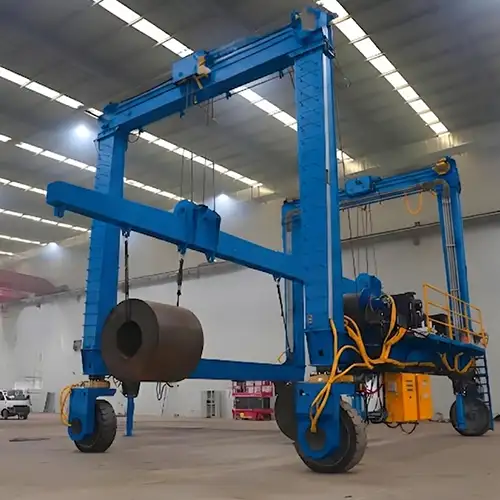
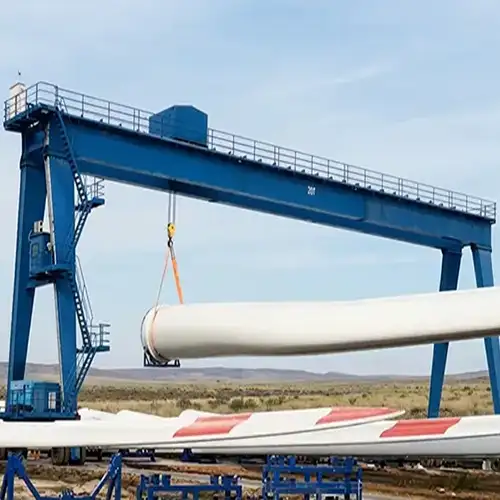
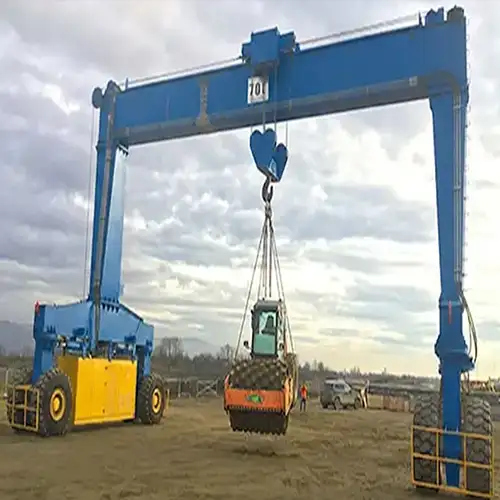

Yuantai Cranes
Overhead Crane Manufacturer with CE, ISO, SGS, CNEX Certificates.
- Main Specifications - Capacity: 0.5–550 tons | Span: up to 40m | Speed: 0.8–12 m/min | Duty: A3–A7 | Power: 380–690V, 50/60Hz | Control: pendant/remote/cabin
- Full engineering: FEA/PLC/VFD + in-house build + global delivery + on-site support, for workshops, factories, EPC contractors, industrial projects, etc.
- Support: design, manufacturing, testing, service – end-to-end, customized lifting solutions worldwide.
How to Get an Accurate Crane Price for Your Application?
Tips: Copy the spec list, fill in your details, and paste it into the form on the right/ down-below for a quick price.
- Crane type:_____ . (e.g., overhead crane, gantry crane, jib crane)
- Max weight to lift:_____ tons. (e.g., 2t, 5t, 10t, 20t, 50t)
- Lifting height:_____ m. (How high does the hook need to reach?
- Workshop width (span):_____ m . (Distance between the two crane rails)
- Travel distance:_____ m . (How long does the crane need to move along the runway?)
- Control type:_____. (Pendant / remote / cabin Control)
- Power supply:_____. (Local voltage & frequency – e.g., 380V, 50Hz, 3-phase)
- What will it be used for?_____ (e.g., steel fabrication, concrete products, mold handling, general manufacturing, etc.)
- Any special requirements?_____ (e.g., extreme temperature, dusty or explosive environment, special paint color, etc.)
Just leave a message via the contact form and our hoist and crane engineer will contact you with in 24working hours.
Get Your Custom Quote–Quick & Easy
Fill in what you know. Skip what you don't – we'll help.Any question will be reply with 24 working hours