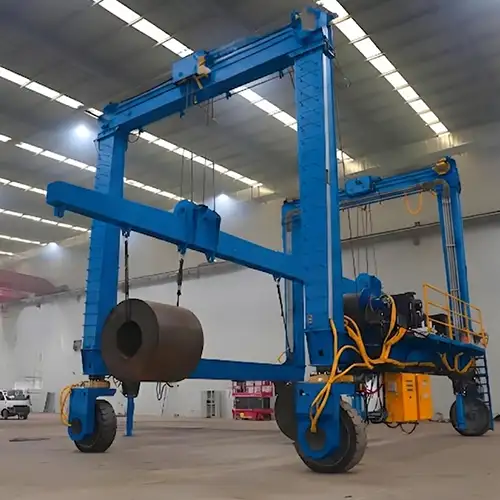
Rubber Tyred Gantry Cranes 20 to 100 Ton for Steel Coil Handling Guide
Complete guide to rubber tyred gantry cranes for steel coil handling, covering capacity, applications, selection, RTG vs RMG comparison, and buyer insights.
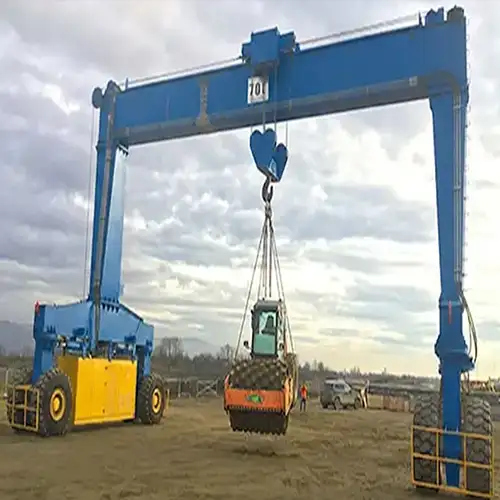
| Crane Type | Rubber Tyred Gantry Crane (RTG) featuring rubber-tyred travelling, 360° or multi-directional steering options, self-propelled movement, flexible positioning and no fixed runway requirement |
| Crane Capacity | 20–100 ton; common capacities 20, 30, 40, 50, 60, 80 and 100 ton |
| Span Length | 15–35 m; customized according to storage area width, truck access and required working coverage |
| Lifting Height | 6–20 m; common lifting heights 8 m, 10 m, 12 m, 15 m and 18 m, customized for required coil stacking height |
| Coverage Area Type | Flexible rectangular working area without fixed rails; rubber tyres allow the RTG to travel between coil storage zones, processing lines, trucks and loading areas |
| Application | Steel mills, steel coil storage yards, cold rolling plants, hot rolling plants, steel service centers, coil processing facilities and outdoor warehouses for steel coil lifting, transportation, loading, unloading and stacking |
| Certifications | CE / ISO / SGS / Other third-party inspection |
| Customization | RTG crane structure, lifting capacity, span, lifting height, wheel configuration, diesel-electric or electric power system, steering mode, travelling speed, coil C Hook, coil clamp, electromagnetic lifter, remote control and automated positioning system |
Crane Manufacturer: Yuantai Cranes – 30+ Years Professional Crane Manufacturer from China
Category: Coil Handling
Tags: coilhandling,rtgcrane
Your Trusted Rubber Tyred Gantry Cranes Manufacturer & Supplier
Rubber Tyred Gantry Cranes 20 to 100 Ton for Steel Coil Handling Guide
Most Important Takeaway
Rubber tyred gantry cranes are the most flexible solution for steel coil handling when yards require mobility, multi-zone operation, and adaptable storage layouts, while rail mounted gantry cranes dominate in fixed, high-efficiency steel mill environments. The right choice depends on yard structure, coil volume, and long-term investment strategy—not just lifting capacity.
- When should a rubber tyred gantry crane be used for steel coil handling?
- When is a rail mounted gantry crane a better investment?
- What is the typical capacity range for steel coil RTG cranes?
- How to choose the right lifting attachment for steel coils?
- How yard layout affects crane selection and efficiency?
- What industries use RTG cranes beyond steel mills?
- What are the real cost and lifecycle considerations?
- How automation and smart control systems improve coil logistics?
Introduction to Rubber Tyred Cranes in Steel Industry
What is a rubber tyred crane and how it works in steel yards
A rubber tyred crane is a mobile lifting machine that runs on rubber wheels instead of fixed rails. It is used in large outdoor yards where steel materials need to be moved, lifted, and stacked in different locations.
In steel coil yards, it moves slowly but steadily across the ground, picks up heavy coils, and places them in storage or onto trucks. The movement is simple in concept, but the system is built to stay stable while carrying very heavy loads.
- Moves freely across yard surfaces without rails
- Lifts and transports heavy steel coils safely
- Works in open storage areas with flexible layout
- Needs a solid and level ground to operate properly
In daily use, operators often shift positions many times a day, depending on where coils need to be placed or picked up.
What is a Rubber Tyred Gantry Crane (RTG) and why it matters in steel logistics
A Rubber Tyred Gantry Crane (RTG) is a larger, gantry-style crane built on rubber tyres. It is mainly used for heavy material handling in steel yards, especially for steel coils.
It can lift coils, move them across the yard, and stack them in organized storage blocks. It also helps load coils onto trucks or other transport vehicles.
- Designed for heavy and continuous lifting work
- Commonly used for steel coil storage and loading areas
- Can handle repetitive yard operations all day
- Works well in large outdoor logistics spaces
In steel logistics, RTG cranes often act as the main handling equipment in storage yards.
Why RTG cranes are widely used for steel coil handling
Steel coils are heavy, round, and must be handled carefully to avoid damage. RTG cranes are widely used because they can move and lift coils safely while covering a large working area.
They are especially useful when the yard is not fixed in a strict layout.
- Suitable for different coil sizes and weights
- Helps reduce coil damage during handling
- Covers wide storage areas with one machine
- Supports fast loading and unloading operations
In many steel yards, flexibility is more important than speed alone, and RTG cranes fit that need well.
RTG cranes vs rail mounted gantry cranes in steel projects
In steel coil handling, two common systems are used: rubber tyred gantry cranes and rail mounted gantry cranes.
Rubber Tyred Gantry Crane is used when the yard needs flexibility, while rail mounted systems are used when the operation is fixed.
Rail mounted cranes move on tracks and follow a fixed path. This makes them stable and efficient for repeated work in one direction. However, they cannot change location easily.
- RTG cranes: flexible, no rails needed, easy yard changes
- Rail mounted cranes: fixed path, high efficiency, stable operation
- RTG better for changing storage layouts
- Rail systems better for fixed production lines
In many steel projects, both types are used together in different areas.
Typical industrial environments where RTG cranes are used
RTG cranes are used in several steel-related industries where materials need to be moved and stored across large open yards.
Steel mills and processing plants
In steel mills, RTG cranes are used in finished product yards. After steel coils are produced, they need to be stacked and prepared for shipping.
- Moving finished steel coils from production lines
- Organizing storage in outdoor yards
- Preparing coils for shipment
- Supporting daily outbound operations
Coil storage and distribution yards
Steel service centers and distributors use RTG cranes to manage large amounts of coil inventory.
- Handling coils from different suppliers
- Sorting and stacking based on orders
- Loading trucks for delivery
- Adjusting storage layout when needed
Logistics terminals handling steel products
In logistics centers, RTG cranes are used when different types of steel products are stored together.
- Handling coils, plates, and beams in one yard
- Managing multi-customer storage areas
- Fast loading for transport vehicles
- Flexible handling of changing cargo types
Ports and export steel handling zones
At ports, RTG cranes are used to manage steel coils before shipping overseas.
- Stacking coils before export
- Loading coils onto vessels or trucks
- Handling high-volume shipping cycles
- Adjusting storage based on shipping schedules
When Rubber Tyred Gantry Cranes Are the Best Choice for Steel Coil Handling
When Rubber Tyred Gantry Cranes are the best choice for steel coil handling
A Rubber Tyred Gantry Crane is a good choice when the steel coil yard needs flexibility instead of a fixed working path. It is commonly used in places where storage areas change, or where materials move between different zones during daily operation.
Rubber Tyred Gantry Crane is mainly selected when the yard layout cannot stay fixed and needs to adjust over time.
In simple terms: if the yard changes, RTG fits better.
RTG cranes are a practical choice when
These are typical real working conditions where buyers often choose RTG cranes for steel coil handling:
- The storage yard layout may change or expand in the future
- One crane needs to serve several different storage blocks
- Steel coils are handled together with other materials like plates, beams, or billets
- Loading and unloading points are spread across the yard
- The project wants to avoid building rail foundations
- Storage space needs to be adjusted based on orders or production flow
In these situations, a fixed rail system is often too limiting.
Why steel buyers prefer RTG cranes in these cases
From a buyer's point of view, the decision is usually based on daily operation needs and cost planning.
- No rail installation means lower civil construction work
- The crane can move to different working areas easily
- One machine can cover a wide storage yard
- Suitable for mixed steel products in one facility
- Storage layout can be changed without modifying the crane system
For many steel coil yards, this means less restriction in planning and faster adjustment when business needs change.
Customized Steel Coil Handling Requirements
Steel coil handling is not only about lifting weight. In real steel yards, the difficulty comes from shape, surface condition, weight variation, and how the coils are stored and moved repeatedly during daily operations. A proper understanding of these points helps buyers choose the right crane capacity and lifting tools.
Steel coil characteristics and handling risks
Steel coils are tightly wound steel strips, usually very heavy and sensitive at the same time. The shape looks simple, but handling is not.
In practice, each coil behaves differently depending on width, thickness, and steel grade.
- Coils are cylindrical, so they can roll if not properly secured
- The load is concentrated in a small contact area during lifting
- Outer surface is often coated or finished, easy to scratch or dent
- Some coils are hot-rolled, others are cold-rolled with higher surface requirements
Because of this, even small handling mistakes can lead to surface damage or deformation, which directly affects product value.
Coil weight variation and center-of-gravity challenges
Steel coil weight is not fixed. In one yard, you may handle coils from a few tons up to 30–50 tons or more, depending on production type.
The real challenge is not only weight, but also center of gravity.
- Narrow coils may have unstable balance during lifting
- Wide coils can shift slightly if not lifted at the correct point
- Uneven winding can cause slight tilt during hoisting
- Different coil sizes require different lifting positions and tools
This is why crane operators must align the hook or lifting device exactly at the coil center before lifting. A small deviation can cause swinging or uneven load distribution.
Surface protection requirements in steel logistics
Steel coils are often sold based on surface quality. Even minor scratches can reduce their value or make them unusable for certain industries.
So handling equipment must protect the surface during every step.
- Coils must not touch rough steel parts directly
- Lifting tools should distribute pressure evenly
- Contact points must be designed to avoid sharp edges
- Storage stacking must avoid direct metal-to-metal friction
In cold-rolled and coated steel, this requirement becomes even stricter. Buyers often choose specialized C-hooks or padded lifting devices to reduce risk.
Common lifting methods for steel coils
Different lifting tools are used depending on coil type, weight, and handling frequency.
This is the most common method in steel coil yards.
- Simple structure, easy to operate
- Hooks inside the coil eye for stable lifting
- Suitable for most coil sizes in standard yards
- Low maintenance and widely used in RTG systems
It is often the first choice for general steel service centers.
Coil tongs grip the outer surface or inner diameter of the coil - Vertical coil lifers and Horizontal coil lifters
- Mechanical tongs are simpler and cost-effective
- Hydraulic tongs provide stronger and more controlled gripping force
- Better for heavy coils or frequent lifting cycles
- Reduces risk of slipping during handling
They are often used in higher-capacity or higher-precision operations.
Limited-use electromagnetic lifting systems
Electromagnetic systems are not commonly used for coils, but they appear in special cases.
- Used mainly for specific steel types or scrap handling
- Fast lifting and release
- Not suitable for all coil coatings or finished surfaces
- Requires stable power supply and safety control systems
Because of surface risk, usage in coil handling is limited compared to C-hooks or tongs.
Preventing coil deformation and surface damage
Coils must keep their original shape and surface condition during transport and stacking.
- Avoid sudden impact during lifting
- Control hook alignment before lifting
- Use proper padding or contact protection
- Reduce unnecessary contact during storage
Even small deformation can affect downstream processing.
Maintaining stability during lifting and stacking
Steel coils can swing during movement if not properly balanced.
- Slow acceleration and deceleration during crane travel
- Correct positioning of lifting tools
- Avoid lifting in strong wind conditions when possible
- Ensure stacking surface is flat and stable
Stability becomes more important when stacking height increases.
High-speed turnover in storage yards
In many steel logistics centers, coils move continuously throughout the day.
- Fast loading from trucks to storage area
- Quick retrieval based on orders
- Continuous movement between storage blocks
- Minimal waiting time between lifting cycles
This requires both efficient crane operation and well-organized yard layout.
Safe stacking height and load control
Stacking steel coils is not only about space utilization. Safety is a key concern.
- Higher stacks increase pressure on lower coils
- Uneven stacking can cause instability over time
- Weight must be distributed properly in each storage block
- Crane capacity must match maximum stacking requirement
Most yards define strict stacking rules based on coil weight and size.
Structure and Working Principle of RTG Cranes
A Rubber Tyred Gantry Crane is designed to handle heavy steel coils in large outdoor yards while still being able to move freely between different storage areas. Its structure looks complex, but the working idea is straightforward: lift, move, and place loads safely and repeatedly throughout the yard.
Rubber Tyred Gantry Crane is built around three main functions: stable lifting, controlled movement, and balanced load distribution.
Main structural components of RTG systems
An RTG crane is made up of several key parts working together as one system. Each part has a direct role in safe steel coil handling.
- Gantry frame: The main steel structure that supports the entire crane and spans across storage lanes
- Tyre and wheel system: Provides mobility and allows the crane to travel across the yard
- Hoisting system: Includes wire rope, winch, and drum used for lifting steel coils
- Trolley system: Moves the lifting device horizontally along the crane bridge
- Power and control system: Manages all crane movements and safety functions
In steel coil yards, this structure must remain stable even when lifting very heavy loads at full span.
Rubber tyred travelling mechanism and mobility system
The mobility system is what makes RTG cranes different from rail-mounted equipment. Instead of tracks, the crane moves on large rubber tyres.
- Tyres distribute load evenly across the ground surface
- Steering system allows the crane to turn or align with storage lanes
- Travel motors control movement speed across the yard
- Some systems include diesel, electric cable reel, or hybrid power options
In practice, this means the crane can move from one coil stack area to another without fixed path limitations. However, the ground must be strong and well-prepared to support wheel loads.
Hoisting trolley and lifting system
The hoisting system is responsible for lifting steel coils safely and accurately. It is one of the most critical parts in daily operation.
- Wire rope and drum provide vertical lifting force
- Hook or coil lifting attachment connects to the load
- Trolley moves the load horizontally across the gantry
- Speed control ensures smooth lifting and lowering
For steel coils, the lifting system is often used with C-hooks or coil tongs to ensure stable gripping and reduce surface damage.
Load distribution and stability engineering
Steel coils are heavy, and when lifted at height or full span, stability becomes very important. RTG cranes are designed with careful load balance calculations.
- Weight is distributed across multiple tyres to reduce ground pressure
- Gantry structure is reinforced to reduce bending under load
- Counterbalance design helps maintain stability during lifting
- Anti-tilt systems prevent unsafe movement during operation
In steel yards, uneven ground or uneven stacking can affect stability, so the crane design must compensate for real working conditions, not just theoretical load values.
Working movements in steel coil handling
RTG cranes perform three main movements during operation. These movements work together to complete lifting and stacking tasks efficiently.
Lifting movement
This is the vertical motion used to pick up or place steel coils.
- Coil is lifted using hook or lifting tool
- Operator controls speed to avoid sudden impact
- Load is raised to safe travel height before movement begins
- Smooth lifting reduces risk of coil deformation
Gantry travel movement
This is the movement of the entire crane across the yard.
- Crane moves forward or backward on rubber tyres
- Used to travel between different storage blocks
- Allows access to wide working areas without rails
- Speed is adjusted depending on load and ground condition
Trolley movement
This is the horizontal movement along the crane beam.
- Moves the lifting device left or right
- Helps position coil precisely above storage location
- Works together with gantry travel for accurate placement
- Reduces need for repositioning the entire crane
Practical working logic in steel coil yards
In real steel coil operations, these three movements are combined in a simple cycle:
Lift coil → move gantry → adjust trolley position → place coil → return
This cycle is repeated throughout the day, often hundreds of times in busy yards. The efficiency and safety of this process depend heavily on how well the structure and control system are designed.
Types of Rubber Tyred Gantry Cranes for Steel Coils
In steel coil handling, different yards need different types of rubber tyred gantry cranes. The right choice depends on coil weight, working speed, yard layout, and how often the crane is used.
Rubber Tyred Gantry Crane can be built in several versions, each designed for a specific working condition.
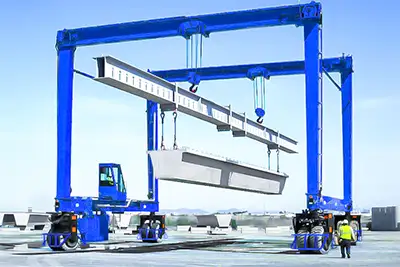
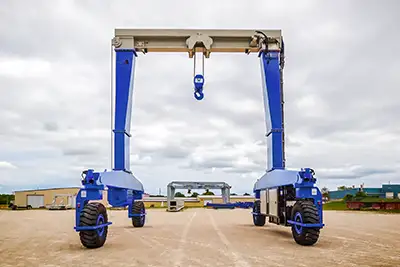
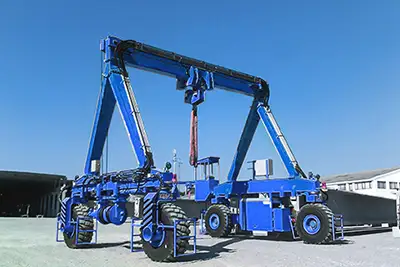
Standard RTG cranes for general coil yards
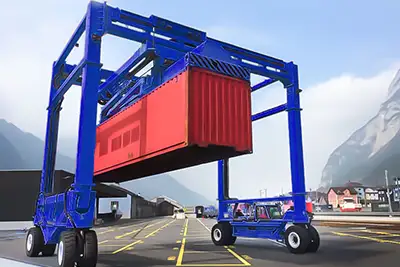
This is the most common type used in steel coil storage yards and service centers.
It is suitable for normal lifting work and medium workload.
- Used in general steel coil warehouses and distribution yards
- Handles medium-weight coils (typical daily operations)
- Simple structure and easy to operate
- Good balance between cost and performance
This type is often chosen when the workload is stable and not extremely heavy.
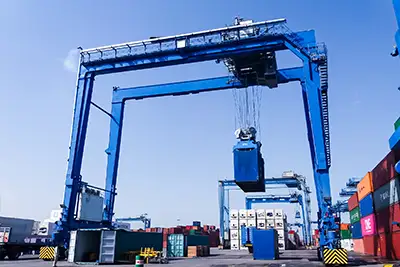
Heavy-duty RTG cranes for steel mills
Heavy-duty RTG cranes are designed for steel mills and high-intensity operations.
They are built to handle larger coils and continuous working cycles.
- Used in steel production and finishing yards
- Handles heavy and oversized steel coils
- Stronger structure for frequent lifting work
- Suitable for long operating hours every day
In steel mills, the crane must keep working without long breaks, so durability is very important.
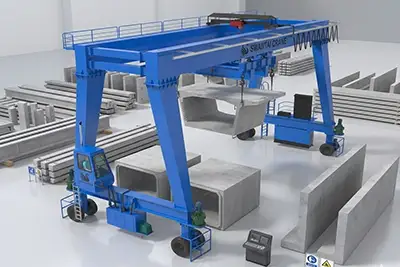
U-frame RTG cranes for long steel products
U-frame RTG cranes have an open structure that allows handling of long or oversized steel materials.
They are used when the yard stores both coils and other steel products.
- Open frame design for long steel beams or plates
- Can handle coils and mixed steel products
- Suitable for flexible storage yards
- Used in steel fabrication and mixed material yards
This type is chosen when the material is not only coils but also long or irregular steel items.
Diesel, electric, and hybrid RTG systems
Diesel RTG cranes
- No external power needed
- Easy to move anywhere in the yard
- Common in outdoor steel storage areas
Electric RTG cranes
- Lower running cost
- Needs fixed power supply
- Good for stable and organized yards
Hybrid RTG cranes
- Combination of diesel and electric
- More energy efficient
- Used when flexibility and cost saving are both needed
Semi-automated and fully automated RTG cranes
Modern steel yards are gradually moving toward automation to improve efficiency and reduce manual work.
Semi-automated RTG cranes
- Operator still controls main movements
- System helps with positioning and safety
- Easier and safer operation
Fully automated RTG cranes
- Crane works automatically based on system commands
- Integrated with yard management system
- Suitable for high-volume coil handling yards
Automation is mainly used in large-scale steel logistics centers where operations are repetitive.
Simple selection idea for buyers
In real projects, the choice usually depends on a few key points:
- Coil weight and daily workload
- Whether the yard handles mixed materials
- Power supply conditions
- Budget and long-term operating cost
- Need for automation or manual control
There is no one fixed solution. The best RTG crane is the one that fits how the yard actually works every day.
Steel Coil Handling Attachments and Lifting Tools
In steel coil handling, the crane itself is only part of the system. The real work is done through the lifting attachments. These tools decide how safely and efficiently a coil is picked up, moved, and placed.
Rubber Tyred Gantry Crane is usually equipped with different lifting tools depending on coil type, weight, and surface condition.
C-hook systems for standard coil handling
C-hooks are the most commonly used lifting tool in steel coil yards. They are simple, strong, and easy to operate.
The hook goes into the inner eye of the coil and lifts it from the center, which helps keep the coil stable during movement.
- Most common solution for standard steel coils
- Easy to use and low maintenance
- Good stability during lifting and travel
- Suitable for regular warehouse and yard operations
In many steel service centers, this is the default lifting method.
Coil tongs for controlled gripping and safety
Coil tongs are used when more control is needed during lifting, especially for heavier coils or frequent handling.
They grip the coil from inside or outside, depending on design, and hold it more firmly than a simple hook.
- Provides stronger grip on heavy coils
- Reduces risk of slipping during lifting
- Can be mechanical or hydraulic type
- Suitable for high-frequency operations
This type is often chosen in steel mills or heavy-duty coil yards.
Lifting beams with slings for flexible operations
Lifting beams with slings are used when the coil shape or size requires more flexible support.
Instead of a single lifting point, the load is supported by multiple slings connected to a beam.
- Distributes weight evenly across lifting points
- Suitable for irregular or mixed coil sizes
- Helps reduce pressure on coil surface
- Often used in flexible or multi-product yards
This method is slower but provides better adaptability for special handling needs.
Magnetic lifting systems for special applications
Magnetic lifting is not commonly used for steel coils, but it is used in specific situations where coil type and surface allow it.
It lifts materials using electromagnetic force instead of mechanical gripping.
- Fast attachment and release of load
- No physical contact with coil surface
- Used only for compatible steel types
- Requires stable power supply and safety control
Because of surface sensitivity and safety limits, it is only used in special applications.
Selection based on coil geometry, weight, and surface sensitivity
Choosing the right lifting tool is not random. It depends on how the coil is made and how it will be handled in daily operation.
Key factors include:
- Coil geometry: inner diameter, width, and winding shape
- Coil weight: light coils vs heavy industrial coils
- Surface condition: coated, cold-rolled, or hot-rolled steel
- Handling frequency: occasional lifting or continuous yard operation
- Damage risk level: higher-quality steel needs gentler handling
In practical projects, many steel yards use more than one type of lifting tool to handle different coil categories efficiently.
Load Capacity and Specification Considerations
When selecting a rubber tyred gantry crane for steel coil handling, one of the most important points is the lifting capacity. This is not only about how heavy the crane can lift, but also how safely and continuously it can work in daily yard operation.
Rubber Tyred Gantry Crane must always be matched with real coil weight, working frequency, and yard ground conditions.
Typical Capacity of Rubber Tyred Gantry Cranes for Steel Coil Handling
In steel coil yards, RTG cranes are designed in different capacity levels depending on workload and industry type.
- 20–50 tons
Used in standard coil warehouses and steel distribution yards
Suitable for normal-sized coils and medium daily turnover - 50–80 tons
Common in steel service centers and steel mills
Used when coils are heavier and handling is more frequent - 80–100+ tons
Used in heavy-duty steel logistics yards
Designed for large coils and high-intensity operation - Up to 120+ tons (custom design)
Used for special heavy steel handling applications
Often includes reinforced structure and special lifting systems
In practice, most steel coil projects fall in the 30–80 ton range, depending on product type and yard size.
Maximum coil weight and lifting method
The real load includes not only the coil itself but also the lifting tool.
- Coil weight varies by thickness and width
- C-hook or tongs add additional load
- Uneven coil weight requires extra safety allowance
- Different lifting methods may reduce effective capacity
The crane must always handle the heaviest possible coil in the yard, not just average weight.
Safety margin requirements (usually +20–30%)
In real engineering practice, cranes are never designed to work at maximum limit.
- Safety margin is added above actual coil weight
- Typically 20% to 30% extra capacity is reserved
- Helps reduce mechanical stress during long-term use
- Improves safety during sudden load movement or imbalance
This is especially important in steel yards where continuous operation is required.
Duty class selection (A6–A8 for heavy use)
Duty class defines how frequently the crane can work under load conditions.
- A6–A7: medium to heavy steel coil handling
- A8: continuous high-frequency operation in steel mills
- Higher duty class means stronger structure and longer service life
- Important for yards with continuous loading cycles
Two cranes with the same lifting capacity can perform very differently depending on duty class.
Ground load bearing conditions
Since RTG cranes move on rubber tyres, the ground becomes part of the lifting system.
- Yard surface must support wheel pressure from full load
- Poor ground conditions can limit safe lifting capacity
- Concrete or reinforced ground is usually required
- Uneven surface affects stability during travel and lifting
In many projects, ground design is as important as crane design itself.
Practical buying insight
In real steel coil handling projects, capacity selection is not only a technical decision. It is also related to how the yard operates every day.
A well-matched capacity means:
- Safe lifting without overload risk
- Stable long-term operation
- Lower maintenance cost
- Better productivity in coil storage and loading
In simple terms, the right capacity is the one that safely covers your heaviest coil, not just the average one.
Yard Layout and Operational Planning (Steel Coil Storage Focus)
In steel coil storage yards, the layout is not just about "where to put coils." It directly affects how fast the crane works, how safely coils are handled, and how smoothly trucks move in and out every day.
Rubber Tyred Gantry Crane is usually planned together with the yard layout, not added later. If the layout is wrong, even a good crane will not perform well.
Coil yard storage block design
Steel coil yards are usually divided into storage blocks. Each block is used to stack coils in an organized way based on size, grade, or customer order.
The main idea is simple: keep coils grouped so the crane does not waste time searching or repositioning.
- Coils are stored in separated blocks based on specification or order
- Each block has a clear stacking limit for safety
- Heavier coils are usually placed in lower layers
- Frequently used coils are stored closer to loading areas
A well-planned block system reduces unnecessary crane travel and improves daily handling speed.
Aisle spacing and crane movement planning
Aisle spacing is the distance between storage blocks. It decides how easily the RTG crane can move and operate between stacks.
If spacing is too narrow, the crane will struggle to position accurately. If too wide, valuable yard space is wasted.
- Aisles must match crane span and turning radius
- Enough space is needed for safe lifting and lowering
- Movement paths should avoid crossing traffic areas
- Clear lanes reduce collision risk with trucks or forklifts
In practice, many steel yards adjust aisle width based on coil size and crane type before construction begins.
Truck loading and dispatch coordination
In steel coil logistics, trucks are constantly entering and leaving the yard. The crane must work together with this flow.
Good coordination reduces waiting time and avoids congestion.
- Dedicated loading zones near yard edges
- Clear separation between storage and dispatch areas
- Scheduled truck arrival times when possible
- Crane positioning close to loading lanes for faster access
If trucks and crane operation are not coordinated, delays quickly build up during peak hours.
Material flow optimization in steel logistics systems
Material flow means how coils move from arrival to storage, and finally to shipment. A smooth flow is more important than just having enough storage space.
In a well-organized coil yard, the movement usually follows one direction.
- Incoming coils are unloaded and placed into storage blocks
- Stored coils are sorted based on order or production plan
- Selected coils are moved to dispatch area for loading
- Outgoing trucks follow a separate route from incoming ones
The goal is to avoid cross-movement and reduce unnecessary crane repositioning.
A simple rule in real yards is:
"The fewer times a coil is moved, the better the efficiency and safety."
Practical planning insight for buyers
When planning a steel coil yard, the crane and layout should be designed together.
A good layout will:
- Reduce crane travel distance
- Improve loading speed for trucks
- Minimize coil handling steps
- Lower risk of damage during movement
- Support future expansion without major changes
In many projects, small layout decisions made early can have a long-term impact on daily operating cost and efficiency.
Stability, Safety, and Anti-Sway Systems (Steel Coil Handling Focus)
Steel coils are heavy, round, and easy to swing during lifting. In storage yards, the main safety challenge is not just lifting the weight, but controlling movement during travel and stacking.
Rubber Tyred Gantry Crane is usually equipped with multiple safety systems to keep coils stable from pickup to final placement.
Anti-sway control for steel coil stability
When a coil is lifted, even a small movement can cause swinging. This becomes more obvious when the crane travels across long distances.
- Controls smooth acceleration and braking
- Reduces coil swing during travel
- Helps precise positioning in storage blocks
- Improves safety during stacking and unloading
In daily coil yard work, this makes operation more predictable and reduces manual correction by the operator.
Wind resistance for outdoor coil yards
Steel coil yards are often fully open. Wind can affect suspended coils, especially larger ones.
- Limits crane operation under strong wind conditions
- Stabilizes crane structure during movement
- Reduces risk of coil sway in air
- Adds safety rules for outdoor lifting work
In practice, operators often slow down or pause lifting when wind increases.
Overload protection for coil handling
Steel coil weight can vary a lot, even within the same yard. Overload protection prevents unsafe lifting.
- Real-time weight monitoring during lifting
- Automatic alarm when load exceeds limit
- Lifting stop when overload is detected
- Operator display for coil weight checking
This is especially important when coils are mixed from different production batches.
Emergency braking and collision protection
In coil yards, multiple movements happen at the same time — crane, truck, and sometimes forklifts.
- Emergency stop system for sudden risks
- Travel limit protection to avoid overrun
- Obstacle detection in working area
- Warning signals during crane movement
These systems help prevent accidents during busy loading periods.
Operator safety in coil handling operations
Operators are directly responsible for safe coil placement. The system must support clear control and visibility.
- Stable control cabin with wide view of coil area
- Smooth control response for precise positioning
- Clear operating procedures for lifting and stacking
- Training for coil balance and safe handling methods
Good operator control often makes a bigger difference than equipment alone.
Power Supply and Drive Systems (Steel Coil Yard Use)
Power systems affect how smoothly steel coils can be handled in daily operations.
Diesel RTG systems for flexible coil yards
Diesel-powered cranes are widely used in open coil storage areas.
- No fixed power line required
- Easy movement across different coil blocks
- Suitable for changing yard layouts
- Common in port and logistics coil yards
This is often chosen when flexibility is more important than energy cost.
Cable reel systems for steady coil handling
Cable-powered RTG cranes are used in more organized coil storage yards.
- Stable power supply during continuous operation
- Lower operating cost compared to diesel
- Suitable for fixed coil storage lanes
- Works well in structured steel service centers
Hybrid and battery systems for coil logistics
Hybrid systems are becoming more common in steel coil handling.
- Reduces fuel use during idle or light work
- Suitable for mixed workload coil yards
- Better energy control for long working hours
- Supports environmental and cost control needs
Practical cost consideration
In steel coil handling, power choice affects long-term cost more than initial price.
- Diesel = flexible but higher fuel use
- Electric = stable but needs infrastructure
- Hybrid = balanced for mixed operation
Most buyers choose based on yard size and daily coil movement frequency.
Automation and Smart Control Systems (Steel Coil Handling)
Automation in steel coil yards is mainly about improving stacking accuracy and reducing repeated manual movement. Rubber Tyred Gantry Crane can now operate with different levels of automation depending on coil volume and yard size.
Semi-automated coil handling systems
Semi-automation still relies on operators but supports better accuracy.
- Operator controls lifting and movement
- System assists with coil positioning
- Reduces repeated manual adjustment
- Improves stacking consistency
This is widely used in medium-size coil storage yards.
Fully automated coil stacking systems
In large steel logistics centers, coil handling can be fully automated.
- Automatic lifting and placement of coils
- Pre-set stacking instructions
- Consistent coil positioning in storage blocks
- Suitable for high-volume repetitive operations
This is often used where coil flow is stable and predictable.
Remote operation for coil yards
Operators can control crane from a control room instead of the cabin.
- Safer working environment indoors
- Better visibility through camera systems
- Reduced exposure to outdoor conditions
- Easier coordination in busy coil yards
WMS integration for coil tracking
Warehouse systems are often linked with crane operation.
- Coil ID tracking from arrival to dispatch
- Real-time storage location updates
- Faster retrieval for shipping orders
- Reduced manual inventory errors
Coil inventory digital tracking
Each steel coil can be tracked during its entire storage life.
- Entry registration with coil ID
- Storage position recorded in system
- Movement history stored digitally
- Accurate inventory control for shipment planning
In steel coil handling, safety, power systems, and automation all work together. The goal is simple: move coils safely, store them clearly, and load them without delay or damage.
Selection Guide for Steel Coil Handling RTG Cranes
Choosing a Rubber Tyred Gantry Crane for steel coil handling is not only about lifting capacity. In most coil storage yards, the real decision depends on how the yard works every day—how coils arrive, how they are stored, and how fast they need to move out. Rubber Tyred Gantry Crane should always be selected based on real coil flow, not only technical data on paper.
Coil size, weight, and production volume
The first step is to understand what kind of steel coils are actually being handled.
- Light coils vs heavy industrial coils (weight difference is very large)
- Narrow coils vs wide coils (affects balance during lifting)
- Daily production volume (how many coils move per day)
- Peak workload during shipment periods
If the crane is too small, it slows down the yard. If it is too large, it increases unnecessary investment and operating cost.
Yard space limitations and expansion plans
Yard layout has a direct impact on crane selection. RTG cranes are often used because they can adapt to different storage layouts.
- Narrow yard requires better turning and positioning control
- Wide yard allows larger span and higher stacking efficiency
- Future expansion should be considered at the beginning
- Storage blocks must match crane travel path
A common mistake is designing the crane first, then adjusting the yard later. In practice, both should be planned together.
Automation level requirements
Not all steel coil yards need automation. The right level depends on operation speed and labor structure.
- Manual operation: suitable for small or flexible yards
- Semi-automation: helps improve positioning and reduce operator load
- Full automation: used in high-volume coil logistics centers
- Remote control: improves safety and visibility in busy yards
Higher automation increases investment, but can reduce long-term labor and handling errors.
Choosing between standard and heavy-duty RTG systems
The difference between standard and heavy-duty RTG cranes is mainly structure strength and working intensity.
Standard RTG cranes
- Used in service centers and medium coil yards
- Suitable for normal lifting cycles
- Lower cost and easier maintenance
Heavy-duty RTG cranes
- Used in steel mills and high-volume production areas
- Designed for continuous lifting operations
- Stronger structure for larger coils and higher duty class
The correct choice depends on whether the yard is "occasional handling" or "continuous production flow."
Common mistakes in crane selection decisions
In steel coil handling projects, selection errors often lead to higher cost or limited performance later.
- Choosing capacity based only on average coil weight, not maximum weight
- Ignoring future production increase or yard expansion
- Underestimating stacking height requirements
- Not matching crane type with yard layout and traffic flow
- Over-investing in automation where simple operation is enough
- Not considering ground load conditions for rubber tyre operation
These mistakes usually appear after the yard starts operation, when changes become expensive and difficult.
Practical selection insight
In real steel coil projects, the best RTG crane is not always the largest or most advanced one. It is the one that fits:
- Coil flow in daily operation
- Yard space and storage method
- Loading and dispatch speed
- Future development plan
A well-matched crane keeps operation smooth without unnecessary cost or complexity.
Cost Factors and Investment Analysis (Steel Coil RTG Cranes)
When investing in a Rubber Tyred Gantry Crane for steel coil handling, the price is only part of the decision. In real steel logistics projects, buyers usually care more about total cost over time, daily operating cost, and how the crane supports coil flow efficiency. Rubber Tyred Gantry Crane investment should always be evaluated as a full system, not just a piece of lifting equipment.
Crane structure and system cost components
The main cost of an RTG crane comes from its physical structure and lifting system. This is the base of the equipment.
- Steel structure (gantry frame and main beams)
- Hoisting system (winch, wire rope, hook or coil attachment)
- Trolley and travel mechanism
- Fabrication strength based on coil capacity (20T–100T+)
- Welding, machining, and assembly quality
For steel coil yards, higher capacity and higher duty class directly increase structural cost because the crane must handle continuous heavy lifting.
Power system and control system cost influence
The power and control system has a strong impact on both price and long-term performance.
- Diesel system: lower initial setup requirement, but higher fuel cost
- Electric system: requires infrastructure but lower daily energy cost
- Hybrid system: higher initial cost but balanced long-term operation
- Electrical control system includes PLC, sensors, and safety logic
For steel coil handling, control precision is important because small positioning errors can affect stacking safety.
Tire and mobility system maintenance costs
Unlike rail-mounted cranes, RTG cranes depend on rubber tyres for movement. This creates a different cost structure.
- Tyre wear depends on yard surface condition and load frequency
- Steering system requires regular inspection and alignment
- Uneven ground increases long-term maintenance cost
- Wheel replacement becomes a major periodic expense
In coil yards with heavy daily traffic, mobility system maintenance is a key part of operating cost.
Long-term operational cost structure
Over time, the real cost of a crane is not the purchase price, but daily operation.
- Energy consumption (fuel or electricity)
- Routine maintenance and spare parts
- Tyre and hoisting system replacement
- Operator labor and training
- Downtime cost during repair or inspection
In steel coil handling, continuous operation makes energy and maintenance costs more important than initial investment.
ROI considerations in steel logistics investment
Return on investment in steel coil RTG systems is usually measured through efficiency and yard performance, not only cost reduction.
- Faster coil loading and unloading time
- Reduced need for multiple handling machines
- Better storage density and yard organization
- Lower coil damage rate during handling
- Improved truck turnaround time
In many steel logistics projects, the crane pays back its investment through higher yard throughput and reduced handling loss, not just equipment savings.
Practical investment insight
In steel coil handling, the lowest price option is not always the most economical in the long term. A well-balanced RTG investment should match:
- Coil volume and daily turnover
- Yard operating hours
- Energy cost conditions
- Maintenance capability
- Future expansion needs
A properly selected system often reduces hidden costs that appear only after the yard starts full operation.
Industry Applications and Case Scenarios (Steel Coil Handling Focus)
Rubber tyred gantry cranes are widely used in steel coil logistics because they can operate in large outdoor yards where storage layouts, coil types, and handling routes are not always fixed. In many real projects, the crane selection is not based on a single specification, but on how the steel coil flow behaves in that specific industry. RTG cranes are mainly applied where steel coils need to be moved between multiple storage zones, loading areas, and dispatch points with changing operational requirements.
Different industries use very different yard logic. Below is a detailed breakdown based on real steel coil handling environments, including typical crane configurations, capacity ranges, design characteristics, and selection logic compared with rail-mounted gantry cranes.
Steel mill production and finished coil handling
Steel mills operate in a continuous production cycle. Coils are produced directly from rolling lines and must be transferred quickly to storage yards without interrupting production flow.
- Heavy-duty double girder structure for continuous operation
- High-speed hoisting system
- C-hook or coil tongs for hot/cold coils
- Diesel or cable reel power system
- Capacity: 50–80 tons for standard lines, 80–100+ tons for integrated mills
- High duty class (A7–A8) and strong anti-sway control
Selection logic: RTG for flexible multi-zone storage, rail-mounted for linear fixed layouts.
Steel service centers and distribution hubs
- Standard or medium-duty RTG crane
- C-hook lifting system
- Diesel or hybrid power system
- Manual or semi-assisted operation
- Capacity: 20–50 tons (standard), 50–70 tons (large hubs)
- Flexible yard layout adjustment and multi-block coverage
Selection logic: RTG for frequent layout changes and multi-order handling, rail-mounted for fixed lanes with stable dispatch.
Port steel export and import terminals
- High-span RTG crane for wide yard coverage
- Diesel or hybrid power system
- C-hook or coil tongs
- Optional remote operation
- Capacity: 40–80 tons (standard), 80–100+ tons (heavy terminals)
- High mobility, anti-collision systems, weather-resistant
Selection logic: RTG for mixed cargo and changing ship schedules, rail-mounted for fixed coil terminals with linear operations.
Heavy manufacturing and fabrication workshops
- Medium-duty RTG crane
- Electric or cable-powered system
- C-hook or lifting beam
- Semi-automated positioning assistance
- Capacity: 20–40 tons (standard), up to 50 tons (large plants)
Selection logic: RTG for flexible multi-line feeding, rail-mounted for fixed high-speed production feeding.
Infrastructure projects (bridges, shipbuilding yards)
- Heavy-duty or U-frame RTG crane
- Flexible lifting system for mixed materials
- Diesel or hybrid power system
- Wide-span gantry
- Capacity: 60–100+ tons
- High stability and strong ground load distribution
Selection logic: RTG for temporary or changing layouts, rail-mounted for permanent yards with repetitive assembly.
Wind energy and large component storage logistics
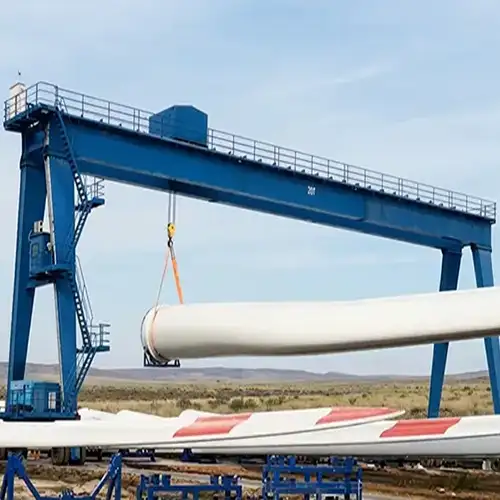
- U-frame or extended-span RTG crane
- Mixed lifting attachments
- Diesel or hybrid system
- Semi-automated control
- Capacity: 50–80 tons (standard), 80–100+ tons (large components)
- Wide clearance, flexible storage, strong stability
Selection logic: RTG for project-based mixed materials, rail-mounted for permanent standardized yards.
Multi-customer steel distribution and logistics centers
- Standard or medium-duty RTG crane
- Diesel or hybrid system
- C-hook primary tool
- Optional tracking or basic digital management
- Capacity: 20–50 tons (standard), 50–70 tons (large hubs)
- Fast adaptation to changing storage layouts
- Efficient truck loading and multi-order handling
Selection logic: RTG for dynamic yard and shared customer spaces, rail-mounted for dedicated lanes with fixed layouts.
Practical application insight
Across all steel coil handling industries, crane selection is tied directly to yard operation, coil flow, and layout flexibility. RTG cranes are chosen for multi-zone, changing layouts, while rail-mounted cranes are suited for fixed, repetitive, stable operations. The key question is whether the yard operates in a constant change mode or a stable, long-term repetition mode.
Challenges in Steel Coil Handling Projects
Steel coil handling may seem simple—lift, move, store, load—but real yard operations present many practical challenges. Performance depends heavily on ground conditions, coil sensitivity, weather, and operator consistency. These challenges are especially critical when using Rubber Tyred Gantry Cranes in outdoor coil yards.
Ground bearing limitations in outdoor yards
Outdoor steel coil yards often have uneven or soft ground, unlike factory floors.
- Uneven ground settlement over time
- Soft soil areas with reduced load capacity
- Water accumulation affecting stability
- High point loads from crane wheels during lifting
Impact on operations:
- Uneven crane movement affects stacking accuracy
- Long-term stress increases maintenance cost
- Reinforced foundations or concrete slabs may be required
Coil surface damage risks during handling
- Hook or clamp pressure marks
- Scratches during lifting or lowering
- Impact during stacking or repositioning
- Improper sling or C-hook alignment
Impact on operations:
- Surface defects reduce downstream processing value
- Damaged coils may be rejected
- Rehandling increases cost and reduces efficiency
Proper attachment selection and skilled operation are critical.
Weather exposure and operational stability
- Strong wind affects coil swing
- Rain causes slippery ground
- High temperature affects components and operators
- Dust and corrosion with long-term exposure
Impact on operations:
- Wind increases swing risk during lifting
- Electrical and hydraulic systems need protection
- Outdoor operation requires robust safety controls
Maintenance cycles may be shorter in coastal or desert areas.
High-frequency operation fatigue issues
- Hoisting system wear from repeated lifts
- Wire rope fatigue over time
- Brake system overheating
- Tyre wear in RTG systems
Impact on operations:
- Downtime affects production flow
- Unexpected failure can halt yard operations
- Maintenance must match real operation frequency
Duty class selection is crucial for high-intensity yards.
Operator skill variation and training requirements
- Inconsistent lifting speed and accuracy
- Improper use of C-hook or coil tongs
- Delayed emergency response
- Different skill levels across shifts
Impact on operations:
- Safety depends on smooth operation
- Poor operation increases coil damage and accident risk
- Automation helps but cannot replace operator judgment fully
Training is as important as equipment selection.
Practical insight
Technical specifications alone are insufficient. Real performance depends on:
- Ground conditions
- Sensitive coil surfaces
- Weather conditions
- Continuous operation cycles
- Operator skill differences
Successful projects focus on yard preparation, operational discipline, and long-term maintenance planning as much as on crane capacity.
Future Trends in RTG Cranes for Steel Industry (Steel Coil Handling Focus)
Steel coil yards are moving from purely mechanical operations to data-driven, system-connected workflows. The focus is on controlled, predictable, and manageable yard operations rather than only stronger cranes. RTG cranes are evolving especially in high-volume hubs, service centers, and ports where efficiency and consistency outweigh manual control.
Autonomous and AI-controlled coil handling systems
- Automatic coil pickup and placement without manual joystick control
- AI-assisted movement path planning inside the yard
- Automated stacking logic based on coil size, weight, and destination
- Reduced dependence on operator decision-making during routine tasks
Benefits in coil handling:
- Stable and precise coil placement
- Reduced human error in repetitive lifting cycles
- Consistent handling in high-volume storage yards
- Standardized operations across shifts
Smart positioning and digital twin monitoring
- Real-time crane position tracking inside the yard
- Digital twin models mirroring actual coil storage layout
- Visualization of coil location, height, and status on control systems
- Integration between crane movement and yard management software
Benefits:
- Prevents wrong coil placement in dense storage blocks
- Reduces time searching or rechecking coil positions
- Improves understanding of yard utilization
- Supports safer stacking decisions in tight spaces
Energy-efficient hybrid RTG technologies
- Diesel-electric hybrid systems for flexible energy use
- Battery-assisted RTG cranes for peak load reduction
- Regenerative braking to recover energy during lowering
- Optimized engine load control to reduce fuel consumption
Benefits:
- Frequent lifting and travel cycles handled efficiently
- Energy cost reduction over long-term operation
- Reduced fuel dependency in outdoor yards
- Supports environmental compliance in industrial zones and ports
Integrated smart yard logistics systems
- Connection between RTG cranes and warehouse management systems (WMS)
- Real-time tracking of coil inventory and movement
- Automated task assignment based on shipment schedules
- Coordination between cranes, trucks, and storage planning
Benefits:
- Efficient handling of thousands of coils of different grades and sizes
- Reduces manual coordination errors
- Improves overall yard throughput and planning accuracy
- Essential for logistics hubs serving multiple customers
Data-driven predictive maintenance systems
- Sensors monitoring motor, gearbox, and wire rope conditions
- Vibration and load tracking during crane operation
- Early warning systems for wear and fatigue detection
- Maintenance scheduling based on actual usage data
Benefits:
- Reduces risk of unexpected downtime in high duty cycle yards
- Extends equipment life under heavy use
- Shifts from reactive to predictive maintenance planning
- Becoming standard in large steel mills and ports
Practical insight
- Less manual control, more system coordination
- Greater data visibility across the yard
- Better energy efficiency for continuous operation
- Predictive maintenance ensures uptime stability
In modern steel logistics projects, RTG cranes are valued not just for lifting capacity, but for integration with the overall digital and operational system of the steel yard.
Frequently Asked Questions on RTG Crane for Steel Coil Handling: 20T to 120T Capacity Size Guide
This guide answers the most common questions from steel coil handling buyers, covering crane capacity, lifting tools, yard layout, safety, and operational considerations for RTG cranes from 20 to 120 tons.
Q: What size RTG crane is usually used for steel coil handling?
A: Most steel coil handling operations use RTG cranes ranging from 20 ton to 80 ton, while large steel mills and heavy industry projects may require 100 ton to 120 ton systems.
- Steel service centers and coil warehouses often use 20T–40T RTG cranes for fast loading and unloading.
- Heavy steel coil storage yards and steel mill logistics systems usually require larger gantry cranes with stronger structure and continuous duty performance.
- The correct crane size depends on coil weight, handling frequency, stacking height, and lifting tool configuration.
Q: How do I choose the right RTG crane capacity for my steel coil yard?
A: The correct RTG crane capacity should be based on maximum coil weight, lifting attachment weight, yard workflow, and future production plans.
- Buyers often search for a "50 ton steel coil gantry crane," but actual selection also depends on C-hook weight, lifting height, and daily operating cycles.
- A coil handling crane working continuously in a steel mill usually needs more operating reserve than a crane used occasionally in a warehouse yard.
- Future expansion matters too. A slightly larger RTG crane may prevent costly replacement later.
Q: Why is the actual lifting capacity lower than the rated RTG crane capacity?
A: Because the crane must also carry the weight of the lifting tool, hook block, and dynamic operating load during movement.
- A 60 ton RTG crane may only safely handle around 52–55 tons of actual steel coil weight when using a heavy-duty C-hook or coil lifter.
- Dynamic forces during travel, acceleration, and braking increase stress on the gantry crane structure.
- This is why crane manufacturers separate rated capacity from working load capacity in steel coil handling projects.
Q: What lifting tools are commonly used for steel coil handling cranes?
A: The most common lifting tools are C-hooks, mechanical coil lifters, electromagnetic lifting systems, and spreader beams.
- C-hooks are widely used in steel coil yards because they allow fast horizontal coil handling.
- Mechanical coil lifters provide more stable positioning for heavy steel coils and automated production lines.
- Electromagnetic lifting systems are sometimes used in automated steel processing facilities where fast handling is required.
Q: Why is safety margin important for RTG cranes handling steel coils?
A: Safety margin helps protect the crane from overload stress caused by continuous heavy lifting and outdoor operating conditions.
- Steel coil handling creates additional stress during travel, braking, and stacking, even when the crane is within rated load.
- Wind load, uneven yard surfaces, and high-frequency lifting cycles increase structural fatigue over time.
- This is why heavy-duty RTG cranes for steel mills are usually designed with additional load allowance and reinforced gantry structures.
Q: What overload problems happen in steel coil handling operations?
A: Overload conditions can cause structural fatigue, unstable lifting, excessive wheel load, and shorter crane service life.
- Common overload issues include girder deformation, wire rope wear, trolley stress, and load swing during travel.
- Overload does not always come from lifting too much weight at once. Continuous operation near full capacity can also damage the crane gradually.
- Many steel mill crane maintenance problems start from repeated heavy-duty cycles over long periods.
Q: Is RTG crane better than rail mounted gantry crane for steel coil yards?
A: RTG cranes are usually better for flexible steel coil yards, while rail mounted gantry cranes are better for fixed handling routes.
- Rubber tyred gantry cranes can move freely across changing storage layouts without rail installation.
- Rail mounted gantry cranes are more common in fixed production lines or dedicated rail handling terminals.
- Steel coil storage yards with changing truck traffic and flexible stacking often prefer RTG crane systems.
Q: How does yard layout affect RTG crane selection?
A: Yard layout affects crane span, travel distance, stacking method, and overall handling efficiency.
- Narrow storage lanes may require more precise gantry crane control and compact movement.
- Large outdoor steel yards often require long-span RTG cranes with higher travel speed.
- Buyers planning a steel coil handling project should evaluate truck flow, stacking density, and loading areas before confirming crane specifications.
Q: What industries commonly use RTG cranes for steel coil handling?
A: RTG cranes are widely used in steel mills, steel service centers, coil storage yards, ports, and heavy industrial logistics terminals.
- Steel processing plants use gantry cranes for moving coils between storage and production lines.
- Port terminals use RTG cranes for steel coil export handling and truck loading operations.
- Heavy fabrication industries and shipbuilding supply chains also use large capacity RTG crane systems for oversized steel coils.
Q: Can one RTG crane handle different coil sizes and weights?
A: Yes, but the crane and lifting attachment must be designed for the full working range.
- Mixed steel coil handling operations often require adjustable lifting tools and additional operating reserve capacity.
- Coil width, diameter, and stacking method all affect lifting stability.
- Buyers handling both small and heavy steel coils usually select more flexible RTG crane configurations to avoid future operating limitations.
Q: What information should buyers prepare before requesting an RTG crane quotation?
A: Buyers should prepare coil weight, dimensions, lifting height, yard layout, handling frequency, and power supply information.
- Important details include maximum steel coil weight, required gantry span, outdoor working conditions, and preferred lifting tools.
- Suppliers also need to understand truck loading methods, stacking height, and future production expansion plans.
- Providing complete technical information helps avoid under sizing the crane system.
Q: What is the typical service life of an RTG crane for steel coil handling?
A: A properly designed RTG crane can operate for many years in heavy-duty steel coil handling environments.
- Service life depends on operating intensity, maintenance quality, load conditions, and safety margin design.
- Cranes operating continuously near full capacity usually require more maintenance and component replacement.
- Heavy-duty RTG cranes designed for steel mills typically use reinforced structure and higher durability components for long-term operation.
Inquiry to Choose the Right RTG Solution for Steel Coils
Choosing between a Rubber Tyred Gantry Crane and a rail mounted gantry crane is not only a technical decision. In steel coil handling, it is mainly about how the yard works in daily operation—whether it needs flexibility or fixed efficiency.
Rubber Tyred Gantry Crane is usually selected when the steel coil yard needs to move freely, adjust storage areas, or handle different loading and dispatch zones. It works well in places where the layout can change and the operation is not fixed in one straight line.
Rail mounted gantry cranes, on the other hand, are better for fixed yards where the coil flow is stable and always follows the same route. They are often used in high-volume production environments with a clear and permanent layout.
In real steel coil projects, the right choice usually depends on a few simple points:
- How steel coils are handled every day (size, weight, and movement speed)
- Whether the yard layout is fixed or needs frequent changes
- How materials flow between storage, production, and dispatch areas
- Whether the project plans to expand or increase capacity in the future
- The level of automation and efficiency the operation wants to achieve
When these points are clear, selecting the crane becomes much easier and more practical.
A well-matched crane system does more than lift steel coils. It helps organize the yard better, speeds up loading and unloading, reduces handling risks, and keeps operating costs under control over the long term.
In simple terms, the right decision is not about choosing the most powerful crane, but choosing the one that fits the real working conditions of the steel coil yard.

Yuantai Cranes
Overhead Crane Manufacturer with CE, ISO, SGS, CNEX Certificates.
- Main Specifications - Capacity: 0.5–550 tons | Span: up to 40m | Speed: 0.8–12 m/min | Duty: A3–A7 | Power: 380–690V, 50/60Hz | Control: pendant/remote/cabin
- Full engineering: FEA/PLC/VFD + in-house build + global delivery + on-site support, for workshops, factories, EPC contractors, industrial projects, etc.
- Support: design, manufacturing, testing, service – end-to-end, customized lifting solutions worldwide.
How to Get an Accurate Crane Price for Your Application?
Tips: Copy the spec list, fill in your details, and paste it into the form on the right/ down-below for a quick price.
- Crane type:_____ . (e.g., overhead crane, gantry crane, jib crane)
- Max weight to lift:_____ tons. (e.g., 2t, 5t, 10t, 20t, 50t)
- Lifting height:_____ m. (How high does the hook need to reach?
- Workshop width (span):_____ m . (Distance between the two crane rails)
- Travel distance:_____ m . (How long does the crane need to move along the runway?)
- Control type:_____. (Pendant / remote / cabin Control)
- Power supply:_____. (Local voltage & frequency – e.g., 380V, 50Hz, 3-phase)
- What will it be used for?_____ (e.g., steel fabrication, concrete products, mold handling, general manufacturing, etc.)
- Any special requirements?_____ (e.g., extreme temperature, dusty or explosive environment, special paint color, etc.)
Just leave a message via the contact form and our hoist and crane engineer will contact you with in 24working hours.
Get Your Custom Quote–Quick & Easy
Fill in what you know. Skip what you don't – we'll help.Any question will be reply with 24 working hours