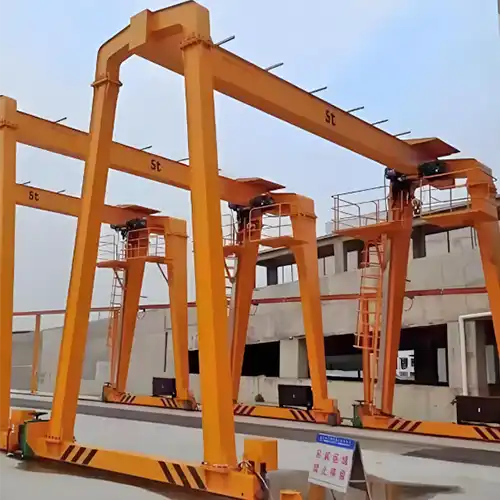
Single Girder Goliath Crane for Sale, Design, Specs & Uses
Single girder goliath crane for sale 3 to 20 ton. Custom single girder goliath crane designs with precise specifications to meet your unique application.
| Crane Type | Single Girder Goliath Crane / Single Girder Gantry Crane with Electric Hoist Trolley, ISO A3–A5 / FEM 1Am–2m |
| Crane Capacity | 1–20 Ton (Common: 3 Ton, 5 Ton, 10 Ton, 16 Ton, 20 Ton) |
| Span Length | 5–35 m (Common: 10.5 m, 13.5 m, 16.5 m, 22.5 m, 28.5 m) |
| Lifting Height | 3–20 m (Common: 6 m, 9 m, 12 m, 18 m) |
| Coverage Area Type | Rectangular coverage for outdoor storage yards, production areas, loading zones & material handling areas. Installed on ground rails or runway tracks with supporting legs, suitable for areas without existing crane buildings. |
| Application | Designed for outdoor yards, precast concrete plants, steel fabrication areas, warehouses, ports & industrial material handling zones. Used for steel structures, machinery parts, containers, precast products & general load lifting operations. |
| Certifications | CE / ISO / SGS / Other third-party inspection |
| Customization | Options - single girder design, electric wire rope hoist, electric chain hoist, rubber tired or rail mounted travel system, VFD, radio remote control, PLC, anti-sway system, wind proof device, overload protection & tailored goliath crane. |
Crane Manufacturer: Yuantai Cranes – 30+ Years Professional Crane Manufacturer from China
Category: Single Girder Goliath Crane
Tags: gantrycrane,goliathgantrycrane
Your Trusted Single Girder Goliath Crane Manufacturer & Supplier
Single Girder Goliath Crane Specifications &Tailored Goliath Crane Design for Your Needs
Single girder goliath crane for sale 3 to 20 ton. Custom single girder goliath crane designs with precise specifications to meet your unique application.
Overview of Single Girder Goliath Cranes
Single girder Goliath cranes are a type of overhead crane designed to handle heavy loads with efficiency and versatility. They consist of a single horizontal girder supported by vertical legs or frames. This simple yet robust design allows these cranes to travel along a fixed rail or track, making them ideal for a wide range of industrial applications. Single girder Goliath cranes are typically used for lifting and moving large and heavy materials across work areas, offering both strength and flexibility.
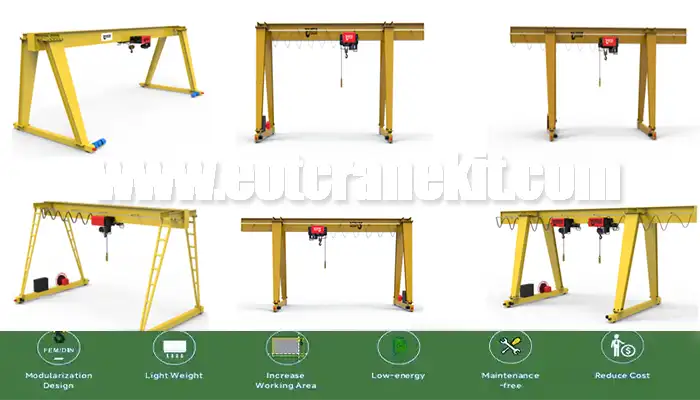
Significance in Industrial Settings
Single girder Goliath cranes play a crucial role in various industrial settings due to their adaptability and cost-effectiveness. Their significance includes:
- Efficiency: These cranes provide a streamlined solution for lifting and transporting heavy loads, which enhances overall productivity in manufacturing, construction, and logistics.
- Space Utilization: Their design is suited for large open areas, maximizing floor space and allowing for efficient use of workspace.
- Cost-Effectiveness: With fewer components than double girder cranes, single girder Goliath cranes often come at a lower initial cost and can be more economical to maintain.
- Versatility: They are used in diverse environments, from manufacturing plants and construction sites to ports and warehouses, demonstrating their broad applicability.
Your Trusted Single Girder Goliath Crane Manufacturer & Supplier
Design and Structure of Single Girder Goliath Cranes
Single Girder Configuration
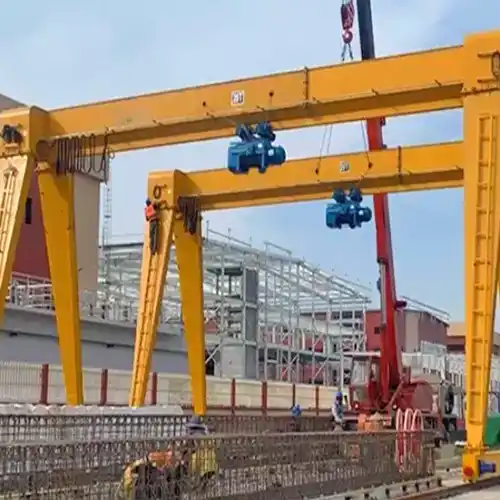
Goliath gantry crane framework, travelling system and structural components
Main Girder
The main girder is a critical component of the single girder Goliath crane, serving as the primary horizontal support beam. It is designed to bear the weight of the loads being lifted and transported, as well as the crane's own weight.
- Design: Typically, the main girder is a single, solid beam that runs across the width of the crane. It can be constructed from various materials, including steel depending on the load requirements and environmental conditions.
- Functionality: The girder supports the hoist mechanism and the trolley, which moves along its length to facilitate load lifting and movement. It must be robust enough to handle the stresses of lifting heavy loads while maintaining stability and minimizing deflection.
Structural Components and Materials
- Girder Material: The choice of material for the girder impacts its strength, weight, and durability. Common materials include:
- Steel: Offers high strength and durability, making it suitable for heavy-duty applications.
- Reinforcements: Additional reinforcements such as stiffeners or gussets may be incorporated into the girder design to enhance its load-bearing capacity and resistance to bending.
Main Girder - Goliath Gantry Crane Framework
The main girder is the central horizontal beam of a Goliath crane and is fundamental to its structure and functionality. Here's an in-depth look at its role and characteristics:
- Function: The main girder supports the crane's lifting and moving mechanisms, including the hoist and trolley system. It spans the width of the crane, bearing the weight of the loads being lifted and ensuring the proper distribution of stress across the crane's framework.
- Construction: The girder is typically made from high-strength materials such as steel or aluminum. Steel girders are favored for their ability to support heavier loads and resist wear over time, while aluminum girders are chosen for lighter applications where reduced weight and corrosion resistance are crucial.
- Design Considerations: The design of the main girder must ensure minimal deflection under load to maintain accurate load positioning and operational safety. Engineers consider factors such as the load capacity, span length, and material strength to optimize the girder's performance and durability.
Supporting Legs - Goliath Gantry Crane Framework
Supporting legs are the vertical structures that provide stability to the Goliath crane by anchoring the main girder and facilitating movement. Key aspects include:
- Function: The supporting legs are attached to the ends of the main girder and transfer the load from the girder to the ground or support structure. They are equipped with wheels or tracks to enable the crane to move along its rail system or trackway.
- Design and Materials: Supporting legs are designed to handle the crane's total load, including both the weight of the crane itself and the loads being lifted. They are commonly constructed from steel or other durable materials to ensure strength and stability. The design of the legs must account for factors such as load distribution, ground conditions, and crane movement.
- Adjustment Capabilities: Some Goliath crane designs include adjustable legs to accommodate different working environments and load requirements. These adjustable legs can be raised or lowered to modify the crane's height, allowing for flexibility in various applications and environments. This feature is particularly useful in facilities with varying ceiling heights or specific operational needs.
- Movement Systems: The legs are often equipped with wheels or tracks that interact with a rail system or trackway. The movement system allows the crane to travel along a predefined path, facilitating efficient handling of materials over large areas. The wheels or tracks must be designed to support the crane's weight and provide smooth, reliable movement.
Wheels - Goliath Gantry Crane Travelling System
The wheels of a Goliath crane are integral to its mobility, enabling smooth and efficient movement along the rail system. Here are key aspects of the wheels:
Function: Mounted on the supporting legs, the wheels support the crane's weight and facilitate its movement along the rails. They are designed to handle the substantial loads the crane may lift and move.
Types of Wheels:
- Steel Wheels: Commonly used for their strength and durability. Steel wheels are suitable for heavy-duty applications and are ideal for rail systems subjected to high stress and heavy loads.
- Polyurethane Wheels: These wheels are used in environments where noise reduction, reduced vibration, and resistance to wear are important. Polyurethane wheels are often chosen for applications requiring smoother, quieter operation and less impact on the rail system.
Maintenance:
- Inspection: Regularly check for signs of wear, damage, or misalignment.
- Lubrication: Proper lubrication reduces friction and wear.
- Alignment: Ensure that wheels are properly aligned with the rail system.
Rail System - Goliath Gantry Crane Rail Travelling System
The rail system provides the track along which the Goliath crane travels. It is a critical component that supports the crane's movement and affects its overall performance.
Function: The rail system is designed to support the crane's weight and guide its movement.
Types of Rails:
- Embedded Rails: These rails are set into the ground, providing a stable and level track.
- Mounted Rails: Installed on support structures such as columns or beams.
Materials: Rails are typically made from high-strength, durable materials such as steel and reinforced concrete.
Installation:
- Proper Alignment: Accurate alignment is crucial for performance.
- Securing Rails: Ensure rails are securely fixed.
- Regular Inspections: Inspect regularly for wear, damage, or misalignment.
Overall, the wheel and rail systems are essential components of single girder Goliath cranes, providing the necessary support and movement capabilities for efficient operation.
Your Trusted Single Girder Goliath Crane Manufacturer & Supplier
Based on Crane Girder Design
Design and Structure of Single Girder Goliath Cranes
Box girder structure design features, applications and advantages
Box Girder Single Girder Goliath Cranes Box girder single girder Goliath cranes are distinguished by their main girder, which features a box-shaped cross-section. This design offers enhanced strength and rigidity, making it well-suited for heavy-duty applications.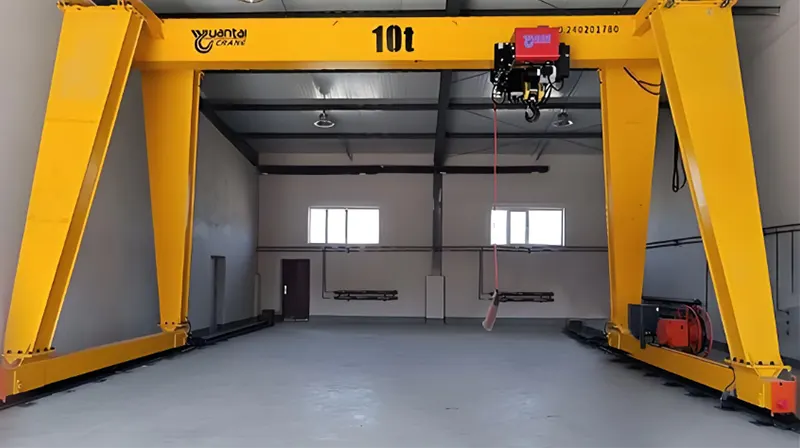
Design Features
- Box Girder Structure: The main girder of a box girder crane has a hollow box-like cross-section, with two parallel flanges connected by a vertical web. This design provides significant strength and resistance to bending, enabling the crane to handle heavy loads with minimal deformation.
- Strength and Rigidity: The box girder's shape contributes to its high strength-to-weight ratio, offering exceptional rigidity and stability. This makes it ideal for applications where structural integrity is critical.
- Load Distribution: The box girder design effectively distributes the load across the entire length of the girder. This even load distribution reduces the risk of localized stress and enhances the crane's overall stability and performance.
Applications
- Heavy-Duty Manufacturing: Box girder single girder Goliath cranes are commonly used in large manufacturing facilities where heavy machinery and equipment need to be lifted and transported. Their robust design is capable of handling substantial loads and providing precise control.
- Heavy Load Handling: These cranes are well-suited for environments where heavy or bulky materials need to be moved, such as steel production plants or large-scale logistics centers.
Advantages
- Enhanced Strength: The box girder design provides superior strength and rigidity, making it capable of handling larger and heavier loads compared to other girder designs.
- Increased Stability: The box girder's structural rigidity contributes to improved crane stability, reducing the risk of swaying or movement that can affect load handling.
- Versatility: Box girder cranes can be used in a variety of industrial settings where heavy-duty lifting and precise load handling are required, offering flexibility and reliability.
In summary, box girder single girder Goliath cranes are ideal for applications requiring high strength and stability. Their robust design and efficient load distribution make them a preferred choice for heavy-duty manufacturing and load handling environments.
H-Beam Single Girder Goliath Cranes
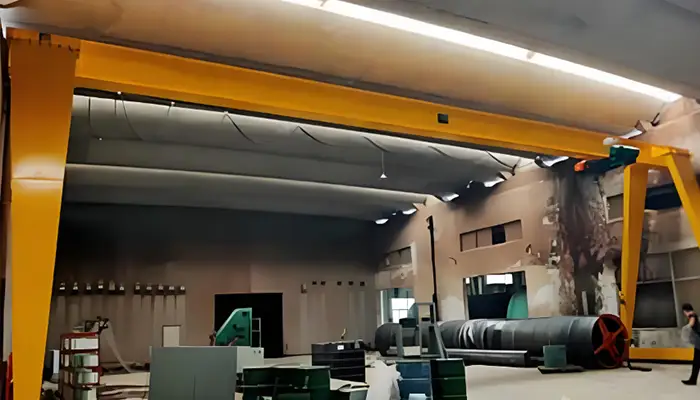
H-beam single girder Goliath cranes utilize an H-beam, also known as an I-beam, as their main girder. This design is characterized by its distinct H-shaped cross-section, which provides a combination of strength, weight efficiency, and cost-effectiveness.
Design Features
- H-Beam Girder: The H-beam features a vertical web and horizontal flanges, which contribute to its load-bearing capacity. The vertical web provides resistance to bending and shear forces, while the horizontal flanges offer support and stability. This design balances structural strength with weight, making it suitable for a variety of applications.
- Strength-to-Weight Ratio: The H-beam's design offers a favorable strength-to-weight ratio, making it a practical choice for cranes that need to support substantial loads without excessive weight. This balance allows for efficient crane operation and reduced material costs.
- Cost-Effectiveness: H-beams are often more cost-effective compared to other girder designs, such as box girders, due to their simpler construction and lower material requirements. This cost efficiency makes H-beam single girder Goliath cranes a popular choice for general industrial and construction applications.
Applications
- Industrial Settings: H-beam single girder Goliath cranes are commonly used in general industrial environments where a balance of strength, weight, and cost is required. They are suitable for lifting and moving various materials and equipment in manufacturing facilities and warehouses.
- Construction Sites: These cranes are also frequently employed on construction sites where the combination of strength and cost-effectiveness is essential. They are used for lifting construction materials, equipment, and structural components.
Advantages
- Versatile Application: The H-beam girder's design makes it adaptable to a wide range of industrial and construction applications, where a combination of strength and cost efficiency is necessary.
- Efficient Performance: The balance of strength and weight provided by the H-beam allows for efficient crane operation, with the ability to handle substantial loads while minimizing material costs.
- Cost Savings: The use of H-beams can reduce overall crane construction costs, making it a cost-effective solution for various lifting and handling tasks.
In summary, H-beam single girder Goliath cranes offer a practical solution for applications requiring a balance of strength, weight, and cost. Their versatile design and cost-effectiveness make them a common choice for industrial and construction environments.
Box Girder + H-Beam Single Girder Goliath Cranes
Box girder + H-beam single girder Goliath cranes combine the structural features of both box girders and H-beams. This hybrid design aims to leverage the strengths of each girder type to offer enhanced performance and versatility for various industrial applications.
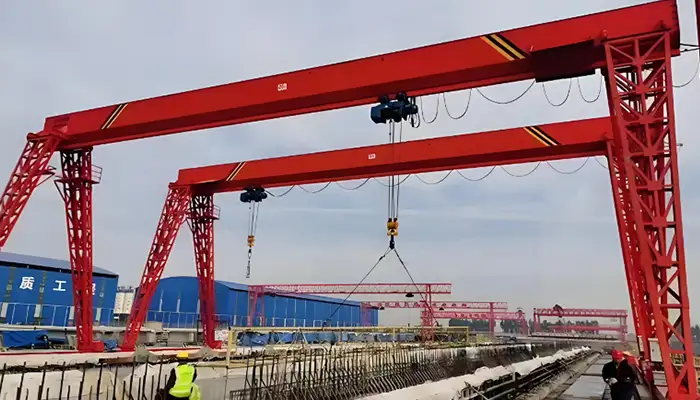
Design Features
- Hybrid Girder Structure: This design incorporates a box girder and H-beam in a single crane system. Typically, the main girder features a box girder in the central section for its superior strength and rigidity, while H-beams may be used in supporting sections to provide additional load-bearing capacity and cost efficiency.
- Strength and Flexibility: The combination of a box girder and H-beams allows the crane to benefit from the box girder's high strength and rigidity, along with the H-beam's balanced strength-to-weight ratio. This hybrid approach offers enhanced structural performance and flexibility in handling various loads.
- Load Distribution and Stability: The integration of these two girder types improves load distribution across the crane, ensuring greater stability and minimizing the risk of stress concentrations. The design allows for efficient handling of both heavy and lighter loads.
Applications
- Heavy and Diverse Loads: The hybrid design is particularly effective in environments where a wide range of load types and sizes need to be managed. This includes manufacturing facilities that handle both heavy machinery and lighter components.
- Industrial and Construction Sites: The versatility of the box girder + H-beam crane makes it suitable for diverse industrial and construction applications. It can accommodate varying load requirements and operational conditions, making it ideal for complex lifting tasks.
Advantages
- Enhanced Strength and Rigidity: By combining the box girder's rigidity with the H-beam's structural efficiency, this crane design achieves a high strength-to-weight ratio, enabling it to handle heavy loads with minimal deflection.
- Cost Efficiency: The use of H-beams in conjunction with a box girder can reduce material costs while still providing robust performance. This cost-effective design approach makes it suitable for various industrial applications.
- Versatility and Adaptability: The hybrid design offers increased versatility, allowing the crane to adapt to different operational needs and environments. It is well-suited for applications requiring a balance of heavy-duty performance and cost-effectiveness.
In summary, box girder + H-beam single girder Goliath cranes offer a hybrid approach to crane design, combining the strengths of both girder types. This design provides enhanced strength, flexibility, and cost efficiency, making it suitable for a wide range of industrial and construction applications.
Truss Girder Single Girder Goliath Cranes
Truss Girder Single Girder Goliath cranes feature a main girder with a truss design, which includes a framework of interconnected triangular elements. This design provides a lightweight yet strong structure, making it suitable for various industrial applications where reduced weight and high strength are essential.

Design Features
- Truss Girder Structure: The truss girder consists of a series of triangular elements, creating a framework that distributes loads efficiently. The use of trusses allows the girder to achieve significant strength while maintaining a lighter weight compared to solid or box-shaped girders.
- Load Distribution: The triangular arrangement of the truss components helps distribute loads evenly across the girder. This effective load distribution reduces the risk of localized stress and enhances the crane's stability and performance.
- Material Efficiency: The truss design makes efficient use of materials, allowing for a strong yet lightweight girder. This material efficiency can result in lower construction and operational costs compared to other girder designs.
Applications
- Light to Medium-Duty Applications: Truss girder single girder Goliath cranes are well-suited for applications where a balance of strength and weight is required. They are commonly used in environments such as light to medium-duty manufacturing facilities, warehouses, and assembly lines.
- Construction and Maintenance: These cranes are also employed in construction and maintenance tasks where their lightweight structure can be advantageous. They are suitable for lifting and moving components and materials in situations where reduced crane weight can improve maneuverability.
Advantages
- Lightweight Design: The truss girder's design allows for a lighter crane structure, which can reduce installation costs and improve operational efficiency. The reduced weight can also facilitate easier transportation and setup.
- High Strength: Despite its lighter weight, the truss girder provides high strength and rigidity, enabling it to handle substantial loads while minimizing deflection and deformation.
- Cost Efficiency: The use of a truss design can result in cost savings by reducing the amount of material required and potentially lowering construction and maintenance expenses.
In summary, truss girder single girder Goliath cranes offer a lightweight yet strong solution for industrial and construction applications. Their efficient use of materials and effective load distribution make them ideal for environments requiring a balance of strength and weight, while also providing cost-effective benefits.
Your Trusted Single Girder Goliath Crane Manufacturer & Supplier
Cantilever Design
Design and Structure of Single Girder Goliath Cranes
Standard Single Girder Goliath Crane
The standard single girder Goliath crane is a widely utilized crane type known for its straightforward design and reliable performance. It features a single horizontal main girder supported by vertical legs and travels along a fixed rail or track, making it ideal for various industrial applications.
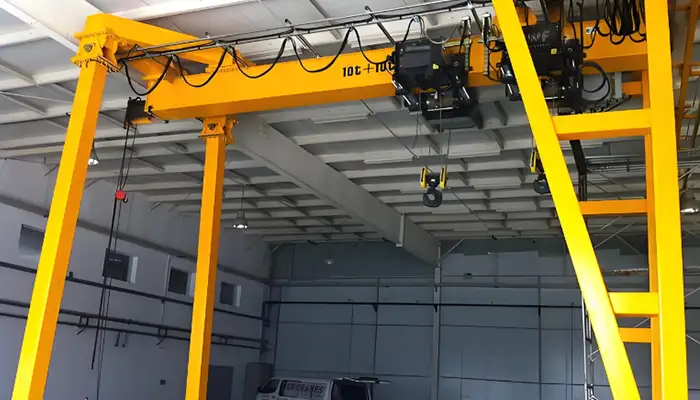
Design Features
Main Girder:
- Structure: A single, robust beam designed to support both the hoist and lifting mechanisms. This girder is engineered to manage the weight of loads efficiently and ensure stable lifting operations.
- Function: Provides the necessary support and movement for the hoist and trolley system.
Support Legs:
- Structure: Vertical legs mounted on wheels that enable the crane to move smoothly along the track. These legs are built to support the crane's weight and the loads it handles.
- Function: Ensure stability and support for the crane while facilitating movement along the rail system.
Rail System:
- Design: A fixed rail or track, which can be ground-mounted or elevated, serves as the path for the crane's movement. This rail system provides stability and precise control over load positioning.
Applications
- Manufacturing: Used for handling and transporting materials, components, and finished products within manufacturing environments. It streamlines operations by facilitating efficient material movement across production areas.
- Construction: Ideal for construction sites where it aids in lifting and moving building materials, equipment, and tools. Its reliability supports various construction tasks and improves workflow efficiency.
- General Industrial Use: Versatile enough for warehouses, distribution centers, and assembly lines. It enhances material handling processes, contributing to overall operational efficiency in diverse industrial settings.
The standard single girder Goliath crane, with its cantilever design, stands out for its simplicity, dependability, and adaptability. Its effective design features and broad application range make it a valuable asset in both manufacturing and construction industries, as well as general industrial operations.
Single Girder Cantilever Goliath Crane
The Single Girder Cantilever Goliath Crane features an extended cantilevered section that provides enhanced reach and flexibility. This design is suited for applications where additional coverage or the ability to maneuver over obstacles is needed.
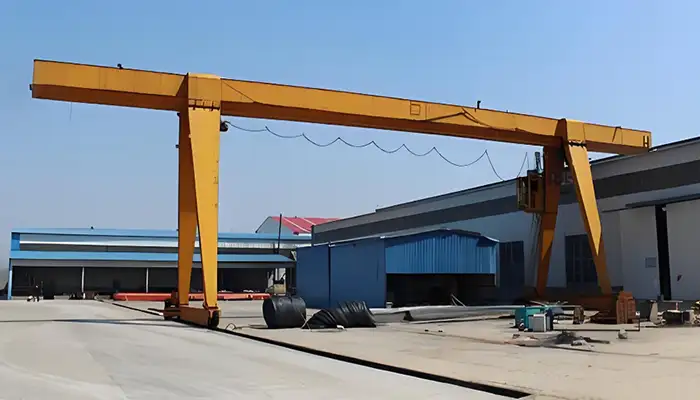
Design Features
Cantilever Arm:
- Structure: Extends outward from the main girder beyond the support legs. This extension allows the crane to reach areas that are otherwise difficult to access.
- Function: Enhances the crane's ability to handle materials over obstructions or to extend its operational range within large facilities.
Main Girder and Legs:
- Configuration: The main girder remains a single beam supported by vertical legs, similar to the standard design. However, the addition of the cantilever arm allows for greater flexibility in material handling.
- Support: The supporting legs and girder are designed to accommodate the additional reach of the cantilever arm, maintaining stability and load-bearing capacity.
Applications
- Extended Reach: Ideal for situations where materials need to be lifted or moved over obstacles or structures within the work area. The cantilevered design allows for greater maneuverability and access.
- Large Facilities: Useful in expansive industrial or manufacturing facilities where the crane needs to cover large areas or handle materials at a distance from the main support structure.
The Single Girder Cantilever Goliath Crane offers increased reach and operational flexibility by incorporating an extended cantilever arm. This design is particularly beneficial in environments requiring the crane to navigate over obstacles or extend its coverage across extensive areas. Its versatile application makes it a valuable tool for handling materials in complex or expansive industrial settings.
Your Trusted Single Girder Goliath Crane Manufacturer & Supplier
Based on Gantry Frame Design
Design and Structure of Single Girder Goliath Cranes
A-Frame Single Girder Goliath Crane
The A-Frame Single Girder Goliath Crane features a distinctive A-shaped frame that provides stability and support. Its design is characterized by two slanted legs that converge at the top to support the main girder, creating a stable and effective structure for various industrial applications.
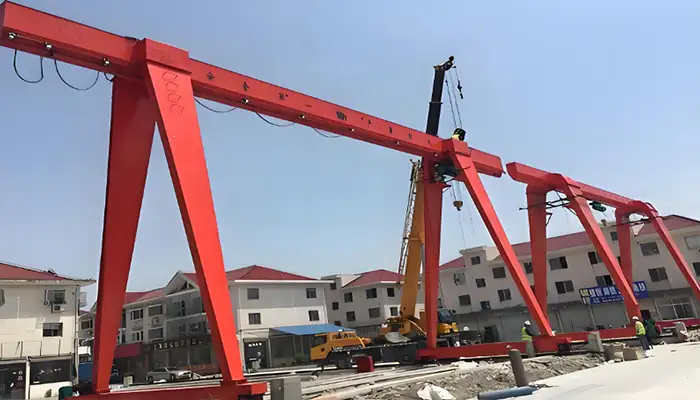
Design Features
A-Frame Structure:
- Configuration: The crane's framework forms a triangular shape resembling the letter A, with the slanted legs providing robust support and stability.
- Function: This design offers a solid base that distributes the load evenly, reducing stress on individual components and enhancing overall stability.
Main Girder:
- Positioning: Located at the top of the A frame, the main girder is supported by the slanted legs. It is responsible for carrying the hoisting equipment and handling the loads.
- Role: Supports the hoist and trolley system, enabling effective lifting and movement of materials.
Applications
- Space Constraints: Ideal for environments where space is limited and the crane needs to be compact yet robust. The A-frame design provides an efficient use of space while maintaining stability.
- Manufacturing Facilities: Particularly suitable for small to medium-sized manufacturing facilities where stability is crucial, and the crane needs to operate within confined areas.
The A-Frame Single Girder Goliath Crane is designed with a triangular A-shaped frame that ensures stability and effective load distribution. Its compact and robust design makes it well-suited for applications in environments with space constraints, such as smaller manufacturing facilities. Its stability and support features contribute to efficient and reliable material handling in these settings.
L-Frame Single Girder Goliath Crane
The L-Frame Single Girder Goliath Crane features a distinctive L-shaped framework, combining a vertical support leg with an extended horizontal leg. This design provides a compact yet effective solution for various industrial lifting needs.
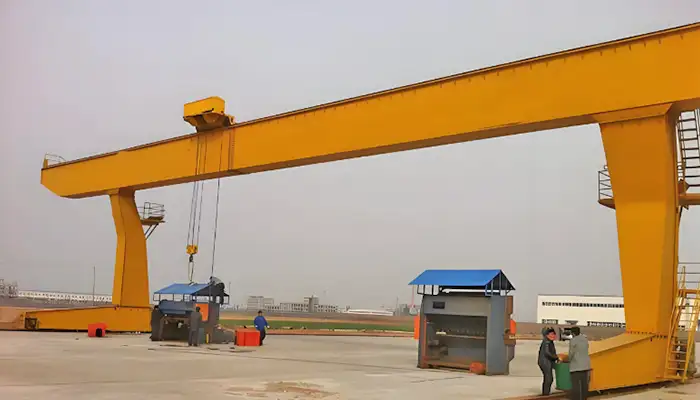
Design Features
L-Frame Structure:
- Configuration: The framework resembles the letter L, with one vertical leg providing support and stability, and an extended horizontal leg accommodating the main girder.
- Function: This design offers a more compact footprint compared to other frame types, making it suitable for environments with space limitations.
Main Girder:
- Mounting: Positioned horizontally at the top of the L frame, the main girder is supported by both the vertical and horizontal legs.
- Role: Supports the hoisting equipment and provides a stable platform for lifting and moving materials.
Applications
- Space-Constrained Environments: Ideal for tight workshop areas or confined construction sites where space is at a premium. The L-frame design allows for efficient use of available space while providing the necessary lifting capabilities.
- Compact Operations: Suitable for operations where a smaller crane footprint is advantageous, facilitating easier maneuverability and access in limited spaces.
The L-Frame Single Girder Goliath Crane offers a compact and effective design with its L-shaped framework. Its combination of a vertical support leg and an extended horizontal leg makes it an ideal choice for environments with space constraints, such as tight workshops or construction sites. Its design ensures stability and efficient material handling while minimizing its footprint.
Semi-Frame Single Girder Goliath Crane
The Semi-Frame Single Girder Goliath Crane features a hybrid design that combines elements of both A-frame and L-frame structures. This configuration is characterized by a partially framed structure, offering a balance between stability and space efficiency.
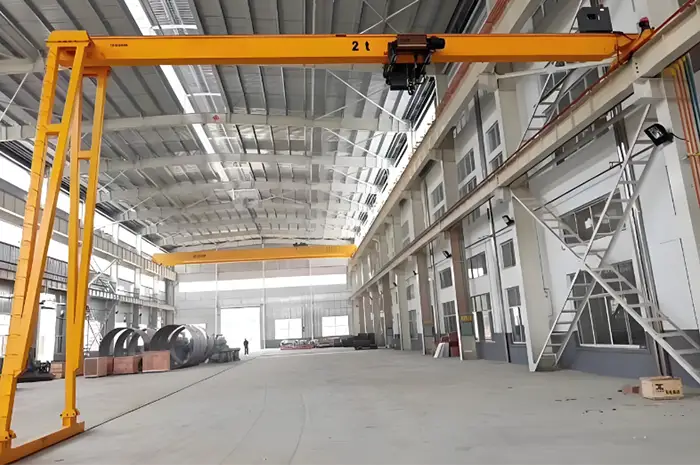
Design Features
Semi-Frame Structure:
- Configuration: The semi-frame design includes a partial framework, typically consisting of a single vertical leg combined with a partially extended horizontal leg. This design provides a stable base while minimizing the crane's footprint.
- Function: The partial frame supports the main girder while allowing for a more compact design compared to a full A-frame or L-frame crane.
Main Girder:
- Mounting: Positioned horizontally and supported by the semi-frame structure. It accommodates the hoisting equipment and is designed to handle the lifting and movement of materials.
- Role: Provides a robust platform for lifting operations while maintaining a balance between support and space efficiency.
Applications
- Moderate Space Requirements: Ideal for environments where a balance between stability and space efficiency is needed. Suitable for industrial settings where the crane needs to fit into moderately constrained spaces.
- Versatile Use: Effective for a variety of applications, including manufacturing and construction, where both support and compactness are required.
The Semi-Frame Single Girder Goliath Crane offers a hybrid design that merges the advantages of A-frame and L-frame structures. Its partially framed design ensures stability while providing a more compact footprint, making it suitable for environments with moderate space constraints. This crane is versatile and effective for various industrial applications, balancing support and space efficiency.
Your Trusted Single Girder Goliath Crane Manufacturer & Supplier
Based on Crane Travelling System
Design and Structure of Single Girder Goliath Cranes
Rubber-Tyred Single Girder Goliath Cranes
Description: Rubber-tyred single girder Goliath cranes are equipped with large, heavy-duty tires instead of running on rails. This design allows the crane to move freely across various surfaces, including concrete and asphalt.
Design Features:
- Tires: The crane uses industrial-grade rubber tires mounted on its supporting legs or base. These tires are designed to handle heavy loads and provide smooth movement across different surfaces.
- Mobility: The rubber-tyred design enables the crane to travel over uneven or rough terrain, making it versatile for use in outdoor environments or temporary setups.
- Steering: Many rubber-tyred Goliath cranes feature advanced steering systems, including articulated steering, to enhance maneuverability in tight spaces.
- Applications: Commonly used in construction sites, port operations, and temporary setups where flexibility and mobility are required.
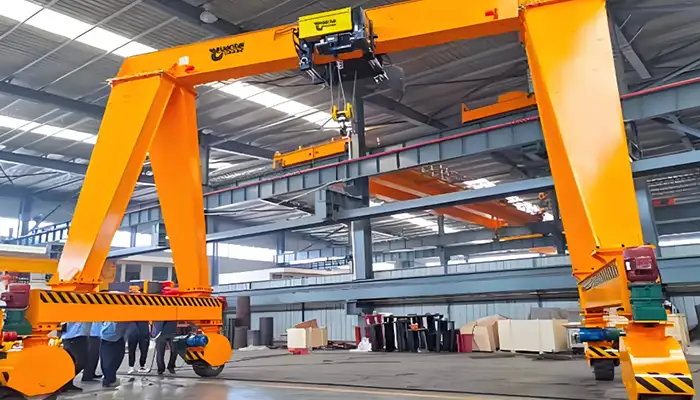
Rail-Traveling Single Girder Goliath Cranes
Description: Rail-traveling single girder Goliath cranes operate on a fixed rail system installed on the ground or elevated structures. This design provides stability and precision for the crane's movement.
Design Features:
- Rails: The crane moves along rails that are either embedded in the ground or mounted on support structures. These rails guide the crane's movement and ensure accurate travel along the designated path.
- Wheels: Steel or polyurethane wheels are mounted on the crane's supporting legs, allowing the crane to travel smoothly along the rails. The wheels are designed to handle the weight of the crane and the loads being lifted.
- Track Systems: The rail system can be straight or curved, depending on the layout of the work area and the crane's intended use. Proper alignment and maintenance of the rail system are essential for smooth operation.
- Applications: Ideal for use in industrial facilities, manufacturing plants, and warehouses where precise positioning and stability are important.
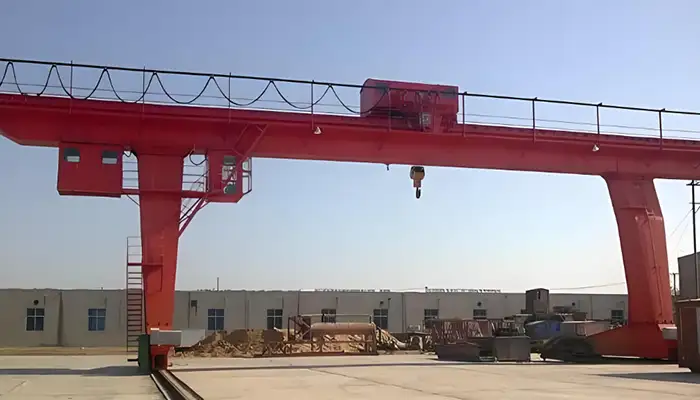
Each type of crane traveling system offers distinct advantages based on the operational environment and requirements. Rubber-tyred Goliath cranes provide greater mobility and flexibility, while rail-traveling Goliath cranes offer enhanced stability and precision for more controlled environments.
Your Trusted Single Girder Goliath Crane Manufacturer & Supplier
Main Specifications of Single Girder Goliath Gantry Cranes
Tailored Design and Soluations are Provided As Per Your Required Specifications
Overview of Main Specifications
Key technical specifications and operational considerations of single girder Goliath cranes, including load, span, materials, mobility, and safety.
| Specification | European Style Goliath Crane | Economical Traditional Goliath Crane | L Leg Goliath Crane | Single Girder Semi-Goliath Crane |
|---|---|---|---|---|
| Load Capacity | 1-20 tons | 1-20 tons | 1-32 tons | 1-20 tons |
| Span | 8~35 | 8~35 | 8~35 | 8~30 |
| Lifting Height | 6~18 | 6~18 | 6~18 | 6~18 |
| Material | Steel, | Steel | Steel | Steel |
| Mobility | movable on fixed crane runway | movable on fixed crane runway | movable on fixed crane runway | movable on fixed crane runway |
| Power Options | Electric, | Electric | Electric | Electric, |
| Control Mechanism | Pendant, Remote | Pendant, Remote | Pendant, Remote | Pendant, Remote |
| Safety Features | Overload Protection, Emergency Stop | Overload Protection, Emergency Stop | Overload Protection | Overload Protection, Emergency Stop |
Load Capacity
- 1 Ton: Suitable for light-duty applications such as small workshops or maintenance tasks.
- 2 Tons: Ideal for handling moderately heavy items in smaller manufacturing facilities or warehouses.
- 5 Tons: Commonly used in medium-sized operations for lifting heavier components or equipment.
- 10 Tons: Used in larger plants and warehouses where heavier loads are handled, such as machinery or large parts.
- 15 Tons: Suitable for demanding applications requiring substantial loads, including heavy assembly and maintenance tasks.
- 20 Tons: Employed in heavy-duty operations such as large-scale industrial facilities or construction sites.
Span and Height
Standard Span Ranges:
- Up to 6 meters (20 feet) – small workshops or confined spaces.
- 6 to 12 meters (20–40 feet) – medium-sized facilities and production areas.
- Over 12 meters (40 feet) – larger industrial settings requiring extended coverage.
Headroom: Distance from girder to floor must allow safe operation and avoid interference with structures.
Lifting Height: Maximum lifting height depends on crane design and intended use.
Crane Structure and Materials
Structural Integrity and Durability:
- Strength – designed to withstand maximum load capacity.
- Durability – quality materials and construction ensure long-term performance and resistance to wear.
Mobility and Operation
Types of Wheels and Tracks:
- Wheels – rubber for smooth surfaces or steel for rails.
- Tracks – fixed tracks or rails for precise movement and stability.
Manual vs. Electric Mobility:
- Manual – hand-cranked or push-pull systems, ideal for light loads.
- Electric – motorized systems for effortless movement, suitable for larger loads and frequent operations.
Power and Control Systems
Power Supply Options:
- Electric – reliable, standard electrical supply.
- Battery-Operated – portable, for locations without direct electrical access.
Control Mechanisms:
- Remote Control – operate from a distance for safety and convenience.
- Pendant Control – handheld unit for precise operation and close operator interaction.
Safety Features
- Overload Protection: Sensors and alarms alert operators when approaching or exceeding load limits.
- Emergency Stop Functions: Immediate halting of operations via emergency buttons or controls.
- Safety Certification Standards: Compliance with CE, ANSI/ASME, and other relevant standards ensures safe and reliable operation.
Hot Sale Single Girder Goliath Gantry Crane Specificaitons
Specificaitons of European Style Single Girder Goliath Crane
Characteristics and Design Features
The European Style Single Girder Goliath Crane is known for its advanced design and engineering, reflecting European standards and practices. Key characteristics include:
- Compact Design: This crane typically features a more compact and lightweight design compared to traditional models, making it ideal for facilities with limited space.
- High Strength Materials: It uses high-quality steel or aluminum, which enhances strength and durability while keeping the crane's weight manageable.
- Optimized Safety Features: Equipped with advanced safety mechanisms such as overload protection, emergency stop functions, and precise control systems.
- Adjustable Height Options: Some models come with adjustable height features, allowing for greater flexibility in various applications.
- Smooth Operation: Designed for smooth and efficient operation, often incorporating sophisticated control systems for precise movements.
Common Applications and Advantages
The European Style Single Girder Goliath Crane is versatile and suited for various applications:
- Manufacturing Facilities: Ideal for lifting and transporting materials and components in manufacturing plants, especially where space is limited.
- Workshops: Used in workshops for maintenance and repair tasks, where a compact, efficient crane is required.
- Warehousing: Suitable for moving goods within warehouses, benefiting from its compact design that fits well in tight spaces.
Advantages:
- Space Efficiency: Its compact design allows for better use of floor space and can operate in smaller areas.
- Enhanced Safety: Incorporates modern safety features that meet stringent European standards, reducing the risk of accidents.
- Energy Efficiency: Often designed to be more energy-efficient, contributing to lower operational costs.
- Ease of Operation: Advanced control systems and smooth operation enhance productivity and reduce operator fatigue.
The European Style Single Girder Goliath Crane is favored for its combination of robust design, safety, and efficiency, making it a reliable choice for various industrial and commercial applications.
Technical Parameter of NMH European Electric Hoist Goliath Crane | ||||||
Capacity | t | 2 | 5 | 10 | 16 | 20 |
Span | S(m) | 8~35 | 8~35 | 8~35 | 8~35 | 8~35 |
Lifting height | m | 6~12 | 6~12 | 6~12 | 6~12 | 6~12 |
Lifting speed | m/min | 0.8/5 | 0.8/5 | 0.8/5 | 0.66/4 | 0.66/4 |
Trolley speed | m/min | 2~20 | 2~20 | 2~20 | 2~20 | 2~20 |
Crane speed | m/min | 3~30 | 3~30 | 3~30 | 3~30 | 3~30 |
Work duty | A5 | A5 | A5 | A5 | A5 | |
Track type | P24 | P24 P30 | P30 P38 | P30 P38 | P38 P43 | |
Specifications of Economical Traditional Single Girder Goliath Crane
Cost-Effective Design and Construction
The Economical Traditional Single Girder Goliath Crane is designed with simplicity and affordability in mind, making it a popular choice for budget-conscious projects. Its cost-effective design and construction include:
- Simplified Structure: This crane features a straightforward design with a single horizontal girder supported by vertical legs. The simplicity of the structure reduces manufacturing and material costs.
- Standard Materials: Utilizes common materials such as standard steel, which keeps production costs low while still providing adequate strength and durability.
- Basic Components: Equipped with essential components and fewer advanced features, this crane is designed to meet basic operational needs without the added costs of high-end technology.
- Easy Maintenance: The simpler design results in easier maintenance and lower upkeep costs, contributing to overall cost savings over the crane's lifespan.
Typical Use Cases and Benefits
The Economical Traditional Single Girder Goliath Crane is well-suited for various applications where budget constraints are a primary concern:
- Small to Medium-Sized Workshops: Ideal for small-scale operations and workshops that need a reliable crane without requiring advanced features or high lifting capacities.
- Construction Sites: Used in construction sites for lifting and moving materials, especially when a cost-effective solution is needed for temporary setups.
- Warehousing and Storage: Suitable for handling goods and inventory in storage facilities where budget-friendly equipment is desired.
Benefits:
- Affordability: Its cost-effective design makes it an excellent choice for projects with limited budgets, offering essential functionality at a lower price.
- Simplicity: The straightforward design ensures ease of use and minimal training requirements for operators.
- Reliability: Despite its basic features, the crane is reliable and performs well for standard lifting tasks, meeting the needs of many industrial and commercial environments.
- Versatility: Can be adapted to various settings and tasks, making it a flexible option for different applications.
The Economical Traditional Single Girder Goliath Crane provides a practical and budget-friendly solution for lifting needs, delivering essential functionality and reliability without the higher costs associated with more advanced crane models.
Technical Parameter of MH Electric Hoist Single Girder Goliath Crane | ||||||
Capacity | t | 3 | 5 | 10 | 16 | 20 |
Span | S(m) | 8~35 | 8~35 | 8~35 | 8~35 | 8~35 |
Lifting height | m | 6~18 | 6~18 | 6~18 | 6~18 | 6~18 |
Lifting speed | m/min | 8(0.8/8) | 8(0.8/8) | 7(0.7/7) | 5(0.35/5) | 3(0.33/3) |
Trolley speed | m/min | 20(30) | 20(30) | 20(30) | 18 | 14 |
Crane speed | m/min | 20(30) | 20(30) | 20(30) | 20(30) | 20(30) |
Work duty | A3~A4 | A3~A4 | A3~A4 | A3~A4 | A3~A4 | |
Track type | P24 | P24 P30 | P30 P38 | P38 | P38 P43 | |
Specifications of L Leg Single Girder Goliath Crane
Design Features and Load Capacity
The L Leg Single Girder Goliath Crane is characterized by its distinctive leg design, which provides unique advantages in terms of stability and load handling. Key design features and specifications include:
- L-Shaped Legs: The L-shaped legs of this crane provide a stable base and allow for a wider span, making it suitable for various types of loads and operational environments.
- Enhanced Stability: The design of the L legs offers improved stability compared to traditional leg configurations, reducing the risk of tipping and ensuring safer operation.
- Load Capacity: Typically, the L Leg Single Girder Goliath Crane can handle loads ranging from 5 to 20 tons. The exact capacity can vary based on the crane's specific design and construction.
- Versatile Span: The L leg design supports a wider span, allowing the crane to cover a larger area and accommodate larger items or multiple smaller loads.
Applications and Operational Efficiency
The L Leg Single Girder Goliath Crane is used in a variety of settings where its design advantages are particularly beneficial:
- Manufacturing Plants: Ideal for lifting and transporting heavy components or equipment in manufacturing facilities, especially where wide spans are needed.
- Construction Sites: Useful in construction sites for moving large materials or machinery, benefiting from its stability and wide reach.
- Ports and Warehouses: Suitable for handling bulky items or multiple loads simultaneously, enhancing efficiency in logistics and storage operations.
Operational Efficiency:
- Increased Reach: The L leg design allows for a greater reach and flexibility in positioning, making it easier to access different areas of the workspace.
- Improved Stability: The design enhances overall stability during lifting operations, reducing the likelihood of crane movement or tipping.
- Enhanced Load Handling: The crane's load capacity and wide span make it effective for handling large and heavy items, increasing productivity and efficiency in various applications.
The L Leg Single Girder Goliath Crane is valued for its stability, load-handling capabilities, and versatility, making it a practical choice for demanding environments where space and load capacity are critical considerations.
Capacity/t | 3 | 5 | 10 | 16 | 20 | ||
Span/m | 12/16/24/30 | ||||||
Operational method | pendent line with press button/cabin/remote | ||||||
| Lifting m/min | 8,8/0.8 | 8,8/0.8 | 7,7/0.7 | 5 | 5 | |
Cross travelling | 20 | 20 | 20 | 20 | 20 | ||
Long Travelling | Ground | 20 | 20 | 20 | 20 | 20 | |
Cable | 20,30,45 | 20,30,40 | 20,30 | 20,30 | 20,30 | ||
Electric hoist | CD1/MD1 | CD1/MD1 | CD1/MD1 | CD1 | HC | ||
Lifting height/m | 6/9/12/18/24/30 | ||||||
Working duty | A3 | ||||||
Power supply | 380V 50Hz 3PH A.C. | ||||||
For outdoor use with double hoists for long and large loads handling
lifting capacity(TON) | 10/2 | 16/2 | 20/5 | 32/5 | 50/10 | |
Span(m) | 18-35 | |||||
Lifting height(M) | Main hook | 10 | 11 | 11 | 11 | 12 |
Auxiliary hook | 11 | 15 | 15 | 185 | 15 | |
crane speed(m/min) | 39.7 | 39.5 | 39.3 | 38.6 | 38.5 | |
trolley speed(m/min) | 39.6/40.1 | 40.1/47.1 | 40.0/47.1 | 38.6/48.2 | 39.7 | |
Wheel load(KN) | 177/222 | 298/383 | 340/432 | 285/457 | 350/378 | |
Track recommendation(kg/m) | 38-70 | |||||
Power Supply | According to customer demand | |||||
Specificaitons of Single Girder Semi-Goliath Crane
Hybrid Design with Rail and Floor Support
The Single Girder Semi-Goliath Crane features a hybrid design that combines elements of both gantry and overhead cranes. This unique structure includes:
- Combination of Support Systems: Unlike a full gantry crane, which relies entirely on gantry legs, the semi-gantry crane uses a combination of rail and floor support. It typically has one end supported by rails and the other end supported by a fixed structure or floor.
- Partial Gantry Design: The crane's design includes a single horizontal beam (the girder) supported on one side by a rail system and on the other side by a supporting structure, such as a building column or wall.
- Adjustable Height: The semi-gantry crane's height can often be adjusted to accommodate different load requirements and clearances, providing flexibility in various operational settings.
Advantages and Typical Uses
The Single Girder Semi-Goliath Crane offers several advantages due to its hybrid design, making it suitable for specific applications:
- Space Efficiency: By utilizing a combination of rail and floor support, the crane can operate in environments with limited space or where full gantry systems would be impractical. This design allows for better use of floor space while still providing effective lifting capabilities.
- Cost-Effective: Generally more affordable than full gantry cranes, the semi-gantry crane offers a cost-effective solution for lifting needs without the need for a complete gantry system.
- Versatility: The crane can be used in various settings, including warehouses, production facilities, and construction sites. It is particularly useful where one end of the crane can be supported by existing infrastructure, reducing the need for additional support structures.
Typical Uses:
- Manufacturing and Production: Ideal for facilities where space is constrained, and one end of the crane can be anchored to an existing building structure or rail system.
- Maintenance and Repair: Suitable for maintenance tasks where a versatile and space-efficient crane is needed to handle equipment and materials.
- Warehousing and Storage: Useful in warehouses for moving and lifting goods, especially in areas where installing a full gantry crane would be challenging or unnecessary.
Benefits:
- Enhanced Flexibility: The hybrid design allows for adaptability in various environments and operational requirements.
- Improved Space Utilization: Efficiently utilizes available space by combining rail and floor support, making it suitable for confined areas.
- Cost Savings: Offers a more economical alternative to full gantry cranes, providing similar lifting capabilities with lower installation and maintenance costs.
The Single Girder Semi-Goliath Crane combines the benefits of both gantry and overhead crane systems, offering a flexible, space-efficient, and cost-effective solution for various lifting needs.
Technical Parameter of BMH Electric Hoist Semi Goliath Crane | ||||||
Capacity | t | 3 | 5 | 10 | 16 | 20 |
Span | S(m) | 8~30 | 8~30 | 8~30 | 8~30 | 8~30 |
Lifting height | m | 6~18 | 6~18 | 6~18 | 6~18 | 6~18 |
Lifting speed | m/min | 8(0.8/8) | 8(0.8/8) | 7(0.7/7) | 5(0.35/5) | 3(0.33/3) |
Trolley speed | m/min | 20(30) | 20(30) | 20(30) | 18 | 14 |
Crane speed | m/min | 20(30) | 20(30) | 20(30) | 20(30) | 20(30) |
Work duty | A3~A4 | A3~A4 | A3~A4 | A3~A4 | A3~A4 | |
Track type | P24 | P24 P30 | P30 P38 | P30 P38 | P38 P43 | |
Tailored Goliath Crane Design, Customization Options
Customization options, design process, and case studies for tailored single girder gantry cranes
Customization Options
Tailoring for Specific Load Requirements
- Load Capacity Customization: Whether handling light, medium, or heavy loads, the crane's design can be customized to match the exact weight and nature of the materials being lifted. For instance, reinforcing the crane's structure for heavier loads or adjusting the hoisting mechanisms for delicate or bulky items.
- Special Load Handling Features: Custom cranes can be equipped with specialized hooks, spreader beams, or lifting magnets to efficiently and safely manage unique or non-standard loads.
Design Modifications for Unique Operational Environments
- Height and Span Adjustments: The crane's height and span can be modified to fit within confined spaces, clear obstacles, or cover extended areas, ensuring optimal functionality within the specific workspace.
- Environmental Considerations: Cranes operating in harsh environments, such as those with high temperatures, corrosive atmospheres, or explosive hazards, can be designed with specialized coatings, materials, and safety features to withstand these conditions.
Design Process
Initial Assessment of Needs and Site Conditions
- Site Analysis: Engineers conduct a detailed evaluation of the installation site, considering factors like available space, structural support, and environmental conditions.
- Operational Needs: Understanding the specific lifting and movement requirements of the operation, including frequency of use, load types, and operational safety standards.
Custom Design and Engineering Considerations
- Design Customization: Engineers create a custom crane design that aligns with the specific requirements. This may include selecting appropriate materials, adjusting structural elements, and integrating specialized components.
- Engineering Calculations: Detailed calculations ensure the crane's stability, load-bearing capacity, and safety margins, adhering to industry standards and regulations.
Prototype and Testing Phases
- Prototyping: A prototype may be developed, especially for highly customized or innovative designs, allowing for practical assessment and adjustments.
- Testing: Rigorous testing ensures the crane meets all performance and safety criteria, identifying any potential issues before the final design is approved for manufacturing.
Material and Design Considerations
Selection of Materials Based on Environmental Conditions
- Corrosion-Resistant Coatings: For cranes operating in coastal or industrial environments where corrosion is a concern, materials such as stainless steel or special coatings can be used to enhance durability and longevity.
- High-Strength Alloys: In applications requiring high load capacities or resistance to extreme conditions, high-strength steel alloys or composite materials may be selected.
Design Adjustments for Special Requirements
- Explosion-Proof Components: For operations in hazardous environments, such as chemical plants or oil refineries, cranes can be designed with explosion-proof motors, controls, and electrical systems to ensure safety.
- Temperature-Resistant Materials: In environments with extreme temperatures, materials and components can be selected to maintain performance and safety under these conditions.
Benefits of Tailored Designs
Enhanced Efficiency and Productivity
- Optimized Performance: Custom designs are aligned with the specific operational workflow, reducing downtime and increasing the speed and precision of material handling.
- Adaptability: A crane designed to meet specific needs can easily adapt to changing operational demands, improving long-term productivity.
Improved Safety and Reliability
- Targeted Safety Features: Whether it's overload protection, emergency stop systems, or environmental safeguards, tailored designs include the most relevant safety mechanisms for the operation.
- Increased Reliability: With components and structures designed for the specific application, custom cranes are generally more reliable, with reduced risk of failure or malfunctions.
Cost-Effectiveness Through Optimized Design
- Reduced Maintenance Costs: Custom cranes are built to last in their specific environment, requiring less frequent repairs or replacements.
- Operational Efficiency: By reducing downtime and enhancing productivity, custom cranes contribute to overall cost savings, offering a strong return on investment.
Case Studies and Examples
Industry-Specific Examples
- Automotive Industry: A leading automotive parts manufacturer required a gantry crane to handle heavy engine components with precision. The custom design included a 10-ton load capacity, extended span to cover multiple workstations, and specialized lifting attachments to secure large, irregularly shaped parts. This solution improved the workflow by reducing handling time and minimizing the risk of damage to critical components.
- Aerospace Manufacturing: In an aerospace facility, a single girder gantry crane was customized to handle delicate and high-value components. The design featured soft-start hoisting mechanisms to prevent jarring movements, along with precise control systems for accurate positioning. The crane was also equipped with a cleanroom-compatible finish to meet the stringent environmental standards of the aerospace industry.
Tailored Solutions for Ports and Logistics
- Port Operations: A major seaport needed a crane capable of handling a diverse range of cargo, from containers to bulk materials. The tailored single girder gantry crane was designed with adjustable height and span, allowing it to accommodate different vessel sizes and cargo types. Additionally, the crane was fitted with corrosion-resistant materials to withstand the harsh marine environment, extending its operational life.
- Logistics and Distribution Centers: A logistics company required a gantry crane to streamline the handling of large, palletized goods. The custom crane design included an integrated tracking system to coordinate with the facility's automated storage and retrieval system. This integration reduced manual handling, speeding up the loading and unloading process, and significantly cutting down operational costs.
Applications of Customized Goliath Cranes
- Heavy Machinery Manufacturer: A custom single girder gantry crane was implemented in a heavy machinery manufacturing plant to handle oversized equipment parts. The crane featured a high lifting height and robust construction, designed specifically to manage loads exceeding 15 tons. After installation, the plant reported a 30% increase in production efficiency and a significant reduction in material handling time.
- Chemical Processing Facility: A chemical processing plant required a gantry crane that could operate safely in a hazardous environment. The tailored design included explosion-proof components and a reinforced structure to handle corrosive materials. The custom crane not only met all safety regulations but also improved the facility's operational efficiency by 25%, as the crane's specialized features reduced the need for additional safety measures.
Outcomes and Performance Improvements
- Increased Productivity: Tailored gantry cranes have consistently delivered improved performance, with many facilities reporting significant gains in productivity. For example, a customized crane in a steel fabrication plant reduced material handling time by 40%, directly contributing to increased output and faster project completion.
- Enhanced Safety: Custom designs address specific safety concerns, leading to a safer working environment. In one case, a mining operation adopted a crane with tailored safety features, resulting in a 50% reduction in workplace accidents related to material handling.
- Long-Term Cost Savings: While the initial investment in a custom crane can be higher, the long-term savings from reduced maintenance, increased operational efficiency, and minimized downtime often outweigh the costs. For instance, a custom crane designed for a wind turbine manufacturer reduced maintenance costs by 35% over five years, due to its specialized design suited to the harsh operational environment.
Specialized Single Girder Goliath Cranes for Different Industrial Sectors
Detailed design features and applications of specialized single girder Goliath cranes for various industrial environments.
Low Headroom Single Girder Goliath Crane
Design for Environments with Limited Vertical Space
Description: Low headroom single girder Goliath cranes are specifically designed to operate in environments where vertical space is constrained. These cranes feature a compact design that maximizes the available headroom.
Design Features:
- Compact Hoist Mechanism: The hoisting system is designed to fit within a reduced vertical clearance, often incorporating a low-profile hoist and trolley.
- Shortened Gantry Legs: The supporting legs are designed to minimize vertical height while maintaining stability and load capacity.
- Specialized Girder Design: The girder may be modified to reduce its height, allowing for greater maneuverability in tight spaces.
Applications in Facilities with Height Constraints:
- Manufacturing Plants: Useful in facilities where overhead space is limited due to existing infrastructure or machinery.
- Warehouses: Ideal for warehouses with low ceilings where maximizing vertical space is important.
- Industrial Workshops: Suitable for workshops where ceiling height is a limiting factor.
Explosion-Proof Single Girder Goliath Crane
Specialized for Hazardous Environments
Description: Explosion-proof single girder Goliath cranes are designed to operate safely in environments where there is a risk of explosive atmospheres. These cranes are built with components that prevent ignition and ensure safe operation.
Design Features:
- Explosion-Proof Components: Includes specialized electrical and mechanical components that are sealed and protected to prevent sparks and explosions.
- Intrinsically Safe Controls: The crane controls are designed to minimize the risk of triggering an explosion, often featuring enclosed and ruggedized controls.
- Enhanced Safety Features: Incorporates additional safety measures such as grounding systems and specialized wiring to handle hazardous environments.
Use in Chemical, Oil, and Gas Industries:
- Chemical Plants: Suitable for facilities where volatile chemicals are handled, reducing the risk of accidents.
- Oil and Gas Refineries: Ideal for environments with flammable gases and liquids, ensuring safe crane operation.
- Explosive Materials Handling: Used in areas where explosive powders or materials are processed or stored.
Corrosion-Resistant Single Girder Goliath Crane
Designed for Marine and Coastal Environments
Description: Corrosion-resistant single girder Goliath cranes are engineered to withstand the harsh conditions of marine and coastal environments. They feature materials and coatings that protect against rust and corrosion.
Design Features:
- Anti-Corrosion Coatings: Components are treated with specialized coatings to resist the effects of saltwater and humidity.
- Stainless Steel and Galvanized Parts: Critical parts are made from stainless steel or galvanized materials to prevent corrosion and extend service life.
- Sealed Components: Electrical and mechanical components are sealed to protect against moisture and corrosive elements.
Applications in Ports and Coastal Industrial Facilities:
- Ports: Used for loading and unloading cargo in maritime environments where exposure to saltwater is a concern.
- Coastal Manufacturing: Suitable for manufacturing facilities located near the coast, where humidity and salt can accelerate corrosion.
- Marine Construction: Ideal for construction projects in marine environments where cranes are exposed to harsh conditions.
Applications
Industrial and sector-specific uses of single girder Goliath cranes for efficient material handling and lifting operations.
Manufacturing Facilities: Handling Components and Materials
- Component Handling: Ideal for moving parts such as machinery components, subassemblies, and raw materials from storage to the production line.
- Material Handling: Efficient in handling bulk materials, including metal sheets, plastic components, and other materials used in manufacturing processes.
- Advantages: Enhances operational efficiency by streamlining material flow and reducing manual handling, leading to increased productivity and safety.
Construction Sites: Large Component Lifting and Material Handling
- Large Component Lifting: Used to move heavy construction components such as steel beams, concrete panels, and large machinery.
- Material Handling: Facilitates the movement of construction materials like bricks, pipes, and lumber, making it easier to position and assemble them on site.
- Advantages: Improves efficiency and safety on construction sites by providing a reliable means of handling heavy loads and reducing manual lifting.
Automotive Industry: Lifting Engine Components and Transmission Parts
- Engine Components: Used to lift and transport heavy engine blocks, cylinder heads, and other large engine parts within the manufacturing or repair facility.
- Transmission Parts: Handles transmission assemblies and components, facilitating their installation and removal with precision.
- Advantages: Enhances workflow efficiency in automotive production lines and maintenance facilities by enabling precise and safe handling of heavy automotive components.
Steel Industry: Handling Heavy Steel Plates and Beams
- Steel Plates: Facilitates the lifting and positioning of large steel plates for processing, cutting, and assembly.
- Steel Beams: Moves heavy steel beams for fabrication and construction purposes, ensuring accurate placement and handling.
- Advantages: Streamlines operations in steel production and fabrication by improving load handling efficiency and reducing manual labor.
Chemical Industry: Safe Handling of Chemicals and Equipment
- Chemical Handling: Used for lifting and transporting containers of chemicals, ensuring safe handling and minimizing the risk of spills or accidents.
- Equipment Handling: Moves specialized equipment and machinery required for chemical processing and production.
- Advantages: Enhances safety and compliance in chemical plants by providing reliable and secure handling solutions for hazardous materials.
Marine Industry: Lifting Ship Components and Heavy Cargo
- Ship Components: Handles large ship parts such as hull sections, engines, and other components during assembly and repair.
- Heavy Cargo: Facilitates the loading and unloading of heavy cargo, including industrial equipment and bulk materials.
- Advantages: Improves efficiency and safety in maritime operations by providing robust and reliable handling solutions for large and heavy items.
Construction Industry: Moving Large Building Materials and Equipment
- Building Materials: Moves large materials like concrete panels, steel girders, and prefabricated sections to their installation locations.
- Construction Equipment: Handles heavy construction equipment and machinery, facilitating their placement and repositioning on site.
- Advantages: Increases productivity on construction sites by providing a reliable means for handling heavy loads and minimizing manual labor.
Cost Considerations
Key factors affecting the cost of single girder Goliath cranes and tips for budgeting effectively.
Design Complexity
- Custom Design Elements: Features such as specialized load capacities, unique span widths, or custom materials increase costs. The more tailored the design, the higher the price.
- Structural Reinforcements: Cranes designed for heavy or specialized loads require additional reinforcements and robust materials, adding to the cost.
- Advanced Technology: Components like remote control systems, advanced safety features, or collision avoidance systems also contribute to higher costs.
Load Capacity and Features
- Capacity Requirements: Higher load capacities require stronger materials and more powerful components. For example, a 20-ton crane costs more than a 5-ton crane.
- Optional Features: Adding remote control systems, advanced safety mechanisms, or high-performance motors increases overall cost.
Budgeting Tips
- Cost-Benefit Analysis: Compare initial purchase cost with long-term savings in maintenance, efficiency, and reduced downtime. High-quality cranes may reduce future expenses.
- Operational Efficiency: Evaluate how crane features improve workflow, productivity, and safety to justify upfront investment.
- Future Needs: Consider scalability and adaptability for future operational requirements.
Budget Planning and Cost Breakdown
- Installation and Training: Include installation and operator training costs, which are crucial for safe operation.
- Maintenance and Support: Plan for ongoing maintenance and support services to ensure long-term performance and lower operational costs.
Installation and Setup
Comprehensive guide for preparing, installing, and testing single girder Goliath cranes for safe and efficient operation.
Pre-Installation Requirements
- Site Assessment: Ensure the installation site can support the crane's weight and operations. Check structural integrity, ground conditions, and available space.
- Foundation Requirements: Prepare or reinforce the foundation to handle the crane's load and operational stresses according to specifications.
- Clearance and Access: Verify sufficient space for crane components and assembly. Plan delivery and assembly routes, including necessary lifting equipment.
Installation Process
- Delivery and Unloading: Receive and inspect all crane components, ensuring no damage during transit.
- Assembly: Erect the main girder, install support legs, and assemble the hoist and trolley per manufacturer instructions.
- Alignment and Securing: Level the main girder, align components accurately, and tighten all connections properly.
- Electrical and Mechanical Connections: Connect motors, wiring, controls, and safety devices, ensuring correct installation and testing.
Post-Installation Testing
- Functional Testing: Test lifting, lowering, travel, and load handling to ensure smooth performance.
- Safety Checks: Verify emergency stops, overload protection, and safety interlocks under various conditions.
- Load Testing: Gradually test up to rated capacity and monitor for strain or malfunctions.
- Operator Training: Train operators on controls, safety systems, and operational procedures for safe crane use.
Your Trusted Single Girder Goliath Crane Manufacturer & Supplier
How to Confirm Your Single Girder Gantry Cranes Specifications
To confirm the specifications of your single girder gantry cranes and ensure they meet your specific needs, follow these steps:
Assess Your Operational Requirements
A step-by-step guide to evaluate your facility needs, review crane specifications, and explore customization options.
Evaluate Operational Requirements
- Load Capacity: Determine the maximum weight your crane needs to lift. Select a crane that can comfortably handle the heaviest loads.
- Lifting Height: Measure the vertical distance the crane must cover. Ensure the crane's lifting height meets or exceeds this requirement.
- Span and Coverage Area: Evaluate the horizontal distance the crane needs to span, with extra space for maneuverability.
- Operational Environment: Consider indoor/outdoor use, corrosive substances, temperature extremes, or hazardous materials. These affect material choice and design features.
Review Crane Specifications
- Load Capacity: Verify the crane's rated load capacity matches your needs. Avoid selecting one too close to the maximum load.
- Span and Height: Check that the crane fits your workspace and can operate without restrictions.
- Mobility and Operation: Decide between mobile or fixed cranes, and manual or electric operation. Review wheel and track options.
- Power and Control Systems: Confirm compatibility with your facility, including remote or pendant controls.
- Safety Features: Look for overload protection, emergency stops, and compliance with safety standards.
Consider Customization Options
- Tailored Load Capacities: Custom capacities for unusual or heavy loads.
- Special Materials and Coatings: Stainless steel, anti-corrosion coatings, or other materials for harsh environments.
- Modified Span and Height: Custom spans and lifting heights for unique spaces.
- Additional Features: Explosion-proof components, specialized hooks, or integrated monitoring systems as needed.
Consult with a Crane Specialist
- Expert Evaluation: Share detailed operational requirements for recommendations.
- Site Visit: A specialist can assess your workspace and suggest optimal crane specifications.
- Quotation and Specification Confirmation: Obtain detailed documentation confirming all agreed specifications.
Finalize and Document Your Requirements
Finalize crane specifications and document all requirements in purchase agreements or contracts. This ensures smooth installation, future maintenance, and any necessary modifications, guaranteeing the crane meets operational needs safely and effectively.
Send Us an Inquiry to Get Your Customized Single Girder Goliath Cranes
Are you ready to enhance your operations with a customized single girder Goliath crane? Whether you need a crane tailored for specific load capacities, unique environmental conditions, or special features, we are here to help.
Contact Us Today
How to Inquire:
- Provide Your Requirements: Share details about your operational needs, including load capacities, span and height requirements, and any specific features or customizations you require.
- Specify Your Industry: Let us know the industry or sector in which the crane will be used. This helps us tailor the design to meet the specific demands of your industry, whether it's automotive, construction, marine, or another field.
- Share Your Site Details: Include information about your installation site, such as space constraints, environmental conditions, and any special considerations that might affect the crane's design and installation.
- Request a Quote: Ask for a detailed quotation that includes pricing for the crane, installation costs, and any additional features or services.
- Discuss Customization Options: Explore various customization options, from load capacity and design features to advanced technology and safety systems.

Yuantai Cranes
Overhead Crane Manufacturer with CE, ISO, SGS, CNEX Certificates.
- Main Specifications - Capacity: 0.5–550 tons | Span: up to 40m | Speed: 0.8–12 m/min | Duty: A3–A7 | Power: 380–690V, 50/60Hz | Control: pendant/remote/cabin
- Full engineering: FEA/PLC/VFD + in-house build + global delivery + on-site support, for workshops, factories, EPC contractors, industrial projects, etc.
- Support: design, manufacturing, testing, service – end-to-end, customized lifting solutions worldwide.
How to Get an Accurate Crane Price for Your Application?
Tips: Copy the spec list, fill in your details, and paste it into the form on the right/ down-below for a quick price.
- Crane type:_____ . (e.g., overhead crane, gantry crane, jib crane)
- Max weight to lift:_____ tons. (e.g., 2t, 5t, 10t, 20t, 50t)
- Lifting height:_____ m. (How high does the hook need to reach?
- Workshop width (span):_____ m . (Distance between the two crane rails)
- Travel distance:_____ m . (How long does the crane need to move along the runway?)
- Control type:_____. (Pendant / remote / cabin Control)
- Power supply:_____. (Local voltage & frequency – e.g., 380V, 50Hz, 3-phase)
- What will it be used for?_____ (e.g., steel fabrication, concrete products, mold handling, general manufacturing, etc.)
- Any special requirements?_____ (e.g., extreme temperature, dusty or explosive environment, special paint color, etc.)
Just leave a message via the contact form and our hoist and crane engineer will contact you with in 24working hours.
Get Your Custom Quote–Quick & Easy
Fill in what you know. Skip what you don't – we'll help.Any question will be reply with 24 working hours