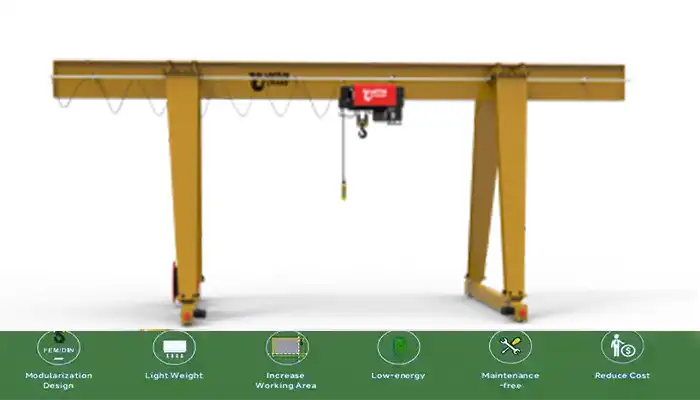
5 Ton Low Headroom Gantry Crane Case Poland
Content Quick Link
Most Important Takeaway
— low headroom gantry crane 5 ton Poland, space saving crane, workshop height limit solution
In many workshops in Poland, the main problem is not lifting capacity. It is the building height. Most factories already have their halls built, and changing the roof or expanding the building is expensive and takes time.
This is why a 5 ton low headroom gantry crane was used in this project. The idea is simple: use the existing workshop space better, instead of rebuilding it.
The customer did not change the building. No civil work. No roof changes. Just a better crane structure that fits the space.
In daily use, this approach is very practical. If the crane works inside the workshop and supports production without interruption, then it solves the real problem.
- 5 ton capacity for normal factory lifting jobs like steel parts and machine components
- low headroom design to increase lifting height inside a low building
- European electric wire rope hoist for smooth and stable lifting
- suitable for existing workshop installation, not new construction
- used in steel workshops, maintenance shops, and manufacturing plants
Simply put, the crane helps the factory get more lifting height from the same building. That is what matters in real production.
Key Takeaways — 5 ton gantry crane Poland, European hoist crane, industrial workshop lifting solution
When companies in Poland choose a 5 ton gantry crane, they usually think in a very practical way. The main question is not about design details. It is: "Will this work every day without problems?"
Most factories want equipment that is simple, stable, and easy to maintain.
- fits into existing workshops without rebuilding the building
- gives more lifting height in low ceiling spaces
- 5 ton capacity is enough for most daily industrial tasks
- works well for steel parts, machines, and workshop lifting jobs
- designed for long-term use, not short-term savings
- European hoist system helps lifting feel smoother and more controlled
- pendant and remote control make operation easier in different working areas
- helps reduce total cost compared to expanding or rebuilding a workshop
In real factory conditions, this type of crane is valued because it does not disturb production. It fits into the workshop, runs normally, and supports daily work without extra complications.
Customer Industry & Working Environment
— low headroom gantry crane Poland, industrial workshop crane use, 5 ton gantry crane application
In real projects in Poland, a 5 ton low headroom gantry crane is usually not selected for one specific industry. It is used across many everyday industrial workshops where lifting work is part of normal production flow.
These are not highly automated environments. Most are practical production sites where steel parts, machine components, and assemblies are moved every day. The focus is straightforward: keep production running, reduce downtime, and maintain stable lifting performance.
Typical Industry Profile — where 5 ton gantry cranes are used
This type of crane is commonly found in the following industries:
- Metal fabrication workshops
- Machinery production plants
- Maintenance and repair workshops
- Small and medium manufacturing companies
- Industrial service workshops supporting larger factories
In many cases, these are long-running industrial businesses. Some are family-owned, others have been operating for decades. The working mindset is usually practical rather than experimental.
Equipment is expected to perform daily lifting tasks without interruption. That is the main requirement. If a crane runs steadily, is easy to maintain, and does not stop production, it is considered a solid investment.
Reliability and service life often matter more than advanced automation features. Operators prefer systems that are predictable, easy to understand, and simple to maintain on site.
Working Environment in Poland — real workshop conditions
In industrial zones across Poland, workshop conditions are often similar across different cities and sectors.
- Many workshops are built with steel structures or reinforced concrete halls
- A large number of buildings have limited ceiling height, especially older facilities
- Production continuity is critical, so downtime must be kept low
- Factories prefer mechanical, proven systems over complex automation
- Maintenance teams value simple structure and easy spare parts access
In practical terms, crane selection becomes very direct. The equipment must fit the building, support daily lifting work, and operate reliably over long periods.
There is usually little demand for over-engineered systems. If a solution is easier to maintain, easier to repair, and understandable on site, it is more likely to be selected.
This is one reason why low headroom gantry crane systems are widely used—they match real workshop constraints without requiring changes to building structure or production layout.
Lifting Requirement
— 5 ton gantry crane Poland, industrial lifting needs, workshop crane application
In this project in Poland, the lifting requirement was very clear and practical. It was not about extreme or special heavy-duty conditions. It was about steady daily lifting work that must run without interruption.
The customer needed a 5 ton gantry crane that could integrate into normal workshop operations and handle repeated lifting tasks throughout the working day. In real factory conditions, stability is more important than peak performance figures.
Rated Load and Daily Use
- Rated lifting capacity: 5 ton
- Designed for continuous industrial use in workshop environments
- Suitable for both full-load and partial-load lifting tasks
The 5 ton range is widely used in manufacturing plants because it matches the weight of most standard industrial components without oversizing the crane system.
Main Materials Handled in Operation
The crane was used for typical workshop materials, including:
- steel components used in fabrication work
- machine parts for assembly and repair
- welded structures and frames
- maintenance tools and industrial equipment
These loads are not always uniform. Some are bulky, some are irregular in shape, so stable lifting control is required during movement and positioning inside the workshop.
Operation Type in Real Production
- repeated lifting tasks every working day
- frequent positioning of parts inside workshop zones
- short travel distance between workstations
- continuous use during production shifts
In many industrial workshops, cranes are not used occasionally. They are part of the production flow. That means reliability is more important than short-term performance peaks.
Key Priority in This Project
The main requirement was not advanced functions or oversized capacity. It was a more fundamental operating condition:
- safe lifting under normal working conditions
- stable performance during repeated operation cycles
- predictable movement during load handling
- no unexpected downtime or unstable behavior
In simple terms, the customer needed a crane that behaves consistently every day. No surprises, no complex adjustments—just steady operation that supports production without slowing it down.
Core Technical Challenge (What Needed to Be Solved)
— low headroom gantry crane Poland, workshop height limitation, gantry crane retrofit solution
In this project in Poland, the core problem was not unusual, but it is very common in real industrial workshops.
The factory already had a fixed building structure. No major modification was possible. At the same time, production demand was increasing, and the existing lifting system was not fully using the available vertical space.
So the real issue was straightforward: how to improve lifting efficiency without changing the workshop structure.
Fixed Workshop Height Limitation
The building height was already fixed and could not be adjusted.
- Existing steel or reinforced concrete workshop structure
- No possibility for vertical expansion
- Limited clearance between crane beam and roof structure
- Older layout still used for daily production
In many factories, this is a normal condition. The building is structurally sound, but it was not designed for today's higher demand for lifting efficiency.
Standard Crane Problem in Low Space Conditions
If a standard gantry crane is used in a low-clearance workshop, performance limitations appear quickly.
- Reduced hook travel height
- Unutilized vertical space inside the building
- Smaller effective lifting range during operation
- Lower efficiency in handling tall or bulky components
This becomes visible during daily work, especially when handling oversized assemblies or repetitive lifting tasks.
Cost Pressure on Building Expansion
One theoretical solution is to rebuild or raise the workshop height, but in practice this is rarely chosen.
- High civil construction cost
- Long engineering and construction timeline
- Production shutdown risk during modification
- Additional approval and structural redesign requirements
For most medium-sized factories, this option is not practical because it directly affects both cost control and production continuity.
Production Continuity Requirement
Another critical factor in this case was production continuity.
- Long shutdown periods were not acceptable
- Installation needed to fit existing production schedules
- Upgrade had to minimize operational disruption
In real industrial environments, downtime often has higher cost impact than the equipment investment itself. This makes fast, non-disruptive solutions more valuable.
Final Core Problem Statement
When all conditions are combined, the technical challenge becomes very clear.
The factory did not need a larger crane or a new building.
It needed a more efficient way to use the existing vertical space.
In practical terms:
- higher lifting efficiency within the same workshop height
- better hook travel without modifying the roof structure
- stable operation without interrupting production
This is exactly the type of condition where a low headroom gantry crane solution becomes a practical engineering response rather than a theoretical upgrade.
Engineering Solution Provided
— low headroom gantry crane 5 ton Poland, European hoist gantry crane, workshop space saving crane design
In this project in Poland, the engineering solution was built around one clear idea: use the existing workshop space more efficiently instead of rebuilding the structure.
The customer required a 5 ton low headroom gantry crane, but the key requirement was not only load capacity. It was achieving sufficient lifting height inside a fixed building. So the design focus was structural efficiency rather than system complexity.
Crane System Type — low headroom gantry crane for existing workshop
The selected system is a low headroom gantry crane, designed specifically for workshops with limited ceiling height and fixed structural constraints.
This type of crane is commonly applied when:
- the building structure cannot be modified
- production must continue during equipment upgrade
- higher lifting height is required within the same space
The design direction was practical and direct:
- integrate into the existing industrial layout
- reduce unnecessary vertical space loss
- maximize usable hook travel height
- maintain stable performance under 5 ton working load
In workshop terms, this is a "fit-first" engineering approach rather than a structural redesign of the facility.
Main Technical Parameters — 5 ton gantry crane specification Poland
The system follows standard industrial requirements commonly used in Polish manufacturing workshops.
- Capacity: 5 ton — suitable for steel parts, machine components, and general workshop lifting tasks
- Span: 16 m (±5.2 m structural flexibility) — covers medium to large workshop working areas
- Effective lifting height: 4.71 m — optimized for low headroom conditions to maximize hook travel
- Power supply: 380V / 50Hz / 3-phase — standard industrial configuration in Poland
- Control system: pendant control + wireless remote — flexible operation for different working positions
These parameters are not designed for extreme applications. They are designed for continuous industrial use where stability and repeatability matter more than specification extremes.
Hoisting System — European-style electric wire rope hoist
The hoisting system uses a European-style electric wire rope hoist, selected for its compact structure and stable lifting performance.
Main characteristics include:
- compact trolley design reduces vertical space loss
- higher hook approach improves usable lifting height
- smooth lifting and lowering control under load
- stable performance in frequent daily operation cycles
In real workshop use, this is not only a lifting component. It directly affects how efficiently the entire production flow operates.
In Polish industrial environments, operators typically expect equipment that is:
- simple to understand
- stable during long-term use
- low in unnecessary complexity
- reliable under continuous operation
The priority is consistent performance, not over-engineered functionality.
Practical Engineering View (Field Reality)
In actual installation conditions in Poland, this solution is valued for its predictable behavior in daily operation.
- fits into existing workshop structure without modification
- improves lifting height without civil construction work
- supports continuous production with minimal disruption
- keeps maintenance requirements straightforward
In practical terms, the system is designed to operate reliably in the background while production continues without interruption.
Engineering Solution Provided
— low headroom gantry crane 5 ton Poland, European hoist gantry crane, workshop space saving crane design
In this project in Poland, the engineering solution was built around one clear idea: improve the use of existing workshop space instead of rebuilding the facility.
The customer required a 5 ton low headroom gantry crane, but the key requirement was not only lifting capacity. The real focus was achieving sufficient lifting height within a fixed building structure. The design therefore prioritized structural efficiency rather than added complexity.
Crane System Type — low headroom gantry crane for existing workshop
The selected system is a low headroom gantry crane, developed for workshops where ceiling height is already limited and cannot be modified.
This type of crane is commonly used in situations where:
- the building structure cannot be changed or extended
- production must continue during equipment upgrade
- additional lifting height is required within the same space
The key design direction is practical:
- fit within existing industrial workshop layout
- reduce unnecessary vertical space loss
- improve usable hook travel height
- maintain stable performance under 5 ton working load
In workshop terms, this is a "fit-first" engineering approach rather than a full facility redesign.
Main Technical Parameters — 5 ton gantry crane specification Poland
The system was designed according to typical industrial requirements used in Polish manufacturing workshops.
- Capacity: 5 ton — suitable for steel components, machine parts, and general workshop lifting tasks
- Span: 16 m (±5.2 m structural flexibility) — suitable for medium to large workshop coverage
- Effective lifting height: 4.71 m — optimized for low headroom condition to maximize usable hook travel
- Power supply: 380V / 50Hz / 3-phase — standard industrial system in Poland
- Control system: pendant control + wireless remote — flexible operation for different lifting scenarios
These parameters are not focused on extreme performance. They are designed for stable daily industrial operation where consistency is more important than specification complexity.
Hoisting System — European-style electric wire rope hoist
The hoisting system uses a European-style electric wire rope hoist, selected for its compact structure and stable lifting performance in restricted height environments.
Main characteristics include:
- compact trolley design reduces unnecessary vertical space loss
- higher hook approach improves usable lifting range inside workshop
- smooth lifting and lowering under load conditions
- stable performance in frequent daily operation cycles
In real workshop operation, the value is not only lifting capacity. It is how consistently the system performs every day under repeated use.
This type of hoist is commonly preferred in Polish industrial environments because operators usually expect:
- simple and intuitive operation
- stable lifting behavior
- low maintenance complexity
- long service life with predictable performance
No unnecessary complexity—just reliable lifting operation.
Practical Engineering View (Field Reality)
In real installation conditions in Poland, this solution is valued because it behaves in a stable and predictable way in daily production.
- fits within existing workshop structure
- improves lifting height without structural modification
- supports continuous production without disruption
- keeps maintenance requirements straightforward
In simple terms, the system is designed to operate quietly in the background while production continues normally.
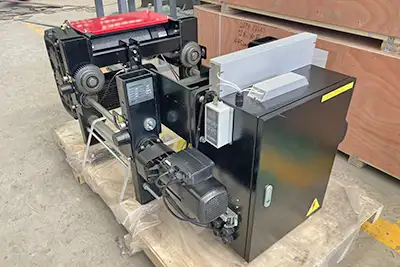
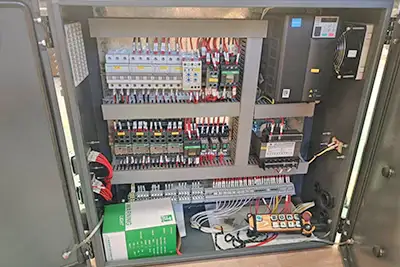
VFD controlled electric cabinet for the low headroom gantry crane - more low headroom hoists and cranes.
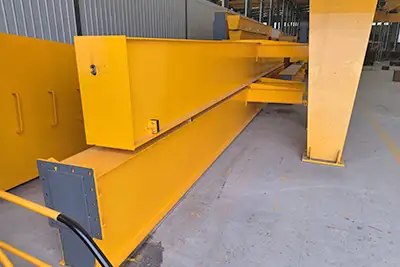
Main girder of low profile gantry crane for sale Poland, more projects on industrial cranes for sale Poland.
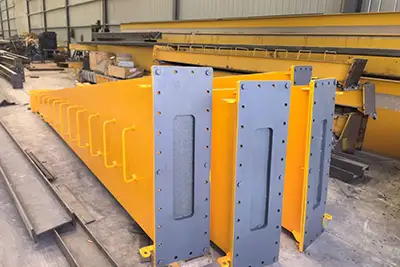
Supporting low headroom electric hoist gantry crane 5 ton
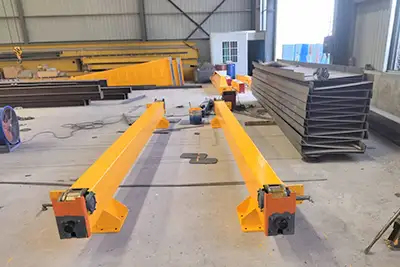
Ground beam of rail travelling gantry crane 5 ton
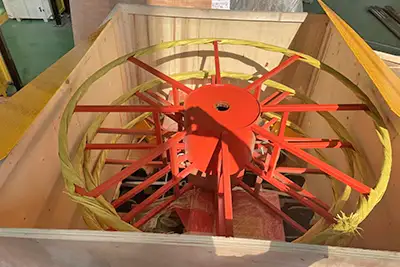
Cable drum and other parts and components of European style 5 ton gantry crane
Practical Advantages
— 5 ton gantry crane Poland, space saving crane system, workshop efficiency upgrade
Direct Practical Benefits
From a buyer's point of view in Poland, the value of a 5 ton low headroom gantry crane is not only technical. It is mainly about how it affects daily production and long-term operating cost.
This type of crane is often chosen because it solves real workshop limitations without forcing major changes.
- uses existing workshop structure efficiently
No need to rebuild or modify the building frame. - avoids high civil construction cost
Especially important when workshop expansion is not planned. - increases usable lifting height
Better vertical space utilization inside the same building height. - reduces long-term operating cost
Stable system design helps reduce unexpected maintenance issues. - suitable for continuous industrial operation
Designed for repeated lifting cycles in real production environments. - improves workflow without changing layout
Equipment adapts to the workshop, not the other way around.
Real Workshop Value
In daily operation, the biggest benefit is not technical complexity. It is stability.
Operators do not need to think about the crane. It simply works during production shifts, supporting material flow without interruption.
That is why many factory owners describe the result in a very simple way:
"It improves production without disturbing production."
This sentence reflects the real expectation behind most crane investments in industrial workshops across Poland.
Frequently Asked Questions (Real Buyer Concerns)
— 5 ton gantry crane Poland, low headroom crane solution, workshop installation questions
Q1: Is it necessary to rebuild the workshop for this crane?
No, rebuilding is not required.
This system is designed for existing industrial buildings, especially workshops with fixed height and steel or concrete structures. It is installed into the current layout without changing the roof or building frame.
- no structural modification needed
- no interruption to building structure
- suitable for old and new workshop halls
- installation adapted to existing space conditions
In most cases, the goal is to improve lifting ability inside the current building, not rebuild it.
Q2: Will the crane work reliably in daily industrial use?
Yes, it is designed for continuous industrial operation.
In manufacturing plants, cranes are used every day, not occasionally. That is why this system is built for stable repeated lifting performance under real working conditions.
- suitable for medium-duty daily operation
- stable lifting behavior during repeated use
- designed for workshop production environments
- consistent performance under normal industrial load cycles
In practice, reliability is more important than peak performance, and this system is built with that priority.
Q3: Why not use a standard gantry crane?
A standard gantry crane can be used, but it is not always suitable for low-height workshops.
The main issue is simple:
- standard designs require more headroom
- less hook travel is available in low buildings
- real lifting height becomes limited
In many workshops in Poland, this means part of the vertical space is wasted.
The low headroom design solves this by improving usable lifting height inside the same structure.
Q4: Is the 5 ton capacity practical for Polish workshops?
Yes, 5 ton is a very common and practical capacity.
It is widely used in:
- steel fabrication workshops
- machinery production plants
- maintenance and repair facilities
- general industrial manufacturing workshops
In real operation, most lifting tasks fall into this range, especially for machine parts, welded structures, and steel components.
- balanced capacity for daily use
- not oversized for normal workshop work
- suitable for frequent lifting operations
- widely accepted in medium industrial facilities
It matches real production needs without unnecessary overdesign.
Q5: How does this solution reduce total cost?
The main cost saving comes from avoiding building changes.
Instead of expanding the workshop or increasing building height, the system improves performance inside the existing structure.
- no civil construction cost
- no production shutdown for building work
- better use of existing vertical space
- reduced long-term operating pressure
In many cases, this approach reduces total investment more than expected, especially for factories that want to keep production running during upgrades.
Installation Approach
— gantry crane installation Poland, workshop crane setup, low headroom crane commissioning
In real projects in Poland, installation is often as important as the crane itself. Many factories cannot stop production for long periods, so the whole process must be planned in a way that keeps disruption low.
For this 5 ton low headroom gantry crane, the installation method was designed around one simple idea: fit into the existing workshop, not the other way around.
Practical Installation Steps in Workshop Conditions
- site measurement based on existing workshop layout
The actual building space is measured first to make sure the crane fits the real working area, not only drawings. - rail installation aligned with current structure
The runway system is installed according to the existing steel or concrete structure, without changing the building frame. - modular gantry assembly to reduce downtime
Pre-assembled components are used where possible to shorten installation time on site. - electrical integration with standard 380V system
Connection is made directly to the common industrial power system used in most Polish factories. - load testing and safety validation
The crane is tested under rated load to confirm stable operation and safety performance. - operator familiarization training
Workers are trained on basic operation, including pendant control and wireless remote use.
Installation Philosophy in Real Projects
The main goal is simple: keep the workshop running.
In many factories, stopping production even for a few days creates pressure on delivery schedules. That is why installation is planned in steps that allow work to continue as much as possible.
This approach is often preferred in industrial environments across Poland because it reduces risk and avoids unnecessary interruption to ongoing orders.
Final Result
— 5 ton gantry crane Poland case result, workshop efficiency improvement, low headroom crane benefit
After installation and commissioning, the 5 ton low headroom gantry crane system delivered a clear and practical improvement in daily workshop operation.
The result is not measured only by specifications, but by how the workshop actually works after the upgrade.
Operational Improvements Achieved
- higher lifting efficiency within the same building
The low headroom design allows better use of vertical space without changing the structure. - stable and reliable 5 ton operation
The crane performs consistently during repeated daily lifting tasks. - improved material flow in workshop conditions
Movement of steel parts, machine components, and assemblies becomes smoother and more organized. - no structural modification required
The existing workshop building remains unchanged, saving time and construction cost. - long-term cost efficiency improvement
Lower investment compared to building expansion, with stable operational performance.
Real Project Outcome Summary
In practical terms, the most important result is simple:
- The customer improved production efficiency without changing the factory infrastructure.
- No major construction work. No long shutdown period. No redesign of the workshop building.
- Just a crane system that fits the space and supports daily production in a more efficient way.
- This is often the main expectation in industrial projects in Poland—to improve output while keeping the existing structure and workflow unchanged.
Conclusion
— 5 ton low headroom gantry crane Poland, practical industrial crane solution, workshop efficiency upgrade
In many industrial workshops in Poland, the final decision about a crane is usually not about technical performance alone. It is more about whether the solution fits the real conditions on site.
Most factories already have a working production system. The building is there, the workflow is established, and stopping production for major reconstruction is rarely a good option. So the real question becomes very practical: how to improve lifting efficiency without changing everything around it.
This 5 ton low headroom gantry crane project follows that kind of thinking. Instead of rebuilding the workshop or increasing building height, the solution focuses on using the existing space better. More lifting height is achieved inside the same structure, with less disruption to daily operations.
It is a simple engineering direction, but in real factory use, this is often the most realistic one.
- improve equipment performance within existing workshop conditions
- avoid unnecessary construction or structural changes
- keep production running during and after installation
- focus on stable, long-term operation rather than complex systems
- match real industrial working habits in Polish manufacturing environments
In practice, many companies in Poland tend to choose solutions that are predictable and easy to maintain. Not because they avoid technology, but because downtime and instability are more expensive than the equipment itself.
This case reflects that approach clearly. The decision was not about upgrading for the sake of higher specification. It was about choosing a crane system that works inside the real limits of the workshop.
At the end, the value is straightforward:a reliable lifting solution that improves daily production without changing the factory structure.

Article by Bella ,who has been in the hoist and crane field since 2016. Bella provides overhead crane & gantry crane consultation services for clients who need a customized overhead travelling crane solution.Contact her to get free consultation.
Yuantai Cranes
Overhead Crane Manufacturer with CE, ISO, SGS, CNEX Certificates.
- Main Specifications - Capacity: 0.5–550 tons | Span: up to 40m | Speed: 0.8–12 m/min | Duty: A3–A7 | Power: 380–690V, 50/60Hz | Control: pendant/remote/cabin
- Full engineering: FEA/PLC/VFD + in-house build + global delivery + on-site support, for workshops, factories, EPC contractors, industrial projects, etc.
- Support: design, manufacturing, testing, service – end-to-end, customized lifting solutions worldwide.
How to Get an Accurate Crane Price for Your Application?
Tips: Copy the spec list, fill in your details, and paste it into the form on the right/ down-below for a quick price.
- Crane type:_____ . (e.g., overhead crane, gantry crane, jib crane)
- Max weight to lift:_____ tons. (e.g., 2t, 5t, 10t, 20t, 50t)
- Lifting height:_____ m. (How high does the hook need to reach?
- Workshop width (span):_____ m . (Distance between the two crane rails)
- Travel distance:_____ m . (How long does the crane need to move along the runway?)
- Control type:_____. (Pendant / remote / cabin Control)
- Power supply:_____. (Local voltage & frequency – e.g., 380V, 50Hz, 3-phase)
- What will it be used for?_____ (e.g., steel fabrication, concrete products, mold handling, general manufacturing, etc.)
- Any special requirements?_____ (e.g., extreme temperature, dusty or explosive environment, special paint color, etc.)
Just leave a message via the contact form and our hoist and crane engineer will contact you with in 24working hours.
Get Your Custom Quote–Quick & Easy
Fill in what you know. Skip what you don't – we'll help.Any question will be reply with 24 working hours