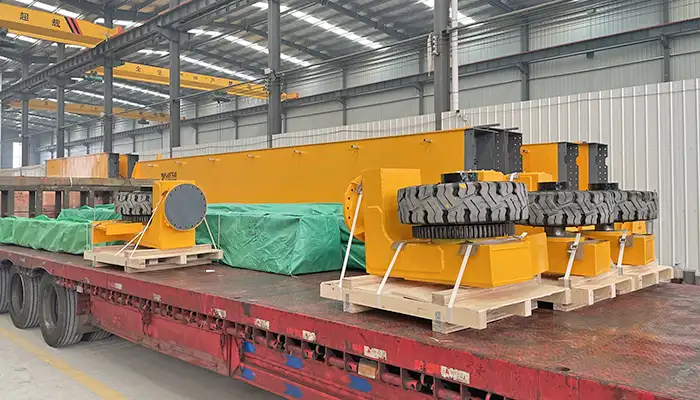
12 Ton Gantry Crane UAE, Tailored Rubber Tyred Gantry Crane 12 Ton
Content Quick Link
Tailored Rubber-Tyred Gantry Crane: Mobility, Safety, and Cost-Saving Insights for Buyers
Introduction
Gantry cranes are essential equipment in many industries. They make moving heavy materials faster, safer, and more precise. From steel manufacturing plants to construction sites, these cranes help reduce manual labor and improve workflow.
Gantry Cranes in Industrial Operations
Unlike fixed overhead cranes, gantry cranes can cover a wider area and adapt to changing layouts, making them a flexible solution for industrial operations in the UAE. They help improve safety, reduce manual handling, and streamline workflow in environments like steel plants, logistics yards, and construction sites.
Why 12-Ton Rubber-Tyred Gantry Cranes Matter
A 12-ton rubber-tyred gantry crane is designed to lift medium-heavy loads while offering mobility and ease of use. The rubber wheels allow it to move across concrete surfaces without needing rails, making it suitable for:
- Industrial zones with uneven or changing layouts
- Logistics and storage yards that require flexible movement
- Construction sites where multiple lifting points are needed
These cranes are particularly popular in the UAE due to their ability to operate outdoors and their adaptability to hot weather and high-load conditions.
Key Factors for Buyers
When planning to purchase a 12-ton gantry crane, it's important to consider more than just lifting capacity. Buyers should evaluate mobility, safety, cost, and operational fit. Key points include:
- Mobility: Can the crane be relocated easily to different zones? Are there obstacles or slopes on site?
- Safety: Does it have overload protection, limit switches, and ergonomic controls for operators?
- Cost: Consider both the initial investment and maintenance costs over the crane's lifespan.
- Operational Fit: Will the crane handle the expected maximum load? Is it compatible with existing workflows and space constraints?
Rubber-Tyred Gantry Cranes (RTG)
Rubber-tyred gantry cranes provide both lifting capacity and mobility, making them ideal for industrial operations where materials need to be moved across multiple zones rather than lifted in one fixed spot.
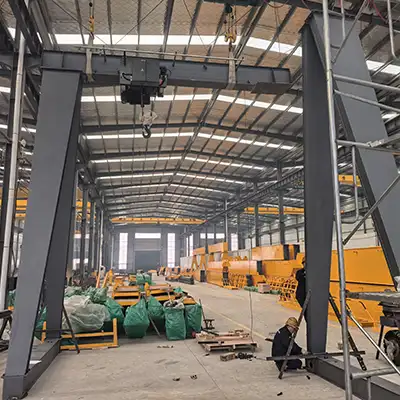
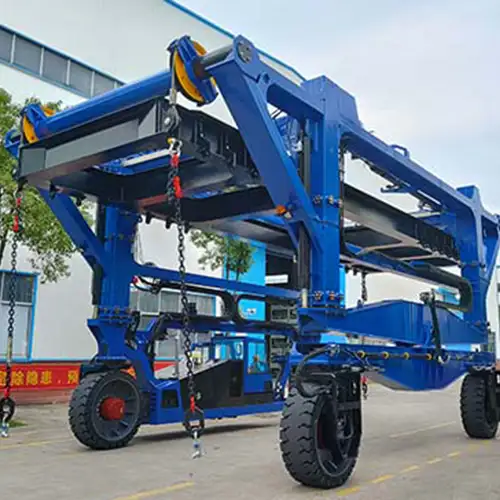
12 ton gantry crane for sale, tailored small portable gantry crane wiht rubber tyred wheels
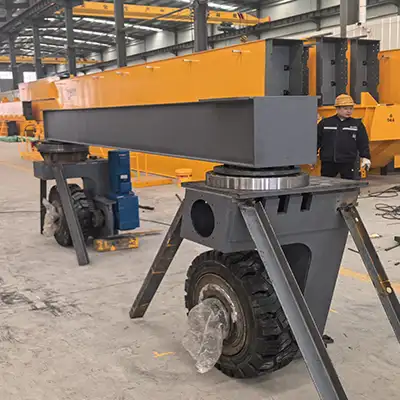 rubber tyred wheels for the 12 ton gantry crane
What Is a Rubber-Tyred Gantry Crane?
A rubber-tyred gantry crane (RTG) is a mobile crane that uses rubber wheels instead of fixed rails. This design allows it to move across concrete or paved surfaces with minimal site preparation. Unlike traditional gantry cranes, RTGs combine lifting capacity with mobility, making them ideal for operations where loads need to be transported between different zones.
- Rubber tires for movement on flat or slightly uneven surfaces
- Adjustable span and height options to fit various industrial layouts
- Robust steel frame and trolley system for lifting up to medium-heavy loads (like 12 tons)
- Operator cabin or remote control for safe maneuvering
- Optional hoist and lifting attachments depending on material type
RTG Cranes vs. Fixed Gantry Cranes
While both types of gantry cranes handle heavy materials, RTGs offer specific advantages for buyers who need flexibility. Key comparisons include:
| Feature | Rubber-Tyred Gantry Crane | Fixed Gantry Crane |
|---|---|---|
| Mobility | Can move freely between zones | Stays fixed on rails or foundation |
| Installation | Minimal civil work required | Requires rails or foundation prep |
| Flexibility | Can handle multiple areas and layouts | Limited to one path or location |
| Cost | Lower installation and relocation costs | Higher setup costs; relocation is difficult |
| Operational Use | Ideal for dynamic storage yards or outdoor projects | Suited for repeated, single-location lifts |
RTGs give UAE buyers the freedom to adapt to changing operational requirements, making them highly suitable for industrial zones where layouts or workflows may change over time.
Practical Applications of RTG Cranes in the UAE
Rubber-tyred gantry cranes are widely used in industries that require both lifting and horizontal movement of materials. Common applications include:
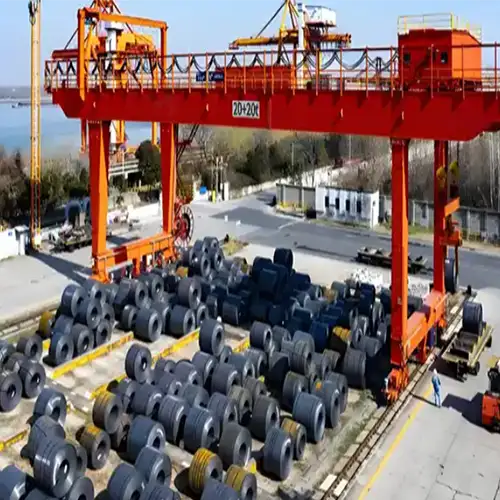
- Steel and metal yards – Moving steel coils, billets, or sheets between storage and processing areas
- Construction sites – Lifting precast concrete elements and transporting them to different zones
- Logistics and storage yards – Loading and unloading containers or large pallets where flexibility is key
- Manufacturing plants – Handling heavy components in assembly areas that are not fixed
Key Buyer Considerations
When buying a 12-ton rubber-tyred gantry crane in the UAE, practical factors like safety, mobility, and long-term costs directly affect operations. Understanding these upfront helps prevent delays and extra expenses.
Load Capacity and Operational Requirements
Matching lifting capacity to actual operational needs is essential. Overloading or underestimating loads can create safety risks or increase costs.
- Maximum lifting load: Confirm the heaviest materials, including stacked or bundled items. A 12-ton crane can handle peaks slightly above capacity but should not be overloaded regularly.
- Frequency of use: Frequent lifting requires robust components and scheduled maintenance.
- Material compatibility: Consider the shape, size, and surface of items like steel coils, precast concrete, or machinery parts.
- Workflow integration: Ensure the crane's lift height and travel range fit your storage and loading processes without creating bottlenecks.
Mobility and Space Utilization
RTG cranes are valued for mobility, but site conditions and spatial constraints must be considered.
- Indoor vs. outdoor use: Rubber-tyred cranes can operate on smooth outdoor surfaces and certain indoor zones. Check slopes and obstacles.
- Tight or variable spaces: Verify aisle widths and turning radius to prevent collisions.
- Multi-zone coverage: Ability to move between zones without rails reduces downtime and infrastructure costs.
- Storage and parking: Plan where the crane will be parked safely when not in use.
Safety Features and Compliance
Safety is paramount in lifting operations. RTGs include features to protect both operators and equipment.
- Overload protection: Prevents lifting beyond rated capacity, reducing accidents and damage.
- Limit switches and emergency stops: Automatically stop the crane or trolley at travel or lift limits.
- Operator ergonomics: Intuitive controls, cab visibility, remote options, and vibration reduction improve safety and reduce fatigue.
- Standards and regulations: Ensure compliance with UAE regulations, ISO standards, and CE certification. Keep documentation for inspections.
Cost and Long-Term Value
Upfront cost is only part of the equation. Consider lifecycle costs, energy, maintenance, and operational efficiency.
- Initial investment vs. lifecycle cost: Cheaper cranes may incur higher maintenance or downtime costs. Calculate total ownership.
- Energy efficiency: Energy-saving drives or optimized motors reduce electricity bills over time.
- Maintenance requirements: Easy access to hoists, wheels, and controls reduces downtime and labor costs.
- Labor cost reduction: One mobile RTG crane can cover multiple zones, reducing manpower needs and increasing efficiency.
Customization and Optional Features
Each site has unique requirements. Consider customization to match operational needs and environmental conditions.
- Weather protection: Sunshades, coatings, or covers to protect against heat, dust, and occasional rain.
- Remote control or automation: Safer handling in tight or hazardous zones, and reduced operator fatigue.
- Hoist types: Wire rope, chain hoists, or specialized attachments like clamps or grabs.
- Adjustable spans and lifting height: Reach all required areas without major site modifications.
- Mobility enhancements: Reinforced tires, GPS positioning, or multi-directional movement for complex layouts.
12-Ton Gantry Crane Project – UAE Reference
Crane Type: Rubber-Tyred Wheeled Portable Gantry Crane
Capacity: 12 tons
Span: 6 meters
Lifting Height: 6.96 meters
Power Supply: 415V, 50Hz, 3 Phase
Project Location: UAE
Key Highlights:
- Portable design for easy movement across industrial yards
- Suitable for medium-duty lifting tasks in outdoor and flexible layouts
- Simple installation and minimal site preparation required
- Ideal for steel handling, logistics, and construction material operations
Planning for Procurement
Proper planning is essential before investing in a 12-ton rubber-tyred gantry crane in the UAE. Careful assessment ensures the crane fits operational needs, avoids costly mistakes, and integrates smoothly into your workflow.
Assess Operational Needs
Clearly define what the crane will handle and how often to avoid over- or under-specifying requirements.
- Maximum lifting loads, including bundled or uneven materials
- Frequency of lifts and daily operational cycles
- Areas or zones the crane will cover
- Compatibility with current material handling processes
Questions to Ask Suppliers
A good supplier should provide clear answers about the crane's capabilities and support services.
- What is the typical delivery time and installation schedule?
- Do you provide on-site technical support or training for operators?
- Are spare parts and maintenance services readily available in the UAE?
- Can the crane be customized for specific site or operational requirements?
Site Preparation Considerations
Even mobile RTG cranes need proper site conditions for safe and efficient operation.
- Ground surface: Level, stable, and able to support the crane's weight
- Maneuvering space: Adequate room for turning, lifting, and parking
- Power supply: Ensure compatibility (e.g., 415V, 50Hz, 3 Phase) and access points
- Safety clearance: Free from overhead obstacles and pedestrian zones
Integration with Existing Workflows
Ensure the crane complements current operations rather than disrupts them.
- Align crane placement with material flow paths
- Plan lifting sequences to minimize delays and bottlenecks
- Coordinate with other equipment like forklifts, conveyors, or storage racks
Practical Buyer Insights
Buying a 12-ton rubber-tyred gantry crane in the UAE is more than just choosing a machine. Understanding real-world applications, potential pitfalls, and ROI strategies helps buyers make informed decisions.
Case Study Examples
Example 1: Industrial Storage Yard – Dubai
A steel yard required a mobile crane to move steel coils between storage and processing areas. A 12-ton RTG crane provided:
- Flexible coverage of multiple zones without installing rails
- Reduced manual handling and improved safety
- Faster material movement, cutting operation time by 25%
Example 2: Precast Concrete Facility – Abu Dhabi
A construction materials supplier needed a crane for precast slabs. The RTG crane allowed:
- Efficient stacking and retrieval of slabs
- Easy relocation as site layouts changed frequently
- Minimal downtime thanks to simple installation and maintenance
Common Mistakes to Avoid
Practical lessons for buyers:
- Underestimating load requirements: Buying a crane with insufficient capacity leads to overloading and safety risks.
- Ignoring site conditions: Uneven ground or tight spaces can limit crane mobility if not planned properly.
- Overlooking maintenance access: Poor maintenance planning can increase downtime and repair costs.
- Not verifying supplier support: Lack of local technical support can delay repairs or replacements.
Tips to Optimize ROI
How buyers can balance cost, capacity, and mobility:
- Match capacity to actual needs: Avoid over-specifying which increases cost, and under-specifying which risks downtime.
- Leverage mobility: Use the crane's multi-zone coverage to reduce additional equipment needs.
- Plan for maintenance: Schedule preventive checks and ensure spare parts are available locally.
- Consider optional features: Remote control, weather protection, or customized hoists can improve productivity and extend crane life.
Conclusion
Choosing the right 12-ton rubber-tyred gantry crane in the UAE requires careful consideration of mobility, safety, and cost-efficiency. A crane that moves easily across multiple zones, meets strict safety standards, and balances upfront cost with long-term maintenance offers the most value to industrial operations.
Tailored RTG cranes provide flexibility that fixed cranes cannot, allowing buyers to adapt to changing site layouts, handle diverse materials, and optimize workflow. Investing in the right crane isn't just a purchase—it's a strategic decision that impacts productivity, safety, and operational costs over many years.
For UAE buyers, working with reputable suppliers ensures access to professional guidance, customization options, and local support. Engaging suppliers early helps clarify technical requirements, delivery schedules, and installation processes, making the procurement process smoother and more cost-effective.
Key Takeaways:
- Prioritize mobility, safety, and cost-efficiency in selection
- Consider tailored features and optional customizations for your operational needs
- Collaborate with experienced suppliers for guidance, installation, and long-term support

Article by Bella ,who has been in the hoist and crane field since 2016. Bella provides overhead crane & gantry crane consultation services for clients who need a customized overhead travelling crane solution.Contact her to get free consultation.
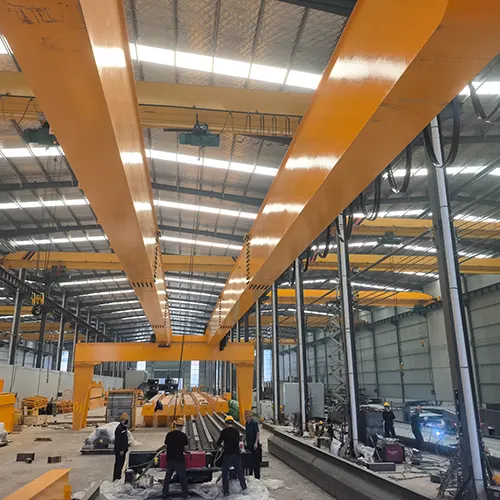
Yuantai Cranes
Overhead Crane Manufacturer with CE, ISO, SGS, CNEX Certificates.
- Main Specifications - Capacity: 0.5–550 tons | Span: up to 40m | Speed: 0.8–12 m/min | Duty: A3–A7 | Power: 380–690V, 50/60Hz | Control: pendant/remote/cabin
- Full engineering: FEA/PLC/VFD + in-house build + global delivery + on-site support, for workshops, factories, EPC contractors, industrial projects, etc.
- Support: design, manufacturing, testing, service – end-to-end, customized lifting solutions worldwide.
How to Get an Accurate Crane Price for Your Application?
Tips: Copy the spec list, fill in your details, and paste it into the form on the right/ down-below for a quick price.
- Crane type:_____ . (e.g., overhead crane, gantry crane, jib crane)
- Max weight to lift:_____ tons. (e.g., 2t, 5t, 10t, 20t, 50t)
- Lifting height:_____ m. (How high does the hook need to reach?
- Workshop width (span):_____ m . (Distance between the two crane rails)
- Travel distance:_____ m . (How long does the crane need to move along the runway?)
- Control type:_____. (Pendant / remote / cabin Control)
- Power supply:_____. (Local voltage & frequency – e.g., 380V, 50Hz, 3-phase)
- What will it be used for?_____ (e.g., steel fabrication, concrete products, mold handling, general manufacturing, etc.)
- Any special requirements?_____ (e.g., extreme temperature, dusty or explosive environment, special paint color, etc.)
Just leave a message via the contact form and our hoist and crane engineer will contact you with in 24working hours.
Get Your Custom Quote–Quick & Easy
Fill in what you know. Skip what you don't – we'll help.Any question will be reply with 24 working hours