Master Overhead Crane Pricing:Essential Terms & Jargon You Need to Know
Key terms for understanding overhead crane pricing: load capacity, span, lifting height, duty cycle, trolley type, installation, and maintenance costs.
| Crane Type | Overhead Bridge Cranes -Single Girder or Double Girder, Single-Web or Box Girder, Top-Running or Under-Running, electric chain hoist, electric wire rope hoist, European-style low-headroom hoist, or open winch, ISO A3–A8 / FEM 1Am–5m, 380V/400V/415V, 50Hz |
| Crane Capacity | Typically 1–550 tons; single girder generally 1–20 tons and double girder typically 20–550 tons, depending on application. |
| Span Length | Typically 7.5–35 m+; customized according to building structure, runway spacing, and required lifting coverage. |
| Lifting Height | Typically 3–30 m; customized according to building height, available headroom, and required hook height. |
| Coverage Area Type | Rectangular or linear working areas served by overhead runway rails, with crane travel along the runway and trolley movement across the bridge span. |
| Application | Factories, workshops, warehouses, steel mills, fabrication plants, machine shops, production lines, power plants, maintenance areas, logistics facilities, and general industrial material handling. |
| Certifications | CE / ISO / SGS / Other third-party inspection |
| Customization | Single girder or double girder, single-web or box girder, top-running or under-running, standard or low-headroom design, customized span, lifting height, runway length, hoist type, lifting/travel speeds, controls, power supply, and lifting attachments. |
Crane Manufacturer: Yuantai Cranes – 30+ Years Professional Crane Manufacturer from China
Category: Overhead Crane Prices
Tags: craneprice,OverheadCranePrice
Your Trusted Overhead Crane Manufacturer & Supplier
Master Overhead Crane Pricing:Essential Terms & Jargon You Need to Know
Key terms for understanding overhead crane pricing: load capacity, span, lifting height, duty cycle, trolley type, installation, and maintenance costs.
Essential Terms &Jargon You Need to Know to Master Overhead Crane Pricing
Overhead cranes, also known as bridge cranes, are essential tools in many industrial environments. These cranes consist of parallel runways with a traveling bridge spanning the gap. The primary purpose of an overhead crane is to lift and move heavy loads horizontally through the overhead space of a facility. This setup is particularly advantageous in environments where floor space is limited, as it allows for efficient use of the vertical space without impeding ground operations.
Overhead cranes are widely used in various industries, including:
- Manufacturing: For moving raw materials, components, and finished products through different stages of production.
- Construction: For lifting and placing heavy materials such as steel beams, concrete blocks, and large equipment.
- Warehousing and Logistics: For loading and unloading goods, and for efficient inventory management.
- Shipbuilding: For assembling large sections of ships and handling heavy maritime components.
- Automotive: For handling parts and assemblies in production lines and maintenance facilities.
The versatility and capacity of overhead cranes make them indispensable in settings where heavy lifting and precise load handling are required.
Importance of Understanding Terms and Jargon
When you're in the market for an overhead crane, understanding the specific terms and jargon used in the industry is crucial for several reasons:
- Accurate Communication: Knowing the correct terminology ensures that you can communicate your needs clearly and effectively to suppliers. This reduces the risk of misunderstandings that could lead to receiving equipment that doesn't meet your requirements.
- Informed Decision-Making: Understanding key terms helps you make informed decisions. You'll be able to evaluate different options, compare quotes accurately, and choose a crane that fits your operational needs and budget.
- Cost Efficiency: A deep understanding of the jargon allows you to decipher what is included in the price and what additional costs might arise. For example, you'll understand the implications of load capacity, duty cycle, and span on the overall cost and functionality of the crane.
- Safety and Compliance: Being familiar with safety-related terms ensures that the crane you purchase complies with industry standards and regulations. This knowledge helps prevent accidents and ensures a safer working environment.
- Customization: Each application may require specific features or modifications. Understanding the terms allows you to specify customizations that enhance the crane's performance for your specific tasks, such as special hoists, control systems, or environmental adaptations.
By mastering the essential terms and jargon associated with overhead cranes, you position yourself to negotiate better, avoid potential pitfalls, and secure a crane that will serve your needs effectively and safely. This guide will help you navigate the complex landscape of overhead crane pricing with confidence and clarity.
Basic Crane Terminology
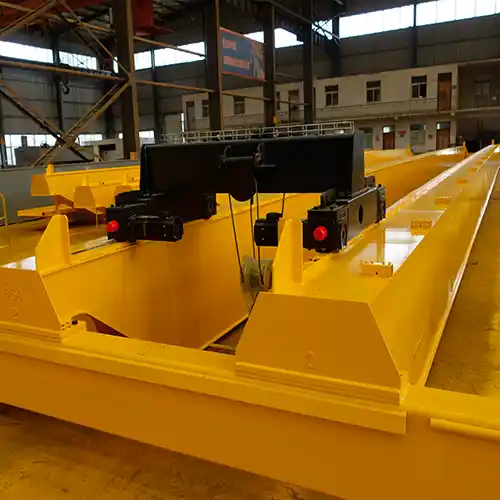
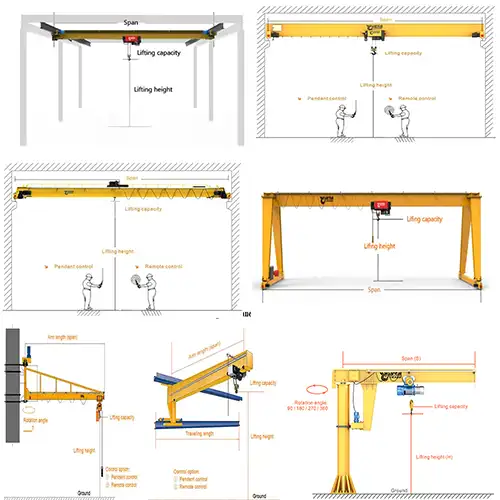
An overhead crane, often referred to as a bridge crane, is a type of crane found in industrial environments. It consists of parallel runways with a traveling bridge spanning the gap. These cranes are designed to move heavy loads horizontally and vertically through the overhead space of a facility, maximizing the use of available vertical space and keeping the floor area free for other operations. There are several types of overhead cranes:
- Bridge Cranes: These are the most common type of overhead crane. They have a bridge that moves along the runways, and a hoist that travels along the bridge. Bridge cranes are used in various industries for lifting heavy loads efficiently.
- Gantry Cranes: Similar to bridge cranes but supported by legs that move on wheels or along a track, these cranes are often used in outdoor applications or where the installation of a bridge crane's runway system is impractical.
- Monorail Cranes: These cranes operate on a single runway or rail. They are used for applications that require lifting and moving along a fixed path.
- Jib Cranes: Featuring a horizontal arm (jib) that supports a moveable hoist, jib cranes are used for localized lifting tasks within a smaller radius.
The different types of overhead cranes helps in selecting the right type for your specific application and operational needs.
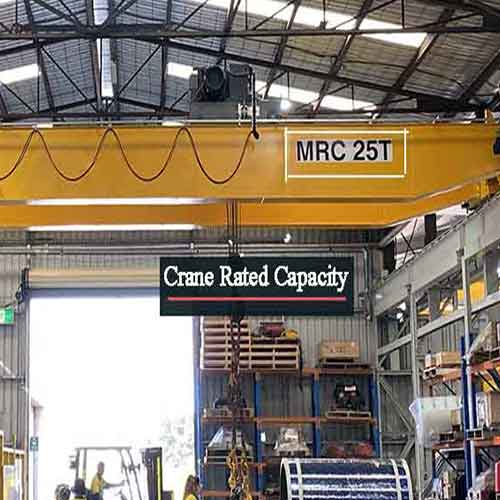
Load capacity, also known as lifting capacity or rated capacity, refers to the maximum weight that an overhead crane can safely lift. This is a critical specification that directly affects the crane's performance and safety. Exceeding the load capacity can result in equipment failure, accidents, and severe injuries. Load capacity is determined by various factors, including the strength of the crane's components, the design of the crane, and the safety margins built into the system. When specifying the load capacity, it's essential to consider the heaviest load the crane will need to lift, including any additional tools or attachments that will be used.
Span
The span of an overhead crane is the distance between the two runway rails on which the crane operates. This measurement is crucial because it determines how wide an area the crane can cover. A larger span allows the crane to service a broader area, which can be beneficial in large facilities. However, increasing the span also typically increases the cost and complexity of the crane system. The span must be carefully measured and specified to ensure that the crane fits the operational requirements of the facility and can effectively cover the work area.
Lift Height
Lift height, also known as lifting height or hook height, is the maximum vertical distance that the hoist can lift a load. This measurement is essential for ensuring that the crane can handle the required lifting tasks within the facility's vertical space. Lift height must be considered in relation to the height of the building, the height of the objects being lifted, and any obstacles that may be present in the lifting path. It's important to specify a lift height that provides sufficient clearance for safe and efficient operation without compromising the crane's performance or safety.
By understanding these basic terms—overhead crane types, load capacity, span, and lift height—you'll be better equipped to communicate your needs, evaluate options, and make informed decisions when purchasing an overhead crane. This foundational knowledge is crucial for ensuring that you select a crane that meets your operational requirements and budget while maintaining safety and efficiency.
Key Components and Features
Bridge
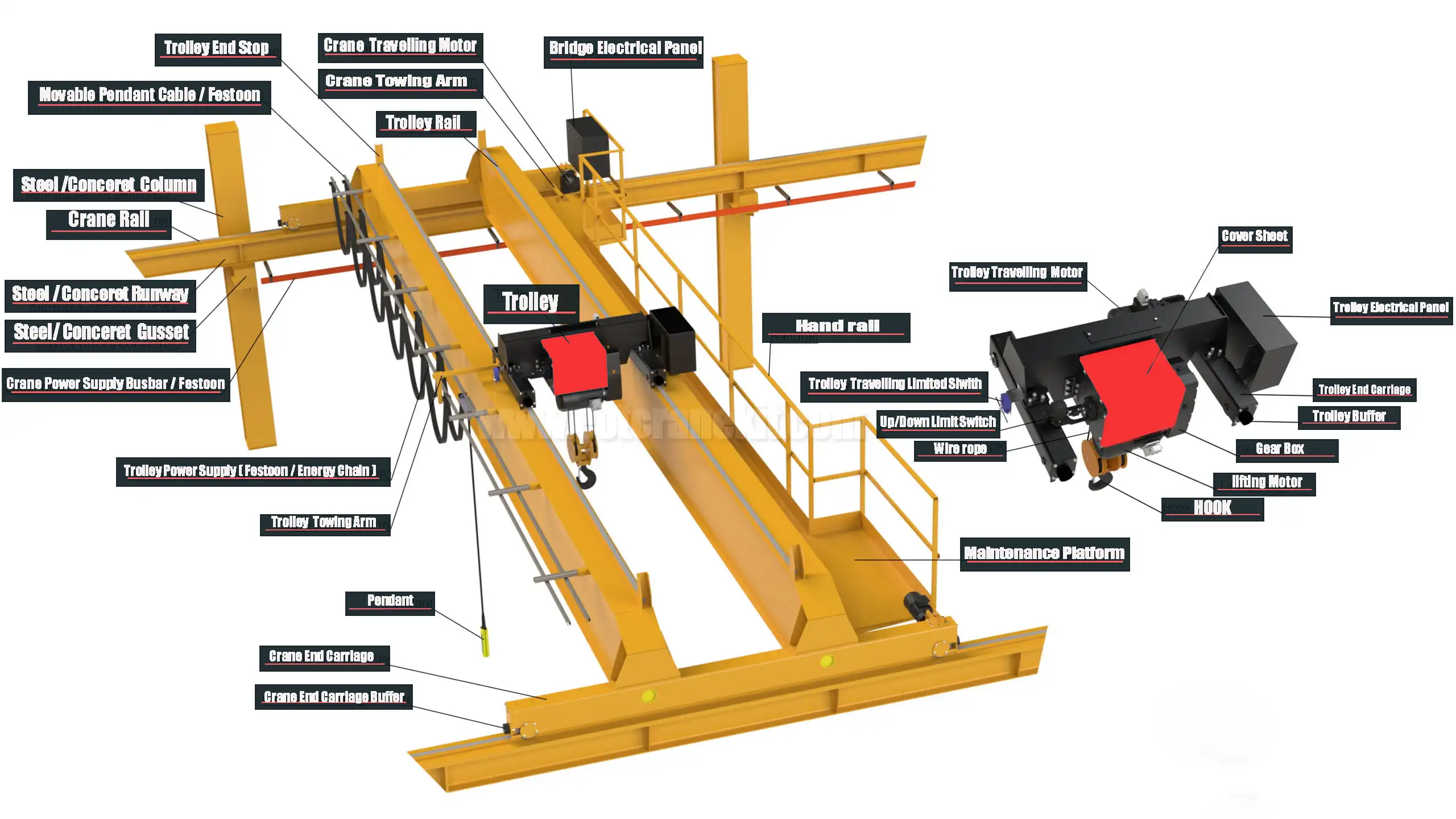
The bridge of an overhead crane is one of the main parts of bridge cranes, which is the primary horizontal beam that spans the width of the crane's operational area. It supports the trolley and hoist, enabling them to move back and forth across the span. The bridge can be either single girder or double girder:
- Single Girder Bridge: Consists of one main girder with the trolley and hoist traveling on the lower flange of the girder. This type is generally lighter and less expensive, suitable for lighter loads and shorter spans.
- Double Girder Bridge: Consists of two main girders with the trolley and hoist running on rails installed on top of the girders. This configuration provides greater strength and stability, suitable for heavier loads and longer spans.
The choice between single and double girder bridges depends on factors such as load capacity, span, and lifting requirements. More details on the main parts of overhead crane kits.
Trolley
The trolley is the mechanism that travels along the bridge, carrying the hoist. It is responsible for the horizontal movement of the load along the bridge. Trolleys can be classified based on their operation and design:
- Top Running Trolley: Runs on rails mounted on top of the bridge girders, providing maximum hook height and better load distribution.
- Under Running Trolley: Suspended from the lower flange of the bridge girder, suitable for lighter loads and applications where headroom is limited.
Trolleys are equipped with wheels and drive mechanisms that allow smooth and controlled movement along the bridge, ensuring precise positioning of the load.
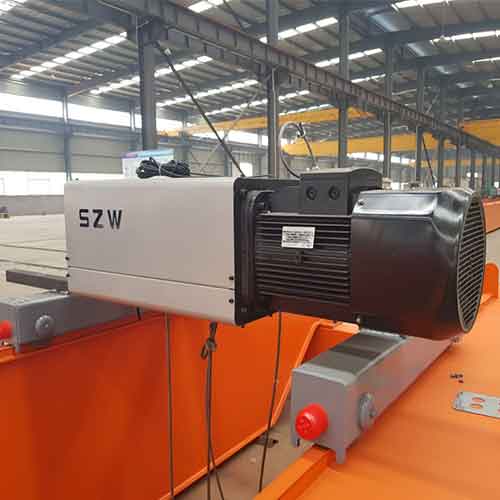
double girder hoist trolley
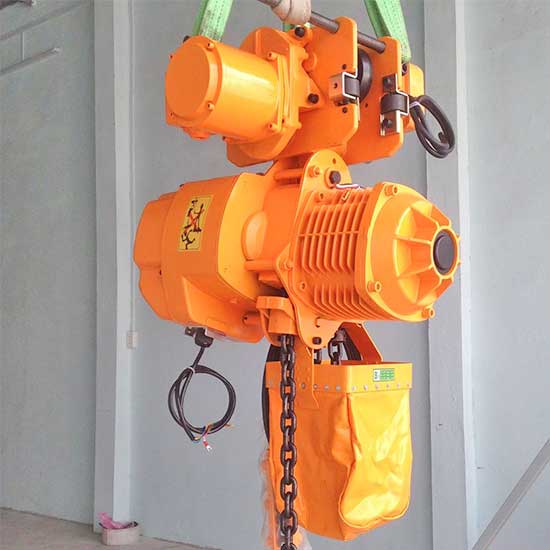
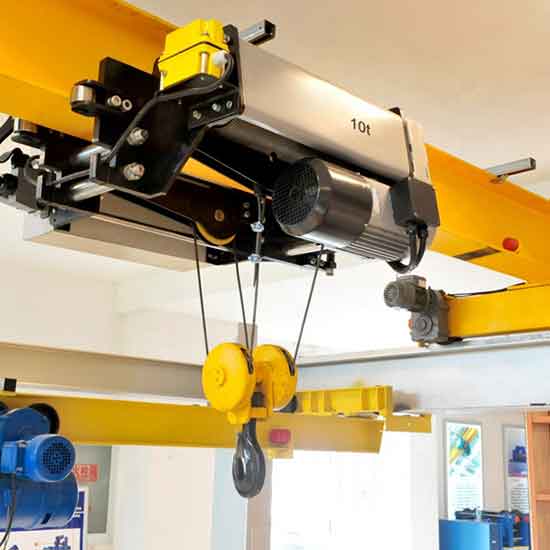
The hoist is the device used for lifting and lowering loads. It consists of a motor, drum or chain, and a lifting hook or attachment. Hoists can be classified based on their operation and lifting medium:
- Wire Rope Hoist: Uses wire rope wound around a drum for lifting. It is ideal for heavy-duty applications due to its high strength and durability.
- Chain Hoist: Uses a chain wound around a pocket wheel for lifting. It is suitable for lighter loads and applications requiring precision lifting.
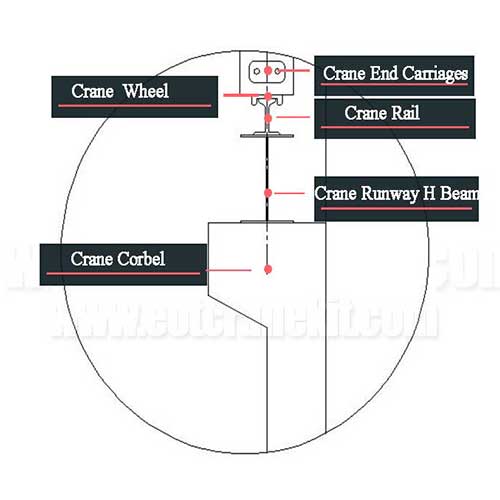
The runway consists of the rails on which the crane travels. These rails are mounted on the building structure or supported by columns. The runway ensures the bridge can move horizontally across the length of the work area. Key considerations for the runway include:
- Rail Alignment: Proper alignment is crucial for smooth crane operation and to prevent wear and tear on the wheels and end trucks.
- Support Structure: The runway must be supported by a robust structure capable of bearing the crane's load and operational stresses.
Runways are essential for providing a stable path for the crane, ensuring reliable and efficient movement.
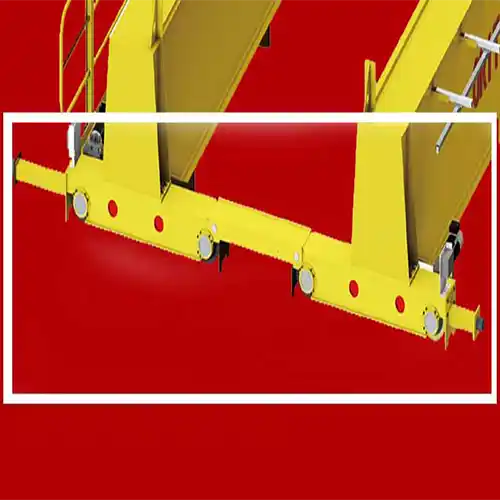
End trucks are located at each end of the bridge. They house the wheels that move the bridge along the runway. End trucks are critical for the horizontal movement of the crane and come in various designs to match different crane configurations:
- Top Running End Trucks: Designed to run on rails mounted on top of the runway beams, suitable for heavy-duty applications.
- Under Running End Trucks: Suspended from the bottom flange of the runway beams, used for lighter loads and when headroom is a concern.
End trucks are equipped with drive mechanisms that allow the crane to travel smoothly and accurately along the runway, ensuring efficient operation.
These key components—bridge, trolley, hoist, runway, and end trucks—provides a comprehensive overview of how an overhead crane functions. This knowledge is essential for selecting the right crane system, ensuring it meets your operational needs, and maintaining efficient and safe operations.
Technical Specifications
The duty cycle of an overhead crane refers to the crane's operational frequency and intensity, indicating how often and how hard the crane can work without overheating or wearing out prematurely. It's a critical specification that helps determine the crane's suitability for different applications.
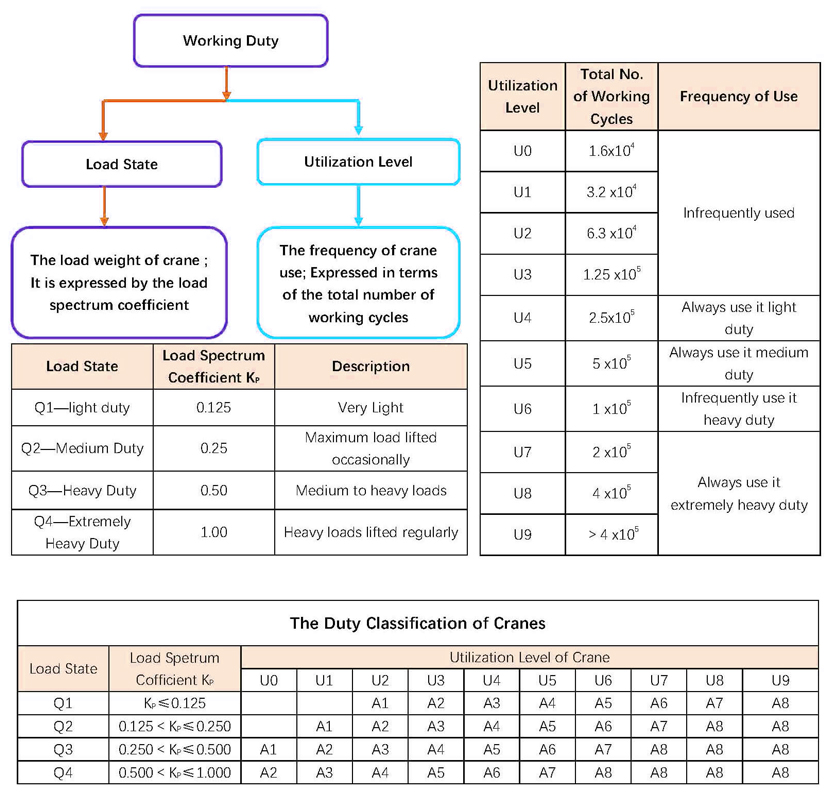
Duty cycle is usually categorized based on standards such as those set by the Crane Manufacturers Association of America (CMAA):
- Class A (Standby or Infrequent Service): Cranes used for precise lifts at slow speeds with long idle periods between lifts. Common in maintenance or repair shops.
- Class B (Light Service): Cranes used in environments with light loads and low operational frequency, like small warehouses.
- Class C (Moderate Service): Cranes used in environments with average loads and moderate operational frequency, such as machine shops and assembly operations.
- Class D (Heavy Service): Cranes used for handling heavy loads continuously during the workday, such as in heavy machine shops, foundries, and fabricating plants.
- Class E (Severe Service): Cranes used in environments with extreme loads and high operational frequency, like in steel mills and other heavy-duty applications.
- Class F (Continuous Severe Service): Cranes used in extreme conditions with continuous operation under severe load conditions, such as in foundries and steel mills with 24/7 operations.
The duty cycle helps in selecting a crane that matches the workload requirements, ensuring longevity and reliability.
Speed specifications of an overhead crane include hoisting speed, trolley travel speed, and bridge travel speed. These speeds are critical for determining the efficiency and productivity of the crane.
- Hoisting Speed: The rate at which the crane can lift or lower a load, typically measured in feet per minute (FPM) or meters per minute (MPM). Higher hoisting speeds allow for quicker lifting cycles, which is important in high-volume operations.
- Trolley Travel Speed: The speed at which the trolley moves along the bridge. Faster trolley speeds enable quicker positioning of the load, improving operational efficiency.
- Bridge Travel Speed: The speed at which the entire bridge travels along the runway. This speed affects how quickly the crane can move a load from one point to another within the facility.
The appropriate speed settings depend on the specific needs of the operation. For instance, high-speed cranes are beneficial in large facilities where long travel distances are common, while slower speeds might be sufficient for precision tasks in smaller areas.
Control System
The control system of an overhead crane dictates how the operator interacts with and controls the crane's movements.
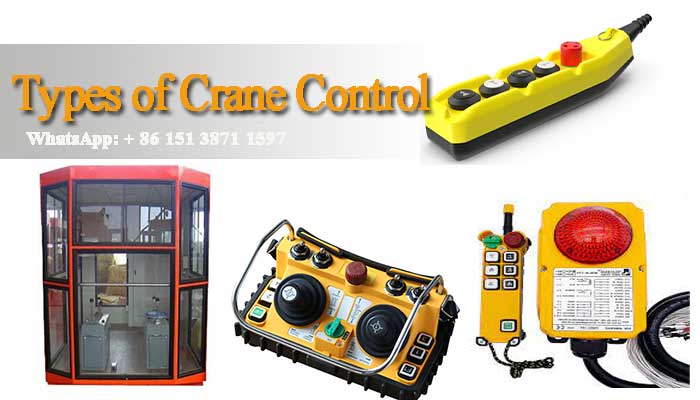
There are several types of control systems, each suited for different operational requirements and preferences:
- Pendant Control: A hand-held control device connected to the crane by a cable. Pendant controls are straightforward and provide direct control over the crane's functions. They are suitable for applications where the operator needs to be close to the load.
- Radio Control: Wireless controls that allow the operator to control the crane from a distance using a radio transmitter. Radio controls enhance flexibility and safety by allowing the operator to choose the best vantage point and stay clear of potentially hazardous areas.
- Cab Control: A control system where the operator sits in a cab attached to the crane. This setup is used in applications where the operator needs a clear view of the load and the working area, such as in large-scale industrial operations or when handling very heavy loads.
Each control system has its advantages. Pendant controls are cost-effective and easy to use, radio controls offer greater mobility and safety, and cab controls provide superior visibility and comfort for the operator. Selecting the right control system depends on factors such as the nature of the tasks, the working environment, and the specific needs of the operation.
These technical specifications—duty cycle, speed, and control system—is essential for choosing an overhead crane that will meet your operational demands efficiently and safely. This knowledge helps ensure that you select a crane with the appropriate capabilities, maximizing productivity while maintaining safety standards.
Safety and Compliance
Safety Features
Ensuring the safety of overhead crane operations is paramount. Overhead cranes come equipped with various safety features designed to protect operators, equipment, and materials. Here are some of the key safety features:
- Emergency Stops: These are crucial for stopping the crane's operation immediately in case of an emergency. Emergency stop buttons are strategically placed on the crane and control devices to allow quick access and rapid response to potential hazards.
- Limit Switches: Limit switches prevent the crane from traveling beyond its designed operating limits. They are installed on the hoist, trolley, and bridge to stop motion at the end of travel paths, thereby preventing collisions and over-travel.
- Overload Protection: This feature prevents the crane from lifting loads that exceed its maximum rated capacity. Overload protection systems can include mechanical, electrical, or electronic devices that detect when a load is too heavy and stop the hoist from lifting further.
- Anti-Collision Systems: These systems use sensors to detect obstacles in the path of the crane or trolley and automatically slow down or stop the crane to avoid collisions.
- Sway Control: Sway control technology reduces the oscillation of the load during lifting and moving, enhancing precision and reducing the risk of load sway that can cause accidents or damage.
- Brake Systems: Reliable brake systems are essential for controlling the crane's movement. This includes hoist brakes, trolley brakes, and bridge brakes that engage automatically in power failure situations to prevent unintended movement.
- Warning Devices: Audible and visual warning devices alert personnel in the vicinity of the crane's operation. This includes horns, lights, and sirens that activate during crane movement or lifting operations.
- Load Indicators: These devices display the weight of the load being lifted, allowing the operator to ensure it is within safe operating limits.
Implementing and maintaining these safety features is crucial for reducing risks and ensuring safe crane operations.
Compliance Standards
Compliance with industry standards is essential for ensuring the safety, reliability, and legal conformity of overhead cranes. Several regulatory bodies set these standards, and adherence to them is mandatory in many regions. Here are the primary compliance standards relevant to overhead cranes:
- OSHA (Occupational Safety and Health Administration): OSHA sets forth regulations in the United States to ensure safe and healthy working conditions. Specific standards for overhead and gantry cranes are outlined in OSHA 1910.179. These regulations cover design, maintenance, inspection, and operation of cranes to prevent workplace injuries and accidents.
- ANSI (American National Standards Institute): ANSI provides guidelines for the design, construction, maintenance, and operation of overhead cranes through standards such as ANSI B30. These standards are designed to enhance safety and performance in crane operations.
- CMAA (Crane Manufacturers Association of America): The CMAA, part of the Material Handling Industry of America, publishes specifications and guidelines for overhead cranes. Key documents include CMAA Specification No. 70 (Specifications for Top Running Bridge and Gantry Type Multiple Girder Electric Overhead Traveling Cranes) and CMAA Specification No. 74 (Specifications for Top Running and Under Running Single Girder Electric Overhead Traveling Cranes). These specifications cover everything from design to testing and ensure cranes are built and operated safely.
- ISO (International Organization for Standardization): ISO provides international standards, including ISO 4301 (Classification of Cranes) and ISO 9927 (Crane Inspections). Compliance with ISO standards ensures global best practices in crane safety and performance.
Adherence to these standards ensures that the cranes are designed, built, and operated following best practices for safety and efficiency. Compliance also helps in reducing accidents, improving operational reliability, and avoiding legal liabilities. Regular inspections, maintenance, and training based on these standards are essential components of a comprehensive safety program for overhead crane operations.
These safety features and compliance standards is critical for anyone involved in the procurement, operation, and maintenance of overhead cranes. It ensures that the cranes not only perform effectively but also operate safely, protecting both personnel and assets.
Customization Options
Special Features
Overhead cranes can be customized with various special features to enhance performance, efficiency, and safety. These features are tailored to meet specific operational needs and can significantly improve the crane's functionality.
- Variable Frequency Drives (VFDs): VFDs are used to control the speed of the crane's motors, including the hoist, trolley, and bridge. By adjusting motor speed, VFDs provide smooth acceleration and deceleration, reducing mechanical stress and wear on the crane. They also improve load control, enhance energy efficiency, and offer better precision during lifting and positioning tasks.
- Automation Options: Automation can transform an overhead crane into an intelligent, self-operating system. Automation options include programmable logic controllers (PLCs), remote monitoring, and integration with facility management systems. Automated cranes can perform repetitive tasks with high precision, reducing the need for manual intervention and increasing productivity. They can also enhance safety by minimizing human error and allowing remote operation in hazardous environments.
- Load Sensing and Weighing Systems: These systems measure the weight of the load being lifted and provide real-time data to the operator. This helps in preventing overload situations and ensures that the crane operates within its safe working limits.
- Sway Control Technology: Advanced sway control systems reduce the pendulum effect of the load, enhancing precision and safety during lifting and moving operations. This is particularly useful in environments where precise positioning is crucial.
- Remote Diagnostics: Remote diagnostic systems enable real-time monitoring of the crane's performance and health. They can detect potential issues before they lead to failures, allowing for proactive maintenance and reducing downtime.
Modifications
Customization options also include modifications to the crane's design and components to suit unique operational requirements and environments.
- Custom Spans: Standard cranes may not always fit the specific dimensions of a facility. Custom spans can be designed to match the exact width required, ensuring optimal coverage of the work area. This is especially important in large or irregularly shaped buildings where standard spans would be inefficient.
- Specialized Hoists: Depending on the application, different types of hoists can be used. For instance, specialized hoists might include explosion-proof hoists for hazardous environments, corrosion-resistant hoists for marine applications, or hoists designed for handling hot materials in foundries. Custom hoists can also be designed to handle specific types of loads or attachments.
- Unique Operating Environments: Some cranes need to operate in harsh or unusual environments, such as high temperatures, corrosive atmospheres, or cleanrooms. Customizing cranes for these environments involves selecting materials and finishes that can withstand specific conditions. For example:
- High-Temperature Environments: Cranes operating in foundries or metal processing plants may require heat-resistant components and insulation.
- Corrosive Environments: In chemical plants or coastal areas, cranes may need corrosion-resistant coatings and stainless steel components.
- Cleanroom Environments: Cranes used in pharmaceutical or semiconductor industries must be designed to minimize particle contamination, using cleanroom-compatible materials and lubricants.
- Custom Control Systems: Beyond standard controls, custom control systems can be developed to include features like multiple operating modes, advanced safety interlocks, and integration with other automated systems within the facility. For instance, cranes in automated warehouses may be integrated with warehouse management systems (WMS) to optimize material handling and storage operations.
- Ergonomic Enhancements: Customizing cranes to improve operator ergonomics can include adjustable control stations, enhanced visibility features, and user-friendly interfaces. These modifications help reduce operator fatigue and improve overall productivity.
By incorporating special features and modifications, overhead cranes can be tailored to meet the precise needs of any industrial application, enhancing performance, safety, and efficiency. Customization ensures that the crane system fits seamlessly into the existing workflow, addresses specific challenges, and maximizes operational effectiveness.
Cost Factors
When pricing overhead cranes, several cost factors must be considered to understand the total investment required. These factors include material costs, manufacturing and engineering complexity, installation and maintenance expenses, and warranties and after-sales services.
Material Costs
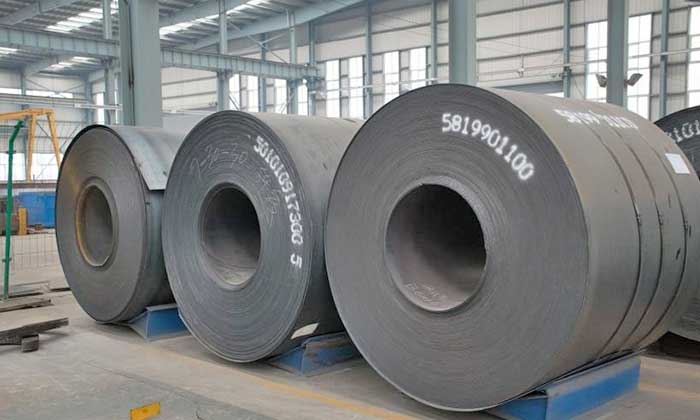
The quality and type of materials used in constructing an overhead crane significantly influence the overall cost. Materials impact the crane's durability, performance, and suitability for different environments.
- Steel Quality: Higher-grade steel, used for critical components like the bridge and hoist, ensures greater strength and longevity but comes at a higher cost. The choice between carbon steel, stainless steel, or alloy steel depends on the operational environment and load requirements.
- Corrosion-Resistant Materials: In environments exposed to moisture, chemicals, or salt air, corrosion-resistant materials such as galvanized steel or special coatings increase the crane's durability but also add to the cost.
- Specialized Components: Components such as explosion-proof hoists, heat-resistant materials, or cleanroom-compatible finishes, which are necessary for specific industries, can also raise the material costs.
Investing in high-quality materials ensures the crane's reliability and reduces long-term maintenance costs, though it requires a higher initial investment.
Manufacturing and Engineering
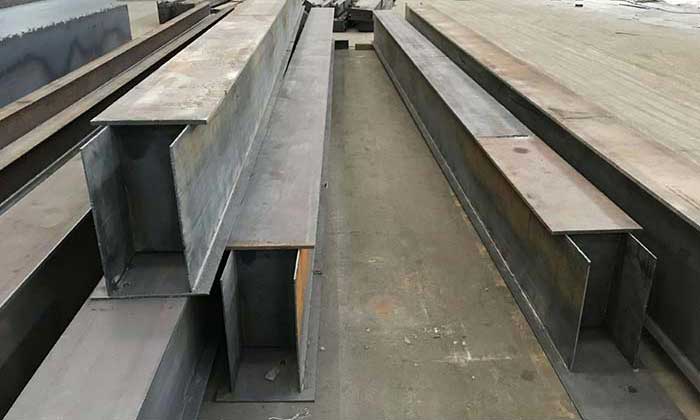
The complexity of the crane's design and the engineering requirements play a crucial role in determining its cost.
- Custom Designs: Customizing a crane to meet specific operational needs, such as unique spans, specialized hoists, or tailored control systems, increases engineering and manufacturing costs. Custom cranes require more detailed design work and specialized components, which add to the overall expense.
- Advanced Features: Incorporating advanced features such as variable frequency drives, automation, and sway control systems involves sophisticated engineering and higher manufacturing costs. These features enhance the crane's performance and efficiency but require additional investment.
- Precision Engineering: High-precision components and assemblies, which are necessary for applications demanding exact positioning and minimal tolerance, are more expensive to produce. Precision engineering ensures the crane meets stringent performance standards and operational demands.
The investment in manufacturing and engineering ensures the crane's capability to handle specific tasks efficiently and safely, justifying the higher upfront costs.
Installation and Maintenance
Installation and ongoing maintenance costs are significant factors in the total cost of owning an overhead crane.
- Installation Fees: These include the costs of transporting the crane to the site, assembling the crane, installing the runway systems, and integrating the control systems. Installation complexity varies based on the crane's size, the facility's layout, and the type of crane (e.g., bridge crane, gantry crane).
- Commissioning and Testing: After installation, the crane must be tested and commissioned to ensure it operates correctly and safely. This process involves rigorous testing of all components and systems, which adds to the initial costs.
- Ongoing Maintenance: Regular maintenance is essential to keep the crane in optimal working condition. Maintenance costs include routine inspections, lubrication, part replacements, and repairs. The frequency and extent of maintenance depend on the crane's duty cycle, operational environment, and usage intensity.
- Downtime Costs: In addition to direct maintenance expenses, consider the potential costs of downtime during maintenance activities. Efficient maintenance strategies and quick access to replacement parts can minimize downtime costs.
Investing in professional installation and regular maintenance ensures the crane's long-term performance and safety, reducing the risk of costly breakdowns.
Warranties and After-sales Service
Warranties and after-sales services are critical for protecting your investment and ensuring continued operational support.
- Warranties: Manufacturers typically offer warranties that cover parts and labor for a specified period. These warranties provide financial protection against manufacturing defects and early failures. The length and coverage of the warranty can vary significantly among manufacturers, affecting the overall cost.
- Extended Warranties: Extended warranties are available for additional fees, offering prolonged protection and covering more components. They are beneficial for long-term peace of mind but increase the initial cost.
- After-sales Service: Quality after-sales service includes technical support, availability of spare parts, and emergency repair services. Good after-sales support ensures quick resolution of issues, minimizing downtime and maintaining productivity.
- Training Programs: Some manufacturers offer training programs for crane operators and maintenance personnel. Proper training enhances safety and operational efficiency but may come at an additional cost.
Investing in comprehensive warranties and robust after-sales service ensures ongoing support and maximizes the crane's lifespan, providing long-term value for the investment.
Understanding these cost factors—material costs, manufacturing and engineering, installation and maintenance, and warranties and after-sales service—provides a holistic view of the total investment required for an overhead crane. This knowledge allows for more accurate budgeting and ensures that you select a crane that meets your operational needs and financial constraints.
Questions to Ask Suppliers
When sourcing an overhead crane, asking the right questions ensures you select the best supplier and crane for your needs. This section covers key questions to differentiate between suppliers, understand technical specifications, and clarify costs.
Comparative Questions
These questions help you compare different suppliers' offerings and identify the best fit for your requirements:
What is your experience in manufacturing overhead cranes for my industry?
This question gauges the supplier's familiarity with your specific needs and their ability to deliver tailored solutions.
Can you provide references or case studies from similar projects?
References and case studies give insight into the supplier's track record and customer satisfaction.
What are the key differentiators of your cranes compared to competitors?
Understanding unique features or advantages helps you assess the value proposition of each supplier.
What is your typical lead time for delivery and installation?
Knowing the lead time helps in planning your project timeline and comparing the efficiency of different suppliers.
Do you offer customization options, and what is the extent of these customizations?
This clarifies the flexibility of the supplier in meeting your specific needs and how they handle bespoke requirements.
Technical Questions
Technical questions ensure the crane meets your operational and performance needs:
What are the load capacities and duty cycles available for your cranes?
Understanding load capacities and duty cycles ensures the crane can handle your required workloads and operational frequency.
What types of hoists, trolleys, and bridges do you offer?
This question helps you understand the options available for different crane components and their suitability for your application.
Can you explain the safety features integrated into your cranes?
Detailed information on safety features ensures compliance with safety standards and enhances operational safety.
What control systems are available (pendant, radio, cab control), and what are their advantages?
Knowing the control system options allows you to choose the one that best suits your operational preferences and safety requirements.
How do you ensure the quality and reliability of your cranes?
This question probes into the supplier's quality control processes, certifications, and testing procedures.
Cost-related Questions
Cost-related questions help you understand the financial aspects of the purchase and avoid hidden costs:
Can you provide a detailed price breakdown for the crane and all associated costs?
A detailed price breakdown clarifies the cost of each component and service, helping you understand the overall investment.
Are there any additional costs for customization or special features?
Identifying additional costs upfront prevents budget overruns and ensures transparency.
What are the installation fees and what do they include?
Understanding installation costs and what they cover ensures you budget appropriately for the entire project.
What are the ongoing maintenance costs, and do you offer maintenance packages?
Knowing the maintenance costs helps in planning long-term operational budgets and ensures continued support.
What financing options do you offer?
Exploring financing options can help manage the investment more effectively, providing flexibility in payment terms.
Are there any hidden costs I should be aware of?
This direct question helps uncover any additional fees that might not be immediately apparent, ensuring full cost transparency.
Asking these questions ensures you gather comprehensive information, enabling you to make an informed decision. Thoroughly evaluating suppliers on these criteria helps select a crane that not only meets your technical and operational needs but also fits within your budget and project timeline. This approach minimizes risks, enhances efficiency, and ensures a successful crane procurement and implementation process.
Conclusion
In the journey of understanding overhead crane pricing, we've covered a wealth of information to equip you with the knowledge needed to make informed decisions. Let's recap the key points discussed and leave you with some final tips for navigating the process effectively.
Recap of Key Points
- Understanding Terminology: We began by exploring the essential terms and jargon used in the overhead crane industry, ensuring you're well-equipped to communicate effectively with suppliers and understand their offerings.
- Key Components and Features: Delving deeper, we examined the crucial components and features of overhead cranes, from bridges and hoists to control systems and safety mechanisms. This understanding enables you to assess crane specifications and choose the right configuration for your needs.
- Technical Specifications: We explored technical specifications such as duty cycle, speed, and control systems, highlighting their importance in determining crane performance and suitability for specific applications.
- Safety and Compliance: Safety is paramount in crane operations, and we emphasized the significance of adhering to compliance standards and implementing safety features to protect personnel and assets.
- Customization Options: Recognizing that one size does not fit all, we discussed the customization options available to tailor overhead cranes to your unique requirements, from specialized features to modifications for challenging environments.
- Cost Factors: Understanding the various cost factors involved in overhead crane procurement, including material costs, manufacturing complexity, installation expenses, and ongoing maintenance, is essential for budgeting effectively and ensuring a sound investment.
- Questions to Ask Suppliers: Armed with the knowledge gained, we provided a comprehensive list of questions to ask suppliers, enabling you to evaluate their offerings, understand technical capabilities, and clarify cost considerations.
Final Tips
- Prioritize Safety: Safety should always be paramount in overhead crane operations. Ensure the crane meets or exceeds safety standards and invest in additional safety features where necessary to protect personnel and assets.
- Plan for the Long Term: Consider not only immediate needs but also future requirements and growth potential. Investing in a crane with scalability and durability ensures long-term value and minimizes the need for costly upgrades or replacements down the line.
- Seek Expert Advice: If in doubt, don't hesitate to seek advice from industry experts or consult with experienced crane professionals. Their insights and recommendations can help you make well-informed decisions tailored to your specific circumstances.
- Compare Offers: Take the time to evaluate multiple suppliers and their offerings. By comparing quotes, specifications, and service levels, you can identify the best value proposition that aligns with your needs and budget.
- Invest in Training: Proper training for crane operators and maintenance personnel is crucial for safe and efficient operations. Allocate resources for comprehensive training programs to ensure everyone involved is equipped with the necessary skills and knowledge.
In conclusion, purchasing an overhead crane is a significant investment that requires careful consideration of various factors. By understanding terminology, evaluating technical specifications, prioritizing safety, and seeking expert guidance, you can navigate the process with confidence and select a crane solution that meets your needs effectively. Remember, informed decisions lead to successful outcomes.
Appendices
In this section, you'll find additional resources to supplement your understanding of overhead crane pricing and procurement.
Glossary of Terms
Here's an alphabetical listing of all terms and jargon mentioned throughout the guide:
- Bridge/Girder
- Control System
- Duty Cycle/ Crane Duty/ Crane Classifications Duty
- End Trucks
- Hoist
- Load Capacity
- Overhead Crane
- Pendant Control
- Radio Control
- Runway
- Span
- Trolley


Yuantai Cranes
Overhead Crane Manufacturer with CE, ISO, SGS, CNEX Certificates.
- Main Specifications - Capacity: 0.5–550 tons | Span: up to 40m | Speed: 0.8–12 m/min | Duty: A3–A7 | Power: 380–690V, 50/60Hz | Control: pendant/remote/cabin
- Full engineering: FEA/PLC/VFD + in-house build + global delivery + on-site support, for workshops, factories, EPC contractors, industrial projects, etc.
- Support: design, manufacturing, testing, service – end-to-end, customized lifting solutions worldwide.
How to Get an Accurate Crane Price for Your Application?
Tips: Copy the spec list, fill in your details, and paste it into the form on the right/ down-below for a quick price.
- Crane type:_____ . (e.g., overhead crane, gantry crane, jib crane)
- Max weight to lift:_____ tons. (e.g., 2t, 5t, 10t, 20t, 50t)
- Lifting height:_____ m. (How high does the hook need to reach?
- Workshop width (span):_____ m . (Distance between the two crane rails)
- Travel distance:_____ m . (How long does the crane need to move along the runway?)
- Control type:_____. (Pendant / remote / cabin Control)
- Power supply:_____. (Local voltage & frequency – e.g., 380V, 50Hz, 3-phase)
- What will it be used for?_____ (e.g., steel fabrication, concrete products, mold handling, general manufacturing, etc.)
- Any special requirements?_____ (e.g., extreme temperature, dusty or explosive environment, special paint color, etc.)
Just leave a message via the contact form and our hoist and crane engineer will contact you with in 24working hours.
Get Your Custom Quote–Quick & Easy
Fill in what you know. Skip what you don't – we'll help.Any question will be reply with 24 working hours