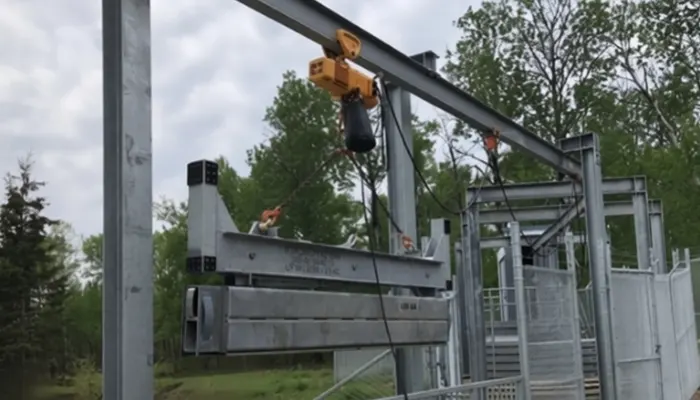
Monorail Crane Systems for Hydropower & Stop Logs
Custom Monorail Lifting Solutions for Dams, Sluice Gates & Water-Control Structures
Yuantai designs and manufactures customized monorail crane systems for hydropower stations, dams, sluice gates and water-control facilities. Engineered for specialized lifting applications, these systems support stop log handling, maintenance gate lifting and the movement of heavy components along defined travel routes.
When conventional overhead cranes or gantry cranes are unsuitable for the available space, a custom monorail hoist system can provide a practical alternative. The monorail track, electric wire rope hoist, motorized travelling trolley, power supply and control system are configured around the required lifting capacity, travel distance, lifting height and site conditions.
From hydropower plant maintenance to dam gate operations and water intake structures, Yuantai develops industrial monorail crane solutions to meet project-specific handling requirements, including long-travel routes, restricted access and customized structural support arrangements.
Discuss Your Lifting Application | Explore Monorail Crane Solutions
Engineered for Specialized Lifting Applications
- Hydropower & Dam Projects: Monorail crane systems for water-control infrastructure and maintenance operations.
- Stop Log & Sluice Gate Handling: Controlled lifting and positioning of stop logs, maintenance gates and compatible hydraulic components.
- Long-Travel Monorail Systems: Customized lifting routes for multiple operating positions along extended structures.
- Site-Specific Engineering: Hoist selection, monorail support arrangements, power supply and controls tailored to the project requirements.
Specialized Lifting Challenges in Hydropower & Water-Control Facilities
Hydropower stations, dams and water-control facilities present lifting challenges that differ from those found in conventional factories and workshops. Stop log handling, sluice gate maintenance and hydraulic equipment servicing often require specialized crane systems designed around existing civil structures, restricted installation space and extended lifting routes.
A conventional overhead crane may require parallel runway beams and sufficient clearance across a defined crane bay, while a gantry crane needs suitable space for its supporting legs and travel path. Where lifting points are arranged along a dam structure, water intake channel or maintenance platform, a custom monorail crane system may offer a more suitable approach by following the required operating route.
Dam and hydropower projects present unique lifting challenges, from extended travel routes along concrete structures to limited space and corrosive outdoor conditions. The following points outline the key considerations for monorail crane system design.
Extended Travel Routes Along Concrete Structures
Stop logs, maintenance gates and other hydraulic components may need to be moved between storage areas and multiple operating positions along a dam or water intake structure. A long-travel monorail crane system can be designed to serve these designated lifting locations along an engineered track.
Limited Space for Conventional Crane Runways
Spillways, sluice gates and water intake structures may lack the clearance required for a conventional overhead crane runway or a large gantry crane. A monorail hoist system can provide a dedicated lifting route where the site geometry and supporting structure permit installation.
Multiple Lifting Points Along a Defined Route
Stop log installation and removal may involve several lifting positions along the same water passage or gate structure. A motorized travelling trolley and electric wire rope hoist can move loads between designated positions along the monorail, subject to the system layout and approved operating procedure.
Restricted Access Around Water Channels & Maintenance Platforms
Concrete walls, narrow walkways, gate mechanisms and adjacent equipment can limit access for mobile lifting equipment. A customized monorail crane can help position the lifting equipment along the required route without relying on a mobile crane's access path, provided installation and maintenance access are adequately addressed.
Outdoor Exposure, Moisture & Corrosive Conditions
Dam cranes, hydropower lifting equipment and water-control crane systems may operate in environments exposed to rain, humidity, condensation and corrosive agents. Hoist protection, electrical enclosures, surface coatings, corrosion-resistant materials and other environmental measures should be selected according to the actual site conditions.
Existing Civil Structures & Installation Constraints
The available mounting locations, concrete geometry, support spacing and allowable structural loads can determine whether and how a monorail beam can be installed. Engineering assessment must verify the supporting structure, connections, beam loading and operational forces before the final crane configuration is approved.
A Monorail Crane System Designed Around the Required Route
In specialized water-control applications, the lifting route is often determined by the existing dam, gate or hydraulic structure. Instead of adapting the entire facility to a conventional crane layout, a customized monorail crane system can be engineered around the required travel path, lifting positions and verified structural conditions.
Yuantai develops monorail crane solutions for hydropower stations, dam maintenance, stop log handling, sluice gate operations and other specialized industrial lifting applications. Each system is configured according to the load, travel distance, lifting height, duty requirements, available installation space and operating environment.
Have a challenging lifting route? Share your site drawings, lifting points and working conditions with our engineering team to explore a suitable monorail crane solution.
A Monorail Crane System Designed Around Your Site
Yuantai designs and manufactures custom monorail crane systems for hydropower stations, dams, sluice gates and water-control facilities. These systems help lift and move stop logs, maintenance gates and other heavy components along a defined route.
Unlike a conventional overhead crane that covers a wider working area, a monorail crane follows a dedicated track to reach designated lifting positions.
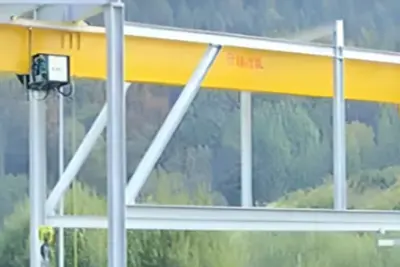
Long-Travel Monorail
- Extended Travel Route: Move loads along dams, water intake structures and gate chambers.
- Multiple Lifting Positions: Serve different stop log storage, installation and maintenance locations along one track.
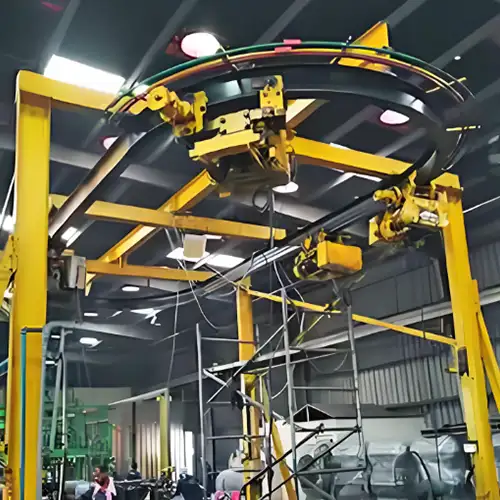
- Customized Track Layout: Adapt the monorail beam to the required travel distance and available installation space. Check the straight and curved monorials .
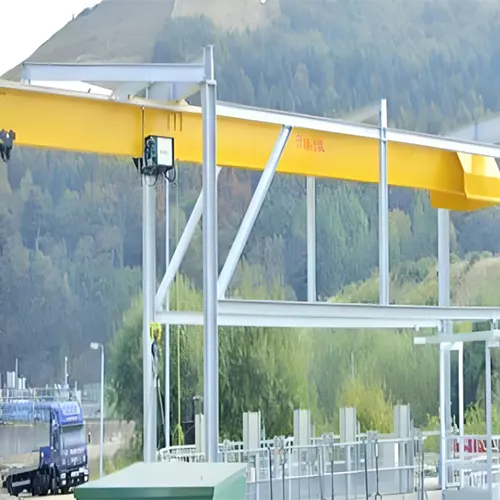
- Customized freestanding monorail crane systems for outdoor use.
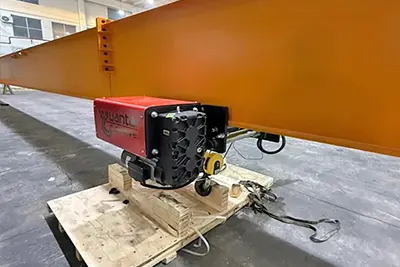
Electric Hoist & Motorized Trolley
- Vertical Lifting: Use an electric wire rope hoist to raise and lower heavy components.
- Horizontal Travel: Move the load along the monorail beam with a motorized travelling trolley.
- Application-Specific Configuration: Select the lifting capacity, lifting height and travel speeds according to the load and operating requirements.
- Special Lifting Attachments: Incorporate suitable lifting beams or attachments when required by the load design.
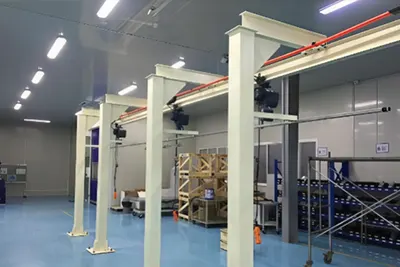
Power Supply & Control System
- Continuous Power Supply: Configure a festoon cable system or another suitable arrangement for the monorail travel route.
- Flexible Operation: Choose pendant control or radio remote control according to site access and operating needs.
- Safety Protection: Provide appropriate overload protection, travel limit switches and emergency stops.
- Environmental Suitability: Select electrical enclosures, cables and protective measures for outdoor exposure, moisture and corrosion risks.
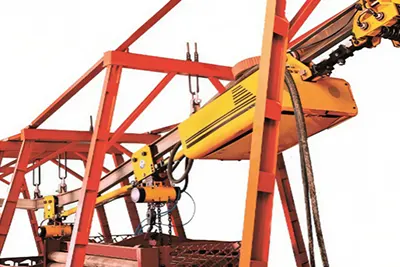
Customized Beam Supports & Installation
- Site-Specific Support Design: Develop beam supports and connections to suit existing concrete structures, steel platforms and available mounting locations.
- Structural Verification: Check the supporting structure, connections and beam loading against applicable design requirements.
- Installation Clearance: Consider surrounding gates, water channels, maintenance platforms and access requirements.
- Project-Based Engineering: Determine the final monorail arrangement from site drawings, travel requirements and verified structural capacity.
A Complete Monorail Lifting Solution
Yuantai integrates the monorail beam, electric hoist, travelling trolley, power supply, controls and supporting structure into a customized monorail crane system.
- Hydropower Stations: Equipment maintenance and specialized lifting operations.
- Dams & Sluice Gates: Stop log handling and maintenance gate lifting.
- Water Intake Structures: Lifting operations where space and access are restricted.
- Spillways & Water-Control Facilities: Route-based lifting for suitable maintenance applications.
Planning a Monorail Crane Project?
Send us your site drawings, required lifting capacity, travel distance, lifting height and working conditions. Our engineering team can assess your requirements and develop a suitable monorail crane solution.
Why Choose a Monorail Crane System?
A Defined Lifting Route for Specialized Handling Operations
In hydropower stations, dams and water-control facilities, lifting points are often arranged along a specific route rather than across a large workshop. Stop log handling, sluice gate maintenance and other hydraulic operations may require lifting equipment that can travel along existing structures while working within limited installation space.
A monorail crane system provides a dedicated track for moving loads between designated lifting positions. Compared with conventional overhead cranes and gantry cranes, it offers a different approach to crane layout and installation. The most suitable solution depends on the required lifting coverage, site conditions and operating requirements.
| Design Consideration | Monorail Crane System | Conventional Crane Alternative |
|---|---|---|
| Lifting Coverage | Moves loads along a designated track | Overhead and gantry cranes can cover broader areas, depending on their configuration |
| Installation Layout | Can follow a defined linear route | May require a wider runway, crane bay or space for supporting legs |
| Existing Structures | Beam supports and connections can be customized to verified site conditions | May require different structural arrangements to accommodate the crane layout |
| Multiple Lifting Points | Suitable when lifting points follow the monorail route | Suitable when lifting operations require broader two-dimensional coverage |
| Project Suitability | Well suited to specialized, route-based lifting applications | Often suitable for workshops, factories and other areas requiring wider load coverage |
A monorail crane is not automatically the best choice for every project. The selection should consider the lifting route, rated capacity, lifting height, operating frequency, structural requirements, installation costs and future maintenance needs.
For stop log handling, dam maintenance and hydropower applications, Yuantai can assess these factors to help determine whether a customized monorail crane system or an alternative crane configuration better fits your project.
Monorail Crane Systems for Stop Log Installation & Removal
Stop logs are removable barriers used to isolate water passages during inspection, maintenance and repair at dams, hydropower stations and other water-control facilities. Handling these components requires lifting equipment that can reach the designated lifting points and operate within the available space.
A monorail crane system for stop log handling provides a dedicated travel route for moving stop logs between storage, installation and maintenance positions. The track layout, hoist capacity and lifting attachments are selected according to the stop log dimensions, lifting points, required travel distance and site conditions.
Typical Stop Log Handling Operations
- Moving Stop Logs Between Locations: Transport stop logs from storage areas to designated installation or removal positions.
- Controlled Lifting and Lowering: Raise and lower stop logs at the required locations using a suitably selected electric hoist.
- Maintenance Gate Handling: Lift compatible maintenance gates and related components where the load and lifting arrangements permit.
- Water Intake Maintenance: Support lifting operations around intake channels, gate chambers and other hydraulic structures.
Typical Monorail Crane System Configuration
A complete stop log lifting system may include the following components:
Monorail Beam → Motorized Travelling Trolley → Electric Wire Rope Hoist → Suitable Lifting Attachment
- Monorail Beam: Provides the travel path between designated lifting positions.
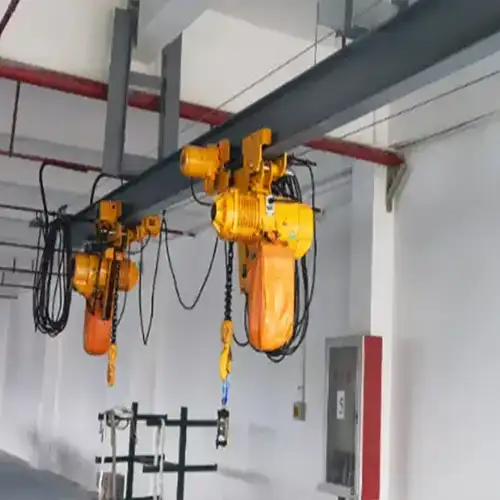
- Motorized Travelling Trolley: Moves the hoist and suspended load along the track.
- Electric Wire Rope Hoist: Raises and lowers the stop log or compatible gate component.
- Lifting Attachment: Connects the hoist to the designated lifting points and may include a lifting beam or specialized device where required.
The lifting attachment, hoist capacity and operating sequence must match the stop log design and the approved handling procedure. The complete system also requires suitable structural support, controls and safety provisions.
With a properly engineered layout, a custom monorail crane for stop log handling can provide a practical solution for water-control facilities where lifting points follow a defined route.
Monorail Crane Applications in Water-Control Infrastructure
Different water-control facilities present different lifting challenges. Yuantai develops customized industrial monorail crane systems according to the lifting task, required travel route, installation space and structural conditions of each project.
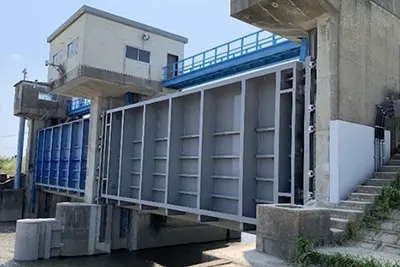
Hydropower Stations
Hydropower facilities may require lifting equipment for maintenance around intake structures, hydraulic gates and associated equipment.
- Lifting and moving maintenance components.
- Serving designated lifting points around intake and gate structures.
- Supporting maintenance operations where conventional crane access is limited.
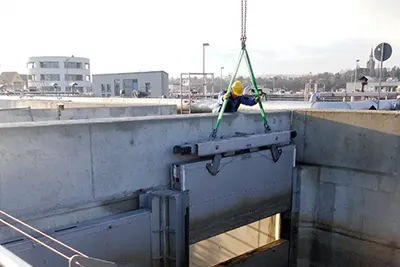
Dams & Sluice Gates
Dam and sluice gate operations may involve installing, removing and maintaining stop logs and compatible gate components.
- Stop log installation and removal.
- Maintenance gate handling.
- Route-based lifting along suitable concrete or steel structures.
- Double hook hoist for dams and sluice gates handling
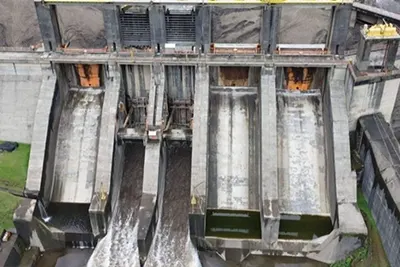
Spillways
Spillway structures can present extended travel routes, restricted access and limited space for conventional lifting equipment.
- Lifting equipment at designated maintenance positions.
- Moving compatible components along suitable spillway structures.
- Customized monorail arrangements subject to structural and environmental assessment.
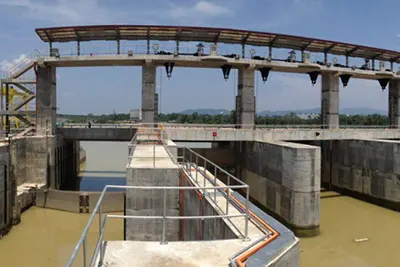
Water Intake & Flood-Control Facilities
Water intake structures and flood-control facilities may require specialized lifting systems to maintain hydraulic equipment and removable barriers.
- Stop log and maintenance component handling.
- Lifting around water channels, gate chambers and maintenance platforms.
- Customized travel paths where site access and installation space are restricted.
A Monorail Solution Matched to Your Facility
From hydropower stations and dams to spillways and flood-control structures, the appropriate crane system depends on the actual lifting route and operating requirements. A monorail crane is particularly worth evaluating when multiple lifting positions follow a defined path and a conventional crane layout is impractical.
Planning a water-control lifting project? Send Yuantai your site drawings, load details, lifting height and required travel distance to discuss a customized monorail crane system.
Monorail Crane Project Requirements Checklist
Please provide the following information to help us assess your monorail crane system.
- Lifting Capacity: ______ tons. Example: 8 tons
- Lifting Height: ______ m. Example: 13 m
- Monorail Travel Distance: ______ m. Example: 48 m
- Load Type & Dimensions: ______. Example: Stop logs, 3 m long
- Lifting Points & Attachments: ______. Example: Two lifting points with a custom lifting beam
- Installation Structure: ______. Example: Existing concrete walls with steel beam supports
- Operating Environment: ______. Example: Outdoor hydropower station with high humidity
- Power Supply: ______. Example: 400 V, 50 Hz, 3-phase
- Control Method: ______. Example: Radio remote control
- Operating Frequency / Duty Class: ______. Example: 10 lifting cycles per day; duty class to be confirmed
- Applicable Standards: ______. Example: EN standards and local safety requirements
- Additional Information: ______. Example: Site layout, structural drawings, photos or special lifting requirements
FAQs About Monorail Crane Systems
Answers to common questions about monorail crane systems for hydropower projects, covering applications, travel distance, structural installation, environment protection and stop log handling.
1. What is a monorail crane system?
A monorail crane system uses a hoist and travelling trolley that move along a dedicated beam or track. It is suitable for lifting and transporting loads along a defined route in hydropower stations, dams and water-control facilities.
2. Can a monorail crane be used for stop log handling?
Yes. A monorail crane can support stop log installation, removal and maintenance when the track layout, lifting capacity, lifting height and attachments suit the application.
3. Can a monorail crane cover a travel distance of approximately 48 m?
Yes, a long-travel monorail system may be designed for a travel distance of approximately 48 m. The final configuration depends on the load, beam spans, support locations, structural conditions and required operating performance.
4. What information is required to design a monorail crane for a dam?
Key information includes lifting capacity, lifting height, travel distance, load dimensions, lifting points, site layout, existing structure drawings, power supply and working environment. These details help determine a suitable crane configuration.
5. Can the monorail beam be installed on an existing concrete structure?
Potentially, yes. The existing concrete structure, anchoring points and connections must be assessed by qualified structural engineers to verify that they can safely withstand the crane loads. Additional steel supports or structural reinforcement may be required.
6. What is the difference between a monorail crane and an overhead crane?
A monorail crane moves along a dedicated track, making it suitable for a defined travel route. An overhead crane typically travels along two runway rails and provides broader coverage across a work area. The appropriate system depends on the lifting route, available space and project requirements.
7. Can the system be designed for outdoor and wet environments?
Yes. A monorail crane can be configured for outdoor or humid environments by selecting suitable protective coatings, electrical enclosures, components and corrosion protection. The design must account for actual exposure to rain, moisture, temperature and other site conditions.
8. How are stop logs connected to the hoist during lifting?
Stop logs may be connected using hooks, lifting beams or specially designed attachments that match their lifting points and load distribution. The attachment, lifting sequence and operating clearances must be compatible with the stop log design and approved handling procedures.
Need a monorail crane for your hydropower project? Share your lifting capacity, travel distance, lifting height and site drawings with Yuantai for a project-specific engineering review.

Article by Bella ,who has been in the hoist and crane field since 2016. Bella provides overhead crane & gantry crane consultation services for clients who need a customized overhead travelling crane solution.Contact her to get free consultation.
Related Products
Yuantai Cranes
Overhead Crane Manufacturer with CE, ISO, SGS, CNEX Certificates.
- Main Specifications - Capacity: 0.5–550 tons | Span: up to 40m | Speed: 0.8–12 m/min | Duty: A3–A7 | Power: 380–690V, 50/60Hz | Control: pendant/remote/cabin
- Full engineering: FEA/PLC/VFD + in-house build + global delivery + on-site support, for workshops, factories, EPC contractors, industrial projects, etc.
- Support: design, manufacturing, testing, service – end-to-end, customized lifting solutions worldwide.
How to Get an Accurate Crane Price for Your Application?
Tips: Copy the spec list, fill in your details, and paste it into the form on the right/ down-below for a quick price.
- Crane type:_____ . (e.g., overhead crane, gantry crane, jib crane)
- Max weight to lift:_____ tons. (e.g., 2t, 5t, 10t, 20t, 50t)
- Lifting height:_____ m. (How high does the hook need to reach?
- Workshop width (span):_____ m . (Distance between the two crane rails)
- Travel distance:_____ m . (How long does the crane need to move along the runway?)
- Control type:_____. (Pendant / remote / cabin Control)
- Power supply:_____. (Local voltage & frequency – e.g., 380V, 50Hz, 3-phase)
- What will it be used for?_____ (e.g., steel fabrication, concrete products, mold handling, general manufacturing, etc.)
- Any special requirements?_____ (e.g., extreme temperature, dusty or explosive environment, special paint color, etc.)
Just leave a message via the contact form and our hoist and crane engineer will contact you with in 24working hours.
Get Your Custom Quote–Quick & Easy
Fill in what you know. Skip what you don't – we'll help.Any question will be reply with 24 working hours