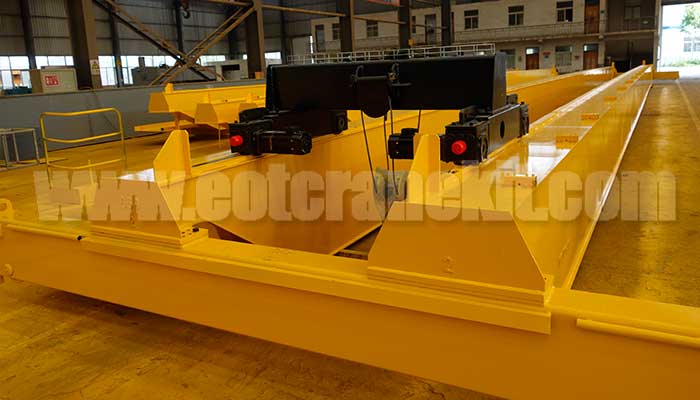
Bridge Cranes for Machinery Manufacturing: Types & Uses 1- 50 Ton
Bridge Cranes in Machinery Manufacturing
In the intricate world of machinery manufacturing, where precision and efficiency are paramount, the role of bridge cranes stands as a testament to innovation in material handling and assembly. This two-part blog series delves into the various types of bridge cranes that play a pivotal role in the machinery manufacturing industry, highlighting their features, benefits, and applications across diverse aspects of production.
Defining Bridge Cranes and Their Significance
Bridge cranes, also known as overhead cranes, are robust and versatile lifting solutions that traverse overhead runways or beams, allowing them to efficiently move heavy loads across a workspace. These cranes have become the backbone of modern manufacturing processes, addressing the challenges posed by the handling of large components, intricate assemblies, and the need for precise positioning.
The Crucial Role in Efficient Material Handling and Assembly
At the heart of machinery manufacturing lies the need for seamless material handling and assembly processes. Bridge cranes address this need by providing a dynamic and adaptable means of moving materials and components within the manufacturing facility. From lifting raw materials to positioning heavy machinery parts, bridge cranes contribute significantly to streamlining production workflows and optimizing factory space utilization.
Whether it's the assembly of automobiles, the creation of intricate aerospace components, or the fabrication of heavy equipment, bridge cranes have become a silent force that empowers manufacturers to achieve greater efficiency, accuracy, and safety in their operations.
Brief Introduction of Machinery Manufacturing
Machinery manufacturing involves the production of various types of machinery and equipment used in different industries and applications. It encompasses the design, development, fabrication, assembly, and testing of machines that are utilized in sectors such as agriculture, construction, manufacturing, energy, transportation, healthcare, and more. Machinery manufacturing plays a crucial role in driving industrial and technological advancements.
Machinery can range from simple devices to complex systems, and it includes a wide variety of equipment such as:
- Industrial Machinery: This includes equipment used in factories and manufacturing plants, such as CNC machines, assembly line systems, printing presses, and industrial robots.
- Construction Machinery: These are machines used in construction projects, such as excavators, bulldozers, cranes, and concrete mixers.
- Agricultural Machinery: Equipment used in farming and agriculture, like tractors, harvesters, irrigation systems, and plows.
- Energy and Power Machinery: Machines used in power generation and distribution, such as turbines, generators, transformers, and power grid equipment.
- Transportation Machinery: This category covers vehicles and equipment used in transportation, including automobiles, trucks, airplanes, ships, and trains.
- Medical Machinery: Equipment used in the medical and healthcare field, like MRI machines, X-ray equipment, surgical robots, and diagnostic instruments.
- Food Processing Machinery: Machines used in food production and processing, including packaging equipment, food preparation machinery, and beverage processing machines.
- Textile Machinery: Equipment used in the textile industry for processes like spinning, weaving, and dyeing.
- Mining and Construction Machinery: Machinery used in mining operations, including drilling rigs, crushers, and mineral processing equipment.
- Material Handling Machinery: Equipment used for moving and handling materials within warehouses, factories, and distribution centers, such as forklifts and conveyor systems.
Machinery manufacturing involves a combination of engineering disciplines, including mechanical, electrical, and sometimes software engineering. It requires expertise in design, manufacturing processes, materials science, quality control, and safety standards. With advances in technology, machinery manufacturing has evolved to incorporate digital design, automation, and smart technologies to enhance efficiency, precision, and functionality.
The machinery manufacturing industry has a significant impact on economic growth and industrial development, as it provides the tools and equipment necessary for other industries to operate efficiently and effectively.
Why overhead cranes are needed in machinery manufacturing ?
Overhead cranes are an essential tool in the machinery manufacturing industry for several reasons:
- Heavy Lifting: Machinery manufacturing often involves the production of large and heavy components, parts, and machinery. Overhead cranes have the capacity to lift and move these heavy loads safely and efficiently, which would be difficult or impossible to accomplish manually.
- Precision Handling: Overhead cranes are equipped with controls that allow operators to maneuver loads with high precision. This is crucial when assembling intricate machinery that requires accurate alignment and positioning of components.
- Efficient Material Movement: Overhead cranes facilitate the movement of materials and components across different workstations within a manufacturing facility. This helps streamline production processes and reduces the need for manual material handling, saving time and minimizing the risk of damage.
- Optimal Use of Space: Manufacturing facilities often have limited floor space due to the large machinery and equipment present. Overhead cranes operate above the production area, utilizing vertical space effectively and freeing up valuable floor space for other operations.
- Safety and Ergonomics: Overhead cranes contribute to a safer work environment by reducing the need for manual lifting, which can lead to injuries. Operators can control the crane from a safe distance, minimizing their exposure to potentially hazardous situations.
- Versatility: Overhead cranes can be designed with various lifting mechanisms, such as hooks, magnets, or specialized tooling, making them adaptable to different manufacturing processes. This versatility allows them to handle a wide range of loads and tasks.
- High Load Capacity: Overhead cranes are engineered to handle heavy loads that would be impractical or unsafe for traditional material handling methods. This capability is particularly useful in the machinery manufacturing industry, where many components are large and heavy.
- Time Efficiency: Overhead cranes can significantly speed up manufacturing processes by swiftly moving materials and components to where they are needed. This leads to faster production cycles and increased overall productivity.
- Reduced Labor Costs: By automating the lifting and movement of heavy loads, overhead cranes reduce the need for manual labor, which can result in cost savings in the long run.
- Improved Quality: Precise handling and positioning offered by overhead cranes contribute to better quality control during assembly and production processes. This helps prevent errors and defects that can arise from mishandling or misalignment.
Overall, overhead cranes play a vital role in machinery manufacturing by providing the means to handle large and heavy components efficiently, safely, and with precision. Their contributions lead to enhanced productivity, reduced risks, and improved manufacturing processes.
Types of Bridge Cranes in Machinery Manufacturing
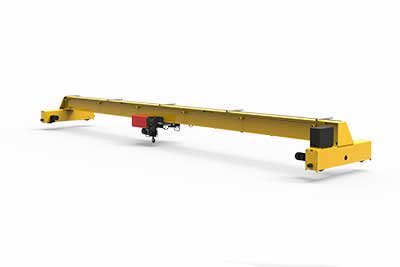
Bridge Cranes (EOT Cranes - Electric Overhead Traveling Cranes):
- Features: Consist of a bridge that travels along elevated runways, with a hoist and trolley for vertical and horizontal movement. Can be single or double girder.
- Benefits: High load capacities, wide coverage area, precise positioning, suitable for heavy-duty tasks.
- Function: Lifting, moving, and positioning heavy components and machinery across a large area.
- Typical Applications: Assembly lines, machining operations, material handling in manufacturing facilities, shipyards, construction sites.
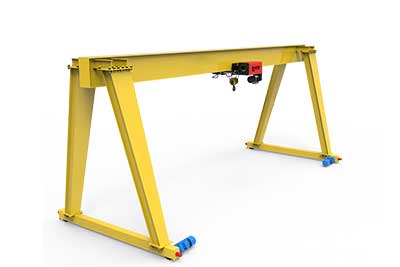
- Features: Similar to bridge cranes but supported by legs on the ground. Can have single or double girder configurations.
- Benefits: Versatile, outdoor use, large coverage area, suitable for open spaces.
- Function: Lifting and moving heavy loads in outdoor areas or where overhead runways are impractical.
- Typical Applications: Construction sites, shipyards, outdoor material handling, large manufacturing facilities.
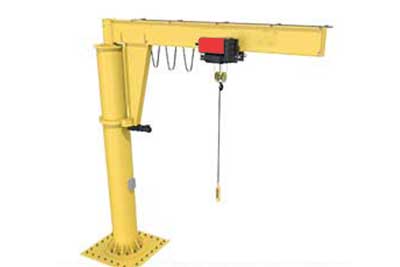
- Features: Consist of a horizontal arm (jib) mounted to a vertical mast or wall. Can be wall-mounted or freestanding.
- Benefits: Space-saving, localized material handling, easy installation, precise positioning.
- Function: Lifting and moving loads within a confined area, loading and unloading workstations.
- Typical Applications: Workstations, assembly lines, machining centers, loading docks.
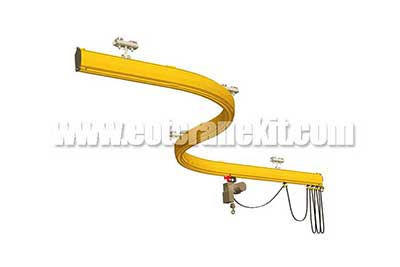
- Features: Utilize a single rail for hoist and trolley movement along a fixed path.
- Benefits: Linear material movement, adaptable to various layouts, suitable for repetitive tasks.
- Function: Transporting materials along a predetermined path, automated material handling.
- Typical Applications: Assembly lines, production processes, material transport in confined spaces.
Single Girder Bridge Cranes
In the vast landscape of machinery manufacturing, precision and efficiency are the cornerstones of success. Among the many tools that enable this success, single girder bridge cranes emerge as a versatile and cost-effective solution. Let's delve into the intricacies of these cranes, uncovering their features, benefits, and applications that make them a staple in the industry.
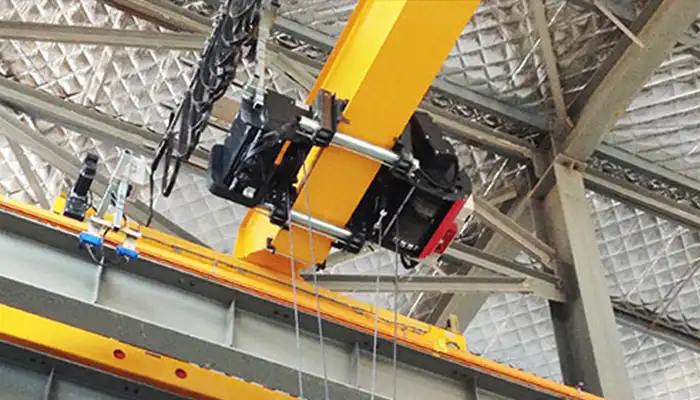
Features of Single Girder Bridge Cranes
Single girder bridge cranes are characterized by their use of a single beam for lifting and movement. This design ensures a streamlined yet robust structure that is ideally suited for specific applications within machinery manufacturing. Additionally, these cranes are engineered to accommodate lighter loads and possess lower headroom requirements, making them adaptable to various production environments.
Benefits of Single Girder Bridge Cranes
- Cost-Effective Solution: One of the standout advantages of single girder bridge cranes is their cost-effectiveness. This makes them an attractive option for manufacturers looking to enhance their material handling capabilities without exceeding budget constraints.
- Space-Saving Design: The single girder configuration translates to a space-saving design, making these cranes ideal for facilities where floor space optimization is a priority. Their compact structure allows for efficient use of available workspace.
Applications of Single Girder Bridge Cranes
- Lighter Machinery Components Handling: Single girder bridge cranes excel in handling lighter machinery components. Their design is particularly well-suited for transporting parts that don't require the load-bearing capacity of larger cranes.
- Assembly Lines with Moderate Load Requirements: These cranes find their niche in assembly lines that involve moderate load requirements. Their precision movement and adaptable load capacity make them valuable assets in ensuring seamless assembly processes.
In the realm of machinery manufacturing, where efficiency, cost-effectiveness, and precision are essential, single girder bridge cranes stand as a testament to innovation. Their ability to handle lighter loads while providing reliable and efficient material handling makes them a trusted choice for manufacturers seeking enhanced productivity.
In the upcoming sections of this series, we'll continue to unravel the world of bridge cranes, exploring double girder bridge cranes, top running and underhung bridge cranes, gantry cranes, and jib cranes. Each type brings a unique set of features and benefits to the table, catering to the diverse needs of machinery manufacturing. Stay tuned to expand your knowledge on the integral role these cranes play in shaping the industry's success.
Single Girder Overhead Crane Offering
Explore the specifications, recommended industries, and typical loads for various single girder overhead cranes suitable for machinery manufacturing, workshops, and heavy industrial applications.
European Standard Suspension Single Girder Bridge Crane
- European Standard Suspension Single Girder Bridge Crane Details
- Lifting capacity: 1 ton, 3 ton, 5 ton to 10 ton
- Span: 3–15 m
- Lifting height: 3–100 m
- Recommended for: Machinery manufacturing and assembly lines
- Typical loads handled: Car body frames, machine components, equipment modules
- Ask for single girder overhead crane price now
Suspension Single Girder Bridge Crane Chinese type
- Suspension Single Girder Bridge Crane Chinese type Details
- Lifting capacity: 0.5 ton, 3 ton, 5 ton to 10 ton
- Span: 3–31.5 m
- Working Class: A3 to A5
- Recommended for: General machinery manufacturing and light industrial operations
- Typical loads handled: Motors, assembly parts, tools, light equipment
- Ask for single girder overhead crane price now
FEM / DIN Top running Single Girder Bridge Crane
- FEM / DIN Top running Single Girder Bridge Crane Details
- Lifting capacity: 3.2 ton, 3 ton, 5 ton, 10 ton, 16 ton
- Span: 7.5–28.5 m
- Working Class: A5
- Recommended for: Heavy machinery manufacturing and industrial plants
- Typical loads handled: Engine blocks, large molds, presses, machinery frames
- Ask for single girder overhead crane price now
Chinese Style Top Running Single Girder Bridge Crane
- Chinese Style Top Running Single Girder Bridge Crane Details
- Lifting capacity: 1 ton, 3 ton, 5 ton, 10 ton up to 20 ton
- Span: 7.5–28.5 m
- Working Class: A3, A4
- Recommended for: Medium-to-heavy machinery manufacturing
- Typical loads handled: CNC machines, presses, fabrication components
- Ask for single girder overhead crane price now
Explosion Proof Single Girder Bridge Crane
- Explosion Proof Single Girder Bridge Crane Details
- Lifting capacity: 1 ton, 3 ton, 5 ton, 10 ton up to 20 ton
- Span: 7.5–28.5 m
- Working Class: A3, A4
- Recommended for: Machinery manufacturing in hazardous or flammable environments
- Typical loads handled: Chemical drums, flammable liquids, motorized equipment
- Ask for single girder overhead crane price now
Partial Hung Low Headroom Single Girder Bridge Crane
- Partial Hung Low Headroom Single Girder Bridge Crane Details
- Lifting capacity: 1 ton, 3 ton, 5 ton, 10 ton up to 32 ton
- Span: 7.5–22.5 m
- Working Class: A3, A4
- Recommended for: Workshops with limited headroom, machinery assembly lines
- Typical loads handled: Gearboxes, large motors, machinery subassemblies
- Ask for single girder overhead crane price now
Low headroom Hoist Single Girder Bridge Crane
- Low headroom Hoist Single Girder Bridge Crane Details
- Lifting capacity: 1 ton, 3 ton, 5 ton, 10 ton up to 32 ton
- Span: 7.5–22.5 m
- Working Class: A3, A4
- Recommended for: Machinery manufacturing, confined spaces
- Typical loads handled: Motors, machine frames, production components
- Ask for single girder overhead crane price now
Ladle handling Single Girder Bridge Crane
- Ladle handling Single Girder Bridge Crane Details
- Lifting capacity: 1 ton, 3 ton, 5 ton, 10 ton
- Lifting height: 6–18 m
- Working Class: M5
- Recommended for: Metalworking and heavy machinery plants
- Typical loads handled: Molten metal ladles, steel molds, heavy castings
- Ask for single girder overhead crane price now
Double Girder Bridge Cranes
Exploring Types of Bridge Cranes - Double Girder Bridge Cranes
In the dynamic realm of machinery manufacturing, where heavy loads and intricate assemblies take center stage, the emergence of double girder bridge cranes marks a significant stride in material handling innovation. This section of our series unveils the powerful features, compelling benefits, and real-world applications that position double girder bridge cranes as indispensable assets within the industry.
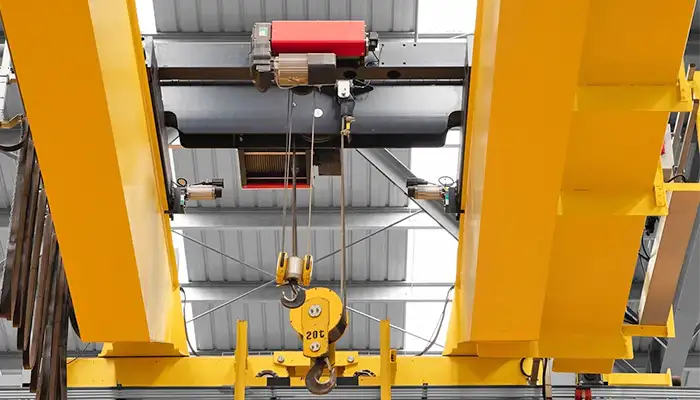
Features of Double Girder Bridge Cranes
Double girder bridge cranes are designed with a unique configuration that incorporates two beams for lifting and movement. This structural enhancement serves as a cornerstone for handling heavier loads and spanning longer distances. As a result, these cranes are adept at tackling the challenges posed by substantial machinery components and complex assembly processes.
Benefits of Double Girder Bridge Cranes
- High Load Capacity: The defining feature of double girder bridge cranes is their ability to accommodate high load capacities. This attribute makes them an invaluable asset for industries dealing with substantial machinery and equipment.
- Versatility for Various Machinery Sizes: Double girder bridge cranes are renowned for their versatility. They can seamlessly handle a range of machinery sizes, from large components to intricate assemblies, making them adaptable to different production scenarios.
Applications of Double Girder Bridge Cranes
- Heavy Machinery Handling: Double girder bridge cranes come into their own when it comes to the handling of heavy machinery. Their robust design and high load capacity make them an optimal choice for moving large equipment and components.
- Large Component Assembly: The precision and strength of double girder bridge cranes make them indispensable in the assembly of large machinery components. Their ability to position parts accurately ensures efficient and error-free assembly processes.
Double Girder Overhead Crane Offering
Discover specifications, recommended industries, and typical loads for various double girder, ladle, electromagnetic, and specialty overhead cranes suitable for machinery manufacturing, steel plants, ports, and heavy industrial applications.
Chinese style double girder hoist crane
- Chinese style double girder hoist crane Details
- Description: Traditional heavy duty double girder bridge crane with overhead electric winch trolley, robust & sturdy, affordable industrial solution.
- Recommended for: Machinery manufacturing, workshops, general heavy industry
- Typical loads handled: Machine components, motors, assembly parts, equipment modules
Chinese style double girder open winch crane
- Chinese style double girder open winch crane Details
- Capacity: 5–63 ton, equipped with rope or chain hoist trolley
- Recommended for: Heavy machinery manufacturing, industrial assembly lines
- Typical loads handled: Motors, gearboxes, structural components, equipment modules
European style double girder open winch crane
- European style double girder open winch crane Details
- Description: European standard double girder bridge crane with open winch trolley, heavy duty up to 320 ton, wide industrial application.
- Recommended for: Steel plants, machinery manufacturing, heavy industry
- Typical loads handled: Large molds, presses, structural steel, heavy machinery
European style double girder hoist trolley crane
- European style double girder hoist trolley crane Details
- Capacity: 5–80 ton electric wire rope hoist trolley
- Recommended for: Industrial manufacturing, metalworking plants, material handling
- Typical loads handled: Steel coils, machinery components, industrial materials
Ladle crane: 5–320 ton
- Ladle crane Details
- Description: Heavy duty ladle crane for steel mill, foundry, furnace, and casting factory.
- Recommended for: Steel mills, foundries, metal casting plants
- Typical loads handled: Molten metal ladles, liquid metal, casting molds
Electromagnetic cranes & Electromagnets
- Electromagnetic cranes Details
- Description: Bridge cranes with electromagnetic chucks & magnetic beams for steel scraps, billets, coils, plates, and pipes.
- Recommended for: Steel mills, scrap yards, metal handling
- Typical loads handled: Steel plates, billets, coils, scrap metal
Rotary bridge crane with electro-magnet beam spreader
- Rotary bridge crane Details
- Description: Double girder bridge crane with rotary design & electromagnet beam spreader for lifting long & large steels.
- Recommended for: Steel fabrication, long steel handling, industrial plants
- Typical loads handled: Steel beams, large metal bars, heavy steel components
Grab crane - Overhead crane with crane grab bucket
- Grab crane Details
- Capacity: 5–20 ton
- Recommended for: Power stations, steel mills, ports, cement plants, waste recycling
- Typical loads handled: Scrap, bulk material, coal, cement, recycling waste
As machinery manufacturing continually pushes the boundaries of innovation, double girder bridge cranes serve as a testament to the industry's commitment to excellence. Their capability to shoulder substantial loads while providing precise movement showcases their significance in enhancing productivity and safety.
Stay tuned as our exploration of bridge cranes delves deeper into the world of top running and underhung bridge cranes, gantry cranes, and jib cranes. With each crane type catering to specific needs, machinery manufacturers are equipped with a diverse toolkit to overcome challenges and seize opportunities.
Top Running Bridge Cranes - Efficient Material Handling in Machinery Manufacturing
In the dynamic landscape of machinery manufacturing, where every inch of space matters, top running bridge cranes emerge as masterful solutions for efficient material handling and streamlined operations. As we venture into the world of top running bridge cranes, we'll explore their distinctive features, benefits, and applications that contribute to their prominent role in the industry.
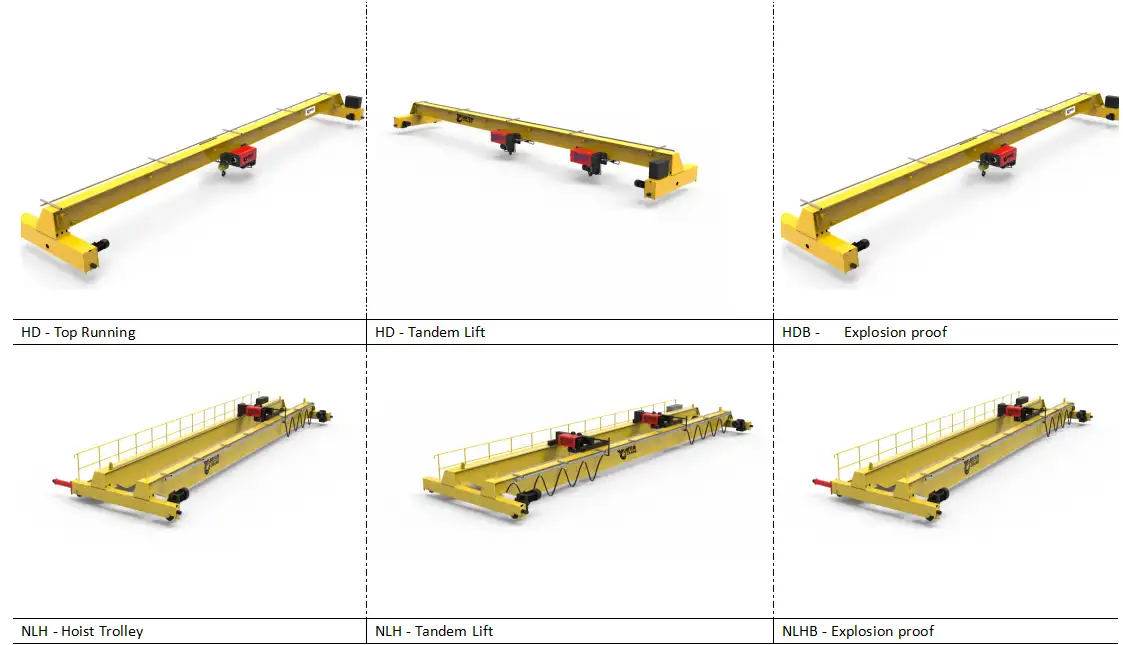
Single Girder Top Running Bridge Cranes
Providing you excellent value for your application, single girder designs allow you to be cost effective without compromising performance. Over the lifetime of the crane, you will save on new support structures as it has reduced wheel loads. This allows you to add more lifting capabilities to your runway structure without upgrading.
Features of Top Running Bridge Cranes
Top running bridge cranes are characterized by their unique design, which involves traveling on elevated runways installed atop the building structure. This ingenious approach not only maximizes the utilization of valuable floor space but also provides an ideal solution for larger manufacturing facilities seeking optimal material handling capabilities.
Key Benefits & Selection Considerations
- Cost-effective installation due to reduced wheel load of single girder design.
- Flexibility in lifting within narrow or limited ceiling spaces.
- Reliable for moderate lifting tasks while maintaining safety standards.
- Reduced runway reinforcement compared to double girder systems.
- Integration options for wire rope or chain hoists based on lifting weight, speed, and precision requirements.
- Consider environmental factors such as dust, oil, or temperature for hoist and crane material selection.
Typical Applications of Single Girder Top Running Cranes
Explore practical applications and selection tips for single girder top running overhead cranes across various machinery manufacturing sectors. Each accordion item describes typical capacities, environments, and recommended crane features.
Metal Fabrication Shops
Handling sheet metal, steel plates, and fabricated components. Typical capacities: 1–20 tons. Environment: indoor workshop with moderate dust. Practical tip: Choose a crane with a wire rope hoist for higher capacity loads or a chain hoist for frequent, lighter lifting. Moderate lifting speed improves precision in cutting and welding operations.
Machine Tool Production
Lifting machine tool beds, engines, and components. Typical loads: 2–15 tons. Environment: precise indoor environment. Practical tip: Use a crane with smooth travel and precise positioning controls. Opt for variable speed hoists and accurate end-stop positioning to protect delicate machinery.
Automotive Component Manufacturing
Handling engine blocks, transmissions, and sub-assemblies. Typical capacities: 5–15 tons. Environment: clean production floor with high traffic. Practical tip: Ensure compact trolley design for narrow aisles. Consider anti-collision systems and quiet operation to reduce noise in busy production areas.
Heavy Equipment Manufacturing
Moving structural frames, hydraulic components, and machinery parts. Typical loads: 10–20 tons. Environment: indoor with oil and minor dust. Practical tip: Select a single girder crane with reinforced hoist and robust end trucks. Use higher working class (A5) for frequent heavy lifting and corrosion-resistant materials if exposed to oil or fluids.
Electrical Equipment Assembly
Lifting transformers, switchgear, and electrical enclosures. Typical capacities: 2–10 tons. Environment: controlled indoor environment. Practical tip: Use electric chain hoists for precision handling and clean operation. Avoid wire rope hoists in dusty or sensitive electrical areas. Ensure smooth travel speed and accurate load positioning.
Maintenance Workshops
Handling repair parts, heavy sub-assemblies, and machinery refurbishment. Typical loads: 1–15 tons. Environment: semi-industrial indoor workshop, sometimes near outdoor storage. Practical tip: Select a crane with flexible span and adjustable lifting height. Opt for modular installation if the crane needs to be moved or adapted to different workstations.
Double Girder Top Running Bridge Crane
Double girder cranes are utilized when a comprehensive lifting solution is required. They are designed for applications with load capacities often exceeding 25 tons. Because the hook goes between the beams, double girder cranes have a higher lift height than single girder cranes.
Benefits of Top Running Bridge Cranes
- Efficient Use of Available Space: One of the standout advantages of top running bridge cranes is their ability to make the most of the available space. By utilizing the vertical dimension, these cranes allow manufacturers to optimize their floor layout for enhanced productivity.
- Ideal for Larger Manufacturing Facilities: Top running bridge cranes find their natural habitat in larger manufacturing facilities where expansive work areas demand a versatile and comprehensive material handling solution.
Applicaitons of Double Girder Top Running Bridge Cranes
Double girder cranes provide a comprehensive lifting solution for heavy-duty applications, often exceeding 25 tons. With the hook running between the beams, they offer higher lift height than single girder cranes. The following accordion highlights typical applications and practical selection tips across machinery manufacturing sectors.
Metal Fabrication Shops
Handling heavy steel plates, fabricated frames, and large components. Typical capacities: 25–80 tons. Environment: indoor workshop with moderate dust and welding fumes. Practical tip: Use a double girder crane with wire rope hoist for higher loads. Consider adjustable speed controls and load sway reduction features for precise material placement.
Machine Tool Production
Lifting large machine beds, presses, and engines. Typical loads: 30–60 tons. Environment: precise indoor machining floor. Practical tip: Choose a crane with smooth travel and dual speed hoists for careful positioning. Ensure robust end trucks and high working class (A6) for frequent heavy lifts.
Automotive & Heavy Vehicle Manufacturing
Handling chassis frames, engines, and sub-assemblies. Typical capacities: 25–100 tons. Environment: clean, organized production floor with high traffic. Practical tip: Opt for cranes with anti-sway and anti-collision systems. Consider compact end carriages for narrow aisles and ensure adequate lift height for stacked assembly stations.
Heavy Equipment Manufacturing
Moving structural frames, hydraulic systems, and large machinery parts. Typical loads: 40–150 tons. Environment: indoor workshop with oil, minor dust, and occasional heat exposure. Practical tip: Use double girder cranes with reinforced wire rope hoists and high-duty end trucks. Choose cranes with corrosion-resistant materials and high working class (A6–A7) for frequent, heavy-duty lifting.
Electrical Equipment Assembly
Lifting large transformers, switchgear cabinets, and electrical enclosures. Typical capacities: 25–60 tons. Environment: indoor controlled assembly area. Practical tip: Use electric wire rope hoists for clean, precise handling. Avoid chain hoists for heavy electrical equipment. Ensure smooth travel and proper end-stops to protect delicate components.
Maintenance Workshops
Handling heavy machinery repair, engines, and sub-assemblies. Typical loads: 25–100 tons. Environment: semi-industrial indoor workshop, sometimes near outdoor storage. Practical tip: Choose a modular double girder crane with adjustable span and lift height. Ensure high working class for frequent lifting and consider optional hoist attachments for diverse machinery parts.
Underhung Bridge Cranes
Unveiling Underhung Bridge Cranes - Optimizing Space in Machinery Manufacturing
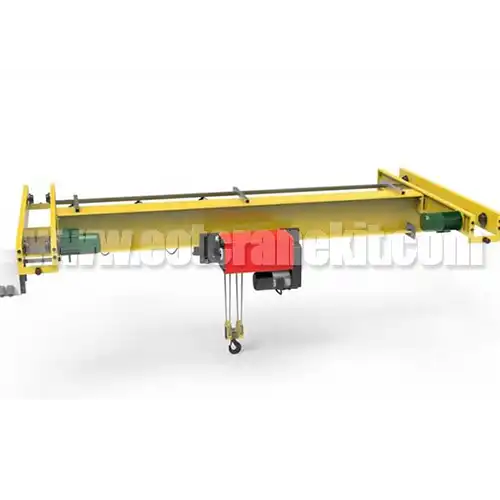
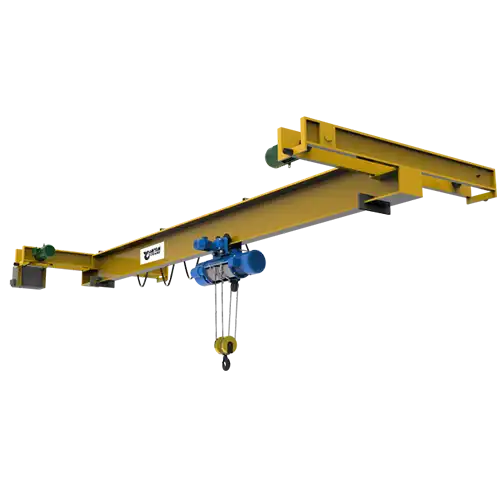
As the machinery manufacturing industry evolves, the need for innovative material handling solutions becomes increasingly crucial. Enter underhung bridge cranes, a versatile option designed to overcome space constraints and provide efficient material transport. In this segment, we'll delve into the defining features, advantages, and real-world applications that make underhung bridge cranes indispensable in compact and height-restricted manufacturing spaces.
Features of Underhung Bridge Cranes
Underhung bridge cranes exhibit a unique suspended design, attached from above to the building structure. This configuration allows them to navigate efficiently in spaces with limited headroom, providing a strategic solution for addressing challenges posed by height constraints.
Benefits of Underhung Bridge Cranes
- Space-Saving Design: The hallmark of underhung bridge cranes lies in their space-saving design. This makes them a valuable choice for manufacturers seeking to optimize their floor layout while maintaining efficient material handling capabilities.
- Suitable for Facilities with Height Constraints: Underhung bridge cranes shine in facilities where ceiling height is a limiting factor. Their suspended nature ensures that they can maneuver effectively without compromising on overhead clearance.
Applications of Underhung Bridge Cranes
- Compact Manufacturing Spaces: Underhung bridge cranes thrive in compact manufacturing environments, where space is a premium. Their ability to operate within confined areas makes them a go-to option for achieving efficient material handling.
- Machinery Handling in Areas with Low Ceiling Height: When dealing with low ceiling heights, underhung bridge cranes become an invaluable asset. They enable machinery handling in areas where traditional cranes might face restrictions.
As machinery manufacturing continues to evolve, the adaptability of underhung bridge cranes becomes increasingly relevant. Their ability to navigate within confined spaces and accommodate height limitations showcases their role as facilitators of seamless operations in unique production environments.
Stay tuned as our exploration of bridge cranes continues, delving into the realm of gantry cranes, jib cranes, and the diverse applications that each type caters to. In the intricate dance of manufacturing, these tools provide manufacturers with the agility and precision required to stay ahead in a dynamic industry.
Gantry Cranes in Machinery Manufacturing
Gantry Cranes in Machinery Manufacturing - Powering Outdoor Handling and Shipbuilding
In the realm of machinery manufacturing, where precision meets durability, gantry cranes emerge as formidable allies. With the ability to seamlessly handle outdoor material transport and facilitate the assembly of massive structures, gantry cranes have carved a niche that underscores their significance. In this segment, we'll delve into the definition, features, and the wide range of applications that make gantry cranes indispensable in the machinery manufacturing landscape.
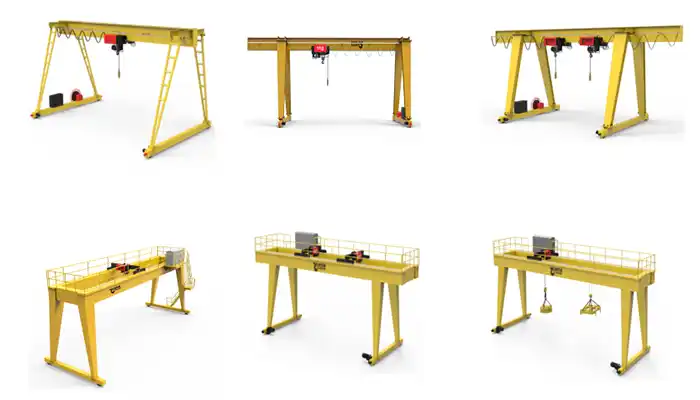
Gantry cranes, known for their imposing structures, are designed with legs that straddle the load. These cranes can move along a set of rails, covering a vast area for material handling and assembly. They stand as towering testaments to engineering prowess, capable of shouldering heavy loads and navigating outdoor environments with ease.
Applications in Machinery Manufacturing
- Outdoor Machinery Handling: Gantry cranes are tailor-made for the challenges of outdoor environments. Their robust structure and versatility allow them to efficiently transport heavy machinery components across sprawling yards and construction sites.
- Shipbuilding and Heavy Equipment Assembly: In the realm of shipbuilding and the assembly of heavy equipment, gantry cranes are unsung heroes. They play a pivotal role in moving massive ship components and facilitating the assembly of towering structures, such as cranes used in port areas.
Gantry cranes offer a bridge between the manufacturing floor and the great outdoors. Their ability to withstand the elements while providing precise and controlled movement makes them essential for industries that demand reliability in any environment.
As we journey through the intricacies of bridge cranes, our exploration takes us further into the world of jib cranes and their specialized applications in machinery manufacturing. From confined spaces to precise positioning, these cranes continue to shape the future of efficient material handling. Stay tuned to discover more about the tools that drive innovation in manufacturing.
Jib Cranes in Machinery Manufacturing
Jib Cranes in Machinery Manufacturing - Precision in Confined Spaces
In the intricate dance of machinery manufacturing, where precision often hinges on the details, jib cranes emerge as nimble performers. These versatile cranes, designed for localized material handling, navigate the challenges of confined spaces with finesse. In this installment, we'll uncover the definition, varieties, and the array of applications that make jib cranes indispensable in machinery manufacturing.
Definition and Varieties of Jib Cranes
Jib cranes, characterized by their horizontal jib arm, are designed to provide precise movement within specific areas. These cranes come in various configurations, including wall-mounted, freestanding, and articulating jibs. Their compact structure allows for strategic positioning within workstations, optimizing material handling efficiency.
Advantages and Applications in Machinery Manufacturing
- Localized Material Handling within Workstations: Jib cranes excel in confined spaces, where their compact design shines. By enabling precise material movement within specific workstations, jib cranes facilitate seamless production processes.
- Assembly Line Loading and Unloading: In the intricate choreography of assembly lines, jib cranes play a vital role. They ensure efficient loading and unloading of components, reducing downtime and enhancing overall assembly line efficiency.
Jib cranes offer a glimpse into the future of machinery manufacturing, where precision is key, and space is a premium. Their ability to provide targeted material handling solutions within limited spaces positions them as valuable assets for manufacturers seeking to optimize workflows.
As our exploration of bridge cranes culminates, we've unraveled the diverse tapestry of single and double girder bridge cranes, top running and underhung bridge cranes, gantry cranes, and jib cranes. Each type adds a unique dimension to the machinery manufacturing landscape, contributing to seamless material handling, assembly, and production processes. With these tools in hand, manufacturers are poised to embrace efficiency, precision, and innovation in their journey to shape the future of manufacturing.
Bridge Cranes in Various Aspects of Machinery Manufacturing
In machinery manufacturing, different procedures require specialized overhead cranes for efficient material handling and assembly processes. This section highlights typical crane usage across major stages of production, along with practical selection tips.
Material Preparation and Machining
In the initial stages, cranes handle raw materials and components, ensuring smooth transitions to machining stations.
- Bridge Cranes: Move heavy raw materials and machinery parts to/from workstations.
- Stacker Cranes: Manage inventory in warehouses and storage facilities efficiently.
- Jib Cranes: Transport smaller components, such as loading/unloading CNC machines.
Practical tip: For machining, select cranes with precise positioning, smooth travel, and appropriate load capacity to minimize risk of material damage.
Assembly and Manufacturing
Top running bridge cranes provide precise movement for assembling heavy sub-components, ensuring high-quality machinery assembly.
- Bridge Cranes: Lift and position sub-assemblies onto main structures; move completed assemblies to testing areas.
- Jib Cranes: Handle smaller components within assembly cells for precise placement and alignment.
For welding and fabrication: Bridge cranes with smooth hoists improve positioning accuracy for welding stations.
For painting and finishing: Bridge cranes transport machinery components for thorough and even coating.
Practical tip: Use cranes with anti-sway, dual-speed hoists, and precise end-stop controls for complex assembly tasks.
Quality Control and Testing
Finished machinery must be moved safely to testing areas for performance verification.
- Underhung Bridge Cranes: Ideal for confined spaces and precise handling.
- Bridge Cranes: Used for transporting finished machinery during quality inspections.
Practical tip: Select cranes with precise travel and load control to avoid damaging tested equipment.
Packaging and Shipping
Cranes move completed machinery to trucks or containers, ensuring safe transport.
- Gantry Cranes: Lift heavy machinery in outdoor areas; handle substantial loads.
- Bridge Cranes: Can also be used for loading machinery indoors or at dock areas.
Practical tip: For shipping, select cranes with high load capacity, proper reach, and weather-resistant features for outdoor handling.
Maintenance and Repair
Cranes assist in lifting and positioning parts during repair or refurbishment.
- Jib Cranes: Compact and precise for maintenance tasks.
- Bridge Cranes: For moving larger parts across workshops.
Practical tip: Use modular cranes with adjustable lifting heights for flexible workshop layout and maintenance efficiency.
Applications of Overhead Cranes in Machinery Manufacturing
Overhead cranes play a vital role in handling, assembly, and transport tasks across diverse industrial sectors. Here is a detailed overview of typical applications, crane types, and practical selection considerations.
Automobile Manufacturing
- Application: Moving car body frames along assembly lines, positioning engines, interiors, and sub-assemblies.
- Typical Crane: Bridge Crane
- Features: High load capacity, long spans, precise positioning.
- Benefits: Efficient assembly flow, accurate alignment, reduced manual labor.
- Practical Tip: Use smooth-travel cranes with variable speed hoists for safe and precise frame handling.
Aerospace Manufacturing
- Application: Transporting wings, fuselage sections, and large components to assembly areas.
- Typical Crane: Bridge Crane
- Features: High load capacity, precision controls, long spans.
- Benefits: Accurate alignment, improved safety in handling large aircraft parts.
- Practical Tip: Use cranes with precision end-stops and anti-sway control for sensitive aerospace assemblies.
Shipbuilding
- Application: Lifting and positioning hull sections, engines, and structural components for welding and assembly.
- Typical Crane: Gantry or Bridge Crane
- Features: High load capacity, long spans, precision controls.
- Benefits: Accurate alignment, safe handling of massive ship components.
- Practical Tip: Select cranes with robust end trucks and reinforced hoists for heavy-duty shipbuilding tasks.
Heavy Machinery Manufacturing
- Application: Handling large machinery parts for welding, painting, and assembly.
- Typical Crane: Bridge Crane
- Features: High load capacity, precise positioning, customizable attachments.
- Benefits: Efficient handling of heavy parts, reduced assembly time.
- Practical Tip: Use cranes with anti-collision systems and dual hoists for flexible load handling.
Steel Production
- Application: Transporting steel coils or sheets to rolling mills and processing stations.
- Typical Crane: Bridge Crane
- Features: High load capacity, precise controls, reliability.
- Benefits: Streamlined production, safe transport of heavy steel materials.
- Practical Tip: Use wire rope hoists for heavy loads and high-duty class cranes for frequent operation.
Paper and Pulp Industry
- Application: Moving heavy paper rolls between storage, processing, and transport areas.
- Typical Crane: Jib Crane
- Features: Space-saving, precise positioning, customizable attachments.
- Benefits: Reduced risk of damage, efficient material movement.
- Practical Tip: Ensure hoist capacity matches maximum roll weight; consider smooth trolley travel for delicate paper surfaces.
Energy and Power Generation
- Application: Assembling turbines and generators with precise alignment.
- Typical Crane: Bridge Crane
- Features: High load capacity, precision controls, safety features.
- Benefits: Efficient assembly and accurate alignment of components.
- Practical Tip: Use cranes with smooth travel, precise hoist control, and adequate load rating for turbine components.
Textile Manufacturing
- Application: Lifting and transporting textile rolls between production stages.
- Typical Crane: Jib Crane
- Features: Space-saving, precise positioning, customizable attachments.
- Benefits: Efficient roll movement, reduced manual handling.
- Practical Tip: Use adjustable hoist height and smooth trolley motion for careful handling of textile rolls.
Food Processing Industry
- Application: Transporting raw materials, ingredients, and packaged products.
- Typical Crane: Monorail Crane
- Features: Linear material movement, hygienic design, customizable attachments.
- Benefits: Efficient material flow, improved hygiene.
- Practical Tip: Ensure crane materials meet food-grade standards and allow easy cleaning.
Construction Equipment Manufacturing
- Application: Positioning heavy components like bulldozer blades and excavator buckets.
- Typical Crane: Bridge Crane
- Features: High load capacity, precise positioning, customizable attachments.
- Benefits: Efficient assembly, reduced handling time.
- Practical Tip: Use reinforced hoists and long-span cranes for large assemblies.
Medical Equipment Manufacturing
- Application: Assembling delicate medical devices with precise component placement.
- Typical Crane: Jib Crane
- Features: Space-saving, precise positioning, customizable attachments.
- Benefits: Reduced risk of component damage, accurate assembly.
- Practical Tip: Ensure smooth trolley motion and lightweight hoist for sensitive components.
Mining Equipment Manufacturing
- Application: Moving massive mining machinery components for assembly and maintenance.
- Typical Crane: Bridge Crane
- Features: High load capacity, precise positioning, reliability.
- Benefits: Efficient handling of heavy mining equipment, reduced assembly time.
- Practical Tip: Use high-duty cranes with reinforced trolleys and robust hooks for massive components.
Warehousing and Material Handling
- Application: Lifting pallets, containers, and retrieving/storing items in high-density storage.
- Typical Crane: Bridge Crane / Stacker Crane
- Features: High load capacity, efficient travel, automated retrieval for stacker cranes.
- Benefits: Optimized storage, reduced manual labor, efficient retrieval.
- Practical Tip: Use stacker cranes for vertical storage and bridge cranes for heavy pallet handling.
Plastic and Rubber Manufacturing
- Application: Moving heavy molds to injection molding machines.
- Typical Crane: Jib Crane
- Features: Precise positioning, customizable attachments.
- Benefits: Efficient mold handling, reduced risk of damage.
- Practical Tip: Use adjustable hoists with smooth trolley travel to safely position heavy molds.
Making Informed Choices - Selecting Bridge Cranes for Machinery Manufacturing
In the intricate landscape of machinery manufacturing, the selection of the right bridge crane can spell the difference between streamlined operations and productivity bottlenecks. As we approach the end of our exploration, it's essential to understand the critical factors that guide the decision-making process. Let's dive into the considerations that play a pivotal role in choosing the perfect bridge crane.
Factors to Consider When Selecting Bridge Cranes for Machinery Manufacturing
- Load Capacity: The weight of the materials and components you'll be handling is a crucial factor. Different types of bridge cranes offer varying load capacities, ensuring that you choose a crane capable of safely lifting your loads.
- Span: The distance between the runways or supports directly affects the choice of bridge crane. Ensure that the crane you select can span the required distance without compromising stability.
- Facility Layout: The layout of your manufacturing facility dictates the type of bridge crane that will work best. Consider the available floor space, ceiling height, and the layout of workstations to determine the crane's size and configuration.
- Automation Needs: In the era of Industry 0, automation plays a pivotal role. Some bridge cranes can be integrated with automation systems for precise, hands-free operation. Evaluate your automation needs and choose a crane that aligns with your goals.
- Safety Features: Safety is paramount in manufacturing. Look for bridge cranes equipped with advanced safety features such as overload protection, emergency stop buttons, and collision avoidance systems.
All in all, from single and double girder cranes to top running and underhung cranes, gantry cranes, and jib cranes, each type offers a unique solution to the intricate challenges of material handling and assembly.
The versatility of bridge cranes shines in their ability to seamlessly integrate into various aspects of machinery manufacturing. From material preparation to quality control, packaging to maintenance, these cranes play pivotal roles at every step of the process, enhancing efficiency, precision, and safety.
As you navigate the landscape of machinery manufacturing, armed with the insights gained from this series, you're well-equipped to make informed decisions when selecting bridge cranes. Consider your specific needs, facility constraints, and production goals to choose the crane type that aligns perfectly with your requirements. With the right bridge crane by your side, you're poised to shape the future of manufacturing, one lift at a time.

Article by Bella ,who has been in the hoist and crane field since 2016. Bella provides overhead crane & gantry crane consultation services for clients who need a customized overhead travelling crane solution.Contact her to get free consultation.
Yuantai Cranes
Overhead Crane Manufacturer with CE, ISO, SGS, CNEX Certificates.
- Main Specifications - Capacity: 0.5–550 tons | Span: up to 40m | Speed: 0.8–12 m/min | Duty: A3–A7 | Power: 380–690V, 50/60Hz | Control: pendant/remote/cabin
- Full engineering: FEA/PLC/VFD + in-house build + global delivery + on-site support, for workshops, factories, EPC contractors, industrial projects, etc.
- Support: design, manufacturing, testing, service – end-to-end, customized lifting solutions worldwide.
How to Get an Accurate Crane Price for Your Application?
Tips: Copy the spec list, fill in your details, and paste it into the form on the right/ down-below for a quick price.
- Crane type:_____ . (e.g., overhead crane, gantry crane, jib crane)
- Max weight to lift:_____ tons. (e.g., 2t, 5t, 10t, 20t, 50t)
- Lifting height:_____ m. (How high does the hook need to reach?
- Workshop width (span):_____ m . (Distance between the two crane rails)
- Travel distance:_____ m . (How long does the crane need to move along the runway?)
- Control type:_____. (Pendant / remote / cabin Control)
- Power supply:_____. (Local voltage & frequency – e.g., 380V, 50Hz, 3-phase)
- What will it be used for?_____ (e.g., steel fabrication, concrete products, mold handling, general manufacturing, etc.)
- Any special requirements?_____ (e.g., extreme temperature, dusty or explosive environment, special paint color, etc.)
Just leave a message via the contact form and our hoist and crane engineer will contact you with in 24working hours.
Get Your Custom Quote–Quick & Easy
Fill in what you know. Skip what you don't – we'll help.Any question will be reply with 24 working hours