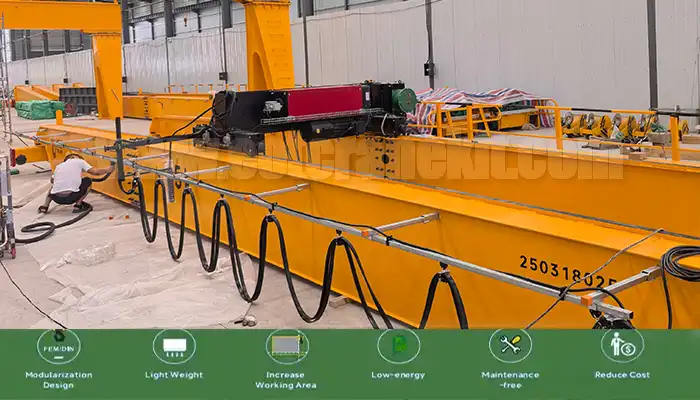
Choosing the Right Overhead Crane for Oil & Gas Facilities
Content Quick Link
Choosing the Right Overhead Crane for Your Oil and Gas Waste Management Facility
Choosing the right overhead crane for oil and gas waste management facilities improves safety, efficiency, and reliability in demanding industrial environments.
Introduction
Overhead cranes are widely used in industrial environments to move heavy materials in a controlled and efficient way. In simple terms, they take the load off manual labor and make handling safer and more predictable. In facilities where large equipment, drums, and waste materials are part of daily operations, this kind of lifting system is not optional—it is part of the core workflow.
Role of Overhead Crane System in Oil and Gas Waste Management
In oil and gas waste management, the role of an overhead crane goes beyond basic lifting. These facilities often deal with heavy, irregular, or even hazardous materials that must be moved carefully from one stage to another. A small mistake here can lead to safety risks, contamination, or downtime. That's why the crane is not just equipment—it's part of the operational control system.
- Supports safe handling of hazardous waste
Cranes help operators avoid direct contact with toxic or unstable materials. This reduces risk and keeps workers at a safer distance. - Improves handling speed and workflow
With the right crane in place, moving waste between descaling, treatment, and storage areas becomes more organized. This helps keep operations steady. - Reduces strain on equipment and personnel
Instead of relying on forklifts or manual lifting, cranes handle the load in a controlled way. This lowers wear and tear on both machines and people.
Areas or Shops Overhead Cranes are Installed
Different areas of a waste management facility do not have the same requirements. A descaling workshop handles lighter components, while a solidification plant may deal with heavy drums or mixing systems. So, the lifting solution must match the job. One crane type will not fit every situation. It needs to be selected based on the function of each area.
- Descaling and preparation zones
Usually require light to medium lifting capacity and frequent, precise movements. - Processing and solidification areas
Often need higher capacity cranes for heavier loads and more demanding cycles. - Maintenance and inspection zones
Benefit from smaller, flexible systems that allow access in tight spaces.
Types of Overhead Cranes Used
There are several types of overhead cranes commonly used in these facilities, each designed for a specific type of work. Choosing between them depends on load size, space, and how often the crane will be used.
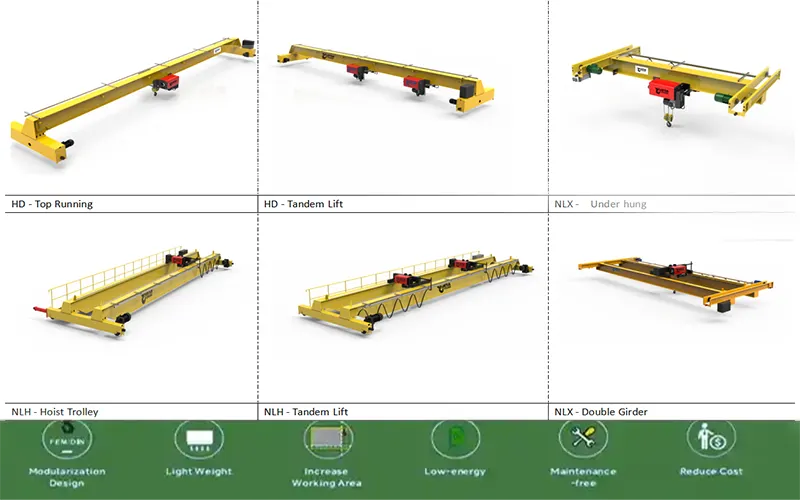
- Single girder bridge cranes
These are simple and cost-effective systems. They are typically used for lighter loads and smaller spans. Easy to install and maintain, they work well in workshops with moderate lifting needs. - Double girder bridge cranes
Built for heavier loads and more demanding operations. They offer greater lifting height and stability, which is useful in solidification plants or heavy processing areas. - Monorail hoists
These systems run along a fixed path. They are often used for repetitive lifting tasks or in areas where movement is limited but precision is important. - Mobile lifting systems
Portable and flexible. They are used in maintenance areas or temporary setups where a fixed crane is not practical.
Operational Considerations
Selecting the right crane is not just a technical choice. It directly affects how safe the facility is and how smoothly it runs. A crane that is too small can slow down operations, while one that is too large may waste space and cost more than needed. The right balance matters.
In practice, choosing a crane means matching capacity, structure, and control method to the real conditions of the site. When this is done correctly, the system supports daily work without interruption. When it is not, problems tend to show up quickly—slower operations, safety concerns, and higher maintenance costs.
Final Takeaway
So, in short, the crane is not just a lifting tool. It is part of the backbone of the facility. Choosing the right one helps keep operations safe, steady, and in line with industry requirements.
Factors to Consider When Selecting an Overhead Crane
Selecting the right overhead crane requires more than comparing specifications. It is about matching the crane to real working conditions, daily load demands, and safety expectations in the facility. Each factor below plays a direct role in how the system performs over time.
Capacity
Capacity defines the maximum load a crane can lift safely. It is the foundation of crane selection. Get this wrong, and everything else becomes less reliable.
In oil and gas waste management, loads are often uneven and sometimes unpredictable. That makes proper capacity planning even more important.
Key considerations when determining capacity:
- Maximum load weight
Identify the heaviest item the crane will lift in normal and peak operations. Always base the selection on this value, not average loads. - Operating frequency
A crane used all day, every day, will experience more stress than one used occasionally. Higher frequency usually requires a stronger design. - Future scalability
Facilities grow. If heavier materials or larger containers may be introduced later, it is better to plan ahead now.
Typical capacity ranges include:
- Light-duty: around 2 tons
- Medium-duty: around 3–5 tons
- Heavy-duty: 10 tons and above
Each range suits a different level of workload. For example, light-duty systems are common in maintenance zones, while heavy-duty cranes are often used in solidification or processing areas.
Recommended safety margin:
- Around 20% to 25% above expected load
- Reduces stress on the crane structure
- Helps extend service life
Span and Lift Height
Span and lift height determine how well the crane fits into the physical space of the facility. These two factors directly affect movement, clearance, and overall usability.
Span refers to the distance between the two runway rails. It defines how wide an area the crane can cover.
- If the span is too small, coverage becomes limited
- If the span is too large, installation may become difficult or costly
Lift height is the vertical distance the hoist can travel. It must be aligned with both the ceiling structure and the height of the materials being handled.
Important considerations:
Clearance requirements
- Ensure enough space between the highest lift point and the ceiling
- Prevents collision and protects structural components
Storage and handling height
- Consider how high drums, tanks, or waste containers need to be lifted
- The crane should comfortably reach these heights without strain
Impact on facility performance:
- Better use of available space
- More efficient material movement
- Reduced risk of accidents due to insufficient clearance
Control System
The control system is how the operator interacts with the crane. It influences safety, accuracy, and ease of use. In waste management environments, control flexibility is especially important.
Common types of control systems:
- Pendant control
A wired handheld unit. It is simple, reliable, and easy to maintain. The operator typically walks alongside the load. - Radio remote control
Wireless operation that allows the operator to move freely. This improves visibility and keeps the operator at a safer distance. - Cabin control
Used in larger cranes. The operator sits in a control cabin, usually mounted on the crane bridge.
Why control systems matter:
- Precision movement
Helps position loads accurately, especially in tight or sensitive areas - Operator safety
Keeps personnel away from hazardous materials and moving equipment - Flexibility
Allows operation from different positions depending on the task
Essential safety functions:
- Emergency stop button for immediate shutdown
- Fail-safe design to prevent uncontrolled movement
Safety Features
Safety features are a critical part of crane selection. They protect both workers and equipment, especially when handling hazardous waste materials.
These features are not optional—they are standard in any properly designed system.
Core safety components include:
- Limit switches
Prevent the crane or hoist from moving beyond safe limits - Load limiters / overload protection
Stop lifting if the load exceeds the rated capacity - Anti-collision systems
Help prevent cranes from hitting each other or nearby structures - Warning systems
Include lights and alarms to alert workers during operation
Why safety matters in this environment:
- Waste materials may be unstable or hazardous
- Exposure to chemicals must be minimized
- Accidental spills can cause environmental and operational issues
Regulatory compliance:
- Cranes must meet safety standards and inspection requirements
- Proper safety systems help pass audits and reduce liability
Practical benefits:
- Fewer accidents
- Reduced downtime
- Longer equipment lifespan
In real operations, safety features work as a network. When one system detects a problem, others respond to keep the crane under control. That coordination is what keeps daily operations stable and predictable.
Matching Crane Types to Specific Facility Areas
Different zones in an oil and gas waste management facility do not operate the same way. Each area handles different loads, workflows, and space constraints. Because of this, using one type of crane for everything is not practical. Instead, the crane system should be matched to the function of each area.
Descaling Workshop
In the descaling workshop, the work is usually lighter and more controlled. This is where components are cleaned, prepared, or lightly processed before moving to the next stage.
For this kind of environment, a single girder bridge crane is typically the right choice.
Why it fits this area:
- Designed for light-duty lifting
- Suitable for handling smaller parts and components
- Works well in areas with moderate load requirements
Typical applications:
- Lifting cleaned parts after descaling
- Moving smaller tools and equipment
- Assisting with light assembly or disassembly tasks
Key advantages:
- Cost-effective: Lower initial investment compared to heavier systems, which makes it suitable for support areas.
- Compact and efficient: Takes up less structural space and fits well in workshops with limited height.
- Easy installation: Simpler structure means faster setup and less complex maintenance.
In practice, this type of crane keeps things moving without overcomplicating the setup. It is a practical solution for day-to-day light work.
Solidification Plant
The solidification plant is where heavier and more complex operations take place. This includes handling sludge, mixing materials, and managing large containers or drums. Loads here are often heavy and require precise control.
A double girder overhead crane is generally recommended for this area.
Why it is suitable:
- Built for heavy-duty lifting
- Provides higher lifting capacity and better structural strength
- Supports more demanding and continuous operations
Typical applications:
- Lifting and moving drums and waste containers
- Handling mixing equipment and processing units
- Transporting bulk materials within the plant
Key advantages:
- High load capacity: Can handle significantly heavier loads compared to single girder systems.
- Greater stability: The double girder structure distributes weight more evenly, improving control during lifting.
- Suitable for continuous operation: Designed for frequent and repetitive use without performance loss.
In this type of environment, reliability matters. The crane must perform consistently, even under heavy workload. A double girder crane provides that level of performance without compromising safety.
Inspection and Maintenance Areas
Inspection and maintenance areas are usually more flexible in nature. The work here changes depending on what needs repair or inspection. Loads may vary, and space can sometimes be limited.
For these conditions, smaller and more adaptable lifting solutions are preferred, such as monorail hoists and mobile lifting systems.
Where they are used:
- Repair stations
- Inspection zones
- Maintenance workshops
Typical applications:
- Lifting components for inspection
- Supporting repair work on machinery
- Moving parts in confined or narrow spaces
Key advantages:
- Flexibility: Can be adapted to different tasks without fixed infrastructure.
- Space-saving design: Ideal for areas where installing a full overhead crane is not practical.
- Cost-efficient for low-frequency use: Since these areas do not require constant heavy lifting, simpler systems help reduce unnecessary investment.
In many facilities, this type of lifting solution is used alongside larger cranes. It supports smaller tasks that still need controlled lifting but do not justify a full crane system.
Final Consideration
Matching the right crane to the right area is not just about equipment selection. It is about making sure each part of the facility works efficiently within its role. When this is done correctly, operations run smoother, safety improves, and equipment lasts longer.
How to Meet Your Facility's Needs
Every oil and gas waste management facility has its own layout, workflow, and operating conditions. Because of this, a standard crane solution often falls short. Customization is not just an extra option—it is often what makes the system fit properly and work reliably over time. A well-designed crane system should match the exact requirements of the site. This includes the building structure, the type of materials handled, and how often the crane is used. When these factors are aligned, operations tend to run more smoothly without unnecessary interruptions.
Overview of Customization Capabilities
Modern crane systems can be adapted in many ways to match real working conditions. This flexibility allows the crane to support both current needs and future changes.
- Site-specific engineering
Cranes can be designed based on building dimensions, runway layout, and available headroom. This ensures a proper fit without forcing structural changes. - Application-based design
The crane can be configured differently depending on whether it is used for light handling, heavy lifting, or continuous operation. - Integration with facility systems
Cranes can be connected to production or control systems when needed, allowing smoother coordination between processes.
In practice, customization helps avoid a "one-size-fits-all" approach. Instead, the system is built to match the way the facility actually operates.
Key Customization Features
Customization is not limited to one area. It covers several important parts of the crane system.
Tailored load capacity and span
- The crane is designed to match the exact weight requirements of your operations
- Span can be adjusted to fit the building width and runway layout
- Helps ensure efficient coverage without wasted space
Custom control systems (remote, automation-ready)
- Options include pendant, radio remote, or integrated control systems
- Remote controls improve operator safety and visibility
- Automation-ready systems can support future upgrades if needed
Specialized safety systems
- Additional safety features can be added depending on the environment
- Examples include enhanced load monitoring, anti-sway systems, and advanced limit controls
- Especially important when handling hazardous or sensitive waste materials
These features are not just technical details. They directly affect how easy the crane is to operate and how safe it is in daily use.
Benefits of Yuantai Solutions
A customized crane solution from a manufacturer like Yuantai Cranes is designed with industrial applications in mind, especially for demanding environments such as oil and gas waste management.
- Designed for oil and gas environments
Built to handle tough conditions, including dust, moisture, and chemical exposure. This makes the equipment more reliable in real-world use. - Enhanced durability and corrosion resistance
Components can be treated or selected to resist corrosion, which is important in waste handling areas where chemicals are present. - Compliance with global standards
Systems are designed to meet international safety and performance standards. This supports inspections, audits, and long-term compliance requirements.
In practice, these benefits mean fewer breakdowns, fewer safety issues, and more consistent performance over time.
Value Proposition
A properly customized crane system delivers value in more than one way. It affects daily operations, long-term costs, and overall facility performance.
Improved efficiency
- Faster material handling
- Better workflow between different facility areas
- Reduced delays during lifting operations
Reduced operational risk
- Lower chance of accidents and equipment damage
- Better control when handling hazardous or unstable materials
- Improved safety for workers on site
Long-term return on investment
- Longer equipment lifespan due to proper sizing and design
- Reduced maintenance costs over time
- Fewer disruptions in operations
In the end, the goal is simple. The crane should support the facility, not limit it. With the right customization, the system becomes a reliable part of the operation—quietly doing its job day after day, without drawing attention or causing problems.
FAQ – Buyer-Focused & Operational Questions
This section addresses the most common questions from buyers and facility operators. The answers are practical and focused on real use cases in oil and gas waste management environments.
What type of overhead crane is best for oil and gas waste management?
There is no single answer that fits every facility. The right crane depends on how the system is used in each area.
Single girder overhead cranes
- Suitable for light-duty tasks
- Common in descaling or general workshop areas
- More cost-efficient and easier to install
Double girder overhead cranes
- Designed for heavy-duty lifting
- Used in solidification or processing plants
- Better for handling drums, tanks, and heavy equipment
Monorail hoist and crane systems
- Best for maintenance and inspection work
- Follow a fixed path for repetitive lifting tasks
In most real facilities, a combination of these crane types is used. Each one supports a different part of the workflow.
How do I determine the right crane capacity?
Choosing the correct capacity should be based on actual working conditions.
- Identify the heaviest load you will lift
- Add a safety margin of around 20–25%
- Consider future load changes
- Consult an engineering specialist
Example: If your heaviest load is 5 tons, a 6–6.5 ton crane provides a safer range.
What safety features are most important for hazardous waste handling?
- Overload protection systems – prevent overloading
- Limit switches – control crane movement range
- Emergency stop systems – immediate shutdown
- Audible and visual alarms – alert nearby workers
- Anti-sway controls – stabilize loads
These systems reduce risk and improve operational safety.
Can one crane be used for multiple areas in the facility?
A single crane can serve multiple tasks if:
- Areas are closely located
- Loads are similar
- Workflow is simple
However, multiple cranes are often needed because:
- Different load sizes
- Simultaneous operations
- Need for efficiency and reduced waiting time
Multiple cranes typically improve productivity and workflow efficiency.
What is the difference between single girder and double girder cranes?
Single girder crane
- Lower cost
- Simple installation
- Light to medium loads
- Workshop use
Double girder crane
- Higher capacity
- Greater lifting height
- Heavy-duty use
- Processing plants
Choice depends on load, space, and usage intensity.
How important is customization in crane selection?
Customization is critical in oil and gas environments.
- Fits facility layout
- Ensures safety compliance
- Improves workflow efficiency
Customization can include:
- Adjusted capacity and span
- Remote or advanced control systems
- Enhanced safety features
Custom cranes improve safety, efficiency, and long-term ROI.
Conclusion
Choosing an overhead crane for an oil and gas waste management facility is not a simple equipment decision. It is a practical planning process that directly affects how the facility operates day to day. When done correctly, it supports safe handling, steady workflow, and long-term stability.
The key selection factors should always be reviewed together, not in isolation.
- Capacity
Must match the heaviest load while leaving a safe operating margin. It ensures the crane can handle real working conditions without being pushed to its limits. - Span and lift height
Should align with the building structure and the actual layout of the workspace. This allows full coverage without wasted space or clearance issues. - Control systems
Play a major role in how operators interact with the crane. Whether using pendant or radio control, the system should provide precise, safe, and responsive operation. - Safety features
Are essential in hazardous environments. Components like overload protection, limit switches, and emergency stop systems help reduce risks and keep operations under control.
Matching crane types to specific facility zones is just as important as selecting the right specifications. A descaling workshop, a solidification plant, and a maintenance area all have different requirements. Using the same crane everywhere usually leads to inefficiency or unnecessary cost.
Instead, a well-planned system uses the right crane for the right task. This approach improves workflow, reduces downtime, and supports safer operations across the entire facility.
Final takeaway
A properly selected crane system does more than lift materials. It supports the structure of the operation itself. With the right setup, handling becomes more controlled, processes become more predictable, and risks are reduced over time.
In oil and gas waste management, where safety and precision are closely linked, this matters a lot.
Working with the right manufacturer
Partnering with a reliable and experienced crane manufacturer is a key part of the process. A company like Yuantai Cranes can provide not only standard equipment, but also customized solutions tailored to the specific needs of the facility.
- Ensures proper design based on real site conditions
- Provides options for customization in capacity, span, and controls
- Helps meet safety and compliance requirements
- Supports long-term performance and serviceability
In the end, the goal is simple: a crane system that works reliably, fits the facility, and supports operations without creating new problems. When that balance is achieved, the entire system benefits.

Article by Bella ,who has been in the hoist and crane field since 2016. Bella provides overhead crane & gantry crane consultation services for clients who need a customized overhead travelling crane solution.Contact her to get free consultation.
Yuantai Cranes
Overhead Crane Manufacturer with CE, ISO, SGS, CNEX Certificates.
- Main Specifications - Capacity: 0.5–550 tons | Span: up to 40m | Speed: 0.8–12 m/min | Duty: A3–A7 | Power: 380–690V, 50/60Hz | Control: pendant/remote/cabin
- Full engineering: FEA/PLC/VFD + in-house build + global delivery + on-site support, for workshops, factories, EPC contractors, industrial projects, etc.
- Support: design, manufacturing, testing, service – end-to-end, customized lifting solutions worldwide.
How to Get an Accurate Crane Price for Your Application?
Tips: Copy the spec list, fill in your details, and paste it into the form on the right/ down-below for a quick price.
- Crane type:_____ . (e.g., overhead crane, gantry crane, jib crane)
- Max weight to lift:_____ tons. (e.g., 2t, 5t, 10t, 20t, 50t)
- Lifting height:_____ m. (How high does the hook need to reach?
- Workshop width (span):_____ m . (Distance between the two crane rails)
- Travel distance:_____ m . (How long does the crane need to move along the runway?)
- Control type:_____. (Pendant / remote / cabin Control)
- Power supply:_____. (Local voltage & frequency – e.g., 380V, 50Hz, 3-phase)
- What will it be used for?_____ (e.g., steel fabrication, concrete products, mold handling, general manufacturing, etc.)
- Any special requirements?_____ (e.g., extreme temperature, dusty or explosive environment, special paint color, etc.)
Just leave a message via the contact form and our hoist and crane engineer will contact you with in 24working hours.
Get Your Custom Quote–Quick & Easy
Fill in what you know. Skip what you don't – we'll help.Any question will be reply with 24 working hours