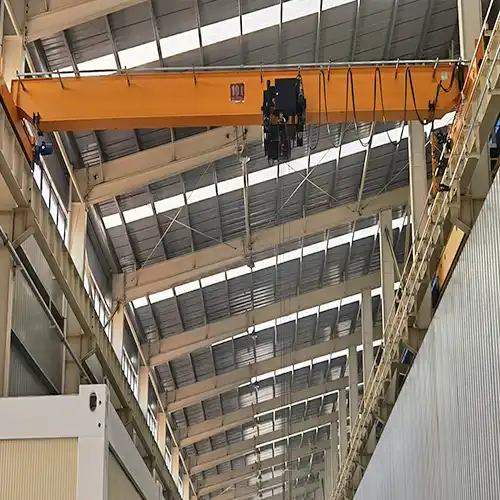
Smart Overhead Crane Layout Planning for Wastewater Plants
Optimize overhead crane layout in wastewater treatment plants with zone-based lifting solutions for pump stations, sludge areas & maintenance efficiency.
| Application | Material handling, lifting, positioning, assembly, maintenance, loading/unloading, |
| Certifications | CE / ISO / SGS / Other third-party inspection |
| Customization | Customized material handling cranes solutions available for indoor, outdoor, hazardous, corrosive, cleanroom, and heavy-duty industrial applications. |
Crane Manufacturer: Yuantai Cranes – 30+ Years Professional Crane Manufacturer from China
Category: Featured
Tags:
Your Trusted Overhead Crane Manufacturer & Supplier
Functional Crane Distribution Across the Wastewater Treatment Plant
Smart Crane Layout Planning: Assigning the Right Lifting System to Every Area of Your Plant
Most Important Takeaway
A wastewater treatment plant does not need more cranes—it needs the right crane in the right location, selected based on load type, environment, and maintenance frequency. Poor crane distribution leads to higher costs, slower maintenance, and unnecessary operational risks.
Key Takeaways
- Crane layout planning must follow functional zones, not standard templates
- Pump stations, sludge areas, and chemical buildings require different overhead crane configurations
- Environmental conditions directly impact crane lifespan and design (corrosion, humidity, gas)
- Long travel areas like filter zones benefit more from monorail or suspension crane systems
- Workshop cranes should prioritize flexibility and frequent operation
- Always plan capacity with a 20–30% safety margin beyond maximum load
- Future expansion and maintenance access should be considered from the beginning
FAQs – What Questions This Guide Solves
Practical answers to common crane selection and layout planning questions in wastewater treatment plants, covering overhead cranes, bridge cranes, and monorail systems across different working zones.
How do I choose the right overhead crane for different areas of a wastewater treatment plant?
The selection depends on how each zone actually operates, not on a single plant-wide standard. Pump stations usually require a single girder overhead crane for frequent pump and motor handling, while power houses often need a double girder bridge crane for heavier and more precise lifting.
In chemical or sludge areas, environmental conditions become more important than load alone. In these cases, corrosion-resistant overhead cranes or sealed electric hoists are more suitable. Filter zones and long narrow layouts often perform better with a monorail crane system, especially when continuous travel is required.
The key is to match the crane type with lifting frequency, load characteristics, and working environment in each zone.
What crane capacity is typically used in pump stations, sludge handling, and workshops?
Typical capacities vary by function:
- Pump stations: usually 2 ton to 10 ton overhead crane, depending on pump and motor size
- Sludge handling areas: commonly 3 ton to 15 ton overhead crane, designed for heavier and contaminated equipment
- Maintenance workshops: often 5 ton to 20 ton overhead crane, covering a wide range of repair and assembly tasks
It is important to consider the maximum combined lifting weight, not just the equipment weight alone. In wastewater treatment plants, accessories and attachments often increase the real load.
A practical design also includes a 20–30% safety margin to handle unexpected lifting conditions.
When should I use a bridge crane vs. a monorail crane system?
A bridge crane system (overhead crane) is suitable when you need full coverage of a rectangular working area. It is commonly used in pump stations, workshops, and power houses where equipment is spread across the floor.
A monorail crane system is more suitable when lifting follows a linear path. This is typical in filter zones, long galleries, or maintenance lines, where equipment is arranged in sequence rather than across a wide area.
In short:
- Bridge crane → wide area coverage, flexible positioning
- Monorail crane → linear movement, long-distance travel efficiency
How do environmental conditions affect crane design and selection?
Environmental conditions directly influence crane lifespan and reliability in wastewater treatment plants.
- In chemical areas, cranes must resist corrosive vapors and often require protective coatings or stainless components
- In sludge zones, high humidity and gas exposure require sealed motors and high IP-rated electrical systems
- In clean electrical rooms, the focus is on stable movement and precision rather than heavy protection
Ignoring these conditions often leads to premature wear, electrical faults, or structural corrosion.
What are the common mistakes in plant crane layout planning?
Several recurring issues are seen in wastewater treatment projects:
- Using the same overhead crane type across all zones
- Ignoring environmental impact on crane durability
- Underestimating hook coverage and travel distance
- Failing to consider future plant expansion or equipment upgrades
These mistakes usually do not appear during installation, but they become obvious during real maintenance work when access or capacity is limited.
How can I reduce long-term maintenance costs through better crane distribution?
Long-term cost reduction comes from correct initial planning. When cranes are properly distributed:
- Equipment is lifted correctly the first time, reducing damage risk
- Maintenance time is shorter due to better access and coverage
- Cranes operate under appropriate load and duty conditions, reducing wear
- Corrosion and environmental damage are minimized through correct selection
A well-planned functional crane distribution strategy ensures each overhead crane works within its intended limits. This reduces breakdowns, extends service life, and lowers overall lifecycle cost of the lifting system in the wastewater treatment plant.
Introduction: Why Smart Crane Layout Planning Matters
In a wastewater treatment plant, lifting work is not evenly distributed. One area may handle heavy pumps every week, while another only needs occasional access to light components. Conditions also change from one building to another—clean electrical rooms, humid sludge zones, and chemically aggressive environments all exist within the same plant.
Because of this, crane selection cannot follow a standard template. Each zone needs a lifting system that fits how it is actually used. If not, problems show up quickly—slow maintenance, difficult access, or equipment that wears out sooner than expected.
Smart crane layout planning means looking at how work is done on site, not just what equipment is installed. It focuses on matching the overhead crane, hoist, or monorail system to real operating conditions.
Why Functional Crane Distribution Is Critical
In wastewater treatment plants, lifting systems must match real operating conditions. Different zones require different overhead crane types, depending on load, frequency, and environment.
Why is functional crane distribution important in wastewater treatment plants?
In a wastewater treatment plant, lifting is part of daily operation, not an occasional task. Pumps need to be pulled, mixers replaced, screens cleaned, and tanks serviced. These tasks happen in different environments, so they cannot rely on a single overhead crane type.
That is why functional crane distribution across wastewater treatment plants is important. It ensures each system—whether a bridge crane, monorail crane, or electric hoist—is selected based on real working conditions in each zone.
What are the differences across wastewater plant zones for crane selection?
Equipment weight and size variation
Pump stations often handle heavy pumps, motors, and pipe assemblies, usually requiring a 2 ton to 10 ton overhead crane with proper hook height and coverage. Chemical dosing areas are lighter and more compact, where a light-duty overhead crane or electric hoist system is more suitable.
Maintenance frequency differences
Some zones require frequent lifting operations. For example, pump stations and screening areas need regular maintenance and benefit from single girder bridge cranes designed for repeated use.
Other areas, such as electrical rooms, require lifting only occasionally. In these cases, a monorail crane system or wall-mounted jib crane is often more practical and cost-efficient.
Environmental exposure differences
Environmental conditions vary significantly across wastewater plants, and this directly affects overhead crane design:
- Sludge handling areas: high humidity, gas, and abrasive particles → require sealed electric hoists and corrosion-protected cranes
- Chemical treatment buildings: exposure to acids, alkalis, and fumes → require corrosion-resistant crane components or special coatings
- Electrical or control rooms: clean indoor environments → standard double girder overhead cranes with precise control are suitable
Choosing the wrong crane for the environment often leads to early failure and higher maintenance cost.
What are the risks of poor crane planning in wastewater treatment plants?
Over-specifying cranes increases investment cost
Installing a large-capacity overhead crane in a light-duty area increases cost without real benefit. For example, using a 10 ton crane in a chemical dosing room that only handles 1–2 ton loads is unnecessary.
Under-specifying leads to operational inefficiencies
If the crane cannot handle peak loads, such as a fully assembled sludge pump, maintenance teams must use temporary solutions. This slows down work and increases safety risks.
Incorrect layout limits equipment accessibility
Even when capacity is correct, poor crane layout can cause limited hook coverage or restricted travel distance. This is common in pump pits and tank areas.
In long filter galleries, using a standard bridge crane instead of a monorail crane system with extended travel can result in incomplete coverage and inefficient operation.
What is the core planning principle for crane distribution?
A wastewater treatment plant crane system should not be based on standard models, but on real application needs.
Crane distribution should always follow three practical factors:
- Function – What is being lifted? Pumps, sludge mixers, chemical tanks, or screens?
- Frequency – Is lifting daily, weekly, or only during maintenance shutdowns?
- Environment – Is the crane exposed to moisture, chemicals, or clean indoor conditions?
In practice, this results in a mixed configuration:
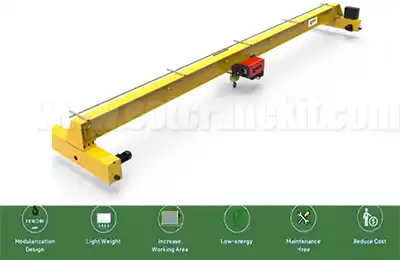
- Single girder overhead cranes for pump stations and general maintenance
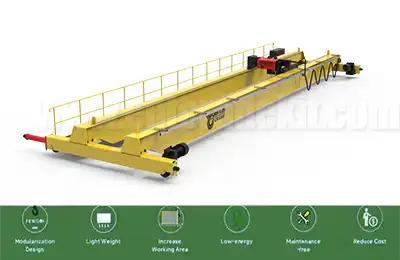
- Double girder overhead cranes for heavy-duty or precision lifting in power houses
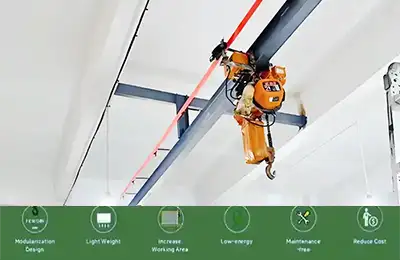
- Monorail crane systems for long filter zones
- Corrosion-resistant electric hoists for chemical and sludge areas
This approach ensures each crane system is matched to its real application, improving maintenance efficiency and reducing unnecessary cost.
Zone-Based Crane Selection Strategy for Wastewater Treatment Plants
In wastewater treatment plants, each zone has different lifting tasks and working conditions. Crane selection should follow real application needs, not a single standard model across the entire plant.
Pump Stations – Reliable Daily Lifting
Pump stations are one of the most frequently used lifting areas in a wastewater treatment plant. Pumps, motors, and piping assemblies are regularly removed and installed during maintenance work. This makes lifting a daily or weekly operation in many plants.
Application: Installation, removal, and maintenance of submersible pumps, dry-mounted pumps, and motor assemblies.
Typical Crane Solution: Single girder overhead crane, usually in the range of 2 ton to 10 ton overhead crane, equipped with a wire rope electric hoist. In low-headroom buildings, underslung bridge cranes or monorail hoist systems may also be used.
Key Design Focus:
- Smooth lifting for alignment-sensitive equipment – Pumps and motors require accurate alignment during installation. Stable speed control helps avoid misalignment.
- Adequate hook coverage for deep pits – Wet wells and pump pits require sufficient hook height and reach to access the bottom safely.
- Reliable performance for frequent use – Designed for repeated operation with proper duty classification and durable hoist components.
Practical Buyer Notes:
- Confirm maximum combined weight of pump, motor, and accessories
- Check lifting height from beam to pit bottom, not only building height
- Ensure full coverage of all pump positions in multi-pump layouts
Power House – Precision Lifting for Critical Equipment
The power house handles high-value equipment such as generators, turbines, and large motors. Although lifting is less frequent, accuracy and safety requirements are much higher.
Application: Installation and maintenance of generators, turbines, large motors, and electrical equipment.
Typical Crane Solution: Double girder overhead crane with VFD control, typically ranging from 10 ton to 50 ton overhead crane depending on plant scale. Large projects may include dual hoists or tandem lifting systems.
Key Design Focus:
- Precision positioning – Fine speed control is needed for accurate installation of sensitive equipment.
- Low-vibration stable lifting – Double girder structure improves stability and reduces movement impact.
- Safe handling of high-value equipment – Includes overload protection, limit switches, and synchronized control systems.
Practical Buyer Notes:
- Check if micro-speed or inching control is required
- Consider future upgrades that may increase load requirements
- Evaluate backup lifting strategy for critical maintenance work
Chemical Buildings – Corrosion-Resistant Lifting Systems
Chemical areas are not heavy-duty lifting zones, but they are highly corrosive. This makes environmental protection more important than lifting capacity alone.
Application: Handling chemical tanks, dosing units, barrels, and treatment equipment.
Typical Crane Solution: Light-duty overhead crane, KBK modular crane system, or monorail hoist system, usually in the 1 ton to 5 ton range.
Key Design Focus:
- Anti-corrosion protection – Coated or corrosion-resistant materials for steel structure and components.
- Compact structure – Suitable for limited space with dense pipe and tank layouts.
- Safe operation in chemical environments – Smooth braking and stable control; explosion-proof design may be required in some cases.
Practical Buyer Notes:
- Confirm chemical type and exposure level
- Check if special coatings or stainless components are required
- Evaluate installation space and structural limits
Filter Zones – Long Travel and Coverage Efficiency
Filter zones are usually long and linear. Equipment is distributed along channels or galleries, so lifting needs follow a continuous travel path rather than a single fixed point.
Application: Filter maintenance, media replacement, cover removal, and handling of distributed equipment along filter lines.
Typical Crane Solution: Monorail crane or suspension crane system with extended travel, typically 1 ton to 3 ton capacity.
Key Design Focus:
- Long travel distance – Continuous movement along extended filter layouts without interruption.
- Full coverage of multiple service points – Every filter unit must be reachable along the line.
- Lightweight and flexible design – Suitable for long installation paths with minimal structural load.
Practical Buyer Notes:
- Define total travel length and number of service points
- Confirm straight or curved track requirements
- Clarify lifting frequency along the full route
Sludge Handling Areas – Harsh Environment Protection
Sludge areas are among the most demanding environments in wastewater treatment plants. High humidity, corrosive gases, and contaminated materials create continuous stress on crane systems.
Application: Handling sludge pumps, mixers, dewatering equipment, and contaminated components.
Typical Crane Solution: Protected overhead crane with sealed electric hoist, typically 3 ton to 15 ton overhead crane, with corrosion protection and high IP-rated electrical systems.
Key Design Focus:
- Resistance to moisture and corrosive gases – Protection against hydrogen sulfide and similar environments.
- High IP-rated electrical systems – Prevents failure from water and dust ingress.
- Low-maintenance durability – Designed for long service intervals in harsh conditions.
Practical Buyer Notes:
- Assess gas exposure and humidity levels
- Define corrosion protection standard required
- Plan inspection and maintenance access strategy
Maintenance Workshops – Versatile Lifting Support
Maintenance workshops are flexible working areas where different equipment types are repaired, stored, and assembled. The crane must support a wide range of lifting tasks.
Application: General maintenance, equipment repair, spare part handling, and workshop operations.
Typical Crane Solution: Single or double girder overhead crane, typically 5 ton to 20 ton overhead crane, depending on workload and plant size.
Key Design Focus:
- Flexible lifting capability – Suitable for pumps, motors, gearboxes, and structural parts.
- Full workshop coverage – Ensures access to all maintenance and storage areas.
- High operational reliability – Designed for frequent daily use.
Practical Buyer Notes:
- Define full range of equipment types handled
- Check future expansion possibilities
- Confirm duty class for frequent operation
Key Design Factors Across All Crane Systems
In wastewater treatment plants, crane selection cannot rely only on zone-based thinking. Every overhead crane system must also meet core engineering and lifecycle requirements that affect long-term stability and performance.
Capacity and Load Planning
Capacity selection is one of the most common areas where planning mistakes occur. While it may look simple during design, real lifting conditions in wastewater treatment plants are often more complex than expected.
For example, a pump is rarely lifted alone. It usually includes the motor, coupling, base frame, and sometimes residual sludge or attached piping. This significantly increases the real lifting load.
- Always calculate based on maximum combined lifting condition, not single equipment weight
- Add a 20–30% safety margin for unexpected lifting situations
- Avoid selecting crane capacity only from nameplate data
For example, a 5 ton pump system may require a 6–7 ton overhead crane in actual operation.
If the capacity is too low, the crane operates under constant stress. If it is too high, investment cost increases without real benefit.
Structural and Installation Constraints
Even a correctly selected overhead crane will not perform well if the building structure is not properly designed. This is often overlooked in early project planning.
Key structural points include:
- Building height and available headroom – Low headroom may require underslung cranes or compact hoists, while higher structures allow double girder configurations
- Span and runway beam condition – Runway alignment and structural strength directly affect crane travel stability and long-term wear
- Power supply and electrical compatibility – Voltage, frequency, and control system standards must be confirmed before final selection
Also consider:
- Cable system type (festoon system or conductor rail system)
- Power stability in remote or outdoor plant areas
A crane system is only as reliable as its structural foundation and power supply support.
Environmental Considerations
Wastewater treatment plants are not controlled environments. Each area exposes overhead cranes to different working risks, and ignoring these conditions often reduces equipment lifespan.
- Chemical exposure zones – Vapors and fumes gradually damage steel structure and electrical parts → Require corrosion-resistant coatings and protected components
- Sludge handling areas – High humidity, gas, and contaminants create harsh conditions → Require sealed motors, high IP-rated electrical systems, and protected hoists
- Electrical or control rooms – Clean and stable environments → Focus on smooth operation and precise speed control rather than heavy protection
A practical design rule is simple: always design the crane for the worst environment it will face, not the average condition.
Maintenance and Lifecycle Cost
Many buyers focus mainly on initial purchase cost, but the real cost of an overhead crane is determined over its entire operating life.
Key lifecycle considerations include:
- Ease of maintenance and inspection – Key components such as hoists, brakes, motors, and electrical panels should be easy to access to avoid maintenance delays
- Spare parts availability – Fast replacement of components reduces downtime and improves plant reliability
- Long-term cost vs initial price – Lower-cost cranes may lead to hidden long-term expenses, including:
- Frequent breakdowns
- Higher repair and labor cost
- Shorter service life
- Unexpected operational shutdowns
For this reason, it is more practical to evaluate cranes based on total lifecycle cost rather than only initial quotation.
A wastewater treatment plant crane system performs best when capacity, structure, environment, and maintenance planning are considered together. These factors are interconnected and directly affect real operational performance.
Common Mistakes in Wastewater Plant Crane Layout Planning
Crane layout decisions in wastewater treatment plants are often made early, sometimes before full operating conditions are understood. This is where long-term performance issues usually begin.
Using the Same Crane Type Across All Plant Zones
One of the most common mistakes is applying a single overhead crane type across the entire wastewater treatment plant. While this simplifies procurement, it rarely matches real operating requirements.
Different zones require different lifting solutions:
- Pump stations need single girder overhead cranes for frequent pump handling
- Power houses require double girder cranes with precision control
- Filter zones are better suited for monorail crane systems with long travel paths
- Sludge and chemical areas need corrosion-resistant or protected hoists
When one crane type is forced into all areas, the result is imbalance—either overdesign in simple zones or insufficient performance in critical areas.
In real projects, crane layout should follow functional crane distribution, not uniform standardization.
Ignoring Environmental Impact on Crane Durability
Wastewater treatment plants contain multiple environmental conditions, and each one affects crane lifespan differently. This factor is often underestimated during early design.
Commonly overlooked conditions include:
- Corrosive gases in sludge handling areas
- Acidic or alkaline vapors in chemical dosing rooms
- High humidity in underground pump stations
When standard overhead cranes are installed without protection upgrades, failures often appear early, such as corrosion, electrical faults, and hoist wear.
A frequent mistake is treating all areas as normal indoor environments, when many actually behave like corrosive industrial zones.
Proper design should include:
- Anti-corrosion coating systems for steel structures
- Sealed electrical components with appropriate IP protection
- Environment-specific hoist selection based on exposure level
Underestimating Travel Distance and Hook Coverage
Even when crane capacity is correctly selected, insufficient travel range or hook coverage can still cause serious operational limitations.
This issue is especially common in:
- Pump pits with multiple lifting positions
- Long filter galleries
- Sludge basins with offset equipment layouts
Typical problems include:
- Crane cannot reach the center of equipment
- Hook cannot align vertically above lifting points
- Travel distance is shorter than actual maintenance route
In some cases, operators are forced to use manual tools or temporary lifting methods, which increases downtime and safety risks.
Proper planning should always verify:
- Full hook coverage for all maintenance points
- Actual travel distance, not only building span
- Obstructions such as pipes, beams, or tanks along the path
Failing to Plan for Future Expansion or Upgrades
Wastewater treatment plants evolve over time. Capacity upgrades, process changes, and equipment replacement are common after commissioning.
However, crane systems are sometimes designed only for the initial layout, without considering future requirements.
This leads to common issues such as:
- Insufficient lifting capacity for upgraded equipment
- Limited runway extension possibilities
- Lack of space for additional crane coverage
- Incompatibility with future automation systems
For example, a pump station designed for 5 ton lifting may later require 8–10 ton capacity after system upgrades. Without early consideration, structural modification becomes costly and disruptive.
A better planning approach includes:
- Reserved load capacity in runway and structure design
- Flexible crane system configuration where possible
- Reserved space for future equipment expansion
When these common mistakes are avoided, crane layout in wastewater treatment plants becomes more stable and practical. The system will support both daily maintenance and long-term upgrades without unnecessary redesign or interruption.
Conclusion: Plan by Function, Not by Standardization
In wastewater treatment plants, crane planning should never start from a fixed model or a standard specification sheet. It should start from how the plant actually runs day to day. Pumps fail, sludge builds up, filters need cleaning, and equipment must be lifted under different conditions across different zones.
This is where smart crane layout planning makes a real difference. It is not about using one type of overhead crane everywhere. It is about matching each lifting system—whether a single girder overhead crane, double girder bridge crane, monorail crane, or protected hoist system—to its real working environment and duty.
When crane distribution follows function instead of standardization, the entire plant becomes easier to manage.
What Functional Crane Distribution Achieves
A practical and well-structured crane layout directly improves long-term plant performance:
- Improved maintenance efficiency: Maintenance teams can access pumps, motors, and equipment faster, without workaround lifting methods or delays caused by poor crane reach or unsuitable configurations.
- Extended crane service life: When cranes are correctly matched to environment and load conditions—especially in sludge and chemical zones—wear and failure rates drop significantly.
- Reduced unnecessary costs: Avoiding oversized cranes in light-duty areas and preventing under-specification in heavy-duty zones helps balance investment and operation cost over time.
- Safer and more reliable plant operations: Proper hook coverage, correct capacity selection, and suitable environmental protection reduce risks during lifting operations.
Final Insight
The most effective overhead crane system in a wastewater treatment plant is not the most advanced design or the highest capacity on paper.It is the system that quietly fits into each zone, handles the real workload without stress, and supports maintenance teams without slowing them down.
In simple terms: good crane planning is not about standardization—it is about fit.


Free consultation to Confirm Parameters & Specifications and Get
Latest Crane Price & Crane Rate.
- Types of overhead cranes : _______?
- Optional: Overhead travelling crane, goliath gantry crane,Slewing jib crane, Single girder or double girder crane,small portable crane or kbk crane, etc.
- Capacity of overhead crane: _______?
- Optional: 0.25ton, 0.5 ton, 1 ton, 2 ton, 3ton, 5 ton, 10 ton,15ton, 20ton, 25 ton, 30ton,35ton, up to 550ton, etc.
- Crane span & lifting height : _______?
- Crane travelling length : _____?
- Control of overhead crane:_______?
- Optional: pendant/ remote/cabin control
- Voltage supply of overhead crane:_____?
- Eg,: 380V50/60HZ,3Phase or others,etc.
- Application/usage of crane:_______?
- Eg,: Steel mill, ,injection mold, cement,stone, concrete,granite, general manufacturing, etc.
Just leave a message via the contact form and our hoist and crane engineer will contact you with in 24working hours.
Get In Touch