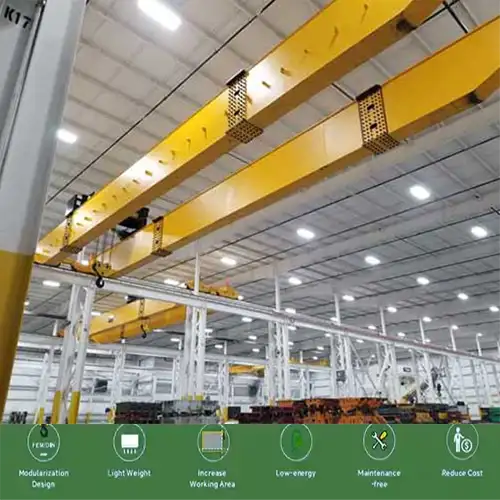
40 Ton Overhead Crane in Steel Mill &Heavy Industry | Buyer Guide
40 ton overhead crane applications in steel mills, fabrication plants, & heavy manufacturing. A practical guide to get reliable bridge crane investment.
| Application | Material handling, lifting, positioning, assembly, maintenance, loading/unloading, |
| Certifications | CE / ISO / SGS / Other third-party inspection |
| Customization | Customized material handling cranes solutions available for indoor, outdoor, hazardous, corrosive, cleanroom, and heavy-duty industrial applications. |
Crane Manufacturer: Yuantai Cranes – 30+ Years Professional Crane Manufacturer from China
Category: Featured
Tags: 40ton
Your Trusted 40 Ton Overhead Crane Manufacturer & Supplier
40 Ton Double Girder Overhead Cranes A Buyer Decision Guide
40 Ton Overhead Crane Project Applications in Steel Mills, Fabrication Plants, and Heavy Manufacturing
40 Ton Overhead Crane Applications in Steel Mills & Heavy Industry | Buyer Guide
Check 40 ton overhead crane project applications in steel mills, fabrication plants, and heavy manufacturing. A practical buyer guide covering selection, design, and key decision factors for reliable bridge crane investment.
Introduction: Why 40 Ton Overhead Cranes Matter in Heavy Industry Projects
A 40 ton overhead crane solution is used in heavy factories where materials are big and heavy. It is not just a lifting tool. It is part of daily production.
In many plants, this crane is chosen not because every load is 40 tons, but because heavy lifting happens regularly.
- Used in steel mills and heavy workshops
- Moves large and heavy materials safely
- Keeps production running without stopping
- Reduces need for multiple small cranes
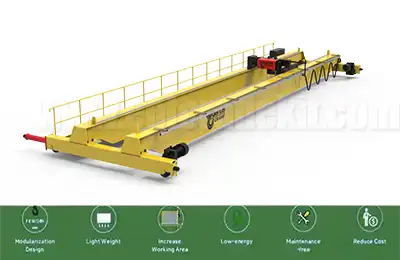
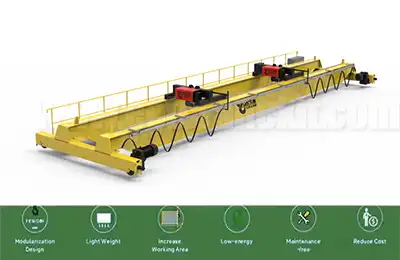
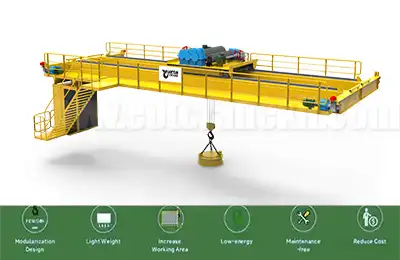
Top running overhead crane double girder- 20 ton + 20 ton hoist trolleys for long and heavy loads handling, tandem operations
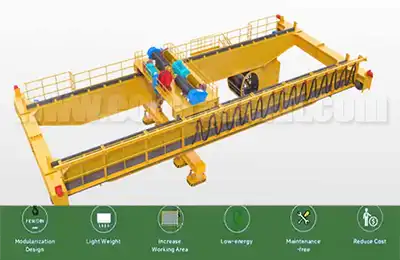
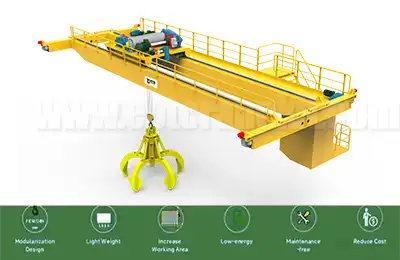
Heavy duty open winch crane 40 ton- processed industrial crane for heavy lifting , tailored 20 ton open winch trolly + 20 ton open winch trolley are available.
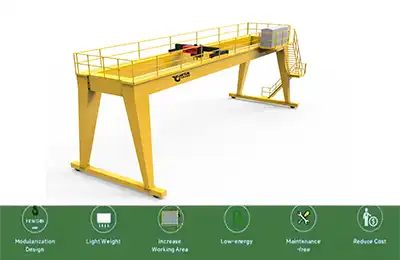
European style gantry crane 40 ton- Low headroom advanced heavy lifting industrial Cranes , tailored double crab trolley gantry crane 20 ton + 20 ton are available.
Working Conditions in Heavy Industry
Before selecting a 40 ton overhead crane, it is important to understand the real working environment inside heavy industry plants. Conditions are not stable or simple. Temperature, load type, and working rhythm can change from one area to another. These differences directly affect crane design, structure, and safety level.
Steel Mill Environment Challenges
Steel mills are one of the most demanding environments for overhead cranes. The crane often works close to heat sources, heavy materials, and continuous production lines. In many cases, it runs almost all day without long stops.
Because of this, the crane must be designed for heat resistance, dust protection, and stable long-term operation. It is not just about lifting capacity, but about reliability in harsh conditions.
| Working Condition | Practical Challenge | Impact on 40 Ton Overhead Crane |
|---|---|---|
| High temperature zones and molten material handling | Heat exposure near furnaces and casting areas | Crane needs heat-resistant design and stable performance under high temperature |
| Dust, scale, and corrosive atmosphere impact | Steel dust and corrosive particles in the air | Electrical system and steel structure require better protection and sealing |
| Continuous operation and high duty cycles | Long working hours, often 24/7 production | Crane must be designed for heavy-duty class with low downtime risk |
In short, steel mill cranes must be strong, stable, and ready for non-stop operation. Small design weaknesses can quickly turn into downtime problems.
Fabrication Plant Requirements
Fabrication plants are different from steel mills. The working environment is more controlled, but the workflow is more complex. Materials move between cutting, welding, assembly, and finishing areas. The crane becomes part of this flow, not just a lifting tool.
Here, smooth movement and accuracy are more important than extreme heat resistance. The crane must support multiple workstations without slowing down production.
| Working Condition | Practical Challenge | Impact on 40 Ton Overhead Crane |
|---|---|---|
| Multi-station lifting and material transfer | Materials move between different work areas | Crane must cover full workshop smoothly without blocking production flow |
| Precision handling of steel structures and assemblies | Positioning large steel parts accurately | Requires stable lifting control and smooth operation |
| Workflow integration with welding, cutting, and machining zones | Different processes running in one workshop | Crane movement must match production rhythm and avoid delays |
In simple terms, fabrication plants need cranes that are flexible, responsive, and easy to coordinate with daily production tasks.
Heavy Manufacturing Conditions
Heavy manufacturing plants deal with large machines, irregular components, and high-risk lifting tasks. The loads are not always standard shapes or weights. This makes lifting conditions more complex and less predictable.
In this type of environment, safety and stability are the main focus. The crane must handle oversized parts without losing control or balance.
| Working Condition | Practical Challenge | Impact on 40 Ton Overhead Crane |
|---|---|---|
| Large equipment assembly and repositioning | Moving very large machines and components | Crane must provide stable lifting and strong structural support |
| Irregular loads and oversized components | Load shape and weight are not always uniform | Flexible lifting tools and strong safety design are required |
| Safety-critical lifting operations | High-risk lifting in assembly or installation work | High safety factors and reliable control systems are necessary |
Overall, heavy manufacturing requires cranes that are stable, safe, and capable of handling unpredictable lifting situations without risk.
40 Ton Overhead Crane Application
A 40 ton overhead crane / 40 ton bridge crane is widely used in heavy industry where large steel parts, machines, and continuous production flow are involved. The application is not limited to lifting weight only. It also depends on how materials move inside the plant and how often the crane is used in daily operation. Below are the main real industrial use cases of a 40 ton overhead bridge crane system.
Steel Mill Applications
In steel mills, a 40 ton bridge crane is part of the core production system. It works under high temperature, dust, and continuous operating conditions. Many plants use it as a main steel mill crane for material flow and maintenance work.
| Application Scenario | Practical Meaning in Operation |
|---|---|
| Ladle handling (auxiliary lifting roles) | Supports hot metal transfer operations in production areas |
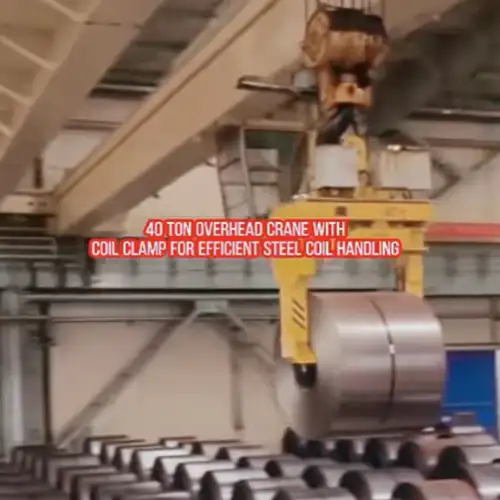
| Steel coil and slab transfer | Moves heavy raw steel materials between rolling and processing lines |
| Charging and discharging operations | Loads and unloads materials into furnaces or processing equipment |
| Maintenance and equipment replacement lifting | Helps replace large components during shutdown or repair work |
In steel mills, the 40 ton overhead crane system must handle continuous duty cycles. Stability and heat resistance are more important than simple lifting capacity.
Fabrication Plant Applications
In fabrication workshops, a 40 ton overhead bridge crane is used for structural steel production and assembly work. Compared with steel mills, the environment is cleaner, but workflow coordination is more complex.
| Application Scenario | Practical Meaning in Operation |
|---|---|
| Steel beam and truss assembly lifting | Supports accurate assembly of large steel structures |
| Modular structure handling | Moves large prefabricated modules inside the workshop |
| Work-in-progress material movement | Transfers semi-finished steel parts between production stations |
| Loading and dispatch operations | Loads finished steel products for delivery or transport |
Here, the 40 ton overhead crane is mainly used to keep production flow smooth and avoid bottlenecks between different fabrication stages.
Heavy Manufacturing Applications
In heavy manufacturing plants, a 40 ton bridge crane is used for equipment assembly, machine installation, and handling irregular heavy components. Loads are often large, non-standard, and safety-critical.
| Application Scenario | Practical Meaning in Operation |
|---|---|
| Large machinery assembly lines | Supports assembly of heavy industrial machines and systems |
| Power equipment installation (generators, turbines) | Used for positioning large energy equipment during installation |
| Casting and forging component handling | Moves heavy cast or forged parts after production |
| Workshop-to-warehouse transfer operations | Transfers heavy finished goods between workshop and storage areas |
In these environments, the 40 ton overhead bridge crane must ensure stable lifting, precise control, and high safety margin even under irregular load conditions.
Key Technical Considerations for a 40 Ton Overhead Crane Project
A 40 ton overhead crane / 40 ton bridge crane is not selected only by capacity. In real projects, technical conditions decide whether the crane will run smoothly or face problems later. Duty level, building structure, runway design, and power system all affect long-term performance. Below are the key technical points buyers must check before final decision.
Duty Classification and Working Frequency
The duty class of a 40 ton overhead crane defines how often and how long it can work. In steel plants or heavy workshops, working frequency is often high, so correct selection is very important.
| Technical Factor | Practical Meaning |
|---|---|
| FEM / ISO duty class selection | Defines crane working intensity and expected service life |
| Continuous vs intermittent operation | Continuous operation needs stronger motors and higher duty rating |
| Impact of shift cycles on crane design | Multiple shifts require better cooling, insulation, and durability |
In simple terms, a 40 ton bridge crane used 24/7 must be designed very differently from one used only a few hours per day.
Span, Lifting Height, and Workshop Layout
Span, Lifting Height, and Workshop Layout
The workshop structure directly affects crane design. A 40 ton overhead crane system must match building dimensions, not just lifting needs.
| Technical Factor | Practical Meaning |
|---|---|
| Structural span limitations in plants | Crane span must match building column distance |
| Hook height vs usable lifting space | Determines real lifting clearance in operation |
| Coordination with building steel structure | Crane design must fit runway beam and roof structure |
If these are not planned correctly, even a well-built 40 ton bridge crane may lose usable lifting space.
Wheel Load and Runway Beam Design
Wheel load is one of the most important structural factors for a 40 ton overhead crane. It directly affects the safety of runway beams and building structure.
| Technical Factor | Practical Meaning |
|---|---|
| Importance of load distribution | Ensures crane weight is evenly transferred to rails |
| Crane runway beam reinforcement requirements | Beam must be strong enough for repeated heavy loading |
| Foundation and rail alignment considerations | Poor alignment can cause vibration, wear, or safety risks |
In real projects, runway beam design is often as important as the crane itself.
Environmental Conditions
The working environment has a direct impact on crane durability. A 40 ton overhead bridge crane used in a steel mill is very different from one used in a clean workshop.
| Technical Factor | Practical Meaning |
|---|---|
| High temperature steel mills | Requires heat-resistant components and insulation protection |
| Dust-proof and heat-resistant configurations | Protects motors, electrical systems, and control panels |
| Outdoor vs indoor installation differences | Outdoor cranes need weather protection and stronger sealing |
Ignoring environment conditions can shorten crane life and increase maintenance cost.
Power Supply and Control Systems
A stable power and control system ensures safe operation of a 40 ton overhead crane. Modern systems also improve efficiency and reduce operator fatigue.
| Technical Factor | Practical Meaning |
|---|---|
| Voltage and frequency compatibility | Must match local industrial power supply standards |
| Soft start, inverter control, and energy efficiency | Reduces impact load and improves smooth operation |
| Remote control and automation readiness | Improves safety and allows flexible operation modes |
For heavy industry users, upgrading control systems often improves overall production efficiency more than expected.
Crane Type Selection for 40 Ton Projects
When selecting a 40 ton overhead crane / 40 ton bridge crane, the crane type is a key decision. Different structures and configurations directly affect stability, lifting efficiency, and long-term operating cost. The correct choice depends on working environment, duty level, and production needs.
Double Girder Overhead Crane (Main Choice)
The double girder 40 ton overhead crane is the most widely used solution in heavy industry. It is designed for high load capacity and stable long-term operation.
| Feature | Practical Meaning |
|---|---|
| High stability and load capacity | Strong structure supports frequent heavy lifting without deformation |
| Suitable for steel mills and heavy manufacturing | Common choice for steel plants, fabrication workshops, and machinery factories |
| Better lifting height utilization | Hoist runs between girders, giving higher hook height and better space use |
In real projects, most 40 ton bridge cranes are built in double girder design because it provides a good balance between strength and working efficiency.
Specialized Configurations
In some industries, a standard crane is not enough. A 40 ton overhead crane system may need special configurations depending on working conditions and material type.
| Feature | Practical Meaning |
|---|---|
| High-temperature heat-resistant cranes | Used in steel mills near furnaces or hot processing zones |
| Explosion-proof variants for special environments | Required in chemical, oil, or hazardous production areas |
| Magnet / grab / hook interchangeable systems | Allows flexible handling of coils, scrap, or bulk materials |
These configurations help the 40 ton bridge crane adapt to different industrial tasks without changing the main structure.
European vs Traditional Design Comparison
For a 40 ton overhead crane, structural design style also matters. The two most common types are European-style and traditional (standard industrial) design.
| Feature | Practical Meaning |
|---|---|
| Structural rigidity differences | European design is lighter with compact structure; traditional design is heavier and more robust |
| Maintenance requirements | European cranes usually require less maintenance due to modular design |
| Long-term operating cost impact | European design often saves energy; traditional design may have lower initial cost but higher long-term usage cost |
In real projects, the choice depends on budget, operating frequency, and long-term production planning. Both designs are widely used in 40 ton overhead bridge crane systems, but the application focus is different.
Project Planning: What Buyers Must Confirm Before Ordering
Before ordering a 40 ton overhead crane / 40 ton bridge crane, project planning is the most important step. Many problems in real projects do not come from the crane itself, but from unclear requirements at the beginning. A clear plan helps avoid redesign, delay, and extra cost later. Below are the key points every buyer should confirm before placing an order.
Material Flow and Production Process Mapping
A 40 ton overhead crane is not used in isolation. It must match the real production flow.
| Key Point | Practical Meaning |
|---|---|
| Material flow inside workshop | Shows how raw materials move from one station to another |
| Production process layout | Defines where lifting points are needed in real operation |
| Crane working route planning | Ensures crane can cover all required zones without blocking workflow |
In practice, a poorly planned layout can make even a good 40 ton bridge crane inefficient.
Maximum and Average Lifting Load Definition
| Key Point | Practical Meaning |
|---|---|
| Maximum lifting load | Determines the crane capacity requirement (e.g., 40 ton peak load) |
| Average working load | Affects duty class and long-term fatigue design |
| Load variation range | Helps decide safety margin and hoist configuration |
A correct load definition ensures the 40 ton overhead crane is neither under-designed nor over-designed.
Future Expansion Possibility (Capacity Upgrade Planning)
Many plants expand over time. A crane system should not only match current needs but also consider future production growth.
| Key Point | Practical Meaning |
|---|---|
| Production expansion plan | Determines if higher capacity or longer span may be needed later |
| Structural upgrade potential | Checks if runway beams and building can support future changes |
| Modular design possibility | Allows easier upgrade of hoist or control system later |
Planning ahead helps avoid replacing the entire 40 ton bridge crane system too early.
Installation Constraints and Civil Engineering Readiness
Installation conditions directly affect crane design and cost. A 40 ton overhead crane requires strong building support and proper installation space.
| Key Point | Practical Meaning |
|---|---|
| Workshop building structure | Must support crane load and runway beam system |
| Installation space availability | Ensures safe assembly and commissioning work |
| Foundation and runway beam readiness | Prevents alignment and stability issues during operation |
If civil work is not ready, even a well-designed crane cannot be installed properly.
Maintenance Access and Spare Parts Availability
A crane is a long-term investment. Maintenance and spare parts must be considered from the beginning, not after installation.
| Key Point | Practical Meaning |
|---|---|
| Maintenance access space | Ensures technicians can inspect and repair safely |
| Spare parts availability | Reduces downtime during unexpected breakdowns |
| Standard vs customized parts | Standard parts are easier and faster to replace |
Good planning ensures the 40 ton overhead bridge crane can operate smoothly for many years with lower downtime risk.
Cost Drivers and Budget Planning for 40 Ton Cranes
When planning a 40 ton overhead crane / 40 ton bridge crane, cost is not only about the equipment price. In real projects, the total budget depends on structure, duty level, electrical system, and long-term operation. Many buyers focus only on purchase price, but ignore installation and lifecycle cost, which often becomes higher later. Below are the main cost factors you should understand before budgeting.
Steel Structure Cost (Girder and End Carriage)
Steel structure is one of the biggest cost parts of a 40 ton overhead crane. It directly affects strength, stability, and span capacity.
| Cost Factor | Practical Meaning |
|---|---|
| Main girder design | Double girder cranes need more steel and stronger fabrication |
| End carriage structure | Supports wheel load and ensures smooth travel |
| Steel grade and thickness | Higher grade steel increases cost but improves durability |
In simple terms, stronger structure = higher cost, but also longer service life.
Hoisting Mechanism and Motor System
The hoisting system is the core working part of a 40 ton bridge crane. It affects lifting speed, safety, and stability.
| Cost Factor | Practical Meaning |
|---|---|
| Hoist type and configuration | High-performance hoists cost more but improve lifting control |
| Motor power and duty class | Higher duty motors support continuous heavy operation |
| Brake and gearbox system | Better components improve safety and reduce maintenance issues |
This part directly affects daily working efficiency, not just capacity.
Electrical Control System Complexity
The electrical system controls how the 40 ton overhead crane is operated. More advanced systems improve safety and precision but increase cost.
| Cost Factor | Practical Meaning |
|---|---|
| Control mode (pendant / remote / cabin) | Remote or cabin control increases cost but improves safety |
| Frequency inverter system | Smooth starting and stopping, reduces mechanical impact |
| Automation level | Higher automation means higher initial investment |
For many plants, better control systems reduce operator fatigue and improve workflow stability.
Customization vs Standardization Impact on Price
Customization has a direct impact on the total cost of a 40 ton overhead bridge crane. Standard designs are more economical, while customized designs match specific working conditions.
| Cost Factor | Practical Meaning |
|---|---|
| Non-standard span or height | Increases design and fabrication cost |
| Special working conditions (heat, explosion-proof) | Requires extra protection systems |
| Special lifting tools (magnet, grab, spreader) | Adds additional mechanical and electrical components |
In general, more customization means higher cost but better fit for real operation needs.
Long-Term Maintenance and Lifecycle Cost
The real cost of a 40 ton overhead crane is not only the purchase price. Maintenance and operation over many years often cost more than the initial investment.
| Cost Factor | Practical Meaning |
|---|---|
| Spare parts replacement | Regular parts like wheels, brakes, and cables need periodic replacement |
| Maintenance frequency | High-duty operation increases service cost |
| Energy consumption | Efficient systems reduce long-term electricity cost |
A well-designed 40 ton bridge crane may cost more initially, but usually saves more in long-term operation.
Common Mistakes Buyers Make in 40 Ton Crane Projects
In real 40 ton overhead crane / 40 ton bridge crane projects, many problems do not come from the crane itself, but from wrong decisions made at the buying stage. These mistakes often lead to higher cost, delays, or poor performance in daily operation.
Below are the most common issues buyers should avoid.
Choosing Based Only on Price per Ton
One of the most common mistakes is focusing only on unit price, such as "price per ton."
| Mistake | Practical Problem |
|---|---|
| Only comparing lowest price | Often leads to lower quality components or weak design |
| Ignoring technical differences | Different suppliers may include different duty class or structure standards |
| No lifecycle thinking | Cheaper crane may cost more in maintenance later |
A 40 ton overhead crane is a long-term investment. Low price at the beginning does not always mean lower total cost.
Ignoring Runway Beam Structural Design
The crane depends heavily on the runway beam system. If this part is weak, the whole 40 ton bridge crane system becomes unstable.
| Mistake | Practical Problem |
|---|---|
| Not checking beam strength | Can cause deformation or unsafe operation |
| Missing load calculation | Crane load is not properly distributed |
| Poor installation alignment | Leads to vibration, wear, and higher maintenance |
In many cases, the crane is fine, but the runway structure becomes the real limitation.
Underestimating Duty Class Requirements
Duty class defines how often the crane can safely work. Many buyers underestimate real working frequency.
| Mistake | Practical Problem |
|---|---|
| Selecting lower duty class to save cost | Crane wears out faster under heavy use |
| Ignoring 24/7 operation needs | Leads to overheating or motor failure |
| Not matching production cycle | Reduces crane lifespan and stability |
A 40 ton overhead crane used in steel or heavy industry usually needs higher duty classification.
Overlooking Future Production Expansion
Some buyers only design for current needs, not future growth. This can cause problems later.
| Mistake | Practical Problem |
|---|---|
| Designing only for current load | Cannot handle future heavier products |
| Ignoring layout expansion | New equipment may not fit crane coverage |
| No upgrade planning | Full system replacement may be needed later |
A well-planned 40 ton bridge crane system should allow room for future production changes.
Not Considering Installation and Commissioning Complexity
Installation is often more complex than expected, especially for heavy-duty cranes.
| Mistake | Practical Problem |
|---|---|
| No site preparation planning | Delays during installation stage |
| Ignoring alignment requirements | Causes operational issues after startup |
| Underestimating commissioning time | Affects production schedule |
For a 40 ton overhead crane, proper installation planning is as important as the crane design itself.
Recommended Decision Framework for Buyers
When planning a 40 ton overhead crane / 40 ton bridge crane, a step-by-step decision process helps avoid mistakes and ensures the crane fits real working conditions. Instead of guessing or only comparing prices, buyers should follow a structured method.
Step 1: Define Real Lifting Operations
| Key Action | What to Confirm | Practical Meaning |
|---|---|---|
| Identify maximum load | Peak lifting weight (up to 40 ton or more) | Ensures correct crane capacity selection |
| Check average load | Typical daily lifting weight | Helps define duty class and working intensity |
| Understand materials | Steel coils, slabs, machines, structures | Affects hoist type and lifting tools |
| Confirm lifting frequency | Lifts per shift or per day | Impacts crane durability and motor selection |
Step 2: Confirm Working Environment Conditions
| Key Action | What to Confirm | Practical Meaning |
|---|---|---|
| Identify industry type | Steel mill, fabrication plant, heavy workshop | Determines crane design requirements |
| Check temperature level | High heat or normal environment | Affects insulation and protection level |
| Check dust/corrosion level | Clean, dusty, or corrosive atmosphere | Impacts electrical and steel protection |
| Confirm operation mode | Continuous or intermittent use | Defines duty class selection |
Step 3: Select Crane Type and Configuration
| Key Action | What to Confirm | Practical Meaning |
|---|---|---|
| Choose crane structure | Double girder or special design | Determines strength and lifting stability |
| Select hoist system | Standard or high-duty hoist | Affects lifting performance and speed |
| Define control mode | Pendant, remote, or cabin control | Impacts operation safety and efficiency |
| Select lifting tools | Hook, magnet, grab, or spreader | Matches material handling needs |
Step 4: Validate Structural and Electrical Compatibility
| Key Action | What to Confirm | Practical Meaning |
|---|---|---|
| Check building span | Workshop column distance | Ensures crane fits structure layout |
| Check runway beam strength | Load-bearing capacity of beams | Prevents structural failure |
| Confirm foundation condition | Floor and column support strength | Ensures safe installation |
| Check power supply | Voltage and frequency match | Guarantees stable electrical operation |
Step 5: Request Full Engineering Proposal from Supplier
| Key Action | What to Request | Practical Meaning |
|---|---|---|
| Layout drawing | Crane general arrangement | Confirms installation feasibility |
| Load calculation | Wheel load and structural data | Ensures safety of building structure |
| Electrical design | Wiring and control system diagram | Confirms operation compatibility |
| Installation plan | Assembly and commissioning steps | Reduces onsite installation risks |
| Maintenance plan | Spare parts and service guide | Supports long-term operation stability |
Final Advice: How to Ensure a Reliable 40 Ton Crane Investment
A 40 ton overhead crane / 40 ton bridge crane is a long-term industrial asset. It is not a one-time purchase. In real projects, the real value comes from stable operation, low downtime, and safe lifting over many years. To make a reliable investment, buyers should focus on the full life cycle, not only the initial price.
Focus on Lifecycle Performance, Not Just Purchase Cost
| Key Focus | Practical Meaning |
|---|---|
| Long-term operation cost | Includes maintenance, spare parts, and energy use |
| Duty life of components | Motors, wheels, and hoist systems must last under real working load |
| Downtime risk control | Better design reduces unexpected shutdowns |
| Total cost of ownership | Real cost = purchase + operation + maintenance |
A cheaper 40 ton overhead crane may look good at the beginning, but higher repair and downtime costs often come later.
Work with Manufacturer for Full Project Engineering Support
| Key Focus | Practical Meaning |
|---|---|
| Full technical communication | Helps match crane design with real workshop conditions |
| Load and structure calculation | Ensures runway and building safety |
| Customized solution design | Adjusts crane to real production flow |
| Installation guidance | Reduces onsite mistakes and delays |
A reliable 40 ton bridge crane project is always based on engineering support, not just product supply.
Ensure Compliance with International Standards (ISO, FEM, CE)
| Key Focus | Practical Meaning |
|---|---|
| ISO standards | Ensures basic quality and production control |
| FEM classification | Defines duty class and working level accuracy |
| CE certification | Confirms safety requirements for international use |
Standards help ensure the 40 ton overhead crane meets global safety and performance expectations.
Prioritize Safety, Stability, and Maintainability
| Key Focus | Practical Meaning |
|---|---|
| Safety design | Prevents overload, collision, and electrical risks |
| Structural stability | Ensures smooth operation under heavy loads |
| Easy maintenance | Reduces downtime and simplifies servicing |
| Operator safety | Improves control comfort and reduces human error |
In heavy industry, a 40 ton bridge crane must first be safe, then stable, and finally cost-efficient. This order is important in real operation.
Get a Custom 40 Ton Overhead Crane Solution
If you are planning a 40 ton overhead crane / 40 ton bridge crane, don't rely only on standard catalog options. Real projects need real data from your workshop and production. Below is a simple checklist to help you get a correct solution.
Tell Us Your Capacity and Application
Please provide:
- Required capacity (40 ton or other)
- What you are lifting (steel, machine, coil, etc.)
- How often the crane will work
- Your industry type (steel mill, workshop, factory)
Why it matters:
- Helps confirm crane size
- Helps choose correct hoist and duty level
- Ensures design matches real operation
Send Your Workshop Layout
Please provide:
- Workshop drawing or layout
- Building span and height
- Column spacing
- Equipment layout inside workshop
Why it matters:
- Defines crane working area
- Ensures proper runway beam design
- Prevents space or movement conflicts
Get Full Design and Quotation
You will receive:
- Crane layout design
- Runway load calculation
- Full technical proposal
- Detailed quotation
Why it matters:
- Confirms crane safety before production
- Helps avoid installation problems
- Gives clear and transparent cost
Save Cost and Avoid Future Problems
Best practice:
- Match crane to real working needs
- Avoid oversizing or undersizing
- Use correct technical design
- Plan for long-term operation
- Work with manufacturer support
A properly planned 40 ton overhead crane runs safer, lasts longer, and reduces long-term cost.


Free consultation to Confirm Parameters & Specifications and Get
Latest Crane Price & Crane Rate.
- Types of overhead cranes : _______?
- Optional: Overhead travelling crane, goliath gantry crane,Slewing jib crane, Single girder or double girder crane,small portable crane or kbk crane, etc.
- Capacity of overhead crane: _______?
- Optional: 0.25ton, 0.5 ton, 1 ton, 2 ton, 3ton, 5 ton, 10 ton,15ton, 20ton, 25 ton, 30ton,35ton, up to 550ton, etc.
- Crane span & lifting height : _______?
- Crane travelling length : _____?
- Control of overhead crane:_______?
- Optional: pendant/ remote/cabin control
- Voltage supply of overhead crane:_____?
- Eg,: 380V50/60HZ,3Phase or others,etc.
- Application/usage of crane:_______?
- Eg,: Steel mill, ,injection mold, cement,stone, concrete,granite, general manufacturing, etc.
Just leave a message via the contact form and our hoist and crane engineer will contact you with in 24working hours.
Get In Touch