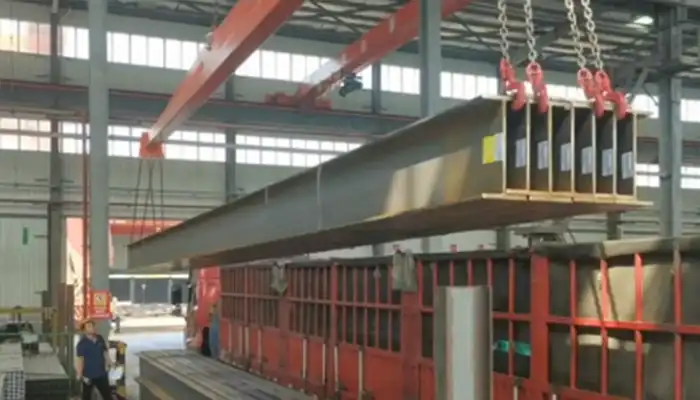
Precision Lifting with 5–20 Ton Bridge Cranes for 12-Meter Beams
menu_open
Content Quick Link
Precision Lifting in Workshops: 5–20 Ton Overhead Cranes for 12-Meter Steel Beams
Introduction
Handling 12-meter steel beams in a workshop isn’t as simple as just lifting and moving them. These beams are long, heavy, and can bend or twist if not handled properly. Even small mistakes can cause damage to the steel, slow down production, or create serious safety risks for workers.
When it comes to lifting long beams, the choice of crane type and capacity matters as much as the lifting accessories. A crane that’s too small may struggle with the load, while an oversized crane can be inefficient and costly. Selecting the right setup ensures beams are moved smoothly, positioned precisely, and handled safely every time.
This guide is designed to help buyers, workshop managers, and operators understand:
- Which crane types are best suited for 12-meter beams.
- How to match crane capacity to beam weight and workshop layout.
- Practical benefits of using overhead cranes for precise fabrication and assembly.
Crane Type Overview
Choosing the right crane type is the first step to safely and efficiently lifting 12-meter steel beams in a workshop. The crane must match the beam weight, lifting height, and movement requirements. Two main types are commonly used in fabrication workshops: single girder and double girder bridge cranes.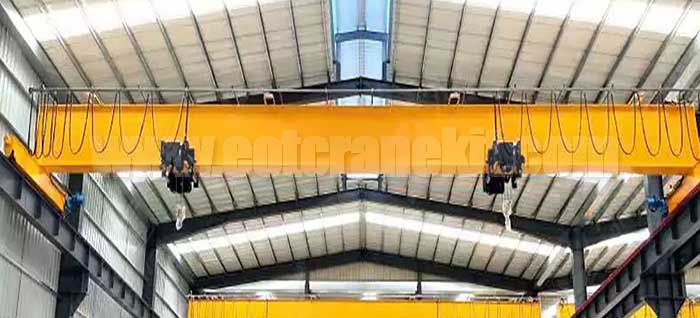
Eurpean style overhead crane with duel hoist trolley for tandem lifting
Top-Running Single Girder Bridge Crane
Single girder cranes are often the go-to choice for lighter beams and smaller workshops. They’re straightforward to install and operate, making them suitable for many indoor fabrication environments.
- Capacity: 5–10 tons, ideal for lighter 12-meter beams.
- Design: Simple structure, which makes maintenance easier and reduces downtime.
- Movement: Allows smooth horizontal travel along the workshop, making beam positioning easier in tight spaces.
Practical Tip: Use single girder cranes for workshops with limited lifting height requirements or where beams are handled individually rather than in bundles.
Double Girder Bridge Crane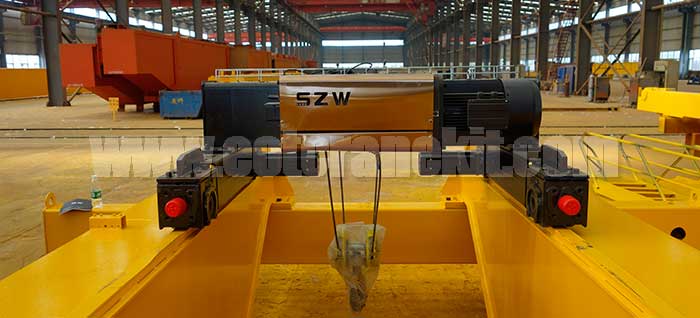
European style double girder overhead crane
Top Running Double Girder Overhead Cranes are designed for heavier loads and longer beams. Their structure provides additional stability, which is important when lifting 12-meter steel beams that can bend or twist if not supported properly.
- Capacity: 10–20 tons, suitable for heavier steel beams or frequent lifts.
- Stability: Two girders reduce deflection and allow higher lifting heights.
- Precision: Supports long beams with better load distribution, making placement more accurate.
Practical Tip: Choose a double girder crane if your workshop handles heavy beams regularly or requires high lifts for assembly or welding stations. The added stability prevents sagging and reduces material stress.
Capacity Considerations
When lifting 12-meter steel beams, understanding their weight is crucial. These beams can vary depending on the profile, dimensions, and steel grade, typically ranging from 1 to 4 tons. Underestimating the weight can lead to overloaded cranes, unsafe lifting conditions, or damage to the beam.
Selecting a crane with the right capacity isn’t just about meeting the current beam weight—it’s also about safety, efficiency, and future-proofing your workshop.
- Safety Margin: Choosing a crane with 5–20 ton capacity ensures the crane can safely lift beams along with any accessories, such as clamps, spreaders, or slings, without stress.
- Future Flexibility: A higher-capacity crane allows for heavier beams or multiple lifts in the future, accommodating production growth or new steel profiles.
- Reduced Wear and Tear: Operating a crane below its maximum rated capacity helps extend its service life and reduces maintenance needs.
Practical Tip: Always calculate the total lifted load, including beam weight, lifting accessories, and any bundled material, and choose a crane with at least 20–30% extra capacity for safety.
Typical Workshop Applications
In a fabrication workshop, 12-meter steel beams need careful handling to avoid bending, twisting, or damaging surfaces. Overhead cranes make it possible to move these long beams efficiently, even in confined spaces where precision is key. Understanding how beams are typically handled helps you choose the right crane type, accessories, and lifting method.
Common Workshop Applications
- Moving beams from storage to cutting or welding stations: Cranes allow quick, safe transport of heavy beams across the workshop without manual handling. This reduces labor costs and minimizes the risk of damage.
- Horizontal or slight vertical adjustments during fabrication: Beams often need precise alignment before cutting or welding. A crane with smooth horizontal travel and fine control ensures accurate placement.
- Placement in tight indoor spaces requiring precision: Workshops are often crowded with equipment and other materials. A well-planned crane layout allows operators to maneuver long beams safely and position them exactly where needed.
Practical Tip: Always plan the beam path in advance, checking for obstacles, narrow passages, or low ceilings. Using adjustable hooks, beam clamps, or spreaders can help maintain beam stability and prevent sagging during movement.
Advantages of Overhead Bridge Cranes in Workshops
Overhead bridge cranes are a key tool in any steel fabrication workshop, especially when handling long 12-meter beams. Their design and functionality provide several advantages that improve both efficiency and safety during beam handling.
Key Benefits
- Smooth Horizontal Movement: Rails installed along the workshop allow the crane to travel the full length of the workspace, making it easy to move beams from storage to fabrication stations without interruptions.
- Precise Beam Positioning: Overhead cranes provide accurate control for placing beams exactly where needed. This precision helps minimize bending, twisting, or surface damage, which is critical for maintaining beam quality during welding or cutting operations.
- Reduced Labor Effort and Faster Workflow: Lifting and moving long beams manually is slow, labor-intensive, and risky. Using an overhead crane speeds up repetitive tasks, allowing operators to focus on assembly, cutting, or welding rather than struggling with heavy materials.
Practical Tip: For maximum efficiency, ensure the crane path is free from obstacles, and use adjustable beam clamps or spreaders to keep 12-meter beams level and stable during travel. This simple preparation reduces accidents and material damage.
Accessories and Safety Enhancements
Handling 12-meter steel beams safely requires more than just the right crane. The lifting accessories and safety measures you choose play a crucial role in preventing sagging, twisting, and accidents. Using the right combination of clamps, slings, and control tools ensures smooth, stable movement during every lift.
Essential Accessories
- Spreaders and Beam Clamps: Spreaders help distribute the load evenly along the length of the beam, preventing bending or sagging in the middle. Beam clamps secure the ends and provide stable attachment points for lifting.
- Slings and Hooks: Use wire rope or synthetic slings that are rated for the beam weight plus a safety margin. Heavy-duty hooks and shackles ensure the beam stays attached securely during lifting and movement.
- Tag Lines: Long beams can swing or rotate unexpectedly. Tag lines allow operators to control beam rotation and swing, especially in confined workshop spaces or when precise placement is required.
Practical Tip: Before each lift, always inspect slings, clamps, and hooks for wear or damage. Combine spreaders and tag lines for longer beams to maintain stability and prevent accidental contact with other equipment or structures.
Practical Buyer Tips
Selecting the right crane for 12-meter steel beams isn’t just about capacity or type—it’s also about matching the crane to your workshop layout and workflow. Careful planning helps prevent accidents, reduces material damage, and ensures smooth, precise operations.
Key Considerations for Buyers
- Evaluate Workshop Layout and Beam Paths: Check the full path your beam will travel from storage to fabrication stations. Ensure there’s enough clearance for the beam length, overhead fixtures, and other equipment. This helps avoid collisions and allows smooth crane movement.
- Confirm Crane Lifting Speed and Control Options: For precise placement, the crane should offer adjustable speed settings and fine control. Smooth acceleration and deceleration help prevent beam swinging and improve accuracy during cutting or welding operations.
- Inspect Rails, Trolleys, and Crane Components: Ensure all crane components can safely handle 12-meter beams. Check rails for alignment, trolleys for smooth operation, and the crane’s hoist for proper load rating. Compatibility is crucial for both safety and efficiency.
Practical Tip: Walk through a mock lift route before installing the crane. Measure clearances, check for obstacles, and test control responsiveness. This simple step can prevent costly mistakes and improve day-to-day workflow.
Conclusion
Handling 12-meter steel beams in a workshop requires careful planning, the right crane type, and the proper accessories. Selecting equipment that matches beam weight, length, and workshop layout ensures lifts are safe, precise, and efficient.
Key Takeaways
- Top-Running Single or Double Girder Cranes: Single girder cranes work well for lighter beams, while double girder cranes handle heavier loads and provide greater stability for long beams.
- Enhanced Safety and Efficiency: Proper crane selection minimizes the risk of beam bending, twisting, or accidental collisions, keeping both workers and materials safe.
- Long-Term Workflow Benefits: Investing in the right crane, along with suitable clamps, slings, and spreaders, supports smooth, predictable lifting operations. This reduces downtime and improves productivity for years to come.
Practical Tip: Combine the right crane with regular inspections, maintenance, and trained operators to maximize both safety and performance when handling long steel beams.

Article by Bella ,who has been in the hoist and crane field since 2016. Bella provides overhead crane & gantry crane consultation services for clients who need a customized overhead travelling crane solution.Contact her to get free consultation.