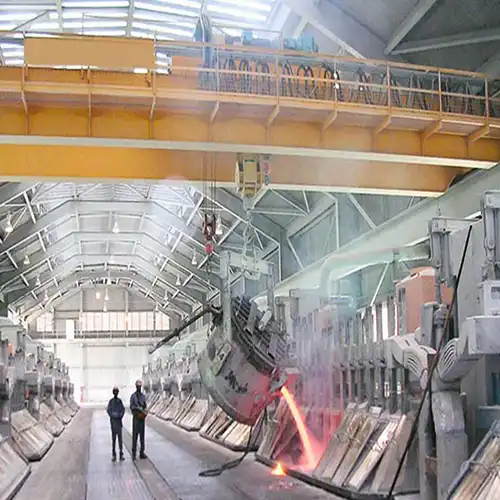
Ladle Handling Overhead Cranes for Melt-Shops – Safe, Heavy-Duty
High-safety ladle handling cranes for melt-shops. Heavy-duty design, 24/7 operation, and reliable performance. Request a technical proposal & layout today.
| Application | Material handling, lifting, positioning, assembly, maintenance, loading/unloading, |
| Certifications | CE / ISO / SGS / Other third-party inspection |
| Customization | Customized material handling cranes solutions available for indoor, outdoor, hazardous, corrosive, cleanroom, and heavy-duty industrial applications. |
Crane Manufacturer: Yuantai Cranes – 30+ Years Professional Crane Manufacturer from China
Category: Steel
Tags:
Your Trusted Ladle Overhead Crane Manufacturer & Supplier
Ladle Handling Overhead Cranes for Melt-Shops
High-Safety, Heavy-Duty Solutions for Molten Metal Operations
Buyer-Focused Introduction: Why Choose a Ladle Crane?
When it comes to melt-shop operations, a ladle crane is not just another overhead crane. These are specialized lifting systems built specifically to handle molten metal safely and efficiently. Using the wrong crane can put both your staff and equipment at serious risk.
Definition & Purpose
Ladle cranes are designed to lift, transport, and pour molten metal safely. Unlike standard overhead cranes, they handle extremely heavy loads while operating in high-temperature environments. They are commonly used in steel mills, foundries, and high-heat production areas.
- Purpose-built for molten metal handling.
- Designed to work with ladles and slag pots.
- Supports both main and auxiliary hoists for flexible operations.
Critical Role in Steel Mills
In a melt-shop, every second counts. Ladle cranes make sure molten metal is moved precisely from the furnace to the casting area. This precision is vital to avoid spillage, ensure consistent production, and maintain worker safety.
- Facilitates accurate ladle pouring and teeming.
- Reduces risk of accidents from misalignment or uncontrolled movement.
- Keeps production continuous without unnecessary stops.
Why Standard Cranes Won't Work
Regular EOT or overhead cranes are not designed for molten metal conditions. High temperatures, dynamic loads, and continuous 24/7 operation can damage standard cranes or create unsafe situations. Ladle cranes are engineered to withstand these harsh conditions reliably.
- Heat-resistant components protect ropes, trolleys, and electrical systems.
- Redundant braking systems provide fail-safe operation.
- Structural design accommodates heavy loads with minimal deflection.
Buyer Insight: How the Right Crane Impacts Your Operation
Choosing the right ladle crane is about more than just lifting capacity. It can improve operational safety, reduce downtime, and extend the service life of your equipment. The right system keeps your melt-shop running smoothly and your team protected.
- Minimizes production interruptions due to crane issues.
- Protects operators from molten metal hazards.
- Ensures consistent performance under continuous operation.
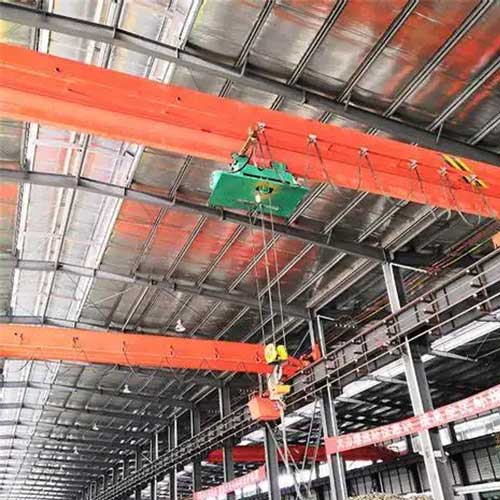
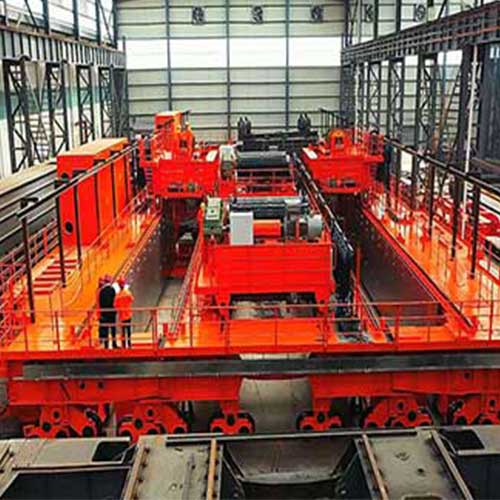
ladle overhead crane 75 Ton to 320 Ton
Safety-Centric Design for Molten Metal Handling
In melt-shops, safety isn't optional—it's a requirement. Ladle cranes operate in extreme heat with heavy molten metal, so every component needs to be designed to protect both the operators and the equipment. A well-engineered crane can prevent accidents, reduce downtime, and keep your operation running smoothly.
Redundant Hoist Braking Systems
Ladle casting cranes rely on dual braking systems to ensure safe lifting at all times. If one brake fails, the other can handle the load, giving operators an extra layer of safety. Most systems also include a manual brake release, allowing controlled movement during emergencies.
- Dual brakes for fail-safe operation under full load.
- Manual release option for controlled lowering of the ladle.
- Protects operators and expensive molten metal ladles.
- Reduces risk of accidents caused by brake failure.
Thermal Protection & High-Temperature Components
Molten metal generates extreme heat, which can damage ropes, trolleys, and electrical components. Ladle cranes include heat shields, high-temperature cables, and insulated hoist systems to maintain reliability and safety. Proper thermal protection ensures that the crane can operate consistently over long periods.
- Heat shields protect sensitive components from radiant heat.
- High-temperature resistant cables and wiring prevent electrical failures.
- Insulated trolleys and hoists extend equipment life.
- Maintains crane reliability even in continuous 24/7 melt-shop operations.
Overload Protection & Limit Devices
Accidental overload or travel beyond limits can cause serious damage. Modern ladle cranes are equipped with overload limiters and travel limit devices to prevent such incidents. These devices help operators stay within safe working parameters and reduce the chance of costly downtime.
- Overload limiters prevent lifting beyond rated capacity.
- Hoist up/down and travel limiters ensure safe movement.
- Reduces the risk of equipment damage.
- Protects operators and maintains consistent production flow.
Heavy-Duty Continuous Operation
In a melt-shop, ladle cranes aren't just lifting equipment—they're critical production assets. These cranes need to operate reliably, day and night, without unexpected downtime. Heavy-duty design ensures that your crane can handle constant use while maintaining safety and precision.
ISO M8 / FEM 4m Classification
Ladle cranes are built to meet ISO M8 and FEM 4m duty classifications, which are standards for heavy-duty, high-cycle operation. This means the crane is engineered to lift large molten metal loads repeatedly without failure. For steel mills running around the clock, this classification is essential to keep production steady.
- Suitable for 24/7 continuous melt-shop operations.
- High-cycle performance ensures long-term reliability.
- Designed to handle dynamic loads safely and consistently.
Robust Gearboxes, Motors, and Structure
Every component of a ladle crane is designed with heavy-duty performance in mind. Gearboxes and motors are oversized and engineered to endure high loads, while the crane structure is reinforced to minimize deflection and wear. This ensures smooth operation even under extreme thermal and mechanical stress.
- High-strength steel and reinforced structures prevent deformation.
- Motors and gearboxes built for continuous heavy lifting.
- Maintains precise movement and positioning under full load.
Proven Ladle-Handling Experience
Experience matters when it comes to ladle cranes. Cranes designed with input from steel mills and foundries have proven performance in real melt-shop environments, which means fewer surprises and higher uptime. Investing in a crane with a track record reduces operational risk and increases confidence in daily production.
- Tested in real-world molten metal operations.
- Reduces maintenance issues and unexpected downtime.
- Ensures consistent, safe performance across shifts.
Precision Hoisting Solutions
Handling molten metal safely requires more than just lifting power—it demands precision, control, and reliability. Ladle cranes are equipped with specialized hoisting systems to move heavy loads smoothly, prevent accidents, and ensure consistent operation in high-temperature environments.
Main Hoist
The main hoist is the workhorse of a ladle crane. Designed to lift 5 ton to 74 tons, it provides controlled, stable movement even when handling molten metal. Features like open winch design, high-strength drum, and low-speed creep control allow operators to move ladles slowly and accurately, minimizing the risk of spills or splashes.
- Open winch design for better heat dissipation.
- High-strength drum and reeving for durability under heavy loads.
- Low-speed creep control for precise pouring and positioning.
- Supports continuous operation in 24/7 melt-shop environments.
Auxiliary Hoist (10–20 tons)
An auxiliary hoist adds flexibility to ladle operations. Typically handling 10 to 20 tons, it's used for slag pots, hook replacements, and precise ladle adjustments. This system allows operators to make small, accurate movements without relying solely on the main hoist, improving workflow and safety.
- Handles secondary lifting tasks like slag pot movement.
- Enables hook replacement and positioning adjustments.
- Improves operational efficiency by supporting multitask lifting.
C-Type Hook Assembly
The hook is critical to crane safety. Ladle cranes use C-type hook assemblies with certified materials, thermal protection, and reinforced hook blocks to withstand extreme heat and heavy loads. This ensures that lifting operations remain safe and reliable, even in demanding melt-shop conditions.
- Certified hooks for maximum load safety.
- Thermal protection prevents deformation from radiant heat.
- Reinforced hook blocks increase longevity and reduce maintenance.
- Supports precise and controlled ladle handling.
Engineered for 24/7 Melt-Shop Production — Get a Quote Now.
Discover how our ladle crane hoisting systems ensure round-the-clock reliability, precision pouring, and maximum safety for your melt-shop operations.
Motion Control for Safe & Efficient Operations
In molten metal handling, precision is just as important as lifting capacity. Sudden movements or uncontrolled swings can cause spills, damage equipment, and create safety hazards. Modern ladle cranes are equipped with advanced motion control systems to ensure smooth, accurate operation and protect both operators and material.
VFD-Driven Motors for Hoist, Cross, and Long Travel
Variable Frequency Drive (VFD) motors provide precise speed control across all crane movements—lifting, trolley travel, and bridge travel. This allows operators to handle heavy loads gently, even under full capacity, reducing mechanical stress and extending the life of crane components.
- Smooth acceleration and deceleration for controlled movement.
- Reduces wear on hoist, gearbox, and structural components.
- Supports continuous 24/7 operations with minimal downtime.
Anti-Sway & Synchronized Hoist Control
Anti-sway technology stabilizes the load during movement, preventing molten metal from swinging or splashing. For cranes with multiple hoists, synchronized operation ensures that all hoists move in harmony, maintaining ladle balance and safe positioning.
- Reduces risk of molten metal spills.
- Improves operator confidence and control.
- Enables simultaneous lifting and positioning with multiple hoists.
Smooth Acceleration for Precision Handling
Gradual acceleration and deceleration allow for fine control during pouring and ladle positioning. Operators can move heavy molten loads carefully, even in tight or congested areas of the melt-shop. This not only improves safety but also reduces material waste and operational errors.
- Precise control over ladle placement.
- Minimizes thermal shocks and metal splashing.
- Enhances overall production efficiency.
Structural Design Built for Reliability
A ladle crane's structure is the foundation of safe and precise molten metal handling. In a melt-shop, cranes are subjected to extreme heat, heavy loads, and continuous operation, so the frame and components must be designed to last. A reliable structural design reduces maintenance, prevents downtime, and keeps production flowing smoothly.
Box Girder Fabrication and High-Strength Steel
The main crane girders are fabricated as box structures using high-strength steel, providing excellent rigidity and load distribution. This design resists bending or twisting under heavy ladles, ensuring precise handling even at full load. Optimized wheel loads reduce wear on rails and improve crane stability.
- Box girders for maximum structural strength.
- High-strength steel minimizes deflection under heavy loads.
- Optimized wheel load distribution protects crane rails and foundation.
Walkways and Maintenance Platforms
Safe and easy access is critical for routine inspection and maintenance. Ladle cranes include walkways and platforms so operators and maintenance staff can reach hoists, trolleys, and electrical components without compromising safety.
- Provides safe access for maintenance and inspections.
- Reduces downtime by simplifying routine servicing.
- Enhances operator safety in high-temperature environments.
Deflection Control for Accurate Ladle Positioning
Even slight structural deflection can affect ladle alignment and pouring accuracy. Modern ladle cranes are engineered to minimize deflection through reinforced structures, precision welding, and careful design. This ensures the ladle remains in the intended position for safe and efficient molten metal handling.
- Maintains precise ladle alignment during lifting and travel.
- Reduces risk of spillage and operational errors.
- Supports consistent production quality across shifts.
Operator Cabin Designed for Productivity & Safety
The operator cabin is more than a control center—it's where precision, comfort, and safety meet. In a melt-shop, crane operators often work long shifts in extreme heat. A well-designed cabin ensures they can maintain focus, control, and safety while handling heavy molten loads.
Air-Conditioned, Ergonomic Cabins with Joystick Operation
Modern ladle cranes feature air-conditioned cabins with ergonomic seating and joystick controls. These cabins are designed to reduce operator strain and allow for intuitive, precise movements. Operators can control the hoist, trolley, and bridge smoothly, which is critical when handling molten metal.
- Climate-controlled cabin for comfort in high-temperature environments.
- Ergonomic layout reduces fatigue and repetitive strain.
- Joystick operation enables smooth, precise control of all crane functions.
Full Visibility for Ladle Pouring
Visibility is crucial in melt-shops. Cabins are positioned and designed to provide clear sightlines of the ladle, furnace, and casting area. This allows operators to maneuver safely, reducing the risk of spills, collisions, or misalignment.
- Panoramic views improve accuracy during ladle transport and pouring.
- Enhances safety by allowing operators to monitor surroundings in real-time.
- Supports precise pouring and teeming operations.
Reduces Operator Fatigue for Long Shifts
Long shifts in melt-shops can be exhausting, but a well-designed cabin keeps operators alert and comfortable. By minimizing strain and providing intuitive controls, these cabins help maintain productivity and reduce the likelihood of human error.
- Comfortable seating and ergonomic design reduce fatigue.
- Maintains operator focus during extended operations.
- Improves overall safety and efficiency in the melt-shop.
Electrical System for Extreme Conditions
In a melt-shop, electrical systems face extreme heat, dust, and continuous operation. A well-designed crane must have reliable electrical components to ensure uninterrupted performance and protect both operators and equipment. Modern ladle cranes are equipped to handle these harsh environments while providing smooth and safe operation.
IP65 Panels with Air-Conditioning and Heat-Resistant Cables
Electrical panels on ladle cranes are typically IP65-rated, meaning they are fully protected against dust and water ingress. Many systems include air-conditioning to maintain optimal temperature, while high-temperature resistant cables prevent insulation damage and maintain safe power delivery even near molten metal.
- IP65-rated enclosures protect sensitive electronics.
- Air-conditioned panels prevent overheating in high-temperature environments.
- Heat-resistant cables ensure long-term reliability and reduce maintenance needs.
VFD Protection and Flexible Power Supply
Variable Frequency Drives (VFDs) are used to control hoist, trolley, and bridge motors with precision. They are protected against voltage spikes, overheating, and other electrical risks. Flexible festoon or conductor bar systems deliver power safely while accommodating the crane's full range of motion.
- VFD protection prevents motor and drive failures.
- Festoon or conductor bar systems ensure continuous power delivery.
- Supports smooth acceleration and deceleration for precise motion control.
Optional SCADA or Monitoring Systems
For operators and maintenance teams who need real-time insights, some ladle cranes can be equipped with SCADA or digital monitoring systems. These systems track crane performance, load cycles, and electrical parameters, helping prevent unexpected failures and plan preventive maintenance.
- Provides real-time monitoring of crane operations.
- Detects abnormal conditions before they become safety issues.
- Supports predictive maintenance and reduces downtime.
Turnkey Installation, Commissioning & Testing
Installing a ladle crane isn't just about putting it in place—it's about ensuring it operates safely, efficiently, and reliably from day one. A proper commissioning process guarantees that every component works as intended and that operators are fully prepared for daily use.
Factory Acceptance Test (FAT)
Before leaving the factory, each crane undergoes rigorous testing to confirm it meets design specifications and safety standards. This includes load testing, brake performance, and certification of ropes and hooks. FAT ensures that potential issues are caught early, reducing delays and surprises on-site.
- Load testing at full rated capacity.
- Brake performance and fail-safe verification.
- Rope and hook certification for safety compliance.
- Confirms crane readiness before shipment.
On-Site Commissioning
Once the crane is delivered, on-site commissioning aligns and calibrates all components. This step ensures smooth operation of hoists, trolleys, and bridges, and verifies that the crane performs safely under real working conditions.
- Precise alignment of rails and bridge structures.
- Calibration of hoist and motion control systems.
- Final load tests and deflection checks.
- Confirms crane is ready for full-scale melt-shop operations.
Operator Training for Safe, Confident Operation
Even the best crane is only as safe as its operator. Comprehensive training programs equip staff with the knowledge and skills to handle the ladle crane confidently and safely. Training covers operation, emergency procedures, and basic maintenance tasks.
- Hands-on operator instruction for daily use.
- Safety procedures for handling molten metal.
- Guidance on preventive maintenance and inspections.
Lead-Generation Support
Full Design + Delivery + Installation Support Available.
After-Sales Service & Spare Parts Support
Buying a ladle crane is a long-term investment, and reliable after-sales service is just as important as the crane itself. Steel mills and melt-shops need immediate support to avoid production delays and costly downtime. A strong service network and ready access to spare parts ensure your crane continues to operate safely and efficiently.
Local Service Teams for Immediate Response
Having trained technicians nearby means fast response times whenever maintenance or repairs are needed. Whether it's a routine check or an unexpected issue, local service teams reduce the impact on production and keep operations running smoothly.
- Rapid on-site support for urgent issues.
- Experienced technicians familiar with ladle crane systems.
- Minimizes production downtime in high-stakes environments.
Preventive Maintenance Plans and Critical Spare Parts
Regular maintenance is key to extending crane life. Many suppliers offer preventive maintenance programs, including scheduled inspections, lubrication, and component replacements. Critical spare parts, like ropes, hooks, and electrical components, are kept on hand to reduce delays.
- Scheduled inspections and preventive maintenance reduce unexpected failures.
- Critical spare parts readily available for fast replacement.
- Helps maintain consistent performance and safety standards.
Long-Term Service Contracts for Maximum Reliability
For high-value operations, long-term service agreements offer peace of mind. These contracts provide ongoing maintenance, prioritized support, and guaranteed access to parts, ensuring your crane operates reliably over its entire lifespan.
- Reduces the risk of unexpected breakdowns.
- Extends crane life and protects your investment.
- Supports consistent melt-shop production with minimal interruption.
Optional Safety & Efficiency Systems
Modern ladle cranes can be equipped with optional systems that enhance safety, efficiency, and operational control. These features help melt-shops reduce risk, improve uptime, and give operators more confidence when handling molten metal.
Anti-Collision and Remote Control
Anti-collision systems prevent cranes from contacting other equipment or structures, which is especially important in busy melt-shop environments. Remote control options allow operators to handle certain movements from a safe distance, reducing exposure to heat and improving precision.
- Prevents accidental collisions with other cranes or obstacles.
- Enhances operator safety by allowing remote operations.
- Improves workflow and minimizes production interruptions.
IoT Condition Monitoring
Internet of Things (IoT) monitoring provides real-time insights into crane performance. Sensors track load cycles, motor temperature, and component health, helping maintenance teams anticipate issues before they cause downtime. This allows proactive maintenance and better decision-making for production planning.
- Tracks critical crane components and system health.
- Supports predictive maintenance to avoid unexpected failures.
- Provides actionable data for improving melt-shop efficiency.
Fire-Resistant Cable Upgrades
Molten metal environments expose cranes to extreme heat. Upgrading to fire-resistant cables ensures continuous power delivery and reduces the risk of electrical failures. This simple enhancement increases both safety and crane longevity.
- Protects electrical systems from heat and potential fire hazards.
- Maintains safe and reliable operation in extreme conditions.
- Reduces maintenance costs and improves overall crane reliability.
Why Choose a Specialized Ladle Crane OEM?
Selecting the right crane manufacturer is just as important as selecting the crane itself. A specialized ladle crane OEM brings experience, technical expertise, and proven solutions that ensure your melt-shop operates safely and efficiently. Partnering with the right supplier reduces risks, improves uptime, and provides confidence in every lift.
Decades of Steel and Foundry Experience
Experienced manufacturers understand the unique challenges of melt-shop operations. They design cranes specifically for high-temperature environments, heavy loads, and continuous production, ensuring that your investment performs reliably.
- Designs optimized for molten metal handling.
- Knowledge of operational challenges in steel mills and foundries.
- Solutions built for 24/7 continuous operation.
Proven Safety Track Record and Global References
A reputable OEM has a history of safe, reliable installations worldwide. Their cranes meet stringent safety standards and come with references from similar steel and foundry projects, giving buyers confidence in performance and reliability.
- Track record of successful, high-capacity crane installations.
- Compliance with international safety standards.
- Trusted references from global steel and foundry operations.
European Components, Heavy-Duty Drives, and Extreme Environment Reliability
Using high-quality European components and robust drive systems ensures long-term reliability. These cranes are engineered to withstand extreme temperatures, heavy cycles, and demanding operational conditions, keeping your production running smoothly.
- Heavy-duty motors, gearboxes, and drive systems built to last.
- Components rated for extreme temperature and continuous operation.
- Minimizes maintenance needs and extends crane service life.
Lead-Generation Support
Send Your Melt-Shop Specs — We Provide a Full Crane Solution.
Buyer FAQs – Addressing Key Pain Points
Selecting a ladle crane is a major investment, and buyers often have practical questions about performance, safety, and support. Here are the most common concerns, answered clearly to help you make an informed decision.
Q1: Can these cranes run continuously in high-heat environments?
A: Absolutely. Every component—including the hoist, trolley, structural steel, and electrical systems—is designed for 24/7 operation in molten metal environments. Heat-resistant cables, insulated hoists, and thermal protection shields ensure safe, uninterrupted performance even near furnaces or slag pots.
- Components rated for high-temperature operation.
- Designed for continuous, high-cycle workloads.
- Minimizes risk of thermal-related failures and downtime.
Q2: What lifting capacities are available?
A: Ladle cranes come with main hoists ranging from 40 to 60 tons and auxiliary hoists from 10 to 20 tons. For unique operational requirements, custom capacities and configurations can be engineered to suit your melt-shop workflow.
- Main hoist handles heavy molten metal loads.
- Auxiliary hoist supports slag pots and precise positioning.
- Custom designs available for specialized applications.
Q3: How is operator safety ensured?
A: Safety is built into every aspect of the crane. Systems include redundant braking, thermal protection, anti-sway technology, and travel/hoist limiters. Operator cabins are ergonomic and air-conditioned, giving clear visibility while reducing fatigue. These features work together to minimize accidents and maintain safe operation.
- Dual brakes and fail-safe systems.
- Anti-sway and smooth motion control reduce metal splashing.
- Ergonomic cabins improve operator comfort and control.
Q4: Is service and spare support available locally?
A: Yes. Local service teams are available to respond quickly to maintenance needs, and critical spare parts are stocked to minimize downtime. Many suppliers also offer preventive maintenance programs and long-term service contracts, ensuring your crane stays operational over its entire lifespan.
- Rapid response from trained local technicians.
- Availability of critical spare parts for urgent replacements.
- Preventive maintenance reduces unplanned downtime.
Q5: Are smart monitoring systems available?
A: Optional IoT and condition monitoring systems provide real-time insights into crane health, load cycles, and electrical performance. This allows predictive maintenance, early detection of potential issues, and more efficient production planning.
- Tracks critical components and load history.
- Alerts maintenance teams to abnormal conditions.
- Improves safety, reliability, and long-term operational efficiency.
Q6: How quickly can a crane be delivered and installed?
A: Lead times vary depending on capacity and customization, but experienced OEMs provide full project support, from technical layout and factory acceptance testing (FAT) to on-site commissioning and operator training. This ensures your crane is installed efficiently and ready for production with minimal delay.
- Full design and technical consultation included.
- Factory and on-site testing for reliable operation.
- Operator training ensures immediate safe usage.
Q7: Can the crane be upgraded for additional safety or automation?
A: Yes. Optional systems like anti-collision, remote control, fire-resistant cables, and IoT monitoring can be integrated at the time of purchase or retrofitted later. These upgrades enhance safety, efficiency, and operational control.
- Supports future automation and monitoring needs.
- Increases safety for operators and equipment.
- Helps adapt to evolving production requirements.

Free consultation to Confirm Parameters & Specifications and Get
Latest Crane Price & Crane Rate.
- Types of overhead cranes : _______?
- Optional: Overhead travelling crane, goliath gantry crane,Slewing jib crane, Single girder or double girder crane,small portable crane or kbk crane, etc.
- Capacity of overhead crane: _______?
- Optional: 0.25ton, 0.5 ton, 1 ton, 2 ton, 3ton, 5 ton, 10 ton,15ton, 20ton, 25 ton, 30ton,35ton, up to 550ton, etc.
- Crane span & lifting height : _______?
- Crane travelling length : _____?
- Control of overhead crane:_______?
- Optional: pendant/ remote/cabin control
- Voltage supply of overhead crane:_____?
- Eg,: 380V50/60HZ,3Phase or others,etc.
- Application/usage of crane:_______?
- Eg,: Steel mill, ,injection mold, cement,stone, concrete,granite, general manufacturing, etc.
Just leave a message via the contact form and our hoist and crane engineer will contact you with in 24working hours.
Get In Touch