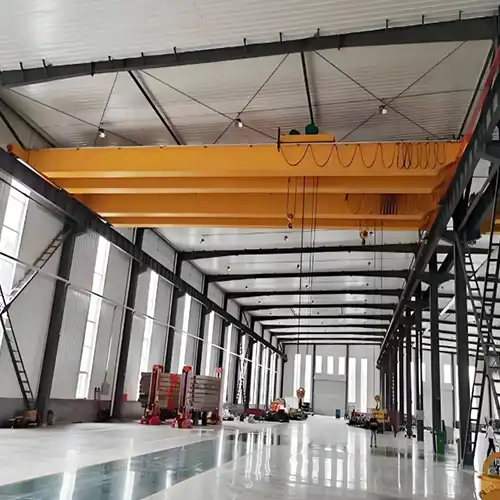
Low Profile Overhead Crane Selection Key Factors
Choosing the right low-profile crane involves considering price, span, lifting height, and space to optimize performance and costs.
| Crane Type | Low Profile / Low Headroom Overhead Bridge Crane; Single Girder for 1–20 ton and Double Girder for 20 ton+; top-running or underhung; ISO A3–A8 working duty; low-headroom hoist; pendant/radio/cabin control; 380/400/415 V, 3 Ph, 50 Hz |
| Crane Capacity | Typically 1–100 ton+ depending on crane configuration; 1–20 ton single girder and 20 ton+ double girder configurations |
| Span Length | Typically 7.5–35 m+; customized to runway spacing, building width and required coverage |
| Lifting Height | Typically 3–30 m+; selected according to required hook height and available building clearance |
| Coverage Area Type | Low-ceiling workshops, existing factories, warehouses, production bays, maintenance shops and buildings where vertical clearance is limited |
| Application | Material handling in low-ceiling factories, workshops, warehouses, machinery plants, manufacturing lines, maintenance areas and space-limited industrial buildings |
| Certifications | CE / ISO / SGS / Other third-party inspection |
| Customization | Headroom: Low-Headroom / Ultra-Low-Headroom ·Span: 7.5–35 m+ · Lift: 3–30 m+ · Hoist: Low-Headroom Wire Rope Hoist / European Hoist / Open Winch · Top Running / Underhung · Environment: Indoor / Outdoor / Heavy-Duty / Hazardous |
Crane Manufacturer: Yuantai Cranes – 30+ Years Professional Crane Manufacturer from China
Category: Featured
Tags: lowheadroomcrane
Your Trusted Low Profile Crane Manufacturer & Supplier
Low Profile Overhead Crane Selection Key Factors
Price, Span, Lifting Height, and Your Space
Choosing the right low-profile crane involves considering price, span, lifting height, and space to optimize performance and costs.
The Impact of Span Length on Crane Pricing
What is Span Length?
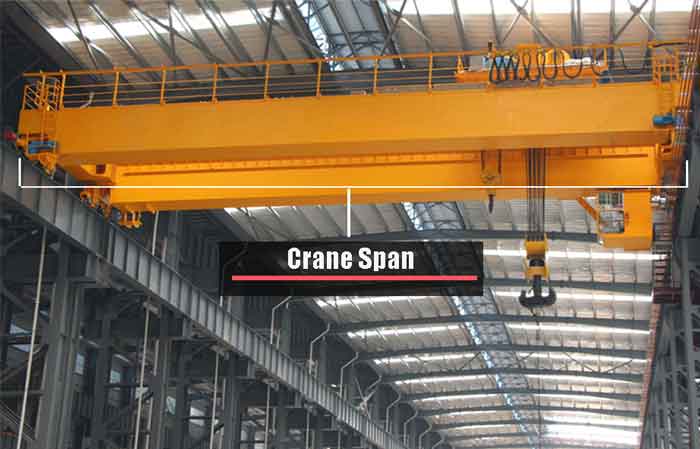
The span of a crane is the distance between its two end supports. It defines how far the crane can reach across your facility. A wider span allows the crane to cover more ground, making it ideal for moving heavy loads across larger areas.
The Impact of Span Length on Crane Pricing
What is Span Length?
The span of a crane is the distance between its two end supports. It defines how far the crane can reach across your facility. A wider span allows the crane to cover more ground, making it ideal for moving heavy loads across larger areas.
How Span Affects Pricing
- Larger Span = Higher Costs: The wider the span, the more weight and stress the crane has to handle. To support this, the crane's structure must be stronger, which increases costs.
- Stronger Materials: With a larger span, you need more robust materials, such as thicker steel and stronger beams, to ensure the crane can carry the load safely. This raises the material costs significantly.
- Increased Power Requirements: As the span gets bigger, the crane may require more powerful motors and advanced control systems. These components add to the price, as they need to be designed to handle the extra load and distance.
Buyer Tip
- Avoid Overbuying: It's tempting to go for a larger span, but choosing a span that's too big will only add unnecessary costs. Make sure the span matches your facility's needs.
- Balance is Key: While you want to cover a good amount of space, going too large may end up costing more without providing additional value. Consider the actual area you need to reach, not just what seems ideal.
Choosing the right span is about balancing your operational needs with the available space. A properly selected span ensures you're not paying for more than you need, while still achieving maximum efficiency.
Crane Weight and Material Costs: What to Consider
The Role of Crane Weight
The weight of a crane plays a crucial role in its overall cost. Heavier cranes are built with more material, which means they require stronger components and more powerful motors. This not only increases the base price of the crane but also affects other factors, like energy consumption and maintenance.
- More Material Needed: A heavier crane requires more steel, stronger girders, and additional structural support to ensure it can handle the weight.
- Stronger Motors and Components: Heavier cranes often need motors with higher power outputs, as well as specialized components to manage the added strain. This raises the manufacturing cost.
- Increased Energy Use: Heavier cranes may consume more energy, which can affect the long-term operational costs. This is something buyers should keep in mind when calculating the total cost of ownership.
Installation Costs
Not only does the weight of the crane affect its initial price, but it also impacts the installation process. Heavier cranes are more difficult to install and typically require specialized equipment, skilled labor, and more time for assembly.
- Specialized Equipment: Installing a heavy crane may require cranes or forklifts with higher lifting capacities, along with other heavy-duty tools.
- Skilled Labor: The installation team must have experience working with heavier equipment, which can add to labor costs.
- Facility Modifications: Depending on the weight, your facility may need additional modifications, such as reinforced floors or stronger foundation supports, to safely accommodate the crane.
Buyer Tip
- Match the Crane Weight to Your Needs: Before purchasing, make sure you carefully assess the weight of the crane against the load requirements in your facility.
- Avoid Over-Specifying: Don't purchase a heavier crane than necessary. Over-specifying the crane's weight increases upfront costs and leads to higher installation and energy expenses.
- Consider Installation and Facility Readiness: Factor in the cost of installation and any required facility modifications. A heavier crane could require more work to get up and running.
By carefully evaluating your load requirements and considering the total costs—including installation and energy use—you can make a more cost-effective choice without sacrificing crane performance.
Choosing the Right Crane Lifting Height for Your Facility
What is Crane Height?
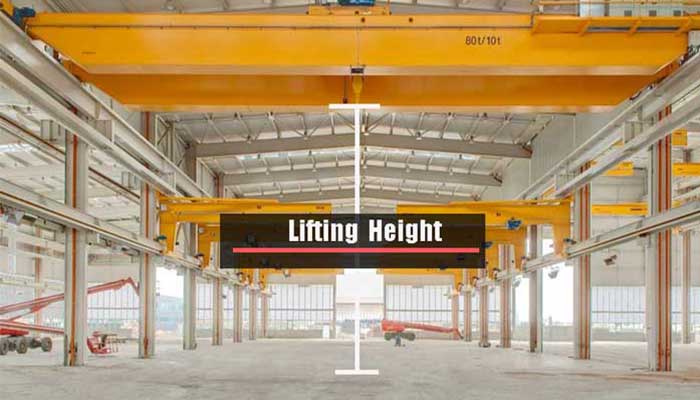
Crane lifting height refers to the vertical distance from the ground to the crane's lifting point. Essentially, it's how high the crane can lift a load. The taller the height crane, the more headroom it needs in your facility.
Price and Space Optimization
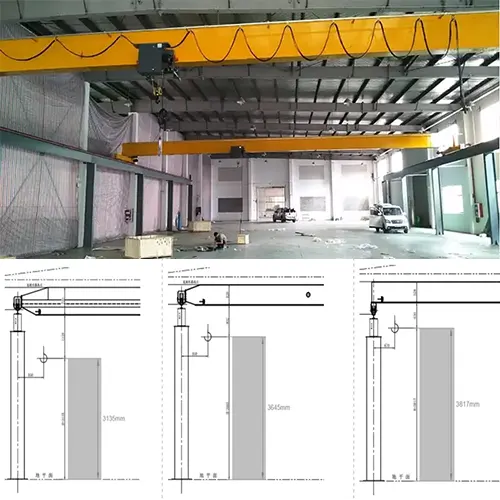
- Low-Headroom Cranes: If your facility has limited vertical clearance, low-headroom cranes are a good choice. They are designed to maximize the available space by minimizing the crane's height, allowing for more efficient use of the area.
- Higher Costs: However, low-headroom cranes tend to cost more due to their specialized design and engineering. The components used to make these cranes compact and efficient are often more advanced and expensive.
Buyer Tip
- Limited Ceiling Height? Consider Low-Headroom Cranes: If your facility's ceiling height is restricted, a low-headroom crane can be a good investment, though it may cost more upfront.
- Plan for Space: When selecting a crane, ensure that your facility can accommodate the required headroom. If vertical space is not an issue, a standard crane may save you money.
Choosing the right crane height is all about finding a balance between cost, space, and efficiency. If your facility has limited headroom, a low-headroom crane will maximize your available space, but be prepared for the added cost.
The Role of Hoist Weight and Type in Crane Cost
Why Hoist Weight Matters
The weight and type of the hoist are crucial factors in determining a crane's overall performance, energy consumption, and cost.
- Heavier Hoists: If the hoist is heavier, it requires more powerful motors and stronger components to handle the load. This results in higher upfront costs.
- Energy Consumption: A heavier hoist may also consume more energy during operation, increasing long-term operating costs.
- Stronger Components: The need for more robust control systems and lifting mechanisms means the overall crane cost rises with a heavier hoist.
Customization for Specific Tasks
- Specialized Hoists: Some tasks, like lifting heavy or irregularly shaped loads, require customized hoists. These custom hoists are tailored to ensure optimal performance, but they add to the crane's cost.
- Why Customization Matters: Custom hoists may have unique features, such as specialized hooks, extended reach, or adjustable lifting speeds, all of which can be critical for specific jobs but come at a premium price.
Buyer Tip
- Match Hoist to Load Requirements: To avoid overpaying, ensure that the hoist's weight and specifications match the types of loads you plan to lift.
- Don't Over-Specify: Choosing a hoist that's too powerful for your needs can result in unnecessary costs, both in the initial purchase and over time.
Selecting the right hoist for your crane is essential for balancing performance and cost. By aligning hoist specifications with your load requirements, you can avoid paying for features or power you don't need, while ensuring efficient and reliable lifting performance.
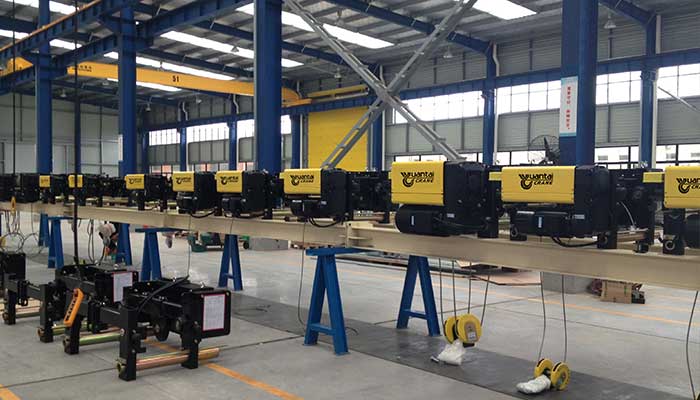
Low headroom electric hoist for single girder low headroom crane
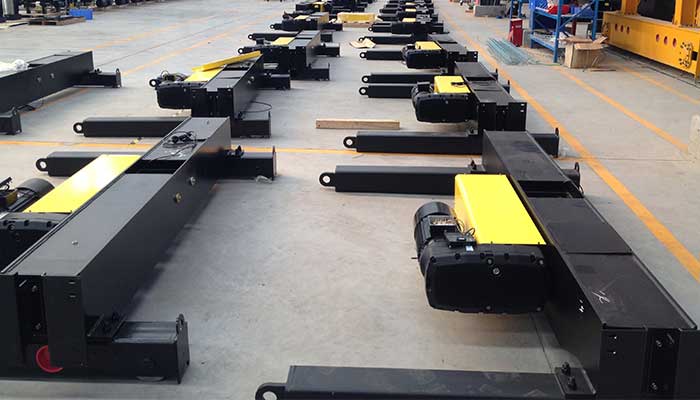
low headroom hoist for double girder low headroom crane
Low Headroom vs. Traditional Cranes: Which is Right for You?
Low-Headroom Cranes
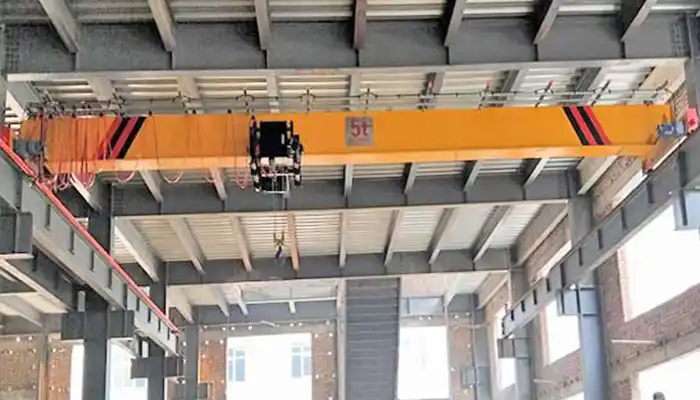
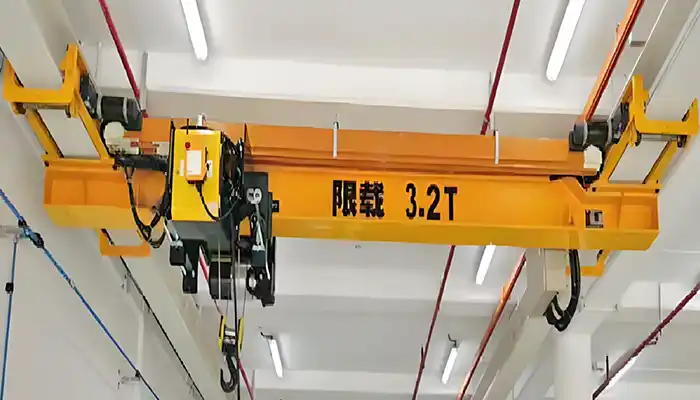
- Designed for Limited Vertical Space: Low-headroom cranes are ideal for facilities where ceiling height is a constraint. Their compact design maximizes available space while still providing effective lifting capabilities.
- Higher Cost: Due to their specialized engineering and design, low-headroom cranes tend to be more expensive. The added cost comes from using advanced components and structural modifications to reduce the crane's height without compromising performance.
Traditional Cranes
- Cost-Effective: Traditional cranes are simpler in design and are usually more affordable compared to low-headroom models. They work well in facilities with adequate ceiling height.
- Limited to Taller Spaces: These cranes are not suitable for environments with low ceiling clearance since they require more vertical space for their operation.
Buyer Tip
- Evaluate Your Facility's Ceiling Height: If you have ample vertical clearance, opting for a traditional crane can save you a significant amount of money. It's a great choice for environments where height isn't a limiting factor.
Deciding between a low-headroom crane and a traditional crane comes down to the available space in your facility. If you have plenty of ceiling height, the traditional crane is a more affordable and efficient option. However, if vertical space is limited, a low-headroom crane may be the better choice for optimizing space.
How Larger Span and Higher Capacity Impact Total Cost of Ownership
What is Total Cost of Ownership (TCO)?
Total Cost of Ownership (TCO) refers to the full cost of owning and operating a crane over its entire lifespan. This includes not only the initial purchase price but also ongoing expenses like maintenance, energy consumption, and repairs. TCO gives you a clearer picture of the long-term costs associated with your crane investment.
Impact of Larger Span and Capacity
- Higher Initial Costs: Cranes with larger spans and higher lifting capacities typically come with a higher upfront cost. This is because the design, materials, and components needed to support larger spans and heavier loads are more expensive.
- Increased Maintenance and Repairs: With larger spans and higher capacities, cranes are subject to more wear and tear. This leads to higher maintenance costs over time, as well as more frequent repairs.
- Higher Energy Consumption: Cranes that handle larger loads or cover wider areas often require more powerful motors and more energy to operate, increasing electricity costs.
Buyer Tip
- Think Long-Term: When selecting a crane, it's important to not only consider the initial purchase price but also the long-term operational costs. A larger span or higher capacity might seem like a good idea for handling heavy loads, but it could significantly increase your TCO. Weigh these long-term expenses carefully to make a more informed decision.
By factoring in the TCO, you can better assess which crane will provide the most cost-effective solution over its lifetime. While larger spans and higher capacities might offer certain advantages, they can lead to higher costs in the long run, making it crucial to balance immediate needs with future expenses.
Installation Costs: Size and Complexity Matter
Installation Requirements
Larger cranes with higher capacities require more time, skilled labor, and special equipment for installation. The bigger the crane, the more complex the installation process becomes. This means additional labor costs and the need for equipment like larger cranes or hoists to help position the new crane.
Facility Modifications
You might need to make changes to your facility to accommodate the new crane. Some examples of modifications include:
- Reinforcing the foundation to support the added weight.
- Upgrading electrical systems to meet higher power demands.
- Increasing ceiling height or creating additional space for proper crane movement.
Buyer Tip
Before you decide on a crane, check if your facility can handle the size and installation requirements. Make sure there's enough room and structural support for the crane. It's also important to budget for any facility upgrades that might be needed to ensure smooth installation.
Balancing Power and Load: Choosing the Right Crane for Efficiency
Matching Power to Load
Choosing the right crane isn't just about picking one with a large lifting capacity. It's essential to select a crane that matches the actual load requirements in your facility.
- Over-Specifying Power: If the crane's lifting capacity is far higher than what's needed, it can lead to wasted energy. The crane will consume more power than necessary for routine tasks.
- Under-Specifying Power: Conversely, if the crane's lifting capacity is too low for the intended loads, it could cause performance issues, including difficulty lifting heavier loads. This can also create safety hazards and reduce the crane's lifespan.
Matching the crane's power capacity to the load you intend to lift is the key to ensuring that it operates optimally without wasting resources.
Energy Efficiency
Energy efficiency plays a crucial role in crane performance and long-term operational costs. By selecting a crane that aligns with the specific weight of the loads you need to lift, you can reduce unnecessary energy consumption.
- Optimal Performance: A crane that's properly powered for its tasks will consume less energy, run smoothly, and avoid overloading. This helps in maintaining its efficiency throughout its operational life.
- Lower Energy Bills: When power consumption is matched to the task, you prevent excessive energy use, leading to lower electricity bills over time.
Buyer Tip
Before making your purchase, assess the types of loads you plan to move and their average weight. Choose a crane that has just the right power to lift those loads. There's no need to overpay for extra lifting capacity you won't use regularly. Balancing the crane's power and efficiency will lead to better overall performance and significant savings in energy costs.
Conclusion: Making an Informed Crane Purchase
When it comes to selecting an overhead crane, there's much more to consider than just the initial cost. To make the best decision, buyers need to evaluate factors like span, weight, hoist specifications, and crane height. These elements not only impact the upfront price but also affect the long-term operational expenses and overall efficiency.
By carefully balancing these factors, you can optimize the crane's performance, minimize the total cost of ownership, and achieve the best return on investment.
Key Recommendations:
- Choose the Right Span and Crane Size: Select a crane with the appropriate span and size that aligns with your operational requirements and available space. This will help avoid unnecessary costs and maximize efficiency.
- Match Hoist Capacity to Load Requirements: Ensure the hoist capacity matches your load handling needs. Avoid overspending on excessive capacity that won't be used regularly.
- Consider Installation and Facility Modifications: Factor in installation costs and any necessary facility modifications, like reinforced foundations or upgraded electrical systems, as these can increase your overall budget.
- Think About Long-Term Costs: In addition to the initial purchase price, consider ongoing expenses like maintenance, energy consumption, and repairs. Balancing these costs will help you make a more cost-effective decision in the long run.
By making a well-informed decision based on these considerations, you can ensure that your crane will meet both your current and future needs efficiently and economically.


Yuantai Cranes
Overhead Crane Manufacturer with CE, ISO, SGS, CNEX Certificates.
- Main Specifications - Capacity: 0.5–550 tons | Span: up to 40m | Speed: 0.8–12 m/min | Duty: A3–A7 | Power: 380–690V, 50/60Hz | Control: pendant/remote/cabin
- Full engineering: FEA/PLC/VFD + in-house build + global delivery + on-site support, for workshops, factories, EPC contractors, industrial projects, etc.
- Support: design, manufacturing, testing, service – end-to-end, customized lifting solutions worldwide.
How to Get an Accurate Crane Price for Your Application?
Tips: Copy the spec list, fill in your details, and paste it into the form on the right/ down-below for a quick price.
- Crane type:_____ . (e.g., overhead crane, gantry crane, jib crane)
- Max weight to lift:_____ tons. (e.g., 2t, 5t, 10t, 20t, 50t)
- Lifting height:_____ m. (How high does the hook need to reach?
- Workshop width (span):_____ m . (Distance between the two crane rails)
- Travel distance:_____ m . (How long does the crane need to move along the runway?)
- Control type:_____. (Pendant / remote / cabin Control)
- Power supply:_____. (Local voltage & frequency – e.g., 380V, 50Hz, 3-phase)
- What will it be used for?_____ (e.g., steel fabrication, concrete products, mold handling, general manufacturing, etc.)
- Any special requirements?_____ (e.g., extreme temperature, dusty or explosive environment, special paint color, etc.)
Just leave a message via the contact form and our hoist and crane engineer will contact you with in 24working hours.
Get Your Custom Quote–Quick & Easy
Fill in what you know. Skip what you don't – we'll help.Any question will be reply with 24 working hours