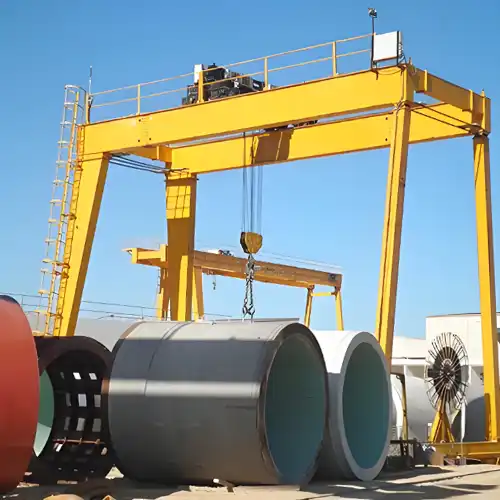
How to Select Right Industrial Gantry Crane for Outdoor Lifting ?
Explore essential factors to consider when choosing an industrial gantry crane for outdoor lifting, ensuring efficiency, safety, and optimal performance.
| Application | Material handling, lifting, positioning, assembly, maintenance, loading/unloading, |
| Certifications | CE / ISO / SGS / Other third-party inspection |
| Customization | Customized material handling cranes solutions available for indoor, outdoor, hazardous, corrosive, cleanroom, and heavy-duty industrial applications. |
Crane Manufacturer: Yuantai Cranes – 30+ Years Professional Crane Manufacturer from China
Category: Featured
Tags: gantrycraneforsale,industrialcrane
Your Trusted Industrial Gantry Crane Manufacturer & Supplier
Selecting the Ideal Industrial Gantry Crane for Outdoor Lifting
Choosing the Right Industrial Gantry Crane: Key Factors for Outdoor Lifting Operations
Explore essential factors to consider when choosing an industrial gantry crane for outdoor lifting, ensuring efficiency, safety, and optimal performance.
What Are Industrial Gantry Cranes? Industrial gantry cranes are heavy-duty lifting machines commonly used in outdoor environments where mobility and high load capacities are required. These cranes consist of a horizontal bridge supported by two vertical legs that move along rails or on rubber tires, depending on the application. Unlike traditional overhead cranes, which are fixed to a building structure, gantry cranes offer mobility, making them ideal for handling large, bulky materials across wide open spaces.
The industrial gantry cranes come in two primary types:
- Single girder cranes: These cranes have a single horizontal beam and are typically used for lighter lifting tasks. They are simpler in design and more cost-effective for projects with lower weight capacity requirements.
- Double girder cranes: These cranes feature two beams for enhanced stability and increased load capacity. They are better suited for heavy-duty applications where the crane needs to lift larger and heavier materials, such as steel components, construction machinery, and large shipping containers.
Industrial gantry cranes are widely used in industries like construction, shipbuilding, and manufacturing due to their versatility and ability to handle a wide variety of materials in open-air environments.
Importance of Gantry Cranes in Outdoor Lifting Operations
In outdoor environments, gantry cranes play an essential role in the efficient transportation of heavy and oversized materials. Their mobility allows them to be used in various industries such as shipyards, construction sites, and manufacturing plants, where large-scale lifting is required. The ability to move freely across expansive areas and lift heavy loads precisely and safely is crucial in these environments, as traditional cranes may lack the required flexibility.
Gantry cranes are designed to endure harsh outdoor conditions, including exposure to rain, wind, and extreme temperatures. They are engineered to function reliably in these settings, often incorporating weather-resistant materials such as galvanized steel or anti-corrosion coatings to prevent damage from the elements. Whether moving massive ship parts in a shipyard or handling construction materials on a job site, industrial gantry cranes help ensure that lifting tasks are performed safely, efficiently, and without delay.
Why Choosing the Right Industrial Gantry Crane Matters
Maximizing Productivity and Efficiency
Selecting the appropriate gantry crane is critical to maximizing productivity on outdoor lifting operations. The correct crane ensures that tasks are completed quickly and efficiently, reducing the time spent on each lift and eliminating the need for additional equipment. By choosing a crane that meets the load and span requirements, lifting tasks can be performed with greater precision and speed, leading to better overall workflow on the job site.
A well-selected crane also reduces wear and tear on both the equipment and the personnel. For instance, if a crane is overworked or under-capacity for a specific job, it may break down more frequently, leading to costly repairs and downtime. Choosing a crane that is appropriately matched to the job's specific requirements, such as the maximum lifting capacity, height, and span, helps prevent equipment malfunctions, ensuring continuous, reliable operation. Over time, this proactive approach leads to reduced operational costs and improved bottom-line results.
Safety Considerations for Outdoor Environments
Safety is a top priority in any lifting operation, and this is especially true for outdoor environments where conditions can vary widely. Choosing the right industrial gantry crane can significantly reduce the risk of accidents caused by crane malfunction, overloads, or environmental factors. Overloading a crane is one of the most common causes of crane accidents. Selecting a crane with an appropriate load capacity prevents these types of accidents and helps maintain safety standards.
Modern gantry cranes come equipped with a variety of safety features that can help prevent accidents and enhance overall site safety. Features like overload protection, anti-collision sensors, and emergency stop buttons ensure that operators have control over the crane, even in hazardous situations. Additionally, gantry cranes designed for outdoor use typically include weatherproofing and anti-corrosion treatments to enhance durability, ensuring that cranes remain reliable in challenging environmental conditions. These safety features work together to ensure the well-being of workers, the structural integrity of the crane, and the safety of the materials being handled.
Choosing the Right Crane for Specific Environments
Each outdoor environment presents unique challenges, which is why selecting the right gantry crane for a specific job is so important. Key environmental factors, such as terrain, weather, and load types, must be taken into account when making this decision.
- Terrain: The ground conditions of the site will determine whether a crane needs to be mobile or fixed. For sites with uneven terrain or expansive areas, a mobile gantry crane with rubber tires may be required to navigate the site effectively. Fixed gantry cranes, often mounted on rails, are better suited to flatter, controlled environments where large, continuous lifts are needed.
- Weather conditions: Outdoor cranes must be capable of handling exposure to extreme weather conditions. For instance, shipyards and coastal environments require cranes with corrosion-resistant features to withstand exposure to saltwater and humidity. In areas with frequent rain or high winds, cranes may need to be built with enhanced wind resistance and waterproofing to prevent failure during operation.
- Load requirements: The crane's lifting capacity must align with the load demands of the site. If a site frequently handles extremely heavy materials, a double girder gantry crane with a higher load capacity and greater stability may be necessary. Additionally, the crane's lifting height and span must match the needs of the operation to ensure efficient material handling and transportation.
By taking these factors into account, businesses can ensure that the gantry crane they select is well-suited to the specific challenges of the environment, improving both operational efficiency and safety.
Choosing the right industrial gantry crane is essential for optimizing lifting operations in outdoor environments. By carefully considering factors such as load capacity, terrain, weather conditions, and safety features, businesses can select a crane that enhances productivity, reduces safety risks, and ensures long-term reliability. Whether working on a construction site, in a shipyard, or in any other outdoor industrial setting, selecting the right crane for the job can lead to smoother operations, lower maintenance costs, and better overall performance. Proper crane selection ensures that outdoor lifting tasks are completed efficiently, safely, and with minimal disruption, making it a critical component of any industrial operation.
Industrial Gantry Cranes for Outdoor Lifting Operations
Gantry cranes are designed to perform heavy lifting tasks in outdoor environments where mobility, stability, and high lifting capacity are essential. Their versatility makes them the preferred choice for various industries, including shipyards, construction sites, and warehouses. Depending on the specific requirements of the operation, different types of gantry cranes are available, each offering distinct advantages for specific lifting tasks.
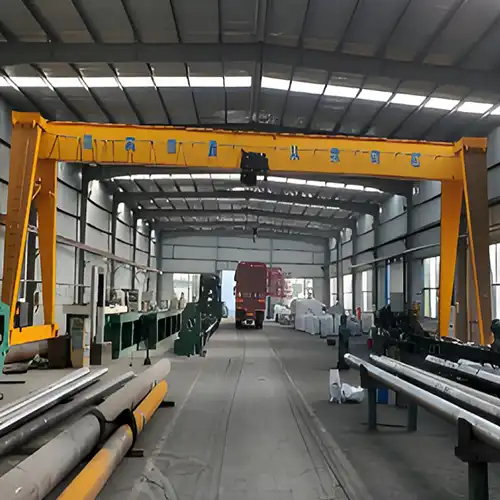
Single Girder Industrial Gantry Cranes
Single girder gantry cranes are a cost-effective solution for light to medium-duty outdoor lifting tasks. They are characterized by a single horizontal beam (girder) that supports the lifting mechanism.
- Load capacity: Typically ranges from 1 to 20 tons, making them ideal for lighter applications.
- Span: These cranes have a limited span but are still highly effective for shorter to mid-range distances.
- Design: The design is simpler and more compact than double girder cranes, allowing for easier installation and lower operational costs.
Single girder cranes are commonly used in environments where frequent and lighter material handling is required, such as smaller construction projects, warehouses, or smaller shipyard tasks.
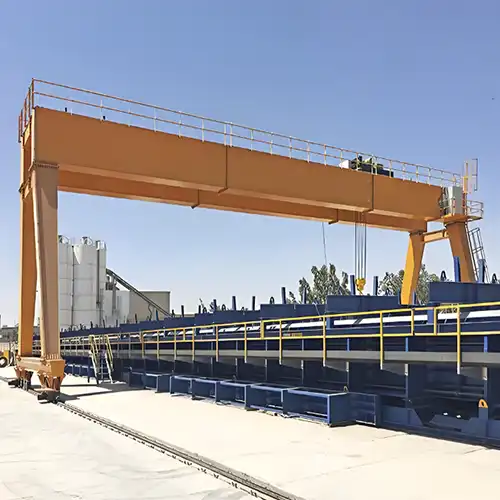
Double Girder Industrial Gantry Cranes
Double girder gantry cranes are built with two horizontal beams, providing greater stability and capacity for heavy-duty lifting operations.
- Load capacity: Typically ranges from 10 tons to 500 tons, suitable for heavy-duty applications.
- Span: They offer greater span capabilities than single girder cranes, making them ideal for larger work areas.
- Design: The more robust design allows for higher lifting speeds, smoother operation, and greater precision, especially in heavy lifting.
These cranes are commonly used in industries that require lifting large, heavy materials, such as construction, shipyards, and manufacturing facilities. They can handle materials like steel beams, machinery, and large components with ease.
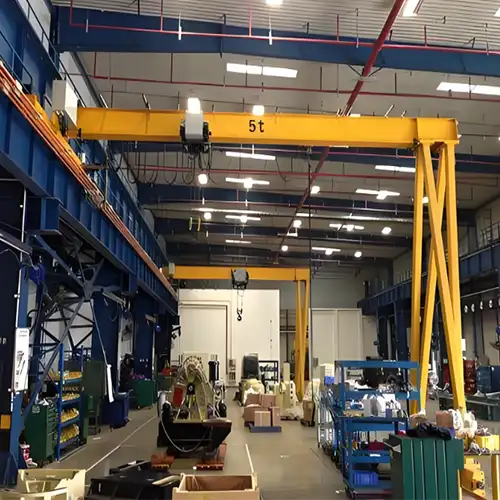
Semi-gantry cranes are a hybrid design, combining features of both overhead cranes and gantry cranes. They have a single track or rail mounted on one side and wheels or legs on the other.
- Load capacity: Varies but typically ranges from 5 to 50 tons.
- Span: Semi-gantry cranes are ideal for locations with limited space or where only part of the crane needs to move along a track.
- Design: This design provides the flexibility to move loads over shorter distances while maintaining the ability to lift heavy items.
Semi-gantry cranes are often used in areas where overhead clearance is limited or when only a partial gantry system is required, such as in certain manufacturing processes or workshops.
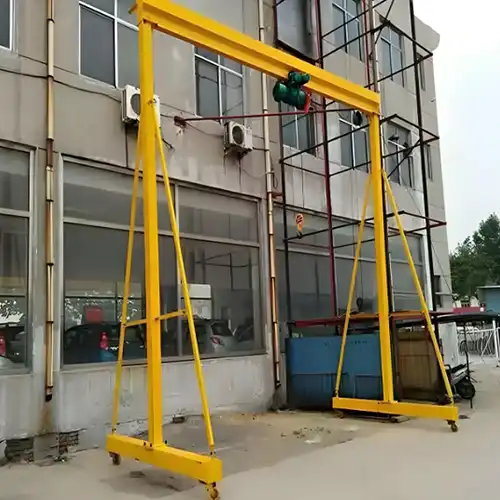
Portable gantry cranes are lightweight, mobile cranes designed for small to medium lifting tasks that require easy relocation.
- Load capacity: Usually ranges from 500 kg to 10 tons.
- Span: Typically smaller spans, making them suitable for confined spaces or localized lifting tasks.
- Design: These cranes are equipped with wheels or casters, allowing them to be moved around job sites easily. They are often adjustable in height and width to suit different lifting needs.
These cranes are widely used in warehouses, workshops, and construction sites where frequent relocation is needed for handling smaller loads, such as machinery or building materials.
Differences in Load Capacity, Span, and Design
- Load Capacity: The primary difference between the types of gantry cranes lies in their lifting capacity. Single girder cranes are more suited for lighter loads, while double girder cranes are built for heavy-duty lifting tasks. Portable and semi-gantry cranes have a more flexible range, suitable for lighter, localized applications.
- Span: Double girder cranes offer the greatest span, enabling them to handle larger areas. Single girder cranes, though more compact, are best suited for narrower work areas. Portable gantry cranes have the smallest spans, making them ideal for confined spaces.
- Design: Single girder cranes are simpler and more affordable but offer less lifting capacity. Double girder cranes are more complex but provide better performance, stability, and lifting precision. Semi-gantry and portable cranes offer specialized designs for specific site conditions or mobility requirements.
Common Outdoor Applications of Industrial Gantry Cranes
Heavy-Duty Lifting in Shipyards, Construction Sites, and Warehouses
Industrial gantry cranes play a vital role in outdoor lifting operations across a wide range of industries, including shipbuilding, construction, and logistics. These cranes are designed to handle heavy loads and move them across vast outdoor spaces, making them ideal for tasks requiring the transportation of large, bulky objects.
- Shipyards: In shipbuilding, gantry cranes are essential for lifting and positioning large steel components, ship parts, and heavy machinery. These cranes must be capable of handling irregularly shaped and heavy loads, such as hull sections, large machinery, and ship components. Their stability and mobility are critical in environments with limited space and the need for precise load handling.
- Construction Sites: Gantry cranes are commonly used on construction sites for hoisting oversized materials such as steel beams, precast concrete, and heavy construction equipment. These cranes improve efficiency by reducing the need for manual labor, enabling quick and safe material transport, and supporting large-scale projects such as bridges, skyscrapers, and highways.
- Warehouses and Distribution Centers: In logistics and warehouse operations, gantry cranes are instrumental in moving heavy pallets, shipping containers, and other large materials across expansive outdoor yards. Their ability to cover long distances and handle heavy loads reduces manual labor, speeds up operations, and improves inventory management.
Handling Oversized Loads: Construction Materials, Equipment, and Shipping Containers
Outdoor lifting operations often involve transporting oversized loads that require robust equipment to handle safely. Gantry cranes excel at these tasks, offering a range of benefits for industries that require lifting and moving large, heavy materials.
- Construction Materials: Industrial gantry cranes are particularly useful in moving heavy construction materials such as steel beams, concrete panels, and prefabricated structures. These materials can be cumbersome and difficult to handle, but with the right gantry crane, they can be lifted and positioned accurately without damage. This ensures that construction projects stay on schedule and within budget.
- Heavy Equipment: Gantry cranes are also used to lift large and heavy machinery, such as bulldozers, generators, cranes, and other essential construction or industrial equipment. These cranes are capable of moving items that are too heavy for traditional lifting methods, ensuring that the necessary equipment is readily available when needed, thereby preventing delays in construction and industrial processes.
- Shipping Containers: In port and dock operations, gantry cranes are the backbone of container handling. These cranes are used to load and unload shipping containers from ships, allowing for rapid turnaround times and minimizing port congestion. Their ability to efficiently move large containers with precision is essential for maintaining the flow of global trade.
Efficient Outdoor Lifting for Increased Productivity
Choosing the right gantry crane for heavy-duty outdoor lifting operations ensures faster, safer, and more efficient handling of materials. Whether moving steel beams on a construction site or unloading shipping containers at a port, gantry cranes significantly enhance productivity by streamlining material handling tasks. Their ability to handle oversized loads with precision, safety, and speed makes them indispensable in a variety of industrial and commercial applications. By selecting the proper crane type for specific tasks, operations can achieve higher efficiency, reduced operational costs, and improved worker safety.
Key Factors in Choosing the Right Gantry Crane for Outdoor Operations
When selecting a gantry crane for outdoor lifting operations, several key factors need to be carefully considered to ensure that the crane meets the specific requirements of the site, load, and environment. These factors include load capacity, span and lifting height, as well as terrain and environmental conditions. By evaluating these elements, businesses can optimize crane performance, enhance safety, and ensure cost-effectiveness in their operations.
Load Capacity Requirements
Calculating Load Weight and Types of Objects
The first and most important consideration when choosing a gantry crane is the load capacity. Load capacity determines the maximum weight a crane can safely lift, and it must be carefully matched to the weight and types of objects that will be handled.
- Load weight: Calculate the weight of typical loads that the crane will be required to move, including materials such as steel beams, construction equipment, and shipping containers. It's important to know not only the static weight of the load but also any dynamic forces that may come into play during lifting, such as the swinging or jolting of the load.
- Types of objects: The design of the gantry crane should align with the type of materials it will handle. For example, a crane lifting heavy machinery or large steel components will need a higher load capacity and more precise control to avoid damage to the equipment or surroundings. Cranes handling shipping containers might need to be designed with hooks or spreaders that are compatible with container lifting.
Choosing Based on Maximum Lifting Capacity
Once the load weight and types of objects are identified, the next step is to select a crane that can comfortably handle the maximum expected load. Industrial gantry cranes come in a wide range of capacities, typically ranging from 1 ton to 500 tons. Common load capacities include:
- 10 tons: Ideal for medium-duty tasks, such as lifting smaller machinery or construction materials.
- 20 tons: Suitable for larger and heavier components found in construction or manufacturing operations.
- 50 tons or more: Required for heavy-duty applications, such as shipbuilding, large-scale construction, or port operations.
Overestimating the load capacity can result in unnecessary costs, but underestimating it can lead to safety risks, reduced efficiency, or even equipment failure. Therefore, the crane's maximum lifting capacity should be chosen based on the heaviest load expected during operations, ensuring a safety margin for extra-heavy or unexpected loads.
Span and Lifting Height
Determining Span Width to Cover the Area
The span of a gantry crane refers to the distance between its two vertical supports (legs), and it is crucial to determine the correct span to ensure the crane can cover the work area effectively.
- Span width: In outdoor operations, gantry cranes often need to span wide areas to reach different parts of a construction site or warehouse. This is especially important when the crane must move materials across large distances, such as in shipyards or construction yards. The span should be wide enough to handle the largest load to be lifted, but not so wide that it reduces stability or compromises efficiency.
- Site-specific considerations: The span will also depend on the physical layout of the job site. For instance, if the site has narrow aisles or limited clearance, a smaller span might be necessary, whereas open spaces would require a wider span. It's also important to consider height clearance for lifting objects over obstacles like buildings, equipment, or other cranes.
Selecting the right span ensures that the crane can move freely and handle materials within the designated area without obstruction or difficulty.
Importance of Lifting Height for Reaching Overhead Obstacles or Structures
Lifting height is another essential factor, particularly in outdoor environments where obstacles may obstruct the crane's lifting path.
- Reaching overhead obstacles: In outdoor operations, cranes often need to lift materials over obstacles such as structures, buildings, or other equipment. If the crane's lifting height is insufficient, it may not be able to handle materials that need to be lifted to specific elevations or over existing structures. For example, in shipyards, cranes need to lift large ship parts over other parts of the vessel or machinery.
- Customization of lifting height: Some gantry cranes are designed with adjustable heights, which allow operators to modify the lifting height based on the needs of the operation. For projects where precise lifting to specific heights is required, it's crucial to select a crane with the right height adjustment capabilities.
The lifting height should be chosen based on both the maximum load height and the necessary clearance required to reach above obstacles or structures in the working environment.
Environment and Terrain Considerations
Handling Cranes on Rough or Uneven Ground
Outdoor lifting operations are often performed on challenging terrains, which can affect the crane's stability and overall performance. When selecting a gantry crane, it is essential to account for how the crane will perform on rough or uneven ground.
- Rough terrain: For operations where the ground is not flat, such as construction sites or shipyards, the crane may need to be equipped with wheels or tires capable of navigating uneven surfaces. This is particularly important when working in areas where the surface can shift or where heavy equipment must be moved over irregular ground.
- Adjustable legs and mobility: Many gantry cranes, especially mobile gantry cranes, are designed with adjustable legs to provide stability on uneven terrain. These cranes also offer the flexibility to move materials across the site, making them ideal for projects that require cranes to be relocated frequently.
When selecting a gantry crane for rough or uneven terrain, consider the type of mobility and stability features needed to ensure safe and efficient operation.
Adapting to Outdoor Conditions (Wind, Rain, Temperature Fluctuations)
Outdoor gantry cranes must be designed to withstand a variety of environmental conditions, including extreme weather and fluctuating temperatures.
- Wind resistance: Strong winds can pose significant risks to lifting operations, especially when handling large or tall loads. Gantry cranes designed for outdoor use should include features that allow them to resist wind forces. This can include wind stoppers or reinforced structures that provide added stability in high winds.
- Rain and temperature fluctuations: Rain and freezing temperatures can affect crane operations by reducing grip, causing corrosion, or causing components to freeze. Cranes used in regions with extreme weather must have weatherproofing and corrosion-resistant materials to ensure safe and reliable operation. Additionally, operators should consider cranes with features like rain shields, waterproof electrical components, and insulated structures to withstand these outdoor conditions.
- Protection from the elements: Anti-corrosion coatings, galvanization, and other protective measures are especially important for cranes operating in coastal areas, ports, or shipyards, where exposure to saltwater accelerates rusting and corrosion.
By choosing a gantry crane with the right environmental adaptations, businesses can ensure smooth operations regardless of outdoor conditions. Ensuring weather resilience and terrain adaptability contributes to the crane's longevity and operational reliability.
Selecting the right gantry crane for outdoor lifting operations requires careful consideration of multiple factors, including load capacity, span and lifting height, and environmental conditions. By accurately assessing the weight of loads, the layout of the work area, and the challenges posed by outdoor conditions, companies can choose a crane that enhances efficiency, safety, and performance. With the right crane, outdoor lifting tasks such as moving heavy construction materials, large machinery, and shipping containers can be accomplished with precision and ease, minimizing downtime and ensuring a successful operation.
Gantry Design: A-Frame Gantry vs. U-Frame Gantry Crane Design
When selecting an industrial gantry crane, understanding the differences between A-Frame gantry cranes and U-Frame gantry cranes is crucial for ensuring you choose the most suitable design for your specific operational needs. Both crane types have their unique features, advantages, and applications depending on the weight, space requirements, and type of lifting tasks.
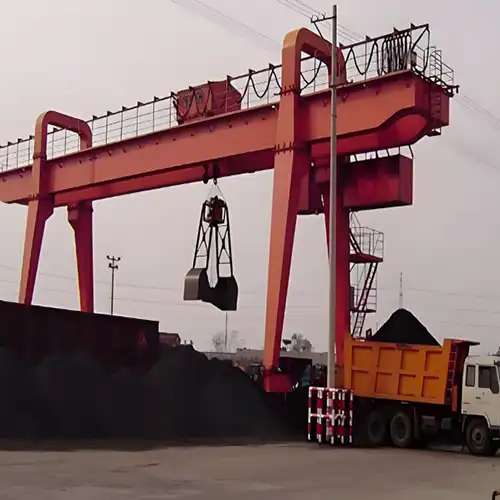
U-Frame Gantry Crane Design
A-Frame Gantry Crane Design
An A-frame gantry crane is named for its triangular "A" shape, which is formed by the two vertical supports (legs) that meet at the top and are connected by a horizontal cross beam (girder). The design is widely recognized for its structural simplicity and versatility, making it ideal for various lifting applications.
Key Features of A-Frame Gantry Cranes:
- Structure: The A-frame structure is supported by two sloped legs that meet at the apex at the top, providing stability. The horizontal beam (girder) extends between the two supports and is where the hoist or lifting mechanism is mounted.
- Load Capacity: A-frame gantry cranes can typically handle medium to heavy loads, with capacities ranging from 1 ton to 100 tons or more, depending on the crane's design and construction.
- Span: These cranes are often used in applications where a significant span (distance between the legs) is needed. The design allows for relatively wide spans, making them suitable for large areas.
- Mobility: A-frame gantry cranes can be either fixed or mobile. Mobile versions come with wheels or casters, enabling them to be moved across job sites or between different locations.
Advantages of A-Frame Gantry Cranes:
- Stability: The "A" shape offers a stable base, making these cranes ideal for heavy-duty applications in outdoor environments like construction sites, warehouses, or shipyards.
- Wide Span: The sloped leg design allows for a wider span compared to other types of cranes, making it ideal for covering large work areas.
- Simplicity and Cost-Effectiveness: A-frame gantry cranes typically have simpler designs, which can make them more affordable and easier to manufacture, install, and maintain.
Common Applications of A-Frame Gantry Cranes:
- Heavy lifting in outdoor applications such as construction, shipyards, and manufacturing plants.
- Ideal for wide-span tasks, such as lifting steel beams, machinery, and large components.
U-Frame Gantry Crane Design
A U-frame gantry crane, as the name suggests, features a U-shaped frame formed by two vertical supports and a horizontal crossbeam, but the legs are typically designed with a more straight, vertical design. This shape makes the crane more compact and is often used in environments where space optimization is key.
Key Features of U-Frame Gantry Cranes:
- Structure: The U-frame design consists of two vertical supports with a crossbeam on top. The legs are usually shorter and vertical compared to the angled legs of the A-frame crane, forming the "U" shape. This design allows for a more compact crane with a lower profile.
- Load Capacity: U-frame gantry cranes can also handle a wide range of loads, from light to heavy, but typically they are more commonly found in medium-duty operations with capacities ranging from 1 ton to 50 tons.
- Span: These cranes tend to have a more limited span compared to A-frame cranes due to the vertical design of the legs. However, their design still allows for relatively good coverage of smaller or more confined work areas.
- Mobility: U-frame gantry cranes can also be designed for mobility, equipped with wheels or casters to allow them to be easily relocated on a job site. Some versions are fixed if the crane will remain in one location.
Advantages of U-Frame Gantry Cranes:
- Compact Design: The U-frame design is more compact and takes up less space, making it suitable for environments with spatial constraints or where a lower profile is needed.
- Cost-Efficiency: The simpler design and fewer materials required for the U-frame make it an economical choice for light to medium-duty lifting applications.
- Space Optimization: With the vertical legs, these cranes fit into spaces where A-frame cranes might not be feasible, especially in smaller industrial settings or workshops.
Common Applications of U-Frame Gantry Cranes:
- Ideal for lifting tasks in warehouses, workshops, and smaller construction sites where space is a concern.
- Frequently used in light-duty applications like lifting machinery, small equipment, and construction materials.
Comparison: A-Frame vs. U-Frame Gantry Crane Design
| Feature | A-Frame Gantry Crane | U-Frame Gantry Crane |
|---|---|---|
| Structure | Two sloped legs forming an "A" shape | Two vertical legs with a horizontal crossbeam forming a "U" |
| Load Capacity | 1 ton to 100 tons or more | 1 ton to 50 tons |
| Span | Larger spans, ideal for wide-area lifting operations | Smaller spans, suitable for confined spaces |
| Stability | Excellent, designed for heavy-duty applications | Good, but less stable for extremely heavy loads |
| Design Complexity | More complex, but suitable for large-scale operations | Simpler and more compact, often used in smaller applications |
| Mobility | Can be fixed or mobile, depending on the application | Can be fixed or mobile, with a more compact footprint |
| Applications | Shipyards, large construction sites, warehouses | Workshops, smaller construction sites, light-duty lifting |
Conclusion
Both A-frame and U-frame gantry cranes are versatile solutions for industrial lifting tasks, but each design has distinct advantages that make it more suitable for certain applications.
- A-frame gantry cranes excel in large-scale, heavy-duty lifting operations where wider spans and greater stability are needed. These cranes are commonly used in shipyards, construction sites, and large manufacturing plants.
- U-frame gantry cranes, with their compact design, are better suited for smaller spaces or applications where light to medium-duty lifting is required. They are ideal for operations in warehouses and workshops where mobility and space optimization are key.
By understanding these design differences, you can choose the right gantry crane for your specific operational needs, optimizing safety, efficiency, and cost-effectiveness.
Travel Mechanism: Rail vs. Rubber-Tired Gantry Cranes
When selecting a gantry crane for outdoor lifting operations, one of the key decisions is the travel mechanism. The two main options available are rail-mounted gantry cranes and rubber-tired gantry cranes. Each offers distinct advantages depending on the application, mobility needs, terrain conditions, and project scope. Below, we compare the two types of gantry cranes in terms of their design, benefits, and ideal use cases.
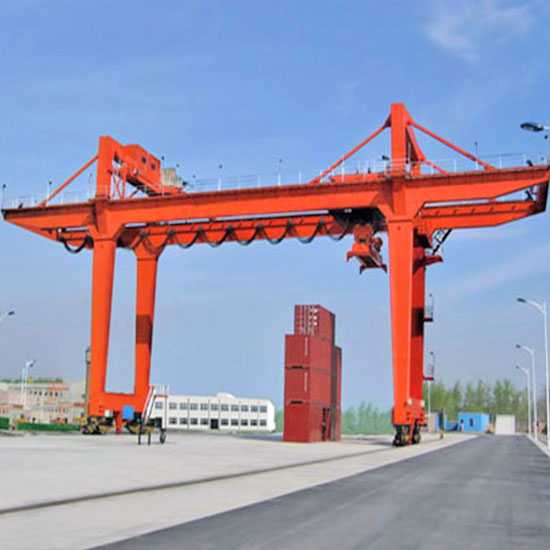
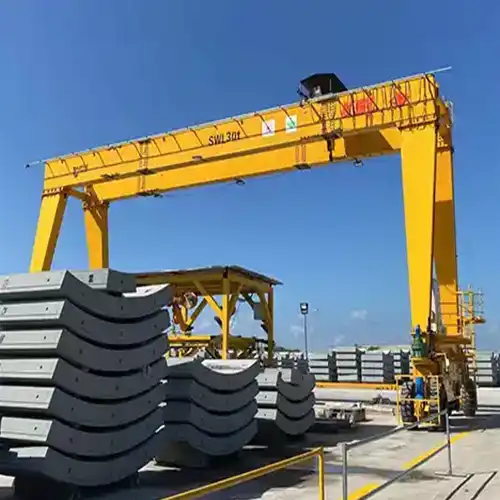
Rail-Mounted Gantry Cranes (RMG)
Rail-mounted gantry cranes are fixed on tracks or rails, offering precise, stable, and high-capacity lifting solutions, particularly suited for large-scale operations where accuracy and consistency are paramount.
Key Features of Rail-Mounted Gantry Cranes:
- Travel Mechanism: The crane moves along permanent steel rails or tracks, which provide a stable and rigid foundation for the lifting operation.
- Load Capacity: Typically higher capacity, with models capable of handling from 10 tons to over 500 tons.
- Span: Designed for larger spans, these cranes can cover wide areas, making them ideal for vast, open spaces such as container yards, large construction sites, and shipyards.
- Stability and Precision: The fixed travel path offers superior stability, which is important for precision in heavy-duty lifting operations.
Advantages of Rail-Mounted Gantry Cranes:
- Stability: The rigid rail system ensures that the crane remains stable during operation, reducing the risk of swaying or misalignment during lifting, especially for heavy loads.
- Precision and Control: Rail-mounted gantry cranes provide greater control over movement, making them ideal for environments requiring precision, such as port terminals and container yards.
- High Lifting Capacity: Because the crane operates along a fixed rail, the structure is designed to bear significant weight, making rail-mounted gantries more suitable for heavy-duty lifting applications.
- Low Maintenance: Since the rails are permanently laid out, the need for constant repositioning and adjustment is reduced, leading to lower maintenance costs.
Limitations:
- Fixed path: Rail-mounted cranes can only operate within the tracks' reach, limiting their ability to be relocated across large sites. This can be problematic on construction sites where cranes need to cover wide areas.
- Installation costs: Installing rail-mounted systems involves significant upfront investment for track laying and foundation work, making them less cost-effective than other systems for smaller or short-term projects.
Common Applications of Rail-Mounted Gantry Cranes:
- Ports and Container Terminals: For the efficient handling of shipping containers, particularly in port logistics.
- Shipyards: For moving large ship sections or heavy equipment.
- Large Industrial Facilities: Where precise lifting over large areas is required, such as steel mills and construction sites.
Rubber-Tired Gantry Cranes (RTG)
Rubber-tired gantry cranes are mobile cranes mounted on wheels, allowing them to move freely across a variety of surfaces without the need for fixed tracks or rails. This provides high flexibility and mobility, making them ideal for sites that require frequent movement or quick repositioning.
Key Features of Rubber-Tired Gantry Cranes:
- Travel Mechanism: These cranes move on rubber tires, making them highly mobile and capable of operating on a variety of surfaces, including asphalt, gravel, and even rough, uneven terrain.
- Load Capacity: Rubber-tired gantry cranes typically handle lighter to medium loads, with capacities ranging from 5 tons to 100 tons.
- Span: Their span is generally narrower than rail-mounted cranes but still large enough to cover typical construction site requirements.
- Mobility: Their primary advantage is mobility; rubber-tired gantry cranes can be easily relocated across job sites or from one area to another without the need for track installation.
Advantages of Rubber-Tired Gantry Cranes:
- Flexibility and Mobility: The ability to move freely without fixed tracks makes these cranes ideal for projects where equipment needs to be relocated frequently, such as construction sites and warehouses.
- Adaptability to Site Conditions: Rubber-tired cranes can operate on various types of terrain, whether it's rough, uneven ground or smooth paved surfaces. This is especially useful for sites with changing or limited infrastructure.
- Lower Initial Cost: Unlike rail-mounted systems, rubber-tired cranes don't require the installation of tracks, which lowers initial setup costs and makes them more affordable in terms of infrastructure.
- Faster Setup and Relocation: Rubber-tired gantry cranes can be quickly deployed and relocated, making them ideal for temporary setups or projects with changing requirements.
Limitations:
- Lower load capacity: Rubber-tired cranes are generally not designed to handle the same heavy loads as rail-mounted cranes, making them less suited for ultra-heavy industrial applications.
- Potential instability: Although mobile, rubber-tired cranes can experience reduced stability when operating on rough or uneven surfaces, requiring careful operation in certain environments like construction sites or shipyards.
Common Applications of Rubber-Tired Gantry Cranes:
- Construction Sites: For moving materials or equipment around job sites with limited infrastructure.
- Warehouses and Distribution Centers: For picking up and moving inventory within a defined area.
- Heavy Lifting in Outdoor Locations: Particularly useful when a crane is needed for a short-term project or one with varying location demands.
Comparison: Rail-Mounted vs. Rubber-Tired Gantry Cranes
| Feature | Rail-Mounted Gantry Cranes (RMG) | Rubber-Tired Gantry Cranes (RTG) |
|---|---|---|
| Travel Mechanism | Operates along fixed tracks or rails | Moves on rubber tires, adaptable to various surfaces |
| Load Capacity | Typically higher, from 10 tons to 500+ tons | Medium to light-duty, generally 5 tons to 100 tons |
| Span | Larger spans, ideal for wide areas | More compact spans, suitable for smaller, confined spaces |
| Mobility | Fixed path, limited movement to the rail area | High mobility, can be relocated across job sites |
| Stability | High stability due to rigid track system | More flexible, but may be less stable with heavier loads |
| Cost | Higher initial cost due to track installation and infrastructure | Lower initial cost, no need for tracks |
| Maintenance | Lower maintenance after installation, less wear and tear | Requires regular tire maintenance and surface condition checks |
| Ideal Applications | Large-scale operations in ports, shipyards, and industrial yards | Construction sites, warehouses, and projects needing flexibility |
Choosing between rail-mounted and rubber-tired gantry cranes largely depends on the specific needs of your outdoor lifting operations.
- Rail-mounted gantry cranes (RMG) are the preferred choice for large-scale, heavy-duty operations that demand high precision, stability, and large spans, such as in ports, shipyards, and industrial manufacturing facilities.
- Rubber-tired gantry cranes (RTG) offer unmatched mobility and flexibility, making them ideal for construction sites, warehouses, and other environments where the crane needs to be moved frequently or operated on various surfaces.
Choosing between fixed and mobile gantry cranes and determining the right travel mechanism (rail-mounted or rubber-tired) are key decisions in selecting an industrial crane for outdoor lifting operations. Fixed gantry cranes offer high stability and load capacity, making them suitable for stationary, high-demand environments like shipyards or heavy-duty manufacturing. Mobile gantry cranes, on the other hand, provide unparalleled mobility and adaptability, ideal for dynamic environments such as construction sites, warehouses, or ports. The right crane configuration and travel mechanism will optimize efficiency, safety, and productivity in any outdoor lifting operation, from heavy equipment handling to oversized load lifting across challenging terrains.
Durability and Material Considerations
Industrial gantry cranes used in outdoor environments must be built to withstand harsh conditions, including extreme weather, corrosive elements, and the stresses of heavy-duty lifting. The materials and coatings used in their construction play a crucial role in ensuring longevity, reliability, and operational efficiency.
Materials Used in Gantry Crane Construction
The material selection for industrial gantry cranes greatly affects both their performance and durability in outdoor environments. The primary materials used in the construction of gantry cranes are steel and aluminum, each offering distinct advantages based on the specific requirements of the lifting operation.
- Steel Gantry Cranes: Steel is the most commonly used material for gantry crane construction due to its strength, stability, and ability to support high loads. Steel cranes are suitable for heavy-duty industrial lifting and offer superior load-bearing capacity. However, steel is prone to corrosion when exposed to moisture, salt, or chemicals over time. Therefore, it's crucial to ensure that steel cranes are equipped with anti-corrosion coatings or galvanization to prevent rust and deterioration.
- Aluminum Gantry Cranes: Aluminum cranes are lighter and more portable, making them ideal for applications where mobility and ease of relocation are essential, such as in construction sites and warehouses. While aluminum has a higher resistance to corrosion than steel, it may not be suitable for lifting very heavy loads due to its lower strength compared to steel. Aluminum gantry cranes are often used in lighter-duty lifting applications.
- Key Considerations for Material Choice: When selecting materials for gantry cranes, factors like weight and load capacity must be considered. Steel is best for heavy-duty lifting tasks, while aluminum is better suited for smaller loads or when portability is needed. Environmental conditions such as humidity, saltwater exposure, and temperature fluctuations also play an important role in material selection.
Considerations for Corrosion Resistance and Longevity
Corrosion is one of the biggest challenges facing gantry cranes, especially when used outdoors in harsh environments such as marine environments or construction sites exposed to moisture and salt. To ensure that industrial gantry cranes can withstand these conditions and maintain long-term functionality, several protective measures should be considered.
- Anti-Corrosion Coatings: Applying anti-corrosion coatings is essential for preventing rust and extending the life of steel gantry cranes. These coatings form a protective barrier between the steel and the elements, significantly reducing the risk of deterioration. Common coatings include epoxy paints and polyurethane-based coatings, which provide excellent protection against moisture and chemicals.
- Galvanization: Galvanization is another effective method for protecting steel gantry cranes against corrosion. The process involves coating the steel with a layer of zinc, which acts as a sacrificial barrier to rust. Hot-dip galvanization is commonly used for cranes exposed to marine environments or high-humidity conditions.
- Stainless Steel: For cranes operating in particularly corrosive environments, such as near saltwater or chemical facilities, stainless steel may be used for certain crane components. While more expensive, stainless steel offers exceptional resistance to rust and corrosion and can be an ideal choice for marine environments.
By investing in proper anti-corrosion treatments and choosing the right materials, industrial gantry cranes can enjoy extended service lives and maintain high performance in harsh outdoor environments.
Weather Resistance Features
Outdoor gantry cranes are continuously exposed to weather elements such as rain, snow, high winds, saltwater, and extreme temperatures. As a result, it is essential that gantry cranes are designed to resist these weather conditions and maintain both structural integrity and operational efficiency.
Designing for Exposure to Harsh Weather:
- Saltwater Exposure: Cranes operating in coastal areas or shipyards face significant exposure to saltwater, which can rapidly accelerate the corrosion process. In these environments, gantry cranes should be equipped with marine-grade materials and specialized coatings that are resistant to saltwater corrosion.
- Extreme Temperatures: Cranes in regions subject to extreme temperatures (both cold and hot) need to be designed with thermal protection to prevent metal from expanding or contracting too drastically. Special coatings and weatherproofing seals can prevent material degradation caused by extreme temperatures.
- High Humidity: High humidity environments, such as in tropical areas or chemical plants, can also contribute to rust formation. Protective features like waterproof seals and moisture-resistant finishes help ensure that the crane's structural components remain intact over time.
Importance of Sealing and Protective Coatings: To minimize the impact of weather on industrial gantry cranes, proper sealing and protective coatings should be implemented. Seals are critical in preventing moisture and contaminants from penetrating the crane's critical components, such as motors, controls, and joints. This helps prevent corrosion and wear. Protective coatings such as polyurethane, epoxy, and zinc-based coatings can protect gantry cranes from rust, abrasion, and chemical exposure, ensuring that they continue to operate effectively under adverse weather conditions.
Additional Features for Weather Resistance:
- Wind Resistance: For cranes used in high-wind areas, such as construction sites or offshore platforms, wind-resistant designs are necessary. This can include reinforced structures or aerodynamic designs to minimize the impact of wind forces on the crane.
- UV Protection: UV-resistant coatings can be applied to prevent the degradation of crane components due to prolonged sun exposure, which is essential for cranes operating in hot climates or desert regions.
By incorporating weather-resistant materials and protective coatings, industrial gantry cranes can maintain reliable performance and durability even in the most demanding outdoor conditions.
The durability and longevity of industrial gantry cranes in outdoor environments heavily depend on the materials used and the weather resistance features incorporated in their design. Whether constructed with steel or aluminum, these cranes must be equipped with anti-corrosion coatings, galvanization, and protective sealing to withstand exposure to harsh weather conditions. By carefully selecting materials and implementing robust weather-resistant features, gantry cranes can provide reliable performance and efficiency over many years, ensuring the safety and productivity of outdoor lifting operations in environments such as construction sites, shipyards, and warehouses.
Safety Features and Compliance
Safety is paramount in outdoor gantry crane operations, especially when handling heavy loads and working in environments such as construction sites, shipyards, and warehouses. Ensuring that gantry cranes are designed with safety in mind and comply with relevant safety standards not only protects operators but also ensures efficient and accident-free operations.
Safety Standards and Regulations
Industrial gantry cranes are subject to strict safety standards and regulations that aim to protect workers and ensure safe crane operations in outdoor environments. Compliance with these standards is essential for preventing accidents and ensuring the crane performs reliably within the prescribed safety limits.
Key Safety Standards for Outdoor Gantry Crane Operations
- OSHA (Occupational Safety and Health Administration): In the United States, OSHA sets forth stringent guidelines for crane operations, including requirements for load limits, operator training, maintenance, and inspection procedures. OSHA's regulations are crucial for ensuring that cranes are used safely, with particular attention to reducing the risk of operator injury and property damage.
- ASME (American Society of Mechanical Engineers): ASME provides the "B30" series, which outlines safety standards for overhead and gantry cranes. ASME B30.2, for example, addresses the operation, maintenance, and inspection of gantry cranes. These standards focus on ensuring cranes are designed and operated to minimize risks of mechanical failure and accidents.
- EN Standards (European Norms): In Europe, gantry cranes must comply with the EN 15011 standard for the design and construction of overhead cranes. These standards cover aspects such as load testing, crane design, and safe operation practices to ensure the crane is fit for purpose in heavy-duty outdoor applications.
Compliance with Load Limit Safety Protocols and Stability Tests
Adherence to safety protocols regarding load limits is critical in outdoor gantry crane operations. Each crane is designed to lift specific maximum loads, and exceeding these limits can lead to structural failure, tipping, or damage. To ensure compliance:
- Cranes should undergo regular stability tests and load capacity assessments to confirm they can safely handle the required lifting tasks.
- Operators must be trained to recognize and adhere to load limits, ensuring that cranes are not overloaded in any lifting operation.
- Safety margins should be integrated into crane designs to account for dynamic loads, such as wind or uneven terrain, which can affect the crane's stability.
Built-in Safety Features
In addition to compliance with safety regulations, modern industrial gantry cranes are equipped with a variety of built-in safety features designed to protect operators and workers in outdoor environments. These safety features help prevent accidents, reduce the risk of equipment damage, and improve the overall efficiency of crane operations.
- Anti-Collision Systems For gantry cranes operating in busy or confined spaces, anti-collision systems are crucial for preventing accidents. These systems use sensors and cameras to detect obstacles, such as other cranes, structures, or workers, and automatically halt crane movement if a potential collision is detected. Anti-collision systems are especially important in crowded environments like shipyards or construction sites where space is limited and visibility may be impaired.
- Overload Protection Overloading a crane is a common cause of accidents and equipment failure. To prevent this, many industrial gantry cranes come equipped with overload protection systems. These systems monitor the weight of the load being lifted and prevent the crane from operating if the load exceeds the maximum capacity. If an overload is detected, the system will trigger an alarm or automatically stop crane movement to avoid dangerous situations.
- Emergency Stop Mechanisms Emergency stop mechanisms are essential for ensuring rapid shutdown of the crane in case of an unexpected issue or hazard. These systems are designed to be easily accessible to operators and emergency personnel, allowing them to stop the crane instantly if needed. Emergency stop buttons should be strategically placed on the crane and the operator's control panel, ensuring that they can be quickly reached from any location.
- Operator Safety Cabins and Remote Controls To protect crane operators from potential hazards, gantry cranes can be equipped with operator safety cabins that provide a secure, enclosed space for the operator to work. These cabins often come with features such as reinforced windows, climate control, and ergonomic controls, ensuring that operators are safe, comfortable, and can perform their duties without distractions.
For added flexibility and safety, some industrial gantry cranes are equipped with remote control systems, allowing operators to control crane movements from a distance. Remote controls are particularly useful in outdoor operations, where operators can avoid dangerous areas such as high-risk lifting zones or unstable terrain. By using remote controls, operators can maintain a safe distance from the crane while still ensuring precise control over its movements.
Safety features and compliance with regulations are crucial for industrial gantry cranes operating in outdoor environments. By adhering to recognized safety standards such as OSHA, ASME, and EN guidelines, these cranes ensure that operators can work in a safe, controlled environment. Built-in safety features, including anti-collision systems, overload protection, emergency stop mechanisms, and operator safety cabins, all contribute to reducing risks and improving operational efficiency. Ensuring that gantry cranes are designed with these safety features in mind will significantly enhance both worker safety and the overall success of lifting operations in outdoor settings.
Power Source and Efficiency
The power source of an industrial gantry crane plays a significant role in its operational efficiency, cost-effectiveness, and environmental impact. Understanding the available power options for outdoor gantry cranes is crucial in selecting the best solution for your specific lifting requirements. Additionally, integrating energy-efficient features into crane designs can reduce operational costs, enhance productivity, and minimize the environmental footprint of lifting operations.
Power Options for Outdoor Gantry Cranes
When choosing a power source for outdoor gantry cranes, it is essential to consider factors such as lifting capacity, environmental impact, and site conditions. The three main power options for gantry cranes include electric, diesel, and solar power.
Electric-Powered Gantry Cranes
Electric-powered gantry cranes are one of the most common choices for operations that require reliable, consistent power and lower operational costs. These cranes are connected to an external electrical supply or use battery-powered systems. Electric gantry cranes offer several advantages:
- Low Operating Costs: Electric motors are generally more energy-efficient than diesel engines, resulting in lower energy consumption and reduced fuel costs.
- Cleaner Energy: Using electricity from the grid or renewable energy sources reduces emissions compared to diesel-powered cranes, making them a more eco-friendly choice.
- Ideal for Indoor and Controlled Outdoor Environments: Electric gantry cranes are best suited for environments where there is access to a stable electrical supply, such as warehouses, construction sites with grid connections, or industrial plants.
However, electric-powered cranes may not be suitable for locations without reliable electricity access or where the lifting area extends over long distances, requiring more flexibility in mobility.
Diesel-Powered Gantry Cranes
Diesel-powered gantry cranes are often used in outdoor environments where electricity supply is limited or impractical. Diesel engines provide greater mobility and autonomy, as these cranes do not require a fixed power source and can operate in remote locations, such as construction sites, shipyards, and offshore platforms. Some key benefits include:
- High Power Output: Diesel engines offer high torque and power, making them suitable for heavy-duty lifting operations where large loads are handled frequently.
- Operational Flexibility: Diesel-powered cranes can be used in areas without electrical infrastructure, allowing for more mobility and flexibility in their deployment.
- Rugged and Durable: Diesel engines are typically more robust and capable of withstanding harsh outdoor environments and demanding conditions.
The main downside of diesel-powered cranes is their higher fuel consumption, which leads to increased operating costs and environmental pollution.
Energy Efficiency Features
In addition to selecting the appropriate power source, incorporating energy-efficient features in gantry cranes can further improve operational costs, reduce energy consumption, and extend the lifespan of equipment.
Regenerative Braking Systems
Regenerative braking is a key energy-efficient feature used in modern industrial gantry cranes. This system captures and recycles energy generated during braking to reduce energy consumption and improve overall crane efficiency. When the crane's load is lowered or moved to a stop, the kinetic energy produced is converted back into electrical energy and stored for later use or fed back into the power grid. Benefits of regenerative braking include:
- Energy Savings: Regenerative braking reduces the need for additional power input, thereby lowering energy costs.
- Reduced Wear on Brakes: By minimizing friction, regenerative braking helps extend the lifespan of the crane's braking components, reducing maintenance costs and downtime.
- Smoother Operation: This system also allows for smoother and more controlled deceleration, enhancing safety and precision during lifting operations.
Regenerative braking systems are particularly valuable for cranes operating in dynamic environments where frequent stopping and starting are required.
Optimizing Power Consumption for Heavy-Duty Operations
For heavy-duty lifting operations, optimizing power consumption is essential to maintaining cost-effectiveness and ensuring the crane operates efficiently. Several strategies can be employed to improve power efficiency:
- Variable Frequency Drives (VFDs): VFDs allow for more precise control of the crane's motor speed, optimizing power usage based on the load and operation needs. This feature ensures that the crane is not consuming excess energy when operating at lower speeds or with lighter loads.
- Energy Management Systems (EMS): EMS help monitor and control the power usage of gantry cranes by providing real-time data on energy consumption, identifying inefficiencies, and optimizing energy distribution.
- Load Sensing Technology: Load sensors can be integrated into the crane to adjust power input based on the weight of the load being lifted. This ensures that the crane uses only the necessary amount of energy to complete the lifting task, reducing power waste.
By incorporating these energy-saving technologies, industrial gantry cranes can operate more efficiently, reducing both energy costs and environmental impact, while improving their overall performance.
Selecting the appropriate power source and integrating energy-efficient features are critical considerations for industrial gantry cranes used in outdoor environments. Electric-powered cranes offer clean and cost-effective operation when a reliable power supply is available, while diesel-powered cranes provide flexibility and mobility in remote or off-grid locations. Solar-powered cranes present an eco-friendly solution, especially for less energy-intensive tasks. Furthermore, implementing energy-efficient features like regenerative braking systems and load sensing technology can further reduce operational costs and improve crane performance. By making informed choices about power sources and efficiency features, businesses can optimize their gantry crane operations while minimizing costs and environmental impact.
Customization Options for Specialized Tasks
Industrial gantry cranes are highly adaptable machines, and their versatility can be further enhanced through customization. Depending on the specific lifting requirements, the ability to adjust crane features and integrate advanced technology can significantly improve operational efficiency, safety, and productivity. Whether it's for unique lifting tasks, greater flexibility, or incorporating cutting-edge technology, customized gantry cranes offer solutions to meet the most demanding operational needs.
Custom Features for Unique Lifting Requirements
For industrial applications, the ability to tailor a gantry crane to specific tasks is essential. Customizing key features ensures that the crane is optimized for the materials being lifted, the environment, and the required lifting operations.
Adjusting for Specific Needs
Gantry cranes can be adjusted to meet a range of specialized requirements, including lifting height, reach, and load capacity. Here are some key areas of customization:
- Lifting Height: Cranes can be configured to achieve the necessary lifting height based on the site's requirements. This is crucial when working in areas with overhead obstacles, such as large machinery, scaffolding, or other infrastructure. Adjustable hoists and lifting components can help accommodate various lifting heights, ensuring the crane can reach desired positions without risk to safety or efficiency.
- Reach: Custom cranes can also be designed to extend their reach, making them suitable for tasks that require lifting loads over long spans or across larger areas. This is particularly important for applications in construction sites, warehouses, and shipyards where large or bulky materials need to be moved over long distances.
- Specialized Hoists: Gantry cranes can be fitted with different types of hoists, including electric, pneumatic, or hydraulic hoists, depending on the load characteristics and required lifting speed. Custom hoists may be needed for handling specific materials like heavy-duty machinery, sensitive equipment, or oversized cargo.
Incorporating Additional Features
To further enhance their versatility, gantry cranes can be equipped with specialized features:
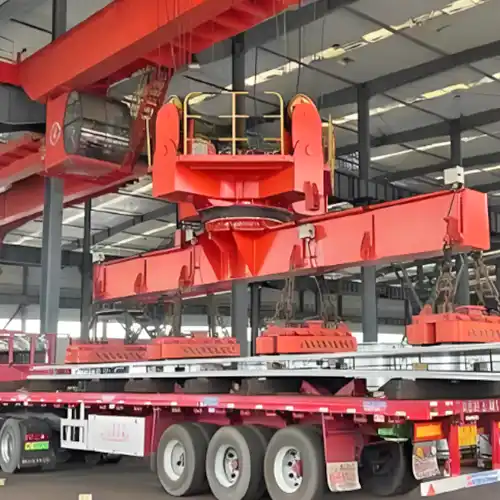
- Rotating Beams: Some gantry cranes come with rotating beams, which allow the crane to rotate the load while lifting, offering greater flexibility in positioning and placement. This is particularly useful in applications such as material handling in shipyards, factories, or ports where precise load placement is required.
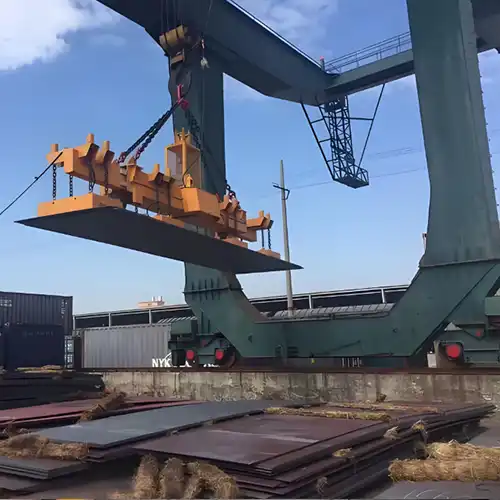
- Magnetic Lifts: In industries such as scrap metal handling, steel production, or automotive manufacturing, magnetic lifting devices can be incorporated into the crane. These magnets allow the gantry crane to handle ferrous materials like steel plates, beams, or scrap metal, providing a safer and more efficient way to lift and transport heavy metal objects.
- Hook or Grab Attachments: For specific industries, such as construction or port operations, crane hooks or grab attachments can be customized to allow for more complex lifting tasks, such as lifting and transporting large construction debris, bulk materials, or cargo.
Technological Integration
As gantry cranes evolve, integrating advanced technology into their systems has become essential for improving operational efficiency, safety, and real-time monitoring. These integrations are particularly beneficial in large-scale operations or highly automated environments where constant communication and control are needed.
Smart Crane Systems
Smart gantry cranes integrate automation, remote control, and real-time monitoring, enabling operators to maximize crane performance while improving safety and reducing human error. Some notable technological advancements include:
- Automation: Automated gantry cranes can be programmed to perform specific lifting tasks with minimal human intervention. These systems use sensors, artificial intelligence (AI), and machine learning algorithms to optimize lifting operations, automatically adjusting the crane's movements for maximum efficiency and safety. Automated cranes can handle repetitive tasks, reducing labor costs and improving accuracy.
- Remote Control: Modern gantry cranes can be equipped with remote control systems, allowing operators to control the crane from a distance. Remote control increases safety by enabling operators to stay clear of hazardous lifting areas, while also providing better visibility of the load and surrounding environment. This is particularly important in environments like shipyards or construction sites where cranes are handling large and potentially dangerous materials.
- Real-Time Monitoring: With integrated monitoring systems, cranes can provide operators with real-time data on performance, load weight, crane speed, and operating conditions. This allows for proactive maintenance, minimizing downtime by alerting operators to potential issues before they lead to major malfunctions. It also helps track crane performance over time to ensure optimal functionality and reduce repair costs.
GPS Tracking and Fleet Management Integration
In large-scale operations or businesses with multiple gantry cranes, integrating GPS tracking and fleet management systems can offer substantial operational benefits:
- GPS Tracking: GPS technology allows for the precise tracking of gantry cranes within large job sites or warehouses, ensuring that cranes are located quickly when needed and preventing unnecessary delays. This is especially useful in vast outdoor environments, such as construction sites, where multiple cranes may be operating in different areas.
- Fleet Management: Fleet management systems integrate data from multiple cranes, allowing companies to manage their entire fleet of gantry cranes from a centralized platform. This integration helps with scheduling, tracking, and optimizing crane utilization, ensuring that each crane is deployed efficiently and effectively. Fleet management systems can also provide performance insights and maintenance schedules, helping companies to reduce downtime and extend the lifespan of their equipment.
Customization and technological integration have significantly expanded the capabilities of industrial gantry cranes. By adjusting crane features to meet specific lifting requirements, such as lifting height, reach, or the addition of specialized hoists, operators can optimize their cranes for different applications. Moreover, integrating smart systems like automation, remote controls, and real-time monitoring enhances safety, efficiency, and control during lifting operations. For large operations, GPS tracking and fleet management systems provide seamless integration and management of multiple cranes, further improving operational workflow. By incorporating these customized and technological solutions, businesses can ensure their gantry cranes are fully equipped to meet the diverse and challenging demands of outdoor lifting tasks.
Conclusion:Industrial Gantry Crane, Customized for Your Industrial Use
Selecting the right industrial gantry crane for outdoor lifting operations is a critical decision that impacts the overall productivity, safety, and efficiency of your business. In this guide, we have discussed several key factors to consider when choosing the right crane, including load capacity, mobility, safety features, environmental suitability, and long-term operational needs. By taking all these aspects into account, you can make an informed decision that aligns with your specific requirements and budget.
Summary of Key Factors to Consider
When selecting a gantry crane, several essential factors must be considered:
- Load Capacity: It's vital to choose a crane with the appropriate load capacity for the materials you handle. Whether you need a light-duty crane (1-20 tons) or a heavy-duty crane (50 tons or more), selecting the right capacity ensures efficient lifting without risking damage to the crane or materials.
- Mobility: Determine whether your operations require a fixed gantry crane or a mobile gantry crane. Fixed cranes offer stability for permanent installations, while mobile cranes provide flexibility for relocation across construction sites, warehouses, or shipyards.
- Safety Features: Safety should always be a top priority. Cranes equipped with anti-collision systems, overload protection, and emergency stop mechanisms ensure the well-being of operators and prevent accidents, which can lead to costly downtime and repairs.
- Environment and Terrain: Consider the environment in which your gantry crane will operate. Cranes designed for outdoor applications need to withstand harsh weather conditions, including extreme temperatures, humidity, and exposure to corrosive substances. Make sure to select a crane with appropriate weather resistance and corrosion protection.
Final Advice for Selecting the Right Gantry Crane
Making the right decision on a gantry crane goes beyond just meeting immediate needs—it requires foresight and careful consideration of future demands. Here are some final tips to guide your decision:
- Consultation with Experts and Crane Suppliers: Don't hesitate to seek expert advice from crane manufacturers or suppliers who understand the specific demands of your industry. Consulting with professionals ensures that you select the right crane tailored to your precise lifting requirements, helping you avoid costly mistakes and poor investments.
- Assessing Future Needs and Scalability: Think beyond your current needs. If your business is growing or if you anticipate heavier lifting or more complex tasks in the future, choosing a crane that offers scalability and flexibility will help ensure long-term efficiency. Selecting a crane that can be easily upgraded or customized can save you money in the long run by avoiding the need for future replacements.
By carefully evaluating these factors and considering both current and future needs, you can confidently choose an industrial gantry crane that will enhance your outdoor lifting operations, improve productivity, and ensure safety and reliability in the long run.
Appendices
Glossary of Terms
This glossary defines key terms and concepts frequently used in gantry crane operations, providing a clearer understanding of the terminology associated with selecting and operating industrial gantry cranes.
- Gantry Crane: A type of crane that moves on wheels or tracks and has a horizontal bridge supported by two or more legs. It is used for lifting and transporting heavy loads in outdoor environments, such as construction sites, shipyards, or warehouses.
- Load Capacity: The maximum weight a crane can safely lift. This is often specified in tons (e.g., 10-ton, 20-ton capacity). Selecting the right load capacity ensures that the crane can handle the required tasks without risk of damage.
- Span: The distance between the crane's supports (legs or tracks), affecting the area the crane can cover. A wider span allows the crane to lift over a larger area but may require a larger footprint and more space.
- Lifting Height: The vertical distance the crane can raise its load. This is critical in environments with overhead obstacles, such as buildings or large equipment.
- Mobile Gantry Crane: A gantry crane designed to be moved around a site. These cranes are typically mounted on wheels or rubber tires, making them ideal for temporary or relocatable operations.
- Rail-Mounted Gantry Crane: A gantry crane mounted on rails, offering better stability and precision in lifting operations but requiring fixed installation.
- Semi-Gantry Crane: A hybrid design where part of the crane operates on rails and the other part is supported by wheels or legs. These cranes are suitable for environments where overhead space is limited or for partial crane systems.
- Corrosion Resistance: The ability of materials (typically steel or aluminum) to resist rust and degradation, especially when exposed to harsh environments like saltwater, chemicals, or extreme temperatures.
- Overload Protection: A safety feature that prevents a crane from lifting loads beyond its maximum rated capacity, protecting the crane and operator from accidents or equipment failure.
Case Studies
Here are real-world examples of gantry crane installations, highlighting their application and effectiveness in different industries, including shipyards and construction sites.
Case Study 1: Shipyard Gantry Crane Installation
- Location: A large shipyard in the U.S.
- Challenge: The shipyard needed a reliable crane to handle the heavy lifting of steel components and ship parts. The crane had to be capable of lifting loads up to 100 tons across a large dock area.
- Solution: The shipyard installed a double girder gantry crane with a load capacity of 100 tons. The crane was designed to move along a set of rails installed along the dock, offering both stability and precision. It also included anti-collision systems for safe operation in the crowded dock area.
- Results: The crane significantly improved the shipyard's operational efficiency, reducing the time needed to transport large components and improving overall safety with its advanced overload protection and remote control operation.
Case Study 2: Construction Site Gantry Crane Application
- Location: A major infrastructure project in a metropolitan city.
- Challenge: The construction site required lifting large concrete slabs and steel beams into place, with limited space for equipment. The crane had to be mobile and able to operate in a crowded, urban environment.
- Solution: A semi-gantry crane with a load capacity of 50 tons was deployed, with one side mounted on rails and the other side supported by wheels for mobility. This setup allowed for lifting operations over a smaller footprint, while still providing sufficient load handling capacity.
- Results: The crane improved site efficiency by allowing for precise lifts in confined spaces, contributing to faster project completion timelines. The mobility of the crane allowed it to be repositioned as needed, reducing downtime and operational costs.
FAQs
Here are some frequently asked questions about selecting and operating gantry cranes for outdoor applications:
Q1: What factors should I consider when choosing the load capacity of a gantry crane?
A1: The load capacity should be based on the heaviest material or equipment that needs to be lifted. It's essential to factor in the maximum weight and type of objects (e.g., steel beams, construction materials, containers) you will be handling. Always select a crane with a higher load capacity than required to ensure safe and efficient operation.
Q2: Can a mobile gantry crane be used in rough terrain?
A2: Yes, mobile gantry cranes are designed for flexibility and can be equipped with wheels or rubber tires for mobility on construction sites or shipyards. However, when using them on rough or uneven terrain, it's important to ensure that the crane is designed to handle such conditions without compromising stability. Some models come with adjustable height and width to better suit uneven surfaces.
Q3: What is the best type of gantry crane for outdoor lifting in coastal areas?
A3: In coastal areas, you will need a gantry crane that is resistant to corrosion due to exposure to saltwater. A double girder gantry crane made from corrosion-resistant steel or aluminum, combined with anti-corrosion coatings (such as galvanization), is ideal. Make sure the crane includes features for weather resistance, such as sealed components and weatherproof controls, to prevent damage from extreme conditions.
Q4: How often should I perform maintenance on my gantry crane?
A4: The frequency of maintenance depends on the crane's usage and the operating environment. For heavy-duty or outdoor applications, it's recommended to perform maintenance checks at regular intervals, typically every 6 to 12 months. Regular maintenance should include checking the lifting mechanism, wheels or tracks, electrical components, and safety features. Keeping an eye on wear and tear will help prevent unexpected breakdowns and costly repairs.
Q5: What are the safety features to look for in a gantry crane?
A5: Key safety features include:
- Overload protection: Prevents the crane from lifting more than its rated capacity.
- Anti-collision systems: Ensures that the crane does not accidentally collide with obstacles or other cranes.
- Operator safety cabins: Provides a safe and controlled environment for the crane operator, protecting them from hazards.
- Emergency stop mechanisms: Allow the crane to be stopped immediately in case of a malfunction or emergency.
These features ensure safe operation and reduce the risk of accidents, especially in complex or hazardous outdoor environments.
This appendix section provides important resources to assist with understanding gantry crane operations, real-world applications, and answers to common questions, helping you make more informed decisions when selecting and operating industrial gantry cranes for outdoor lifting tasks.


Free consultation to Confirm Parameters & Specifications and Get
Latest Crane Price & Crane Rate.
- Types of overhead cranes : _______?
- Optional: Overhead travelling crane, goliath gantry crane,Slewing jib crane, Single girder or double girder crane,small portable crane or kbk crane, etc.
- Capacity of overhead crane: _______?
- Optional: 0.25ton, 0.5 ton, 1 ton, 2 ton, 3ton, 5 ton, 10 ton,15ton, 20ton, 25 ton, 30ton,35ton, up to 550ton, etc.
- Crane span & lifting height : _______?
- Crane travelling length : _____?
- Control of overhead crane:_______?
- Optional: pendant/ remote/cabin control
- Voltage supply of overhead crane:_____?
- Eg,: 380V50/60HZ,3Phase or others,etc.
- Application/usage of crane:_______?
- Eg,: Steel mill, ,injection mold, cement,stone, concrete,granite, general manufacturing, etc.
Just leave a message via the contact form and our hoist and crane engineer will contact you with in 24working hours.
Get In Touch