
How to Choose a Straddle Carrier | Key Factors & Design Parameters
Learn how to select the right straddle carrier with 5 key factors, route & load checks, and technical parameters for safe, efficient heavy load handling.
| Crane Type | Rubber-Tyred Straddle Carrier for Container and Heavy-Duty Material Handling, with Hydraulic/Electric Lifting, 20/40/45 ft Spreader, Multi-Wheel Steering, Multiple Power Options, and Customized Container & Industrial Cargo Handling Configuration. |
| Crane Capacity | 20–80 Ton (Common: 20 Ton, 30 Ton, 40 Ton, 50 Ton, 60 Ton, 80 Ton),20 ft / 40 ft / 45 ft Containers with Telescopic Spreader |
| Lifting Height | 6–18 m (Common: 8 m, 10 m, 12 m, 15 m) |
| Coverage Area Type | Flexible rubber-tyred operation across container blocks, storage yards, transfer lanes, and industrial areas without fixed rails. |
| Application | Container terminals, port yards, logistics centers, BESS projects, steel yards, precast plants, industrial yards, and oversized cargo handling sites. |
| Customization | 20/40/45 ft spreader, customized lifting height, hydraulic/electric lifting, rubber-tyred travel, multi-wheel steering, diesel/diesel-electric/hybrid/battery-electric power, cabin/remote/PLC control, anti-collision, and customized lifting attachments. |
Crane Manufacturer: Yuantai Cranes – 30+ Years Professional Crane Manufacturer from China
Category: Straddle Carrier
Tags: straddlecrane
Your Trusted Straddle Carrier Crane Manufacturer & Supplier
How to Choose a Straddle Carrier | Key Factors & Design Parameters
Key Takeaways
Choosing the right straddle carrier is not just about rated capacity—it depends on your load, travel route, site conditions, lifting method, and operational needs. Selecting the wrong model can compromise safety, reduce efficiency, and increase costs.
- Confirm load type, weight, center of gravity, and lifting points for stable, safe handling
- Evaluate travel route, doorways, and turning radius to ensure smooth movement
- Assess ground condition and bearing capacity to prevent structural or operational failure
- Choose the appropriate power system and control mode for indoor/outdoor operation and working frequency
- Configure steering, wheel setup, and safety devices based on site layout and operational requirements
Questions Solved in This Guide
Learn how to select the right custom straddle carrier for oversized industrial cargo, modular transport, container handling, and restricted work environments by understanding load requirements, steering systems, site conditions, and operational safety considerations.
Q: How do I select a straddle carrier for non-standard or oversized loads?
A: You choose a carrier based on the actual load dimensions, lifting points, and weight distribution rather than just rated capacity.
- Modular buildings, BESS units, or industrial steel structures require the frame span and lifting attachments to match their specific size and support needs.
- Considering cargo geometry ensures safe handling and prevents tipping or structural stress during transport.
Q: What site conditions affect straddle carrier design?
A: Ground strength, floor thickness, slope, and route obstacles directly influence wheel type, axle distribution, and stability.
- Indoor workshops and outdoor yards may need different tyres, load distribution, or even track reinforcement for heavy units.
- Seasonal factors like rain, ice, or soft ground can impact traction and safe maneuvering.
Q: How do lifting points and load distribution impact frame and steering choices?
A: The placement of lifting points and center of gravity determines the carrier's frame structure and optimal steering mode.
- Multi-point lifting or uneven loads may require wider spans, reinforced beams, and 360° steering to move safely in tight yards.
- Proper alignment of load and carrier improves stability, reduces stress on the wheels, and enables precise positioning.
Q: What is the difference between steering modes, wheel setups, and power systems?
A: Steering modes, wheel configuration, and power type are selected according to route complexity, surface conditions, and operational environment.
- Standard, side travel, or crab steering affects how the carrier navigates narrow lanes or docks.
- Wheel count and tyre type distribute weight for heavy modular units or stacked containers.
- Diesel, battery, or hybrid power choices balance indoor/outdoor use, shift duration, and environmental restrictions.
Q: How can I ensure safe operation in narrow or restricted work areas?
A: Combine careful route mapping, clearance checks, and safety features like cameras, sensors, and emergency stops.
- Plan for door heights, tight corners, and multi-zone transfers to avoid collisions.
- Remote or cabin control with integrated warning systems ensures operator safety and precise handling in constrained spaces.
Key Takeaway
By understanding these factors and planning around actual cargo, route, and site conditions, buyers can select a custom straddle carrier that handles industrial heavy loads, oversized modules, or container yard operations safely and efficiently, avoiding costly errors or downtime.
Introduction
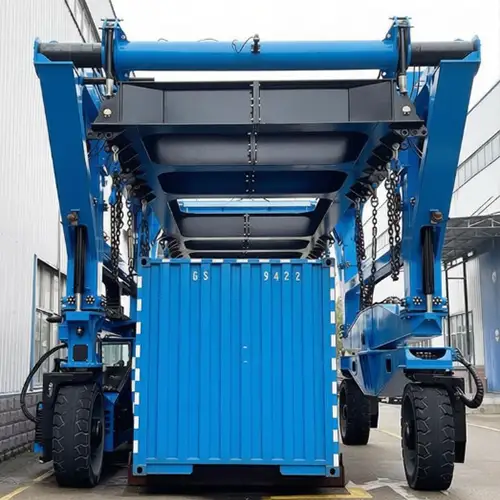
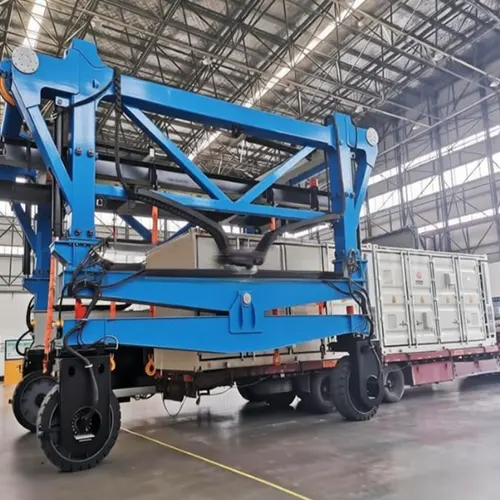
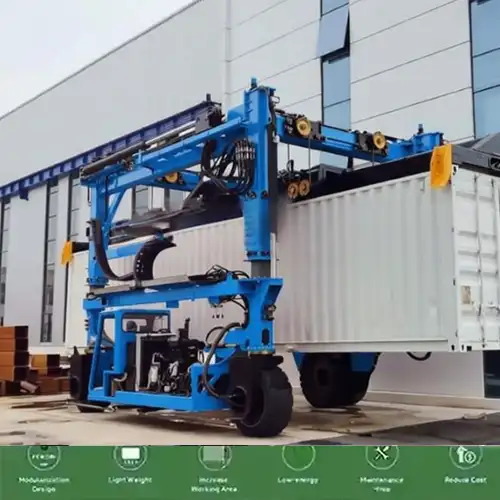
A straddle carrier is a type of heavy-duty vehicle designed for lifting, moving, and positioning large loads safely and efficiently. Unlike forklifts or conventional cranes, straddle carriers lift cargo within the machine frame, allowing operators to move containers, oversized equipment, or modular units across short or medium distances with stability and precision. These machines are commonly used in container yard handling, industrial logistics areas, modular building transport, steel structure movement, and precast component handling. In short, if you're moving heavy or non-standard cargo between areas where a fixed crane or gantry system isn't practical, a straddle carrier is often the go-to solution.
Choosing the right straddle carrier for industrial heavy load handling is more than matching a rated capacity. Efficiency, safety, and long-term operational cost all depend on whether the machine fits your actual workflow. A carrier that is too large can waste energy, reduce maneuverability, and take up unnecessary space, while one that is too small might struggle with lifting, lead to uneven load distribution, or fail to navigate narrow routes safely. For industrial projects involving container yards, modular units, or oversized cargo, considering factors like load type, lifting points, travel routes, ground conditions, and operational frequency is essential.
This guide focuses on the five key factors to consider when choosing a straddle carrier and the technical parameters you need to confirm before finalizing a solution. By following these steps, you can ensure your custom straddle carrier solution is tailored for your site, cargo, and workflow, rather than adapting your operation to a standard model.
What this guide will help you achieve:
- Understand how load type and lifting points affect carrier selection for industrial cargo transport
- Evaluate travel routes, doorways, and turning areas for yard container handling or modular building transfer
- Review site conditions such as ground bearing capacity, surface type, and slope for safe straddle carrier operation
- Decide on power source and control mode for remote or cabin-operated carriers in indoor or outdoor yards
- Configure steering, wheels, and safety systems for oversized cargo transport and industrial load movement
Whether you manage a container terminal, a precast concrete yard, a modular construction site, or a heavy equipment facility, knowing these factors ensures you select a straddle carrier that matches your workflow, enhances productivity, and reduces operational risks.
keep the wording of the following, and fill them into the avoe faq format code
Factor 1: Load Characteristics and Lifting Requirements
Before selecting a straddle carrier, understanding the load you need to move is the first and most critical step. In industrial operations, cargo comes in all shapes and sizes—containers, steel structures, modular buildings, precast components, or specialized units like E-house and BESS containers. Each type of load has unique lifting and support requirements. Choosing a straddle carrier that matches the cargo type and lifting method ensures safe handling and prevents costly operational delays.
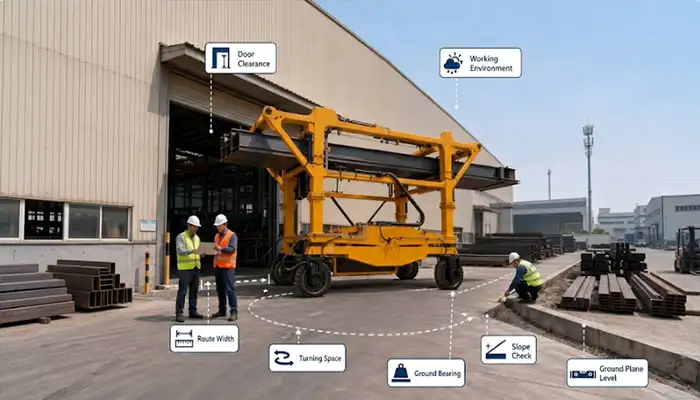
Even if two loads weigh the same, the lifting points, center of gravity, and overall dimensions can make a huge difference in selecting the right carrier. For instance, moving a modular building unit requires a different span and lifting attachment than transporting a stacked shipping container, even if the total weight is similar. Getting these details right avoids situations where the carrier frame cannot safely support the load or cannot pass through doorways or narrow paths.
Cargo Type
Identify whether you are moving standard containers, steel frames, modular units, precast concrete, or specialized equipment like BESS or E-house units. The shape, rigidity, and stacking ability directly affect the required straddle carrier structure, lifting frame, and support design.
Weight & Load Distribution
Determine the maximum load weight, normal working load, and center of gravity before selecting the carrier. Unevenly distributed loads require careful planning of frame strength, wheel load distribution, and lifting point positioning to maintain operational stability and prevent structural stress.
Lifting Method
Evaluate how the cargo will be lifted, including top lifting, bottom lifting, spreader lifting, multi-point lifting, or customized lifting attachments. The lifting method influences the carrier's frame span, lifting beam configuration, attachment design, and operational safety requirements.
Technical Parameter Checks
Load Distribution & Support: Ensure the cargo weight is evenly supported across the carrier frame to reduce tipping risks and structural stress.
Lifting Points: Confirm the location, spacing, and strength of lifting points to maintain stable handling, especially for oversized or irregular cargo.
Frame Span & Lifting Height: Select a carrier with sufficient internal span and lifting clearance to safely accommodate cargo dimensions during transport.
Support Method: Evaluate whether the load requires bottom support, side support, saddles, or custom fixtures during lifting and transfer operations.
Factor 2: Travel Route and Working Area
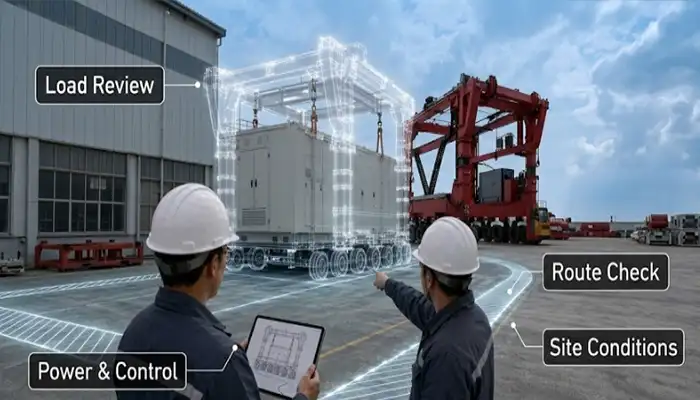
Once the load characteristics are defined, the next step is understanding where and how the straddle carrier will move. Even a perfectly matched carrier can run into problems if the travel path is restricted or the working area isn't suitable. Industrial projects often have narrow lanes, tight doorways, and varying overhead limits that can affect the carrier's width, height, and turning capabilities. For yard container handling or modular unit transport, careful route planning is just as important as load evaluation.
The carrier's path determines whether it can operate efficiently, whether it can align with trailers or loading docks, and whether it can navigate between production zones or storage areas. Overlooking route restrictions can lead to operational delays, safety hazards, or the need for costly redesigns.
Key Considerations:
- Pathway Width & Turning Radius: Measure the width of lanes, passageways, and turning areas to ensure the carrier can navigate without difficulty.
- Doorways & Overhead Limits: Check entrances, roof structures, piping, lighting, or cables along the route that could restrict movement or require height adjustments.
- Trailer Loading Positions & Multi-Zone Transfers: Confirm if the carrier must transfer loads between storage zones, loading points, or multiple working areas.
- Indoor vs. Outdoor Movement: Determine if the route transitions between indoor workshops and outdoor yards, which may require changes in tires, power mode, or safety features.
Action Steps:
- Map the Route: Record all dimensions, turning areas, and overhead clearances. Include photos or sketches of critical points for reference.
- Identify Obstacles: Look for narrow lanes, sharp turns, columns, or stacked materials that may affect carrier travel.
- Plan for Special Maneuvers: Consider side travel, 90-degree alignment, or 360-degree crab steering for tight spaces or unusual transfer paths.
Factor 3: Ground and Site Conditions
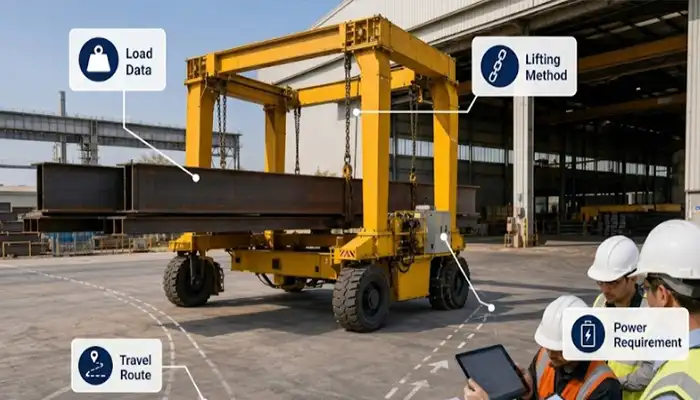
Understanding the ground and site conditions is crucial before choosing a straddle carrier. Even a well-designed machine can face serious stability and operational issues if the surface cannot support the load or if terrain is uneven. For operations like container yard handling, modular unit transport, or industrial heavy load movement, the ground determines the carrier's performance, safety, and longevity.
Ground Bearing Capacity
The surface must safely support the total weight of the straddle carrier plus the load.
- Check floor strength for indoor sites and paved or compacted surfaces outdoors.
- Poor bearing capacity may require additional wheels or structural reinforcement.
- Overlooking this can lead to floor damage or uneven load distribution.
Surface Type & Flatness
The type of pavement and how level it is can affect traction and stability.
- Concrete, asphalt, or compacted gravel are common surfaces for straddle carriers.
- Uneven or soft surfaces may need specialized tyres or more wheels to distribute the load.
- Flat surfaces help reduce the risk of tilting when moving heavy modular units or oversized cargo.
Slope & Drainage
Even small inclines or water accumulation can impact carrier stability.
- Check the route for slopes and ensure drainage prevents puddles or soft spots.
- Adjust wheel configuration or load handling method if necessary.
- Improper slope handling can reduce maneuverability and increase safety risks.
Floor Thickness / Yard Surface Strength
Indoor floors and outdoor yards must handle wheel loads without damage.
- Verify concrete floor thickness and reinforcement for indoor operation.
- Outdoor yards may require compacted or reinforced surfaces for repeated cargo movement.
- Weak surfaces may require reduced load limits or temporary support structures.
Seasonal & Weather Impact
Weather conditions affect traction and overall carrier operation.
- Rain, snow, or ice can reduce grip for outdoor operations.
- Dusty or sandy areas may increase tyre wear and reduce steering precision.
- Seasonal changes may require tyre selection or speed adjustments for safe handling.
Why This Matters
Proper evaluation of ground and site conditions directly affects:
- Wheel type – solid, pneumatic, or specialized tires for different surfaces.
- Wheel quantity & axle load distribution – prevents structural stress and improves stability.
- Tyre selection & durability – ensures safe handling for repeated heavy load transfers.
A thorough site and ground assessment ensures the straddle carrier can operate safely, handle oversized cargo, and move efficiently across indoor and outdoor zones, whether you are managing a container terminal, precast yard, or modular construction site.
Factor 4: Power, Control, and Operation Mode & Key Considerations
Once the load, route, and site conditions are defined, the next step is to determine the power source, control method, and operation mode for the straddle carrier. This is critical for ensuring reliable, safe, and efficient performance in industrial heavy load handling, whether moving containers, modular units, precast components, or oversized cargo. The right combination of power and control affects not only speed and maneuverability but also safety, maintenance requirements, and environmental compliance.
Power Options
- Diesel Engines: Ideal for outdoor operations and longer travel distances where battery charging is impractical.
- Battery-Powered Carriers: Suitable for indoor or environmentally sensitive areas with low emissions and quiet operation.
- Hybrid Systems: Combine diesel and battery for sites with mixed indoor/outdoor operations.
- Site-Specific Solutions: Some yards or industrial plants may require unique power systems tailored to local voltage, fuel type, or access constraints.
Control Methods
- Cabin Operation: Traditional operator cabins for full visibility and precise control, especially useful for long-duration shifts.
- Remote Operation: Enables the operator to manage the carrier from a safe distance, ideal for hazardous areas or limited-access zones.
- Wired or Hybrid Controls: For environments where communication stability or safety restrictions limit wireless operation.
Duty Cycle & Environmental Constraints
- Assess working frequency, shift length, and continuous load handling needs.
- Consider temperature extremes, dust, noise, or emission restrictions that could affect equipment performance.
- Matching the carrier's power and control system to the operational environment prevents downtime and maintenance issues.
Safety and Automation Features
- Integrated warning systems, cameras, and sensors help prevent collisions and protect personnel.
- Slow-speed positioning allows precise alignment for trailer loading, container stacking, or modular unit placement.
- Advanced automation can improve productivity while maintaining safety for complex industrial operations.
Purpose and Outcome
Selecting the right power source and control system ensures that your straddle carrier:
- Operates efficiently across indoor and outdoor zones.
- Handles continuous industrial heavy load operations without excessive downtime.
- Maintains safety for operators, personnel, and cargo.
- Adapts to environmental or site-specific constraints, including dust, noise, or emission limitations.
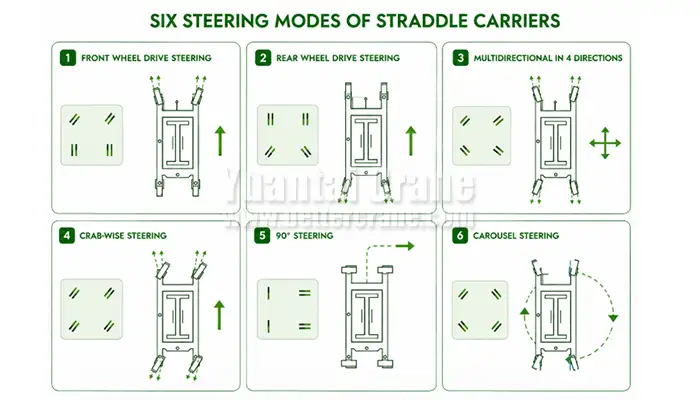
Factor 5: Steering, Wheel Configuration, and Safety Features
The final factor in choosing the right straddle carrier is how it moves and how it stays safe. Steering, wheel configuration, and safety systems are critical for industrial heavy load handling, especially when transporting containers, modular buildings, precast components, or oversized cargo across indoor and outdoor areas. The right setup ensures precise maneuvering, load stability, and compliance with site safety standards.
- Standard Steering: Suitable for straight-line movement or large open areas.
- Side Travel: Enables lateral movement for alignment with trailers, docks, or storage areas.
- 90° Turn: Allows the carrier to navigate tight corners or restricted yard spaces.
- 360° Crab Mode: Ideal for complex routes, narrow aisles, or situations requiring precise positioning.
Wheel Quantity & Axle Distribution
- Determines load stability and weight distribution.
- Multiple axles may be required for oversized cargo or uneven surfaces.
- Ensures the carrier can safely operate on varying floor or yard conditions.
Tyre Type
- Solid Tyres: Durable for indoor or paved surfaces with heavy loads.
- Pneumatic Tyres: Offer traction on uneven or outdoor terrain.
- Specialty Tyres: For soft surfaces, steep slopes, or specific environmental requirements.
Safety Features
- Pedestrian Detection & Warning Systems: Protect personnel in busy yards.
- Emergency Stop Functions: Critical for preventing accidents during abnormal operation.
- Cameras & Sensors: Enable better visibility and positioning in tight areas.
- Maintenance Access: Ensure that safety and control systems can be serviced easily.
Result
By confirming steering, wheel configuration, and safety features, you guarantee that the straddle carrier:
- Can maneuver precisely in narrow lanes, multiple zones, or complex routes.
- Maintains stability and even load distribution for industrial heavy loads.
- Complies with local site safety regulations and operational safety standards.
- Supports long-term, safe, and efficient operations across container yards, modular construction sites, or industrial logistics facilities.
Technical Parameters to Confirm Before Final Straddle Carrier Design
Before finalizing a straddle carrier solution, confirming key technical parameters ensures the machine matches your load, route, and site conditions. These parameters are not just numbers—they define safety, efficiency, and operational reliability for industrial heavy load handling, yard container movement, or modular unit transport.
| Parameter | Purpose |
|---|---|
| Load weight & center of gravity | Structural strength, lifting stability, safety margin |
| Cargo dimensions & lifting points | Inner span, frame clearance, attachment type |
| Door & route clearance | Ability to pass restricted spaces, turning radius |
| Ground bearing capacity | Wheel type, quantity, and load distribution |
| Working frequency & environment | Power system, control, cooling, visibility, safety features |
Load Weight & Center of Gravity
- Purpose: Ensures structural strength, lifting stability, and appropriate safety margins.
- Why it matters: An uneven or underestimated load can compromise carrier frame integrity and cause tipping, especially with oversized cargo.
Cargo Dimensions & Lifting Points
- Purpose: Determines internal frame span, clearance, and attachment type.
- Why it matters: The carrier must accommodate cargo length, width, height, and lifting points. Modular buildings, E-house units, and BESS containers require careful attachment design for safe handling.
Door & Route Clearance
- Purpose: Confirms the carrier can pass through restricted spaces, doorways, and tight turns.
- Why it matters: Insufficient clearance can halt operations, require site modifications, or force an oversized carrier into unsafe maneuvers.
Ground Bearing Capacity
- Purpose: Guides wheel type, quantity, and load distribution.
- Why it matters: Proper distribution avoids damage to indoor floors, paved yards, or soft outdoor surfaces, ensuring the carrier remains stable under full load.
Working Frequency & Environment
- Purpose: Determines power system, control method, cooling requirements, visibility needs, and safety features.
- Why it matters: Continuous operation, harsh temperature ranges, dusty or coastal environments, or high-speed yard activity require adjustments in diesel, battery, or hybrid power, control modes, and safety systems to maintain performance.
Confirming these technical parameters allows you to define a straddle carrier design that fits the real workflow, route limitations, and cargo characteristics of your industrial site. By addressing these factors early, you minimize risks, improve efficiency, and ensure that the carrier can handle everything from container yard operations to modular construction transport and industrial oversized cargo movement safely and reliably.
Practical Buyer Tips for Choosing a Straddle Carrier
Selecting the right straddle carrier is more than checking a spec sheet—it's about matching the equipment to real-world cargo, route, and site conditions. Many industrial projects face challenges that only become clear on site, so preparing accurate information upfront can save time, cost, and headaches.
Gather Accurate Load, Route, and Site Data
- Take real measurements of cargo length, width, height, and lifting points.
- Capture photos or videos of the load, transfer paths, doorways, and storage areas.
- Note any overhead obstacles, narrow lanes, or surface conditions that may affect carrier design.
- Why it matters: Detailed information allows engineers to propose a straddle carrier solution that fits the actual workflow rather than just the rated capacity.
Plan for Multi-Area Transfers and Stacking
- Determine if cargo needs to move between multiple storage zones, trailers, or workshops.
- Include stacking requirements for containers, modular units, or industrial equipment.
- Assess whether the carrier must perform side travel, 90° alignment, or 360° steering for precise positioning.
- Why it matters: Planning for multi-zone operations ensures the carrier can navigate complex routes efficiently without requiring costly redesigns.
Compare Alternative Lifting Solutions
- Consider other options such as mobile gantry cranes, hydraulic gantry systems, or industrial forklifts if the route or cargo is challenging.
- Evaluate cost, flexibility, footprint, and safety for each alternative.
- Why it matters: In some scenarios, a hybrid solution may provide better efficiency or lower site impact than a single straddle carrier.
Request an Engineering Review Before Finalizing a Quote
- Share all collected measurements, photos, and workflow information with the supplier.
- Ask for a technical evaluation that confirms load handling, route clearance, ground capacity, steering mode, power system, and safety features.
- Why it matters: An engineering review ensures the proposed straddle carrier matches the real operational requirements and avoids costly mistakes.
Taking these practical steps allows buyers to make informed decisions when selecting a custom straddle carrier solution, ensuring it operates safely, efficiently, and reliably in container yards, modular building sites, or industrial heavy load handling projects.
Quick Checklist for Straddle Carrier Buyers
Use this checklist to prepare the information your supplier needs to recommend a custom straddle carrier for industrial heavy loads, container yards, modular units, or oversized cargo.
Load Details
- Type of cargo: container, modular building, steel frame, precast unit, E-house, BESS unit, generator, or other oversized item.
- Maximum and normal working weight.
- Cargo dimensions: length, width, height, and center of gravity.
- Lifting points, preferred lifting method (top, bottom, multi-point, spreader, or custom fixture).
- Photos, sketches, or technical drawings if available.
Travel Route & Working Area
- Route dimensions: lane width, turning radius, doorways, and overhead limits.
- Trailer loading points, storage zones, or multiple transfer areas.
- Indoor vs. outdoor transitions, ramps, or slope sections.
- Known obstacles: columns, stacked materials, pipes, lighting, or cables.
- Special movement requirements: side travel, 90° turns, or 360° crab steering.
Site & Ground Conditions
- Indoor floor type, thickness, and bearing capacity.
- Outdoor yard surface, pavement type, slope, and drainage.
- Seasonal or weather impacts affecting traction and wheel pressure.
Power & Operation Preferences
- Preferred power: diesel, battery, hybrid, or site-specific solution.
- Control method: cabin, remote, wired, or hybrid.
- Working frequency, duty cycle, and shift duration.
- Environmental limits: temperature, noise, dust, or emission constraints.
Safety & Maneuverability Requirements
- Steering mode preferences: standard, side travel, 90°, or 360° crab.
- Wheel quantity, axle distribution, and tyre type.
- Required safety systems: pedestrian detection, cameras, emergency stops, slow-speed positioning, or remote monitoring.
- Maintenance access and emergency clearance.
Optional Considerations
- Alternative lifting solutions for comparison: mobile gantry cranes, hydraulic gantries, or forklifts.
- Stacking requirements for containers or modular units.
- Special project constraints: height restrictions, multi-zone transfer, or load rotation.
Providing detailed answers to these items allows your supplier to create a straddle carrier solution customized to your load, route, and site conditions, ensuring safe, efficient, and reliable operation for both short-term projects and long-term industrial operations.
Conclusion: Choosing the Right Straddle Carrier
Selecting the right straddle carrier isn't just about rated capacity—it's about how the equipment fits your real-world load, route, and site conditions. From yard container handling to modular unit transport and industrial oversized cargo movement, each project has unique challenges that influence frame size, lifting method, steering, and power system.
Using the five-factor framework—load characteristics, travel route, ground and site conditions, power and control, steering and safety features—ensures that the carrier operates safely, efficiently, and reliably over the long term.
Practical Takeaways:
- Match the carrier to the actual load size, weight, and lifting points.
- Confirm that the travel path, doorways, and turning space support safe movement.
- Check ground bearing capacity and site conditions to select wheels, tyres, and axle distribution.
- Choose a power and control system suitable for your operational frequency and environment.
- Ensure proper steering, wheel configuration, and safety systems to maintain stability and comply with regulations.
To get the most out of your straddle carrier investment, buyers should provide detailed load data, route plans, and site information. Sharing this information allows suppliers to perform a custom engineering review and propose a solution tailored to your workflow and operational needs.
Information Required to Get a Custom Straddle Carrier Solution
If your heavy-load handling involves lifting, moving, turning, positioning, or yard transfers, sending us some basic project details will help us recommend the best solution.
We first review your load and site conditions. Then we can advise if a custom straddle carrier is suitable and suggest the most practical configuration for your operations.
Please provide the following information if available:
- Load type: container, modular building, steel frame, precast component, or other oversized cargo
- Load weight: maximum and normal working load
- Load dimensions: length, width, height, and center of gravity
- Lifting points or method: top, bottom, spreader, multi-point, or custom attachment
- Required lifting height and frame clearance
- Travel route: length, turning radius, or available turning area
- Ground condition: floor type or yard surface and bearing capacity
- Operating environment: indoor, outdoor, or mixed-use
- Power preference: diesel, electric, or hybrid
- Working frequency: expected number of lifts or trips per day
- Supporting visuals: photos, layout drawings, or route sketches
What Will Be Provided for Your After Review:
- Recommended straddle carrier configuration
- Suggested capacity and lifting attachments
- Power and steering options
- Route and operational advice
- Initial budget estimate
Sharing these details helps us design a safe, efficient, and tailored straddle carrier that fits your workflow, whether it's for container yards, modular construction, or industrial heavy-load handling.
With careful planning and informed selection, your straddle carrier will not only handle the cargo safely but also improve operational efficiency across your industrial yard or facility.

Yuantai Cranes
Overhead Crane Manufacturer with CE, ISO, SGS, CNEX Certificates.
- Main Specifications - Capacity: 0.5–550 tons | Span: up to 40m | Speed: 0.8–12 m/min | Duty: A3–A7 | Power: 380–690V, 50/60Hz | Control: pendant/remote/cabin
- Full engineering: FEA/PLC/VFD + in-house build + global delivery + on-site support, for workshops, factories, EPC contractors, industrial projects, etc.
- Support: design, manufacturing, testing, service – end-to-end, customized lifting solutions worldwide.
How to Get an Accurate Crane Price for Your Application?
Tips: Copy the spec list, fill in your details, and paste it into the form on the right/ down-below for a quick price.
- Crane type:_____ . (e.g., overhead crane, gantry crane, jib crane)
- Max weight to lift:_____ tons. (e.g., 2t, 5t, 10t, 20t, 50t)
- Lifting height:_____ m. (How high does the hook need to reach?
- Workshop width (span):_____ m . (Distance between the two crane rails)
- Travel distance:_____ m . (How long does the crane need to move along the runway?)
- Control type:_____. (Pendant / remote / cabin Control)
- Power supply:_____. (Local voltage & frequency – e.g., 380V, 50Hz, 3-phase)
- What will it be used for?_____ (e.g., steel fabrication, concrete products, mold handling, general manufacturing, etc.)
- Any special requirements?_____ (e.g., extreme temperature, dusty or explosive environment, special paint color, etc.)
Just leave a message via the contact form and our hoist and crane engineer will contact you with in 24working hours.
Get Your Custom Quote–Quick & Easy
Fill in what you know. Skip what you don't – we'll help.Any question will be reply with 24 working hours