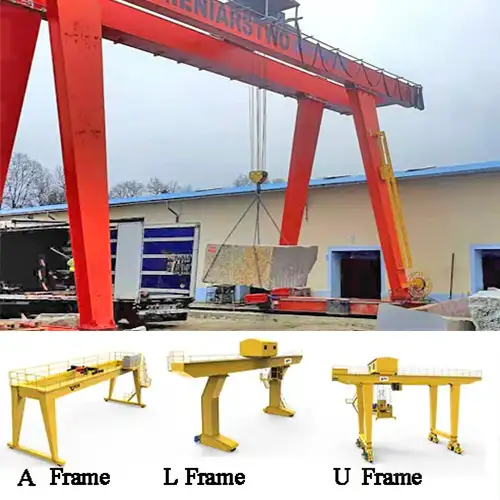
Choose Right Gantry Crane: L Frame, A Frame, U Frame Gantry Crane
Compare L, A, and U frame gantry cranes. Learn differences in structure, lifting range, and applications to select the best crane for your workspace.
| Crane Type | L-Frame, A-Frame, or U-Frame gantry crane; single- or double-girder; ISO A3–A8 / FEM 1Am–5M; 380/400/415V, 50Hz, 3Ph; customized for general, heavy-duty, outdoor, container, steel, precast, and oversized-load handling |
| Crane Capacity | 1–550t+, customized to the load and duty requirements |
| Span Length | Typically 7.5–40m+, customized to the working area |
| Lifting Height | Typically 4–30m+, customized to site clearance and load requirements |
| Coverage Area Type | Large rectangular indoor or outdoor work areas served by ground rails or engineered travel paths. L-Frame → Side clearance and long materials. A-Frame → General-purpose and balanced structure. U-Frame → Wide clearance and oversized loads |
| Application | Steel yards, fabrication plants, workshops, warehouses, ports, container yards, precast plants, shipyards, construction sites, machinery handling, loading and unloading |
| Certifications | CE / ISO / SGS / Other third-party inspection |
| Customization | Customized frame design, leg height, clearance, runway length, duty class, hoist type, travel system, and control method; L-frame, A-frame, or U-frame configuration; single- or double-girder design; VFD, radio remote, cabin, positioning, anti-collision, e |
Crane Manufacturer: Yuantai Cranes – 30+ Years Professional Crane Manufacturer from China
Category: Featured
Tags:
Your Trusted Overhead Gantry Crane Manufacturer & Supplier
Tailored Gantry Crane for Sale
Choose Right Gantry Crane: L Frame, A Frame, U Frame Gantry Crane
Compare L, A, and U frame gantry cranes. Learn differences in structure, lifting range, and applications to select the best crane for your workspace.
A gantry crane is one of those machines you don't truly appreciate until you see it at work — quietly lifting dozens of tons of material day after day, keeping projects moving smoothly. Whether in a busy port terminal, a fabrication workshop, or a construction site, gantry cranes play a key role in handling heavy loads efficiently and safely.
Unlike fixed overhead cranes that rely on building structures, gantry cranes stand on their own. They run on rails or wheels and can be placed almost anywhere. That flexibility makes them a favorite for industries that need to move large components — such as containers, steel plates, molds, or machinery — within open yards or temporary work zones.
But not every gantry crane is the same.
Choosing the right frame design and girder configuration can make a big difference in how the crane performs and how easy it is to maintain.
- Frame Design (L, A, or U frame):
Each frame style suits a different working environment. Some offer better clearance for trucks, while others provide more stability on uneven ground. - Girder Type (Single or Double):
The girder setup directly affects the lifting capacity, span, and cost. Single girders are simpler and more economical, while double girders handle heavier loads and higher lifting heights.
This guide breaks down three common designs — the L-frame gantry crane, A-frame gantry crane, and U-frame gantry crane — explaining how each type works, where it fits best, and what kind of projects it supports.
Gantry Crane Basics
Understanding the basics of how a gantry crane works helps you make smarter decisions when choosing the right model for your site.
What Is a Gantry Crane?A gantry crane is a lifting machine that moves materials using a bridge supported by legs on the ground — not by the building structure. It's similar to an overhead crane, but with one key difference: a gantry crane stands independently.This means it can be installed:
- Outdoors in ports, shipyards, or container yards
- Indoors in workshops, assembly lines, or warehouses
- On construction sites, even before the building structure is ready
In short, a gantry crane gives you flexibility where permanent installations aren't possible or practical.
Main Components of a Gantry Crane
Every gantry crane, regardless of size or type, relies on a few key components that work together to lift and move loads safely and efficiently. Understanding these parts helps in selecting the right crane for your operation.
Girder (Main Beam)
The girder is the horizontal beam that carries the trolley and hoist. It's the backbone of the crane.
- Single girder gantry crane: Compact, lightweight, and easier to install and maintain. Ideal for workshops or light-duty operations.
- Double girder gantry crane: Stronger, allows higher lifting heights, and supports heavier loads. Perfect for ports, steel mills, and heavy fabrication yards.
Legs
The legs support the girder and determine the crane's stability. Their design — L-frame, A-frame, or U-frame — affects both safety and working space underneath the crane.
- L-frame gantry crane : One leg inclined, providing wide clearance on one side.
- A-frame gantry crane: Both legs angled outward for balance and stability.
- U-frame gantry crane: Wide spacing for oversized or heavy loads.
Trolley & Hoist
The trolley moves along the girder while the hoist lifts the load. The right combination depends on your operational needs:
- Hoist types: Electric wire rope or electric chain.
- Lifting speeds: Available in various speeds for different workflows.
- Optional features: Explosion-proof or outdoor-rated hoists for specialized applications.
Rails or Wheels
Gantry cranes can move in different ways depending on your site:
- Rail-mounted (MG cranes): Travel along steel rails fixed to the ground for precise, repeated operations.
- Rubber-tired (RTG cranes): Move freely without tracks, ideal for open yards, ports, or areas where flexibility is needed.
When evaluating a gantry crane, consider how girder type, frame design, and mobility align with your site layout and lifting requirements. This ensures safe operation and maximum efficiency.
How Gantry Cranes Are Classified
Gantry cranes are generally grouped by girder type and frame design, since these two factors determine the crane's capacity, cost, and application.
By Girder Type
- Single Girder Gantry Crane – economical, simpler to install, suitable for lighter loads (usually up to 20 tons).
- Double Girder Gantry Crane – used for heavier lifting, longer spans, and continuous operation (up to several hundred tons).
By Frame Design
- L-Frame Gantry Crane – one inclined leg for wide clearance; best for container handling in ports.
- A-Frame Gantry Crane – classic triangular legs for strength and balance; common in workshops and construction sites.
- U-Frame Gantry Crane – wider legs for oversized items; preferred in shipyards and heavy industrial plants.
Quick Summary
| Classification | Type | Best Use | Key Advantage |
|---|---|---|---|
| Girder | Single | Workshops, small plants | Simple and cost-effective |
| Girder | Double | Ports, steel yards | Higher lift height and load |
| Frame | L-Frame | Ports, container yards | Wide clearance for trucks |
| Frame | A-Frame | Factories, construction | Stable and easy to maintain |
| Frame | U-Frame | Shipbuilding, heavy industry | Handles large components |
Your Trusted Overhead Gantry Crane Manufacturer & Supplier
Gantry Crane Girder Configurations: Single vs. Double Girder
The girder is the backbone of any gantry crane. It carries the load, supports the trolley and hoist, and defines how much weight the crane can lift safely.
Gantry cranes generally come in two main configurations — single girder and double girder — each designed for specific lifting needs and working conditions.
Single Girder Gantry Crane
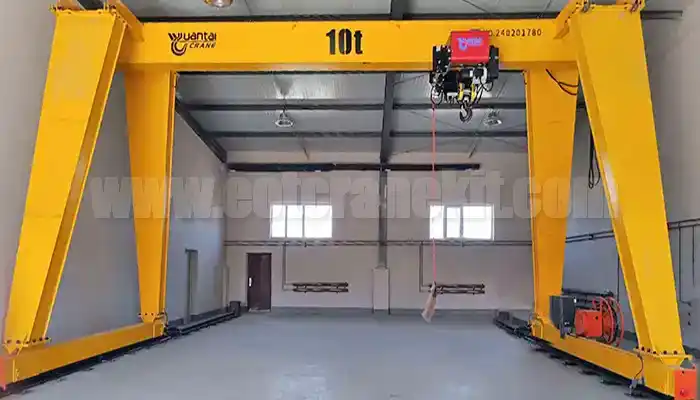
A single girder gantry crane uses one main beam across the span. It's a simple, practical design that covers most everyday lifting tasks.
Typical Capacity Range: Up to 20 tons, depending on span and hoist type.
Key Features
- Lightweight and easy to install, even in workshops with limited space.
- Cost-effective solution for factories or small outdoor yards.
- Requires less structural support and lower maintenance.
Typical Applications
- Workshops handling motors, molds, or small steel parts.
- Light manufacturing plants with moderate lifting frequency.
- Construction sites where quick setup and relocation are needed.
Advantages in Use
- Simple electrical system, easier to troubleshoot.
- Ideal for manual or semi-automated operation.
- Lower power consumption due to lighter structure.
Is It Right for Your Application?
If you need a crane that's reliable, easy to maintain, and doesn't break the budget, a single girder gantry crane often makes perfect sense.
Double Girder Gantry Crane
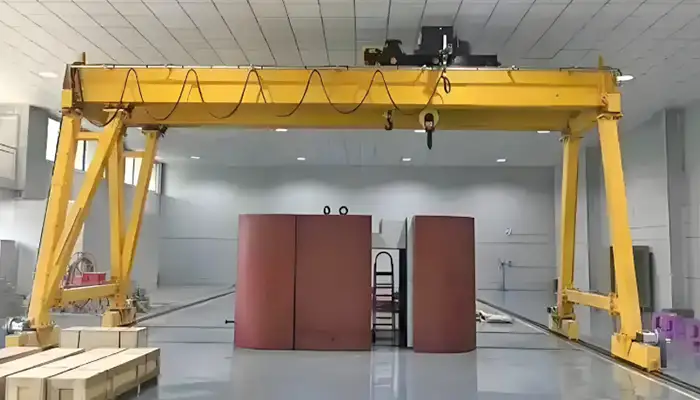
A double girder gantry crane has two parallel beams running across the span, giving it greater strength and lifting height. This configuration is used when the work involves heavy loads, long spans, or continuous operation.
Typical Capacity Range: From 20 tons to 550 tons, depending on the design and hoisting system.
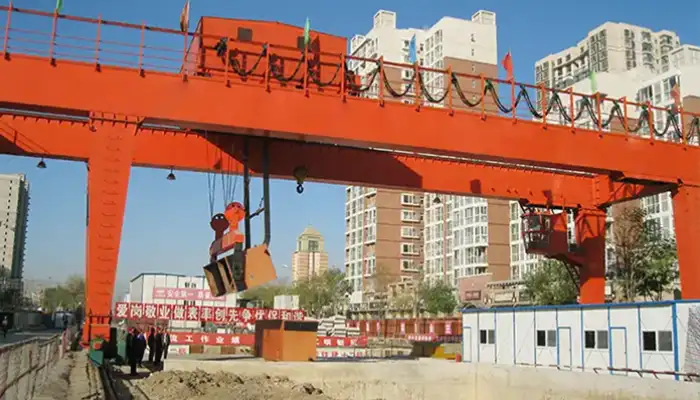
Key Features
- Higher lifting height, since the hoist sits between or on top of the girders.
- More stable under large loads and in outdoor environments.
- Capable of handling heavier materials or multiple lifts in one shift.
Typical Applications
- Ports and shipyards, for container handling and ship part assembly.
- Large factories or steel mills, where heavy steel plates or components are moved regularly.
- Fabrication yards, handling machinery, wind tower sections, or metal structures.
Advantages in Use
- Allows auxiliary hoists or dual trolley setups for complex lifting operations.
- Can support automation systems or open winch trolleys for heavy-duty work.
- Provides a longer service life under intensive operation.
Why Choose a Double Girder Gantry Crane?
If you're managing heavy production or outdoor lifting where stability and reach matter, a double girder gantry crane is the go-to choice.
Quick Comparison: Single vs. Double Girder Gantry Cranes
| Feature | Single Girder Gantry Crane | Double Girder Gantry Crane |
|---|---|---|
| Structure | One main beam | Two main beams |
| Lifting Capacity | Up to 20 tons | 20–550 tons |
| Lifting Height | Moderate | Higher (hoist above girders) |
| Span Range | Short to medium | Medium to extra long |
| Stability | Sufficient for light loads | Excellent for heavy loads |
| Installation Cost | Lower | Higher |
| Maintenance | Easier, fewer components | More complex, requires inspection routines |
| Common Use | Workshops, light manufacturing, construction | Ports, steel mills, heavy fabrication yards |
Your Trusted Overhead Gantry Crane Manufacturer & Supplier
L Frame Gantry Crane, vs A Frame Gantry Crane, vs U Frame Gantry Cranes
L-Frame vs A-Frame vs U-Frame Gantry Cranes: Which Design Fits Your Worksite Best?
The frame design of a gantry crane shapes how it moves, how it fits into the work area, and how efficiently it handles loads. The three most common frame styles — L-frame, A-frame, and U-frame — each have their own strengths and best-use scenarios.
Let's take a closer look at the first two: L-frame and A-frame gantry cranes, which are among the most widely used in workshops, ports, and outdoor yards.
L-Frame Gantry Crane
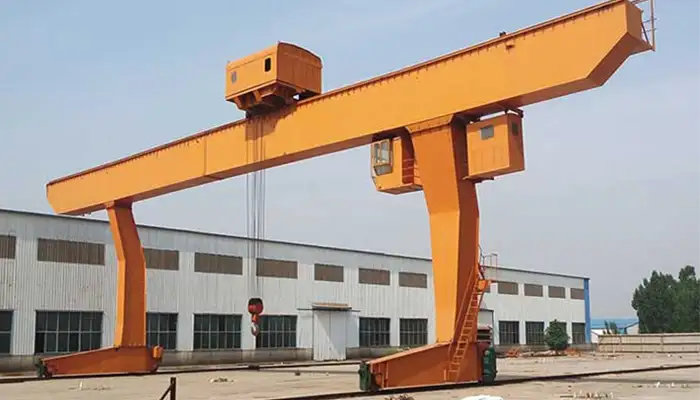
An L-frame gantry crane is easily recognized by its unique shape — one leg is straight, and the other is inclined outward, forming an "L."
This asymmetrical design isn't just for looks; it serves a practical purpose. The inclined leg provides extra clearance on one side, allowing trucks, containers, or large cargo to move freely underneath.
Types of L Frame Gantry Cranes
Advantages:
- Wider working space: The slanted leg opens up room for loading and unloading vehicles or containers without obstruction.
- Smooth vehicle access: Trucks can pass close to the leg side, making container handling faster and more convenient.
- Excellent visibility: The open frame improves operator visibility, especially during port operations.
- Optimized for outdoor conditions: Designed to resist side winds and maintain balance even with large suspended loads.
Applications:
- Container yards and port terminals: Perfect for moving, stacking, and transferring containers between transport vehicles.
- Outdoor logistics areas: Suitable for handling steel coils, large equipment, and bulky cargo.
- Storage yards: Used in large open spaces where flexibility and clearance are critical.
When choosing an L-frame design, pay attention to the clearance width and hook approach distance — they directly affect how efficiently containers or trucks can move through the working area.
A-Frame Gantry Crane
The A-frame gantry crane is the classic type, featuring two legs angled outward to form an "A" shape. This design provides a naturally stable base and distributes load evenly across the structure. It's simple, durable, and suitable for a wide range of industries.
10 Ton Gantry Crane Installation on Uneven Ground Workshop Mongolia, FEM Single Girder Gantry Crane
25 TonGantry Crane for Marble Stone Yard Poland | Heavy Lifting Outdoor Gantry Crane for Sale
Types of A Frame Gantry Cranes
Advantages:
- High stability: The triangular structure prevents swaying, even when lifting heavy or uneven loads.
- Strong yet economical: Offers an excellent balance between strength and cost, with fewer components to maintain.
- Easy to assemble: Commonly used for both fixed and mobile gantry cranes due to its straightforward setup.
- Durable design: Works well in dusty, outdoor, or construction environments with minimal maintenance.
Applications:
- Construction sites: For lifting concrete blocks, rebar bundles, and machinery during installation.
- Workshops and manufacturing plants: Used for assembling parts, moving molds, or handling tools.
- Repair and maintenance bays: Practical for lifting engines, mechanical equipment, or heavy parts.
For workshop use, consider adjustable A-frame gantry cranes with wheels or height settings. They're easy to move, save floor space, and adapt to different work areas.
U-Frame Gantry Crane
The U-frame gantry crane features a wide, U-shaped frame that provides ample clearance between the legs. Unlike L or A-frame cranes, the legs run nearly parallel, creating a large open space beneath the crane. This makes it ideal for handling oversized or unusually tall loads that require more room than traditional frames can offer.
u frame gantry crane - rail mounted gantry craneTypes of U Frame Gantry Cranes
Advantages:
- Extra clearance: The wide spacing allows tall or bulky items to pass underneath without obstruction.
- Heavy-duty lifting: Often paired with double girders and open winch trolleys to manage very large loads safely.
- Versatile handling: Suitable for lifting trailers, large machinery, or ship sections with minimal restrictions.
- Enhanced stability: The U-shape distributes the weight evenly, reducing stress on the crane structure even under heavy loads.
Applications:
- Shipbuilding yards: For moving ship components, hull sections, and large assemblies.
- Heavy fabrication plants: Ideal for steel structures, machinery, and large industrial parts.
- Container assembly and industrial yards: Handles oversized containers or specialized cargo that standard frames can't accommodate.
When selecting a U-frame crane, pay attention to span width and lifting height. These determine whether your oversized equipment or materials can pass comfortably under the crane while keeping operations smooth and safe.
Selecting the Right Gantry Crane for Your Needs
Choosing a gantry crane isn't just about size or lifting capacity. The right crane depends on your work environment, the type of loads, and how the crane will be used daily. Below is a practical guide to help you match frame type and girder configuration to common applications.
1. Port Operations
Ports and container yards handle heavy, bulky loads daily. Efficiency and clearance are key, as trucks and trailers move constantly underneath the crane.
Best Choice: L-frame or U-frame double girder cranes
Why It Works:
- Handles heavy containers and ship sections efficiently.
- Offers wide clearance for trucks, trailers, and cargo.
- Supports dual hoists or open winch trolleys for faster operations.
Tips:
- Check the hook approach and span to avoid obstacles during loading/unloading.
- Consider corrosion-resistant coatings if operating in coastal or humid environments.
2. Workshops & Factories
In workshops or manufacturing plants, space is often limited, and loads are moderate. Cranes must be compact, reliable, and easy to maintain.
Best Choice: A-frame single girder crane
Why It Works:
- Ideal for general material handling, molds, and machinery.
- Compact and easy to install in indoor spaces.
- Lower installation and maintenance costs compared with double girder systems.
Tips:
- Mobile or wheeled versions increase flexibility between workstations.
- Ensure lifting height matches the tallest equipment or materials in the shop.
3. Construction Sites
Construction projects require cranes that are portable, quick to set up, and capable of handling medium-weight loads across various locations on-site.
Best Choice: A-frame single girder crane
Why It Works:
- Portable and quick to set up on temporary projects.
- Suitable for medium-weight loads like concrete elements and machinery.
- Easy to move between different areas on-site.
Tips:
- Choose models that are easy to assemble and disassemble.
- Verify ground stability before installation to maintain safety during lifting.
4. Heavy Industry & Steel Mills
Heavy industries and steel mills deal with large, heavy components that require robust lifting systems. Cranes must offer high capacity, stability, and wide clearance.
Best Choice: U-frame double girder crane
Why It Works:
- Wide frame allows oversized steel sections or heavy machinery to pass underneath.
- Double girders provide high lifting capacity and stability.
- Can accommodate automation systems or dual trolley setups for complex lifts.
Tips:
- Always calculate maximum load plus a safety margin.
- Ensure crane foundations and rail systems can support heavier operations.
5. Summary: How to Select
Selecting the right gantry crane involves balancing:
- Load weight – single vs. double girder.
- Space requirements – clearance under the frame.
- Mobility needs – fixed rails vs. wheeled cranes.
- Frequency of use – temporary setup vs. continuous operation.
Matching the frame type and girder configuration to your work environment ensures safe, efficient, and productive lifting, whether at a port, workshop, construction site, or steel mill.
Comparison Summary Table
Before choosing a gantry crane, it helps to have a clear overview of the main frame types. Each frame — L, A, or U — has its own strengths, ideal applications, and girder configurations. Understanding these differences can save time, improve safety, and make sure your crane fits the space and load requirements.
Here's a quick, mobile-friendly reference to help you compare them side by side:
| Frame | Structure | Best For | Girder | Advantages | Applications |
|---|---|---|---|---|---|
| L-Frame | One inclined leg | Ports, containers | Double | Large clearance, efficient space | Container handling, port terminals, outdoor logistics |
| A-Frame | Two angled legs | Workshops, construction | Single | Stable, economical | Factories, workshops, on-site lifting |
| U-Frame | Wide leg spacing | Heavy industry | Double | Handles large objects, heavy loads | Shipbuilding, steel fabrication, large machinery |
Practical Tip: Use this table as a quick reference when deciding which gantry crane fits your site:
- L-Frame → wide clearance for trucks and containers
- A-Frame → simple, stable, cost-effective
- U-Frame → oversized or heavy components
This format ensures that the key information is easy to read on mobile devices without excessive scrolling or zooming.
Practical Buying Tips for Gantry Cranes
Buying a gantry crane requires careful attention to capacity, design, and site-specific factors. The right choice improves safety, efficiency, and long-term performance in workshops, ports, or construction sites. Here's a practical guide focused specifically on gantry cranes:
Check Lifting Capacity and Span
- Confirm the crane can handle your heaviest load, including any future increases.
- Verify the span fits your workspace — too short or too long can affect stability and efficiency.
- Consider the working environment: indoor, outdoor, or uneven ground can influence frame selection (L, A, or U) and girder type (single or double).
Consider Maintenance and Accessibility
- Ensure routine maintenance is easy to perform on the crane's hoist, trolley, and electrical systems.
- Check accessibility to components without disrupting production.
- Verify power supply compatibility with your facility (single-phase, three-phase, or voltage differences).
- Confirm ground and rail conditions for mobile or rail-mounted gantry cranes to prevent operational issues.
Verify Certifications and Quality
- Look for CE, ISO, or other relevant certifications specific to gantry cranes.
- Request third-party inspection reports or factory load tests.
- Review case studies or client references to ensure reliability under real operational conditions.
Explore Customization Options
- Ask about hoist types suitable for your materials: wire rope, chain, or explosion-proof.
- Consider speed control options for hoisting and trolley travel.
- Explore frame modifications (L-frame, A-frame, or U-frame) to fit your space and clearance needs.
- Check if additional features like dual hoists, open winch trolleys, or special coatings for outdoor use are available.
Practical Tip
For gantry cranes, matching capacity, frame design, and mobility to your operational requirements is key. A well-chosen crane reduces downtime, improves workflow, and ensures safe, long-term operation.
Conclusion: Send Us An Inquiry
Choosing the right gantry crane goes beyond just picking a size or lifting capacity. The combination of girder type (single or double) and frame design (L, A, or U) directly affects performance, safety, and long-term operational costs. A well-matched crane ensures smooth material handling, reduces maintenance challenges, and improves overall efficiency.
When selecting a gantry crane, always consider your site layout, load types, and operational environment. For instance:
- L-frame cranes are ideal for ports or container yards with wide clearance needs.
- A-frame cranes fit workshops and construction sites where stability and portability matter.
- U-frame cranes handle oversized or heavy components in industrial and shipbuilding operations.
Work with a professional gantry crane manufacturer to design a tailored solution that fits your industry's requirements. Whether you need an L-frame, A-frame, or U-frame crane, expert guidance ensures you get a safe, efficient, and long-lasting lifting solution.



Yuantai Cranes
Overhead Crane Manufacturer with CE, ISO, SGS, CNEX Certificates.
- Main Specifications - Capacity: 0.5–550 tons | Span: up to 40m | Speed: 0.8–12 m/min | Duty: A3–A7 | Power: 380–690V, 50/60Hz | Control: pendant/remote/cabin
- Full engineering: FEA/PLC/VFD + in-house build + global delivery + on-site support, for workshops, factories, EPC contractors, industrial projects, etc.
- Support: design, manufacturing, testing, service – end-to-end, customized lifting solutions worldwide.
How to Get an Accurate Crane Price for Your Application?
Tips: Copy the spec list, fill in your details, and paste it into the form on the right/ down-below for a quick price.
- Crane type:_____ . (e.g., overhead crane, gantry crane, jib crane)
- Max weight to lift:_____ tons. (e.g., 2t, 5t, 10t, 20t, 50t)
- Lifting height:_____ m. (How high does the hook need to reach?
- Workshop width (span):_____ m . (Distance between the two crane rails)
- Travel distance:_____ m . (How long does the crane need to move along the runway?)
- Control type:_____. (Pendant / remote / cabin Control)
- Power supply:_____. (Local voltage & frequency – e.g., 380V, 50Hz, 3-phase)
- What will it be used for?_____ (e.g., steel fabrication, concrete products, mold handling, general manufacturing, etc.)
- Any special requirements?_____ (e.g., extreme temperature, dusty or explosive environment, special paint color, etc.)
Just leave a message via the contact form and our hoist and crane engineer will contact you with in 24working hours.
Get Your Custom Quote–Quick & Easy
Fill in what you know. Skip what you don't – we'll help.Any question will be reply with 24 working hours