
5 Ton Overhead Crane Boosts Efficiency in Riyadh Workshop
A compact plastic CNC plant in Riyadh improved mold handling, reduced downtime, and enhanced safety with a 5-ton overhead crane.
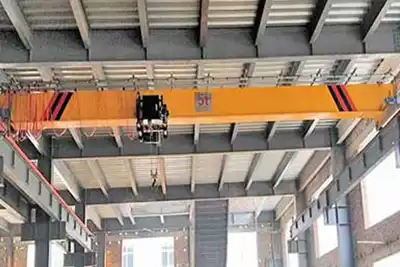
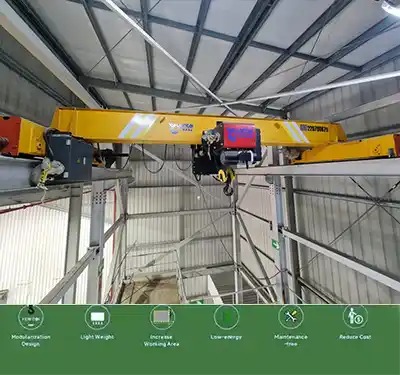
| Crane Type | 5 Ton European-Style Overhead Crane: Top-Running Single Girder Overhead Crane with low-headroom hoist; Working Duty: ISO A3–A5 / M3–M5; Power Supply: 380/400/415V, 3 Ph, 50/60Hz or customized |
| Crane Capacity | 5 ton; project crane selected for molds typically weighing 1–3 ton, with some molds approaching 4.5 ton |
| Span Length | Project-specific; selected according to the compact workshop layout, machine locations and required coverage |
| Lifting Height | Project-specific; selected according to the approximately 5.2 m workshop ceiling, available headroom and required hook height |
| Coverage Area Type | CNC workshops, mold storage areas, machining centers, injection molding areas, finishing and inspection zones |
| Application | Plastic mold handling, CNC machining, injection molding, machine setup, tooling transfer and workshop maintenance |
| Certifications | CE / ISO / SGS / Other third-party inspection |
| Customization | Plastic Molds / CNC Tooling · Handling: Storage / CNC Machine / Molding Press / Inspection · Headroom: Low-Headroom / Side-Mounted Motor · Control: Two-Speed / Pendant · Special: Load Limiter / Limit Switches / Rubber Buffers / Precision Positioning |
Crane Manufacturer: Yuantai Cranes – 30+ Years Professional Crane Manufacturer from China
Category: Saudi Arabia
Tags: Saudi,5tonoverheadcrane
Your Trusted Overhead Crane Manufacturer & Supplier
5 Ton Overhead Cranes Improving Efficiency in Saudi Arabia’s Plastic CNC Workshops
Case Study: 5 Ton Overhead Cranes Improving Efficiency in Saudi Arabia’s Plastic CNC Workshops
Introduction
The plastic CNC workshop industry in Saudi Arabia has been growing steadily, driven by demand from various sectors like packaging, automotive parts, and consumer goods. These workshops often work with complex molds that require precise and careful handling. In such a setting, managing heavy molds efficiently is critical to keep the production running smoothly.
Handling molds manually or with inadequate equipment can lead to delays, safety risks, and even damage to expensive tooling. That’s why investing in the right lifting solution can make a noticeable difference in day-to-day operations.
This case study looks at a compact plastic plant located in Riyadh. It highlights how the introduction of a 5-ton overhead crane helped improve mold handling, boosted workflow efficiency, and contributed to safer working conditions. The goal here is to share practical insights into how a well-chosen crane can support plastic manufacturing processes, especially in tight workshop environments.
Background of the Plastic CNC Workshop
The plastic plant in Riyadh is a medium-sized facility, covering roughly 1,200 square meters. It specializes in producing precision plastic components used mainly in packaging and automotive applications. The workshop operates two CNC machining centers and several injection molding machines, running on a tight schedule to meet customer demands.
The workflow is designed to move molds from the storage area to CNC machining, then to the molding section, and finally to finishing and inspection. Because the plant space is limited, every step needs to be as efficient as possible to avoid bottlenecks.
Before installing the overhead crane, the plant faced several challenges:
- Manual handling of molds often caused delays and posed safety risks to workers.
- Forklifts and mobile cranes were sometimes used but were bulky and not suitable for moving molds inside the confined workshop areas.
- Mold positioning was less precise, leading to longer setup times on CNC machines and molding presses.
- Material movement was inconsistent, causing occasional interruptions in the production flow.
Previously, mold lifting was mainly done using portable chain hoists and manual labor. While these methods worked for lighter molds, heavier ones required more effort and coordination, increasing the risk of accidents and damage. This setup limited the plant’s ability to handle molds quickly and safely, which became a bottleneck as production demands increased.
The Need for a 5 Ton Overhead Crane
In this Riyadh plant, most molds used in production weighed between 1 to 3 tons, with some reaching close to 4.5 tons, especially for multi-cavity or steel-based designs. These molds also varied in shape—some long and narrow, others blocky and awkward to handle. The workshop needed a lifting system that could reliably move any mold, no matter the shape or exact weight, without the constant worry of overload or instability.
The earlier equipment had clear limitations.
- Manual chain hoists were too slow and required two to three people for each lift, which wasn’t sustainable.
- Forklifts, though useful for outdoor and warehouse tasks, struggled with tight turns and positioning inside the workshop.
- Portable gantry cranes offered flexibility but weren’t ideal for repeated heavy lifting or precise alignment during machine loading.
These constraints affected not just efficiency but also worker safety and machine uptime.
The plant needed a solution that could do three things reliably:
- Handle up to 5 tons of load with a comfortable safety margin, so even the heaviest molds wouldn’t strain the system.
- Improve lifting speed and accuracy, making it easier to align molds during machine setup.
- Enhance overall safety, reducing manual involvement and the risk of injury or equipment damage.
Installing a 5-ton overhead crane was not just about lifting more weight—it was about lifting smarter, safer, and more consistently in a tight workspace.
Implementation of the 5 Ton Overhead Crane
Selection Process of the Crane Model and Supplier
The plant management began by reaching out to several crane manufacturers, both local and international, with a clear list of requirements. They needed a crane with:
- A 5-ton lifting capacity,
- A compact design that wouldn’t interfere with lighting or ventilation,
- A smooth hoisting mechanism suitable for delicate mold positioning, and
- Reliable after-sales support in Saudi Arabia.
After comparing technical proposals and site visits, they selected a Chinese overhead crane supplier with CE and ISO certifications and prior experience serving the plastics industry in the region. One key reason for the decision was the supplier’s willingness to tailor the crane design for the plant’s limited ceiling height and narrow working aisles.
Installation Considerations in a Compact Workshop Environment
The workshop posed some installation challenges. The ceiling height was only about 5.2 meters, and several overhead utilities—like cable trays and ducting—left limited clearance. To address this, the selected crane came with:
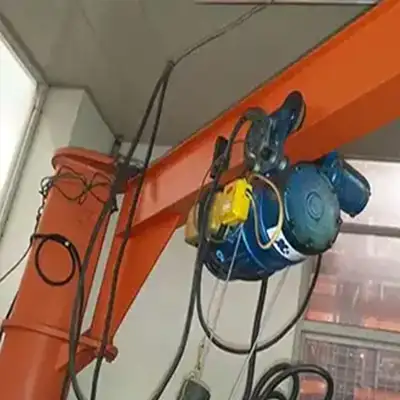
- A low-headroom hoist design to maximize lifting height,
- Side-mounted motor units to reduce space usage above the runway beam, and
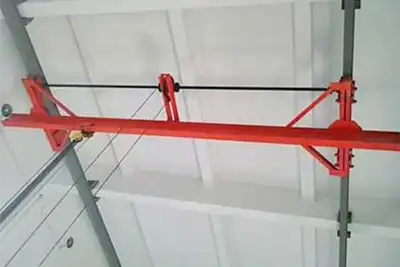
- A lightweight steel structure that could be installed without major changes to the workshop roof.
Installation took place over a weekend to avoid production downtime. The crane’s modular design made on-site assembly quicker, and the supplier’s team coordinated with the plant’s electrician to integrate the crane controls smoothly into the existing power system.
Customizations or Special Features Relevant to Plastic CNC Workshops
Recognizing that mold handling requires more precision than general lifting tasks, the crane was equipped with a few practical features:
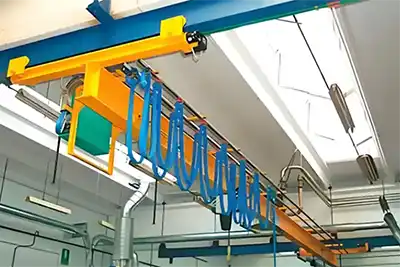
- Two-speed hoisting control, allowing operators to switch between fast movement and slow, precise positioning.
- Pendant control with ergonomic layout, easy for operators to manage mold placement without needing extra hands.
- Load limiter and emergency stop systems, critical for both equipment protection and worker safety.
- Rubber buffers and limit switches, to prevent over-travel and damage to end stops.
The result was a system perfectly suited to the workflow of a plastic CNC shop—strong enough to handle the heaviest molds, yet nimble enough to position them exactly where needed without fuss.
Impact on Mold Handling Efficiency
The impact of the 5-ton overhead crane was immediately noticeable in the daily operations of the Riyadh plastic plant. Mold handling, which was once a tedious and often stressful task, became faster, smoother, and far more controlled.
Reduction in Handling Time per Mold Movement
Before the crane was installed, moving a single mold from storage to the CNC machine could take 20–30 minutes, depending on mold size and availability of workers or forklifts. Now, that same task takes less than 10 minutes.
- Quicker lifts from mold racks
- Faster transfer across workshop sections
- Minimal waiting time, even during busy shifts
The time savings added up quickly, especially when changing molds several times a day. That directly translated into more machine uptime and better workflow.
Improved Safety for Workers and Reduced Manual Labor
Previously, two or three workers were needed to guide, lift, or adjust molds using slings, jacks, or hand-operated hoists. These methods often required bending, pushing, or maneuvering under suspended loads—a clear safety concern.
Now, with the overhead crane in place:
- One operator can handle most mold movements using the pendant control
- Hands-off lifting reduces physical strain and risk of injury
- No need for forklifts inside the tight production zone, reducing collision risk
The plant reported a noticeable drop in minor lifting-related incidents within just the first two months of crane operation.
Enhanced Precision in Positioning Molds During CNC Machining and Molding
Precision is critical when placing molds onto CNC machines or injection molding presses. Even a small misalignment can cause delays or damage.
With the crane’s two-speed hoisting and smooth trolley travel:
- Operators could position molds accurately on the first try
- No more nudging or manual adjustments, which used to eat up time
- Less wear and tear on both the molds and machine beds
This led to quicker machine setup and improved part quality, especially in high-tolerance jobs.
Flexibility in Handling Different Mold Sizes and Weights
The plant works with a mix of mold sizes—some light and compact, others large and asymmetrical. The overhead crane proved versatile enough to handle this variety without needing reconfiguration.
- 5-ton capacity covered all current molds, with room for future upgrades
- Balanced lifting, even for uneven or oddly shaped tools
- Reduced need for extra lifting attachments, thanks to built-in control precision
In short, the crane didn’t just move molds—it gave the plant more control, more safety, and more speed, all within the same limited floor space.
Overall Workflow Improvements
The integration of the 5-ton overhead crane didn’t just improve mold handling—it brought a ripple effect across the entire production line. From CNC machining to injection molding and even final inspection, each stage of the process became smoother and more synchronized.
Streamlining of Production Stages Thanks to Faster Mold Transfers
Before the crane installation, mold transfers between stations were inconsistent. Operators had to wait for forklifts or coordinate multiple workers, which often led to scheduling gaps or machine idling. Now, the crane ensures a reliable, fast handoff from one step to the next.
- CNC machines no longer sit idle waiting for molds to arrive
- Injection molding presses can be set up faster without relying on external lifting support
- Better predictability in job sequencing, allowing production planners to keep things moving without delays
This helped the workshop maintain a steady rhythm, even during busy shifts.
Decreased Downtime Between Machining and Molding Operations
Previously, mold changes could take 30–45 minutes or longer when moving from CNC to molding machines, depending on how busy the lifting equipment or team was. With the crane, that downtime dropped by nearly half.
- Quick transitions between machining and molding setup
- Reduced dependency on other equipment or manpower
- Shorter gaps in machine utilization, boosting output per day
Operators mentioned that they no longer felt the need to “wait around” for a forklift or crew—if the mold was ready, they could move it instantly.
Improved Plant Layout Utilization Enabled by Overhead Crane Integration
Space is always tight in plastic workshops, especially in growing operations. Forklifts required wide aisles and clear paths, limiting how equipment could be arranged. With the crane installed overhead, the floor space was freed up.
- More compact equipment layout, improving material flow
- No need to reserve lanes for forklifts, which were previously underused
- Better storage organization, with racks and tooling placed directly under the crane’s coverage
This allowed the plant to expand machine capacity slightly without needing to physically expand the workshop. Simply put, the crane gave the team room to think smarter about their space.
Challenges and Lessons Learned
While the 5-ton overhead crane brought many benefits, the process wasn’t completely smooth. Like most equipment upgrades, the plant encountered a few bumps during installation and early use. But those challenges also offered valuable lessons that helped shape long-term maintenance and operation strategies.
Initial Installation Hurdles or Training Needs
The biggest challenge came during installation. The workshop had limited headroom and existing utilities running across the ceiling, which made mounting the crane structure a tight fit. The team had to coordinate closely with both the supplier and their in-house maintenance crew to avoid interfering with existing lighting and wiring.
- Temporary relocation of overhead cable trays was required
- Crane beam alignment had to be fine-tuned to avoid conflict with wall-mounted fans and ducting
- The supplier provided a short onsite training session, but it wasn’t enough for all shifts
To address the training gap, the plant scheduled follow-up training sessions internally, rotating team leads through a half-day practical session on crane safety, troubleshooting, and load balancing.
Maintenance and Operational Best Practices Developed
Once the crane was in regular use, the plant quickly realized the importance of having a simple, consistent maintenance plan. While the equipment didn’t require daily checks, small issues—like chain lubrication and pendant cable wear—needed regular attention.
They developed the following best practices:
- Weekly inspection of the hoist and trolley systems
- Monthly lubrication schedule, especially for high-use weeks
- A checklist logbook kept at the crane station for operators to note minor issues
- Quarterly full inspection by the supplier’s local technician
This approach helped catch wear-and-tear early and kept operations running with minimal downtime.
Feedback from Plant Operators and Management
Operator feedback was generally positive, especially from those who had struggled with manual hoisting in the past.
- “It takes one person to do what used to take three,” one technician commented.
- Operators appreciated the responsive controls and slower speed mode, which helped when aligning molds precisely.
- Management noted a decrease in small lifting-related accidents and better workflow predictability during shift planning.
However, there were also a few suggestions from the team:
- Add a wireless remote in the future to allow more flexible operation
- Consider installing a second hook or lifting point for dual-mold setups in the long term
Overall, the crane became more than just a lifting tool—it became a key part of the plant’s production rhythm, with lessons learned now shaping their approach to future equipment upgrades.
Conclusion
The introduction of the 5-ton overhead crane in this Riyadh plastic CNC workshop brought clear, measurable improvements. What used to be a slow, labor-intensive process of mold handling has turned into a streamlined, safe, and efficient part of the daily operation.
Summary of Key Efficiency Gains and Operational Benefits
The crane delivered improvements across several areas:
- Faster mold transfers reduced downtime between machining and molding stages
- Safer lifting operations minimized manual labor and risk to workers
- Better mold positioning improved setup time and machining accuracy
- Optimized workshop space, freeing up floor area for better layout and future equipment
These changes didn’t require major restructuring—just the right tool, installed thoughtfully, and integrated with training and maintenance.
How the 5-Ton Overhead Crane Supports Future Growth and Scalability
With its current capacity, the crane is more than capable of handling the workshop’s existing mold range. But more importantly, it gives the plant room to grow. As they add larger or more complex molds, or even new production lines, they won’t need to revisit their lifting solution right away.
- Spare lifting capacity means they’re ready for heavier tooling
- Flexible operation area allows future reconfiguration of machines without lifting limitations
- Proven safety and efficiency gives confidence in expanding production hours or adding shifts
In essence, the crane is not just solving today’s problems—it’s supporting tomorrow’s expansion.
Final Recommendations for Similar Plastic CNC Workshops
For other plastic factories—especially those working in compact spaces or handling medium-sized molds—the takeaway is simple: an overhead crane isn’t a luxury; it’s a practical upgrade.
- Choose a crane size with room to grow, not just for current mold weights
- Consider low-headroom and two-speed features for precision handling
- Invest in proper training and regular checks—it keeps everything running smoothly
- Plan your layout with the crane in mind, to make the most of your space
A well-installed, well-managed overhead crane can quickly become one of the most valuable tools in a CNC plastics workshop—one that pays for itself in saved time, safer shifts, and smoother production flow.



Yuantai Cranes
Overhead Crane Manufacturer with CE, ISO, SGS, CNEX Certificates.
- Main Specifications - Capacity: 0.5–550 tons | Span: up to 40m | Speed: 0.8–12 m/min | Duty: A3–A7 | Power: 380–690V, 50/60Hz | Control: pendant/remote/cabin
- Full engineering: FEA/PLC/VFD + in-house build + global delivery + on-site support, for workshops, factories, EPC contractors, industrial projects, etc.
- Support: design, manufacturing, testing, service – end-to-end, customized lifting solutions worldwide.
How to Get an Accurate Crane Price for Your Application?
Tips: Copy the spec list, fill in your details, and paste it into the form on the right/ down-below for a quick price.
- Crane type:_____ . (e.g., overhead crane, gantry crane, jib crane)
- Max weight to lift:_____ tons. (e.g., 2t, 5t, 10t, 20t, 50t)
- Lifting height:_____ m. (How high does the hook need to reach?
- Workshop width (span):_____ m . (Distance between the two crane rails)
- Travel distance:_____ m . (How long does the crane need to move along the runway?)
- Control type:_____. (Pendant / remote / cabin Control)
- Power supply:_____. (Local voltage & frequency – e.g., 380V, 50Hz, 3-phase)
- What will it be used for?_____ (e.g., steel fabrication, concrete products, mold handling, general manufacturing, etc.)
- Any special requirements?_____ (e.g., extreme temperature, dusty or explosive environment, special paint color, etc.)
Just leave a message via the contact form and our hoist and crane engineer will contact you with in 24working hours.
Get Your Custom Quote–Quick & Easy
Fill in what you know. Skip what you don't – we'll help.Any question will be reply with 24 working hours