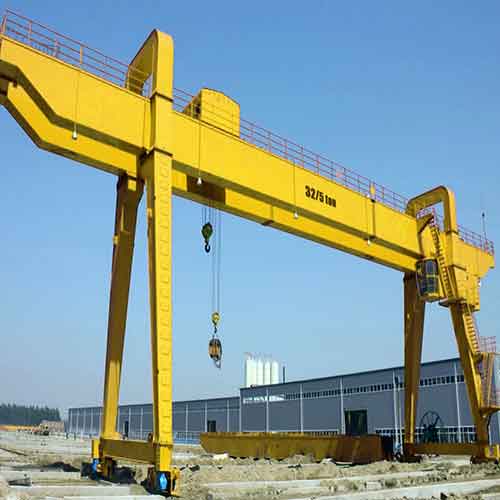
Slab & Coil Yard Cranes 5–80 Ton for Indian Steel Yards
Check safe handling of slabs and coils in India with 5–80 ton overhead cranes. Practical guide for crane selection, duty cycles, and yard operations.
| Crane Type | Slab & Coil Yard Crane System: C-Hook Overhead Crane, Magnetic Overhead/Gantry Crane and Slab Clamp Overhead/Gantry Crane; Working Duty: M5–M7 , selected by load spectrum and operating cycles; Power Supply: 380/400/415/440/480V, 3 Ph, 50/60Hz or customize |
| Crane Capacity | 5–80+ ton; C-hook cranes 5–40 ton, magnetic cranes 20–80 ton, slab clamp cranes 20–80 ton |
| Span Length | 10–35 m+ typical; project-specific according to yard width, storage layout, runway arrangement and required coverage |
| Lifting Height | 6–20 m+ typical; project-specific for higher stacking or specialized yard layouts |
| Coverage Area Type | Indoor and outdoor slab/coil storage areas, production zones, loading areas, transfer areas and crane runway zones |
| Application | Steel slab handling, steel coil handling, slab storage yards, coil yards, steel processing plants, integrated steel mills, loading/unloading and production transfer |
| Certifications | CE / ISO / SGS / Other third-party inspection |
| Customization | Material: Steel Coil / Slab / Stacked Slab · Attachments: C-Hook / Electromagnet / Slab Clamp · Handling: Coil Positioning / Slab Stacking / Transfer / Loading · Integration: Existing Runway / Storage Layout / Multi-Crane Coordination · Special: Anti-Sway |
Crane Manufacturer: Yuantai Cranes – 30+ Years Professional Crane Manufacturer from China
Category: India
Tags: India
Your Trusted Overhead Crane Manufacturer & Supplier
Slab & Coil Yard Overhead Cranes
Handling Steel Products Safely in Indian Plants
Most Important Takeaway: In India’s fast-growing steel industry, choosing the right overhead crane for slab and coil yards is not just about lifting capacity—it’s about operational reliability, safety, and productivity under local conditions. Selecting C-hook cranes, magnetic cranes, or slab clamp cranes that match yard layout, duty cycles, and environmental challenges ensures smooth operations, minimizes downtime, and protects your workforce.
Key Takeaways for Indian Steel Plant Operators & Buyers
- Reliable handling of slabs and coils: Right crane selection ensures material moves efficiently in high-volume yards.
- Optimized crane types for yard operations: C-hook, magnetic, and slab clamp cranes address specific handling needs for coils and slabs.
- Indian plant-specific challenges solved: Power fluctuations, high temperatures, monsoon rains, and dust are considered in crane design and operation.
- Cost-effective maintenance and spares: Choosing cranes with locally available parts reduces downtime and lifecycle costs.
- Compliance with local and international standards: Ensures safe operations, protects employees, and builds trust among clients and community.
Questions Solved Here:
- Which crane type is best for coil vs. slab handling in Indian yards?
- What crane capacities and duty classes suit high-frequency Indian operations?
- How can Indian plants reduce downtime due to environmental challenges?
- How to align crane investment with practical yard requirements and safety norms?
Slab & Coil Yard Operations in India
Steel yards in India work differently from those in other countries. Big plants like Tata Steel Jamshedpur, JSW Vijayanagar, and SAIL Bhilai handle thousands of tons of slabs and coils every day. Smaller rebar mills and distribution yards in Maharashtra, Gujarat, and Odisha manage a mix of sizes and move materials frequently. Each yard has its own pace, shaped by production schedules, climate, and workforce patterns.
Handling slabs and coils isn't just about lifting heavy loads. It's about moving them safely and reliably. Mistakes can slow down production or even damage materials. That's why knowing your yard conditions is the first step before picking a crane.
Main Challenges in Indian Steel Yards
Indian yards face some practical challenges that affect crane choice and operation:
- High temperatures: Summer heat can reach 45°C or more in open yards. Hot conditions can affect motors, brakes, and wire ropes. Regular checks are necessary.
- Power fluctuations: Electricity can be unstable in some areas. Voltage dips or surges can stop crane operations or damage electrical components. Backup power or stabilizers are often needed.
- Variable material sizes: Slabs and coils come in different thicknesses, diameters, and weights. Cranes must handle all sizes safely.
- Continuous operation: Many yards run multiple shifts every day. Cranes need to be strong and durable for frequent use, often rated M5–M7 duty class.
Practical Tips for Crane Selection
Choosing the right crane in India is about balance—productivity and reliability together. Key points to consider:
- Use the right crane for the material: C-hook cranes for coils, magnetic cranes for slabs, slab clamp cranes for stacked or uneven slabs.
- Make sure crane span and lifting height fit the yard layout. Older plants may have limited space.
- Pick designs that are easy to maintain and have spare parts available locally.
- Protect cranes from dust, heat, and rain with coatings, enclosures, or weatherproofing.
Types of Yard Overhead Cranes for Indian Steel Yards
Choosing the right overhead crane is crucial for slab and coil yards in India. Each crane type is designed for specific materials and operational needs. Indian yards face challenges like high temperatures, dust, monsoon rains, and variable material sizes. Here’s a detailed look at the main crane types used in Indian steel operations.
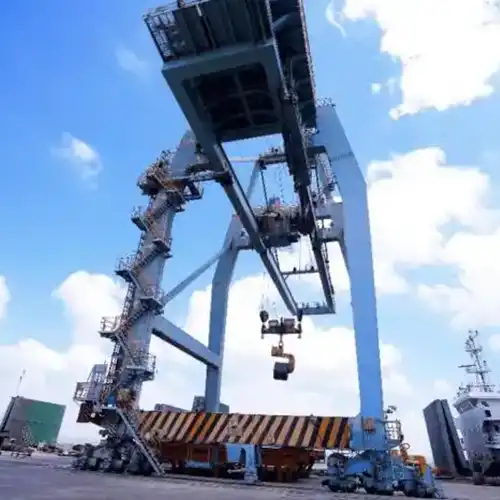
C hook coil handling cranes, rail mounted gantry crane with c hook,
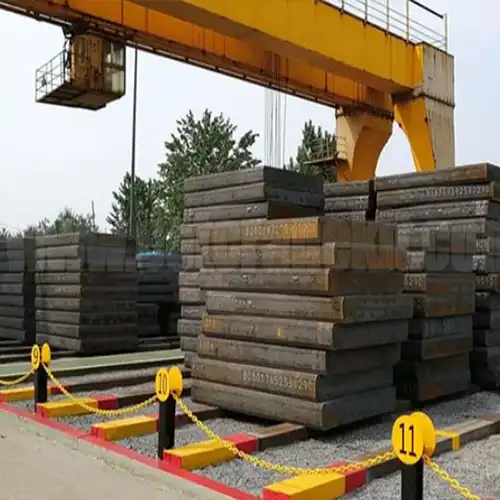
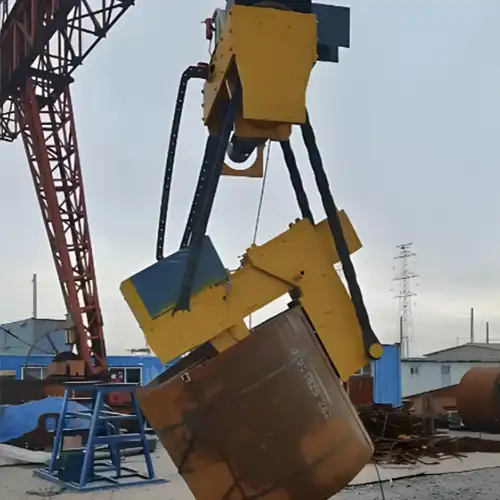
Coil clamp gantry cranes for coil handling
C-Hook Cranes – Fast Coil Handling
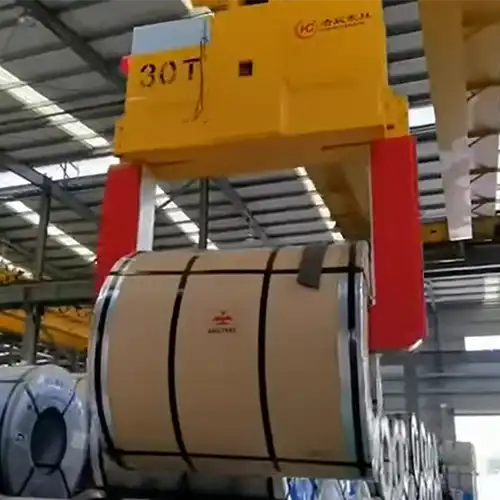
C-hook cranes are designed specifically for coil handling. The C-shaped hook fits inside the coil, allowing operators to lift and move it safely. These cranes are particularly useful in Indian yards where coils are moved frequently and operations run multiple shifts.
Typical Configurations & Capacities: The right configuration depends on the size of the coils and the yard layout:
- Top-running single girder C-hook cranes: 5–20 tons. Ideal for smaller coils or compact yard spaces.
- Top-running double girder C-hook cranes: 20–40 tons. Suited for larger coils or high-frequency yards.
- Duty class: M5–M7, designed for continuous use throughout the day.
Why Indian Operators Prefer Them: C-hook cranes are practical for everyday operations:
- Reduce coil damage compared to chains, slings, or manual handling.
- Allow faster movement of coils in tight or crowded yard layouts.
- Simple hook design makes inspection and maintenance easier in hot and dusty conditions.
Specialized Project Locations in India: These cranes are commonly used at:
- Tata Steel Jamshedpur – for high-volume coil handling.
- JSW Vijayanagar – compact yard with frequent shifts.
- SAIL Bhilai – for handling coils of varying sizes reliably.
Magnetic Cranes – Efficient Slab Movement
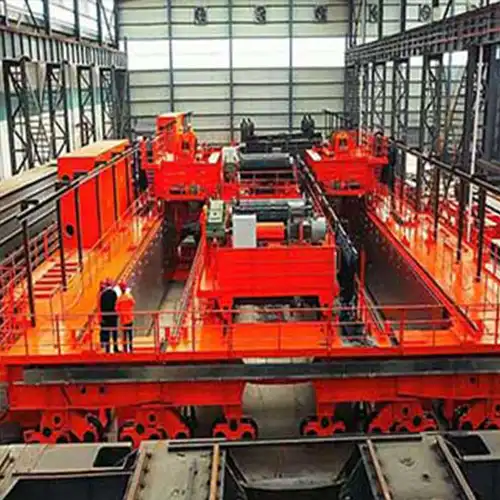
Magnetic overhead cranes use powerful electromagnets to lift slabs safely and efficiently. They are ideal for Indian yards that handle multiple slabs at once, increasing productivity while keeping operators safe.
Typical Configurations & Capacities: Magnetic cranes come in different designs depending on the yard:
- Top-running double girder slab magnetic cranes: 20–50 tons. Suitable for indoor slab storage or processing.
- Gantry-type magnetic cranes for outdoor yards: 30–80 tons. Perfect for larger outdoor yards exposed to dust, rain, and sun.
- Duty class: M6–M7 for continuous, high-frequency operations.
Indian Considerations: Operating magnetic cranes in India requires extra attention:
- Stable power supply is critical; backup systems prevent unplanned stops.
- Slabs may be hot, oxidized, or covered with scale, requiring careful magnet calibration.
- Outdoor yards need weatherproofed cranes to handle monsoon rains and dust.
Specialized Project Locations in India: Magnetic cranes are widely used at:
- SAIL Rourkela – high-capacity slab yards.
- JSW Dolvi – handling multiple slabs in a limited space.
- Essar Hazira – outdoor slab yards with heavy-duty cranes.
Slab Clamp Cranes – Safe Vertical Lifting
Slab clamp cranes are designed for lifting slabs vertically using mechanical clamps. They are especially useful in yards with stacked or uneven slabs, where safety and precision are critical.
Typical Configurations & Capacities: The design depends on the slab weight and yard layout:
- Top-running double girder slab clamp cranes: 20–60 tons. Suitable for indoor storage and processing areas.
- Gantry slab clamp cranes: 25–80 tons. Designed for outdoor yards with larger or heavier slabs.
- Duty class: M5–M7 for continuous, high-frequency yard operations.
Indian Advantages: Slab clamp cranes offer practical benefits for Indian conditions:
- Reduce the risk of slab slippage in hot, dusty, or monsoon-affected yards.
- Integrate easily into existing crane control systems.
- Durable design allows safe operation in outdoor, harsh environments.
Specialized Project Locations in India: These cranes are commonly deployed at:
- Bhilai Steel Plant – stacked slab yards with frequent handling.
- JSW Salem – for slabs of varying thicknesses.
- Tata Steel Kalinganagar – high-frequency operations in large outdoor yards.
Yard Duty Frequency & Operating Considerations
In Indian steel yards, understanding yard duty frequency is key to selecting cranes that last. Slabs and coils are often moved continuously throughout the day, sometimes in multiple shifts. That means cranes need to handle frequent lifts without slowing down operations or wearing out too quickly.
Most integrated steel plants and rebar mills in India rely on cranes rated M6–M7 duty class to withstand these heavy daily cycles. On top of that, seasonal conditions like monsoon rains, dust, and high summer temperatures put extra stress on equipment. Cranes must be robust, reliable, and designed for easy maintenance under these conditions.
Practical Advice for Indian Operators
Before finalizing a crane purchase or planning operations, Indian plant managers should consider the following:
- Schedule maintenance around labor availability: Regular inspections of brakes, wire ropes, and motors prevent unplanned downtime. Align maintenance with shift schedules so operations remain smooth.
- Prioritize cranes with locally available spares: Fast access to spare parts reduces downtime and keeps production on track. Cranes designed for local servicing are a big advantage in India’s fast-moving yards.
- Monitor operational cycles: Keep track of how frequently each crane is used. Avoid overloading or exceeding duty limits to extend equipment life and prevent unexpected failures.
Safety Protocols for Indian Slab & Coil Handling
Safety is a top priority in Indian slab and coil yards. Cranes move heavy materials continuously, often in outdoor yards exposed to heat, dust, and rain. Implementing practical safety protocols not only protects workers but also ensures smooth operations and builds trust with the local workforce and community.
Operator Training
Crane operators must be trained to handle the specific conditions found in Indian yards. Training programs should match local labor skill levels and comply with certification requirements. Operators need to understand proper lifting techniques, load handling, and emergency procedures.
- Ensure all operators are familiar with the crane type they are using.
- Provide refresher training regularly, especially for high-frequency yards.
- Encourage awareness of environmental challenges like slippery surfaces during monsoon or hot surfaces in summer.
Load Control Systems
Cranes must be equipped with reliable load control systems to prevent accidents. These systems help operators manage heavy slabs and coils safely, even in high-pressure operations.
- Use anti-sway mechanisms to keep loads stable during movement.
- Include overload protection to prevent crane damage and material accidents.
- Ensure emergency brakes are functional and tested regularly.
Yard Layout Safety
The physical layout of the yard directly affects safety. Clearly defined pathways help prevent accidents between cranes, workers, and other vehicles.
- Segregate pedestrian areas from crane travel zones.
- Use visible markings or barriers to guide movement.
- Maintain clear lines of sight for crane operators, especially in crowded or compact yards.
Practical Tip
Regular safety checks and audits are more than formalities—they build trust and improve efficiency. Reviewing incidents and near-misses helps prevent future problems and demonstrates commitment to worker safety.
- Conduct routine inspections of cranes, controls, and lifting devices.
- Hold safety meetings to discuss improvements and lessons learned.
- Track safety performance metrics to ensure ongoing accountability.
Buyer’s Checklist for Indian Slab & Coil Yard Cranes
Selecting the right crane for slab and coil yards in India is about more than just lifting capacity. Indian plants face high temperatures, dust, monsoon rains, and frequent operations, so the equipment must be reliable, maintainable, and suited to local conditions. Here’s a practical checklist for buyers:
Duty Frequency and Operating Cycles
Crane duty class is crucial in Indian yards where slabs and coils are moved continuously, often across multiple shifts.
- Ensure the crane matches your yard’s operational cycles.
- Choose a crane rated for M5–M7 duty class if operations are frequent and heavy.
- Plan for continuous usage without overloading the system.
Load Type, Slab Thickness, and Coil Diameter
Material characteristics dictate the crane type and lifting accessories needed.
- Match the crane to slab thickness, coil diameter, and weight.
- Consider specialized handling like C-hook cranes for coils, magnetic cranes for slabs, and slab clamp cranes for stacked loads.
- Verify crane adaptability for future changes in material sizes.
Environmental Challenges: Heat, Dust, Monsoon Rains
India’s weather and yard conditions affect crane performance and maintenance.
- Ensure cranes can handle high temperatures and dusty environments.
- Outdoor cranes should be weatherproofed for monsoon rains.
- Protective coatings and enclosures extend equipment life.
Maintenance Capabilities and Local Availability of Spare Parts
Downtime can be costly, so ease of maintenance is a key factor.
- Prioritize cranes that are easy to maintain locally.
- Confirm availability of spare parts in India to minimize delays.
- Include routine inspection plans in operations to prevent unexpected breakdowns.
Compliance with Indian and International Safety Standards
Safety compliance ensures both regulatory adherence and operational reliability.
- Follow relevant Indian standards (IS 3177, IS 3938, etc.).
- Ensure cranes meet international norms for lifting and safety.
- Incorporate features like anti-sway, overload protection, and emergency brakes for safer operations.
Business Insight
In India, a crane that is robust, low-maintenance, and locally serviceable builds trust with your workforce and stakeholders. It reduces operational risks and ensures long-term reliability, which is often more important than upfront cost savings.
Frequently Asked Questions (FAQ) – Indian Slab & Coil Yard Cranes
1. Which crane type is best for coil vs. slab handling in Indian yards?
For coils, C-hook cranes are ideal. The C-shaped hook fits inside the coil, reducing damage and allowing fast movement, even in tight yard layouts.
For slabs, magnetic cranes work best when handling multiple slabs at once, while slab clamp cranes are perfect for stacked or uneven slabs where secure vertical lifting is required.
2. What crane capacities and duty classes suit high-frequency Indian operations?
Indian steel yards operate continuously, often across multiple shifts. Typical capacities are:
- C-hook cranes: 5–40 tons
- Magnetic cranes: 20–80 tons
- Slab clamp cranes: 20–80 tons
Duty classes M5–M7 are recommended to handle frequent lifts without equipment failure. Choosing cranes rated for your yard’s operational cycles ensures durability and fewer interruptions.
3. How can Indian plants reduce downtime due to environmental challenges?
Indian yards face heat, dust, and monsoon rains, all of which affect crane performance. To minimize downtime:
- Use cranes designed for high temperatures and dusty conditions.
- Weatherproof outdoor cranes for rain and humidity.
- Ensure local availability of spare parts for quick replacement.
- Schedule preventive maintenance aligned with operational shifts.
4. How to align crane investment with practical yard requirements and safety norms?
Crane selection should balance cost, productivity, and safety. Consider:
- Yard layout and material type (slab thickness, coil diameter, and weight).
- Duty frequency and expected operational cycles.
- Compliance with Indian safety standards (e.g., IS 3177, IS 3938) and international norms.
- Features like anti-sway, overload protection, and emergency brakes.
Investing in a crane that is robust, low-maintenance, and locally serviceable builds trust with your workforce and ensures long-term reliability—critical for Indian steel operations.
Conclusion: Making the Right Crane Choice for Indian Slab & Coil Yards
Strategic Decision Beyond Specs
Choosing a crane in India’s steel yards isn’t just about lifting capacity. It’s about aligning equipment with yard layout, duty cycles, and environmental conditions. The right crane ensures smooth operations and protects both workers and materials.
Matching Crane Type to Your Needs
- C-hook cranes: Fast, safe coil handling in compact yards.
- Magnetic cranes: Efficient movement of multiple slabs simultaneously.
- Slab clamp cranes: Secure vertical lifting for stacked or uneven slabs.
Selecting the correct type prevents downtime, reduces material damage, and improves overall efficiency.
Practicality and Reliability Matter
Indian steel operators value cranes that are:
- Durable and robust for continuous, high-frequency operations.
- Easy to maintain with locally available spare parts.
- Trusted suppliers who understand local yard challenges.
The Business Impact
Investing in the right crane delivers measurable results:
- Fewer stoppages and smoother yard operations.
- Safer handling and reduced workplace incidents.
- Better return on investment over the long term.
A carefully chosen crane is not just equipment—it’s a partner in maintaining productivity, safety, and reliability in India’s steel industry.

Yuantai Cranes
Overhead Crane Manufacturer with CE, ISO, SGS, CNEX Certificates.
- Main Specifications - Capacity: 0.5–550 tons | Span: up to 40m | Speed: 0.8–12 m/min | Duty: A3–A7 | Power: 380–690V, 50/60Hz | Control: pendant/remote/cabin
- Full engineering: FEA/PLC/VFD + in-house build + global delivery + on-site support, for workshops, factories, EPC contractors, industrial projects, etc.
- Support: design, manufacturing, testing, service – end-to-end, customized lifting solutions worldwide.
How to Get an Accurate Crane Price for Your Application?
Tips: Copy the spec list, fill in your details, and paste it into the form on the right/ down-below for a quick price.
- Crane type:_____ . (e.g., overhead crane, gantry crane, jib crane)
- Max weight to lift:_____ tons. (e.g., 2t, 5t, 10t, 20t, 50t)
- Lifting height:_____ m. (How high does the hook need to reach?
- Workshop width (span):_____ m . (Distance between the two crane rails)
- Travel distance:_____ m . (How long does the crane need to move along the runway?)
- Control type:_____. (Pendant / remote / cabin Control)
- Power supply:_____. (Local voltage & frequency – e.g., 380V, 50Hz, 3-phase)
- What will it be used for?_____ (e.g., steel fabrication, concrete products, mold handling, general manufacturing, etc.)
- Any special requirements?_____ (e.g., extreme temperature, dusty or explosive environment, special paint color, etc.)
Just leave a message via the contact form and our hoist and crane engineer will contact you with in 24working hours.
Get Your Custom Quote–Quick & Easy
Fill in what you know. Skip what you don't – we'll help.Any question will be reply with 24 working hours