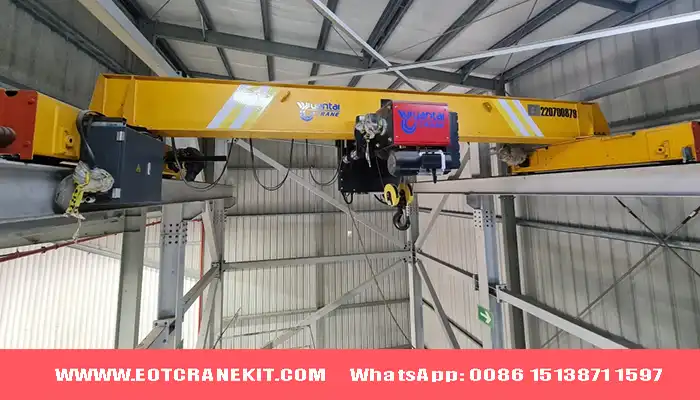
Qatar Single Girder Overhead Crane Case 5T–12T System
Content Quick Link
Single Girder Overhead Crane System (5 Ton + 12 Ton Low Headroom Solution)- Qatar case study: single girder overhead crane system with 5 ton & 12 ton low headroom crane, European VFD overhead crane hoist solution.
Project Background – Practical Industrial Requirement in Qatar
Industrial Working Environment in Qatar
In Qatar, industrial workshops are usually busy every day. Steel fabrication, construction supply, and logistics work all run on tight schedules.
In this kind of environment, crane equipment is not just a machine. It is part of daily production flow. If it stops, the whole workshop slows down.
That is why buyers in Qatar usually focus on three things:
- Stable operation
- Long service life
- Easy maintenance in daily use
Simple, but very practical requirements.
Project Requirement – What the Workshop Needed
This project was planned for a workshop that handles both heavy and regular lifting work.
The main requirement was clear:
One crane system was not enough for all tasks. The workshop needed an low headroom overhead crane solution to match different working loads.
So the final requirement included:
- A crane for heavy steel and structural lifting
- A crane for daily material movement inside production lines
Nothing complicated. Just a system that fits industrial workshop work.
Final Solution – Single Girder Overhead Crane System
The solution was a single girder overhead crane system designed for practical workshop use in Qatar.
It includes two crane capacities working together:
Heavy Duty Crane
- 12 ton overhead crane
- Used for steel structures, heavy assemblies, and large lifting jobs
- Handles heavier loads but operates less frequently
General Production Crane
- 5 ton overhead crane
- Used for daily handling tasks inside the workshop
- Supports continuous production movement
This combination helps balance workload inside the workshop instead of pushing everything onto one crane.
Low Headroom Design – Why It Matters in Qatar Workshops
Most workshops in Qatar have fixed building heights. That means lifting height is always limited.
Because of this, the system was designed as a low headroom crane.
This design helps in a simple but important way:
- More lifting height inside the same building
- Better use of vertical space
- Easier handling of tall or bulky materials
In industrial workshop operation, even a small gain in lifting height makes daily work easier.
European Overhead Crane Hoist + VFD Control
To improve operation quality, the system uses a European overhead crane hoist combined with VFD overhead crane control.
In simple terms:
- The hoist lifts and lowers load smoothly
- VFD control helps speed up or slow down gently
- The load does not swing too much during movement
This is important when workers handle steel plates, long beams, or assembled parts.
It feels more controlled during operation, especially for daily use.
Practical Value for Workshop Operation
This system is designed based on industrial workshop behavior, not theory.
It helps in several ways:
- The 12 ton overhead crane handles heavy lifting without overloading the smaller system
- The 5 ton overhead crane supports daily work without slowing down heavy equipment
- The single girder overhead crane structure keeps installation and maintenance simple
- The low headroom crane design improves usable lifting height
- The VFD overhead crane system makes operation smoother and safer
This project is not about complex design. It is about matching the crane system to industrial workshop conditions in Qatar.
A single girder overhead crane system with 12 ton and 5 ton capacity, combined with low headroom crane design and European hoist technology, gives a balanced and practical solution for daily industrial work.
Engineering Solution Overview – Practical Design for Qatar Workshop Conditions
Overall System Design Concept
The crane system is designed as a European overhead crane structure with low headroom configuration.
In simple terms, the goal is to make full use of the available workshop height without changing the building structure.
In Qatar industrial workshops, this point is important. Many factories already have fixed steel buildings, so the crane must "fit inside the space" rather than require modification.
The design focuses on:
- Better lifting height within limited building height
- Stable operation under continuous industrial use
- Simple maintenance and long service life
- Safe movement of heavy and medium loads
Final Crane Configuration – Dual Capacity Setup
The project uses a two-crane working layout. Each crane has a clear role inside the workshop.
Heavy Duty Crane Line
- 1 × 12 ton overhead crane
- Used for heavy fabrication work
- Suitable for steel structures, large assemblies, and lifting bulky components
- Designed for less frequent but higher load operations
Production Crane Line
- 1 × 5 ton overhead crane
- Used for daily workshop material handling
- Supports production flow between workstations
- Handles frequent lifting tasks with stable operation
Low Headroom Crane Design – Maximizing Workshop Height
Both cranes are built as low headroom crane systems.
This design is commonly used in Qatar workshops because it solves a practical problem: limited building height.
Main advantages include:
- More effective lifting height inside the same workshop structure
- Better use of vertical working space
- Improved handling for taller or stacked materials
- Reduced limitation from roof and steel structure beams
In industrial operation, this means workers can lift higher loads without changing the building.
European Overhead Crane Structure – Stable Industrial Operation
The system uses a European overhead crane design, which is widely used in modern industrial workshops.
Key characteristics:
- Compact structure with reduced dead weight
- Smooth load movement during operation
- Better stress distribution on runway beams
- Suitable for long-term continuous use
This structure is chosen mainly for stability and predictable performance in daily industrial work.
Working Principle – Simple and Practical Layout
The system is not designed to be complex. It follows a clear working logic:
- The 12 ton overhead crane handles heavy lifting tasks
- The 5 ton overhead crane supports routine production flow
- Both cranes operate independently but within the same workshop system
This separation helps reduce overload on a single crane and keeps production moving smoothly.
Engineering Value Summary
In practical workshop conditions in Qatar, this engineering solution provides:
- A balanced combination of heavy-duty and general-purpose lifting
- Efficient use of limited workshop height through low headroom crane design
- Stable European overhead crane performance for long-term use
- Clear division of workload between 12 ton and 5 ton systems
The overall approach is simple: match crane capacity to industrial working needs, not just maximum load requirements.
Technical Specifications – Qatar Single Girder Overhead Crane System
12 Ton Overhead Crane System – Heavy Duty Line
This crane is designed for heavy fabrication work and structural lifting inside the workshop. It follows a single girder overhead crane structure with low headroom optimization.
Main Technical Parameters
- Type: European style Single girder overhead crane
- Configuration: 12 ton low headroom crane
- Span: 18.586 m
- Lifting Height: 10.689 m
- Hoist Type: 12 ton low headroom hoist (European overhead crane hoist)
Practical Use in Workshop
- Steel structure lifting
- Heavy assembly handling
- Large component installation work
This 12 ton overhead crane is usually used for tasks that require higher lifting capacity but lower frequency during daily operation.
5 Ton Overhead Crane System – Production Line
This 5 ton overhead crane supports daily workshop movement and continuous production handling. It is also built as a single girder overhead crane with low headroom design.
Main Technical Parameters
- Type: Single girder overhead crane
- Configuration: 5 ton low headroom crane
- Span: 24.026 m
- Lifting Height: 10.884 m
- Hoist Type: 5 ton low headroom hoist (European overhead crane hoist)
Practical Use in Workshop
- Material transfer between workstations
- Daily production lifting tasks
- Medium-load handling during assembly work
The 5 ton overhead crane is designed for frequent operation with stable performance during continuous use.
Electrical & Control System – Stable and Controlled Operation
Both crane systems share the same electrical and control design, suitable for Qatar industrial power conditions.
Electrical Specifications
- Power Supply: 380V / 50Hz / 3 Phase
- Suitable for standard GCC industrial workshop power systems
Control System – VFD Overhead Crane Technology
The system uses a VFD overhead crane control system (Variable Frequency Drive) for both cranes.
Key Functional Advantages
- Smooth acceleration and deceleration
- Reduced load swing during lifting and traveling
- Better positioning accuracy for overhead crane hoist operation
- Lower mechanical impact on structure and components
Hoist System – European Overhead Crane Hoist Design
Both cranes use European overhead crane hoist systems, designed for stable and precise lifting.
Practical Benefits
- Stable lifting speed under different loads
- Better control during vertical movement
- Reduced wear compared to traditional hoist systems
- Suitable for long-term industrial operation in workshop environments
Summary – Practical Technical Layout
This technical configuration combines:
- 12 ton overhead crane (low headroom crane system) for heavy duty tasks
- 5 ton overhead crane (low headroom crane system) for production work
- European overhead crane hoist system for stable lifting
- VFD overhead crane control system for smooth and safe operation
- Standard 380V / 50Hz / 3 phase power supply for Qatar industrial use
In industrial workshop operation, this setup supports both heavy lifting and daily production work without unnecessary complexity.
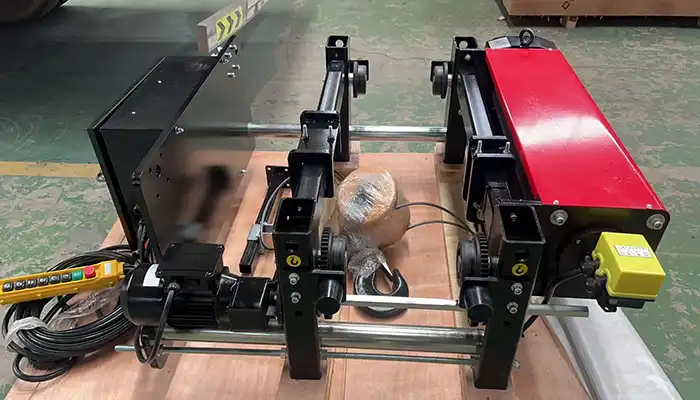
Low headroom electric hoists of Single Girder Overhead Crane System (5 Ton + 12 Ton Low Headroom Solution)- Qatar case study
Product Design Features – European Engineering Approach (Qatar Practical Workshop Focus)
European Overhead Crane Structure – Stable and Practical Design
This project uses a European overhead crane structure, which is commonly applied in modern industrial workshops where stable operation and long service life are required.
In Qatar's industrial environment, many buyers prefer this structure because it is straightforward, easy to maintain, and performs consistently under daily workload conditions.
Main design characteristics:
- Compact crane structure that saves workshop space
- Higher lifting efficiency during repeated operations
- Reduced self-weight, which helps lower stress on runway beams
- More balanced load distribution across the crane girder
In industrial workshop use, this means the crane runs smoothly without putting unnecessary strain on the building structure.
Low Headroom Crane Optimization – Better Use of Workshop Height
Both crane systems are designed as low headroom crane configurations.
This is a very practical requirement in Qatar, where workshop building height is usually fixed and cannot be modified after construction.
Instead of changing the building, the crane is designed to fit inside it.
Practical improvements achieved:
- More effective lifting height within the same building height
- Better use of vertical space inside the workshop
- Easier handling of tall steel parts and long materials
- More flexible operation in tight structural conditions
In daily use, this helps operators get more usable lifting range without structural changes or extra construction work.
VFD Overhead Crane Control System – Smooth and Controlled Operation
The system integrates VFD overhead crane control technology (Variable Frequency Drive) for both the 12 ton and 5 ton overhead cranes.
This control method is widely used in modern overhead crane hoist systems because it improves how the crane moves and reacts during operation.
Key practical benefits:
- Smooth start and stop of the overhead crane hoist
- Reduced mechanical shock during lifting and traveling
- Better load stability, especially when handling steel or uneven loads
- Improved control accuracy during positioning work
- Lower energy consumption during partial-load operation
In industrial workshop conditions, this makes the crane easier to operate and reduces sudden movements that can affect both safety and material handling quality.
Summary – Practical Engineering Design Logic
This European overhead crane design approach is not focused on complexity. It is focused on daily usability in industrial workshop conditions.
The system combines:
- European overhead crane structure for stable operation
- Low headroom crane design for better lifting height usage
- VFD overhead crane system for smooth and controlled movement
In Qatar industrial workshops, this type of design is commonly preferred because it supports continuous work, simple operation, and stable long-term performance without unnecessary complications.
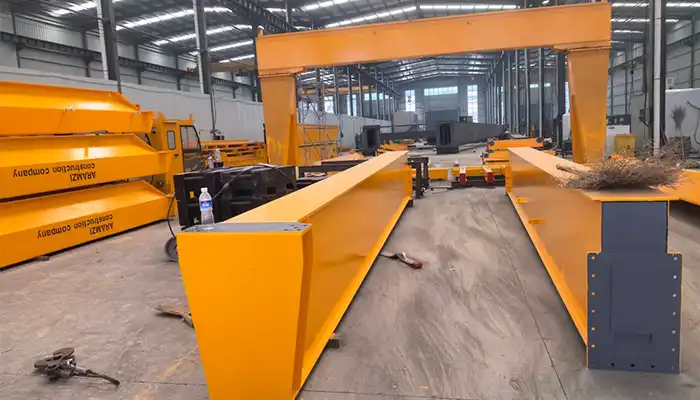 Main girder of Single Girder Overhead Bridge Crane System (5 Ton + 12 Ton Low Headroom Solution)- Qatar case study
 Engineering Advantages for Qatar Industrial Buyers
Dual-Capacity Operational Strategy – Practical Workshop Layout
In many Qatar workshops, lifting work is not the same every day. Some tasks are heavy, some are frequent, and some need quick movement between stations. Because of this, using one crane for everything usually creates unnecessary load and delays.
This project uses a dual-capacity single girder overhead crane system, which separates heavy lifting from daily handling work.
How the workload is divided:
- 12 ton overhead crane → heavy fabrication and steel structure handling
- 5 ton overhead crane → daily production flow and routine material movement
This setup keeps the system balanced. Heavy work does not interrupt daily production, and daily work does not overload the heavy-duty crane.
In industrial operation, this kind of separation often helps reduce waiting time between lifting tasks.
Long-Term Reliability for GCC Industrial Conditions
Industrial buyers in Qatar and the wider GCC region usually focus on long-term operation rather than short-term performance. Equipment is expected to run for years with stable output.
This single girder overhead crane system is designed with that expectation in mind.
Key practical requirements it supports:
- Long service life under continuous operation
- Low maintenance downtime during production cycles
- Stable performance in daily workshop use
- Reliable operation under standard 380V / 50Hz industrial conditions
In practical terms, the goal is simple: the crane should work every day without frequent interruption or complex servicing.
Low Headroom Advantage in Industrial Workshop Conditions
Workshop height in Qatar is often fixed once the building is completed. This makes lifting height a very important factor during crane selection.
Both the 5 ton low headroom crane and 12 ton low headroom crane are designed to solve this limitation.
Practical advantages:
- More usable lifting height without changing the building structure
- Better utilization of vertical workshop space
- Easier lifting of tall steel components and assembled parts
- More flexibility in handling different product sizes
In daily operation, this means operators can lift higher loads within the same workshop height limit.
European Hoist System Stability – Controlled and Safe Operation
Both cranes use European overhead crane hoist systems, including the 5 ton low headroom hoist and 12 ton low headroom hoist.
These hoists are designed for stable and controlled lifting performance in industrial environments.
Main operational benefits:
- Smooth vertical lifting without sudden movement
- Reduced wear on mechanical and structural components
- Higher positioning accuracy during load placement
- Improved safety during lifting and lowering operations
In industrial workshop use, this helps operators maintain better control, especially when handling steel materials or irregular-shaped loads.
Summary – Practical Engineering Value for Qatar Buyers
This system is designed around industrial workshop needs in Qatar, not theoretical performance.
It combines:
- 12 ton overhead crane for heavy lifting tasks
- 5 ton overhead crane for daily production work
- Low headroom crane design for space efficiency
- European hoist systems for stable lifting control
- Long-term reliability suitable for GCC industrial conditions
The result is a practical lifting solution that supports daily production without unnecessary complexity.
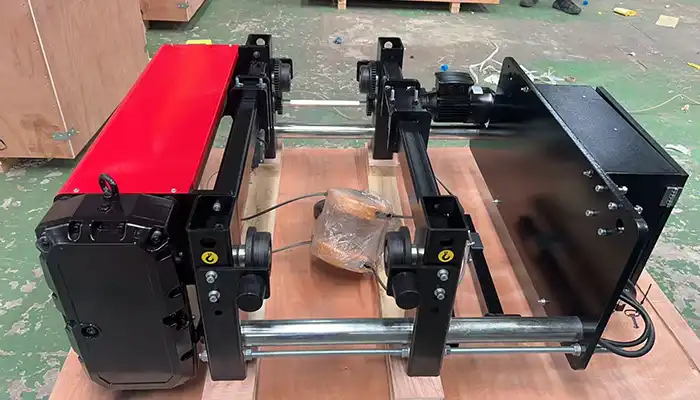
Low Profile Hoist of Single Girder Overhead Crane System (5 Ton + 12 Ton Low Headroom Solution)- Qatar case study
Practical Problems Solved for Qatar Clients
Limited Workshop Height Reduces Lifting Efficiency
In many Qatar industrial workshops, the building height is already fixed before crane installation. This often creates a industrial limitation: the hook height becomes lower than expected, and some lifting tasks become difficult or inefficient.
This is a common situation in steel fabrication and general manufacturing workshops.
Solution: Low Headroom Crane + European Overhead Crane Structure
The system uses a low headroom crane design combined with a European overhead crane structure.
This helps in a practical way:
- Increases usable lifting height inside the same workshop
- Reduces loss of vertical space caused by crane structure
- Improves handling of tall steel parts and large assemblies
- Works well in existing buildings without modification
In industrial operation, this means more lifting range without changing the workshop structure.
Mixed Heavy and Light Lifting Requirements
Most workshops in Qatar do not handle only one type of load. On the same day, workers may need to lift heavy steel structures and also move lighter materials between stations.
Using one crane for everything often slows down work or creates overload risk.
Solution: 12 Ton Overhead Crane + 5 Ton Overhead Crane Dual System
This project uses a dual single girder overhead crane setup:
- 12 ton overhead crane → heavy fabrication and structural lifting
- 5 ton overhead crane → daily production handling and material flow
This separation makes operation more balanced and practical:
- Heavy tasks do not interrupt daily workflow
- Light tasks do not occupy heavy-duty equipment
- Overall workshop movement becomes more efficient
Unstable Operation with Traditional Hoist Systems
In older crane systems, sudden start and stop movement can cause load swing. This makes operation less stable, especially when handling long steel parts or uneven loads.
Operators often need to correct the load position manually, which slows down work.
Solution: VFD Overhead Crane Hoist System
The system integrates a VFD overhead crane hoist control system (Variable Frequency Drive).
Practical improvements include:
- Smooth start and stop during lifting and traveling
- Reduced load swing during movement
- Better control when positioning materials
- More stable handling of steel and structural loads
In daily use, it gives operators more control and reduces unnecessary movement.
High Maintenance Cost in Continuous Operation
In Qatar's industrial environment, cranes are often used throughout the day. If the system has high wear or unstable mechanical design, maintenance costs increase over time.
Frequent repairs also affect production continuity.
Solution: European Overhead Crane Design
The system adopts a European overhead crane structure, which is designed for long-term industrial use.
Key practical benefits:
- Reduced mechanical stress on main components
- Lower wear rate during continuous operation
- Fewer maintenance interruptions
- More stable long-term performance
This helps keep the crane running consistently without frequent servicing.
Summary – Practical Value in Industrial Workshop Conditions
This crane system is designed to solve common operational problems in Qatar workshops:
- Limited building height
- Mixed lifting requirements
- Load instability during movement
- High maintenance pressure in daily operation
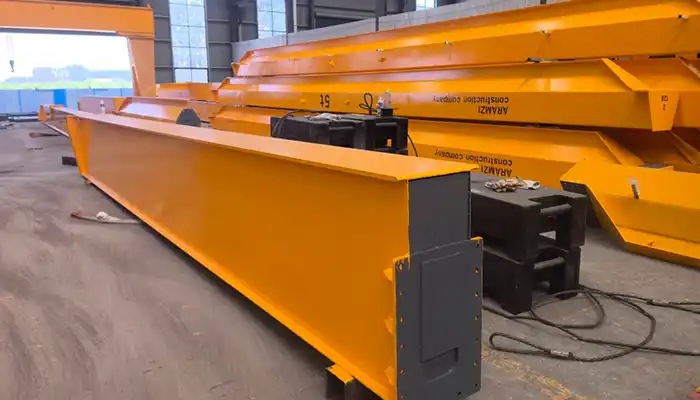
Beam Girder of Single Girder Overhead Travelling Crane System (5 Ton + 12 Ton Low Headroom Solution)- Qatar case study
FAQ – Practical Buyer Questions
What is the advantage of a single girder overhead crane in Qatar workshops?
A single girder overhead crane is widely used in Qatar workshops because it fits well with industrial building conditions. Many workshops are designed with fixed structures, so equipment needs to be simple, efficient, and easy to maintain.
Practical advantages:
- Lower installation cost compared to double girder systems
- Lighter structure, which reduces load on workshop beams
- Better space utilization inside compact workshops
- Works well with low headroom crane design for improved lifting height
In daily operation, it is a practical solution for factories that need reliable lifting without complex structure.
Why use both a 12 ton overhead crane and 5 ton overhead crane in one project?
In industrial workshop operation, lifting tasks are not the same every day. Some jobs require heavy lifting, while others involve frequent material movement.
Practical reason for dual system:
- 12 ton overhead crane → heavy steel fabrication and structural lifting
- 5 ton overhead crane → daily production handling and material flow
This separation helps in a very direct way:
- Heavy crane is not overloaded with small tasks
- Light crane does not slow down production flow
- Overall workshop operation becomes more balanced
It is a simple layout, but commonly used in Qatar industrial planning.
What is a low headroom crane and why is it important?
A low headroom crane is designed to maximize lifting height inside a workshop where building height cannot be changed.
This is especially important in Qatar, where many industrial buildings are pre-built and cannot be modified after installation.
Main benefits:
- Increases usable lifting height inside existing workshops
- Reduces wasted vertical space from crane structure
- Helps handle taller steel parts and large components
- Improves flexibility in limited-height environments
In simple terms, it helps "get more lifting height from the same building."
What is the role of VFD overhead crane technology?
A VFD overhead crane system (Variable Frequency Drive) controls the motor speed of the crane more smoothly.
Instead of sudden starts and stops, it allows gradual movement.
Practical benefits:
- Smooth acceleration and braking
- Reduced load swing during movement
- Better control of overhead crane hoist operation
- Lower mechanical stress on crane components
- Improved safety during lifting and positioning
In workshop use, this means operators can move loads more carefully and with better control.
Is the 5 ton low headroom hoist different from a standard hoist?
Yes, the 5 ton low headroom hoist is designed specifically for workshops with limited vertical space.
Key differences from standard hoist:
- Compact design for reduced headroom conditions
- Better lifting height within the same workshop structure
- Stable performance under frequent daily operation
- Suitable for continuous production use
It is commonly used in 5 ton overhead crane systems where space efficiency is important.
Summary – Buyer Perspective in Qatar
These FAQs reflect industrial questions from Qatar industrial buyers:
- Cost efficiency and structure simplicity
- Matching crane capacity to industrial workload
- Maximizing lifting height in fixed workshops
- Ensuring smooth and safe operation using VFD systems
- Choosing the right hoist for low headroom conditions
The overall focus is always practical: stable operation, long-term use, and suitability for industrial workshop conditions.
Project Summary – Practical Engineering Value
Practical Engineering Approach for Qatar Workshop Conditions
This Qatar project reflects a straightforward industrial approach. It is not designed around complex features or unnecessary engineering layers. Instead, it focuses on how the crane will actually be used inside a working workshop.
In industrial operation, especially in Qatar industrial environments, the priority is clear: stable lifting, predictable performance, and long service life without frequent interruption.
Core System Composition
This solution is built by combining several practical crane design elements that work together in one system:
- Single girder overhead crane structure for efficient workshop space use and simpler installation
- 12 ton overhead crane system for heavy fabrication and structural lifting work
- 5 ton overhead crane system for daily production handling and internal material flow
- Low headroom crane optimization to maximize lifting height inside fixed workshop buildings
- European overhead crane technology for stable and controlled operation
- VFD overhead crane control system for smooth speed control and safer load movement
Each part is selected based on industrial workshop requirements, not theoretical performance.
Overall System Performance in Industrial Use
When these elements are combined, the system performs in a balanced and practical way:
- Heavy lifting is handled separately from daily production work
- Workshop height is used more efficiently through low headroom design
- Operators get smoother control during lifting and traveling movements
- Maintenance demand is reduced through stable mechanical structure
- The system remains suitable for continuous industrial operation
In daily workshop conditions, this helps keep production moving without unnecessary delays or operational interruption.
Final Engineering Message – Qatar Industrial Perspective
In Qatar's industrial environment, decision-making is usually based on long-term value rather than complex design concepts. Equipment is expected to work consistently and reliably over many years.
This project reflects that practical mindset.
A well-designed single girder overhead crane system, combined with 12 ton overhead crane and 5 ton overhead crane configuration, low headroom crane design, European overhead crane technology, and VFD overhead crane control, delivers more practical value than oversized or over-complicated lifting solutions.
In simple terms, the right crane is the one that fits the workshop, supports daily work, and stays reliable over time.

Article by Bella ,who has been in the hoist and crane field since 2016. Bella provides overhead crane & gantry crane consultation services for clients who need a customized overhead travelling crane solution.Contact her to get free consultation.
Yuantai Cranes
Overhead Crane Manufacturer with CE, ISO, SGS, CNEX Certificates.
- Main Specifications - Capacity: 0.5–550 tons | Span: up to 40m | Speed: 0.8–12 m/min | Duty: A3–A7 | Power: 380–690V, 50/60Hz | Control: pendant/remote/cabin
- Full engineering: FEA/PLC/VFD + in-house build + global delivery + on-site support, for workshops, factories, EPC contractors, industrial projects, etc.
- Support: design, manufacturing, testing, service – end-to-end, customized lifting solutions worldwide.
How to Get an Accurate Crane Price for Your Application?
Tips: Copy the spec list, fill in your details, and paste it into the form on the right/ down-below for a quick price.
- Crane type:_____ . (e.g., overhead crane, gantry crane, jib crane)
- Max weight to lift:_____ tons. (e.g., 2t, 5t, 10t, 20t, 50t)
- Lifting height:_____ m. (How high does the hook need to reach?
- Workshop width (span):_____ m . (Distance between the two crane rails)
- Travel distance:_____ m . (How long does the crane need to move along the runway?)
- Control type:_____. (Pendant / remote / cabin Control)
- Power supply:_____. (Local voltage & frequency – e.g., 380V, 50Hz, 3-phase)
- What will it be used for?_____ (e.g., steel fabrication, concrete products, mold handling, general manufacturing, etc.)
- Any special requirements?_____ (e.g., extreme temperature, dusty or explosive environment, special paint color, etc.)
Just leave a message via the contact form and our hoist and crane engineer will contact you with in 24working hours.
Get Your Custom Quote–Quick & Easy
Fill in what you know. Skip what you don't – we'll help.Any question will be reply with 24 working hours