Tunnel Gantry Crane Guide: Types, TBM Uses & Design Roles
Content Quick Link
Complete tunnel gantry crane guide covering TBM integration, types, capacities, workflows, and EPC procurement decisions in underground projects.
Tunnel Gantry Crane Guide: Types, TBM Uses & Design Roles
MOST IMPORTANT TAKEAWAY
A tunnel gantry crane is not simply lifting equipment—it is a core underground logistics and construction coordination system tightly integrated with TBM or NATM workflows, and its performance directly influences excavation speed, segment installation efficiency, and project safety across metro, hydropower, mining, and railway tunnel projects.
In early-stage planning, engineers and EPC teams should treat it as part of the underground lifting system design, not a later procurement item.
- Tunnel gantry cranes define how materials flow inside underground construction systems
- TBM-driven projects depend on synchronized segment handling and spoil removal cycles
- Different project roles evaluate the crane from different priorities: design, cost, safety, and schedule
- Early misalignment between crane system and tunnel layout can create serious construction bottlenecks
- Configuration and capacity selection must follow workflow logic, not just load calculation
What is a tunnel gantry crane in industrial underground engineering applications?
It is a lifting system used inside tunnels to move segments, equipment, and materials under confined underground conditions.
How does it integrate with TBM-driven excavation and segment installation systems?
It works in sync with TBM advance to deliver segments, support installation at the tunnel face, and maintain continuous construction flow.
What types of gantry cranes are used in metro, mining, and hydropower tunnels?
Common types include single girder, double girder, semi gantry, low headroom, and rail-mounted gantry systems.
How do EPC planners define underground lifting system requirements early?
They match crane layout and capacity with tunnel geometry, TBM configuration, and logistics flow before final design is fixed.
What capacity ranges are used for different tunnel construction scenarios?
Typically 5–10 ton for small tunnels, 10–20 ton for metro segments, 16–32 ton for TBM operations, and up to 50 ton for heavy tunnels.
What is the difference between tunnel cranes and conventional gantry cranes?
Tunnel cranes are designed for confined underground space, low clearance, and continuous TBM logistics, unlike open-yard gantry cranes.
How do different project roles influence crane selection decisions?
Engineers focus on operation fit, EPC planners on system integration, procurement on specification clarity, and project managers on schedule risk control.
INTRODUCTION: WHY TUNNEL GANTRY CRANES ARE A KEY EARLY DESIGN DECISION
Understanding Tunnel Logistics, TBM Integration, and Early Crane Planning
In underground construction projects, material handling is often one of the first practical constraints that affects how the entire tunnel layout is designed. Before detailed structural drawings are finalized, engineers already need to think about how precast segments, spoil, pipes, and installation equipment will actually move inside the tunnel.
At this stage, the discussion is not only what is a tunnel gantry crane, but more practically:
- "How will TBM segments be lifted from transport cars and installed accurately inside the tunnel?"
- "What equipment will handle continuous spoil removal without interrupting excavation?"
- "Which crane layout can fit inside limited tunnel diameter while still supporting full construction cycle?"
In industrial projects, the crane selection is directly tied to how the tunnel is built and how fast it progresses, especially in TBM-driven metro and subway systems.
How do junior engineers view tunnel gantry crane operations?
Junior engineers on site or in design offices usually try to understand actual movement inside the tunnel. They ask how segment lifting is done, how cranes travel along rails, and how a tunnel gantry crane or subway gantry crane system positions heavy precast segments without damaging them or slowing installation.
How do EPC planners and system designers evaluate tunnel gantry cranes?
EPC planners and system designers focus on workflow continuity. In TBM projects, they evaluate how the crane becomes part of a continuous underground lifting system, ensuring that segment delivery, installation, and spoil handling all operate in sync with excavation speed. Their concern is usually:
"If the crane cycle is slower than TBM advance, the whole tunnel production will stop."
What are procurement and commercial teams concerned about?
Procurement and commercial teams are already thinking in terms of configuration and sourcing. They typically ask:
"Do we need a standard metro tunnel crane, or a customized rail-mounted gantry system designed for TBM logistics?"
"What capacity is realistic for 16–32 ton segment or muck handling in this tunnel section?"
Where are tunnel gantry cranes commonly used in industrial applications?
- Metro and subway construction, where they handle TBM segment lifting, tunnel lining installation, and spoil bucket transfer in continuous cycles
- Hydropower tunnels, where they lift pipe sections, heavy formwork, and installation equipment in long underground shafts
- Mining tunnels, where they support ore handling, ventilation equipment installation, and underground logistics movement
- Railway tunnels, where they assist with rail installation materials and maintenance equipment in confined tunnel sections
In all these cases, the crane is not an isolated machine—it is part of a working system that connects portal logistics, TBM operation, and underground installation points.
Why is tunnel gantry crane planning important during early design stages?
At this early stage of design, the tunnel gantry crane is still not treated as a final product selection. Instead, it is a working concept inside the underground construction system, where its layout, capacity, and configuration must match industrial construction flow: segment installation speed, spoil removal rate, and overall TBM progress.
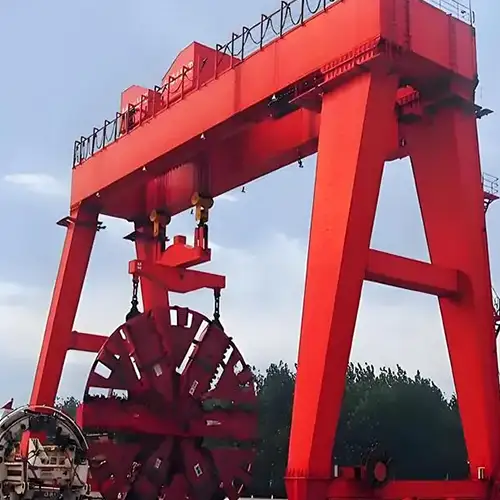
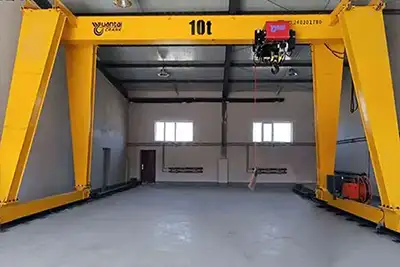
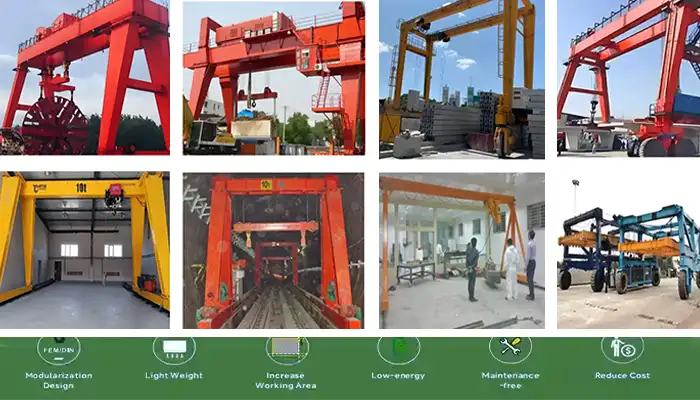
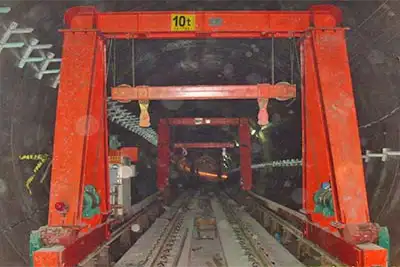
Euroepan style Single girder gantry crane for indoor use with low headroom design - more on Indoor gantry cranes
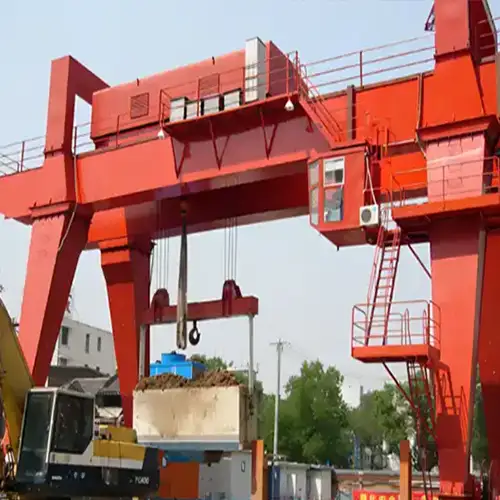
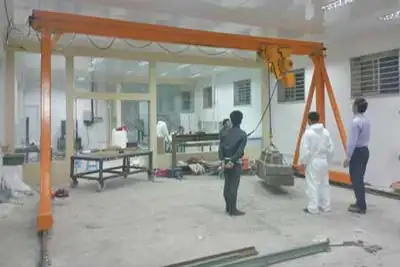
Double girder gantry crane for confined space applicaitons, - more about low built hoist and cranes.
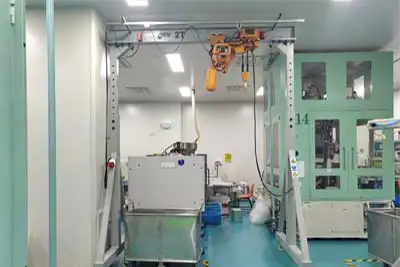
Low headroom portable gantry crane with low headroom chain hoist - more about portable gantry cranes
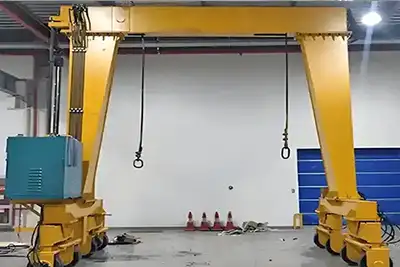
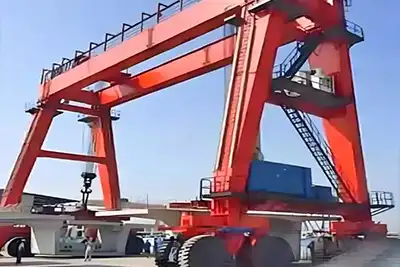
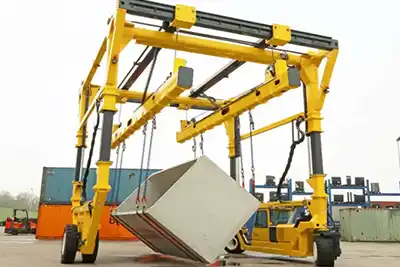
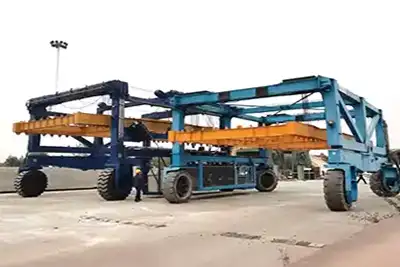
Affordsble straddle carrier for heavy and large loads handling with telescopic design can be used for confined space and applications
WHAT IS A TUNNEL GANTRY CRANE IN UNDERGROUND ENGINEERING
Understanding Underground Lifting Systems and TBM Logistics Integration
A tunnel gantry crane is a specialized overhead or rail-mounted lifting system designed to operate in confined underground construction environments where standard outdoor or yard cranes cannot function. These cranes are engineered to cope with limited clearance, ventilation constraints, dusty or humid conditions, and continuous excavation workflows, making them indispensable in TBM-driven projects and other underground construction scenarios.
In practice, these systems are often referred to as:
- Underground construction gantry crane
- Metro tunnel crane system
- Subway gantry crane configuration
- Tunnel lifting system integrated with TBM logistics
Basic Functional Definition
Tunnel gantry cranes are used for real-world underground operations such as:
- Segment installation – lifting and accurately placing precast tunnel lining segments directly from transport carts or portal staging areas.
- Spoil and muck handling – transporting excavated material from the tunnel face to muck removal points efficiently.
- Equipment transport inside tunnels – moving TBM support systems, pipes, formwork, and maintenance machinery.
- Continuous underground logistics coordination – linking material inflow, segment placement, and waste removal into a synchronized flow that keeps excavation progressing without delays.
From a junior engineer's perspective, this is where "learning how the crane actually moves segments and spoil in a industrial TBM tunnel" begins.
Core Functional Role in Projects
A tunnel gantry crane is not just a lifting device—it is part of the construction workflow. Its primary roles include:
- Supporting continuous TBM excavation cycles without interruption.
- Ensuring safe movement of heavy precast segments and mechanical components in tight tunnel geometries.
- Coordinating material transfer between portal staging areas and the tunnel face.
- Integrating with conveyors, rail-mounted transport, and other lifting systems to maintain uninterrupted workflow.
EPC planners often frame the conversation around system integration:
"Will this crane cycle keep up with the TBM advance rate without causing bottlenecks?"
How It Differs from Standard Gantry Cranes
Compared with open-air or yard cranes, tunnel gantry cranes are designed for confined, high-demand underground conditions:
- Low headroom adaptation – maximizes lifting height where vertical space is extremely limited.
- Confined space operation – able to travel and operate in narrow tunnel sections.
- Dust, humidity, and ventilation constraints – designed for long-term reliability in harsh underground conditions.
- Tight integration with tunnel logistics systems – connects seamlessly to segment transport, spoil removal, and TBM backup support.
A design consultant's practical question often sounds like:
"Can this crane fit within the TBM backup equipment layout without blocking access or slowing excavation?"
Contractors and project managers add a workflow perspective:
"If lifting stops for even one segment, does the entire tunnel advance halt?"
WHY TUNNEL GANTRY CRANES ARE ESSENTIAL IN UNDERGROUND PROJECTS
Understanding Their Role in Continuous Excavation and Underground Logistics
Underground construction environments impose strict operational constraints where material handling is directly linked to excavation productivity. Unlike surface operations, any interruption in lifting or transport immediately affects TBM advance, installation efficiency, and overall project throughput.
Key industrial constraints that make tunnel gantry cranes critical include:
- Limited tunnel cross-section and clearance – cranes must operate within confined geometries while handling heavy precast segments, pipe sections, or mechanical equipment.
- Continuous TBM-driven workflow – lifting and material transport must maintain pace with excavation cycles to prevent operational bottlenecks.
- Industrial safety requirements – working in humid, dusty, or poorly ventilated tunnels requires reliable, controlled lifting systems to protect personnel.
- Synchronized material handling – cranes coordinate the movement of segments, spoil, and equipment with excavation and installation sequences.
- Reduced manual intervention – minimizing human handling in hazardous underground conditions improves both safety and efficiency.
A project manager often summarizes the operational reality:
"If lifting stops, excavation halts, and the entire production chain is disrupted."
Industrial Application Perspective
- Metro and subway projects: Cranes handle TBM segment delivery and positioning while managing spoil transfer. Any misalignment between lifting speed and TBM advance can create workflow delays.
- Hydropower tunnels: Cranes lift large-diameter pipes, formwork, and mechanical components along long underground shafts where space and access are restricted.
- Mining operations: Continuous transport of ore and muck relies on cranes that maintain uninterrupted underground logistics, often under high production demands.
- Railway tunnels: Cranes support precise placement of rails and structural elements, requiring consistent movement over long tunnel distances with strict alignment tolerances.
From an EPC Engineering Perspective
From an EPC engineering perspective:
"Will the crane cycle integrate seamlessly with TBM logistics and underground transport systems to maintain production continuity?"
From a Procurement Standpoint
From a procurement standpoint:
"Do we specify a standard low-headroom industrial gantry crane, or a fully customized rail-mounted solution tailored to tunnel geometry and load requirements?"
Industrial Takeaway
Industrial Takeaway:
A tunnel gantry crane is not merely lifting equipment; it is a critical component of the underground industrial material handling system, ensuring that segment installation, equipment transport, and spoil removal occur efficiently, safely, and in sync with excavation cycles.
TYPICAL APPLICATIONS IN UNDERGROUND CONSTRUCTION PROJECTS
How Tunnel Gantry Cranes Support Metro, Hydropower, Mining, and Railway Projects
Tunnel gantry cranes are deployed across multiple underground engineering sectors, but their role is always tied to one core requirement: maintaining continuous material flow in confined construction environments where TBM or drill-and-blast operations are ongoing. Each application area places different demands on crane configuration, capacity, and operational rhythm.
Metro & Subway Construction
In metro and subway infrastructure projects—commonly referenced in engineering specifications as metro tunnel crane or subway gantry crane systems—the crane forms a critical part of the TBM segment installation and underground logistics chain.
Typical industrial operations include:
- Handling and positioning of TBM precast segments
- Installation of tunnel lining rings under confined clearance conditions
- Transfer of muck buckets or spoil containers from tunnel face to shaft
- Continuous coordination of material flow between surface shaft and excavation front
In industrial construction environments, contractors typically emphasize production continuity:
"The crane cycle must keep pace with TBM advance rate; otherwise, segment installation becomes the bottleneck."
From an EPC engineering standpoint, the focus is on system integration:
- Coordination with TBM backup gantry and trailing systems
- Synchronization with conveyor or rail muck removal systems
- Ensuring crane travel does not interfere with tunnel logistics corridors
Hydropower Tunnel Projects
Hydropower tunnel construction involves large-scale mechanical installation in long-distance underground passages, where lifting systems must handle oversized and high-mass components under restricted access conditions.
Typical lifting activities include:
- Installation and alignment of large-diameter steel or composite pipelines
- Handling of concrete formwork systems for tunnel lining sections
- Transport of turbine components, valves, and hydraulic control equipment
- Installation and maintenance support for embedded mechanical systems
Engineering teams often evaluate the system from a load and accessibility perspective:
"Can the lifting system safely manage oversized and high-weight components within confined tunnel geometry while maintaining installation precision?"
Here, reliability and controlled movement are prioritized over speed, due to the high-value nature of equipment being installed.
Mining and Underground Extraction Tunnels
Mining applications require tunnel gantry cranes to operate under continuous production conditions, often with high dust, humidity, and safety-critical environments.
Typical operational requirements include:
- Continuous transport of ore containers or muck handling units
- Installation and maintenance of ventilation and support systems
- Movement of underground electrical and mechanical equipment
- Emergency lifting support during maintenance or breakdown scenarios
In mining operations, the focus shifts heavily toward system reliability and redundancy:
"What is the operational impact if one lifting unit is unavailable in the underground production cycle?"
Unlike construction-only projects, mining environments require cranes to support long-term, repetitive, high-duty operational cycles.
Railway Tunnel Projects
Railway tunnel construction emphasizes precision installation and long-distance material handling consistency, where crane systems must maintain alignment accuracy and stable movement across extended tunnel lengths.
Typical lifting operations include:
- Handling and installation of rail tracks and fastening systems
- Transport of structural tunnel components and support elements
- Lifting of maintenance machinery and inspection equipment
- Support for alignment and positioning during track installation
A key engineering concern in these projects is:
"How do we maintain installation accuracy and alignment consistency over long tunnel distances without repositioning or workflow interruption?"
In this context, crane stability and controlled travel performance are more critical than lifting speed alone.
Key Takeaway Across All Underground Applications
Across metro, hydropower, mining, and railway tunnel projects, tunnel gantry cranes function as core underground logistics assets, ensuring that material flow, installation cycles, and excavation progress remain synchronized within confined and continuously operating environments.
CAPACITY PLANNING IN UNDERGROUND CRANE DESIGN
Matching Crane Capacity with TBM Workflow, Throughput, and Tunnel Logistics
In tunnel engineering practice, crane capacity selection is not treated as a simple rated-load decision. It is directly driven by construction workflow requirements, lifting cycle frequency, and TBM-driven logistics demand. The same nominal load can behave very differently depending on tunnel geometry, operating rhythm, and installation sequence.
In underground environments, engineers typically evaluate capacity based on system throughput rather than isolated lifting events, especially when cranes are integrated into a continuous tunnel construction line.
Typical Capacity Ranges in Tunnel Applications
- 5–10 ton systems → Utility and service tunnels
Used for light segment handling, installation of auxiliary equipment, ventilation ducts, and maintenance components in small-diameter tunnels with limited clearance. - 10–20 ton systems → Metro and subway segment installation
Common in metro tunnel crane or subway gantry crane configurations, where precast lining segments are handled in repetitive cycles synchronized with TBM advancement. - 16–32 ton systems → TBM spoil handling and combined segment logistics
Applied in main TBM drives where cranes manage both segment lifting and muck/spoil transfer operations. This range is widely used in underground construction gantry crane systems supporting continuous excavation cycles. - 32–50 ton systems → Hydropower tunnels and heavy infrastructure projects
Used for large-diameter pipes, turbine components, heavy formwork systems, and oversized mechanical installations where lifting loads are irregular but significantly high in magnitude.
Engineering and Procurement Decision Logic
In early project discussions, procurement teams typically frame the problem as:
"Are we sizing the crane based on maximum peak lifting load, or based on continuous operational duty requirements over the full tunnel construction cycle?"
This question is critical because underground crane systems rarely operate under static conditions. Instead, they function in repetitive, high-frequency cycles tightly linked to TBM progress, where cycle time often becomes more important than absolute lifting capacity.
Engineering Focus in Industrial Project Conditions
From a design and engineering perspective, capacity selection is influenced by more than just tonnage:
- Dynamic loading effects in confined tunnel geometry
Load behavior changes due to restricted movement space, rail alignment accuracy, and synchronized TBM operations. - Repetitive cycle fatigue and duty classification
Tunnel gantry cranes operate under continuous cycles (segment lifting, spoil handling, return movement), requiring careful consideration of fatigue life and duty class rather than single-point load ratings. - System-level throughput matching
Capacity must align with TBM advance rate, segment supply frequency, and spoil removal speed to avoid bottlenecks in the underground logistics chain.
Capacity Planning Takeaway
In underground construction, crane capacity is not an isolated specification—it is a system-level parameter that defines how efficiently the entire TBM-driven workflow can operate without interruption or delay.
CONFIGURATION SELECTION IN INDUSTRIAL EPC DESIGN DISCUSSIONS
Choosing the Right Gantry Crane Configuration for Tunnel Geometry and TBM Logistics
In underground construction engineering, crane configuration is never selected in isolation. It is directly driven by tunnel geometry, TBM backup arrangement, construction method, and underground logistics layout. In EPC design reviews, the crane is treated as a subsystem that must integrate seamlessly into the overall excavation and segment installation workflow.
At this stage, discussions are highly practical and often revolve around one central issue: how to maintain continuous TBM production without introducing logistical or spatial bottlenecks.
Configuration Types and Typical Underground Applications
| Configuration Type | Application Scenario | Tunnel Handling Requirements & Practical Focus | Typical Use in Underground Projects |
|---|---|---|---|
| Single Girder Gantry Crane | Compact and cost-sensitive tunnel sections | Moderate lifting demand Limited tunnel space Simple structure Easy installation | Utility tunnels Auxiliary passages Small-scale underground works |
| Double Girder Gantry Crane | Heavy-duty TBM segment and equipment handling | High structural rigidity Stable repetitive lifting Continuous TBM support High-frequency cycle | Metro tunnels Subway gantry crane projects Large infrastructure tunnels |
| Low Headroom Gantry Crane | Strict vertical clearance environments | Limited vertical space Maximize lifting height Compact footprint | Retrofit tunnels Confined TBM zones Densely packed underground layouts |
| Semi Gantry Crane | Asymmetrical shaft or constrained tunnel layouts | One side runway beam Other side ground rail Adapt to irregular geometry | Launch shafts Portal zones Partially constrained tunnels |
| Rail-Mounted Gantry System | Long-distance, repetitive underground logistics | Continuous movement along tunnel High cycle frequency Synchronized with TBM | Long TBM drives Metro construction lines Continuous underground logistics |
Configuration Logic Based on Tunnel Conditions and Workflow Demand
- Single girder gantry crane → Compact and cost-sensitive tunnel sections
Applied in smaller utility tunnels or auxiliary passages where lifting demand is moderate and space is restricted. Engineers often select this option when the primary requirement is functional segment handling with simplified structure and lower installation complexity. - Double girder gantry crane → Heavy-duty TBM segment and equipment handling
The preferred configuration for main TBM drives in metro, subway, and large infrastructure tunnels. It provides higher structural rigidity and stability for repetitive lifting of precast segments and spoil containers under continuous cycle conditions. - Low headroom gantry crane → Strict vertical clearance environments
Used where tunnel diameter or TBM backup equipment severely limits vertical space. This configuration is frequently adopted in retrofit tunnels or densely packed underground logistics systems where maximizing lifting height is critical. - Semi gantry crane → Asymmetrical shaft or constrained tunnel layouts
Applied in tunnel portals, launch shafts, or partially constrained environments where one side operates on a runway beam and the other side runs on ground rail. EPC designers often consider this when tunnel geometry is irregular or when space is shared with other construction systems. - Rail-mounted gantry systems → Long-distance, repetitive underground logistics
Common in structured TBM drives where consistent movement along tunnel length is required. This configuration supports high-frequency segment handling and spoil transport, making it suitable for metro tunnel crane and subway gantry crane applications with continuous production cycles.
EPC Engineering Discussion Perspective
In industrial design coordination meetings, EPC engineers and system integrators typically frame the selection process in operational terms rather than mechanical specifications:
"We need a crane configuration that fits within TBM backup constraints without disrupting excavation rhythm or segment installation flow."
This reflects the core engineering priority in tunnel projects: ensuring that crane movement, TBM advance, and material logistics operate as a synchronized system rather than independent processes.
Configuration Selection Takeaway
Crane configuration selection in underground construction is fundamentally a system integration decision, where structural design, tunnel geometry, and TBM workflow must align to ensure uninterrupted production and stable underground logistics performance.
TUNNEL WORKFLOW INTEGRATION: HOW THE SYSTEM ACTUALLY OPERATES
Understanding Continuous Material Flow in TBM-Driven Tunnel Construction
In industrial underground construction projects, a tunnel gantry crane is not operated as a standalone lifting device. It functions as a continuous material flow node inside the TBM-driven construction system, where every lifting action is synchronized with excavation, segment erection, and spoil removal cycles.
From an engineering standpoint, the system is best understood as a closed-loop underground logistics chain, rather than a series of isolated lifting operations.
Continuous Underground Logistics Flow in TBM Projects
The actual operational sequence typically follows a structured cycle:
- Material delivery at portal staging area
Precast segments, pipes, reinforcement materials, and equipment are delivered and temporarily stored at the tunnel entrance or shaft zone. - Transfer into underground handling system
A tunnel gantry crane or associated lifting system receives materials and transfers them into the confined tunnel environment, often coordinating with rail carts, transfer platforms, or TBM backup systems. - Progressive movement toward working face
Materials are moved step-by-step along the tunnel using coordinated crane travel and auxiliary transport systems, ensuring alignment with TBM advance rate and installation sequence. - Segment installation and excavation support cycle
Precast segments are lifted, positioned, and installed in synchronization with TBM thrust and lining operations. - Reverse logistics for spoil and muck removal
Excavated material is collected in buckets or containers and transported back toward the portal for disposal, forming a continuous return flow.
Practical Engineering Interpretation
In industrial project coordination, project managers often describe the system in operational terms rather than technical definitions:
"This is not just lifting operations—it is a continuous underground logistics flow that must match TBM production rhythm."
This statement reflects a key reality in tunnel construction: crane performance directly determines excavation continuity. If lifting, transport, or positioning is delayed, the entire TBM cycle is immediately affected.
EPC and Site-Level Integration Perspective
From an EPC engineering standpoint, workflow integration focuses on:
- Synchronization between crane cycle time and TBM advance rate
- Compatibility with backup gantry systems, conveyors, or rail transport lines
- Minimizing transfer points to reduce handling delays
- Ensuring uninterrupted segment installation and spoil removal balance
From site management perspective, the key concern is operational stability:
- Avoiding downtime between segment delivery and installation
- Preventing congestion at portal or shaft transfer points
- Maintaining consistent production output across shifts
Workflow Integration Takeaway
A tunnel gantry crane functions as a continuous material flow node inside the TBM-driven construction system, where excavation, segment installation, and spoil removal operate as a synchronized underground logistics chain. Successful tunnel construction depends on maintaining this workflow without interruption.
Tunnel Gantry Cranes FAQs: What Engineers, Planners, and Managers Focus on in Tunnel Crane Use
Practical Questions About TBM Logistics, Segment Handling, Safety, and Workflow Integration
These frequently asked questions address the practical concerns engineers, EPC planners, procurement teams, site managers, and operators encounter when selecting and operating tunnel gantry cranes in underground construction projects.
FAQ 1: "How are we supposed to lift segments in such a narrow TBM tunnel?"
Answer:
Segments are lifted using a tunnel gantry crane engineered for tight underground clearance, allowing precise rotation, positioning, and smooth movement toward the TBM installation face.
- Precast tunnel segments are transferred from shaft or portal staging areas into the tunnel working zone.
- Lifting is synchronized with TBM advance and segment installation cycles.
- Forms a continuous underground crane system for metro and subway construction, ensuring uninterrupted material flow.
Tunnel handling requirements & practical focus:
- Junior Engineers: Understand lifting sequence and TBM integration.
- Project Managers: Confirm crane does not interrupt excavation cycle.
- EPC Planners: Verify system fits TBM backup equipment geometry.
- Stable segment positioning in narrow tunnel space
- Smooth coordination with TBM segment installation cycle
- Safe handling without damaging precast lining
Typical crane selection logic:
- Double girder gantry crane for segment stability
- Low headroom gantry for restricted vertical clearance
- Rail-mounted gantry system for linear TBM logistics
Key features: precise positioning control, anti-sway, compact frame
FAQ 2: "Will the crane keep up with TBM advance speed?"
Answer:
Yes, if the crane cycle is designed as part of the tunnel logistics system, aligned with excavation and segment installation rate.
- Crane movement follows repetitive cycles tied to TBM advance, segment delivery, and spoil removal.
- Misalignment can create production delays in metro or subway gantry crane operations.
Tunnel handling requirements & practical focus:
- EPC Planners: Ensure crane cycle matches TBM advance speed.
- Site Managers: Verify continuous operation under peak shifts.
- Procurement Teams: Confirm crane duty rating supports continuous cycle.
- Match crane cycle to TBM production
- Ensure uninterrupted segment supply and spoil handling
- Avoid slowdowns in tunnel logistics
Typical crane selection logic:
- High-duty double girder for continuous operation
- Rail-mounted for long repetitive tunnel transport
Key features: heavy-duty class (A5–A7), stable cycle operation, variable speed control
FAQ 3: "Do we need a standard crane or a customized tunnel lifting system?"
Answer:
Most underground projects need a customized solution tailored to tunnel geometry, logistics, and TBM interface.
- Standard gantry cranes rarely fit confined tunnels, TBM backup layout, or segment handling paths.
- Design integrates into the underground construction gantry crane system, not just mechanical lifting equipment.
Tunnel handling requirements & practical focus:
- Procurement Teams: Define whether system is standard or fully customized.
- EPC Planners: Ensure crane layout matches tunnel logistics and TBM access.
- Junior Engineers: Learn crane operation and sequence integration.
- Adaptation to tunnel diameter and clearance
- Compatibility with segment size and transport system
- Integration with TBM backup and logistics
Typical crane selection logic:
- Semi gantry for asymmetrical shafts or tunnels
- Rail-mounted for structured TBM tunnels
- Low headroom gantry for tight vertical spaces
Key features: modular frame, project-specific span, adjustable rail alignment
FAQ 4: "Will this crane interfere with TBM backup or conveyor systems?"
Answer:
No, if planned and integrated early with TBM and underground logistics systems.
- Crane operates along defined corridors with TBM backup equipment, conveyors, and temporary storage areas.
- Poor planning can block material flow or reduce excavation speed.
Tunnel handling requirements & practical focus:
- EPC Planners: Map crane path relative to TBM and conveyors.
- Project Managers: Maintain access for inspection, maintenance, and emergency removal.
- Junior Engineers: Verify clearance and crane travel alignment.
- Clear separation between crane travel and TBM backup
- Continuous segment delivery and spoil removal paths
- Safe operational zones for maintenance and emergencies
Typical crane selection logic:
- Rail-mounted gantry for linear logistics
- Semi gantry for asymmetric tunnel geometry
Key features: precision rail guidance, compact travel, integrated layout compatibility
FAQ 5: "What happens if lifting becomes slower than excavation?"
Answer:
The crane becomes a bottleneck, directly limiting TBM advance and segment installation.
- Underground construction relies on continuous flow: material in, spoil out.
- Any slowdown interrupts TBM production, affecting metro, subway, hydropower, or railway projects.
Tunnel handling requirements & practical focus:
- Project Managers: Confirm capacity meets peak TBM output.
- Procurement Teams: Verify crane cycle matches specification for continuous handling.
- EPC Planners: Coordinate cycle timing with logistics system.
- Continuous handling of segments and spoil
- Balanced workflow for installation and excavation
- Avoid workflow interruption
Typical crane selection logic:
- High-capacity double girder or dual-hoist crane
- Tandem lifting for heavy or oversized segments
Key features: redundancy, high duty cycle, synchronized lifting
FAQ 6: "Is this crane safe enough for underground operation conditions?"
Answer:
Yes, if designed for underground hazards including dust, humidity, and confined spaces.
- Tunnels create low visibility, dusty, and humid environments.
- Safety and protective systems are critical for reliable lifting.
Tunnel handling requirements & practical focus:
- Safety Engineers: Oversee overload, emergency stop, and protective systems.
- Project Managers: Ensure operational safety in confined zones.
- Operators / Junior Engineers: Understand safe lifting limits and access zones.
- Stable operation in low-visibility, high-humidity tunnels
- Reliable overload protection and emergency stop mechanisms
- Dust and corrosion resistance
Typical crane selection logic:
- Enclosed hoist gantry for dusty and humid environments
- Fully protected double girder cranes for TBM operation
Key features: corrosion-resistant structure, enclosed electrical system, overload limiter, emergency braking
FAQ 7: "Can we maintain the crane without stopping tunneling?"
Answer:
Yes, with modular design and accessible components.
- Maintenance must be achievable without halting TBM or tunnel operations.
- Key systems should be easy to access and service in confined spaces.
Tunnel handling requirements & practical focus:
- Maintenance Teams / Engineers: Perform regular checks without interrupting operations.
- Project Managers: Avoid production downtime due to maintenance.
- Procurement / EPC Teams: Specify accessible design in contract.
- Maintenance without halting TBM cycles
- Easy access to hoist, wheels, and electrical modules
- Standardized spare parts system
Typical crane selection logic:
- Modular gantry crane with replaceable modules
Key features: plug-in electrical modules, accessible hoist, standardized spares
FAQ 8: "How do we prevent material handling from becoming a bottleneck underground?"
Answer:
By selecting cranes that match TBM production rhythm and material handling flow.
- Segment delivery, installation, and spoil removal must be fully coordinated.
- Crane acts as the central node in the underground logistics crane solution.
Tunnel handling requirements & practical focus:
- Project Managers: Monitor balance between lifting and excavation cycles.
- EPC Planners: Optimize underground logistics layout.
- Procurement Teams: Ensure capacity supports projected flow rates.
- Synchronized segment inflow and spoil outflow
- Stable cycle times matching TBM speed
- Avoid interruptions in continuous underground logistics
Typical crane selection logic:
- Rail-mounted gantry for continuous TBM logistics
- Double girder for high-frequency handling cycles
Key features: synchronized control system, stable repetitive operation, high-speed travel
FAQ 9: "Is operating cranes in confined tunnels difficult for operators?"
Answer:
No, with proper control systems, training, and feedback interfaces, even low-clearance TBM tunnels can be managed safely.
- Lifting is repetitive and coordinated with excavation and installation schedules.
- Control systems ensure precision in low-visibility, restricted spaces.
Tunnel handling requirements & practical focus:
- Operators: Need simple, reliable controls for repetitive underground lifting.
- Junior Engineers / Site Managers: Understand feedback, load, and positioning data.
- Accurate load positioning in confined spaces
- Simple, intuitive operator interface
- Stable operation under repetitive cycles
Typical crane selection logic:
- Precision low-speed gantry cranes with variable frequency drive
Key features: anti-sway system, load feedback, precise positioning
FAQ 10: "Why decide on crane type early in the project?"
Answer:
Because tunnel crane configuration impacts TBM layout, tunnel design, and overall underground logistics.
- Late changes may require redesigning tunnel geometry or TBM backup arrangement.
- Early selection ensures smooth coordination between excavation, installation, and material handling.
Tunnel handling requirements & practical focus:
- EPC Planners: Align crane layout with TBM system from design stage.
- Project Managers: Reduce schedule risk caused by late engineering changes.
- Procurement Teams: Finalize realistic specifications before equipment sourcing begins.
- Early integration with TBM logistics and tunnel geometry
- Reduced redesign and construction delays
- Improved workflow coordination throughout the project lifecycle
Typical crane selection logic:
- Select configuration according to tunnel diameter, TBM layout, and logistics flow
- Integrate crane design into overall underground construction planning
Key features: system compatibility, optimized layout, long-term operational efficiency
Selection Considerations for Early Project Stages
In the early phases of underground construction, choosing the right tunnel gantry crane goes beyond tonnage — it directly impacts tunnel workflow, TBM efficiency, and safety.
Key Tunnel Handling Requirements and Practical Focus
- Tunnel diameter and geometry: Ensure crane configuration fits the tunnel cross-section and clearance limits; low-headroom or semi-gantry designs may be required in narrow passages.
- TBM system integration: The crane must align with TBM backup equipment, segment storage, and conveyor routes to maintain continuous excavation cycles.
- Segment and equipment weight: Confirm maximum lifting loads including precast lining segments, pipes, valves, or maintenance machinery; select single or double girder cranes accordingly.
- Lifting frequency and cycle time: Match crane speed and repeatability with TBM advance to avoid bottlenecks; consider fatigue behavior in high-cycle operations.
- Power supply and underground infrastructure: Verify voltage availability, cable routing, and grounding; some low-headroom cranes may need dedicated power or auxiliary systems.
- Environmental conditions: Account for dust, humidity, water ingress, and corrosive conditions; enclosed hoist or protective covers may be required.
- Maintenance and accessibility: Ensure cranes can be serviced without major tunnel disruption; consider modular or easily removable hoists and trolleys.
Early-Stage Risks of Poor Selection
- Redesign of tunnel logistics layout, causing delays in excavation or segment installation.
- Construction bottlenecks when crane cycle cannot match TBM progress.
- Equipment mismatch leading to under-utilized or over-stressed cranes.
Typical Role Perspectives
- Junior Engineers: Focus on how crane movement physically operates within tunnel geometry.
- Procurement Teams: Need clear specifications on configuration, lifting capacity, and maintenance scope.
- EPC Planners: Ensure crane integrates smoothly with TBM systems, conveyor lines, and logistics workflow.
- Project Managers: Assess risk of production delays or operational bottlenecks.
Practical Crane Selection Suggestions
- Small tunnels / light loads: Single girder, low-headroom crane.
- Metro segments / moderate loads: Double girder, rail-mounted or semi-gantry crane with moderate lifting cycles.
- TBM muck removal / heavy duty: Double girder, high-capacity gantry with enclosed hoist and robust duty class.
- Hydropower or mining tunnels / oversized loads: Customized double girder or semi-gantry with special lifting fixtures and corrosion protection.
CONCLUSION: WHY TUNNEL GANTRY CRANES DETERMINE UNDERGROUND CONSTRUCTION PERFORMANCE
A tunnel gantry crane is not just a lifting device—it is a core part of the underground construction and TBM logistics system. Its configuration directly influences how materials move inside the tunnel, how efficiently segments are installed, and how continuously excavation can proceed without interruption.
In industrial TBM-driven projects, the crane effectively becomes the coordination point between segment supply, installation at the tunnel face, and spoil removal back to the portal. If this system is not properly matched to tunnel geometry and production rhythm, even a well-designed TBM system can lose efficiency due to handling delays.
Practical project reality
From early engineering and EPC planning discussions, it becomes clear that crane performance is not evaluated in isolation. Instead, it is judged by how well it supports continuous underground workflow:
- maintaining uninterrupted segment installation cycles
- ensuring stable coordination with TBM advance rate
- preventing congestion in confined tunnel logistics corridors
- enabling safe and repeatable lifting operations under harsh underground conditions
Role alignment in industrial projects
When different stakeholders align early on tunnel crane selection, the overall project outcome improves significantly:
- Engineers ensure the lifting sequence fits confined tunnel geometry and segment handling logic
- EPC planners integrate the crane into TBM backup systems and underground logistics layout
- Procurement teams define clear technical boundaries, capacity margins, and configuration scope
- Project managers control schedule risk by ensuring lifting capacity matches excavation demand
Typical selection logic in practice
Successful projects usually avoid generic selection and instead define the crane as part of the system design:
- matching crane capacity with peak TBM production, not average load
- selecting configurations based on tunnel geometry (single girder, double girder, semi-gantry, rail-mounted, low-headroom systems)
- designing for continuous duty cycles rather than occasional lifting
- considering environmental and maintenance conditions from the earliest stage
Final Project Perspective
In modern metro, hydropower, mining, and railway tunnel construction, project success is no longer defined only by how fast excavation progresses.
It is ultimately determined by how well the underground lifting and logistics system—centered on the tunnel gantry crane—is designed, integrated, and aligned from the very beginning of the project.

Article by Bella ,who has been in the hoist and crane field since 2016. Bella provides overhead crane & gantry crane consultation services for clients who need a customized overhead travelling crane solution.Contact her to get free consultation.
Yuantai Cranes
Yuantai Cranes - Global Material Handling Crane Solution Provider & Manufacturer with CE, ISO, SGS, CNEX and other Third Party Certifications.
- Main Specifications - Capacity: 0.5–550 tons | Span: up to 40m | Speed: 0.8–12 m/min | Duty: A3–A7 | Power: 380–690V, 50/60Hz | Control: pendant/remote/cabin
- Full engineering: FEA/PLC/VFD + in-house build + global delivery + on-site support, for workshops, factories, EPC contractors, industrial projects, etc.
- Support: design, manufacturing, testing, service – end-to-end, customized lifting solutions worldwide.
Get Your Custom Quote – Quick & Easy
Fill in what you know. Skip what you don't – we'll help.
- Crane type:_____ . (e.g., overhead crane, gantry crane, jib crane)
- Max weight to lift:_____ tons. (e.g., 2t, 5t, 10t, 20t, 50t)
- Lifting height:_____ m. (How high does the hook need to reach?
- Workshop width (span):_____ m . (Distance between the two crane rails)
- Travel distance:_____ m . (How long does the crane need to move along the runway?)
- Control type:_____. (Pendant / remote / cabin Control)
- Power supply:_____. (Local voltage & frequency – e.g., 380V, 50Hz, 3-phase)
- What will it be used for?_____ (e.g., steel fabrication, concrete products, mold handling, general manufacturing, etc.)
- Any special requirements?_____ (e.g., extreme temperature, dusty or explosive environment, special paint color, etc.)
Just leave a message via the contact form and our hoist and crane engineer will contact you with in 24working hours.
Inquire Yuantai Cranes