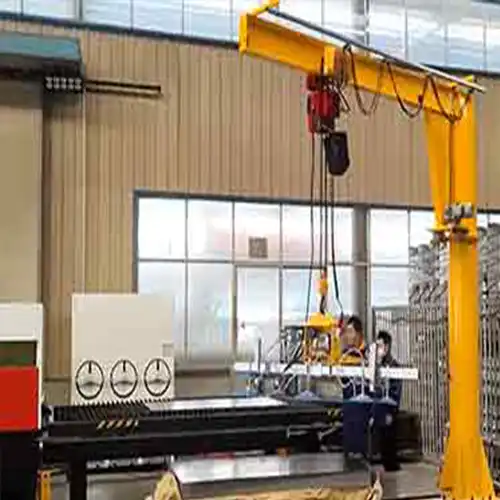
0.5–5 Tons Jib Crane for Sale in Qatar | Hot Deal
0.5–5 tons jib crane for sale in Qatar. Hot sale in Al Daayen, Doha, Al Khor and nearby areas. Reliable lifting solutions with competitive price and fast delivery.
| Crane Type | Qatar 0.5–5 Ton Jib Crane: Pillar-Mounted / Floor-Mounted / Freestanding / Wall-Mounted / Wall-Travelling / Slewing |
| Crane Capacity | 0.5–5 ton for the main Qatar jib crane range; configurations from 500 kg to 5,000 kg |
| Span Length | Typical Boom Length: 3–10 m depending on workshop size and required lifting radius; 3–6 m is commonly used for compact urban workshops and limited working areas. |
| Coverage Area Type | Circular or Localized Working Area: The jib arm provides a defined working radius around a pillar, wall, or supporting structure; suitable for workshops, repair shops, maintenance depots, assembly stations, production work cells, equipment service areas |
| Application | Material Handling: Motors / Gearboxes / Engine Blocks / Housings · Presses / Dies / Assembly Tools · Pumps / Valves / Motors · Vehicle Engines / Transmissions · Small Metal Parts · Precision Tools · Machinery Components · Service Components. |
| Certifications | CE / ISO / SGS / Other third-party inspection |
| Customization | Pillar-Mounted / Floor-Mounted / Freestanding / Wall-Mounted / Wall-Travelling / Portable · Slewing: Manual / Electric / 180° / 270° / 360° or customized. Installation: Reinforced Concrete Foundation / Existing Column / Steel Column / Wall or Structural S |
Crane Manufacturer: Yuantai Cranes – 30+ Years Professional Crane Manufacturer from China
Category: Qatar
Tags: 2tonjibcrane
Your Trusted Rotating Jib Crane Manufacturer & Supplier
0.5–5 Tons Jib Crane for Sale in Qatar
Hot Deals in Al Daayen, Doha & Al Khor
Introduction
Jib cranes with lifting capacities from 0.5 to 5 tons are some of the most practical lifting tools for small and medium-sized workshops. These cranes are designed to help handle medium-weight loads easily and safely, especially in places where space is limited. Unlike larger overhead cranes, jib cranes are compact, easy to install, and perfect for tasks like lifting machine parts, tools, and other equipment.
In Qatar, these cranes are becoming increasingly popular. Why? Because many local industries and maintenance facilities need reliable, cost-effective lifting solutions that fit well within smaller, often cramped workshop spaces. The ability to precisely lift and position parts without needing a huge setup makes jib cranes a preferred choice.
Several cities stand out when it comes to demand for jib cranes in this capacity range:
- Al Daayen – Growing urban workshops and repair centers need cranes that fit tight spaces.
- Doha – The capital’s diverse industries, from equipment maintenance to assembly lines, create steady demand.
- Al Khor – Local service and maintenance depots rely on flexible, easy-to-use cranes for daily operations.
- Al Rayyan – Small to medium workshops here appreciate jib cranes that offer precise control and simple installation.
These locations represent key markets where jib cranes can help improve workflow and safety while keeping costs reasonable. Whether it’s for lifting machine parts or handling small service components, jib cranes in this range are proving to be just right for many businesses in Qatar.

Buyer Profile and Market Overview
Understanding who typically buys jib cranes and where they use them helps both suppliers and buyers make smarter choices. In Qatar, the market for 0.5 to 5-ton jib cranes is driven by specific industries and workshop setups that need practical, space-saving lifting solutions.
Industry Focus
The main industries that rely on these jib cranes include:
- Equipment Maintenance - Workshops and service depots involved in maintaining machinery and equipment are the biggest users. They regularly need to lift heavy parts or tools safely without using bulky equipment that takes up too much space.
- Assembly Line Operations - Many small to medium assembly lines benefit from jib cranes. These cranes help move parts and components from one station to another efficiently. Their compact size and flexibility allow them to fit in tight production areas without disrupting workflow.
- Small Parts Handling - Handling small or medium parts that are too heavy to lift by hand is another common use. Whether it's machine parts, tools, or replacement components, jib cranes make it easier and safer to manage these loads with precision.
These industries value cranes that offer reliability, easy operation, and adaptability to their daily tasks.
Location Features
Where these cranes are used is just as important as who uses them. The key location characteristics in Qatar include:
- Urban Workshops - In cities like Doha and Al Rayyan, workshops are often located in tight urban spaces. This means cranes need to be compact and able to fit in narrow aisles or corners without blocking work areas.
- Maintenance Depots - Service depots, especially those supporting equipment fleets or industrial machinery, require cranes that can be quickly installed and easily maintained. These depots often have high turnover of parts and need cranes ready for frequent use.
- Proximity to Industrial Hubs - Many buyers are near industrial clusters, such as those in Al Khor or Al Daayen, where manufacturing and repair activities are concentrated. This means suppliers can offer fast delivery and support, and buyers often seek cranes suited for the specific demands of these hubs.
This geographic aspect affects not just the type of crane needed but also service, installation, and after-sales support expectations.
Facility Scale and Workshop Type
The physical size and layout of the facility also shape the choice of jib crane:
- Small to Medium-Sized Facilities - These cranes are mostly bought by workshops that aren't huge factories but have enough work to require lifting assistance. Such places need cranes that won't dominate the floor space but can handle regular loads reliably.
- Narrow Repair Shops - Many repair shops in Qatar operate in tight spaces where every square meter counts. Jib cranes installed here must have a small footprint, easy swiveling ability, and simple controls to avoid disrupting other operations.
- Compact Working Zones Requiring Space-Efficient Cranes - In some cases, the working area itself is very limited, demanding cranes that provide maximum lifting power without needing a lot of room. Space-saving designs like wall-mounted or pillar-mounted jib cranes fit this need perfectly.
These facility constraints mean that buyers often prioritize cranes that can be customized or come with flexible installation options.
Typical Lifting Applications
Jib cranes between 0.5 and 5 tons are versatile helpers in many workshops and maintenance facilities across Qatar. They make lifting heavier parts and tools much safer and more efficient.
Machine Parts
Handling machine parts is one of the main jobs for jib cranes. These parts are often heavy and awkward to move by hand.
- Lifting motors, gearboxes, engine blocks, and housings
- Positioning parts for repair or assembly
- Reducing manual labor and risk of injury
Local Example: - In Doha's equipment maintenance shops, pillar-mounted jib cranes help lift heavy engine components quickly and safely.
Tools
Heavy tools and tooling equipment need careful handling to avoid damage and ensure worker safety.
- Moving presses, dies, and assembly tools
- Keeping tools within easy reach
- Minimizing downtime during tool changes
Local Example: - Assembly workshops in Al Rayyan use wall-mounted jib cranes to transport hydraulic presses and calibration devices efficiently.
Service Components
Service components like pumps, valves, and motors require precise lifting in tight spaces.
- Lifting small to medium parts during maintenance
- Precise placement thanks to slewing jib cranes
- Useful in confined or cluttered areas
Local Example: - In Al Khor, maintenance depots use slewing jib cranes with small spans to handle water pump parts and HVAC components.
More Local Applications
- Al Daayen Repair Shops: Use pillar-mounted jib cranes to lift vehicle parts such as engines and transmissions in narrow workshop spaces.
- Doha Manufacturing Lines: Wall-mounted jib cranes help move small metal parts and precision tools smoothly along assembly lines.
- Al Rayyan Maintenance Depots: Slewing jib cranes support lifting heavy pumps and motors during routine servicing.
Jib cranes in the 0.5–5 ton range are the practical solution for everyday lifting tasks in Qatar's workshops. They combine strength, precision, and space efficiency, making life easier and safer for workers handling a wide variety of loads.
Jib Crane Types Preferred by Buyers
In Qatar's small to medium workshops, buyers choose jib cranes based on their space constraints and lifting needs. The three most popular types—pillar-mounted, wall-mounted, and slewing cranes—each serve different purposes and offer unique advantages.
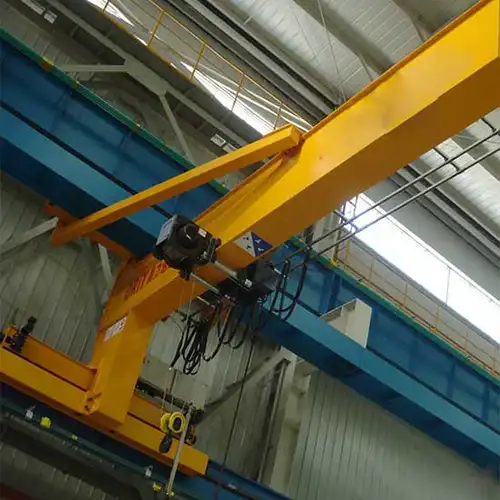
Pillar-Mounted Jib Cranes
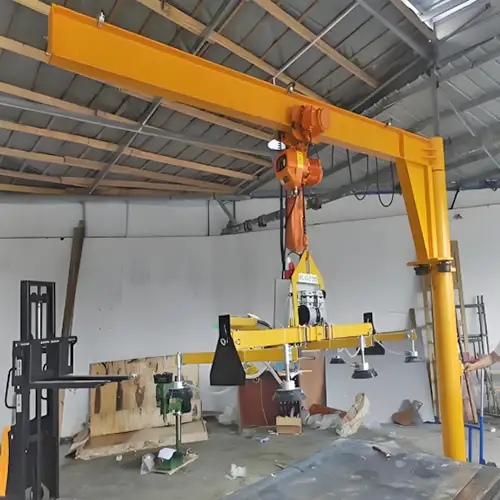
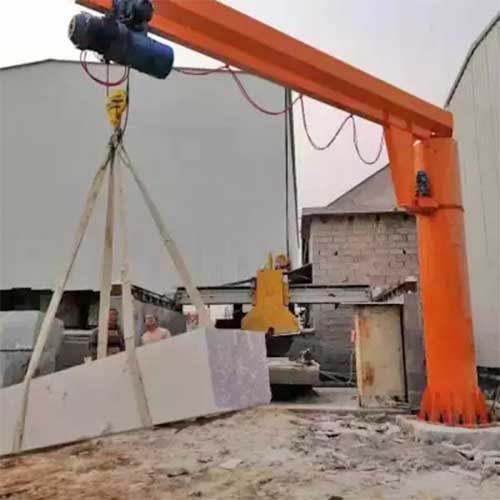
Pillar-mounted jib cranes are favored for their flexibility and ability to cover a large work area. They're great when you need full rotation without taking up much floor space.
- Flexible 360-Degree Rotation: Allows operators to move loads all around the pillar, making it easy to handle materials from any angle.
- Minimal Floor Space Usage: Takes up very little workshop floor area, so it's ideal for places where space is limited but mobility is important.
- Versatile Installation: Can be set up almost anywhere on a sturdy floor, perfect for open areas where overhead cranes aren't practical.
Typical places to install these cranes include open workshop floors and repair shops that need to move heavy parts frequently without structural restrictions.
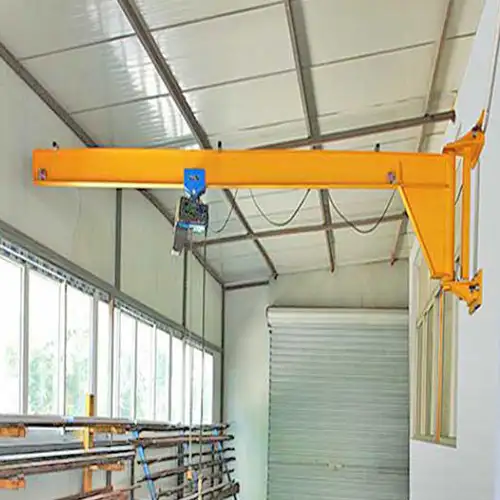
Wall-Mounted Jib Cranes
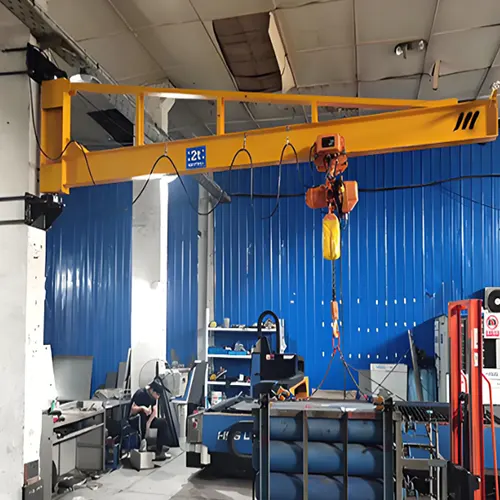
Wall-mounted jib cranes save valuable floor space by attaching directly to walls or columns. They're ideal for workshops with narrow layouts or limited ground area.
- Space-Saving Design: Mounted on a wall, freeing up floor space for other equipment or workflow.
- Fixed Rotation Span: Usually rotates about 180 degrees, covering the needed area without overcrowding the workspace.
- Quick and Practical Installation: Perfect for tight, narrow workshops where lifting happens within a limited radius.
These cranes fit well in narrow repair shops or assembly stations where floor space is tight but lifting is still needed nearby.
Slewing Cranes with Small Span and Precise Control
Slewing jib cranes with small spans are chosen for their accuracy and fine control, especially when handling delicate or small parts.
- Precise Load Positioning: The slewing arm swings smoothly, allowing careful placement of loads, reducing risk of damage.
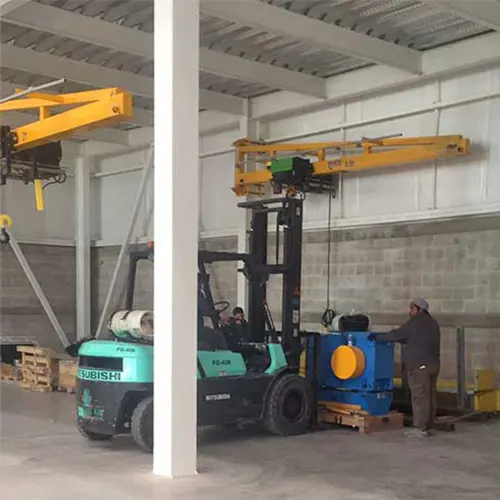
- Compact and Adaptable: Designed to work well in tight spaces, with rotation angles adjustable to fit specific tasks.
- Enhanced Operator Control: Great for workshops where safety and precision are essential, such as tool handling or quality control.
These cranes are often used in maintenance depots and assembly lines where small, sensitive parts need to be lifted gently and accurately.
Key Specifications of 0.5–5 Tons Jib Cranes
When choosing a jib crane in the 0.5 to 5-ton range, several technical specifications play a critical role in ensuring the crane fits the workshop's needs. These details help buyers match lifting capacity, size, and operational features with their daily tasks.
Load Capacity Range and Corresponding Crane Dimensions
Understanding how load capacity relates to crane size is crucial. The heavier the load, the stronger and larger the crane components must be.
- Load Capacity: Jib cranes in this range can lift anywhere from 500 kilograms (0.5 tons) up to 5,000 kilograms (5 tons).
- Boom Length (Span): Generally, boom lengths vary between 3 to 10 meters depending on workshop size and lifting radius needed.
- Height Requirements: The height of the pillar or wall mount will be adjusted based on the workspace ceiling and the load height to ensure safe clearance.
- Weight of the Crane Itself: Heavier capacity cranes have sturdier pillars and booms, which affects installation and foundation requirements.
Choosing the right size means balancing the span (reach) and the lifting capacity to avoid overloading or underutilizing the crane.
Span Lengths Typically Used in Urban Workshops
The span length determines how far the crane arm can reach to lift and move loads. Urban workshops often require shorter spans due to limited space.
- Common Span Range: Most urban workshops use jib cranes with spans between 3 and 6 meters to cover their immediate work area.
- Compact Design Preference: Shorter spans reduce crane weight and installation complexity while fitting better into tight spaces.
- Customization: Many suppliers offer custom boom lengths to fit unique workshop layouts, ensuring the crane serves the exact working radius required.
In compact workshops in cities like Doha and Al Rayyan, choosing the right span length is key to maximizing efficiency without overcrowding.
Power Options: Manual, Electric Hoists, or Air-Powered
Jib cranes can operate with different power sources depending on lifting frequency, load type, and budget.
- Manual Hoists: Best for very light loads and infrequent lifting. Low cost but requires physical effort from operators.
- Electric Hoists: The most common option for 0.5–5 ton cranes. They provide smooth, controlled lifting with minimal effort and higher efficiency. Suitable for frequent use.
- Air-Powered Hoists: Used in environments where electric power is limited or hazardous, such as in some maintenance depots. Offers safe operation with consistent power but requires compressed air supply.
Choosing the right power option depends on how often the crane will be used and the specific workshop environment.
Safety Features and Compliance with Local Standards
Safety is a top priority for any lifting equipment, especially in busy workshop environments.
- Overload Protection: Prevents lifting beyond rated capacity to avoid accidents and equipment damage.
- Emergency Stop Controls: Allows operators to halt the crane immediately in case of an emergency.
- Limit Switches: Automatically stop lifting or slewing motions at predefined points to prevent collisions or overtravel.
- Compliance with Qatar and International Standards: Jib cranes should meet local safety regulations (such as QCS) and international certifications (like ISO, CE) for quality assurance.
- Regular Inspection and Maintenance: Proper maintenance schedules and inspections are essential to keep safety systems working effectively.
Workshops in Qatar must ensure their jib cranes comply with these safety requirements to protect workers and maintain smooth operations.
Selecting the right jib crane means carefully considering these specifications in relation to your workshop's layout, lifting needs, and operational demands. It's always wise to consult with experienced suppliers who can tailor cranes to your exact requirements.
Regional Demand and Trends
Jib cranes between 0.5 and 5 tons are in steady demand across several key cities in Qatar. Each location has its own industrial makeup and workshop needs that influence the types and quantities of cranes buyers look for.
Al Daayen
Overview: - Al Daayen is rapidly developing, with an increasing number of small industrial workshops and service centers. Though not as densely industrial as Doha, the city is attracting businesses focused on equipment repair and small parts assembly.
Demand Drivers:
- Growth of urban repair shops servicing vehicles and machinery.
- Need for compact, easy-to-install cranes that fit narrow workshops.
- Rising number of maintenance depots requiring reliable, space-saving lifting solutions.
Many buyers here prioritize pillar-mounted jib cranes for their flexibility in relatively open workshop layouts, along with wall-mounted options for shops with limited floor space.
Doha
Urban Maintenance and Assembly Market Size: - Doha, being Qatar's capital and largest city, hosts the widest variety of industrial and maintenance activities. The market for jib cranes here is the largest due to numerous equipment maintenance providers, manufacturing workshops, and assembly lines.
Popular Jib Crane Configurations:
- Wall-mounted jib cranes dominate in narrow workshops and assembly stations.
- Pillar-mounted cranes are common in larger repair shops with more floor space.
- Electric hoists paired with these cranes are widely preferred for efficiency and ease of use.
In Doha, buyers often look for cranes that can be customized to fit specific workshop layouts and handle varied lifting tasks, from small parts to medium-weight equipment.
Al Khor
Industrial and Service Sector Overview: - Al Khor's economy centers around port activities, light manufacturing, and maintenance services. The city's service depots, especially those supporting port equipment and HVAC systems, frequently use jib cranes to speed up repair and servicing work.
Specific Lifting Needs:
- Frequent lifting of pumps, valves, and motors in confined spaces.
- Cranes with precise control to handle delicate service components safely.
- Preference for slewing jib cranes with small spans for accurate load positioning.
Buyers in Al Khor value cranes that combine compact size with reliable performance and ease of maintenance.
Al Rayyan
Workshop Concentration and Use Cases: - Al Rayyan has a healthy mix of small to medium workshops specializing in assembly, equipment maintenance, and fabrication. Workshops here often operate in tight spaces where every bit of floor area matters.
Buyer Preferences and Customization Trends:
- Wall-mounted jib cranes are favored for their space-saving design.
- Increasing demand for electric hoist options to improve lifting speed and reduce operator fatigue.
- Customized jib cranes with specific boom lengths and rotation limits to fit unique workshop layouts.
Buyers here tend to focus on cranes that maximize workspace efficiency without compromising lifting capacity or safety.
Buying Considerations for Jib Cranes in Qatar
Choosing the right jib crane involves more than just picking the lifting capacity. Several factors unique to Qatar's industrial environment and workshop conditions play a major role in ensuring the crane performs well and lasts long.
Site Conditions and Installation Requirements
Before buying, it's important to assess the actual workshop conditions where the jib crane will be installed. This affects crane type, size, and mounting options.
- Available Space: Measure floor area and ceiling height to decide between pillar-mounted or wall-mounted cranes.
- Structural Support: Confirm if walls or floors can support the crane's weight and load capacity, especially for wall-mounted types.
- Foundation Requirements: Some pillar-mounted cranes require reinforced concrete foundations to handle heavy loads safely.
- Clearance and Obstructions: Check for overhead pipes, lighting, or equipment that might limit crane movement or installation options.
A proper site survey ensures the crane fits perfectly and works without disruption.
Power Supply and Compatibility
Power source compatibility is key for the crane's operation and maintenance.
- Voltage and Phase: Verify the workshop's power supply voltage and phase (single-phase or three-phase) to match electric hoists.
- Power Stability: In some areas, power fluctuations are common; cranes with built-in voltage stabilizers or air-powered hoists might be better.
- Energy Efficiency: Electric hoists are popular for their efficiency, but manual hoists may be preferred where power supply is unreliable.
Discuss power details with your supplier to avoid mismatches that can cause downtime.
Maintenance and Service Support Availability
Reliable after-sales support makes a big difference in crane longevity and safety.
- Local Service Providers: Choose suppliers with local service teams who can provide quick repairs and regular maintenance.
- Spare Parts Availability: Confirm that spare parts are readily available in Qatar to minimize crane downtime.
- Training and Documentation: Proper operator training and clear manuals improve safe crane operation and reduce wear and tear.
Workshops should plan for routine maintenance to keep the crane running smoothly and safely.
Cost vs. Performance Trade-Offs for Small Workshops
Budget considerations are always important, especially for small to medium workshops.
- Initial Investment: Higher quality cranes with better features cost more upfront but can save money by reducing downtime and maintenance.
- Operating Costs: Electric hoists may use more power but reduce labor costs and improve efficiency. Manual cranes cost less but require more operator effort.
- Customization vs. Standard Models: Customized cranes fit specific needs better but come at a higher price; standard models are cheaper but less tailored.
Balancing upfront cost with long-term performance and safety is key to getting value for money.
Supplier Selection Criteria: Quality, Certifications, and Local Presence
Choosing the right supplier is just as important as choosing the right crane.
- Certifications: Look for ISO, CE, or other internationally recognized quality and safety certifications.
- Experience and Reputation: Suppliers with proven track records in Qatar understand local needs and challenges better.
- Local Presence: Suppliers with offices or service centers in Qatar can provide faster support and delivery.
- Customization and Technical Support: Good suppliers offer tailored solutions and technical advice, helping you pick the best crane for your workshop.
Selecting a trustworthy supplier ensures you get a crane that meets safety standards and comes with reliable support.
Conclusion and Send An Inquiry
Jib cranes with lifting capacities between 0.5 and 5 tons offer a perfect balance of strength, flexibility, and space efficiency for small to medium workshops across Qatar. Whether you run a busy repair shop, an assembly line, or a maintenance depot, these cranes help make lifting safer and faster while fitting into tight workspaces. Their compact design and range of mounting options—pillar-mounted, wall-mounted, or slewing—mean you can find a solution that suits your specific needs.
If you’re considering adding a jib crane to your workshop, it’s best to work with specialized suppliers who understand Qatar’s industrial environment. They can help assess your site, recommend the right crane type and specifications, and ensure smooth installation and after-sales support.
Ready to improve your workshop’s lifting efficiency? Reach out to trusted jib crane suppliers today for personalized consultations and free quotations. Getting the right crane isn’t just about lifting heavier loads—it’s about making your daily work safer, easier, and more productive.
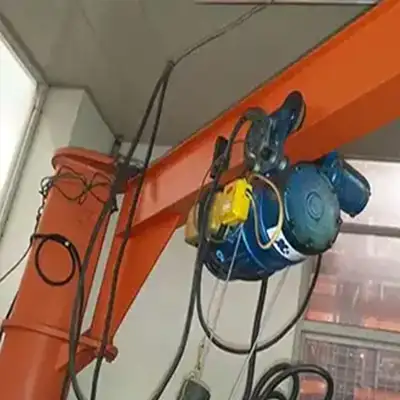

Yuantai Cranes
Overhead Crane Manufacturer with CE, ISO, SGS, CNEX Certificates.
- Main Specifications - Capacity: 0.5–550 tons | Span: up to 40m | Speed: 0.8–12 m/min | Duty: A3–A7 | Power: 380–690V, 50/60Hz | Control: pendant/remote/cabin
- Full engineering: FEA/PLC/VFD + in-house build + global delivery + on-site support, for workshops, factories, EPC contractors, industrial projects, etc.
- Support: design, manufacturing, testing, service – end-to-end, customized lifting solutions worldwide.
How to Get an Accurate Crane Price for Your Application?
Tips: Copy the spec list, fill in your details, and paste it into the form on the right/ down-below for a quick price.
- Crane type:_____ . (e.g., overhead crane, gantry crane, jib crane)
- Max weight to lift:_____ tons. (e.g., 2t, 5t, 10t, 20t, 50t)
- Lifting height:_____ m. (How high does the hook need to reach?
- Workshop width (span):_____ m . (Distance between the two crane rails)
- Travel distance:_____ m . (How long does the crane need to move along the runway?)
- Control type:_____. (Pendant / remote / cabin Control)
- Power supply:_____. (Local voltage & frequency – e.g., 380V, 50Hz, 3-phase)
- What will it be used for?_____ (e.g., steel fabrication, concrete products, mold handling, general manufacturing, etc.)
- Any special requirements?_____ (e.g., extreme temperature, dusty or explosive environment, special paint color, etc.)
Just leave a message via the contact form and our hoist and crane engineer will contact you with in 24working hours.
Get Your Custom Quote–Quick & Easy
Fill in what you know. Skip what you don't – we'll help.Any question will be reply with 24 working hours