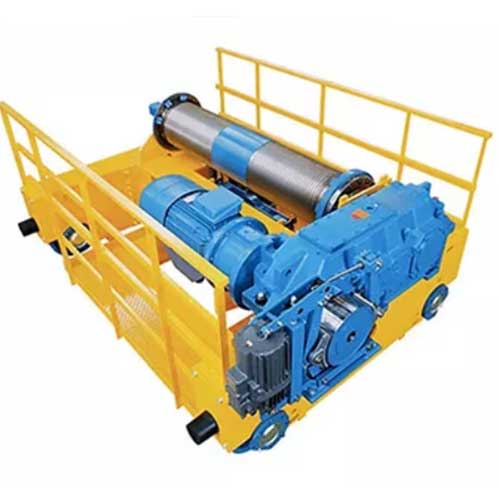
Heavy Duty Open Winch, Built Up Hoist for Heavy Duty Crane
Built up hoist for heavy duty open winch crane. Highly engineered & processed open winch hoist for top running double girder cranes.Check built up hoist now.
| Crane Type | Heavy Duty Open Winch Hoist- Heavy Duty Open Winch Hoist / European Style Open Winch, ISO M5–M8 / FEM 2M–5M |
| Crane Capacity | 5–500 Ton (Common: 10 Ton, 20 Ton, 50 Ton, 100 Ton, 200 Ton) |
| Lifting Height | 6–50 m (Common: 9 m, 12 m, 18 m, 24 m) |
| Coverage Area Type | Installation Type:Open winch trolley or fixed installation for double girder overhead cranes, gantry cranes, shipyard cranes, and heavy-duty lifting systems. |
| Application | Designed for steel plants, power plants, shipyards, ports, heavy machinery factories, and large industrial projects. Used for heavy material handling, equipment installation, assembly, maintenance, loading, and unloading operations. |
| Certifications | CE / ISO / SGS / Other third-party inspection |
| Customization | Customized for heavy-duty overhead cranes and gantry cranes. Options include dual lifting mechanism, twin trolley design, VFD control, PLC automation, anti-sway system, remote control, load monitoring, and custom lifting solutions. |
Crane Manufacturer: Yuantai Cranes – 30+ Years Professional Crane Manufacturer from China
Category: Hoist
Tags: openwinchcrane,hoist
Your Trusted Overhead Electric Hoist Manufacturer & Supplier
Heavy Duty Open Winch, Built Up Hoist for Heavy Duty Crane
Built up hoist for heavy duty open winch crane. Highly engineered & processed open winch hoist for top running double girder cranes.Check built up hoist now.
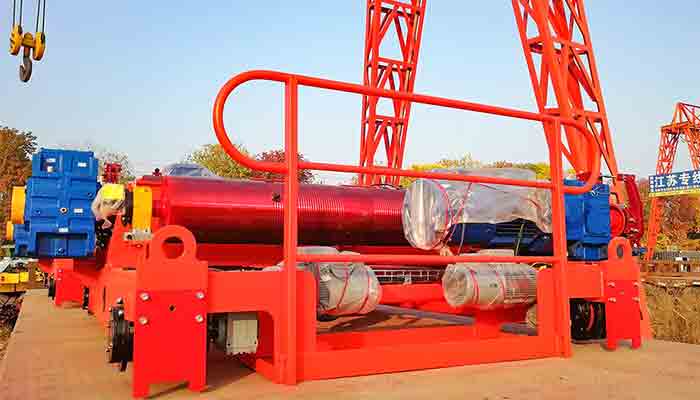
Built-up hoists are engineered,processed, integrated systems that are generally equipped on top running heavy duty cranes. These heavy duty hoist systems are built to withstand high-output production and tough industrial conditions and operate on process cranes. Because each built-up hoist system is totally designed for the particular application and material handling.
Applications of Built up Hoists
Built up hoist system are widely used on the following applications such as, Automation, bucket hoists, ladle and charging hoists, explosion proof hoists, magnet service, wet and dry end paper-mill service, turbine handling, critical lifts, die flipping and metal coil handling, etc.
Components of heavy duty built up open winch
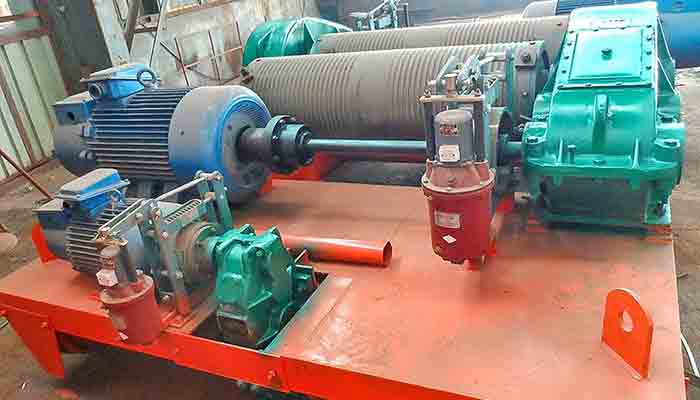
In order to perform a very specific and precise lift, a built-up hoist is made up of sturdy and carefully engineered components. Drums, a motor, a gearbox, couplings, sheaves, an encoder, brakes, limit switches, drives and control systems, festooning, and other elements are a few of these parts.
Many of these built up open winch hoist components are processed for particular application and constructed to last, allowing them to accomplish a complex or critical lift repeatedly. To reduce stress, fatigue, and distortion within the system, built-up hoist materials are usually high alloy, heat-treated/hardened, and precision welded.
Advantages of Built Up Hoist Systems
Built-up heavy duty hoists are engineered for specific industrial lifting applications, offering superior durability, high performance, and long service life. These wire rope hoist systems are ideal for complex lifting operations, high-capacity material handling, and precision load positioning in demanding environments such as steel mills, manufacturing plants, and automated process cranes.
High Durability and Long Service Life
All components of a built-up heavy duty hoist are specifically designed for dedicated lifting duties, ensuring extended service life, high durability, and reliable long-term performance. These wire rope hoists excel in complex lifting tasks, heavy load handling, and high-frequency operations in industrial crane systems.
Easy Maintenance and Improved Reliability
Compared to standard package hoists, built-up hoists provide enhanced reliability, simplified inspection, and easier maintenance and repair. Service platforms or walkways allow safe and convenient access for maintenance personnel, reducing downtime and improving maintenance efficiency and operational safety.
Accessible Components and Efficient Lubrication
Built-up hoists are designed with independent grease points for roller bearings, enabling efficient lubrication and extended component life. Key components such as gearboxes, brakes, and couplings are easily accessible, allowing quick adjustments, reduced maintenance time, and improved mechanical reliability.
Advanced Technology and Smart Control Features
Modern built-up hoist systems incorporate advanced technologies such as variable frequency drives (VFD), anti-sway control systems, overload protection limit switches, and radio remote controls. These features enable precise movement, smooth operation, energy efficiency, enhanced safety, and real-time diagnostics for predictive maintenance and optimized equipment lifecycle management.
Disadvantages of Heavy Duty Built Up Hoist
Heavy duty built-up hoists offer high performance and durability, but they also come with higher initial investment, complex engineering requirements, and reduced versatility. These wire rope hoist systems are typically used in demanding industrial applications, where cost, customization, and specialized maintenance must be carefully evaluated.
Higher Cost and Investment Requirements
The most significant disadvantage of installing a built-up hoist into an overhead crane system is the cost. This includes higher upfront investment, additional engineering and design specifications, specialized hoist components, longer manufacturing lead times, and increased transportation and freight costs for open winch hoist systems. Installation is also more complex, requiring more time, labor, and technical expertise.
Limited Application Flexibility
Built-up hoists are designed for a specific lifting application and excel at a single task, but this results in limited versatility. Unlike standard or package hoists, lower duty cycle hoists can handle a wider range of materials, variable lifting frequencies, and more flexible operational requirements within their rated capacity and duty cycle.
Complex Installation and Engineering
Built-up hoist systems require detailed engineering design, customization, and integration into top-running double-girder crane systems. This increases project complexity, extends project timelines, and demands experienced engineering teams for proper system configuration, load calculations, and structural compatibility.
Training, Inspection, and Maintenance Complexity
Operators and maintenance personnel require additional training to handle the advanced controls, performance characteristics, and complex components of built-up hoists. Regular inspections also require experienced inspectors due to the sophisticated mechanical and electrical systems. However, most crane manufacturers provide customized training programs to ensure safe operation, proper maintenance, and compliance with industrial safety standards.
Designed for You Built-Up Open Winch Hoist
The built-up open winch hoist is designed to satisfy your unique needs in heavy duty material handling and overhead crane systems.
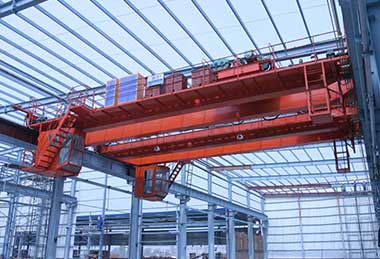
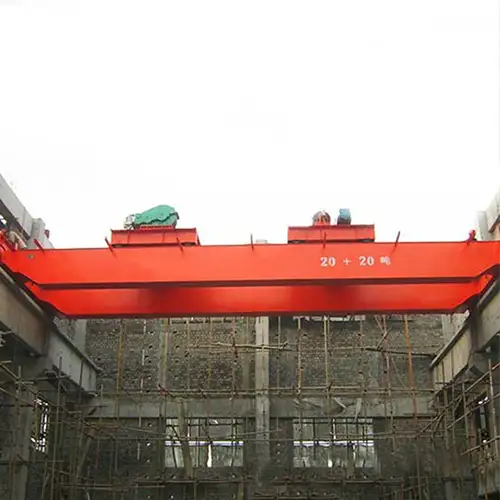
Chinese Style Double Girder Open Winch Trolley Top Runing Crane - 5 ton- 63 ton double girder overhead electric crane with rope hoist trolley / chain hoist trolley, competitive hoist trolley crane system, cheaper hoist trolley crane price, good electric overhead crane solution.
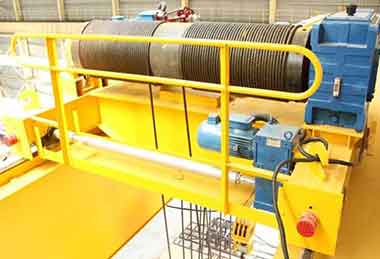
European Style Double Girder Open Winch Top Running Crane European standard double girder overhead crane with open winch trolley, a heavy duty winch crane up to 320 ton, wide specifications hook cranes for wide application. Get FEM / DIN open winch travelling bridge crane now!
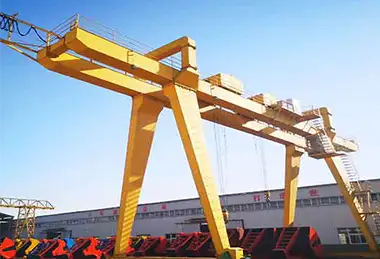
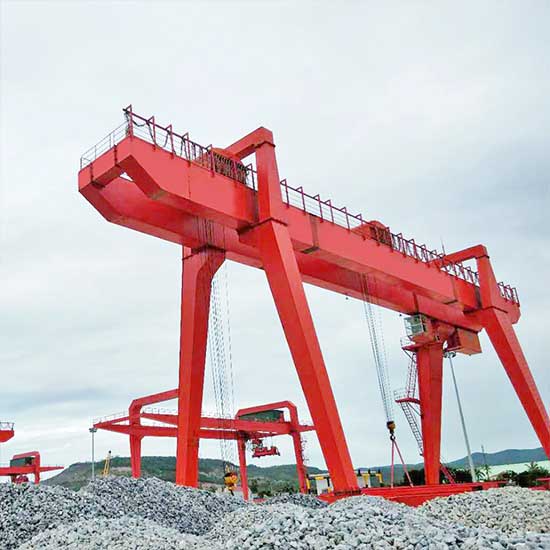
Mg Double Girder Gantry Crane with Box Girder Design 5 -500 ton gantry cranes with A frame gantry, double box girder & hook crane design for heavy lifting. Reliable box girder crane & hook crane for sale.
Why go with the open winch / engineered hoist trolley?
The built-up open winch wire rope hoist is intended for heavy lifting applications and engineered for strength, safety, and reliability in industrial crane systems.
- Designed for high-capacity lifting such as steel mills, power plants, and shipyards
- Ensures maximum safety, dependability, and precision in critical lifting operations
- Optimized for demanding duty cycles and continuous industrial use
- Supports customized crane configurations for various application-specific requirements
Safety features of built-up open winch hoist
All built-up open winch wire rope hoists are equipped with advanced safety systems to prevent overloads and ensure precise load handling.
- Load monitoring system prevents overload and collects operational safety data
- Standard rope overwrap protection enhances lifting safety
- Micro-speed and inching control enable precise load positioning
- Variable frequency drive (VFD) improves smooth operation and control accuracy
- Supports safe operation in heavy duty overhead crane environments
Reliability and durability of open winch hoists
The robust design of the built-up open winch hoist ensures long-term durability and reliable performance in heavy-duty lifting applications.
- Three-step helical gearing provides efficient power transmission
- Class H motor insulation supports high temperature and continuous operation
- D.C. disk brakes ensure safe and reliable braking performance
- Flexible two-stage geared coupling reduces fatigue and extends service life
- Engineered specifically for hoisting operations to maximize efficiency and uptime
Precision control and customization options
Heavy-duty open winch hoists provide precise lifting control and flexible customization for various industrial applications.
- Closed-loop vector control ensures accurate and smooth lifting performance
- Load floating and anti-sway control improve operational efficiency
- Hoisting synchronization enables coordinated multi-hoist operations
- Expanded speed range supports diverse lifting requirements
- Custom crane packages can be designed to meet specific project needs
FAQs on Built-Up Open Winch Hoist
Learn key information about heavy duty built-up open winch hoists, including design, applications, advantages, and performance in industrial crane systems.
What is a built-up open winch hoist?
Direct answer: A built-up open winch hoist is a custom-engineered wire rope hoisting system designed for heavy-duty and high-capacity lifting applications.
Explanation:
- Individually designed for specific crane applications
- Typically used on top-running double girder cranes
- Built with separate components like drum, gearbox, and motor
- Ideal for high-load and continuous operation environments
Where are built-up open winch hoists commonly used?
Direct answer: They are widely used in heavy industries requiring precise and high-capacity lifting operations.
Explanation:
- Steel mills and metal processing plants
- Power generation and turbine handling
- Paper mills (wet and dry end operations)
- Automated production systems and process cranes
- Special lifting such as ladle handling and die flipping
What are the main components of a built-up hoist system?
Direct answer: A built-up hoist consists of multiple engineered components designed for precise lifting performance.
Explanation:
- Wire rope drum and hoisting mechanism
- Electric motor and gearbox system
- Brakes, couplings, and sheaves
- Limit switches and control systems
- Encoders, drives, and safety devices
Why choose a built-up hoist over a standard hoist?
Direct answer: Built-up hoists offer superior durability, customization, and performance for demanding lifting tasks.
Explanation:
- Designed for high-duty cycles and continuous operation
- Higher reliability in harsh industrial environments
- Custom-built for specific lifting requirements
- Better suited for complex and critical lifts
What are the key safety features of built-up open winch hoists?
Direct answer: Built-up hoists are equipped with advanced safety systems to ensure safe and precise lifting operations.
Explanation:
- Overload protection and load monitoring systems
- Rope overwrap and limit switch protection
- Variable frequency drive (VFD) for smooth control
- Emergency braking systems
- Anti-sway and precision positioning controls
What are the disadvantages of built-up open winch hoists?
Direct answer: The main disadvantages include higher cost, complex engineering, and limited flexibility.
Explanation:
- Higher initial investment and longer lead time
- Requires detailed engineering and customization
- More complex installation and commissioning
- Needs skilled operators and maintenance personnel
Can built-up hoists be customized?
Direct answer: Yes, built-up hoists are fully customizable to meet specific application and operational requirements.
Explanation:
- Custom lifting capacity and speed configurations
- Adaptable to different crane types and layouts
- Optional smart control and automation features
- Designed for specific materials and environments
What maintenance is required for built-up hoists?
Direct answer: Regular inspection, lubrication, and component checks are required to ensure long-term performance.
Explanation:
- Routine inspection of wire ropes and brakes
- Lubrication of bearings and gear systems
- Monitoring electrical and control systems
- Scheduled preventive maintenance programs

Yuantai Cranes
Yuantai Cranes - Global Material Handling Crane Solution Provider & Manufacturer with CE, ISO, SGS, CNEX and other Third Party Certifications.
- Main Specifications - Capacity: 0.5–550 tons | Span: up to 40m | Speed: 0.8–12 m/min | Duty: A3–A7 | Power: 380–690V, 50/60Hz | Control: pendant/remote/cabin
- Full engineering: FEA/PLC/VFD + in-house build + global delivery + on-site support, for workshops, factories, EPC contractors, industrial projects, etc.
- Support: design, manufacturing, testing, service – end-to-end, customized lifting solutions worldwide.
Get Your Custom Quote – Quick & Easy
Fill in what you know. Skip what you don't – we'll help.
- Crane type:_____ . (e.g., overhead crane, gantry crane, jib crane)
- Max weight to lift:_____ tons. (e.g., 2t, 5t, 10t, 20t, 50t)
- Lifting height:_____ m. (How high does the hook need to reach?
- Workshop width (span):_____ m . (Distance between the two crane rails)
- Travel distance:_____ m . (How long does the crane need to move along the runway?)
- Control type:_____. (Pendant / remote / cabin Control)
- Power supply:_____. (Local voltage & frequency – e.g., 380V, 50Hz, 3-phase)
- What will it be used for?_____ (e.g., steel fabrication, concrete products, mold handling, general manufacturing, etc.)
- Any special requirements?_____ (e.g., extreme temperature, dusty or explosive environment, special paint color, etc.)
Just leave a message via the contact form and our hoist and crane engineer will contact you with in 24working hours.
Inquire Yuantai Cranes