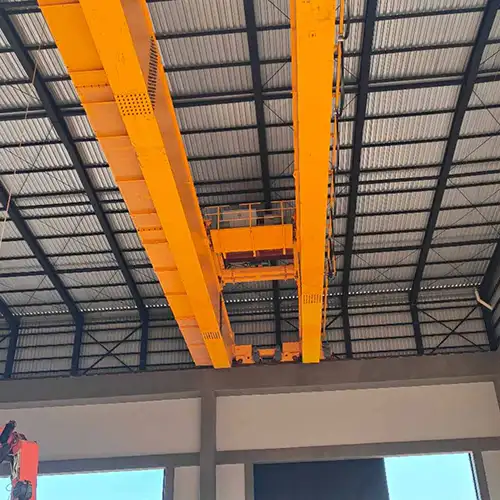
Overhead Cranes & Gantry Cranes for Solar PV Modules (0.5–20T)
Guide to choosing overhead crane and gantry cranes (0.5–20 tons) for solar PV module handling—safe, efficient, and tailored to factory and yard needs.
| Crane Type | 0.5–20 ton overhead/EOT or gantry crane systems for PV module and production-equipment handling; single-girder for lighter capacities and double-girder for heavier loads,ISO A3–A5 / FEM 1Am–3M, 380/400/415V, 50Hz, 3Ph; |
| Crane Capacity | 0.5–20 ton; capacity selected according to module weight, glass or frame load, production equipment, lifting attachment weight, and handling process. |
| Span Length | 5–30 m for overhead cranes; gantry crane span and runway length customized according to the PV factory or outdoor material-handling area. |
| Lifting Height | 3–15 m; customized according to factory height, production-line layout, storage height, and equipment installation requirements. |
| Coverage Area Type | Rectangular or localized lifting coverage; PV production lines, module assembly stations, glass handling areas, equipment zones, warehouses, maintenance areas, loading zones, and installation areas. |
| Application | PV module handling, glass lifting, frame handling, module assembly, production equipment installation, material transfer, maintenance, warehouse handling, and factory logistics. |
| Certifications | CE / ISO / SGS / Other third-party inspection |
| Customization | Customized 0.5–20 ton capacity, overhead/EOT or gantry configuration, single- or double-girder structure, electric chain or wire rope hoist, electric trolley, pendant/radio/cabin control, vacuum lifter, spreader beam, clamp, and positioning or automation |
Crane Manufacturer: Yuantai Cranes – 30+ Years Professional Crane Manufacturer from China
Category: Featured
Tags:
Your Trusted Overhead Crane Manufacturer & Supplier
Overhead and Gantry Cranes for Solar PV Module Industry
Choosing the Right Crane (0.5–20 Tons) for Safe, Efficient Module Handling
Most Important Takeaway
Selecting the right overhead or gantry crane is critical for the solar PV module industry. Proper crane choice ensures safe handling of delicate modules, smooth material flow, minimized equipment damage, and long-term operational efficiency. Wrong capacity, type, or features can lead to production delays, higher costs, and safety risks.
Key Takeaways for Crane Buyers:
- Choose cranes based on module weight, stack size, and production workflow.
- Understand the difference between single girder, double girder, full gantry, semi-gantry, and portable cranes.
- Consider safety features like anti-sway hoists, soft load handling, and vacuum lifters.
- Factor in indoor vs outdoor usage, future expansion, and multi-purpose flexibility.
- Verify supplier experience, hoist type, and precision controls for delicate PV modules.
Typical Overhead Cranes Used in PV Module Factories
Overhead cranes are the backbone of most solar PV module production lines. They move heavy glass sheets, aluminum frames, and delicate modules across the factory floor with precision. Choosing the right type can save time, reduce module damage, and make daily operations smoother. Let's break down the main types used in PV factories.
Single Girder Overhead Crane
Capacity: 1–10 tons
Best For: Handling light-to-medium PV modules, small laminators, and workshop equipment
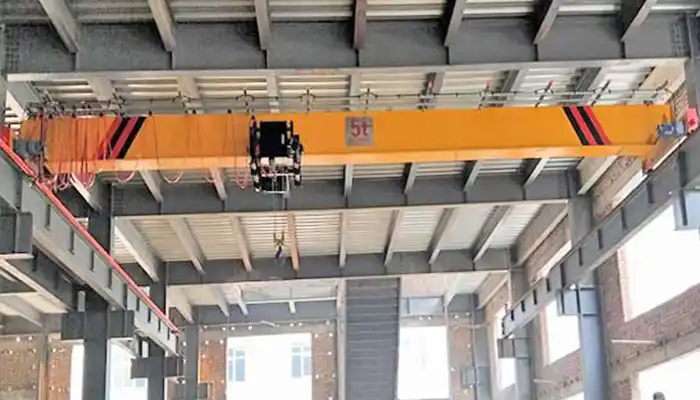
Single girder overhead cranes are often the first choice for smaller production lines or experimental PV module setups. They are simple in design, reliable, and cost-effective. They don't need as much building height as a double girder system, which makes them suitable for older or smaller factories.
Advantages:
- Cost-effective and simple to install – minimal structural work required.
- Low building height requirement – fits in workshops with limited vertical space.
- Good for smaller production lines or pilot projects – easy to adapt for occasional changes in workflow.
Considerations:
- Limited span, which may not cover very wide factory floors.
- Moderate lifting height may not be enough for tall stacks of modules.
- Not ideal for handling very heavy equipment or multiple simultaneous lifts.
Double Girder Overhead Crane
Capacity: 5–20 tons
Best For: Heavy stacks of modules, laminators, and large PV production equipment
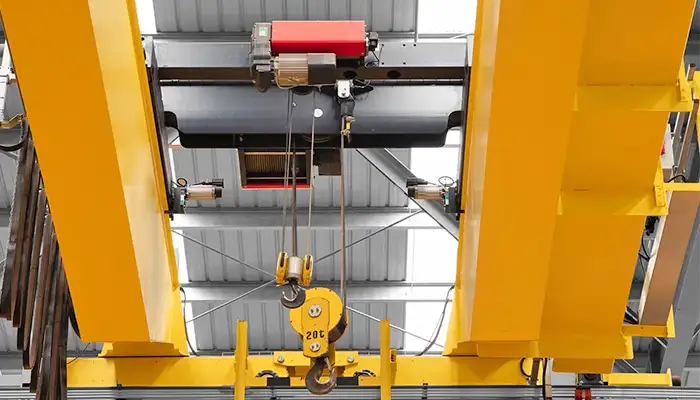
Double girder overhead cranes are more robust and widely used in full-scale PV module production. The dual-girder design allows for longer spans and higher lifting capacities. They are perfect when you need to handle heavier modules or lift multiple items at once using a dual-trolley setup.
Advantages:
- Greater stability and longer spans – can cover large factory areas.
- Supports dual-trolley operation – allows two lifts at the same time.
- Smooth operation – wire rope hoists reduce sway and give precise control.
- Better for heavier production equipment – like laminators and automated stacking systems.
Considerations:
- Higher upfront cost compared to single girder cranes.
- Requires a robust building structure or runway support.
- Slightly more complex installation and maintenance.
Special Features for PV Module Handling
When handling solar modules, safety and precision are just as important as lifting capacity. Certain crane features can make a huge difference in avoiding module damage and improving workflow.
Key Features to Consider:
- Anti-sway hoists – reduce swinging during lifting and placement.
- Soft load handling – prevents cracking or scratching on glass and thin-film modules.
- Adjustable lifting speeds – allow for precise module placement, especially on assembly lines.
- Custom spreader bars or vacuum lifters – useful when lifting multiple stacked modules at once without risk.
These features are particularly valuable in modern PV factories, where module sizes and formats vary, and efficiency is closely linked to careful material handling.
Typical Gantry Cranes Used in PV Module Industry
Gantry cranes are widely used in solar PV module facilities, especially where flexibility and outdoor handling are needed. They don't rely on overhead building support, which makes them perfect for module storage yards, loading areas, and workshops. Choosing the right type can improve efficiency and reduce handling risks for delicate modules.
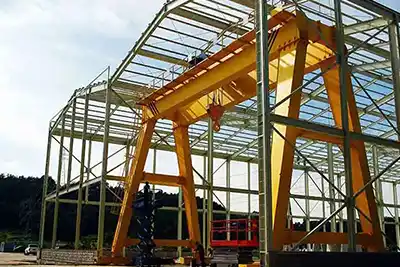
Full Gantry Crane
Capacity: 5–20 tons
Best For: Outdoor module storage, loading/unloading trucks, and heavy equipment handling
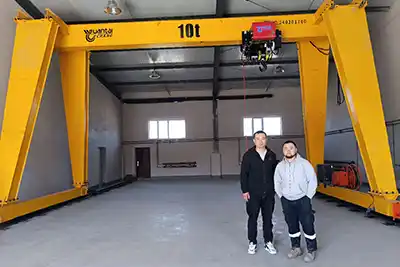
Full gantry cranes are robust, freestanding systems that move along rails on the ground. They are ideal when you need to lift large stacks of modules or heavy production equipment in open areas. Because they don't require building support, they're particularly useful in outdoor yards or large assembly spaces.
Advantages:
- Freestanding design – no overhead structure needed.
- Wide spans – can cover large outdoor areas and storage yards.
- High lifting capacity – suitable for heavy modules or equipment.
Considerations:
- Requires rail installation for precise movement and alignment.
- Less suited for small workshops with limited space.
- Installation can take longer and needs a stable foundation.
Semi-Gantry Crane
Capacity: 2–10 tons
Best For: Medium-weight loads in limited spaces, indoor or outdoor use
Semi-gantry cranes are a hybrid solution. One side of the crane runs on a rail, while the other is supported by a leg. This design reduces the need for a full outdoor rail system while still providing lifting capability for medium loads. They're flexible enough for growing PV factories or areas where space is partially constrained.
Advantages:
- Cost-effective alternative to full gantry cranes.
- Flexible layout options – works well in both indoor and outdoor areas.
- Adaptable – can be installed incrementally as production expands.
Considerations:
- Span is limited compared to full gantry cranes.
- Lifting capacity is moderate; may not suit heavy stack handling.
- Requires some floor or partial runway support.
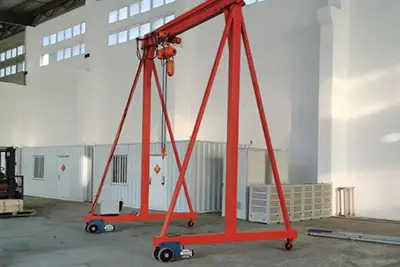
Portable / Mobile Gantry Crane
Capacity: 0.5–5 tons
Best For: Small workshops, maintenance tasks, or flexible layouts
Portable or mobile gantry cranes are lightweight and can be moved between workstations or locations as needed. They're ideal for small-scale PV module assembly, repair tasks, or temporary installation sites. Because of their mobility, they provide quick solutions for changing production needs without requiring permanent infrastructure.
Advantages:
- Easily movable between different areas of the facility.
- Low cost and flexible – ideal for small-scale production.
- Quick setup – doesn't require permanent rails or building modifications.
Considerations:
- Limited lifting capacity and height.
- Less precise than fixed gantry cranes for repeated operations.
- Best suited for lighter loads and short-term use.
How to Choose the Right Crane for Your Solar PV Facility
Choosing the right crane is not just about weight limits. It's about matching crane type, capacity, and features to your workflow, module sizes, and future needs. Here's a step-by-step practical guide for PV module buyers.
Determine Module Size, Weight, and Stacking
The first step is understanding what you need to lift. PV modules differ in size, technology, and fragility. Stacked modules increase the load, which affects the crane's required lifting capacity.
Key Points:
- Measure module dimensions and typical stack heights.
- Include a 20–30% safety margin for stacked or bundled loads.
- Consider special handling for fragile glass or thin-film modules.
- Check if lifting includes other production equipment like laminators or stringers.
Match Crane Type to Facility Workflow
Your facility layout and workflow determine the crane type. Indoor assembly lines usually use overhead cranes, while outdoor yards or flexible areas often require gantry cranes.
Key Points:
- Map your material flow from raw materials to finished modules.
- Identify locations where fixed path lifting or mobile lifting is needed.
- Consider combining crane types for mixed indoor and outdoor operations.
- Make sure crane span and height match your floor layout and storage racks.
Evaluate Lifting Frequency and Fragility
Not all PV modules are equal in strength. Frequent handling of fragile modules requires precise, controlled lifting to avoid damage.
Key Points:
- Use anti-sway hoists to stabilize delicate modules.
- For repeated lifts, electric wire rope hoists are preferable for smooth operation.
- Plan maintenance schedules to avoid downtime during peak production.
- Check for variable speed controls to adjust lifting speed as needed.
Plan for Future Expansion and Multi-Purpose Use
Solar PV facilities often grow over time. Cranes should be selected not just for today's requirements, but also for future production lines or heavier equipment.
Key Points:
- Choose cranes that allow capacity upgrades or modular expansions.
- Consider flexible designs that adapt to changing layouts or new assembly lines.
- Ensure runway systems or foundations can handle heavier loads in the future.
Prioritize Safety Features
Safety is critical for PV module handling. Modules are expensive and fragile, and workers need protection from accidents.
Must-Have Safety Features:
- Anti-sway systems – prevent swinging during lifts.
- Spreader bars – evenly distribute weight on stacked modules.
- Vacuum lifters – lift glass modules without scratching or pressure points.
- Emergency stop functions and limit switches for height and travel.
Verify Supplier Credentials and Experience
The crane supplier's experience in the solar PV industry is just as important as the equipment itself. Experienced suppliers understand module handling, production flow, and required features.
Key Points:
- Request references or case studies from PV module factories.
- Confirm warranty, spare parts availability, and maintenance support.
- Ensure the supplier can provide custom solutions for unique module sizes or lifting requirements.
Bottom Line
A well-chosen crane ensures your PV modules are handled safely, efficiently, and with minimal risk of damage. Matching the crane's type, capacity, and features to your workflow, module sizes, and future growth makes day-to-day operations smoother and reduces long-term costs.
Practical Tips for PV Module Crane Buyers
Buying a crane for a solar PV module facility is more than checking lifting capacity. The right crane can improve efficiency, reduce module damage, and simplify daily operations, while the wrong choice can cause downtime, safety issues, and extra costs. Here's a practical guide for buyers.
Inspect the Supplier's Track Record
Not all crane suppliers understand the unique needs of PV module handling. Choosing a supplier with proven experience reduces risks and ensures better support.
Key Points:
- Ask for references from other PV factories or warehouses.
- Review case studies or project examples that demonstrate experience with delicate modules.
- Confirm whether the supplier provides local service, maintenance, and training.
Verify Hoist Type, Precision, and Reliability
The hoist is the heart of any crane. For PV modules, precision and smooth operation are crucial to prevent damage.
Key Points:
- Prefer electric wire rope hoists for smooth, controlled lifts.
- Check for variable speed controls for accurate placement.
- Ensure the hoist can handle frequent lifting cycles without excessive wear.
- Confirm reliability with manufacturer certifications and test reports.
Evaluate Installation, Maintenance, and Space Constraints
Even the best crane won't help if it doesn't fit your facility or is too costly to maintain. Consider both current and future needs.
Key Points:
- Review installation requirements, including runway supports or foundations.
- Estimate ongoing maintenance costs and availability of spare parts.
- Check space constraints: ceiling height, aisle width, and floor load limits.
- Consider the impact on workflow and storage layout.
Request Custom Solutions for Non-Standard Modules or Workflows
Not every PV facility has standard-sized modules or linear workflows. Custom solutions can maximize efficiency and safety.
Key Points:
- Ask for special spreader bars, vacuum lifters, or adjustable hooks.
- Consider dual-trolley or modular designs for unusual layouts.
- Verify the crane can handle stacked or oversized modules safely.
Consider Energy-Efficient, Low-Noise, and Durable Options
Modern PV facilities benefit from cranes that are not just functional, but also efficient and quiet, improving working conditions and reducing operational costs.
Key Points:
- Look for energy-efficient motors that lower electricity costs.
- Choose low-noise systems for indoor production areas.
- Check durability and expected lifespan—long-term reliability saves money.
- Factor in environmental exposure if cranes are used outdoors.
Bottom Line
For PV module buyers, it's not just about the crane's capacity—it's about supplier experience, hoist precision, facility fit, customization, and efficiency. Following these practical tips helps ensure your crane investment delivers safe, reliable, and long-term performance.
Conclusion
Choosing the right overhead or gantry crane (0.5–20 tons) is about much more than lifting capacity. It directly affects worker safety, production efficiency, and long-term operational costs in solar PV module factories. A well-matched crane ensures smooth workflow, reduces module damage, and avoids unexpected downtime.
Key Takeaways:
- Single girder cranes are ideal for lighter, indoor module handling and small-scale production lines.
- Double girder cranes handle heavier modules, large equipment, and full-scale production efficiently.
- Gantry cranes—whether full, semi, or portable—offer flexible outdoor solutions for storage yards, loading/unloading, or temporary setups.
- Attention to capacity, safety features, and workflow compatibility prevents costly mistakes, delays, and damaged modules.
- Understanding crane types, capacities, and PV industry requirements allows buyers to make informed, practical, and cost-effective decisions.
Investing time in the right crane selection today saves money, improves safety, and ensures long-term reliability for your PV facility.
FAQ: Choosing Overhead and Gantry Cranes for Solar PV Module Handling
Q1: Which crane types are best suited for different stages of PV module production and handling?
A: The crane type depends on where and how the modules are handled:
- Single Girder Overhead Cranes (1–10 tons): Ideal for lightweight modules, small laminators, and indoor assembly lines. Best for smaller factories or pilot lines.
- Double Girder Overhead Cranes (5–20 tons): Handle heavier modules, large laminators, and full production equipment. Suitable for large indoor production lines where precision and dual-trolley lifts may be needed.
- Full Gantry Cranes (5–20 tons): Perfect for outdoor storage yards, truck loading, and heavy module stacks. Freestanding design allows use where building support isn't available.
- Semi-Gantry Cranes (2–10 tons): Good for medium loads and limited space, combining indoor and outdoor flexibility.
- Portable / Mobile Gantry Cranes (0.5–5 tons): Best for small workshops, maintenance tasks, or temporary lifting needs, where flexibility is required.
Q2: What lifting capacities are typical and sufficient for PV module handling?
A: PV modules are usually fragile and vary in size, so lifting capacity must account for module weight plus stacking:
- Small modules or single-panel lifts: 0.5–5 tons (portable or single girder cranes).
- Medium-sized modules or stacked bundles: 2–10 tons (semi-gantry or single girder cranes).
- Large modules, laminators, or heavy production equipment: 5–20 tons (double girder or full gantry cranes).
Tip: Always include a 20–30% safety margin on top of the maximum expected load for stacked modules.
Q3: How do you match crane type to factory layout, workflow, and safety requirements?
A: The right crane depends on where modules are handled and how often:
- Indoor assembly lines: Overhead cranes (single or double girder) provide precise, controlled lifting along fixed paths.
- Outdoor yards or flexible areas: Gantry cranes (full, semi, or portable) allow wide coverage without relying on building support.
- Mixed indoor and outdoor workflows: Use a combination of overhead and gantry cranes for efficiency.
Other factors to consider:
- Frequency of lifting
- Fragility of modules
- Space constraints and building height
- Potential future expansion or layout changes
Q4: What practical features and attachments ensure safe handling of fragile solar panels?
A: Handling PV modules safely requires more than lifting capacity:
- Anti-sway hoists: Reduce module swinging during lifts.
- Soft load handling: Prevents cracks or scratches on glass and thin-film modules.
- Adjustable lifting speeds: Helps precise placement in assembly lines.
- Spreader bars or vacuum lifters: Distribute weight evenly and handle stacked modules safely.
- Limit switches and emergency stop functions: Provide extra safety for operators and modules.
Tip: Work with suppliers experienced in the PV module industry—they can recommend the right attachments for your workflow.

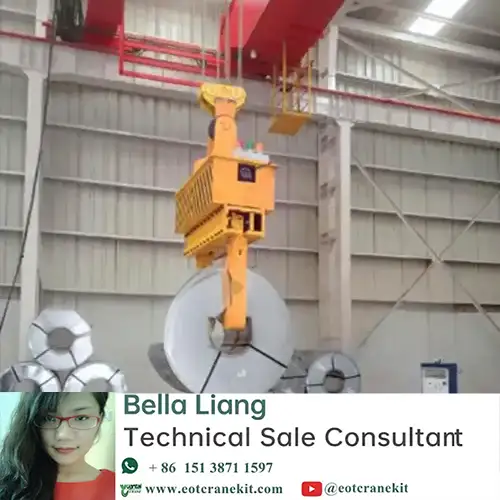
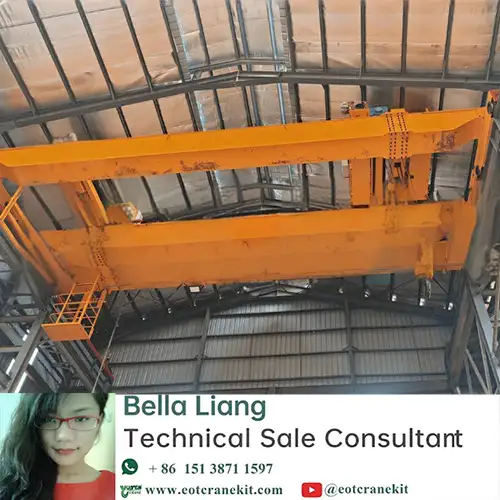

Yuantai Cranes
Overhead Crane Manufacturer with CE, ISO, SGS, CNEX Certificates.
- Main Specifications - Capacity: 0.5–550 tons | Span: up to 40m | Speed: 0.8–12 m/min | Duty: A3–A7 | Power: 380–690V, 50/60Hz | Control: pendant/remote/cabin
- Full engineering: FEA/PLC/VFD + in-house build + global delivery + on-site support, for workshops, factories, EPC contractors, industrial projects, etc.
- Support: design, manufacturing, testing, service – end-to-end, customized lifting solutions worldwide.
How to Get an Accurate Crane Price for Your Application?
Tips: Copy the spec list, fill in your details, and paste it into the form on the right/ down-below for a quick price.
- Crane type:_____ . (e.g., overhead crane, gantry crane, jib crane)
- Max weight to lift:_____ tons. (e.g., 2t, 5t, 10t, 20t, 50t)
- Lifting height:_____ m. (How high does the hook need to reach?
- Workshop width (span):_____ m . (Distance between the two crane rails)
- Travel distance:_____ m . (How long does the crane need to move along the runway?)
- Control type:_____. (Pendant / remote / cabin Control)
- Power supply:_____. (Local voltage & frequency – e.g., 380V, 50Hz, 3-phase)
- What will it be used for?_____ (e.g., steel fabrication, concrete products, mold handling, general manufacturing, etc.)
- Any special requirements?_____ (e.g., extreme temperature, dusty or explosive environment, special paint color, etc.)
Just leave a message via the contact form and our hoist and crane engineer will contact you with in 24working hours.
Get Your Custom Quote–Quick & Easy
Fill in what you know. Skip what you don't – we'll help.Any question will be reply with 24 working hours