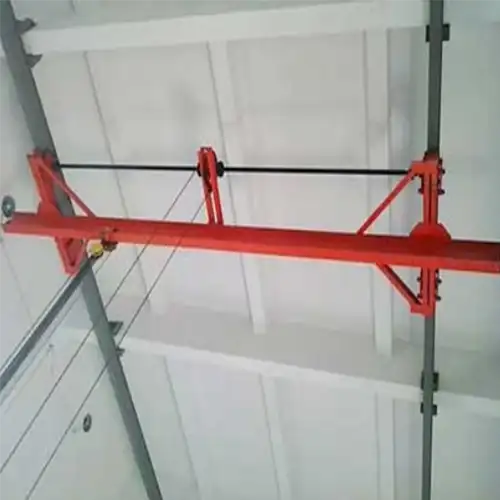
When a Light-Duty Indoor Overhead Crane Is Enough
Check when a light-duty indoor overhead crane is suitable for your workshop and when upgrading to a heavier model is necessary for safe, efficient operations.
| Crane Type | Light-duty indoor overhead/EOT crane; typically single-girder or underhung; electric chain/wire rope hoist; ISO A3–A5 / FEM 1Am–3M; 380/400/415V, 50Hz, 3Ph; pendant or radio remote control. |
| Crane Capacity | 0.5–20 ton typical light-duty range |
| Span Length | 7.5–25 m typical; determined by building width, runway arrangement, and required coverage |
| Lifting Height | 3–12 m typical; customized for building height and required hook position |
| Coverage Area Type | Rectangular indoor working areas covered by the crane runway; suitable for workstations, production lines, storage areas, and maintenance zones |
| Application | Indoor workshops, warehouses, maintenance areas, repair bays, light assembly lines, machine shops, production cells, and general material handling |
| Certifications | CE / ISO / SGS / Other third-party inspection |
| Customization | Customized headroom, and runway length; single-girder or underhung bridge crane; electric chain hoist, wire rope hoist, or low-headroom hoist; electric trolley; pendant or radio remote control; optional VFD, positioning, and anti-collision systems |
Crane Manufacturer: Yuantai Cranes – 30+ Years Professional Crane Manufacturer from China
Category: Featured
Tags:
Your Trusted Overhead Crane Manufacturer & Supplier
Light Duty Overhead Cranes for Indoor Material Handling
When a Light-Duty Indoor Overhead Crane Is Enough—and When It Is Not
Most Important Takeaway
Choosing the right indoor overhead crane can save your workshop money, reduce downtime, and improve safety. Light-duty indoor overhead cranes are ideal for small to medium loads and occasional lifting—but if your operations involve heavier materials, frequent lifts, or future expansion, a medium or heavy-duty crane may be necessary. Correct sizing avoids costly rework and operational inefficiency.
Key Takeaways (Bullet Points)
- Light-duty indoor overhead cranes typically handle 0.5–5 tons and are suitable for small workshops, maintenance areas, and light material handling.
- Load weight, frequency of use, and workshop structure are the main factors in deciding if a light-duty crane is sufficient.
- Undersized cranes increase safety risks, accelerate wear, and may lead to expensive upgrades later.
- Consider single girder vs. double girder designs, lifting height, span, hoist type, and duty cycle for optimal performance.
- Planning for future production expansion is essential when selecting your crane today.
Light-Duty Indoor Overhead Cranes
This section covers specifications, applications, and advantages of light-duty indoor overhead cranes.


Specifications
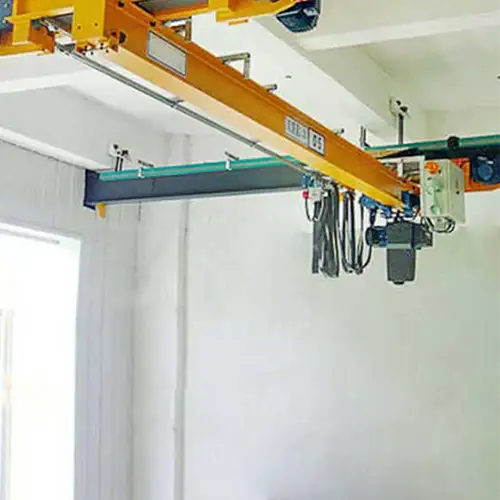
Light-duty indoor overhead cranes are designed for small to moderate lifting tasks. Typically, these cranes have a lifting capacity between 0.5 and 5 tons, which is sufficient for many workshops, small factories, and storage areas. The span of these cranes usually ranges from 6 to 20 meters, and the lifting height can reach up to 10 meters, depending on the building structure and crane design. Most light-duty cranes use a single girder design, making the system compact and easier to install compared to double girder models.
- Lifting capacity: 0.5–5 tons
- Span: 6–20 meters
- Lifting height: up to 10 meters
- Common design: single girder
These cranes are suitable when you don't have extremely heavy loads or need complex lifting systems. They are particularly handy in smaller spaces or areas with lower ceiling heights where a bigger crane would be overkill.
Applications
Light-duty cranes are very practical for a variety of indoor operations. They are commonly found in assembly lines, small manufacturing plants, laboratories, and warehouses where the loads are moderate and the lifting tasks are routine. They are also useful in maintenance workshops, where moving tools, machines, or components safely is required without investing in a larger, more expensive crane.
- Small assembly lines with moderate materials
- Maintenance and repair workshops
- Laboratories and testing facilities
- Light storage and inventory handling
For example, if your workshop handles plastic molds, small steel components, or machinery parts under 5 tons, a light-duty crane can handle these tasks efficiently without consuming extra power or requiring extensive structural reinforcement.
Advantages
One of the main reasons buyers choose light-duty indoor cranes is the balance between cost, efficiency, and functionality. They are affordable, easy to install, and require less energy to operate. Maintenance is also simpler, which is important for smaller teams or workshops that don't have full-time crane technicians.
- Lower upfront cost compared to medium or heavy-duty cranes
- Reduced energy consumption, helping save on operating expenses
- Simple installation, often possible without major modifications to the building
- Lower maintenance needs, with fewer components that can wear out quickly
These advantages make light-duty cranes a practical choice for small businesses or workshops that need reliable lifting for moderate loads. They offer enough flexibility for everyday operations while keeping costs reasonable.
When a Light-Duty Crane Is Enough
Choosing the right crane isn't just about the numbers on paper. It's about how your workshop actually operates day to day. A light-duty indoor overhead crane can be enough if your lifting tasks and workshop conditions match certain practical criteria. Let's break down the key points.
Weight of Loads
A light-duty crane is ideal when your lifting tasks stay comfortably below the crane's maximum capacity. You want to make sure there's a safe margin so the crane isn't constantly operating at its limit, which can cause faster wear or unexpected breakdowns.
- Suitable for loads consistently under 5 tons
- Leave at least 20–30% capacity margin for safety
- Handles components like small steel parts, plastic molds, or light machinery
If your workshop mainly moves lighter parts, a light-duty crane is perfectly adequate and avoids over-investing in a heavier system that isn't needed.
Frequency of Use
Another key factor is how often the crane is used. Light-duty cranes are best for occasional or moderate lifting tasks rather than continuous, high-frequency operations.
- Ideal for daily tasks with breaks in between
- Not suited for nonstop production lines lifting heavy items every few minutes
- Helps extend the crane's lifespan and reduces maintenance costs
Think of a small assembly line or maintenance shop where lifts happen a few times an hour, not dozens. Here, a light-duty crane will perform reliably.
Workshop Structure
Your building also plays a role in crane suitability. Light-duty cranes work best in workshops where ceiling height, runway beams, and structural support can handle the crane without major upgrades.
- Check that runway beams are rated for the crane's weight and capacity
- Ensure there's enough vertical space for the hook and load clearance
- Avoid expensive structural modifications unless absolutely necessary
If your workshop is compact or has lower ceilings, a single girder light-duty crane is usually the easiest fit.
Operational Precision
Finally, consider the precision and speed your tasks require. Light-duty cranes are sufficient when you don't need ultra-high lifting accuracy or very fast operations.
- Suitable for tasks where moderate positioning is fine
- Works well for small component handling, maintenance lifts, or material transfers
- Not ideal for high-speed assembly lines or tasks requiring extreme repeatable accuracy
Practical Example
In a typical workshop, a light-duty crane is enough for:
- Lifting small steel parts
- Moving plastic molds
- Handling light machinery components
This combination of weight, frequency, structure, and precision shows when a light-duty crane truly meets your workshop needs without overbuilding or overspending.
When a Light-Duty Crane Is Not Enough
Sometimes, a light-duty indoor overhead crane just won't cut it. Knowing the signs early can save you from costly downtime, frequent maintenance, or a full crane replacement down the line. Let's look at the situations where stepping up to a medium or heavy-duty crane is the smarter choice.
Heavier Loads
If your workshop regularly handles loads over 5 tons, a light-duty crane becomes risky. Operating at or near maximum capacity all the time stresses the crane's mechanical components and shortens its lifespan.
- Loads above 5 tons require medium or heavy-duty cranes
- Lifting heavy molds, steel parts, or machinery repeatedly can cause wear and safety hazards
- Always plan with a safety margin to prevent accidents or crane failure
A light-duty crane may seem cheaper upfront, but if your loads are consistently heavy, it can quickly become a false economy.
High-Duty Cycles
Light-duty cranes are designed for moderate use. If your operation involves continuous or high-frequency lifting, the crane will wear out faster than intended.
- Frequent lifting increases stress on hoists, wheels, and gears
- High-duty cycle operations demand cranes rated for industrial-grade use
- Reduces maintenance downtime and unexpected repair costs
For example, an assembly line that moves heavy components every few minutes will quickly outpace a light-duty crane's design.
Workshop Expansion
Even if your current operations fit a light-duty crane, future growth may push your crane beyond its limits. Expansion plans, bigger production runs, or new materials can require more lifting capacity or longer spans.
- Consider anticipated production increases
- Evaluate whether new equipment or larger loads will fit the existing crane
- Upgrading later is more expensive than choosing the right crane from the start
Planning for growth avoids the headache of costly rework and operational interruptions.
Specialized Handling Needs
Some workshops have unique requirements that light-duty cranes cannot meet. These include long spans, multiple hoists, double-girder stability, or precise positioning needs.
- Long spans may require double girder cranes for stability
- Multiple hoists for simultaneous lifts need medium or heavy-duty cranes
- Precision tasks, like aligning molds or machinery, may demand more robust control and rigidity
Ignoring these needs can lead to inefficiency, increased safety risks, and higher long-term costs.
Practical Example
In real-world industrial settings, a light-duty crane is insufficient for:
- Handling steel billets in metal workshops
- Lifting large machinery molds in manufacturing plants
- Frequent heavy lifts in busy production lines
Upgrading to a medium or heavy-duty crane in these cases ensures safe, reliable operations while reducing wear, downtime, and potential accidents.
Risks of Choosing an Undersized Crane
Selecting a crane that is too small for your workshop needs might seem like a cost-saving move at first. But in reality, it can create serious problems, both for safety and for your bottom line. Understanding the risks helps buyers make smarter, long-term decisions.
Safety Hazards and Reduced Safety Margins
When a crane operates near or beyond its capacity, it puts everyone around it at risk. Hooks, hoists, and structural components can fail unexpectedly if the crane isn't strong enough for the loads you lift.
- Reduced safety margins increase the risk of accidents
- Overloaded cranes may cause dropped loads or structural damage
- Worker safety and compliance with regulations (CE, ISO, OSHA) can be compromised
Even occasional overloads can weaken the crane over time, making what seemed "good enough" into a dangerous situation.
Faster Component Wear and More Frequent Maintenance
An undersized crane works harder than it was designed to. This accelerates wear on critical parts like hoists, wheels, brakes, and gearboxes.
- Increased maintenance frequency and higher repair costs
- Shorter overall lifespan for crane components
- More downtime for inspections and repairs, disrupting workshop operations
Buying a slightly larger crane upfront can save thousands in repairs and replacement parts over the years.
Operational Inefficiencies and Production Downtime
Using a crane that can't comfortably handle your loads can slow down your workflow. Operators have to lift more cautiously, wait between lifts, or even use multiple smaller lifts instead of one.
- Slower lifting speeds reduce productivity
- Extra handling steps increase labor time and potential for mistakes
- Downtime for repairs or breakdowns disrupts production schedules
In short, the "small savings" on purchase can cost far more in lost productivity.
Costly Upgrades or Complete Crane Replacement
Eventually, an undersized crane will hit its limits. At that point, workshops often have no choice but to upgrade or replace the crane entirely, which can be a major expense.
- Crane replacement costs more than selecting the right size initially
- Upgrades may require structural modifications to the building
- Production interruption adds indirect costs to the upgrade
Planning ahead by matching the crane to your current and future loads is the most practical way to avoid these pitfalls.
Buyer Guidelines for Selecting Indoor Overhead Cranes
Selecting the right indoor overhead crane doesn't have to be complicated, but it does require careful planning. Making the wrong choice can lead to safety issues, downtime, and extra costs. Below are practical guidelines that help buyers make informed decisions and choose a crane that meets both current needs and future growth.
Assess Current and Future Load Requirements
Start with the loads you handle every day—but don't forget to think ahead. Consider the maximum weight of items, the types of materials you lift, and how often lifting occurs. This ensures the crane is strong enough today and tomorrow.
- Identify the heaviest loads and add a safety margin (20–30%)
- Consider material types: steel, plastic, machinery parts, molds, or sensitive equipment
- Evaluate lifting frequency: occasional, moderate, or continuous operations
This step helps you avoid underpowered cranes that will wear out quickly or slow down your workflow.
Evaluate Workshop Structure
Your building plays a key role in determining what kind of crane can be installed. Check ceiling height, runway beam strength, and structural support to ensure the crane can operate safely and efficiently.
- Verify runway beams can carry the crane and load weight
- Ensure enough vertical clearance for hook height and load movement
- Consider whether the building structure will require reinforcement for heavier cranes
Matching crane size with your building prevents costly modifications and ensures smooth installation.
Determine Operational Demands
Think about how your crane will be used. The duty cycle, precision needs, and lifting speed all affect which crane type is most suitable.
- Light-duty cranes are fine for occasional lifts at moderate speed
- Medium or heavy-duty cranes are necessary for continuous, high-frequency operations
- Precision lifting tasks may require double-girder cranes or advanced control systems
Understanding operational demands ensures you don't overwork the crane or compromise safety.
Factor in Safety Standards and Certifications
Cranes must meet safety regulations for your country or region. Choosing a crane with CE, ISO, or other relevant certifications guarantees compliance and reduces risk.
- Verify CE, ISO, or local industrial crane certifications
- Ensure crane components meet safety standards (hoist, brakes, wiring)
- Consider safety features like overload protection, limit switches, and emergency stops
Certified cranes give you peace of mind and may reduce insurance costs.
Plan for Upgrade Flexibility
Even if a light-duty crane meets your current needs, consider whether your workshop may grow or change in the future. Selecting a crane that can accommodate heavier loads or expanded operations saves you time and money later.
- Check if the crane can be upgraded to higher capacity hoists
- Ensure the building structure allows for future crane expansions
- Consider modular designs that are easier to adapt as needs change
Planning for flexibility helps avoid expensive replacements and keeps your operations efficient over time.
Frequently Asked Questions
Here are the most common questions regarding light-duty indoor overhead cranes and their usage.
1. How do I know if a light-duty indoor overhead crane is enough for my workshop?
A light-duty crane works well for loads under 5 tons, moderate lifting frequency, and simple operations. If your loads are consistent, and you don't need ultra-precise lifts, it's likely sufficient.
- Ideal for small steel parts, plastic molds, or light machinery components.
- Works in smaller workshops or maintenance areas.
2. What are the risks of choosing an undersized overhead crane?
- Safety hazards: Overloading a light-duty crane can lead to accidents and equipment failure.
- Faster wear: Frequent use near the crane's limit increases wear and requires more maintenance.
- Operational inefficiencies: Slower lifting speeds or multiple lifts increase downtime and reduce productivity.
- Costly upgrades: Eventually, you'll need to replace or upgrade, which can be expensive and disruptive.
3. How do I evaluate lifting capacity, span, and frequency for my indoor crane?
- Capacity: Ensure the crane can handle your heaviest load, plus a 20–30% safety margin.
- Span: Choose a crane with a span that fits your workshop dimensions.
- Frequency: Match the crane to how often you'll be using it—light-duty is for occasional to moderate lifting tasks.
4. Should I choose a single girder or double girder crane for my indoor operations?
Single girder cranes are best for light-duty and smaller spaces with moderate lifting.
Double girder cranes are more suitable for heavier loads, longer spans, and higher precision needs.
5. How can I avoid costly rework or downtime due to incorrect crane sizing?
Carefully assess your current and future load needs. Choose a crane that accommodates both your existing requirements and future growth.
- Check your workshop structure for compatibility with the crane.
- Consider upgrading potential if your operations expand.
Conclusion
Choosing the right indoor overhead crane can make a big difference in your workshop’s efficiency, safety, and long-term costs. Light-duty cranes work well for small loads, occasional lifts, and simple setups. They are cost-effective and easy to install.
But if your workshop handles heavier materials, has frequent lifting operations, or is planning future growth, a medium or heavy-duty crane is usually the better choice. These cranes provide more durability, safety, and flexibility for changing needs.
The key is to carefully assess:
- Lifting capacity and load weight
- Crane span and lifting height
- Duty cycle and frequency of use
- Workshop structure and runway beam strength
By evaluating these factors, buyers can avoid overspending on undersized cranes, reduce downtime, and select a system that meets both current and future needs. A properly sized crane keeps your operations running smoothly, safely, and efficiently.


Yuantai Cranes
Overhead Crane Manufacturer with CE, ISO, SGS, CNEX Certificates.
- Main Specifications - Capacity: 0.5–550 tons | Span: up to 40m | Speed: 0.8–12 m/min | Duty: A3–A7 | Power: 380–690V, 50/60Hz | Control: pendant/remote/cabin
- Full engineering: FEA/PLC/VFD + in-house build + global delivery + on-site support, for workshops, factories, EPC contractors, industrial projects, etc.
- Support: design, manufacturing, testing, service – end-to-end, customized lifting solutions worldwide.
How to Get an Accurate Crane Price for Your Application?
Tips: Copy the spec list, fill in your details, and paste it into the form on the right/ down-below for a quick price.
- Crane type:_____ . (e.g., overhead crane, gantry crane, jib crane)
- Max weight to lift:_____ tons. (e.g., 2t, 5t, 10t, 20t, 50t)
- Lifting height:_____ m. (How high does the hook need to reach?
- Workshop width (span):_____ m . (Distance between the two crane rails)
- Travel distance:_____ m . (How long does the crane need to move along the runway?)
- Control type:_____. (Pendant / remote / cabin Control)
- Power supply:_____. (Local voltage & frequency – e.g., 380V, 50Hz, 3-phase)
- What will it be used for?_____ (e.g., steel fabrication, concrete products, mold handling, general manufacturing, etc.)
- Any special requirements?_____ (e.g., extreme temperature, dusty or explosive environment, special paint color, etc.)
Just leave a message via the contact form and our hoist and crane engineer will contact you with in 24working hours.
Get Your Custom Quote–Quick & Easy
Fill in what you know. Skip what you don't – we'll help.Any question will be reply with 24 working hours