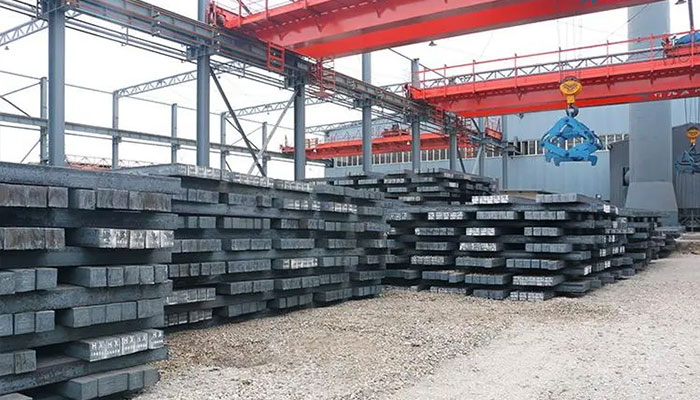
How to Choose the Right Clamp for Handling Billet, Bloom & Slab
Content Quick Link
Key Takeaways for Crane Buyers
- Safety First: Always prioritize clamps with locking mechanisms, anti-slip surfaces, fail-safe designs, and verified certifications (CE, ISO, or third-party inspections).
- Match Clamp to Steel Product: Billets, blooms, and slabs each require clamps suited to their size, shape, and surface conditions.
- Crane Compatibility Matters: Ensure the clamp works with your overhead, gantry, or jib crane and fits within lifting capacity and travel limits.
- Right Type for the Job: Mechanical clamps are simple and cost-effective for light to medium loads; hydraulic clamps offer precision and adaptability for heavy or irregular loads.
- Consider Maintenance and Durability: Easy inspection, lubrication, and replaceable parts extend clamp life and reduce downtime.
- Practical Testing: Trial lifts on sample steel products reveal real-world performance before bulk purchase.
- Avoid Overestimation: Focus on actual operational loads and safety margins rather than maximum theoretical capacity.
- Use a Checklist: A structured buyer checklist ensures every factor—load, frequency, surface, crane, safety, and maintenance—is considered before purchase.
Clamp Selection Buyer’s Checklist for Billets, Blooms, and Slabs
- Determine Maximum Load – Calculate the weight of single pieces and bundles, include a 20–30% safety margin.
- Identify Steel Product Type – Billets, blooms, or slabs; note size, shape, and surface conditions.
- Check Uniformity – Are products uniform or mixed? Decide on adjustable vs. fixed clamps.
- Assess Surface Conditions – Hot, cold, scaled, or rough surfaces; choose anti-slip or protective jaw pads.
- Define Lifting Frequency and Duty Cycle – Light, medium, or heavy-duty; intermittent or continuous operation.
- Choose Clamp Type – Mechanical or hydraulic, based on load, surface, and operational needs.
- Ensure Crane Compatibility – Verify clamp fits overhead, gantry, or jib crane; consider travel, reach, and crane capacity.
- Consider Operational Environment – Indoor or outdoor, temperature extremes, corrosive or harsh conditions.
- Verify Safety Features – Locking mechanisms, anti-slip jaws, fail-safe designs, and emergency release.
- Check Certifications – CE, ISO, or third-party inspection reports.
- Evaluate Maintenance Ease – Inspectable, lubricatable, and with replaceable wear parts.
- Test Clamp Before Bulk Purchase – Trial lift with sample billets, blooms, or slabs; check grip, stability, and crane interaction.
- Consult Manufacturers – Custom solutions for irregular sizes or high-frequency operations.
- Avoid Overestimating Capacity – Focus on realistic operational needs rather than maximum theoretical load.
- Maintain a Maintenance Schedule – Daily visual checks, weekly lubrication, and scheduled replacement of worn parts.
Introduction: Why the Right Clamp Matters
Mechanical clamps are a crucial part of steel handling. They allow you to safely lift, move, and place billets, blooms, and slabs. But not all clamps are created equal. Choosing the wrong one can cause accidents, product damage, or costly downtime.
For buyers in steel mills, plant engineers, and procurement teams, the goal is clear: find a clamp that is safe, efficient, and cost-effective. It’s about more than just capacity. It’s about matching the clamp to the steel product and the crane system you already have.
Considerations for buyers:
- What type of steel products will you lift? Billets, blooms, or slabs?
- How often will the clamp be used? Light or heavy-duty operation?
- Which crane will carry it? Overhead, gantry, or single-girder?
- Are safety certifications and third-party inspections in place?
Steel Products You Handle
Before selecting a clamp, you must know the products it will handle. Each steel product has unique shapes, weights, and handling challenges. Getting this wrong can compromise safety and efficiency.
Billets
Billets are long, narrow steel pieces, usually square or rectangular in cross-section.
- Length: 2–12 meters
- Weight: 0.5–2 tons per piece
- Challenges: High quantity per lift, small size, surface oxidation or scale
Key buyer tips:
- Confirm billet size range and surface condition
- Decide if you need clamps for single or bundled lifts
- Check crane compatibility—small, light-duty clamps for overhead cranes; larger clamps for gantry cranes
- Look for anti-slip jaw surfaces to protect steel and ensure a secure grip
Blooms
Blooms are larger than billets, generally square or rectangular, used for rolling into structural steel.
- Cross-section: 150 × 150 mm to 400 × 400 mm
- Length: 6–12 meters
- Weight: 2–8 tons per piece
Key buyer tips:
- Ensure clamp jaws fit bloom cross-sections
- Factor in crane lifting capacity for heavier loads
- Consider adjustable or hydraulic clamps for uneven or irregular surfaces
- Review frequency of lifting—blooms are lifted multiple times during processing
Slabs
Slabs are wide, flat steel products, heavier and more challenging to handle.
- Dimensions: 1.5–2.5 m width, 4–12 m length, 0.15–0.3 m thickness
- Weight: 8–25 tons per slab
Key buyer tips:
- Always calculate weight including bundles, not just single slabs
- Check steel surface condition: hot, scaled, or cold affects gripping method
- Make sure the crane can reach and lift safely
- Consider mechanical clamps with wide, padded jaws or tilting features for safe handling
Key Clamp Selection Criteria
Selecting the right clamp isn't just about lifting the heaviest load. The goal is to ensure safety, efficiency, and smooth operation in your steel handling process. The following factors are critical when evaluating clamps for billets, blooms, and slabs.
Weight Capacity and Safety Margin
The first step in clamp selection is understanding the weight of your load. This includes not only individual pieces but also bundles if you plan to lift multiple billets or slabs at once. Overloading a clamp—even slightly—can lead to accidents or premature wear.
Buyer tips:
- Calculate the total load for single and bundled lifts
- Include a safety margin of 20–30% above the maximum expected load
- Confirm that your crane's rated capacity exceeds the total clamp load, including the safety factor
- Check manufacturer specifications for maximum rated weight per clamp
Material and Surface Considerations
The steel's condition directly affects clamp performance. Hot steel, cold steel, or steel with scale and oxidation requires different gripping approaches. A clamp that works on clean, cold billets may slip on hot, scaled slabs.
Buyer tips:
- Determine if steel is hot, cold, or scaled before selecting a clamp
- Choose clamps with appropriate jaw material or padding for surface protection
- Consider specialized coatings or gripping surfaces for oxidized or rough steel
- Ask the supplier whether clamps are tested for your specific steel surface conditions
Shape and Size Compatibility
Clamps are designed for specific cross-sections and shapes. Using the wrong clamp can reduce stability and increase wear.
Buyer tips:
- Identify the cross-section of your steel: round, square, or rectangular
- Choose clamps that are adjustable for mixed sizes or fixed for uniform products
- Verify the clamp jaw opening range matches the maximum and minimum product dimensions
- For irregular or tapered shapes, consider custom or hydraulic clamp designs
Handling Frequency and Duty Cycle
Not all clamps are built for continuous heavy use. Understanding your lifting frequency is critical for operational longevity.
Buyer tips:
- Define your operation type: light, medium, or heavy-duty
- Determine whether lifts are continuous or intermittent throughout the day
- Match the clamp to your duty cycle to reduce wear and maintenance needs
- Ask suppliers for recommended operational hours and maintenance schedules
Mechanical vs. Hydraulic Clamps
Choosing between mechanical and hydraulic clamps is one of the most important decisions for steel mill operations. The type of clamp you select affects safety, operational efficiency, and crane performance. Understanding the differences helps you choose what fits your steel product, lifting frequency, and budget.
Mechanical Clamps
Mechanical clamps rely on gravity, spring mechanisms, or simple levers to grip steel products. They are often preferred for simplicity, reliability, and low maintenance.
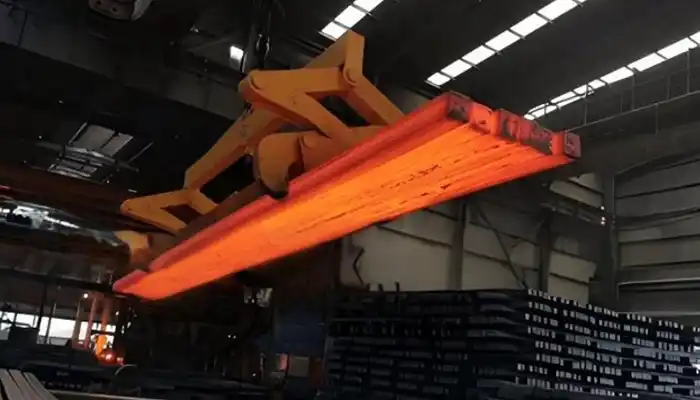 Overhead clamp crane for hot billets handling
Advantages:
- Simple design, easy to operate
- Lower cost compared to hydraulic systems
- Minimal maintenance required
- Well-suited for small to medium loads or less frequent lifting
Limitations:
- Fixed gripping force may not adapt to varying steel sizes
- Less effective on hot, rough, or scaled steel surfaces
- Not ideal for very heavy slabs or blooms that require precise control
Best use cases:
- Handling billets or small blooms in workshops
- Operations with light to medium-duty lifting
- Situations where maintenance resources are limited
Hydraulic Clamps
Hydraulic clamps use fluid pressure to control gripping force, allowing precise and adjustable lifting. They are more versatile than mechanical clamps but generally cost more.
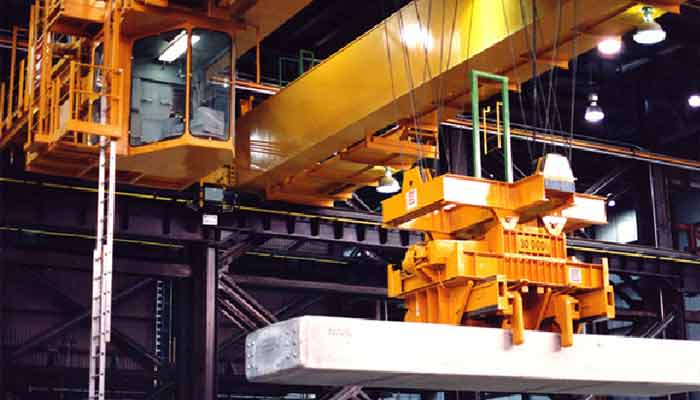
Clamp crane for slabs, billets and blooms handling
Advantages:
- Adjustable gripping force for different steel products
- Can handle heavier slabs or blooms safely
- Better suited for hot, scaled, or irregular surfaces
- Offers smooth operation and reduces the risk of steel damage
Limitations:
- Higher initial cost
- Requires regular maintenance to check hydraulic pressure and seals
- More complex system that may need trained operators
Best use cases:
- Lifting large slabs or heavy blooms
- Mixed-size or irregular steel products
- High-frequency or continuous operations where precise control matters
Impact on Crane Selection and Efficiency
The type of clamp affects your crane setup and overall workflow.
Considerations for buyers:
- Weight and capacity: Hydraulic clamps may require higher-rated cranes due to their own weight and higher load capacity
- Operational speed: Mechanical clamps are fast for repetitive, simple lifts, while hydraulic clamps allow careful placement of heavy or irregular steel
- Maintenance planning: Hydraulic systems need more frequent inspection, which can impact downtime scheduling
- Cost vs. productivity: Mechanical clamps save upfront costs; hydraulic clamps can increase efficiency and reduce steel handling risks
Compatibility with Crane and Workshop Setup
Selecting the right clamp isn't just about the steel product—it must fit your crane system and workshop environment. Even the best clamp can underperform or create safety issues if it's not compatible with your lifting setup.
Crane Type
Different cranes require different clamp considerations. The type of crane determines how the clamp will move, lift, and operate.
- Overhead cranes: Ideal for precise, high-frequency lifting of billets, blooms, or slabs in workshops
- Gantry cranes: Suitable for heavy slabs or large-scale outdoor steel yards; clamps must handle higher weights and longer spans
- Jib cranes: Used for smaller, localized lifting tasks; clamps should be lightweight and easy to maneuver
Tip: Always verify that the clamp's weight and size do not interfere with crane trolley or hoist travel.
Crane Capacity
Your crane's rated capacity must exceed the total load, including clamp weight, steel weight, and any bundled products. Using a clamp beyond the crane's safe working load can be dangerous and damage equipment.
- Calculate the combined weight of the clamp and steel
- Include a safety margin of 20–30% to account for dynamic loads and handling irregularities
- Ensure the crane's lifting speed and travel distance are compatible with the clamp's operation
- Confirm manufacturer specifications for maximum rated load with the clamp attached
Operational Environment
Environmental factors can dramatically affect clamp performance and safety. Consider temperature, moisture, and corrosive elements when choosing a clamp.
- Indoor vs. outdoor: Outdoor clamps may require protective coatings or covers to resist rain, dust, or sunlight
- Temperature extremes: Hot steel handling requires heat-resistant jaw surfaces; cold environments may affect hydraulic fluid performance
- Corrosive environments: Salty air, chemical exposure, or high humidity may necessitate stainless steel components or special coatings
Tip: Select clamps with durable materials, protective pads, or seals to maintain grip and prevent rust or wear in harsh conditions.
Summary: The right clamp works seamlessly with your crane type, lifting capacity, and workshop conditions. Matching these factors ensures safe, efficient, and long-lasting operation while reducing maintenance and downtime.
Safety Features and Certifications
Safety should be the top priority when selecting clamps. Proper features and certifications prevent accidents, protect steel products, and reduce downtime.
Mandatory Safety Mechanisms
Clamps should include essential safety mechanisms to secure loads during lifting and handling.
- Locking systems: Prevent clamps from accidentally releasing under load
- Anti-slip surfaces or pads: Improve grip on hot, cold, or scaled steel
- Jaw alignment and stability mechanisms: Ensure even pressure distribution to prevent steel damage
- Built-in indicators: Visual or mechanical indicators show if the clamp is properly engaged
Tip for buyers: Test the clamp on a sample load to verify that locking and anti-slip features function reliably under real operational conditions.
Industry Certifications
Certifications ensure clamps meet recognized international standards for safety and quality, and help comply with workplace regulations.
- CE Certification: Confirms compliance with European safety, health, and environmental protection standards
- ISO Certification: Demonstrates adherence to international quality management standards
- Third-party inspections: Independent verification ensures performance, reliability, and safety claims are valid
Buyer advice: Always request copies of certification documents and inspection reports before purchase.
Emergency Release and Fail-Safe Considerations
Even with the best clamps, emergencies can occur. Features that allow safe emergency release or fail-safe operation protect personnel and equipment.
- Emergency release mechanisms: Allow operators to safely release a load if needed
- Fail-safe designs: Clamps remain locked or stable during power or hydraulic failure
- Redundant systems: Dual locking or gripping mechanisms provide extra safety for heavy or high-risk loads
Practical tip: Ask suppliers to demonstrate emergency release and fail-safe operation during commissioning or testing.
Summary: Safety features and certifications are non-negotiable. Proper locking mechanisms, anti-slip jaws, emergency release functions, and verified certifications ensure secure, reliable, and compliant steel handling operations.
Maintenance and Operational Practicalities
Proper maintenance and operational planning are essential to extend clamp life, reduce downtime, and ensure safe steel handling.
Ease of Inspection and Lubrication
Clamps should allow simple, regular inspection and easy lubrication without specialized tools or disassembly.
- Ensure the clamp allows quick visual checks for wear, cracks, or jaw alignment issues
- Look for accessible lubrication points for pins, pivots, and gears
- Confirm if the supplier provides a maintenance manual with clear instructions
- Consider clamps with modular components that can be replaced individually
Durability Under Abrasive Steel Surfaces
Steel surfaces can be rough, scaled, or hot, which may wear down clamp jaws. Durable clamps resist abrasion and maintain grip over time.
- Check for wear-resistant materials or hardened steel jaws
- Ask about replaceable pads or inserts for high-wear areas
- Consider clamps with coatings or treatments to reduce corrosion and abrasion
- Match clamp materials to steel type: heat-resistant jaws for hot billets, wider jaws for slabs
Recommended Maintenance Schedule
Routine maintenance keeps clamps safe, reliable, and long-lasting.
- Perform daily visual inspections before and after lifting operations
- Lubricate moving parts weekly or per manufacturer guidelines
- Replace worn pads, springs, or pins as soon as wear is detected
- Conduct comprehensive monthly or quarterly checks, including hydraulic or locking systems if applicable
- Maintain a maintenance log for audits and operational planning
Summary: Buyers should focus on inspection ease, wear resistance, and a clear maintenance plan to ensure clamps operate safely and efficiently. Simple-to-maintain, durable clamps reduce downtime, save costs, and improve productivity.
Buyer's Checklist: Step-by-Step Guide for Selecting the Right Clamp
A practical checklist for buyers to evaluate clamps for billets, blooms, or slabs, ensuring safety, operational efficiency, and maintainability.
Maximum Weight Per Lift
Understand the load weight, including bundled lifts.
- What is the heaviest single piece or bundle I will lift?
- Does the total load plus a 20–30% safety margin stay within crane and clamp capacity?
- Has the supplier provided load testing or rated specifications?
Uniformity of Steel Products
- Are billets, blooms, or slabs uniform in size, or do they vary?
- Do I need adjustable clamps for mixed-size products, or fixed clamps for uniform loads?
- Will irregular shapes require a custom or hydraulic clamp solution?
Surface Conditions
- Will the clamp handle hot, cold, or scaled steel?
- Does the clamp have anti-slip jaws or protective pads?
- Are special coatings or jaw materials needed for abrasive or oxidized surfaces?
Lifting Frequency and Duty Cycle
- Is lifting intermittent or continuous throughout the day?
- Will the clamp operate under light, medium, or heavy-duty conditions?
- Does the manufacturer provide guidance on operational limits and maintenance intervals?
Type of Clamp
- Would a mechanical clamp suffice, or is hydraulic needed for heavy or irregular loads?
- Does the clamp type suit workflow speed and precision requirements?
- What is the total cost of ownership including maintenance for each type?
Compatibility With Crane and Environment
- Is the clamp compatible with the overhead, gantry, or jib crane in use?
- Can the crane handle the combined weight of the clamp and steel load?
- Will the clamp function reliably in indoor, outdoor, or extreme environmental conditions?
Safety Features and Certifications
- Does the clamp include locking mechanisms, anti-slip jaws, and fail-safe features?
- Are CE, ISO, or third-party certifications provided?
- Has the clamp been tested under real operational conditions?
Maintenance and Inspection
- Can moving parts be inspected and lubricated easily?
- Are wear parts like jaws or pads replaceable without full disassembly?
- Does the supplier provide a maintenance schedule and guidance?
Summary: This checklist ensures informed decisions that maximize safety, efficiency, and clamp longevity. It also supports practical discussions with suppliers and on-site evaluation before purchase.
Practical Tips for Buyers
Real-world steel handling operations are unpredictable. These tips help buyers make safer, more efficient, and reliable decisions when selecting clamps.
Don't Overestimate Capacity Needs
- Focus on the actual maximum weight plus a reasonable safety margin, not just the largest possible lift.
- Choose a clamp that allows precise handling, especially for smaller billets or slabs.
- Ensure the crane can operate efficiently with the chosen clamp without reducing travel speed or lift control.
Consult with Clamp Manufacturers
- Discuss your steel dimensions, surface conditions, and operational workflow with manufacturers.
- Ask for recommendations on adjustable or hydraulic designs if your loads vary.
- Verify if the manufacturer can provide certifications and testing documentation for custom clamps.
Test Before Bulk Purchase
- Arrange a trial lift with sample billets, blooms, or slabs.
- Check for secure grip, stability, and ease of use during operation.
- Evaluate how the clamp interacts with your specific crane and workshop setup.
- Inspect how locking, anti-slip, and fail-safe mechanisms perform under actual load conditions.
Summary: Practical experience matters. Focus on realistic capacity, consult with manufacturers, and test before bulk orders to select clamps that are safe, efficient, and reliable for daily steel handling operations.
Conclusion
Selecting the right clamp for billets, blooms, or slabs is more than a technical requirement—it’s a critical decision that affects safety, productivity, and the lifespan of your crane equipment. The right clamp ensures secure handling, reduces the risk of accidents, and allows operations to run smoothly and efficiently.
Key Takeaways for Buyers
- Match clamp to product type: Billets, blooms, and slabs each require clamps suited to their size, shape, and weight.
- Consider crane compatibility: Ensure the clamp works with your overhead, gantry, or jib crane and fits within lifting capacity limits.
- Prioritize safety features: Look for locking mechanisms, anti-slip surfaces, fail-safe designs, and certified clamps (CE, ISO, or third-party inspection).
- Factor in maintenance: Choose clamps that are easy to inspect, lubricate, and maintain for long-term durability.
- Use the checklist: The step-by-step buyer’s checklist provides a practical framework for evaluating clamps and making informed decisions.
Final Advice
Taking the time to carefully select a clamp pays off in reduced downtime, safer operations, and higher efficiency. By considering all relevant factors—product type, weight, surface condition, crane compatibility, safety, and maintenance—buyers can confidently choose clamps that perform reliably day after day.
Remember, the checklist is not just a guide—it’s a practical tool that helps you avoid costly mistakes and ensures your steel handling operations run smoothly.

Article by Bella ,who has been in the hoist and crane field since 2016. Bella provides overhead crane & gantry crane consultation services for clients who need a customized overhead travelling crane solution.Contact her to get free consultation.
Yuantai Cranes
Overhead Crane Manufacturer with CE, ISO, SGS, CNEX Certificates.
- Main Specifications - Capacity: 0.5–550 tons | Span: up to 40m | Speed: 0.8–12 m/min | Duty: A3–A7 | Power: 380–690V, 50/60Hz | Control: pendant/remote/cabin
- Full engineering: FEA/PLC/VFD + in-house build + global delivery + on-site support, for workshops, factories, EPC contractors, industrial projects, etc.
- Support: design, manufacturing, testing, service – end-to-end, customized lifting solutions worldwide.
How to Get an Accurate Crane Price for Your Application?
Tips: Copy the spec list, fill in your details, and paste it into the form on the right/ down-below for a quick price.
- Crane type:_____ . (e.g., overhead crane, gantry crane, jib crane)
- Max weight to lift:_____ tons. (e.g., 2t, 5t, 10t, 20t, 50t)
- Lifting height:_____ m. (How high does the hook need to reach?
- Workshop width (span):_____ m . (Distance between the two crane rails)
- Travel distance:_____ m . (How long does the crane need to move along the runway?)
- Control type:_____. (Pendant / remote / cabin Control)
- Power supply:_____. (Local voltage & frequency – e.g., 380V, 50Hz, 3-phase)
- What will it be used for?_____ (e.g., steel fabrication, concrete products, mold handling, general manufacturing, etc.)
- Any special requirements?_____ (e.g., extreme temperature, dusty or explosive environment, special paint color, etc.)
Just leave a message via the contact form and our hoist and crane engineer will contact you with in 24working hours.
Get Your Custom Quote–Quick & Easy
Fill in what you know. Skip what you don't – we'll help.Any question will be reply with 24 working hours