From Workshop to Warehouse: Matching Overhead Cranes to Your Facility's Layout
Content Quick Link
Optimize your facility with overhead cranes tailored to your workshop or warehouse layout, enhancing workflow efficiency and maximizing available space.
Choosing the right overhead crane for your facility is one of the most important decisions you'll make. It's not a one-size-fits-all scenario. The crane needs to be carefully selected based on the unique characteristics of your facility. Whether you're in a small workshop or a large warehouse, the crane must fit into the space and serve the operational needs. When the crane matches your layout, it brings efficiency, productivity, and safety. If it doesn't, you could face a variety of issues—from unnecessary delays to safety risks.
Importance of Selecting the Right Crane
A crane that is well-matched to your facility layout will optimize your workflow and minimize problems. The right crane doesn't just carry heavy loads; it enhances productivity, helps with faster material handling, and reduces equipment strain. On the flip side, if the crane is not suited for the facility, you may experience limitations that affect efficiency and safety.
- Improved efficiency: The crane operates smoothly, lifting and moving materials quickly and safely.
- Space optimization: When the crane fits the layout, it frees up valuable floor space, maximizing the use of the facility.
- Reduced maintenance: Properly sized and designed cranes require less maintenance due to reduced stress on components.
How Crane Selection Impacts Operational Efficiency and Safety
The choice of crane will have a direct impact on your daily operations and long-term safety. If the crane isn't suited for your space, it could create bottlenecks or even lead to accidents. Factors like lifting capacity, travel speed, and the type of load being handled all come into play when determining which crane works best for your layout.
- Operational efficiency: A crane that's too large for a small space or one with insufficient lifting height can slow down work. For example, if you don't have enough headroom, a crane with the wrong design could limit your ability to handle high loads.
- Safety concerns: A mismatched crane might not be able to handle the required load or could have trouble navigating obstacles, creating hazards in the workplace. Crane stability and operator safety are always top priorities.
- Maintenance costs: Cranes that aren't designed to fit your space may experience more wear and tear, increasing the need for frequent repairs and extending downtime.
The Relationship Between Crane Features and Facility Characteristics
The connection between crane features and facility characteristics is crucial to selecting the right equipment. Facility layout includes aspects like ceiling height, floor space, load weight, and material handling needs. Each of these factors will dictate the ideal crane design, lifting capacity, and features.
Key Facility Considerations:
- Ceiling height: If your facility has low headroom, you'll need a low-profile crane or an underhung crane that fits below the ceiling structure.
- Floor conditions: The type of flooring (smooth, rough, or uneven) will impact crane selection. Cranes designed for rough terrain may be needed in warehouses with poor flooring.
- Available space: The width of your workspace and the space needed for the crane to operate efficiently is important. A double girder crane might be suitable for a larger space where heavy loads need to be lifted across wide spans.
Crane Features to Match Facility Needs:
- Capacity: The crane must be able to handle the heaviest loads typically moved in your facility. This could mean choosing a crane with higher load capacity than expected to account for any future needs.
- Span and lift height: The crane must cover the full width of your working area and reach the height required for lifting loads.
- Travel systems: Whether you choose an overhead bridge crane, monorail system, or gantry crane depends on the space and layout, as well as the distances the crane needs to cover.
By matching crane features to your facility's characteristics, you can improve workflow, enhance safety, and reduce operational costs. Selecting the right crane isn't just about choosing a lifting system; it's about creating a seamless integration between your equipment and your space.
Your Facility Layout and Requirements
Selecting the right overhead crane starts with a deep understanding of your facility's layout and operational needs. Your warehouse or workshop's physical space plays a major role in determining what type of crane will be most effective. Equally important is evaluating the type of work you do, the materials you handle, and how often you need to use the crane. This foundational knowledge ensures the crane will integrate smoothly into your workflow and enhance overall efficiency.
Evaluating Facility Size and Design
Warehouse Space: Width, Height, and Layout
The dimensions of your warehouse will directly affect the crane system you choose. The width of the building determines how far the crane's lifting mechanism can travel, while the height affects the crane's lifting capacity and range. A high ceiling allows for more flexibility in choosing a crane with a greater lift height and load capacity.
- Example: If your warehouse has low ceilings, you might need to opt for an underhung crane or a low-profile design.
- Key considerations: Ensure the crane's span and lifting height match your facility's measurements.
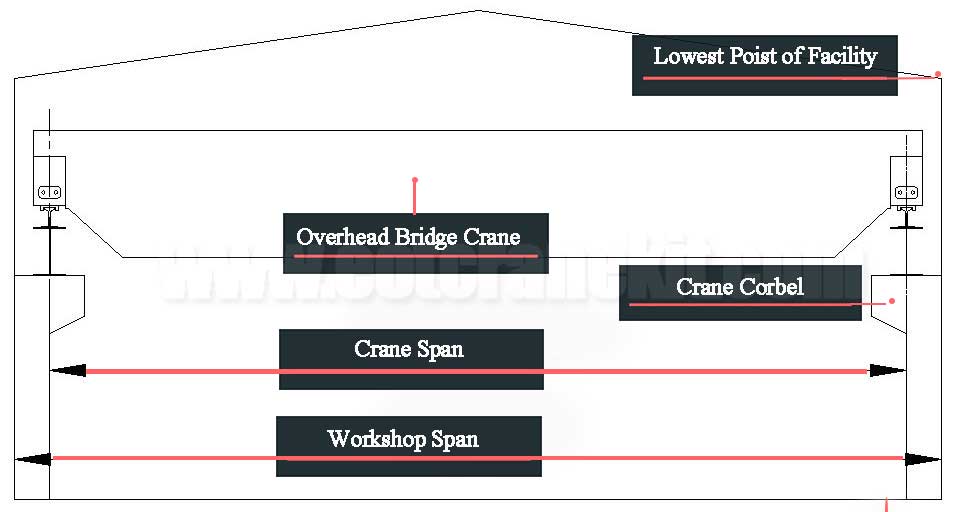
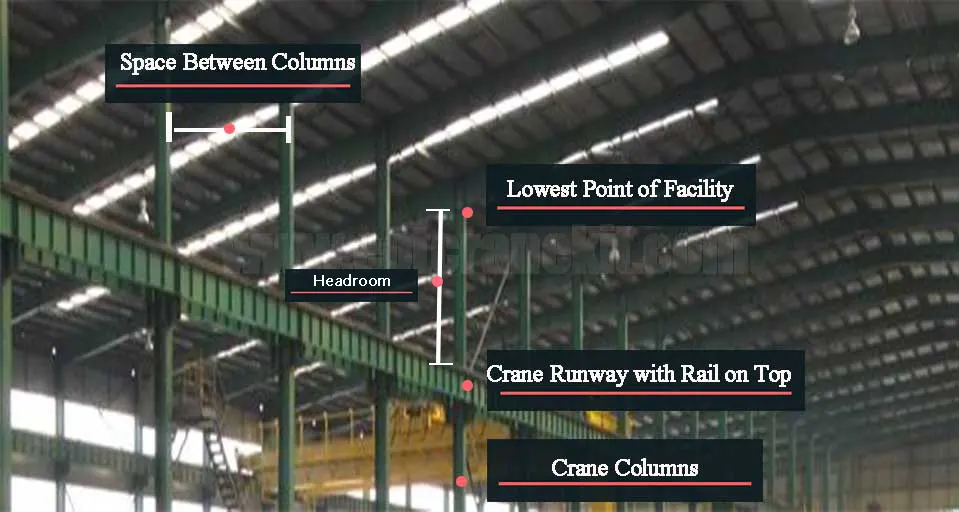
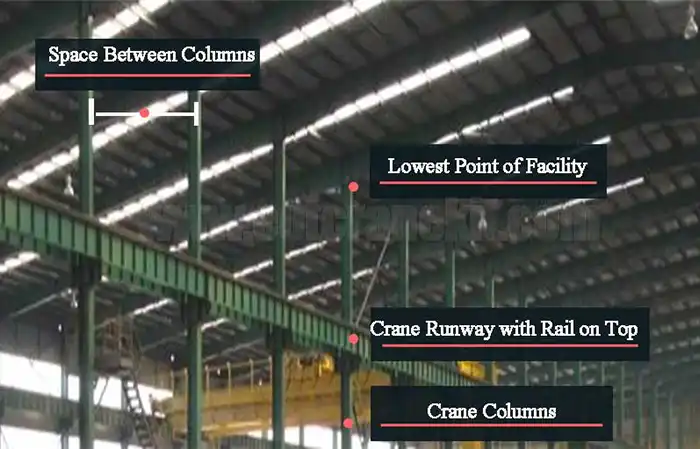
main parameters needed to get your customized overhead crane for your facility
Workshop Environment: Floor Type, Obstructions, and Load Handling Areas
The type of flooring in your workshop or warehouse is critical to crane selection. Smooth, level floors are ideal for most cranes, but rough or uneven floors may require a different type of crane, like a gantry or heavy-duty system.
- Example: In a facility with uneven floors or outside environments, a semi-gantry crane with rugged wheels can handle the terrain.
- Obstructions: Keep in mind any pillars, machinery, or other obstacles that could interfere with crane movement. You might need custom crane systems that can navigate tight spaces or overhead obstructions.
Special Considerations for Confined Spaces or Low Headroom
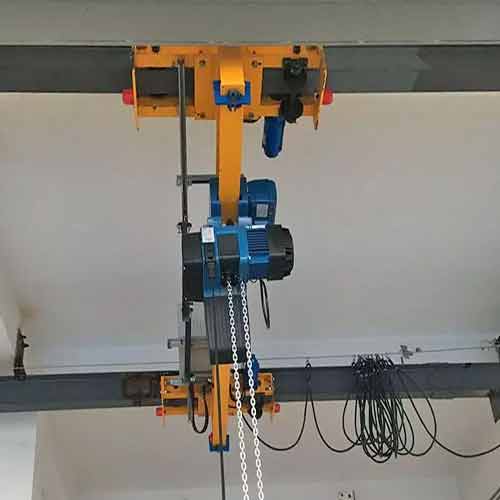
If your facility has limited headroom or confined spaces, traditional overhead cranes may not fit. In such cases, cranes with compact designs are essential.
- Solution: Low-profile or underhung cranes can be a good fit for these situations, as they allow for maximum use of space without compromising safety or efficiency.
Defining Operational Needs
Types of Materials or Products Handled
The type of material or product you move most often will influence the crane you choose. Cranes that handle heavy machinery or bulky loads require high-capacity lifting systems, while cranes in environments dealing with lighter components need systems designed for quick and frequent lifts.
- Example: A workshop handling heavy equipment might require a double girder crane, while a warehouse for lighter loads might get by with a simpler single girder or monorail crane.
Load Capacities and Lifting Height
Your crane must have the proper lifting capacity for the loads it will regularly carry. Overestimating or underestimating load requirements can lead to inefficiency and potential safety issues.
- Capacity: Cranes should be selected based on the maximum load weight they will regularly handle. Choosing a crane with more capacity than needed can be a good idea for future-proofing.
- Lifting Height: Make sure the crane can reach the necessary height for lifting materials to specific storage areas, shelves, or other levels in your facility.
- Example: If you need to lift heavy machinery over high shelving or racking, you'll need a crane that can handle large weights and reach significant heights.
Frequency of Crane Use: Continuous vs. Intermittent
How often the crane is used will influence the type of system required. If the crane is needed for continuous operation, selecting a heavy-duty crane with a higher duty cycle is essential. If the crane will be used intermittently, a lighter-duty system may be sufficient.
- Continuous use: Choose cranes designed for high-cycle operations, with robust components and higher power ratings to handle continuous lifting.
- Intermittent use: A lighter crane may be more appropriate if it's used sporadically, which will also help to save on operational costs.
By These critical elements of your facility's design and operational needs, you can make a well-informed decision on the type of overhead crane that will best meet your requirements, ensuring efficiency and safety for the long term.
Key Crane Features and How They Align with Facility Layout
Once you've evaluated your facility's layout and operational requirements, the next step is understanding how the key features of the crane will align with your space. The crane's type, configuration, capacity, lift height, and traveling systems will all play a significant role in maximizing efficiency and ensuring that the crane suits both the physical layout and the specific tasks at hand.
Crane Type and Configuration
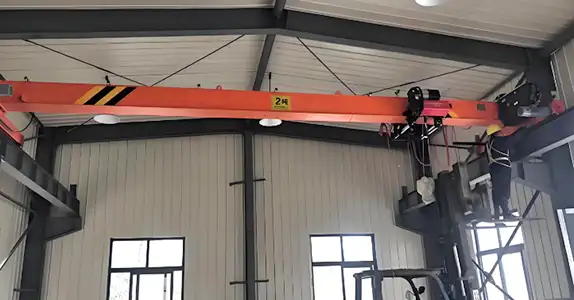
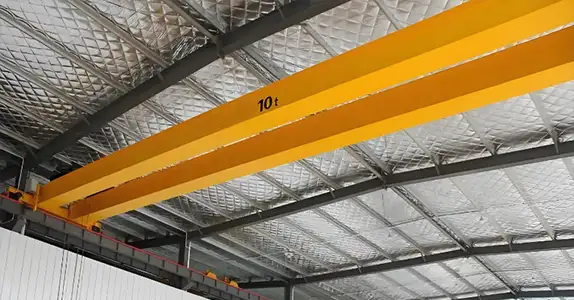
Single Girder vs. Double Girder Cranes: Advantages Based on Space and Load
The choice between single girder and double girder cranes is largely influenced by the space available in your facility and the type of loads you need to lift.
- Single girder cranes are ideal for facilities with limited headroom or smaller operational areas. They are generally more compact, lighter in weight, and less expensive. However, their load capacity is typically lower than that of double girder systems.
- Double girder cranes are perfect for larger, more spacious facilities with higher lifting requirements. They offer greater load capacities and provide more flexibility for handling heavy loads or lifting across wider spans. However, they take up more vertical space, which may limit their suitability in facilities with low headroom.
- Example: In a facility with limited height and lighter load requirements, a single girder crane might be the best fit. For warehouses with high ceilings and heavy loads, a double girder crane would be a more appropriate choice.
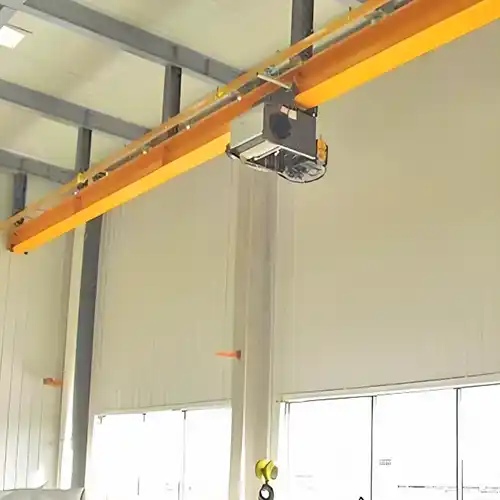
Underhung Cranes for Lower Headroom Environments
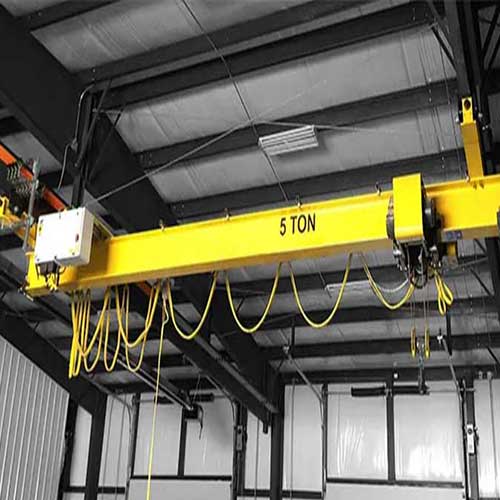
When your facility has low ceiling heights or limited vertical space, an underhung crane is an ideal solution. Unlike traditional overhead cranes, underhung cranes hang from the building's ceiling structure, allowing you to maximize the available headroom.
- Benefits: These cranes make the most out of lower ceiling heights, providing efficient material handling without sacrificing load capacity.
- Example: A manufacturing facility with restricted ceiling height could use an underhung crane to move lighter loads across short spans while utilizing the vertical space more effectively.
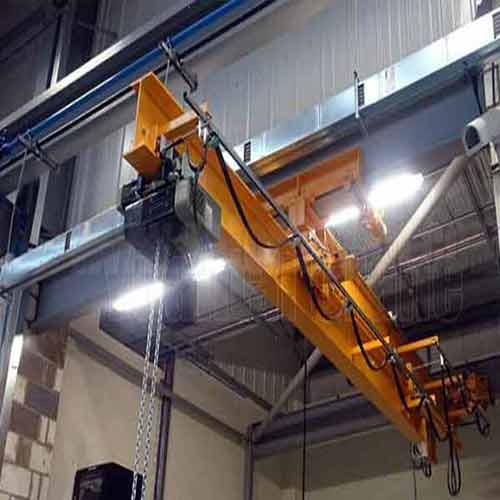
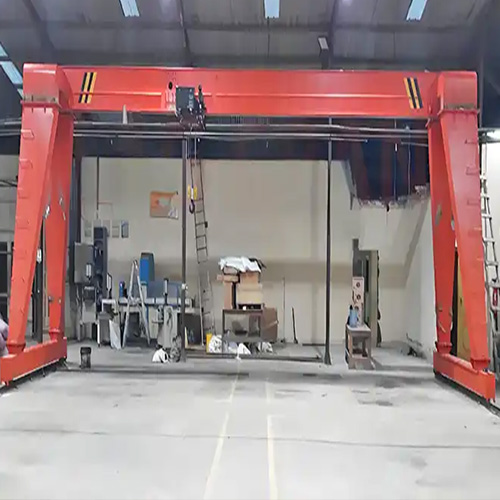
Gantry and Semi-Gantry Cranes for Outdoor or Limited Floor Space Use
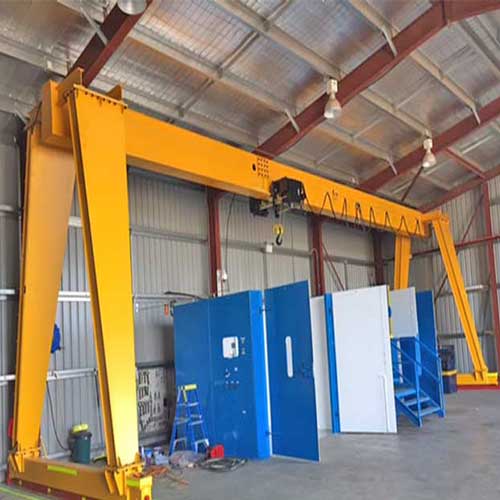
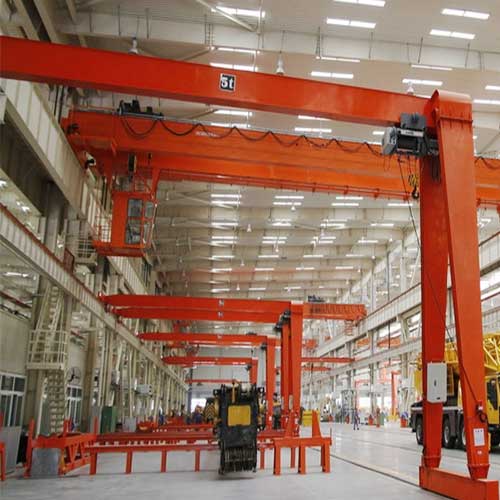
Gantry and semi-gantry cranes are often the go-to solution when you're working in an environment with limited floor space, such as an outdoor site or a yard. These cranes run on rails at ground level, so they don't require overhead tracks or support beams, making them suitable for outdoor or rugged environments.
- Gantry cranes have wheels mounted on both sides of the frame, enabling them to move freely across open areas.
- Semi-gantry cranes are similar but have wheels only on one side, making them more cost-effective in facilities where only part of the workspace requires the crane's reach.
- Example: For outdoor warehouses or container yards, a gantry crane would allow you to move heavy loads without worrying about limited ceiling height or track systems.
Crane Capacity and Lift Height
Matching Crane Capacity to Typical Load Weights in Your Facility
It's critical to select a crane with a lifting capacity that aligns with the typical load weights in your facility. Overestimating or underestimating load requirements can result in wasted resources or potential safety issues.
- Heavy load facilities: If your facility handles heavy machinery or large components, a crane with a higher load capacity, such as 10 tons or more, is essential to ensure safety and efficiency.
- Lightweight load facilities: For environments that handle lighter materials, such as small parts or components, a crane with a lower capacity (1 to 5 tons) will suffice.
- Example: A warehouse that moves large machinery should opt for a crane with at least a 10-ton capacity to handle the heaviest loads without overburdening the equipment.
Considerations for Maximizing Lift Height and Headroom Efficiency
Lift height is another crucial consideration, especially if your operation requires lifting materials to high shelves, storage bins, or between multiple levels. To make the best use of your crane system, it's important to choose one that maximizes available headroom.
- Maximizing headroom: Choosing a crane with adjustable lifting mechanisms or one that is designed for efficient use of vertical space can allow you to lift materials to higher points without losing too much headroom.
- Example: A facility that stores materials on high racking systems should select a crane with the ability to reach greater heights while minimizing the vertical space used by the crane itself.
Traveling Systems: Bridge vs. Monorail
How Crane Travel Systems Impact Warehouse Space Usage
The traveling system—whether bridge or monorail—has a direct impact on how your crane moves across your facility and how much space is required.
- Bridge cranes move along a fixed track, traveling across the width and length of the building. They are ideal for large facilities with expansive floor space and are well-suited for handling materials over a wide area.
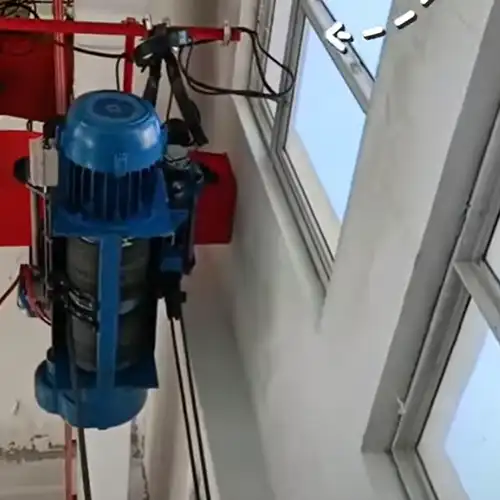
- Monorail cranes, on the other hand, are more compact and move along a single beam, making them a better choice for narrower spaces. Monorails are typically used for short-distance material handling and are highly efficient in smaller workshops or along assembly lines.
- Example: A large warehouse where goods need to be moved across long distances would benefit from a bridge crane, while a smaller workshop with confined spaces might be better served by a monorail crane.
Choosing the Right Traveling Speed and Range for Your Operations
The travel speed and range of the crane should be tailored to the specific demands of your operation. If your work involves frequent and fast lifting movements, a crane with higher travel speeds and smooth operation will keep things moving efficiently.
- High-speed travel systems are essential for industries where rapid load handling is critical, such as in manufacturing or distribution centers.
- Lower-speed systems might be more appropriate for industries requiring precision handling, such as in assembly lines or delicate material handling.
- Example: If your operation deals with large, heavy loads that need to be moved carefully across a short distance, a crane with slower, more controlled travel speeds might be the best choice.
By selecting the right crane type, capacity, lift height, and traveling system based on the specific features of your facility, you can ensure a more efficient, safer, and cost-effective operation. Proper alignment between crane features and facility layout is key to optimizing your material handling and boosting productivity.
Customizing Cranes to Facility-Specific Challenges
Every facility has its unique set of challenges that can affect the type of crane required for optimal operation. Whether it's dealing with limited headroom, managing floor conditions, or navigating around obstructions, customizing a crane system to suit these challenges is crucial. This section explores practical solutions for overcoming common facility constraints and ensuring that your crane can operate efficiently and safely.
Headroom and Clearance Considerations
Strategies for Overcoming Limited Headroom
Low ceilings or limited vertical clearance in workshops or warehouses can present a significant challenge when selecting a crane. However, there are strategies to make the most of the available space.
- Use of underhung cranes: These cranes hang directly from the building's ceiling structure, reducing the amount of vertical clearance needed and allowing for more headroom in low-ceiling environments.
- Low-profile cranes: Custom low-profile crane designs, such as single girder cranes, help maximize the available vertical space while still offering a sufficient lifting capacity for light to medium loads.
- Example: In a workshop with a ceiling height of only 10 feet, using a low-profile, single girder underhung crane might be the best solution to avoid losing valuable headroom while still achieving effective material handling.
Custom Crane Designs for Low-Clearance Workshops
For workshops where headroom is especially limited, custom crane designs can help overcome clearance challenges. These designs may involve specialized tracks, lifting systems, or compact crane structures that are tailored to fit your facility's exact height requirements.
- Design adjustments: For example, modifying the hoist or trolley system to fit a particular height or using a specialized crane that minimizes vertical space can allow for effective handling in tight spaces.
- Example: A small-scale manufacturing facility with restricted ceiling height might require a tailored crane that incorporates a low-profile hoist and minimizes the height of the support structure to maximize vertical clearance.
Facility Floor Considerations
Selecting Cranes Based on Floor Condition (e.g., Smooth vs. Rough Terrain)
The condition of your facility's floor plays an essential role in selecting the right crane. Cranes perform best on smooth, even surfaces, but many facilities deal with rough, uneven terrain, which requires a more rugged approach.
- Smooth floors: If your facility has smooth, level flooring, a standard overhead crane or monorail system will work efficiently.
- Rough or uneven floors: For environments with uneven surfaces or outdoor installations, semi-gantry cranes or gantry cranes with heavy-duty wheels are more suitable as they are designed to handle such terrain.
- Example: A factory floor that is regularly exposed to wear and tear, or an outdoor yard, would benefit from a gantry crane or a semi-gantry system to navigate rough surfaces.
Impact of Crane Weight on Floor Load Capacity
It's important to consider the weight of the crane itself, as well as the loads it will carry, when assessing the floor's load-bearing capacity. Cranes with heavier components may require specialized flooring or reinforcement to prevent damage to the floor.
- Floor reinforcement: Depending on the crane's design and weight, additional reinforcements or modifications may be necessary to ensure the floor can support the crane's operation without risk of buckling or weakening.
- Example: For a heavy-duty crane that will be lifting large loads in a manufacturing plant, ensuring the floor can withstand the combined weight of the crane and materials is crucial. This might require reinforcing the floor with additional structural support.
Obstructions and Structural Constraints
Navigating Around Pillars, Machinery, and Other Fixed Structures
In many facilities, obstructions such as pillars, machinery, storage racks, and other fixed structures can limit crane movement. Careful planning is required to ensure the crane can maneuver effectively in such environments.
- Custom crane configurations: Specialized cranes can be designed to work around these obstructions, using features like custom tracks or offset trolley systems to navigate tight spaces.
- Solution: Cranes with adjustable spans, or even trackless cranes, can move around obstacles more easily.
- Example: In a warehouse with several support columns and storage racks, using a crane with a customizable track layout or one that offers flexible movement could improve efficiency and reduce the risk of collisions.
Specialized Cranes for Cluttered or Complex Environments
In facilities with complicated layouts or cluttered work areas, specialized cranes can be designed to maximize space usage and minimize obstacles. These cranes often come with advanced features like compact frames, extended reach, or custom hoisting systems to help navigate the complexities of your facility.
- Compact designs: Cranes designed with smaller, more flexible frames can fit into tighter spaces, making them ideal for environments where there is little room to maneuver.
- Flexible lifting systems: Cranes with specialized hoists and adjustable lift heights or spans can also help navigate around obstacles without requiring major facility modifications.
- Example: A busy, crowded warehouse with varying heights and narrow aisles could benefit from a customized crane with a slim design and adjustable hoisting system to optimize space and workflow.
By customizing your crane to fit the specific challenges of your facility, such as low headroom, floor conditions, or obstructions, you can enhance operational efficiency while minimizing the risk of costly downtime or safety hazards. Tailored crane solutions ensure that even in the most challenging environments, your equipment can meet your material handling needs effectively.
Improving Efficiency: Matching Crane Features to Operational Workflow
To ensure your crane system contributes to overall efficiency, it must be carefully aligned with your operational workflow. This involves selecting cranes with the right speed, control systems, and automation features to handle tasks effectively, improve precision, and minimize downtime. Proper crane integration with the work process can streamline operations, enhance safety, and reduce strain on operators.
Optimizing Load Handling with Crane Speed and Control Systems
Selecting Appropriate Lifting Speeds for Operational Flow
The speed at which a crane lifts and moves loads is directly tied to the pace of operations within your facility. For environments that require quick material handling, such as high-turnover warehouses, crane speed should be fast enough to keep up with demand without sacrificing safety.
- Speed and workflow balance: It's crucial to match crane lifting speeds with the pace of the surrounding processes. If a crane is too slow, it can cause bottlenecks. If it's too fast, it can lead to safety issues or increased wear and tear.
- Example: In a high-volume distribution center, choosing a crane with adjustable speed settings ensures that loads are lifted efficiently but at a safe pace to avoid damage or delays.
Importance of Fine Control for Delicate Tasks
For tasks that require precision—such as assembly lines, equipment positioning, or handling delicate parts—fine control over crane movements is critical. Cranes with advanced control systems allow operators to make small adjustments to lift speeds and positioning, which is essential for handling sensitive materials without causing damage.
- Precision control systems: Features like variable speed drives and load-sensing technology can help regulate lifting speed and positioning to improve task accuracy and reduce errors.
- Example: In an automotive assembly line, handling components like dashboards or windshields requires precise control to avoid damage, making fine-tuned crane control a priority.
Automation and Remote Control Systems
Benefits of Automated Cranes in Large Warehouses and Workshops
Automation is becoming increasingly popular in larger facilities that require consistent and high-volume material handling. Automated cranes can reduce human error, increase efficiency, and work around the clock without fatigue.
- Automated material handling: These systems can be programmed to perform specific tasks, such as automatically retrieving and moving goods or parts to pre-determined locations, improving workflow efficiency.
- Example: In a large warehouse, automated overhead cranes can move inventory quickly from one section to another, minimizing downtime and reducing the need for manual labor.
Remote Control Options for Reducing Operator Fatigue and Increasing Precision
For many crane applications, especially in more hazardous or challenging environments, remote control systems can significantly improve both safety and efficiency. Remote controls allow operators to work from a safe distance, reducing their exposure to potential risks while maintaining precise control over crane movements.
- Enhanced precision and safety: Remote controls can be equipped with fine control features that help operators handle sensitive loads or maneuver in tight spaces more accurately.
- Example: In a manufacturing plant with limited space and high safety concerns, using remote-controlled cranes allows operators to position heavy loads or delicate materials while standing at a safe distance, reducing the risk of injury or mishaps.
By matching crane features such as speed, control systems, and automation to the specific demands of your operational workflow, you can significantly improve overall efficiency. Tailored cranes that are finely tuned for task-specific requirements ensure that material handling is optimized, reducing downtime, improving safety, and enabling smoother operations.
Safety Considerations and Compliance
When selecting an overhead crane for your facility, safety should always be a top priority. Cranes are powerful machines that, if not properly equipped or operated, can pose serious risks to operators and workers nearby. Integrating the right safety features and ensuring compliance with industry standards can reduce accidents, enhance operational safety, and prevent costly downtime. This section highlights critical safety features and the importance of adhering to safety regulations.
Safety Features in Overhead Cranes
Anti-Collision Systems, Limit Switches, and Overload Protection
Overhead cranes are often used in busy environments where multiple cranes or machines operate in close proximity. To reduce the risk of accidents, anti-collision systems are essential to prevent cranes from colliding with other equipment, workers, or obstacles. These systems use sensors and automated controls to detect proximity and adjust crane movements accordingly.
- Anti-collision systems: Sensors can be installed to monitor the position of cranes and prevent them from moving into unsafe areas or interfering with other equipment.
- Limit switches: These devices prevent cranes from exceeding safe travel limits, helping to protect the crane and other infrastructure from damage.
- Overload protection: Cranes should be equipped with overload detection systems to prevent lifting loads heavier than the crane's rated capacity, which can lead to equipment failure or accidents.
- Example: In a warehouse with multiple cranes operating simultaneously, using anti-collision sensors ensures that no two cranes cross paths, reducing the risk of accidents and collisions.
Emergency Stop Mechanisms and Operator Safety Features
Every crane should be equipped with emergency stop systems that allow operators to halt crane operations immediately in the event of an emergency. These systems can be activated from the crane's control panel or via remote control, ensuring quick response in dangerous situations.
- Emergency stop buttons: Located at strategic points on the crane and control system, these buttons allow for rapid cessation of crane movements to protect workers and equipment.
- Operator safety features: To minimize risk to operators, cranes should include features like protective barriers, safety mats, or cage enclosures that ensure operators are shielded from moving parts.
- Example: A crane operator working in a manufacturing facility with high-speed lifting operations should be able to hit an emergency stop button immediately if they detect a problem, preventing accidents before they happen.
Compliance with Industry Standards
Relevant Crane Standards (e.g., OSHA, CE Marking, ISO)
Compliance with safety standards is essential for any industrial crane operation. Various organizations, including OSHA (Occupational Safety and Health Administration), ISO (International Organization for Standardization), and CE (Conformité Européenne), provide guidelines and regulations that ensure cranes meet safety and performance benchmarks.
- OSHA standards: In the U.S., OSHA standards dictate safe operation, maintenance, and inspection procedures for cranes to ensure worker protection.
- CE marking: In Europe, cranes must meet CE marking requirements to indicate they comply with safety, health, and environmental protection standards before being sold or used.
- ISO certifications: These global standards ensure that crane manufacturing and operation meet rigorous safety and quality control protocols, including load testing and operational efficiency.
- Example: A crane manufacturer in Europe must ensure that its products meet the CE marking requirements before being sold, guaranteeing that they comply with local safety regulations.
Aligning Crane Operation with Workplace Safety Regulations
Compliance extends beyond the crane's design; it also involves ensuring that crane operation follows all workplace safety regulations. This includes operator training, regular maintenance, safety audits, and documentation. Proper crane operation guidelines must be implemented to prevent unsafe practices and ensure the protection of all personnel.
- Workplace safety regulations: Adhering to local and international safety regulations ensures that cranes are operated in a safe environment. This may involve clear signaling for crane movements, designated zones for crane operation, and maintaining safe distances between workers and cranes.
- Training and certification: Operators should be thoroughly trained on safe crane operations, including emergency protocols, weight limits, and hazard recognition, to ensure that they are equipped to handle the crane safely and effectively.
- Example: In a construction site, workers must be trained to recognize the "safe working zones" where the crane operates, and operators should hold certifications to demonstrate they understand the safety protocols and crane handling procedures.
By ensuring that cranes are equipped with the necessary safety features and complying with established industry standards, facilities can significantly reduce the risk of accidents. Regular safety training, effective emergency systems, and adherence to regulations not only protect personnel but also extend the life of the crane and reduce the likelihood of costly downtime due to safety violations or incidents.
Safety Considerations and Compliance
Safety is paramount when operating overhead cranes. With the right safety features and compliance to industry standards, facilities can prevent accidents, ensure safe crane operations, and protect employees. This section highlights essential safety systems and the importance of adhering to regulations for both equipment and operation.
Safety Features in Overhead Cranes
Anti-Collision Systems, Limit Switches, and Overload Protection
Overhead cranes often operate in busy environments where multiple units may be used simultaneously. To prevent accidents and ensure safe operation, cranes must be equipped with various safety features:
- Anti-collision systems: These systems use sensors and alarms to detect proximity and prevent cranes from colliding with other equipment, structures, or workers. Anti-collision systems are especially important in facilities where multiple cranes are used or in confined spaces.
- Limit switches: Limit switches are crucial for stopping the crane from moving beyond safe operating limits. These prevent the crane from reaching dangerous positions, reducing the risk of damaging the crane, the structure, or causing accidents.
- Overload protection: Overload systems ensure that the crane does not lift weights beyond its rated capacity, preventing strain on the crane's structure and reducing the risk of mechanical failure. If the crane is overloaded, the system activates to stop operation, avoiding damage and safety hazards.
Emergency Stop Mechanisms and Operator Safety Features
In case of unexpected situations or emergencies, cranes should include mechanisms that allow operators to halt operations quickly and safely:
- Emergency stop buttons: These buttons, located at key control points, allow for an immediate shutdown of the crane's operation. Emergency stops are critical to ensuring the safety of operators and personnel in the event of a malfunction or hazard.
- Operator safety features: To protect crane operators, safety features such as operator cabins with safety barriers, non-slip surfaces, and guardrails are essential. Additionally, advanced systems like load sway control, which minimizes swinging during lifting, contribute to safety by making operations smoother and more stable.
- Example: In a high-risk construction environment, operators can stop the crane instantly if an unexpected obstacle or person enters the crane's path, reducing the risk of injury.
Compliance with Industry Standards
Relevant Crane Standards (e.g., OSHA, CE Marking, ISO)
Compliance with safety standards ensures that overhead cranes meet minimum safety and performance requirements. Industry regulations govern crane design, operation, and maintenance to protect both operators and facility personnel.
- OSHA standards: In the United States, the Occupational Safety and Health Administration (OSHA) provides safety guidelines for crane operation, including load testing, operator qualifications, and regular inspections to ensure safety on construction and industrial sites.
- CE marking: In Europe, cranes must meet CE marking requirements, which signify that the equipment complies with health, safety, and environmental protection standards. This marking is crucial for ensuring that cranes are safe for use in various industrial applications.
- ISO standards: The International Organization for Standardization (ISO) sets global standards for cranes, including performance criteria, safety regulations, and equipment maintenance protocols. These standards help ensure that cranes are designed, installed, and operated safely and efficiently.
Aligning Crane Operation with Workplace Safety Regulations
Meeting industry standards extends to ensuring that crane operations adhere to local and international workplace safety regulations. This includes training, safe work practices, and hazard assessments:
- Workplace safety regulations: Depending on the region, facilities must follow safety guidelines regarding safe operation zones, crane operator duties, and environmental considerations. Ensuring that operators understand these regulations minimizes the risk of accidents and injuries.
- Operator training and certification: Regular training and certification for crane operators are essential to ensuring they understand the operational procedures, safety measures, and emergency protocols associated with crane use. Operators should also be well-versed in load limits, safe rigging practices, and accident prevention techniques.
- Example: A manufacturing plant may require regular safety audits and crane inspections to comply with OSHA standards, ensuring the crane is in top operating condition and preventing any safety hazards during use.
By incorporating robust safety features like anti-collision systems, overload protection, and emergency stop mechanisms, and adhering to established industry standards, facilities can ensure their overhead cranes operate safely and efficiently. Regular maintenance, operator training, and compliance with safety regulations play a critical role in minimizing risks and enhancing operational reliability.
Case Studies: Successful Facility-Crane Matchups
In this section, we explore real-world examples of how the right overhead cranes were successfully matched to facility layouts. These case studies demonstrate the importance of carefully selecting crane features that align with a facility's size, function, and workflow. They offer valuable insights into the practical challenges and lessons learned when pairing cranes with various types of industrial environments.
Real-World Examples of Successful Crane Installations
Case Study 1: Warehouse Crane Installation for Bulk Material Handling
Facility Type: Warehouse
Challenge: The warehouse was tasked with handling large, heavy shipments of bulk materials, but the space was limited due to tall shelving units.
Crane Solution: A double girder overhead crane was installed with a high lifting capacity and longer span to reach the depth of the shelves. The crane also included a hook and specialized lifting attachments to handle irregularly shaped loads.
- Outcome: The crane's high lift height and heavy lifting capacity improved the speed and efficiency of moving bulk material in and out of storage, while the wider span helped optimize space and prevented delays.
- Lesson Learned: Choosing a crane with the right lift height and load capacity significantly increased productivity in handling heavy and irregular loads in tight spaces.
Case Study 2: Manufacturing Plant Overhead Crane for Precision Assembly
Facility Type: Manufacturing Plant
Challenge: The manufacturing plant needed to install cranes to handle delicate parts during the assembly of high-precision machinery. There were concerns about controlling the load while preventing damage to sensitive components. Crane Solution: A single girder crane with fine control systems and variable speed drives was installed. The crane featured a lightweight design with low-speed control to handle the delicate parts gently.
- Outcome: The crane's fine control allowed the operators to lift and position parts with precision, reducing errors in assembly and minimizing damage to expensive components.
- Lesson Learned: For facilities requiring delicate load handling, investing in cranes with fine control and variable speed is crucial for maintaining product quality and preventing damage.
Case Study 3: Workshop Crane for Heavy Machinery Maintenance
Facility Type: Workshop
Challenge: The workshop needed to lift and transport large, heavy machinery components, but the facility had limited headroom and narrow aisles, making traditional overhead cranes impractical.
Crane Solution: An underhung crane system was chosen due to its ability to operate in areas with limited headroom. The crane was equipped with a high-capacity hoist and had a compact design to work within the constrained aisles.
- Outcome: The underhung crane allowed maintenance work to continue smoothly in the tight space, increasing efficiency and minimizing downtime for equipment repairs.
- Lesson Learned: For workshops with limited headroom, selecting a crane that operates from below the runway (underhung) can optimize space and improve workflow without sacrificing lifting capacity.
Case Study 4: Warehouse Crane for Outdoor and Indoor Load Handling
Facility Type: Mixed Indoor and Outdoor Warehouse
Challenge: The facility required a crane that could handle both indoor and outdoor tasks, such as moving materials from shipping docks to indoor storage and vice versa.
Crane Solution: A semi-gantry crane was selected because it combines the flexibility of a gantry crane for outdoor work with the efficiency of an overhead crane for indoor tasks. The crane was equipped with a powerful hoist and weather-resistant components for outdoor use.
- Outcome: The semi-gantry crane successfully met the demands of both indoor and outdoor operations, reducing the need for multiple cranes and streamlining the material handling process.
- Lesson Learned: In environments with both indoor and outdoor tasks, a semi-gantry crane offers the versatility and durability needed to handle diverse materials without compromising performance.
Lessons Learned from Aligning Crane Features with Facility Layout
Space Optimization: By selecting the right crane type (e.g., underhung or gantry) for specific space constraints, facilities can make better use of available headroom and floor space. This ensures that the crane fits seamlessly into the layout without interfering with other equipment or work areas.
- Load Handling Efficiency: Matching the crane's lifting capacity and speed to the operational needs of the facility is essential. A crane that is too powerful for light loads or too weak for heavy loads can cause inefficiency and may result in equipment wear or failure.
- Customization for Special Environments: Many facilities face unique challenges, such as limited clearance or complex layouts with obstructions. In these cases, opting for customized crane features such as low-profile designs or specialized hoists can improve operational efficiency and safety.
- Technology Integration: Incorporating modern control systems, such as automation and remote control, into crane setups has proven to be a game-changer. It reduces operator fatigue and enhances the precision of operations, leading to improved safety and productivity.
These case studies reinforce the importance of taking a comprehensive approach when selecting and installing cranes. The specific layout and operational needs of your facility, coupled with careful crane selection, is key to achieving efficient and safe material handling.
Conclusion: Send Us An Inquiry to Get Your Customized Overhead Crane for Your Facility
In conclusion, aligning the features of your overhead crane with the specific layout and operational needs of your facility is crucial for maximizing efficiency and ensuring smooth operations. The right crane not only improves material handling but also enhances safety, reduces downtime, and helps optimize space usage within your facility.
By considering factors such as facility size, load types, headroom requirements, and special operational demands, you can select a crane that fits seamlessly into your workflow. Whether you need a single girder crane for a compact workshop or a heavy-duty double girder crane for a large manufacturing plant, the right choice ensures that your crane system works in harmony with the layout and specific challenges of your facility.
Final Tips for Choosing the Right Overhead Crane
- Assess your operational needs carefully: Understand the type of materials you handle, the frequency of crane use, and any space constraints.
- Consider crane type and configuration: Choose between single girder, double girder, underhung, or gantry cranes depending on your facility's layout and headroom.
- Match crane capacity to load weight: Ensure the crane can handle the heaviest loads you need to lift while offering optimal speed and precision.
- Plan for long-term efficiency: Consider automation, remote control, and advanced safety features that can future-proof your crane system.
Long-Term Benefits of the Right Crane Choice
Making the right crane choice can lead to substantial long-term savings. Not only will it increase operational productivity, but it can also reduce maintenance costs, improve workplace safety, and extend the lifespan of your crane system. Properly matched cranes ensure a smoother, more efficient workflow, which, in turn, enhances the overall success of your facility.
Ultimately, investing time in selecting the right overhead crane is an investment in your facility's future, leading to better performance, fewer operational disruptions, and a safer working environment for everyone involved.

Article by Bella ,who has been in the hoist and crane field since 2016. Bella provides overhead crane & gantry crane consultation services for clients who need a customized overhead travelling crane solution.Contact her to get free consultation.
Yuantai Cranes
Overhead Crane Manufacturer with CE, ISO, SGS, CNEX Certificates.
- Main Specifications - Capacity: 0.5–550 tons | Span: up to 40m | Speed: 0.8–12 m/min | Duty: A3–A7 | Power: 380–690V, 50/60Hz | Control: pendant/remote/cabin
- Full engineering: FEA/PLC/VFD + in-house build + global delivery + on-site support, for workshops, factories, EPC contractors, industrial projects, etc.
- Support: design, manufacturing, testing, service – end-to-end, customized lifting solutions worldwide.
How to Get an Accurate Crane Price for Your Application?
Tips: Copy the spec list, fill in your details, and paste it into the form on the right/ down-below for a quick price.
- Crane type:_____ . (e.g., overhead crane, gantry crane, jib crane)
- Max weight to lift:_____ tons. (e.g., 2t, 5t, 10t, 20t, 50t)
- Lifting height:_____ m. (How high does the hook need to reach?
- Workshop width (span):_____ m . (Distance between the two crane rails)
- Travel distance:_____ m . (How long does the crane need to move along the runway?)
- Control type:_____. (Pendant / remote / cabin Control)
- Power supply:_____. (Local voltage & frequency – e.g., 380V, 50Hz, 3-phase)
- What will it be used for?_____ (e.g., steel fabrication, concrete products, mold handling, general manufacturing, etc.)
- Any special requirements?_____ (e.g., extreme temperature, dusty or explosive environment, special paint color, etc.)
Just leave a message via the contact form and our hoist and crane engineer will contact you with in 24working hours.
Get Your Custom Quote–Quick & Easy
Fill in what you know. Skip what you don't – we'll help.Any question will be reply with 24 working hours