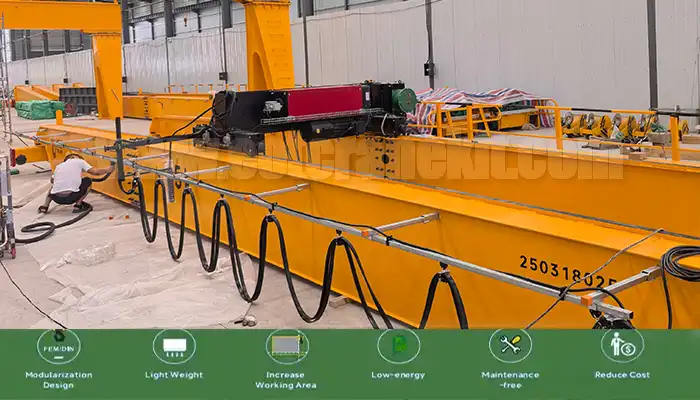
How CE, ISO, CNEX & Inspections Ensure Explosion-Proof Cranes
Content Quick Link
How CE, ISO, CNEX, and Third-Party Inspection Work Together for Explosion-Proof Cranes
Most Important Takeaway:
For buyers of explosion-proof overhead cranes, the safest and most cost-effective strategy is to combine CE, ISO, CNEX certifications with independent third-party inspections, ensuring both legal compliance and operational safety, rather than relying solely on the number of certificates.
Key Takeaways / Questions Solved
- What each certification guarantees: CE, ISO, CNEX, and third-party inspection – safety, quality, and legal acceptance.
- How buyers can distinguish safety from legal compliance: CNEX and third-party inspections focus on safety; CE ensures legal market entry.
- How to avoid over-reliance on multiple certificates: Quality and safety are more important than certificate quantity.
- Practical guidance for purchasing decisions: Checklist to evaluate suppliers of explosion-proof cranes for hazardous environments.
- Export vs. domestic considerations: Which certification matters for buyers in Asia, Africa, Latin America, and China.
CE Certification
Everything buyers need to know about CE certification: scope, limitations, and practical guidance for crane selection.
What Is CE Certification?
The CE mark is a sign that a crane meets European Union safety, health, and environmental standards. Think of it as a passport that lets your crane legally enter EU markets. It proves the manufacturer follows EU rules, but it does not guarantee the crane is explosion-proof or suitable for hazardous zones.
Scope of CE Certification
CE certification focuses on general machinery safety, including:
- Mechanical safety: Brakes, moving parts, and structural integrity.
- Electrical safety: Basic electrical design and protection against shocks.
- Environmental compliance: Emissions, energy use, and other EU environmental regulations.
What CE Does Not Cover
It's important to understand the limitations of CE certification:
- Explosion-proof performance: CE does not confirm suitability for flammable gases, dust, or chemicals.
- Extreme industrial conditions: High-temperature, corrosive, or hazardous zone operation is not guaranteed.
Why Buyers Should Care
For crane buyers, CE certification is useful but not enough on its own.
- It ensures legal compliance for export to the EU.
- It does not replace safety-focused certifications like CNEX or independent inspections.
- CE is a starting point, not the final check for explosion-proof cranes.
Practical Buyer Tips
- Use CE to verify legal acceptability in European markets.
- Always check for CNEX certification for explosion-proof compliance if the crane will operate in hazardous zones.
- Ask for third-party inspection reports to confirm real-world safety.
Common Scenarios
- Export to Europe: CE is mandatory for legal sale.
- Factory in Asia or Africa: CE helps with documentation, but CNEX and inspections are essential for safety.
- Comparing suppliers: Don't base your decision on CE alone—consider the full combination of certifications and inspections.
ISO Standards
Key ISO certifications for overhead cranes, their scope, limitations, and practical guidance for buyers.
What Are ISO Standards?
ISO (International Organization for Standardization) sets global standards for quality, safety, and environmental management. For overhead cranes, the most relevant are:
- ISO 9001: Focuses on quality management systems, ensuring suppliers consistently meet product and process standards.
- ISO 14001: Focuses on environmental management, ensuring manufacturing processes minimize environmental impact.
In simple terms, ISO is about how a supplier makes a crane, not necessarily how the crane performs in a hazardous zone.
Scope of ISO Standards
ISO certification covers:
- Process quality: Standardized procedures for design, production, and assembly.
- Consistency: Ensures that every crane is built to the same specifications.
- Environmental compliance: Reduces waste, energy use, and environmental risks in production.
What ISO Does Not Cover
While ISO is important for quality, it does not provide legal acceptance in any country and does not guarantee explosion-proof safety. For hazardous zone cranes, ISO must be combined with CNEX certification or third-party inspections.
Why Buyers Should Care
For crane buyers, ISO standards are a signal of reliability:
- It confirms the manufacturer has documented procedures and quality control systems in place.
- It reduces the risk of receiving poorly manufactured cranes or components.
- It ensures that replacements, spare parts, and future crane orders will maintain the same quality level.
Practical Buyer Tips
- Ask if the supplier is ISO 9001 certified and request proof of audits.
- Use ISO certification as an indicator of consistent quality, especially for multi-crane projects.
- Don't assume ISO replaces explosion-proof testing—it only guarantees the manufacturing process, not operational safety.
Common Scenarios
- Large-scale industrial projects: ISO helps ensure multiple cranes are produced consistently without defects.
- Cost-sensitive buyers: ISO certification gives confidence in supplier reliability, avoiding unexpected downtime or repair costs.
- Comparing suppliers: An ISO-certified manufacturer is generally more reliable than one without it, even if both have CE or CNEX certificates.
CNEX Certification
Key CNEX certification details for explosion-proof cranes, including scope, limitations, and practical buyer tips.
What Is CNEX Certification?
CNEX is China's national certification for explosion-proof electrical equipment. It ensures electrical components of cranes—like motors, hoists, and control systems—are safe to use in hazardous zones.
Simply put, CNEX indicates a crane can operate safely where flammable gases, dust, or chemicals are present. For buyers in chemical plants, refineries, or powder-handling facilities, CNEX is often the most practical indicator of real-world explosion safety.
Scope of CNEX Certification
- Electrical safety: Motors, control panels, and wiring meet explosion-proof standards.
- Hazardous area performance: Tested for zones classified as explosive (Gas or Dust zones).
- Compliance with Chinese standards: Aligns with GB/T and other national safety regulations for explosive environments.
What CNEX Does Not Cover
- CNEX does not certify structural integrity of the crane's steel framework—that's still covered by ISO or third-party inspection.
- It does not provide CE compliance for export to Europe; CE must be checked separately.
Why Buyers Should Care
- Reduces operational risk by ensuring electrical systems won't trigger explosions.
- For domestic Chinese buyers, CNEX is often legally required.
- For export buyers using Chinese cranes, CNEX provides extra assurance of safety, even if CE compliance is also needed.
Practical Buyer Tips
- Verify the CNEX certificate matches your plant's hazard zone classification (Zone 1, Zone 2, Zone 21, Zone 22).
- Check that all critical electrical components—hoist, trolley, control box—are covered.
- Combine CNEX with ISO quality systems and third-party inspections for complete safety assurance.
Common Scenarios
- Domestic petrochemical plant in China: CNEX certification is mandatory for legal and operational safety.
- Export project using Chinese cranes: CNEX ensures electrical explosion-proof safety, while CE ensures legal acceptance in Europe.
- Hazardous warehouses or powder handling facilities: CNEX guarantees the crane's electrical systems are safe in flammable environments.
Third-Party Inspection
Key points about third-party inspections for cranes, including scope, importance, and practical buyer tips.
What Is Third-Party Inspection?
A third-party inspection is when an independent company checks a crane's structure, electrical components, hoists, and safety systems. The idea is simple: don't just rely on certificates or manufacturer claims—have someone neutral verify that the crane works as promised and safely.
Think of it like having an independent engineer double-check everything before you put your staff and facility at risk. It gives buyers practical assurance beyond paperwork.
Scope of Third-Party Inspection
- Structural verification: Checks the steel framework, welds, and overall crane construction.
- Electrical testing: Confirms motors, hoists, control systems, and emergency stops function correctly.
- Functional and load testing: Ensures the crane can lift rated loads safely and operate smoothly.
- Compliance check: Confirms the crane matches design specifications and any claimed certifications (CE, CNEX, ISO).
Why Buyers Should Care
- You're importing cranes from another country and cannot easily verify quality onsite.
- You are purchasing high-value or critical cranes, where failure could cause downtime, injuries, or loss.
- You want to confirm explosion-proof performance in real operational conditions.
It's essentially the last safety net—if a crane passes third-party inspection, you can be confident it works safely and matches the manufacturer's claims.
Practical Buyer Tips
- Always request inspection reports with photos and load test data.
- Make sure the inspector is independent and qualified, not affiliated with the manufacturer.
- Combine inspection with CE, CNEX, and ISO certifications to cover legal compliance, quality, and safety.
- For hazardous areas, verify that functional testing includes zone-specific explosion-proof checks.
Common Scenarios
- Exporting to Africa or Latin America: Third-party inspection verifies cranes perform as expected in local conditions.
- Domestic Chinese plants: Even with CNEX, independent testing adds confidence for operational safety.
- Large projects with multiple cranes: Ensures every crane meets design specifications, avoiding mismatched performance or downtime.
How These Certifications Work Together
Understanding the complementary roles of CE, ISO, CNEX, and third-party inspection for explosion-proof cranes.
CE – Legal Market Acceptance
- Confirms the crane meets European Union machinery and safety regulations.
- Required for export to EU countries and sometimes recognized in other regions.
- Focuses on legal compliance, not real-world explosion-proof performance.
ISO – Quality and Reliability
- Ensures the manufacturer has consistent processes and quality management (ISO 9001).
- Covers production reliability, repeatability, and standardized manufacturing.
- Helps buyers avoid poorly built cranes or inconsistent parts.
CNEX – Explosion-Proof Safety
- Confirms that the crane's electrical components and hoists are safe for hazardous areas.
- Essential for operations in chemical plants, powder-handling facilities, and petrochemical plants.
- Focuses on operational safety rather than export legality.
Third-Party Inspection – Real-World Verification
- Independent experts test, verify, and document crane performance.
- Confirms that structural, electrical, and functional systems match specifications.
- Adds practical assurance, especially for high-value or imported cranes.
Practical Buyer Tip
- Complementary strategy: Use CE + ISO + CNEX + third-party inspection for full coverage.
- Don't rely on quantity: One certificate cannot replace actual testing and verification.
- Ask for reports: Review inspection documentation to confirm real-world safety and compliance.
Practical Guidance for Buyers
Navigating the maze of certifications and inspections can be overwhelming. Here's how to approach the process in a structured way, ensuring safety, compliance, and quality.
Safety vs. Legal Compliance
Understanding the difference between safety assurance and legal acceptance is critical. Each certification addresses a different aspect:
CNEX + third-party inspections → Safety assurance
- CNEX confirms electrical components and hoists are safe for hazardous areas.
- Third-party inspections test actual crane performance, load handling, and operational safety.
CE → Legal compliance
- Required for export to EU countries or regions recognizing EU machinery directives.
- Focused on regulatory acceptance, not operational safety in explosive environments.
ISO → Quality assurance
- Confirms the manufacturer has reliable processes and quality management systems.
- Reduces risk of defects, inconsistent parts, and long-term maintenance issues.
Practical tip: Think of certifications as layers of protection—CE covers legality, ISO covers quality, CNEX and inspections cover safety.
Checklist for Evaluating Suppliers
Before placing an order, buyers should systematically check suppliers using these practical questions:
- Certification relevance: Are CE, CNEX, or ISO certificates recognized in your operational country or export market?
- Zone classification match: Does the CNEX certificate match your plant's hazardous zone (e.g., Zone 1, Zone 2, Zone 21, Zone 22)?
- Functional testing: Has the crane passed third-party load tests and operational inspections?
- Quality management: Is ISO 9001 implemented, audited, and current?
- Document verification: Are inspection reports available with photos, load data, and clear results, not just certificates?
This checklist helps buyers avoid surprises and ensures that the crane will operate safely from day one.
Avoid Over-Reliance on Certificate Quantity
Having many certificates can be misleading. Buyers should remember:
- Quantity ≠ Quality or Safety.
- A single certificate cannot replace operational testing or proper explosion-proof compliance.
- Focus on the right combination of certifications that match your project's hazards, regulatory needs, and quality expectations.
Tip: Always prioritize safety and compliance over decorative certificates that don't add practical value.
Export vs. Domestic Buyer Recommendations
Depending on where the crane will operate, the certification strategy should differ:
Export Buyers (Asia, Africa, Latin America):
- CE → Legal compliance for export markets.
- CNEX → Ensures explosion-proof safety.
- Third-party inspection → Optional but adds confidence.
Domestic Buyers (China):
- CNEX → Mandatory for operational safety.
- ISO → Confirms supplier quality.
- Third-party inspection → Highly recommended to reduce risk.
Cost-Sensitive Projects:
- Focus on certifications that directly affect safety and legal approval.
- Avoid paying for certificates that do not contribute to compliance or operational reliability.
Practical takeaway: A balanced approach combining safety, quality, and legal compliance ensures buyers get the right crane for the right conditions without overpaying.
Cases: Choosing the Right Certification Combination
Not all projects are the same. Here's how different types of buyers can use CE, ISO, CNEX, and third-party inspections to match safety, quality, and legal needs.
Export to Africa – Chemical Plant
Situation: You are exporting a crane from China to a chemical plant in Africa.
Certification Focus:
- CE: Needed for EU compliance if documentation is required for import.
- CNEX: Optional, but adds extra safety assurance for hazardous zones.
- ISO: Confirms consistent quality from the supplier.
Why it matters:
- CE ensures legal acceptance.
- CNEX and inspections provide real-world operational safety, reducing risk in flammable or chemical environments.
- ISO ensures the crane is built reliably and consistently.
Practical Tip: Even if CE satisfies paperwork, adding CNEX or an inspection gives peace of mind for on-site safety.
Domestic Buyer – China Petrochemical Plant
Situation: A domestic plant needs an explosion-proof crane for a hazardous petrochemical environment.
Certification Focus:
- CNEX: Mandatory for operation in explosive zones.
- ISO: Guarantees consistent manufacturing quality.
- Third-Party Inspection: Confirms crane performance matches specifications.
Why it matters:
- CNEX protects against electrical hazards in explosive areas.
- ISO ensures the supplier maintains quality across production runs.
- Third-party inspection provides independent verification before the crane enters service.
Practical Tip: Even with CNEX and ISO, a third-party inspection is strongly recommended for critical lifting operations.
3. Cost-Conscious Projects
Situation: You need a crane for a budget-sensitive project but still want operational safety.
Certification Focus:
- CNEX + ISO + Third-Party Inspection: Focus on safety, quality, and verification.
- Optional certificates like CE are secondary unless legally required.
Why it matters:
- Avoids spending on certificates that don't affect safety or compliance.
- Ensures the crane is safe and reliable without unnecessary cost.
Practical Tip: Prioritize relevant certifications and inspections to reduce risk while staying within budget.
Key Takeaways Across All Scenarios
- CE → Legal compliance for export markets.
- CNEX → Explosion-proof safety in hazardous zones.
- ISO → Reliable manufacturing quality.
- Third-party inspection → Confirms real-world crane performance.
- Choose the right combination, not the largest number of certificates.
Conclusion: Making Smart Certification Decisions
When it comes to explosion-proof cranes, certifications and inspections are not interchangeable—each plays a distinct role in ensuring safety, quality, and legal compliance. Understanding how they work together is key to making informed purchasing decisions.
Optimal Certification Strategy
For most buyers, the most effective combination is:
- CE: Legal acceptance for export or EU market entry.
- ISO: Guarantees consistent manufacturing quality and reliable supplier processes.
- CNEX: Ensures electrical and operational safety in hazardous zones.
- Third-party inspection: Verifies real-world performance and compliance with specifications.
Practical Takeaways for Buyers
- Prioritize relevance over quantity: Focus on certifications that directly impact safety, legal compliance, and quality.
- Complementary approach: Use CE, ISO, CNEX, and inspections together for full coverage.
- Check documentation: Always request inspection reports and certificates to confirm claims.
- Cost-effective decisions: Following this checklist avoids unnecessary certificates while ensuring safe and reliable crane operation.
By combining legal compliance, operational safety, and quality assurance, buyers can confidently select an explosion-proof crane that meets regulatory requirements, performs reliably, and keeps workers safe, without overspending on unnecessary paperwork.

Article by Bella ,who has been in the hoist and crane field since 2016. Bella provides overhead crane & gantry crane consultation services for clients who need a customized overhead travelling crane solution.Contact her to get free consultation.
Yuantai Cranes
Overhead Crane Manufacturer with CE, ISO, SGS, CNEX Certificates.
- Main Specifications - Capacity: 0.5–550 tons | Span: up to 40m | Speed: 0.8–12 m/min | Duty: A3–A7 | Power: 380–690V, 50/60Hz | Control: pendant/remote/cabin
- Full engineering: FEA/PLC/VFD + in-house build + global delivery + on-site support, for workshops, factories, EPC contractors, industrial projects, etc.
- Support: design, manufacturing, testing, service – end-to-end, customized lifting solutions worldwide.
How to Get an Accurate Crane Price for Your Application?
Tips: Copy the spec list, fill in your details, and paste it into the form on the right/ down-below for a quick price.
- Crane type:_____ . (e.g., overhead crane, gantry crane, jib crane)
- Max weight to lift:_____ tons. (e.g., 2t, 5t, 10t, 20t, 50t)
- Lifting height:_____ m. (How high does the hook need to reach?
- Workshop width (span):_____ m . (Distance between the two crane rails)
- Travel distance:_____ m . (How long does the crane need to move along the runway?)
- Control type:_____. (Pendant / remote / cabin Control)
- Power supply:_____. (Local voltage & frequency – e.g., 380V, 50Hz, 3-phase)
- What will it be used for?_____ (e.g., steel fabrication, concrete products, mold handling, general manufacturing, etc.)
- Any special requirements?_____ (e.g., extreme temperature, dusty or explosive environment, special paint color, etc.)
Just leave a message via the contact form and our hoist and crane engineer will contact you with in 24working hours.
Get Your Custom Quote–Quick & Easy
Fill in what you know. Skip what you don't – we'll help.Any question will be reply with 24 working hours