8 Types of Overhead Cranes:4 Main Types & 4 Specialized Options
Content Quick Link
Explore hot sale 8 types of overhead cranes, from top-running, undehrung crane, single girder crane and double girder crane to the 4 specialized overhead crane including the explosion-proof models, electromagnetic overheada crane, grab bucket overhead crane and ladle crane for steel mills for material handling in various industries.
8 Types of Overhead Cranes Every Crane Buyer Should Know
As a crane buyer, choosing the right overhead crane is crucial to improving your facility's productivity and safety. Whether you're managing a small workshop or a large industrial plant, understanding the types of cranes available will help you make an informed decision. This guide covers the 4 main types of overhead cranes and 4 specialized industrial cranes tailored for unique applications.
The 4 Main Types of Overhead Cranes for Crane Buyers
Choosing the right type of overhead crane for your facility is a key decision that impacts both productivity and safety. With so many options available, it's important to understand the core types of cranes and how each one can best meet the needs of your operations.
In this section, we'll cover the four main types of overhead cranes that are commonly used across various industries:
- Top-Running Cranes: Ideal for larger spans and heavy-duty lifting.
- Under-Running Cranes: Perfect for smaller spaces and lighter loads.
- Single Girder Cranes: Cost-effective and suitable for light to medium lifting.
- Double Girder Cranes: Designed for heavy-duty lifting and longer spans.
Each of these crane types has its strengths and is designed to address specific operational needs. By understanding the features and benefits of each, you'll be able to make a more informed choice for your business. Let's take a closer look at each one.

Top-Running Overhead Cranes
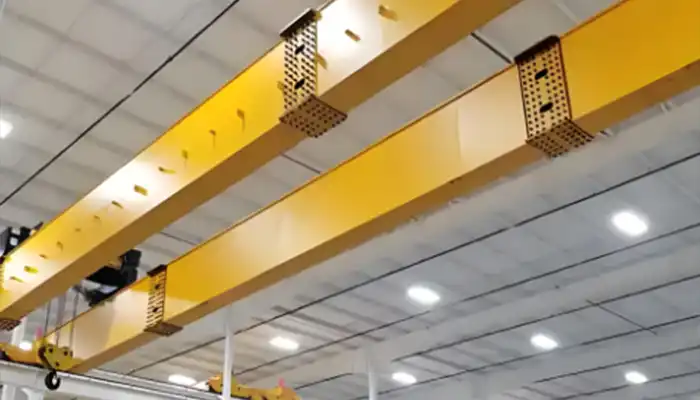
Top-running cranes are installed on top of the runway beams, giving them the ability to span large areas and lift heavy loads. If you're dealing with larger operations, this type of crane is a strong choice.
- Larger spans: Since they run on beams above, they can cover wide areas, making them ideal for large spaces.
- Heavy-duty lifting: These cranes can handle high lifting capacities, so they're perfect for industries that need to move large, heavy materials.
- Maximum lifting height: The crane's design allows for a higher lifting height, meaning you can utilize more of your vertical space.
- Wide usage: These cranes are commonly found in steel mills, large manufacturing plants, and warehouses.
Best for:
If you're in an industry that requires heavy lifting, like steel mills or machinery assembly, a top-running crane will give you the reach and lifting power you need to get the job done.
Under-Running (Suspension) Overhead Cranes
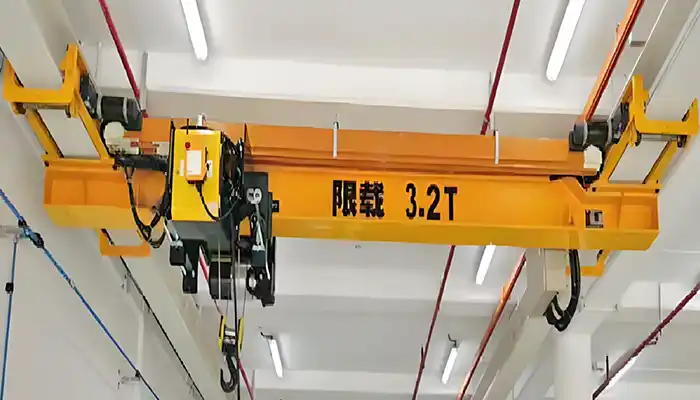
Under-running cranes, also known as suspension cranes, are mounted underneath the runway beams. This design makes them ideal for small workshops or spaces with low ceilings.
- Space-saving design: Since the crane hangs from the ceiling, it doesn't require a heavy structure on the ground. This saves valuable floor space.
- Light to medium loads: These cranes are great for handling lighter materials, so they're best for facilities with lower lifting needs.
- Perfect for low ceilings: They're ideal for workshops or factories where the ceiling height is limited, offering a compact and effective solution.
Best for:
If you're managing a smaller facility or need something that can work in tight spaces, an under-running crane could be your go-to choice. It gives you efficient lifting without taking up much room.
Single Girder Overhead Cranes
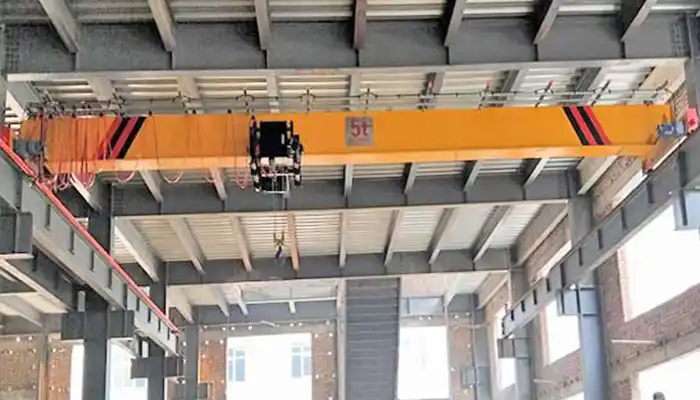
Single girder cranes are a popular choice for many buyers because they're more affordable and easier to install. If you're working with light to medium loads, this crane type can offer good performance without the high cost.
- Lower cost: The simple design means they're cheaper than double girder cranes, which can be an important factor for budget-conscious buyers.
- Light to medium-duty: These cranes can handle loads up to about 20 tons, making them perfect for lighter applications.
- Compact design: With just one beam, these cranes need less headroom and work well in smaller workshops with limited vertical space.
- Simple design: These cranes feature a single beam for the hoist and trolley travel, which makes them easier to install.
- Affordable: The cost is lower than double girder cranes, making it a good choice for buyers with a limited budget.
- Light to medium-duty: They typically handle loads up to 20 tons, which is perfect for industries that don't need heavy-duty lifting.
- Lower headroom: Because of the single beam design, these cranes require less headroom, making them ideal for smaller workshops with low ceilings.
- Low maintenance: With fewer moving parts, these cranes are easier to maintain, saving you time and money on upkeep.
Best for:
If you're working with a budget or in a smaller facility that needs to handle lighter loads, a single girder crane is a great option. It's reliable, cost-effective, and ideal for workshops with limited space.
Double Girder Overhead Cranes
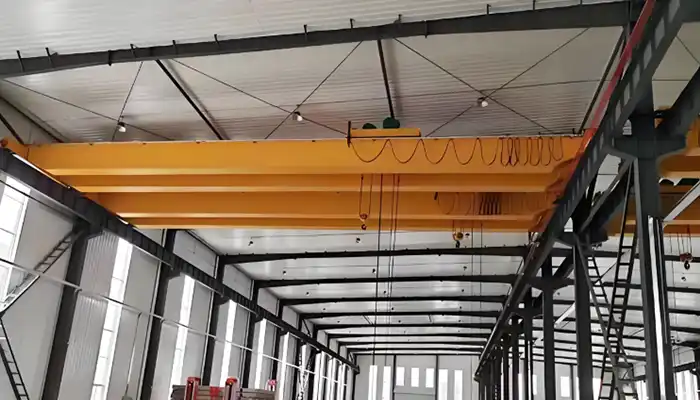
Double girder cranes are a bit more complex but also much stronger. With two parallel beams, they can lift heavier loads and offer more flexibility for various lifting tasks.
Double girder cranes are built for strength and are best suited for heavy-duty lifting. These cranes offer more flexibility and are ideal for larger operations that require higher capacities and longer spans.- Stronger design: With two parallel beams, these cranes can handle much heavier loads than their single girder counterparts.
- Higher load capacity: These cranes are designed for heavy-duty lifting, often handling capacities beyond 20 tons.
- More flexible: They provide multiple hoist configurations, like dual hoists or walkways, making them more adaptable to complex tasks.
- Longer spans: Their design allows for longer spans, which is great for larger facilities or when you need to cover more ground.
- Heavy materials and high-frequency use: Perfect for industries that deal with large materials, like steel mills, or for high-frequency operations.
Best for:
If your facility requires heavy-duty lifting, longer spans, or flexible hoist configurations, a double girder crane will provide the strength and versatility you need. It's the best choice for industries handling large materials or those with demanding lifting needs.
4 Specialized Industrial Overhead Cranes for Specific Applications
When it comes to handling unique materials or operating in challenging environments, not all overhead cranes are created equal. Specialized industrial cranes are designed to meet the specific needs of certain industries, ensuring safety, efficiency, and compliance with regulations. Whether you're managing a steel foundry, a recycling plant, or a chemical facility, understanding the right crane for the job is essential.
In this section, we'll explore four specialized overhead cranes tailored for particular applications:
- Explosion-Proof Cranes: Designed for environments with explosive gases or dust.
- Electromagnetic Cranes: Perfect for moving ferrous metals like steel plates and scrap.
- Grab Bucket Cranes: Ideal for handling bulk materials like coal, sand, or grain.
- Metallurgy Cranes (Ladle Cranes): Built to withstand high temperatures for handling molten metal.
These cranes are engineered to handle extreme conditions and specialized tasks, ensuring the job gets done safely and efficiently. Let's dive into the details of each type.
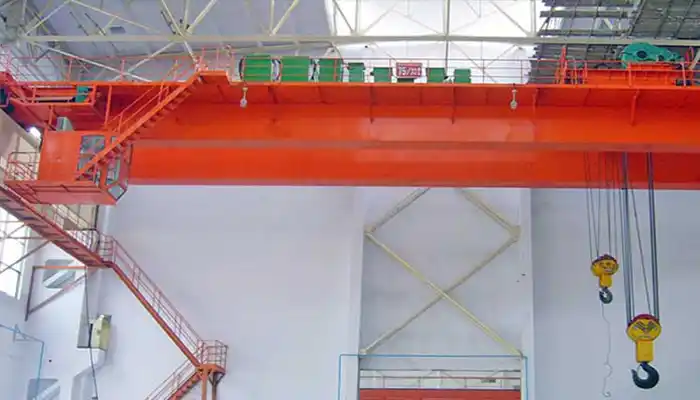
Explosion-Proof Overhead Cranes
Explosion-proof cranes are specifically designed for environments where there's a risk of explosive gases, dust, or volatile substances. These cranes are built with special features to keep operations safe in hazardous areas.
- Built for hazardous environments: Explosion-proof cranes are essential in industries dealing with flammable gases, dust, or chemicals. They are often used in ATEX or IECEx zones.
- Spark-resistant components: These cranes are equipped with spark-resistant and sealed components to reduce the risk of ignition, ensuring maximum safety.
- Compliance with regulations: They help you meet strict safety regulations and compliance requirements in industries like chemical plants, oil refineries, and gas facilities.
- Safe operation in extreme conditions: With their advanced design, these cranes allow for safe handling of materials in potentially dangerous environments.
Best for:
If you're in an industry dealing with flammable materials or operating in hazardous environments, an explosion-proof crane is your best choice. It ensures safety while meeting regulatory standards for dangerous work conditions.
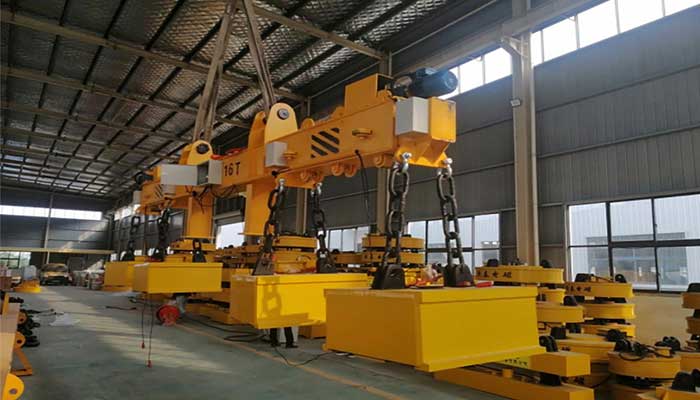
Electromagnetic Overhead Cranes
Electromagnetic cranes are specially designed for lifting and transporting ferrous metals, such as steel plates, scrap, and other metallic materials. These cranes use powerful magnets to make material handling faster and more efficient.
- Uses magnets for lifting: The crane uses electromagnets to lift steel plates, billets, scrap, or other ferrous materials, making it a highly effective tool for metal handling.
- Efficient material handling: These cranes are perfect for operations where speed and efficiency are crucial. The powerful magnets ensure quick handling, reducing downtime and increasing productivity.
- Common in metal industries: Electromagnetic cranes are widely used in steel mills, scrap yards, and metal recycling plants, where large volumes of metal need to be moved safely and quickly.
- Ideal for bulk metal handling: Designed for industries that handle large volumes of metal, these cranes can quickly and securely move materials, saving time and improving workflow.
Best for:
If you're working in metal processing, recycling, or scrap handling, an electromagnetic crane is the ideal solution. It offers safe, efficient lifting and is perfect for environments where large quantities of metal need to be moved quickly.

Grab Bucket Overhead Cranes
Grab bucket cranes are designed to handle bulk materials, making them ideal for industries that need to move large quantities of loose materials quickly and efficiently. These cranes come with a grab bucket, either mechanical or hydraulic, to scoop and transport bulk goods.
- Handling bulk materials: These cranes are perfect for lifting materials like coal, sand, gravel, or grain, which are typically loose and difficult to manage with traditional lifting methods.
- Common in heavy industries: You'll often find grab bucket cranes in ports, power stations, and cement plants, where bulk materials are handled on a daily basis.
- Efficient and reliable: Designed for large-scale operations, grab bucket cranes can handle large amounts of material with speed, improving the efficiency of material transport.
Best for:
If you're in an industry that deals with bulk materials like coal, sand, or grain, especially in large-scale operations, a grab bucket crane is a must-have. It's built to handle massive quantities of loose material, saving time and improving productivity.
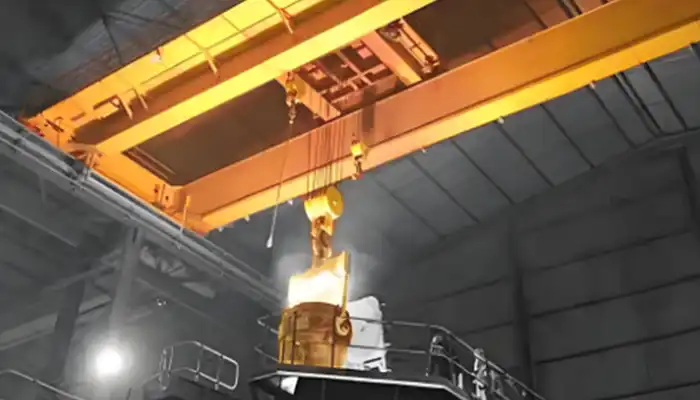
Metallurgy (Ladle) Overhead Cranes
Metallurgy cranes, also known as ladle cranes, are specifically built for high-temperature environments where molten metal is handled. These cranes are reinforced with heat-resistant components to ensure safety and efficiency in steel foundries and metal smelting plants.
- Built for extreme temperatures: These cranes are designed to withstand intense heat, making them suitable for environments like steel foundries or metal smelting plants where molten metal is handled.
- Lifting molten metal: They are specialized in lifting ladles and other heavy metal containers used to carry molten metal, ensuring safe transport without compromising on strength or durability.
- Reinforced with heat-resistant materials: To ensure safety, these cranes are made with heat-resistant components, allowing them to operate near furnaces and other high-heat equipment.
- Specialized for metallurgy: Ladle cranes are a critical part of the process in metallurgy, ensuring safe and efficient movement of molten metal from one part of the plant to another.
Best for:
If you're in the metallurgy or foundry industry and need to handle high-temperature materials, such as molten metal, a metallurgy crane is essential. It's specifically designed for extreme conditions and heavy-duty metal lifting.
How to Choose the Right Overhead Crane for Your Facility
Choosing the right overhead crane for your facility is an important decision that can impact your productivity, safety, and overall operational costs. It's not just about picking the most powerful crane or the cheapest option; it's about finding a crane that meets the specific needs of your business.
When deciding which overhead crane to purchase, consider these key factors:
- Lifting Capacity:
What's the maximum weight your crane will need to lift? Make sure the crane can handle your heaviest loads without straining or compromising safety. - Frequency of Use:
Will your crane be in use all day, every day, or only for occasional tasks? High-frequency operations require a more durable, heavy-duty crane, while light use may only require a lighter-duty model. - Workshop Layout:
What's the ceiling height and span of your workshop? You'll need a crane that fits within the physical constraints of your facility. Also, think about where you'll need the crane to travel and how much space you have to work with. - Environmental Conditions:
Does your facility experience extreme temperatures, humidity, or dust? Are there hazardous materials present? Specialized cranes, like explosion-proof or corrosion-resistant models, might be necessary depending on your environment. - Long-Term Needs:
Consider your future plans. Are you likely to expand your operations, or will you need additional features like multiple hoists or safety options down the line?
Tip for crane buyers:
Choosing the right crane is an investment in both efficiency and safety. Take your time to assess your current and future needs. Don't hesitate to ask manufacturers for tailored advice or custom recommendations to make sure you get the best solution for your facility.
Conclusion
As a crane buyer, selecting the right overhead crane for your facility is crucial to optimizing your operations. The right crane—whether it's a top-running crane for heavy-duty lifting, a single girder crane for cost-effective operations, or a specialized crane for handling hazardous materials or bulk materials—can significantly improve your workflow and reduce overall operational costs.
Understanding your facility's specific needs and choosing the crane that best fits those requirements will ensure you get the most out of your investment. If you're unsure about which crane is right for you, don't hesitate to reach out to a trusted supplier for expert advice and tailored solutions. We'll help guide you through the process and ensure you're investing in the best crane for your business.

Article by Bella ,who has been in the hoist and crane field since 2016. Bella provides overhead crane & gantry crane consultation services for clients who need a customized overhead travelling crane solution.Contact her to get free consultation.
Yuantai Cranes
Overhead Crane Manufacturer with CE, ISO, SGS, CNEX Certificates.
- Main Specifications - Capacity: 0.5–550 tons | Span: up to 40m | Speed: 0.8–12 m/min | Duty: A3–A7 | Power: 380–690V, 50/60Hz | Control: pendant/remote/cabin
- Full engineering: FEA/PLC/VFD + in-house build + global delivery + on-site support, for workshops, factories, EPC contractors, industrial projects, etc.
- Support: design, manufacturing, testing, service – end-to-end, customized lifting solutions worldwide.
How to Get an Accurate Crane Price for Your Application?
Tips: Copy the spec list, fill in your details, and paste it into the form on the right/ down-below for a quick price.
- Crane type:_____ . (e.g., overhead crane, gantry crane, jib crane)
- Max weight to lift:_____ tons. (e.g., 2t, 5t, 10t, 20t, 50t)
- Lifting height:_____ m. (How high does the hook need to reach?
- Workshop width (span):_____ m . (Distance between the two crane rails)
- Travel distance:_____ m . (How long does the crane need to move along the runway?)
- Control type:_____. (Pendant / remote / cabin Control)
- Power supply:_____. (Local voltage & frequency – e.g., 380V, 50Hz, 3-phase)
- What will it be used for?_____ (e.g., steel fabrication, concrete products, mold handling, general manufacturing, etc.)
- Any special requirements?_____ (e.g., extreme temperature, dusty or explosive environment, special paint color, etc.)
Just leave a message via the contact form and our hoist and crane engineer will contact you with in 24working hours.
Get Your Custom Quote–Quick & Easy
Fill in what you know. Skip what you don't – we'll help.Any question will be reply with 24 working hours