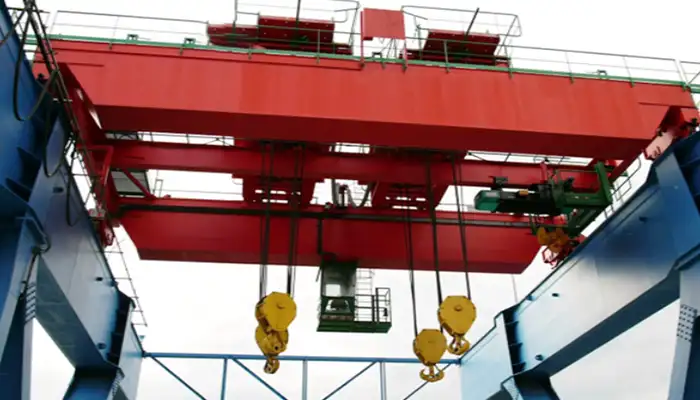
How a Ladle Handling Crane Is Engineered for Your Plant
Content Quick Link
From Inquiry to Commissioning: How a Ladle Handling Crane Is Engineered for Your Plant
Most Important Takeaway:: A ladle handling crane is not just equipment—it’s a customized, high-value solution engineered for your steel plant’s safety, efficiency, and long-term reliability. Choosing the right manufacturer and following a structured engineering process ensures compliance, optimal performance, and minimal operational downtime.
Key Takeaways
- Every ladle crane project begins with a technical consultation, ensuring solutions are tailored to your plant.
- Accurate plant specifications (furnace type, ladle weight, runway dimensions) are critical for safety and crane lifecycle.
- Duty class selection (A7/A8 for ladle cranes) affects crane reliability, service life, and compliance with ISO, FEM, DIN, or GB standards.
- Custom engineering and 3D modeling prevent costly design errors and guarantee integration with plant automation and control systems.
- Quality fabrication, factory testing, and third-party inspection reduce installation risks and ensure international compliance.
- Proper installation, commissioning, and staff training maximize crane performance from day one.
- Lifecycle support including preventive maintenance, spare parts, and remote assistance protects your investment.
Your Plant Requirements
Before a ladle handling crane can be properly designed, the first step is a clear picture of your plant. Every steel plant is unique, and skipping this step can lead to mismatched equipment, costly redesigns, or downtime later. The goal is simple: give the manufacturer enough information so the crane fits perfectly with your operations.
To do this, several key pieces of data are needed:
- Furnace type and ladle dimensions: Knowing the exact type of furnace and the size of the ladles helps determine the crane’s span, hook height, and lifting capacity. A ladle for a small furnace may look similar to a large one, but the difference in weight and handling frequency is huge.
- Ladle weight and handling frequency: How heavy is each ladle, and how often will it be moved? A crane that lifts a 40-ton ladle twice a day has very different requirements than one lifting 20 tons dozens of times. This information directly affects the working class of the crane and the expected service life.
- Plant layout, headroom, and runway structure: The physical layout of your plant dictates crane design. Key measurements include building width, ceiling height, and the type of runway beam you have. Even small headroom limitations can change whether a single girder or double girder crane is recommended.
- Environmental factors: Conditions like temperature, humidity, dust, or exposure to outdoor elements affect materials, coatings, and protective covers. For example, a crane in a high-temperature casting area may need heat-resistant components, while a dusty mill might require sealed motors and special maintenance schedules.
Providing detailed and accurate information at this stage ensures the crane is engineered for safe lifting, smooth operation, and long-term reliability. It also reduces unexpected costs and downtime during installation and commissioning.
Initial Inquiry & Technical Consultation
Once the plant requirements are clear, the next step is reaching out for an initial inquiry and technical consultation. This stage might seem simple, but it’s actually where the project’s success is largely determined. Getting expert input early can prevent costly mistakes and make sure the crane is designed exactly for your needs.
A professional consultation does more than just answer questions. It helps both the buyer and manufacturer align expectations and narrow down what’s really required. Specifically, it covers:
- Filter serious buyers from low-intent inquiries: Not every inquiry needs a full proposal. A technical consultation helps the manufacturer understand which projects are viable and which might not yet have enough detail or commitment. This ensures your time is spent efficiently and your project receives proper focus.
- Discuss crane capacity, working class, and layout constraints: During the consultation, your plant’s specifics—like ladle weight, frequency of lifts, headroom, and runway dimensions—are reviewed. This helps determine the crane’s working class (A7, A8, etc.) and the exact specifications needed for safe and reliable operation.
- Identify integration challenges: Many plants already have existing automation, overhead systems, or production equipment. Early consultation identifies potential clashes, interference, or areas where customization is needed. For example, control systems might need to sync with plant automation, or the crane’s path may require adjustments to avoid obstacles.
Starting the project with a consultation ensures you’re not just buying an off-the-shelf crane. Instead, you’re getting a solution tailored to your plant’s layout, workflow, and operational demands, which saves time, reduces risk, and maximizes crane performance from day one.
Feasibility Study & Concept Design
Once the initial consultation is complete, the project moves into the feasibility study and concept design phase. This stage turns the preliminary information into a practical plan, making sure the crane will meet your plant’s needs safely and efficiently. Think of it as the blueprint for your ladle handling crane before any steel is cut or machinery ordered.
During this phase, several critical aspects are carefully analyzed:
- Load calculations and structural assessments: Engineers calculate the maximum loads the crane will carry, including the heaviest ladle and any safety margins. The runway and supporting structures are evaluated to ensure they can handle these loads without excessive deflection or stress. This step directly affects the crane’s working class and durability.
- Selection of hoisting mechanism and trolley configuration: Choosing the right hoist and trolley setup is key for smooth, safe operation. Depending on the ladle weight, lift height, and frequency, engineers decide whether a single or double hoist, top-running or under-slung trolley, is most suitable.
- Initial electrical and control system layout: Early electrical planning ensures the crane’s controls, motors, and safety systems match your plant’s power supply and automation setup. This includes control panels, limit switches, emergency stops, and optional remote operation features.
- Environmental considerations: The crane’s design must account for temperature extremes, dust, humidity, and hazardous conditions. For example, cranes in steel casting areas may need heat-resistant components, while dusty or corrosive environments require sealed motors, special coatings, or explosion-proof options.
Outcome of this stage:: By the end of the feasibility study, your project has a conceptual design that balances safety, operational efficiency, and cost-effectiveness. The design serves as a reference for detailed engineering, ensuring the final crane will fit perfectly within your plant’s requirements.
Detailed Engineering & Customization
After the conceptual design is approved, the project moves into detailed engineering and customization. This is where the crane design becomes fully tailored to your plant’s needs, ensuring every component works together safely and efficiently. It’s not just about building a crane—it’s about creating a solution that fits your plant, your workflow, and your operating conditions.
Key elements addressed in this stage include:
- 3D CAD modeling of crane and runway integration: Engineers create precise 3D models of the crane and its interaction with your plant layout. This includes the runway, support beams, hoists, and trolleys. Modeling helps detect potential interference issues early and allows for virtual testing before fabrication begins.
- Electrical system design: Detailed planning covers control panels, wiring, remote operation capabilities, and safety interlocks. Proper electrical design ensures reliable performance, protects operators, and integrates smoothly with existing plant automation.
- Materials selection for durability and resistance: The choice of steel, coatings, and components depends on your plant environment.
For example:
- High-temperature areas require heat-resistant materials.
- Dusty or corrosive environments may need sealed motors and anti-corrosion coatings.
- Outdoor cranes often include weatherproof and UV-resistant finishes.
Compliance with international standards: Every component is designed to meet relevant standards, including ISO, FEM, DIN, and GB. Compliance ensures safety, reliability, and ease of inspection for both local and international operations.
Outcome of detailed engineering:: At the end of this phase, you have a fully engineered ladle handling crane solution that is ready for manufacturing. The crane fits your plant layout, meets operational demands, and is engineered for safety, efficiency, and long-term reliability.Manufacturing & Quality Assurance
Once the detailed engineering is complete, the project moves into the manufacturing and quality assurance phase. This is where the crane takes physical form, and strict quality controls ensure it will perform safely and reliably in your plant environment. Every step is carefully monitored to prevent issues during installation and operation.
Key processes include:
- Fabrication of steel structures and components in certified workshops: All crane components, from girders to hoists, are fabricated in workshops with proper certifications. This ensures consistent quality and adherence to engineering specifications. Using certified workshops also guarantees that the materials and welding processes meet safety and strength requirements.
- Pre-assembly and factory testing: Before shipping, the crane is partially assembled and tested in the factory. This step identifies any mechanical or electrical issues early, saving time and cost during on-site installation. Pre-assembly also confirms that components fit together as designed.
- Third-party inspection for international compliance: Independent inspectors verify the crane meets ISO, FEM, DIN, and GB standards. Third-party verification provides confidence for international operations and helps streamline regulatory approvals.
- Verification of working class and load capacity: The crane’s rated load, duty cycle, and working class are checked against design calculations. This ensures the crane will perform reliably under maximum loads without premature wear or safety risks.
Buyer Advantage:: By following these strict manufacturing and QA processes, you reduce installation risks, prevent delays, and gain assurance that your ladle handling crane will deliver long-term reliability. This stage turns engineering plans into a safe, functional, and fully compliant crane ready for delivery.
Delivery, Installation & Commissioning
After manufacturing and quality checks, the crane is ready for delivery and on-site setup. This stage is critical because even a perfectly engineered crane can run into problems if transportation, assembly, or commissioning are not handled carefully. A well-planned process ensures your ladle handling crane is operational with minimal downtime.
Key steps include:
- Transportation logistics for heavy crane components: Moving large crane components safely requires detailed planning. Specialized vehicles and lifting equipment are used to transport girders, hoists, and control systems without damage. Route surveys and coordination with your plant ensure smooth delivery.
- On-site assembly and runway integration: Once on-site, the crane is assembled and integrated with your existing runway and plant layout. This includes aligning girders, installing hoists, and connecting trolleys. Proper assembly is crucial for smooth movement and long-term performance.
- Electrical, control system, and hoist commissioning: Electrical systems are connected, tested, and synchronized with plant automation if needed. Safety interlocks, limit switches, and remote controls are checked to ensure reliable operation. The hoist is tested for precise lifting and lowering under varying loads.
- Load testing and staff training: Before the crane enters regular operation, full load tests verify that the crane performs as designed. Staff are trained on safe operation, emergency procedures, and routine maintenance tasks to maximize safety and productivity.
Key Benefit:: By handling delivery, installation, and commissioning professionally, your plant achieves minimal downtime and the crane is fully operational from day one, ready to handle heavy ladles safely and efficiently.
After-Sales Support & Lifecycle Management
Buying a ladle handling crane is not just a one-time expense—it’s a long-term investment. Even the best-engineered crane needs proper care and support to operate safely and efficiently for years. After-sales services and lifecycle management are essential for maximizing uptime, reducing unexpected costs, and protecting your plant’s operations.
Key aspects of support include:
- Preventive maintenance programs: Scheduled inspections, lubrication, and parts replacement help prevent breakdowns before they happen. Regular maintenance ensures the crane maintains its rated capacity and extends its service life.
- Spare parts availability: Quick access to spare parts minimizes downtime if a component fails. Reliable suppliers provide genuine parts that match your crane’s specifications exactly.
- Remote support and troubleshooting: Modern cranes often include digital monitoring and remote diagnostics. Expert support teams can identify issues quickly, guide on-site staff through fixes, or adjust system settings without waiting for a technician to arrive.
- Upgrade options for future plant expansion: As your plant grows or production processes change, your crane may need capacity upgrades, additional controls, or integration with new automation systems. Planning for upgrades ensures the crane remains compatible with evolving operational needs.
A ladle handling crane is more than equipment—it’s a long-term asset. Comprehensive after-sales support ensures safety, operational uptime, and a reliable return on your investment. Investing in proper lifecycle management protects both your plant and your budget.
Questions This Article Solves
Choosing a ladle handling crane involves more than picking a model off a catalog. Plants differ in layout, processes, and environmental conditions, so every crane must be custom-engineered. This article addresses the key questions buyers typically face before committing to a project, helping you make informed decisions.
- What information is needed from my plant to specify a ladle handling crane?: Details such as ladle weight, dimensions, handling frequency, furnace type, plant layout, headroom, and environmental conditions are essential. Accurate data ensures the crane is designed for safe lifting and smooth operation.
- Why are ladle cranes usually classified as A7 or A8, and what happens if a lower class is used?: Working class determines a crane’s ability to handle frequent, heavy-duty loads safely. Using a lower class like A5 or A6 can reduce lifespan, increase maintenance, and compromise safety, especially in continuous ladle handling applications.
- How does the engineering process impact crane safety, efficiency, and cost?: From feasibility study to detailed design, every step—from load calculations to electrical integration—ensures the crane performs reliably. Skipping or rushing engineering can lead to higher operating costs, downtime, and safety risks.
- What customization options are available for electrical systems, hoists, and controls?: Cranes can be tailored with remote operation, explosion-proof motors, heat-resistant components, or integration with plant automation. Customization ensures the crane matches your workflow, power supply, and operational environment.
- How does factory testing and compliance affect commissioning and long-term reliability?: Pre-assembly, load testing, and third-party inspections verify performance before delivery. Compliance with ISO, FEM, DIN, and GB standards reduces installation issues and ensures the crane meets international safety and operational standards.
- What post-installation support is critical for ladle handling cranes?: Preventive maintenance, spare parts availability, remote troubleshooting, and upgrade options help maintain uptime and protect your investment over the crane’s service life.
By answering these questions, buyers can understand the full journey from inquiry to commissioning and make informed decisions about safety, reliability, and long-term cost-effectiveness.
Conclusion
Designing and commissioning a ladle handling crane is a step-by-step process, not a simple off-the-shelf purchase. Each stage matters, and skipping any can lead to operational risks, unexpected costs, or downtime.
Here’s what the journey ensures:
- Safety first: Every crane is engineered to handle your ladle loads reliably, according to the correct working class (A7/A8) and plant conditions.
- Efficiency and performance: From detailed engineering to commissioning, the crane is tailored to your workflow and plant layout.
- Compliance and reliability: ISO, FEM, DIN, and GB standards are followed throughout, giving confidence for audits and inspections.
- Long-term value: With preventive maintenance, spare parts, and upgrade options, your crane remains operational for years, protecting your investment.
By partnering with an experienced crane manufacturer:
- You get a solution designed for your plant, not a generic model.
- You minimize installation risks and operational downtime.
- You ensure your ladle crane delivers consistent performance and reliability over its full lifecycle.
Start your ladle crane project with a free technical consultation and get a solution tailored to your plant’s needs.

Article by Bella ,who has been in the hoist and crane field since 2016. Bella provides overhead crane & gantry crane consultation services for clients who need a customized overhead travelling crane solution.Contact her to get free consultation.
Yuantai Cranes
Overhead Crane Manufacturer with CE, ISO, SGS, CNEX Certificates.
- Main Specifications - Capacity: 0.5–550 tons | Span: up to 40m | Speed: 0.8–12 m/min | Duty: A3–A7 | Power: 380–690V, 50/60Hz | Control: pendant/remote/cabin
- Full engineering: FEA/PLC/VFD + in-house build + global delivery + on-site support, for workshops, factories, EPC contractors, industrial projects, etc.
- Support: design, manufacturing, testing, service – end-to-end, customized lifting solutions worldwide.
How to Get an Accurate Crane Price for Your Application?
Tips: Copy the spec list, fill in your details, and paste it into the form on the right/ down-below for a quick price.
- Crane type:_____ . (e.g., overhead crane, gantry crane, jib crane)
- Max weight to lift:_____ tons. (e.g., 2t, 5t, 10t, 20t, 50t)
- Lifting height:_____ m. (How high does the hook need to reach?
- Workshop width (span):_____ m . (Distance between the two crane rails)
- Travel distance:_____ m . (How long does the crane need to move along the runway?)
- Control type:_____. (Pendant / remote / cabin Control)
- Power supply:_____. (Local voltage & frequency – e.g., 380V, 50Hz, 3-phase)
- What will it be used for?_____ (e.g., steel fabrication, concrete products, mold handling, general manufacturing, etc.)
- Any special requirements?_____ (e.g., extreme temperature, dusty or explosive environment, special paint color, etc.)
Just leave a message via the contact form and our hoist and crane engineer will contact you with in 24working hours.
Get Your Custom Quote–Quick & Easy
Fill in what you know. Skip what you don't – we'll help.Any question will be reply with 24 working hours