15–32 Ton Overhead Cranes for Indian Rolling Mills – Buyer Guide
Practical guide for Indian steel mills: select 15–32 ton overhead cranes, match duty, hoist type, and safety for reliable production and lower downtime.
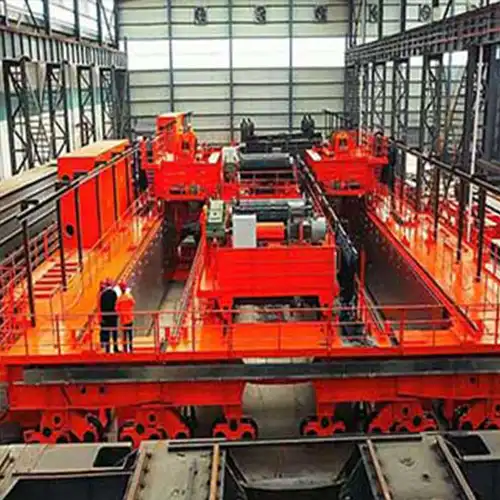
| Crane Type | Rolling Mill Overhead Crane: Top-Running Single or Double Girder Overhead Crane; Double Girder commonly selected for heavier and higher-duty applications; Working Duty: ISO A3–A5 / M3–M5 ; Power Supply: 380/400/415/440/480V, 3 Ph, 50/60Hz or customized |
| Crane Capacity | 15–32 ton; selected according to maximum load, load configuration, lifting attachment, handling frequency and duty |
| Span Length | 10–35 m+ typical; project-specific according to workshop width, runway arrangement and required coverage |
| Lifting Height | 6–20 m+ typical; project-specific according to furnace, rolling line, storage and plant layout |
| Coverage Area Type | Rolling mills, billet mills, rebar plants, furnace areas, production lines, finishing zones, storage areas and crane runway zones |
| Application | Billet handling, rebar production, steel bundle handling, magnetic lifting, furnace transfer, rolling lines, finishing and storage |
| Certifications | CE / ISO / SGS / Other third-party inspection |
| Customization | Handling: Billets / Rebar Bundles / Steel Products · Attachments: Hook / Magnet / Clamp · Environment: Heat / Dust / Humidity · Control: VFD / Remote / Cabin / PLC · Special: Anti-Sway / Fine Positioning / Load Monitoring / Backup Safety |
Crane Manufacturer: Yuantai Cranes – 30+ Years Professional Crane Manufacturer from China
Category: India
Tags: India
Your Trusted Overhead Crane Manufacturer & Supplier
15–32 Ton Overhead Cranes for Indian Rolling Mills:
Practical Selection Guide
Most Important Takeaway
For Indian rolling mill and steel plant decision-makers, choosing a 15–32 ton overhead crane is more than just about lifting capacity. It’s about selecting a solution that fits your plant’s daily realities, ensures long-term reliability, and keeps your production running smoothly. In India, where production continuity is key, the wrong crane can disrupt operations, increase maintenance costs, and affect trust among your workforce and partners.
Key Takeaways for Indian Crane Buyers
Choosing the right overhead crane in India isn’t just about lifting capacity—it’s about fitting your plant’s workflow, environment, and workforce needs. Here’s what matters most:
- Fit for Purpose: Select a crane that aligns with your mill type, heat conditions, and production rhythm. One-size-fits-all rarely works.
- Reliable Duty Class & Capacity: Ensure the crane can handle your daily workload without frequent breakdowns—especially important in continuous, high-volume operations.
- Magnetic Handling Advantage: For billets and rebar bundles, magnet-equipped cranes speed up handling, reduce labor dependency, and improve safety.
- Cost with Value: Look beyond the upfront price. Factor in lifecycle costs, service support, and local spare parts availability.
- Infrastructure Compatibility: Check power supply stability, shed headroom, runway quality, and environmental conditions before committing.
- Safety and Community Trust: Overload protection, limit switches, and secondary safety systems are essential—they protect both your team and your company’s reputation.
Practical tip: In India, a crane that fits your workflow, withstands local conditions, and is backed by reliable support will pay for itself many times over in uptime and safety.
What Questions This Guide Answers
This guide is designed to help Indian steel mill and rolling mill buyers make informed decisions. It answers key questions such as:
- Which 15–32 ton overhead cranes work best for billet mills and rebar production plants in India?
- How to choose duty classification, hoist type, and controls for heavy industrial workloads?
- What are the practical advantages and challenges of magnetic lifting for steel products?
- How can I optimize costs without compromising reliability or safety?
- Which site-specific conditions in Indian plants should I evaluate before purchasing?
Bottom line: This guide helps industrial buyers match the right crane to their plant’s needs, avoid downtime, and maintain safe, predictable operations.
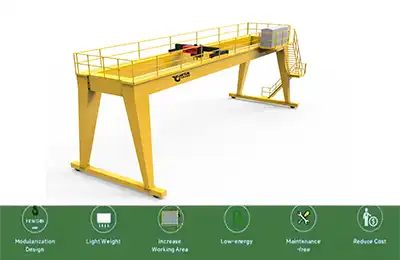
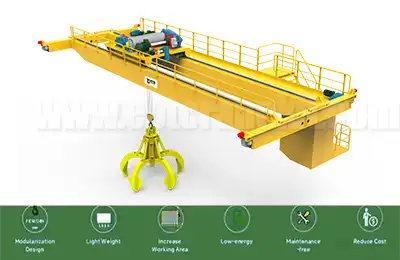
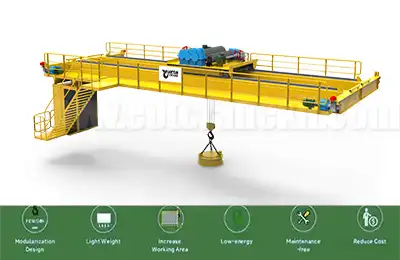
Indian Rolling Mills – Buyer Insights
Practical guidance for Indian rolling mill buyers: operations, challenges, and market behavior for cranes.
Industry Reality
Indian rolling mills—including billet mills and rebar production plants—operate on high volume and tight schedules. Operations are continuous, so any delay affects the whole line.
- Handling glowing billets: Freshly cast billets require careful handling to prevent damage and ensure safety.
- Reheating: Billets are sent to furnaces and brought to rolling temperature.
- Rolling: Hot billets pass through mills to become rebar, bars, or other products.
- Finishing: Bundling, cooling, and storage before dispatch.
In Indian mills, every crane move matters. One misstep can slow the line for hours, affecting multiple production stages.
Common Challenges
Rolling mill cranes must operate reliably despite tough conditions. Challenges include:
- High duty cycles: Frequent heavy lifts stress motors, brakes, and wire ropes.
- Harsh environmental conditions: Dust, furnace heat, humidity, and chemical residues accelerate wear.
- Infrastructure limits: Older plants may have limited headroom or non-uniform runways.
- Power supply fluctuations: Sudden dips or surges can trip cranes or damage motors if systems aren't robust.
Practical tip: a crane that isn't reliable costs more in the long run than one slightly more expensive upfront.
Market Behavior
Indian industrial buyers prioritize long-term value and reliability over purchase price. Key factors include:
- Trust and relationship: Suppliers who provide guidance, respond quickly, and support equipment are preferred.
- Local support: Spare parts and service must be readily accessible.
- Predictable operations: Equipment must perform consistently, shift after shift, year after year.
As the saying goes in Indian industry: “Time is money, and every hour a machine sits idle costs more than the machine itself.”
Practical takeaway for buyers: Invest in cranes that match your plant conditions, production frequency, and local service availability for smooth operations and confident staff.
Technical Selection Criteria – Indian Rolling Mills
Practical guidance for selecting overhead cranes in Indian rolling mills, covering capacity, hoists, structure, and safety.
Capacity & Duty Classification
When you're looking at 15–32 ton cranes, the first step is to match capacity to the real loads in your plant. Oversized cranes cost more upfront and may be harder to maneuver, while undersized cranes wear out quickly and risk breakdowns.
- Match bundle sizes and throughput: Know the heaviest bundles you lift and how many lifts happen per shift.
- Duty cycles matter: Indian rolling mills often operate multiple shifts. Choose duty classes M3–M5 to ensure the crane can handle continuous, heavy use without frequent breakdowns.
- Practical tip: Always plan for a 20–30% buffer over your maximum expected load to account for bundle variation or magnet pull.
Bottom line: a crane that meets your actual workload keeps production moving and avoids costly downtime.
Hoist Type
The hoist is the heart of your crane. The type you choose affects speed, precision, and maintenance.
- Wire rope hoists: Ideal for long-span, high-lift operations, such as moving billets from furnace to rolling line. They are durable and well-suited for heat-intensive environments.
- Chain hoists: Work well for moderate-lifting or intermittent tasks. They are simpler and easier to maintain but not ideal for continuous heavy loads.
- Magnetic hoists: Perfect for high-volume operations. They speed up handling of steel bundles and reduce labor requirements. Careful selection of magnet size and control is critical to prevent slips or accidental drops.
Remember: the wrong hoist type slows down the line and increases maintenance headaches.
Structural Design
The crane's structure affects stability, durability, and how well it handles heavy or hot loads.
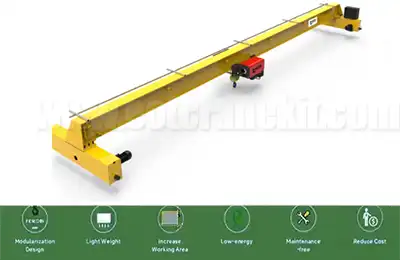
- Single-girder cranes: Cost-effective for moderate spans and lighter duty. Easier to install in plants with limited headroom.
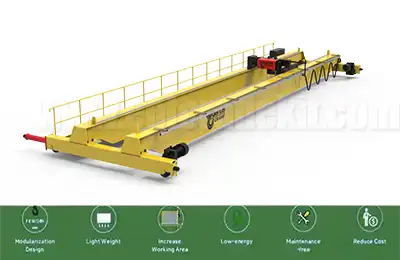
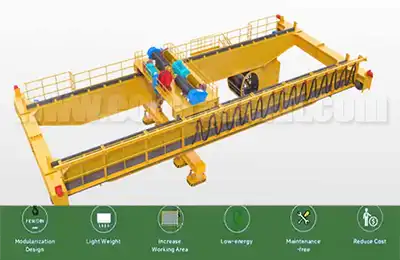
- Double-girder cranes: Provide stiffness and stability, making them ideal for heavy-duty, high-frequency, or heat-intensive operations. They also allow for higher lifting heights and heavier bundles.
In practical terms: a double-girder crane may cost more initially, but it lasts longer and handles tough conditions better, making it a wiser investment in the long run.
Controls & Safety
Smooth and reliable operation is key to worker safety, precision handling, and plant reputation.
- VFD-driven drives: Ensure smooth motion and minimal load sway, which is important for delicate bundles or hot billets.
- Overload protection: Prevents accidental lifting beyond capacity, protecting both crane and steel.
- Limit switches & secondary safety systems: Provide extra security, especially when handling high-temperature materials or magnetic loads.
In India, where workforce safety and equipment reliability are closely linked to business trust, these safety measures are non-negotiable.
Magnetic Overhead Cranes for Billet Handling, Electro-Magnetic Overhead Bridge Crane for Handling 600°C Steel Billets Safely & Efficiently
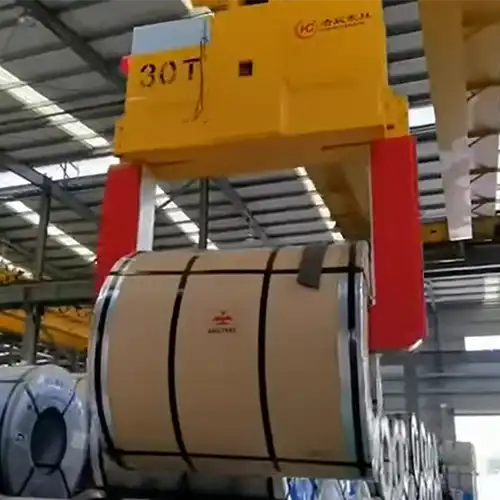
Clamp Overhead Cranes, Double Girder Overhead Crane with Motorized Coil Grab 30 Ton - Overhead Coil Handling Crane
Application-Specific Focus – Indian Rolling Mills
The specific lifting demands of billet mills, rebar production, and magnetic handling ensures safer, smoother production.
Billet Mills
Handling hot billets is one of the toughest challenges in Indian steel plants. Steel comes straight from casting, often glowing, and mistakes in lifting can damage expensive material or slow production.
Specialized Cranes Used:
- Top-running double girder bridge cranes with wire rope hoists
- Hot-material duty cranes designed to withstand high temperatures
Typical Capacity: 15–32 tons
Typical Loads Handled: 2–10 tons per billet, bundles up to 25 tons
Key Features:
- Heat-resistant wire rope hoists: Essential for lifting billets safely at high temperatures.
- Anti-sway systems: Reduce swinging of heavy, hot billets, protecting material and equipment.
- Fine positioning controls: Ensure precise placement into furnaces or rolling lines, preventing misalignment and downtime.
Practical tip: In Indian mills, where multiple shifts run daily, even small delays add up. A crane that handles billets smoothly pays for itself quickly.
Rebar Production Plants
Rebar handling differs from billets. Bundles vary in size, weight, and shape, so the crane must adapt to each lift efficiently.
Specialized Cranes Used:
- Top-running single or double girder bridge cranes with hook or mechanical clamp attachments
- Custom trolleys for adjustable bundle lifting
Typical Capacity: 15–25 tons
Typical Loads Handled: 0.5–15 tons per rebar bundle
Key Features:
- Flexible trolleys and adjustable attachments: Lift bundles of different sizes without changing equipment.
- Moderate-speed travel: Smooth motion avoids jolts that could scatter bundles or risk worker injury.
- Reduced manpower requirements: Properly configured cranes let one operator manage multiple lifts safely, improving productivity.
Observation from Indian plants: Space constraints and mixed bundle sizes are common. A crane that adapts quickly keeps lines moving and reduces labor strain.
Magnetic Handling
Magnetic lifting is increasingly used in India for high-volume steel handling because it reduces manual labor and speeds up cycle times. But magnets bring their own considerations.
Specialized Cranes Used:
- Double girder bridge cranes with electro-magnetic hoists
- Cranes integrated with magnet control systems for precision handling
Typical Capacity: 20–32 tons
Typical Loads Handled: 5–25 tons per bundle, depending on magnet size
Key Features:
- Magnet sizing: Must match the weight and dimensions of billets or rebar bundles. Overpowered magnets can damage material; underpowered ones are unsafe.
- Reliable power supply: Magnets need steady current. Power dips can cause accidental drops if the system isn't robust.
- Redundant safety mechanisms: Secondary holding devices, backup controls, and clear alarms prevent accidents.
- Worker and business trust: In India, investing in safety isn't just regulatory—it protects your team, customers, and reputation.
In short: a well-designed magnetic crane in your mill keeps production fast, workers safe, and partners confident.
Cost Optimization Strategies – Indian Rolling Mills
In India, the upfront crane price is only part of the story. Smart buyers focus on lifecycle cost, local support, modular upgrades, and energy efficiency.
Lifecycle Cost Analysis
When evaluating a 15–32 ton overhead crane, it's important to look beyond the sticker price. The total cost of ownership over 10–15 years, including maintenance, spare parts, and downtime, often has a far bigger impact on your plant's bottom line.
- Standardized parts: Cranes using widely available components are easier and cheaper to maintain, reducing downtime.
- Long MTBF (Mean Time Between Failures): High-quality motors, hoists, and controls lower the risk of unexpected breakdowns.
- Practical takeaway: Even if a crane costs slightly more upfront, longer-lasting equipment saves both money and production time.
In Indian plants, where production schedules are tight, a single day of downtime can quickly outweigh any initial savings.
Local Sourcing & Support
Having a reliable supplier network in India can make a huge difference. Delays in spare parts or service can halt production and frustrate your team. Choosing a supplier who understands your plant's realities ensures smoother operations.
- Local service centers: Provide faster repairs and fewer stoppages, keeping your mill running.
- Quick spare part availability: Motors, brakes, hoists, and control components should be accessible locally.
- Technical support: Responsive suppliers help with troubleshooting, inspections, and preventive maintenance guidance.
Tip: Build a partnership with suppliers who value long-term relationships over one-time sales. Trust and reliability pay off in Indian steel plants.
Modular & Upgradeable Design
Cranes that are modular and flexible save money in the long run. Indian plants often grow or change production patterns, and having a crane that can adapt without a full replacement is a major advantage.
- Modular components: Allow upgrades like higher-capacity hoists or new trolleys without major structural changes.
- Energy efficiency retrofits: Variable Frequency Drives (VFDs) can be added later to reduce power consumption.
- Future-proofing: Cranes designed with modular layouts can handle heavier loads or expanded spans as your plant evolves.
Practical note: Investing in a crane that can grow with your plant avoids repeated capital expenditure and keeps operations uninterrupted.
Energy Efficiency
Electricity costs are a significant portion of running a steel mill in India. Energy-efficient cranes reduce operating costs while maintaining performance and reliability.
- VFD-driven motors: Provide smooth acceleration and deceleration, saving power and reducing wear on brakes and gears.
- Optimized load handling: Cuts energy wasted on unnecessary starts, stops, or overspeed.
- Maintenance benefits: Efficient systems generate less heat and stress on components, increasing their lifespan.
In short: an energy-efficient crane is not just about saving electricity—it reduces mechanical stress, downtime, and maintenance costs, making it a practical, long-term investment for Indian steel mills.
Comparative Selection for Your Quick Reference
Choosing the right crane for your mill isn’t always straightforward. Indian rolling mills and rebar plants deal with a wide range of bundle sizes, lifting heights, and production frequencies. A quick reference table helps buyers compare capacities, duty classes, hoist types, and costs at a glance, making it easier to match the crane to your plant’s needs.
| Capacity | Duty Class | Typical Application | Hoist Type | Special Feature | Cost Tier |
|---|---|---|---|---|---|
| 15 Ton | M3 | Small rebar bundles | Chain | Moderate-speed | Economical |
| 20 Ton | M4 | Billet handling | Wire rope | Heat-resistant | Mid-range |
| 25 Ton | M4–M5 | Billet + rebar | Wire rope + Magnet | Anti-sway | Premium |
| 32 Ton | M5 | High-volume rolling | Wire rope + Magnet | Heavy-duty | Premium |
This matrix highlights the practical differences between capacities and features. For example, a 15 ton chain hoist is sufficient for small rebar bundles, while a 32 ton double girder crane with magnet handling is better suited for high-volume rolling operations or hot billet handling. By using this comparison, Indian steel mill buyers can quickly identify which crane fits both operational requirements and budget constraints, reducing trial-and-error and downtime.
Practical note: Always consider not just the load, but duty cycle, working environment, and local service availability when selecting a crane. The right match keeps production smooth and ensures long-term reliability.
Frequently Asked Questions (FAQ) – 15–32 Ton Overhead Cranes for Indian Rolling Mills
1. Which 15–32 ton overhead cranes work best for billet mills and rebar production plants in India?
The right crane depends on your plant type, load size, and production frequency. For billet mills handling hot steel, double girder bridge cranes with heat-resistant wire rope hoists are common. Rebar plants often use single or double girder cranes with flexible trolleys or hook attachments for varying bundle sizes. Capacities typically range from 15 to 32 tons, with hot billet or high-volume lines requiring the upper range.
Practical tip: Always match crane capacity to the heaviest load plus a 20–30% buffer for safety and future growth.
2. How do I choose duty classification, hoist type, and controls for heavy industrial workloads?
- Duty classification: Indian mills usually operate multiple shifts, so select M3–M5 duty class cranes for continuous heavy lifting.
- Hoist type: Wire rope hoists are best for high-lift, long-span operations, while chain hoists are suitable for moderate loads or intermittent use. Magnetic hoists work well for high-volume steel handling but require careful power and safety planning.
- Controls: Smooth operation with VFD drives, overload protection, and limit switches is essential for both precision handling and safety.
Practical takeaway: The right combination ensures reliable production, minimal downtime, and worker safety.
3. What are the practical advantages and challenges of magnetic lifting for steel products?
Magnetic handling accelerates operations and reduces labor, especially for billets and rebar bundles. But magnets have specific requirements:
- Proper magnet sizing to match load weight and dimensions.
- Steady power supply to prevent accidental drops.
- Redundant safety mechanisms like secondary holding devices.
In India, investing in magnetic cranes improves efficiency but also builds trust with your workforce and partners, as safety and reliability are visible every day.
4. How can I optimize costs without compromising reliability or safety?
Consider the total lifecycle cost, not just the upfront price:
- Cranes with standardized parts and long MTBF reduce repair frequency.
- Local sourcing and service support minimize downtime.
- Modular and upgradeable designs allow for future expansion or energy-efficiency retrofits.
- VFD and energy-efficient motors lower electricity bills while reducing mechanical wear.
Tip: A slightly higher initial investment in a well-supported, durable crane often pays for itself many times over.
5. Which site-specific conditions in Indian plants should I evaluate before purchasing?
- Headroom and shed dimensions for crane travel.
- Runway beam quality and span length.
- Power supply stability to support hoists, magnets, and controls.
- Environmental factors like dust, heat, and humidity.
Bottom line: Understanding your plant's real conditions ensures the crane fits seamlessly, operates reliably, and keeps production uninterrupted.
Conclusion
For Indian steel and rolling mills, choosing a 15–32 ton overhead crane is about more than just lifting capacity. It’s about practicality, reliability, and building trust—with your team, your customers, and your business partners. The right crane is not just strong; it fits your plant’s workflow, handles local environmental challenges, and keeps your workforce and equipment safe.
By carefully balancing capacity, duty classification, hoist type, environmental adaptation, and lifecycle costs, you can ensure smooth production, minimal downtime, and predictable operations. A well-chosen crane also strengthens long-term business relationships because it demonstrates that your plant invests in reliability and safety.
As many Indian industrial leaders like to say: “A crane that works reliably today earns trust for years to come.”
Practical takeaway: In India’s fast-paced steel industry, a crane is not just equipment—it’s a key part of your production team. Choose wisely, maintain regularly, and it will serve your plant efficiently for many years.

Yuantai Cranes
Overhead Crane Manufacturer with CE, ISO, SGS, CNEX Certificates.
- Main Specifications - Capacity: 0.5–550 tons | Span: up to 40m | Speed: 0.8–12 m/min | Duty: A3–A7 | Power: 380–690V, 50/60Hz | Control: pendant/remote/cabin
- Full engineering: FEA/PLC/VFD + in-house build + global delivery + on-site support, for workshops, factories, EPC contractors, industrial projects, etc.
- Support: design, manufacturing, testing, service – end-to-end, customized lifting solutions worldwide.
How to Get an Accurate Crane Price for Your Application?
Tips: Copy the spec list, fill in your details, and paste it into the form on the right/ down-below for a quick price.
- Crane type:_____ . (e.g., overhead crane, gantry crane, jib crane)
- Max weight to lift:_____ tons. (e.g., 2t, 5t, 10t, 20t, 50t)
- Lifting height:_____ m. (How high does the hook need to reach?
- Workshop width (span):_____ m . (Distance between the two crane rails)
- Travel distance:_____ m . (How long does the crane need to move along the runway?)
- Control type:_____. (Pendant / remote / cabin Control)
- Power supply:_____. (Local voltage & frequency – e.g., 380V, 50Hz, 3-phase)
- What will it be used for?_____ (e.g., steel fabrication, concrete products, mold handling, general manufacturing, etc.)
- Any special requirements?_____ (e.g., extreme temperature, dusty or explosive environment, special paint color, etc.)
Just leave a message via the contact form and our hoist and crane engineer will contact you with in 24working hours.
Get Your Custom Quote–Quick & Easy
Fill in what you know. Skip what you don't – we'll help.Any question will be reply with 24 working hours