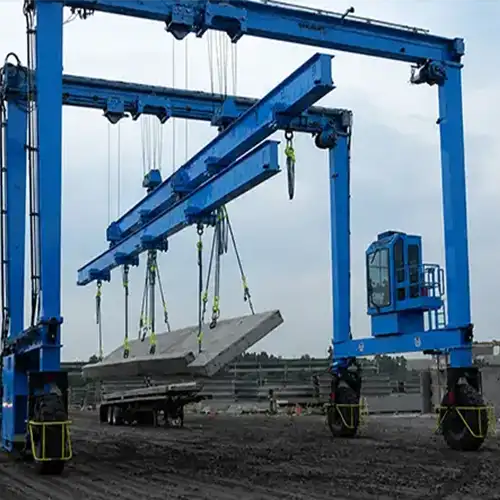
10 Ton to 80 Ton Straddle Carriers for Precast Components Handling
Learn how straddle carriers 10 ton to 80 ton improve precast handling, site logistics, & modular unit transport safely & efficiently.
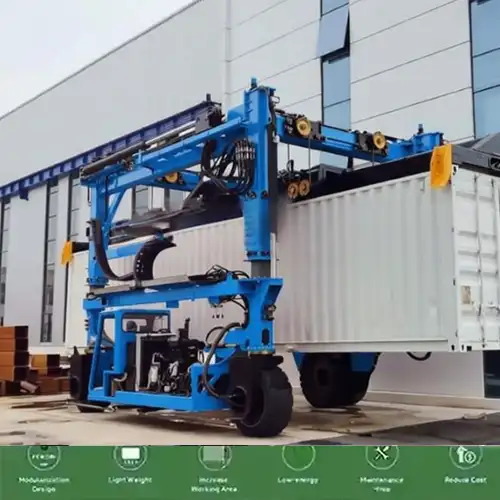
| Crane Type | Rubber-Tyred Straddle Carrier for Precast Concrete and Modular Unit Handling, with Heavy-Duty Portal Frame, Synchronized Hydraulic Lifting, Multi-Wheel Steering,Remote/PLC Control, and Customized Precast Lifting Attachments. |
| Crane Capacity | 10–80 Ton (Common: 10 Ton, 20 Ton, 30 Ton, 40 Ton, 60 Ton, 80 Ton) |
| Span Length | 5–15 m typical, customized according to precast component and modular unit dimensions.Customized. |
| Lifting Height | 3–12 m (Common: 4 m, 6 m, 8 m, 10 m) |
| Coverage Area Type | Mobile outdoor handling coverage across precast plants, construction sites, storage yards, assembly areas, and temporary project roads without fixed crane rails. |
| Application | Designed for precast beam, slab, column and panel handling, modular building transport, construction-site logistics, prefabricated unit positioning, and material transfer between production and installation areas. |
| Certifications | CE / ISO / SGS / Other third-party inspection |
| Customization | Customized frame dimensions, lifting height, hydraulic lifting, precast spreader/lifting beam, multi-wheel steering, diesel-electric/hybrid/electric power, remote/PLC control, load monitoring, and safety systems. |
Crane Manufacturer: Yuantai Cranes – 30+ Years Professional Crane Manufacturer from China
Category: Straddle Carrier
Tags: straddlecrane
Your Trusted Straddle Carrier Cranes Manufacturer & Supplier
Industrial Straddle Carrier Cranes for Sale
10 ton to 80 Ton Straddle Carriers for Precast Components
Most Important Takeaway
Straddle carriers, typically ranging from 10 to 80 tons, are the most practical solution for moving precast components and modular units on construction sites. Proper selection and customization can save time, prevent damage, and improve workflow in busy construction yards.
Key Takeaways
- Straddle carriers handle everything from small wall panels (10–20 tons) to large beams or modular units (up to 80 tons) safely.
- Custom configurations match site layout, load dimensions, and frequency of movement.
- Efficient route planning and carrier design reduce traffic congestion and project delays.
- Advanced steering and stability features improve safety and precision for oversized loads.
Practical solutions for buyers:
- What carrier capacity suits different precast loads?
- How to move large panels or modules without blocking other operations?
- How to design carrier paths and storage areas for smooth workflow?
Introduction: Why Straddle Carriers for Precast?
Precast construction is becoming more common in building projects. Every day, construction yards move wall panels, concrete slabs, beams, and modular units, many of which are very heavy. Moving these pieces quickly and safely is important to keep projects on schedule and avoid damage.
Standard forklifts or small cranes often struggle with these loads. They may need multiple lifts, take up a lot of space, or risk damaging the precast units. For example, trying to move a long concrete wall panel with a forklift can block other work or even cause cracks if it isn't handled correctly.
Straddle carriers solve these problems. They are specially designed to lift, carry, and place precast components safely. Since the machine moves over and around the load, it can transport large or awkwardly shaped items without interfering with other site activities.
Why straddle carriers are useful for precast handling:
- Carry heavy loads safely: From small panels (10–20 tons) to large modular units (up to 80 tons).
- Fewer handling steps: Move components directly from storage to installation.
- Work in tight spaces: Advanced steering lets them operate in narrow lanes and crowded yards.
- Protect the precast units: Weight is distributed evenly to prevent damage.
- Keep the site running smoothly: Other activities can continue while the carrier moves loads.
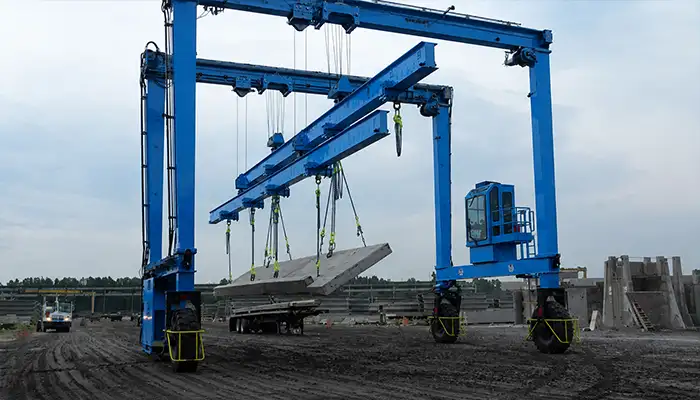
In short, straddle carriers are a practical, reliable, and efficient tool for moving precast components. They may not be flashy, but they make construction work faster, safer, and easier.
Typical Capacities and Load Handling
Understanding the right capacity for your straddle carrier is essential. Precast components come in all shapes and sizes, and the carrier must match the weight, dimensions, and frequency of use to ensure safe, efficient handling on the construction site. Picking the wrong capacity can slow your workflow, increase risk of damage, or even create safety hazards.
Typical Capacity Ranges for Precast Components
These ranges reflect what is commonly used in construction yards and precast handling projects:
- Small precast panels (10–20 tons):
Ideal for wall panels, small slabs, and lightweight modular sections. These are typically moved in residential projects or smaller construction yards where quick, frequent lifts are needed. - Medium modular units (20–40 tons):
Suitable for larger wall sections, floor panels, or medium-sized modular units. Often used in commercial or multi-story construction projects. These require carriers with wider lifting arms and stronger frames for stability. - Large beams, slabs, or complete modules (40–80 tons):
Used for long beams, bridge segments, or full modular units. These are common in large infrastructure projects or industrial precast yards. Tandem lifting or specialized clamps may be needed for long or irregular loads.
Factors to Consider When Choosing Capacity
Before selecting a carrier, it's important to consider several site-specific factors. Making the right choice ensures the carrier can handle your loads safely and efficiently every day.
- Weight and dimensions of the load: Measure the heaviest and longest units you plan to move. Irregular shapes or top-heavy components may require extra care.
- Frequency of moves per day: Heavy or repetitive lifting needs a carrier built for continuous operation, with strong motors and low-maintenance components.
- Site terrain and obstacles: Uneven surfaces, ramps, narrow lanes, or tight turns may require carriers with advanced steering and stability features.
- Storage and stacking needs: If loads are stored on racks or need vertical positioning, adjustable lift heights and precise control are essential.
Practical Tips for Buyers
To make sure your carrier is truly practical for everyday use, keep these points in mind:
- Always add a 10–20% safety margin above the heaviest load to avoid overloading.
- Consider future projects: a slightly higher capacity today may save costs later.
- Ensure the carrier can handle long, narrow, or top-heavy components, not just weight.
- Verify operator visibility and site access; even a powerful carrier is ineffective if it cannot navigate safely.
Using the right capacity isn't just about lifting weight—it's about keeping your workflow smooth, reducing damage risk, and avoiding downtime. A correctly sized straddle carrier makes precast handling safer, faster, and more predictable.
Customization for Precast Handling
Every construction site is different, and so is every precast project. Straddle carriers are not one-size-fits-all machines. Customization ensures that the carrier fits your load types, site layout, and workflow. The right adjustments make handling safer, faster, and less stressful for operators.
Adjustable Width and Height for Various Panel Sizes
Precast components come in different shapes and dimensions. Having a carrier that can adjust its width and lift height means it can handle both small wall panels and larger slabs without extra handling steps or risk of damage.
- Width adjustment for narrow or wide panels
- Lift height adjustment for stacking or passing under overhead structures
Specialized Lifting Accessories
Not all loads are simple rectangular panels. Long beams, hollow-core slabs, or modular units often need specialized equipment to lift and move safely. Using the right lifting accessory ensures load stability and prevents damage during transport.
- Clamps designed for secure grip on panels
- Spreader bars for evenly distributing weight across long units
- Hooks for modular or irregularly shaped units
Semi-Automatic or Fully Automated Positioning
Precise placement is critical when installing panels or modules. Automation features can help operators position loads accurately without repeated adjustments, reducing installation time and minimizing risk of accidents.
- Semi-automatic alignment for consistent placement
- Fully automated positioning for repeatable precision in large projects
Site-Specific Modifications
Every yard has its own layout, and every project has unique challenges. Custom modifications allow straddle carriers to operate efficiently in tight spaces and complex environments.
- Narrow lane steering for congested construction yards
- Adjustable lift height for racks or temporary storage
- Tandem hook systems for lifting extra-long beams safely
Proper customization ensures that your straddle carrier not only matches your precast components but also fits the real conditions of your site, making your workflow smoother and reducing the risk of accidents or component damage.
Construction Site Logistics Made Simple
Moving precast components around a construction yard is not just about having a strong machine—it's about planning the workflow. Even the best straddle carrier can get slowed down if routes aren't clear or lifts are poorly scheduled. Simple planning can make a big difference in efficiency and safety.
Plan Routes for Smooth, Uninterrupted Movement
Before moving heavy panels or modular units, map out the paths the carrier will take. Avoid sharp turns, low clearances, or congested areas. A clear route reduces travel time and prevents accidents.
- Identify the shortest, safest path from storage to installation
- Mark low overheads, narrow passages, and potential obstacles
Sequence Lifts to Minimize Crane or Truck Delays
Coordinating the timing of lifts ensures that carriers aren't waiting on other equipment, which keeps the yard running efficiently. Proper sequencing avoids downtime and ensures that all site activities stay on schedule.
- Schedule carrier movements around crane operations
- Align carrier lifts with truck deliveries to reduce waiting times
Avoid Site Bottlenecks with Dedicated Carrier Lanes
If carriers have to share space with trucks, cranes, or workers, delays are inevitable. Creating dedicated lanes for straddle carriers keeps traffic moving smoothly and prevents backups.
- Separate lanes for carrier-only use
- Mark crossing points for safety
Combine Carrier Movement with On-Site Storage and Installation Schedules
Plan carrier operations together with the storage and installation layout. This ensures loads move directly to where they're needed, reducing double handling.
- Align storage racks with installation points
- Move materials in the order they'll be installed
Practical tip: For sites with repeated module transport, consider using two carriers in rotation. This prevents idle time, ensures continuous workflow, and speeds up the handling of large precast units.
With proper planning, straddle carriers don't just move precast components—they make the whole site more organized, efficient, and safer for everyone.
Safety and Stability
Handling heavy precast components comes with risks. Safety is not just about protecting people—it's also about protecting the panels, slabs, and modular units from damage. Straddle carriers are designed to keep loads stable, even when moving long or irregularly shaped items, but operators still need to follow best practices.
Anti-Tipping Designs Keep Heavy Precast Units Stable
Straddle carriers are built with wide bases, low centers of gravity, and reinforced frames. This ensures that heavy panels or modules remain balanced during lifting and transport, even when moving over uneven surfaces.
- Wide wheelbase and reinforced chassis for stability
- Load distribution systems that prevent tilting
- Suitable for both short moves and longer on-site travel
Advanced Steering for Tight Lanes
Construction yards often have narrow lanes or congested areas. Modern straddle carriers offer advanced steering modes, such as crab steering or 90° turns, to allow precise movement in tight spaces without risking collisions.
- Crab mode: diagonal movement for narrow or angled paths
- 90° turns: rotate the carrier without long turning radii
- Improves efficiency in busy yards and reduces site congestion
Load Sensors and Balance Control
Even a stable machine can become dangerous if the load shifts unexpectedly. Built-in sensors monitor weight distribution and balance, alerting operators or automatically adjusting systems to prevent accidents during long or awkward moves.
- Weight sensors for each lifting point
- Automatic balance correction for long beams or modules
- Reduces risk of panel cracking or falling loads
Always Match Carrier Capacity to Load Weight
Overloading is a common cause of accidents and equipment damage. Choose a carrier with a capacity slightly higher than your heaviest load and never exceed the manufacturer's limits.
- Check total load weight before each lift
- Include a 10–20% safety margin for variations in precast units
- Consider future heavier loads when selecting carrier capacity
Keeping safety and stability in mind ensures that your precast components are protected, operators are secure, and workflow remains smooth. Proper planning, combined with the carrier's design features, makes handling heavy loads much easier and predictable.
Industrial Applications
Straddle carriers are not just theoretical solutions—they are actively used in construction yards to move precast components efficiently and safely. Seeing how they perform in real projects helps buyers understand which configuration works best for their site.
Transporting Concrete Wall Panels
Straddle carriers can move wall panels directly from storage to the installation point, reducing handling steps and minimizing the risk of damage. This is especially useful in residential or commercial building sites where multiple panels need to be installed quickly.
- Direct transfer from storage racks to installation point
- Reduces need for cranes or forklifts in tight areas
- Protects panels from scratches, cracks, or tipping
Moving Modular Housing Units
Large modular units can be moved across a construction yard without blocking other operations. Carriers can lift, transport, and position modules precisely for installation, making fast-track housing projects more practical.
- Efficient transport across congested sites
- Accurate positioning for installation with minimal adjustments
- Reduces downtime compared to traditional crane handling
Handling Long Beams and Slabs
Long beams, bridge segments, or large slabs often require tandem lifting or specialized clamps. Straddle carriers keep these heavy components stable during transport, ensuring safety and efficiency on commercial or infrastructure projects.
- Use tandem hook systems for extra-long units
- Balance load across the carrier to prevent tipping
- Works on uneven surfaces or sloped sites with advanced stability systems
Example from the Field
In a precast yard handling medium and large panels, a 40-ton straddle carrier was introduced. The results were clear:
- 40% reduction in handling time compared to forklifts and cranes
- Minimal damage to panels, reducing replacement costs
- Improved workflow and reduced site congestion
Practical Buyer Questions Solved
Answers to common concerns help buyers select the right straddle carrier for precast handling safely and efficiently.
Which straddle carrier capacity should I choose for my precast panels?
Choose a carrier that can safely lift your heaviest panel with a 10–20% margin.
- Small wall panels usually need a 10–20 ton carrier, medium modules about 20–40 tons, and large beams or full modules may require 40–80 tons.
- Always consider both the weight and size of the panel to prevent tipping or damage during transport.
How can I move modular units without blocking traffic on site?
Plan dedicated routes and schedule lifts to avoid interfering with other operations.
- Use predefined lanes for carriers to move directly from storage to installation points.
- Sequence lifts so that carriers operate while cranes and trucks are not in the way.
- For yards handling multiple modular units daily, rotating two carriers keeps the workflow smooth.
Can a straddle carrier operate on uneven or narrow surfaces?
Yes, if the machine is equipped with advanced steering and balance control.
- Crab mode and 90° steering allow precise movement in tight spaces and congested construction yards.
- Built-in load sensors and stability systems prevent tipping, even with long slabs or top-heavy modules.
Should I use single or tandem lifting for long beams?
Tandem lifting is recommended for long or heavy precast beams.
- Dual hooks or clamps distribute the weight evenly, improving safety.
- Short panels or small modular units can be moved with a single lift, but always match the method to the length, weight, and shape of the component.
How do I plan efficient carrier paths for repeated daily moves?
Map storage, installation, and movement routes to minimize turns and delays.
- Align storage racks and installation points to reduce double handling.
- Batch lifts when moving multiple modules or slabs to maximize productivity.
- Avoid narrow or congested areas by scheduling moves strategically around other site activities.
Conclusion
Straddle carriers are a practical and reliable solution for handling precast components, whether you are moving wall panels, slabs, beams, or complete modular units. They make transport across construction yards safer, faster, and more predictable, while minimizing damage to materials.
Choosing the right carrier isn't just about picking a model—it's about matching capacity to load weight, customizing features for your site, and planning routes and lifts for smooth workflow. When these factors are considered together, you can save time, reduce material handling risks, and keep your projects on schedule.
Before purchasing a straddle carrier, carefully evaluate:
- The types of precast units you handle daily, from small panels to large modules.
- Your site layout, including narrow lanes, storage areas, and installation points.
- The frequency of moves, especially if multiple panels or modules need daily transport.
- How your storage and staging areas align with carrier paths for efficient handling.
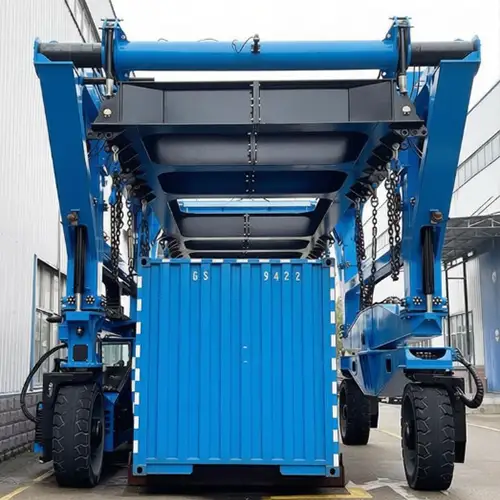
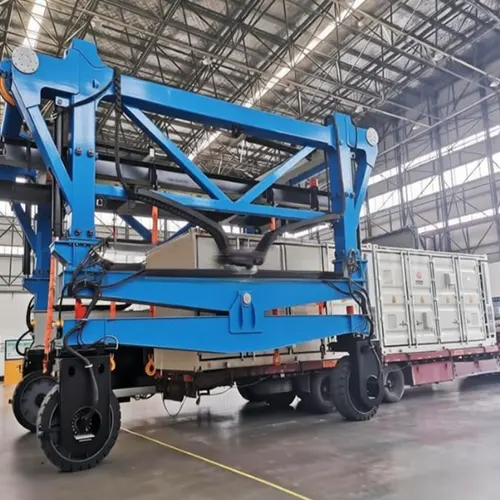

Yuantai Cranes
Yuantai Cranes - Global Material Handling Crane Solution Provider & Manufacturer with CE, ISO, SGS, CNEX and other Third Party Certifications.
- Main Specifications - Capacity: 0.5–550 tons | Span: up to 40m | Speed: 0.8–12 m/min | Duty: A3–A7 | Power: 380–690V, 50/60Hz | Control: pendant/remote/cabin
- Full engineering: FEA/PLC/VFD + in-house build + global delivery + on-site support, for workshops, factories, EPC contractors, industrial projects, etc.
- Support: design, manufacturing, testing, service – end-to-end, customized lifting solutions worldwide.
Get Your Custom Quote – Quick & Easy
Fill in what you know. Skip what you don't – we'll help.
- Crane type:_____ . (e.g., overhead crane, gantry crane, jib crane)
- Max weight to lift:_____ tons. (e.g., 2t, 5t, 10t, 20t, 50t)
- Lifting height:_____ m. (How high does the hook need to reach?
- Workshop width (span):_____ m . (Distance between the two crane rails)
- Travel distance:_____ m . (How long does the crane need to move along the runway?)
- Control type:_____. (Pendant / remote / cabin Control)
- Power supply:_____. (Local voltage & frequency – e.g., 380V, 50Hz, 3-phase)
- What will it be used for?_____ (e.g., steel fabrication, concrete products, mold handling, general manufacturing, etc.)
- Any special requirements?_____ (e.g., extreme temperature, dusty or explosive environment, special paint color, etc.)
Just leave a message via the contact form and our hoist and crane engineer will contact you with in 24working hours.
Inquire Yuantai Cranes