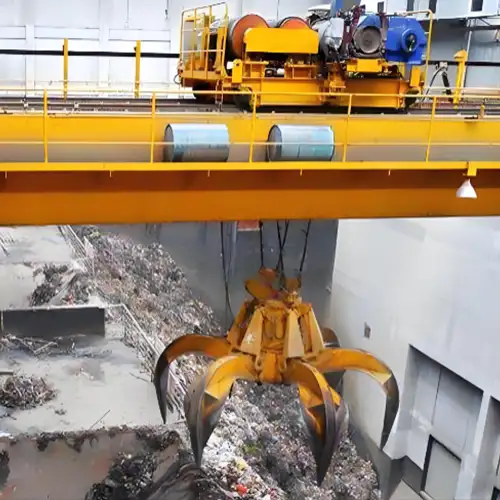
Waste Grab Bucket Crane for MSW Plants – Design & Reliability
Check design, throughput, and long-term operation of waste grab bucket overhead cranes for MSW plants. Maximize efficiency, reliability, and uptime.
| Crane Type | Heavy-duty double-girder garbage grab overhead crane; typically ISO A6–A8 / FEM 2M–5M; 380/400/415V, 50Hz, 3Ph; hydraulic/electric grab; manual, semi-automatic, or fully automatic control. |
| Crane Capacity | 5–25 ton typical; larger capacities available for specific waste-handling systems |
| Span Length | 10.5–35 m typical, customized according to the waste pit and building structure |
| Lifting Height | 20–36 m typical, customized according to waste pit depth, bunker height, and furnace feeding arrangement |
| Coverage Area Type | Large rectangular waste storage pits, bunker areas, furnace feeding zones, mixing areas, unloading zones, and waste storage/transfer areas |
| Application | Municipal solid waste (MSW) handling, waste-to-energy (WTE) plants, waste incineration, refuse-derived fuel (RDF), waste transfer stations, recycling plants, biomass handling, and waste storage pits |
| Certifications | CE / ISO / SGS / Other third-party inspection |
| Customization | Customized pit layout, working cycle,control mode; double-girder overhead crane; hydraulic or electric grab bucket; pendant, radio remote, cabin, semi/ full automatic; weighing, positioning, anti-sway, anti-collision, remote monitoring,plant-control integ |
Crane Manufacturer: Yuantai Cranes – 30+ Years Professional Crane Manufacturer from China
Category: Featured
Tags:
Your Trusted Waste Overhead Crane Manufacturer & Supplier
Grab Bucket Overhead Crane & Garbage Grab Bucket Cranes
High-Throughput MSW Crane Systems, Electric Overhead Crane Solutions for MSW PlantsFor Waste Handling
Waste Grab Bucket Crane for MSW Plants: Design, Throughput, Reliability & Long-Term Operation of Overhead Cranes
Introduction: Why the Waste Grab Bucket Overhead Crane Is the Heart of an MSW Plant
In any municipal solid waste (MSW) plant, a waste grab bucket overhead crane is more than just equipment—it's the central piece that keeps the plant running smoothly. These cranes are responsible for transferring large amounts of waste from the intake point to bunkers or directly to downstream treatment systems. When the crane works efficiently, the plant operates at full capacity. When it doesn't, everything slows down.
The Role of Waste Grab Bucket Overhead Cranes
These cranes are responsible for transferring large amounts of waste from the intake point to bunkers or directly to downstream treatment systems. Efficient crane operation ensures the plant runs at full capacity, whereas poor performance can cause slowdowns.
Why Reliability Matters
Reliability is critical because MSW plants handle high volumes continuously. Many plants operate at 500–600 tons per day (TPD) and often run 24/7. A breakdown in the crane halts lifting, creates bottlenecks, and increases labor and operational costs. Cranes must be robust, easy to maintain, and precise to handle dust, moisture, and mixed waste types.
Who Benefits Most
- Municipalities: Need consistent waste removal without delays.
- EPC Contractors: Require reliable cranes to meet project specifications.
- Waste-to-Energy Operators: Depend on a steady feed to maintain efficient combustion.
Practical Advantages of Waste Grab Bucket Overhead Cranes
- Handles large volumes of mixed waste safely and efficiently.
- Reduces downtime for the entire plant, keeping processes running smoothly.
- Designed for easy maintenance without stopping operations.
- Provides precise movement to minimize spillage and hopper blockages.
Key Features to Look For
- Heavy-duty electric overhead crane (EOT crane) design for continuous operation.
- Grab bucket adapted to wet, dry, bulky, or compacted waste.
- Smooth and controlled movements for consistent feeding.
- Accessibility for maintenance and inspection.
Suggested Visuals
- Diagram showing crane moving waste from intake to bunkers and conveyors.
- Infographic highlighting crane uptime vs plant throughput and the impact of downtime.
Garbage Grab Bucket Crane vs Standard Electric Overhead Crane (EOT Crane)
A comparison to help buyers understand why garbage grab bucket cranes are essential for MSW operations versus standard EOT cranes.
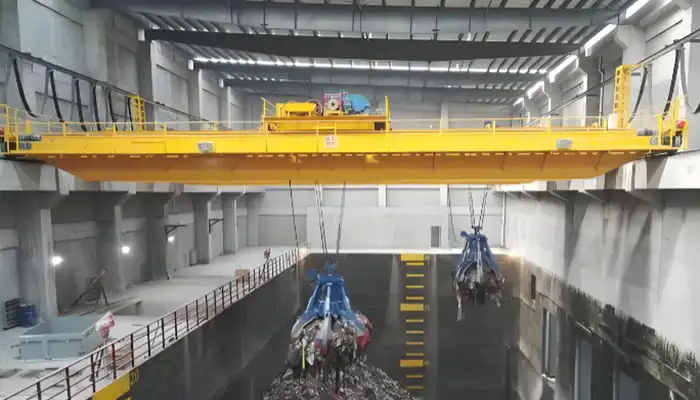
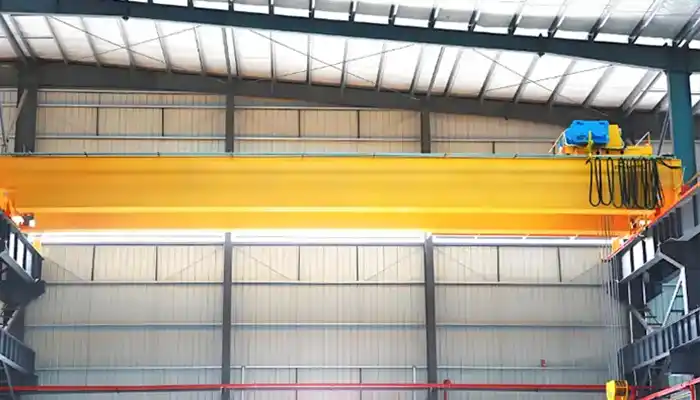
What Is a Garbage Grab Bucket Crane?
A garbage grab bucket crane is a type of waste handling overhead crane designed specifically for moving mixed municipal solid waste (MSW), refuse-derived fuel (RDF), or other bulk waste materials. It is the key piece of equipment in MSW plants, feeding waste from bunkers or hoppers to downstream conveyors and treatment systems.
Unlike conventional EOT cranes, it handles irregular, heavy, and loose waste safely and efficiently.
Key Differences from a Standard EOT Crane
| Feature | Standard Electric Overhead Crane (EOT) | Garbage Grab Bucket Crane |
|---|---|---|
| Load Type | Uniform, predictable materials (e.g., steel, pallets) | Irregular, bulky, loose MSW or RDF |
| Lifting Mechanism | Hook, sling, or beam | Grab bucket or clamshell |
| Operation | Simple lifting and moving | Controlled grabbing cycles, precise placement |
| Environment | Clean, dry, factory floors | Dusty, wet, corrosive waste conditions |
| Automation | Manual or semi-automatic | Cabin/remote control, sometimes automated feeding cycles |
Takeaway: While a standard EOT crane can lift, it is not optimized for the realities of waste handling. Garbage grab bucket cranes are built for safety, efficiency, and continuous operation in MSW environments.
Main Components of a Garbage Grab Bucket Crane
- Bridge: Supports trolley and hoist, spans the waste bunker.
- Trolley: Moves the hoist and grab bucket along the bridge.
- Hoist: Lifts and lowers the grab with precise control.
- Grab Bucket: Available in 2-tine, 4-tine, or clamshell designs depending on waste type.
- Electric Controls: Cabin or remote operation systems for accurate, repeatable cycles.
Applications of Garbage Grab Bucket Cranes
- MSW Plants: Feeds bunkers and conveyors continuously.
- RDF Facilities: Handles pre-processed waste for fuel production.
- Waste-to-Energy Plants: Maintains steady feed to combustion systems.
Benefits for Operators:
- Efficiently handles heavy, irregular waste loads.
- Reduces manual handling and minimizes spillage.
- Supports downstream processes with consistent feeding.
Why the Waste Grab Bucket Crane Determines Plant Performance
Understanding how crane performance directly impacts throughput, reliability, and overall efficiency in MSW plants.
The Connection Between Crane Performance and Plant Throughput
In an MSW plant, the grab bucket overhead crane is the heartbeat of the operation. Its performance directly affects how much waste can be processed per hour or per day. The rated lifting capacity of the crane is not just a number—it determines how much waste each grab cycle can move safely and efficiently.
If a crane is undersized or poorly maintained, feeding to downstream conveyors becomes inconsistent, leading to backups, re-handling, or even plant stoppages.
Grab Cycle Time and Duty Classification
Two factors are critical for maintaining throughput:
- Grab Cycle Time: This includes lowering, grabbing, lifting, and depositing waste. Faster cycles mean more tons moved per hour, but the crane must be designed for continuous operation without overheating or excessive wear.
- Duty Classification: Waste handling overhead cranes have to handle heavy, irregular loads repeatedly. Selecting a crane with the right duty class ensures it can run safely for multiple shifts without premature failure.
Practical Tip: A crane with a faster hoist but inadequate duty rating may seem efficient initially but could lead to downtime and maintenance issues in just months of operation.
Feeding Stability to Downstream Systems
Smooth, reliable feeding is essential. MSW and RDF processes often depend on continuous conveyor operation. If the grab bucket crane delivers waste inconsistently:
- Conveyors may be underfed or overloaded.
- Downstream equipment like shredders, sorters, or furnaces may experience interruptions.
- Plant efficiency and energy recovery can drop significantly.
Key Consideration: A single crane failure can halt operations for hours, impacting throughput, cost, and scheduling.
Case Example: Single vs Dual Crane System
Imagine a plant with one grab bucket overhead crane rated for 600 TPD:
- If the crane stops for maintenance or fails, the entire feeding system stops.
- Using a dual crane system provides redundancy. One crane continues feeding while the other is serviced, maintaining near-continuous throughput.
Practical Benefits of Dual Cranes:
- Reduced downtime and operational risk
- Flexibility in maintenance scheduling
- Ability to handle peak loads without over-stressing a single crane
Suggested Visuals
- Throughput Comparison Table: Single crane vs dual crane system.
- Graph: Grab cycle time vs tons per day (TPD).
- Infographic: Duty classification and its impact on continuous operation.
How to Size a Waste Grab Bucket Crane for TPD Requirements
Step-by-step guidance for determining crane capacity based on plant TPD, grab size, duty cycle, and safety margins.
Converting TPD to Hourly Handling Capacity
The first step in sizing a grab bucket overhead crane is understanding how much waste your plant receives per day (TPD) and converting it into an hourly handling requirement. For example, a 560 TPD plant operating 16 hours per day would require the crane system to handle about 35 tons per hour.
This conversion ensures the crane can feed downstream conveyors consistently, avoiding bottlenecks or interruptions in the waste processing system.
Grab Bucket Volume vs MSW Density
Once hourly handling is defined, the next step is selecting the right grab bucket size. Grab volume must match the density and type of waste:
- Light, bulky waste: Larger bucket to maximize throughput.
- Dense, compacted waste: Smaller bucket with higher lifting capacity to stay within crane limits.
- Mixed waste: Mid-sized grab bucket or adjustable tines to handle varying density.
Tip: Overloading a bucket can strain the crane and shorten its service life. Underloading can reduce plant efficiency. Finding the right balance is crucial.
Duty Cycles: Continuous vs Intermittent Operation
Waste handling cranes operate under different duty conditions:
- Continuous Duty: 24/7 operation, typical for large MSW plants or waste-to-energy facilities. Requires a crane designed for repeated heavy lifts without overheating.
- Intermittent Duty: Shorter cycles, lighter loads, or plants operating fewer hours. These cranes can have lower duty classification but must still handle peak loads safely.
Practical Insight: Choosing the right duty cycle classification ensures long-term reliability and prevents unexpected downtime.
Safety Margins for Peak Load
Even if a crane is rated for the average load, it's important to build in safety margins:
- Consider seasonal variations or peak collection days.
- Add 20–30% capacity margin to prevent overloading.
- Account for wet or heavy waste that can exceed nominal weight.
Example: Sizing for a 560 TPD Plant
For a plant receiving 560 TPD of MSW over 16 operational hours:
- Hourly requirement: ~35 tons/hour.
- Grab bucket options: 2–3 cubic meters per grab depending on waste density.
- Cycle time: 1–2 minutes per grab for continuous operation.
- Recommendation: 2–3 grab bucket cranes to balance reliability, redundancy, and maintenance needs.
This setup ensures consistent feeding while allowing maintenance or downtime without interrupting plant operations.
Suggested Tables / Visuals
- Calculation Table: Convert TPD → hourly tons → grab volume → cycle time.
- Duty Class Overlay Diagram: Illustrate continuous vs intermittent operation and crane rating requirements.
Waste Bunker & Hopper Layout: Designing for Real Operation
Best practices for designing waste bunkers and hoppers to maximize grab bucket crane efficiency and plant throughput.
Why Layout Matters for Waste Handling Overhead Cranes
The layout of waste bunkers and hoppers directly affects the efficiency of a grab bucket overhead crane. Poor positioning can create dead zones, require extra handling, or limit the crane's reach, reducing throughput and increasing wear on the equipment.
A well-planned layout ensures that the crane can cover the entire bunker area smoothly, minimizing unnecessary movements while maintaining operator safety and maintenance access.
Bunker Geometry and Grab Crane Coverage
- Full coverage: The crane bridge and trolley should allow the grab bucket to reach every corner of the bunker without obstruction.
- Shape considerations: Rectangular or square bunkers are easiest for uniform coverage; irregular shapes may require dual cranes or extended reach trolleys.
- Grab swing radius: Ensure the crane can swing freely without hitting walls, conveyors, or other obstacles.
Practical tip: A 10–15% overlap in grab coverage ensures no material is left unreachable.
Hopper Positioning: Single vs Multi-Hopper
- Single Hopper: Simpler design, lower initial cost, easier to maintain, but may create bottlenecks if waste inflow is high.
- Multiple Hoppers: Higher upfront cost, but allows simultaneous feeding of different waste streams, reducing re-handling and increasing efficiency.
Operator consideration: Position hoppers so that the crane can feed them without unnecessary repositioning, keeping cycles short and predictable.
Avoiding Dead Zones and Re-Handling
Dead zones occur when portions of the bunker or hopper are beyond the reach of the crane or difficult to access. Re-handling waste adds:
- Extra labor
- Increased cycle time
- Higher wear on grab buckets and crane components
Solution: Map reach zones carefully and adjust bunker dimensions, crane span, or trolley travel to minimize inaccessible areas.
Operational Ergonomics & Maintenance Access
- Ensure the crane and grab bucket can operate safely without obstruction from walls, conveyors, or maintenance walkways.
- Provide easy access to the hoist, trolleys, and grab bucket for inspection, lubrication, or repairs.
- Operator cabin and controls should offer a clear view of bunkers and hoppers for precise placement.
Practical tip: A well-designed layout reduces accidents, simplifies maintenance, and keeps the plant running smoothly.
Suggested Visuals
- Top-View Layout Diagram: Show reach zones for the grab bucket crane.
- Single vs Multi-Hopper Feeding Diagram: Illustrate coverage and feeding efficiency.
SEO Keywords: waste bunker crane, grab bucket overhead crane, waste handling overhead crane
Single vs Dual Crane Configuration: Reliability and Redundancy Strategy
Exploring the benefits, risks, and operational considerations of single versus dual grab bucket crane systems.
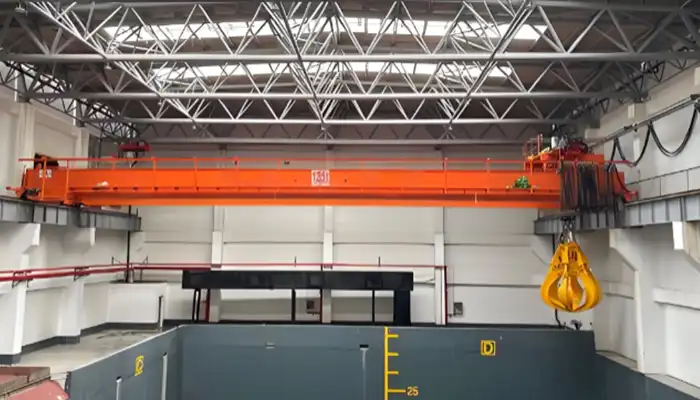
single overhead crane system
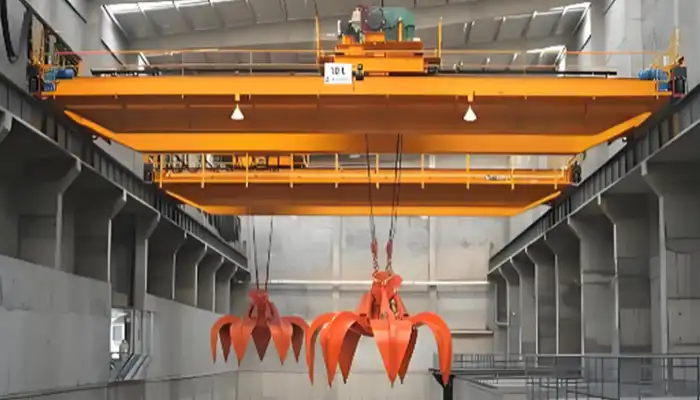
dual overhead crane system
The Risks of a Single Crane System
A single grab bucket overhead crane may seem sufficient for many MSW plants, but it comes with inherent risks:
- Complete downtime if the crane fails: Any mechanical or electrical issue halts feeding to downstream conveyors.
- Limited maintenance flexibility: Routine inspections or repairs require plant stoppages, which can be costly.
- Peak load limitations: During heavy inflow periods, a single crane may struggle to maintain throughput, increasing operational stress.
Practical takeaway: Single crane systems are simpler and cheaper upfront but carry higher operational risks.
Dual Crane Strategies: Parallel and Duty + Standby
Implementing a dual crane system introduces redundancy and flexibility:
- Parallel Operation: Both cranes work simultaneously, increasing throughput and reducing cycle time.
- Duty + Standby: One crane handles normal operation while the second remains on standby for emergencies or maintenance.
Benefits of dual cranes:
- Reduces the impact of unexpected failures.
- Allows one crane to be serviced without stopping the plant.
- Supports higher throughput during peak operations.
Maintenance Without Plant Downtime
With dual crane configurations, scheduled maintenance becomes simpler:
- One crane continues feeding while the other is inspected or repaired.
- Prevents costly production stoppages.
- Extends overall crane lifespan by reducing stress on a single unit.
Tip: Always design the system so that both cranes have full coverage overlap in the bunker or hopper area.
CAPEX vs OPEX Considerations
- CAPEX (Capital Expenditure): Dual cranes cost more upfront due to additional equipment.
- OPEX (Operating Expense): Savings come from reduced downtime, lower emergency repair costs, and improved plant reliability.
Practical insight: In high-throughput MSW plants, the long-term operational savings often outweigh the higher initial investment, making dual crane systems a sound choice.
Suggested Tables / Visuals
- Reliability Comparison Table: Single crane vs dual crane system uptime.
- Cost-Benefit Analysis Chart: CAPEX vs OPEX impact over 5–10 years.
- Illustration of Parallel vs Duty + Standby Operation: Showing crane coverage and operational flow.
SEO Keywords: dual EOT crane system, garbage grab bucket crane redundancy, overhead bridge crane reliability, grab bucket overhead crane
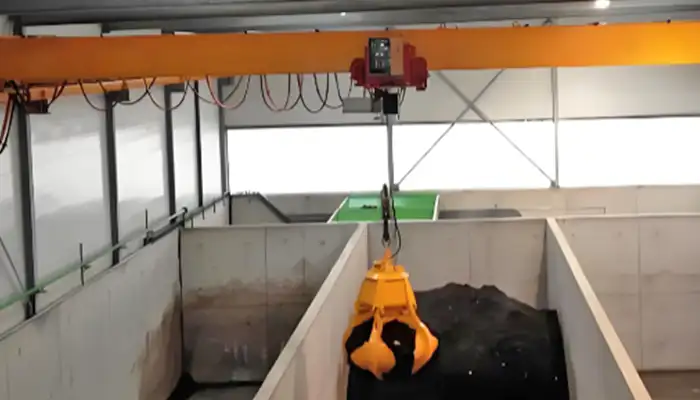
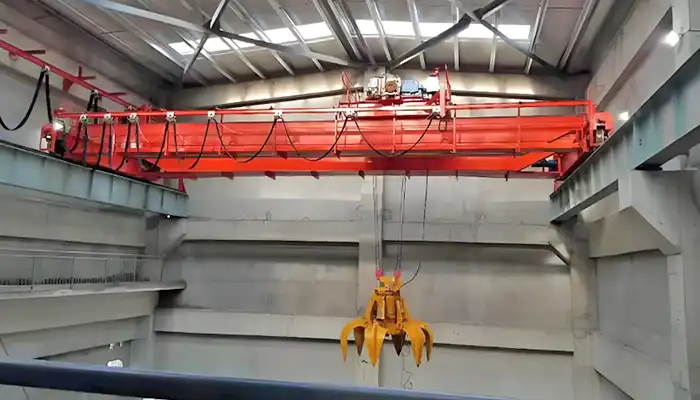
Structural Design: Single Girder vs Double Girder Waste Grab Cranes
Comparing single and double girder designs for optimal performance, fatigue resistance, and maintenance in MSW grab bucket cranes.
Load Characteristics Under Grab Bucket Duty
Waste grab bucket cranes operate under unique and heavy-duty loads. The grab bucket lifts irregular, bulky, and sometimes wet waste repeatedly, generating dynamic forces on the crane bridge and trolley.
- Single Girder Cranes: Designed for lighter or moderate grab loads, suitable for smaller MSW plants or lower throughput applications.
- Double Girder Cranes: Provide higher load capacity, better resistance to dynamic stresses, and improved stability for large-volume plants.
Practical takeaway: The choice between single and double girder depends on grab weight, cycle frequency, and plant throughput.
Fatigue Resistance for Continuous Operation
Continuous operation in waste plants demands high fatigue resistance:
- Single Girder: Less material mass means lower fatigue resistance over time, particularly under high cycle rates.
- Double Girder: Larger section modulus and better structural stiffness reduce long-term fatigue, making them ideal for 24/7 operations.
Tip: Overlooking fatigue life can lead to bridge deformation, increased maintenance, or unexpected downtime.
Maintenance Access and Component Replacement
Maintenance is a critical consideration:
- Single Girder: Easier to install and maintain in small plants, but accessing hoists or trolleys can be tighter.
- Double Girder: Offers better accessibility for hoist removal, trolley replacement, and structural inspections, especially in high-capacity plants.
Practical insight: Easier maintenance reduces OPEX, minimizes downtime, and ensures safe operations.
Recommended Structures for MSW Plants
- Low-to-Medium Throughput: Single girder waste grab bucket cranes may suffice.
- High Throughput / Continuous Operation: Double girder garbage cranes are preferred for long-term reliability.
- Considerations: Span length, grab weight, and duty classification should guide the final choice.
Suggested Visuals
- Cross-Section Diagram: Single vs double girder overhead bridge crane.
- Stress Distribution Illustration: Highlighting bending and torsional stresses under grab bucket operation.
SEO Keywords: single girder waste grab bucket crane, double girder garbage crane, electric overhead crane fatigue life, grab bucket overhead crane
Operator Control, Automation & Safety
Optimizing operator control, automation, and safety for grab bucket overhead cranes in MSW plants.
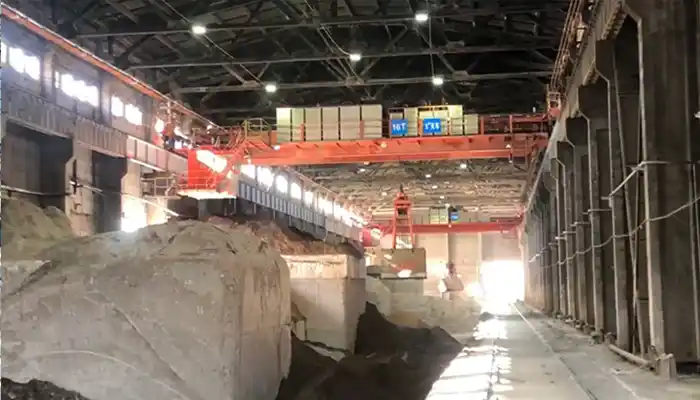
cabion control grab bucket overhead crane

Operator Cabin vs Remote Control Room
Waste grab bucket cranes can be operated from a traditional operator cabin or a remote control room, depending on plant design and operator preference:
- Operator Cabin: Mounted on the crane bridge, offers direct line-of-sight to the bunker and grab operation. Ideal for precision handling in smaller plants or complex layouts.
- Remote Control Room: Operators control the crane via cameras and control panels from a safe distance. Suitable for larger plants or environments with dust, noise, or high temperatures.
Practical insight: Choosing the right control setup improves operator comfort, safety, and crane precision.
Visibility, Ergonomics, and Working Environment
- Clear visibility of the grab bucket and hopper is essential for accurate placement and safe operation.
- Ergonomically designed cabins or remote panels reduce operator fatigue during long shifts.
- Adequate lighting, HVAC, and vibration isolation improve working conditions, which directly impacts operational efficiency.
Semi-Automatic and Automated Grab Cycles
Modern electric grab bucket cranes often feature semi-automatic or fully automated grab cycles:
- Semi-Automatic: Operator initiates grab, lift, and placement; crane assists with controlled movement.
- Fully Automated: PLC or software-controlled cycles manage repetitive lifting and placement, increasing throughput and consistency.
Practical tip: Automation reduces human error, ensures smoother feeding to conveyors, and can handle higher TPD without additional staff.
Future-Proofing for Automation
- PLC Integration: Allows for precise cycle control, diagnostics, and integration with plant SCADA systems.
- CCTV / Camera Systems: Provide operators remote visibility and monitoring for safety and efficiency.
- Modular Design: Ensures new sensors, controls, or automated features can be added later without major retrofitting.
Safety Interlocks and Emergency Stop Systems
- Interlocks: Prevent unsafe crane movements when doors, hoppers, or other safety zones are open.
- Emergency Stops: Quick shutdown capability at the crane, control room, or via remote panels.
- Overload Protection: Prevents lifting beyond rated capacity, protecting crane structure and hoist.
Practical insight: A well-designed safety system reduces accidents, protects equipment, and ensures compliance with industrial safety standards.
Suggested Visuals
- Operator Cabin Layout: Showing line-of-sight, controls, and ergonomics.
- Automation Schematic: Semi-automatic vs fully automated grab cycle integration.
SEO Keywords: operator safety overhead crane, crane automation MSW, electric grab bucket crane, grab bucket overhead crane
Waste Environment Challenges & Crane Design Solutions
Design strategies to ensure waste grab bucket cranes operate reliably in harsh MSW environments.
Corrosion Protection for Harsh Waste Environments
Waste grab bucket cranes operate in highly corrosive conditions: moisture, acidic waste, and dust can quickly degrade unprotected steel. Effective corrosion protection is essential:
- Protective Coatings: Epoxy or polyurethane paint layers extend steel lifespan.
- Stainless Steel Components: Used in critical areas like pivot points, hoist ropes, and control panels.
- Regular Maintenance: Inspections and touch-ups prevent early deterioration.
Practical insight: Proper corrosion protection reduces unplanned downtime and lowers long-term OPEX.
Anti-Entanglement Grab Bucket Design
Grab buckets can get tangled in wet, stringy, or bulky waste if not properly designed. Features to prevent entanglement include:
- Smooth edges and reinforced tines
- Clamshell buckets with controlled closing speed
- Drainage slots to avoid suction or accumulation of wet waste
Benefit: Reduces cycle delays, protects the hoist, and improves safety for operators.
Shock & Impact Absorption
Lifting heavy, irregular waste generates shock loads and vibrations:
- Structural Reinforcement: Bridge, trolley, and hoist frames designed to handle sudden impact forces.
- Shock-Absorbing Hoists: Reduce stress on mechanical components.
- Vibration Damping: Extends fatigue life of crane structures.
Tip: Without these design considerations, repeated shocks can shorten crane lifespan and increase maintenance frequency.
Electrical Protection and Environmental Sealing
Electrical systems in waste cranes face dust, moisture, and occasional spills. Protection measures include:
- IP-Rated Enclosures: Prevent ingress of dust and water into motors and controls.
- Sealed Cables and Connectors: Reduce risk of short circuits or corrosion.
- Remote Monitoring: Enables early detection of electrical faults.
Practical benefit: Ensures reliable operation in harsh conditions and minimizes unscheduled downtime.
Suggested Visuals
- Before/After Protective Coating Examples: Show the difference in exposed vs protected steel.
- Anti-Entanglement Schematic: Illustrate clamshell design and tine configuration.
- Structural Reinforcement Diagram: Highlight shock absorption features.
SEO Keywords: waste grab crane corrosion protection, garbage grab bucket crane durability, waste handling EOT crane, grab bucket overhead crane
Lifecycle Cost & Total Cost of Ownership (TCO)
Analyzing CAPEX, OPEX, maintenance, and energy efficiency for waste grab bucket cranes.
Understanding CAPEX vs OPEX
When selecting a waste grab bucket crane, the initial investment (CAPEX) is just one part of the story. Long-term operational costs (OPEX) often have a bigger impact on the plant's bottom line:
- CAPEX: Purchase cost, installation, and commissioning of single or dual cranes.
- OPEX: Includes maintenance, spare parts, energy consumption, and labor for operation.
Practical insight: A slightly higher CAPEX for a dual or more robust crane can reduce OPEX significantly over the lifecycle.
Maintenance Frequency and Spare Parts Strategy
Maintenance is a major component of OPEX for grab bucket overhead cranes:
- Regular Inspections: Bridges, hoists, trolleys, and grab buckets require routine checks to prevent failures.
- Spare Parts Inventory: Keeping critical components like motors, cables, and grabs in stock reduces unplanned downtime.
- Predictive Maintenance: Modern electric overhead crane controls can monitor usage and alert operators before parts fail.
Tip: A proactive maintenance strategy keeps cranes running reliably and lowers overall TCO.
Downtime Cost Modeling
Plant downtime is costly in MSW operations:
- Lost throughput and delayed processing
- Potential fines for missed waste disposal contracts
- Additional labor and energy costs to catch up
Example: A single crane failure in a 560 TPD plant could halt operations for hours, affecting the daily tonnage target. Dual cranes or cranes with higher duty ratings can minimize this risk.
Energy Efficiency and Modern Controls
Modern electric overhead crane systems offer:
- Variable Frequency Drives (VFDs): Reduce energy consumption and wear on motors.
- Optimized Hoist Cycles: Controlled grab operations minimize unnecessary energy use.
- Integrated Monitoring: Tracks energy usage and identifies efficiency improvements.
Practical insight: Energy-efficient cranes reduce OPEX while also extending the service life of hoists and motors.
Suggested Tables / Graphs
- TCO Table: Compare single vs dual crane over 20 years, including CAPEX, OPEX, maintenance, and downtime costs.
- Cost vs Reliability Graph: Show impact of crane selection on lifecycle cost and operational uptime.
SEO Keywords: waste grab bucket crane TCO, electric overhead crane lifecycle cost, grab bucket overhead crane maintenance, grab bucket overhead crane
Choosing a Reliable Waste Grab Crane Supplier
Key factors to consider when selecting a supplier for MSW grab bucket cranes.
Proven MSW Project Experience
A supplier's track record matters. Ask about:
- Projects of similar size and throughput (TPD, bunker layout).
- References or case studies showing crane performance in real MSW plants.
- Experience handling challenging waste types, like RDF or bulky MSW.
Why it matters: Experienced suppliers can anticipate operational challenges and recommend solutions that reduce downtime.
Tailored Solutions for Your Plant
Every MSW facility has unique needs. Look for suppliers offering:
- Custom grab types: 2-tine, 4-tine, or clamshell for different waste densities.
- Flexible crane span and reach: Fit to your bunkers and hoppers.
- Automation options: Semi-automatic, fully automated, or remote-controlled systems.
Benefit: Tailored cranes match your plant's throughput, layout, and operational requirements.
Layout & Commissioning Support
Top suppliers do more than sell cranes—they support the full setup:
- Layout consultation: Optimize hopper placement and crane coverage.
- Onsite commissioning: Ensure proper installation, testing, and operator training.
- Operational optimization: Reduce re-handling and improve feeding consistency.
Tip: Proper early-stage guidance avoids costly retrofits or operational bottlenecks later.
After-Sales Service & Lifecycle Support
Ongoing support keeps cranes reliable over time:
- Maintenance programs: Scheduled inspections, lubrication, and adjustments.
- Spare parts supply: Quick access to hoists, motors, trolleys, and grabs.
- Technical support: Remote or onsite troubleshooting to minimize downtime.
Practical insight: Suppliers with robust lifecycle support reduce unexpected expenses and extend crane service life.
Compliance & Safety Standards
Safety and standards ensure long-term reliability:
- CE & ISO certification: Demonstrates quality, safety, and compliance.
- Local regulation adherence: Meets electrical, mechanical, and operational requirements.
Why it matters: Compliance prevents safety incidents, facilitates permitting, and ensures reliable operation in harsh waste environments.
Visual Suggestions
- Project Reference Map: Highlighting crane installations in MSW facilities.
- Customization Diagram: Showing grab types, spans, and automation options.
- Service Flowchart: Illustrating maintenance, spare parts supply, and support lifecycle.
Conclusion: Designing a Waste Grab Crane System That Works for 20+ Years
Waste Grab Crane: The Heart of Your MSW Plant
A properly designed grab bucket overhead crane isn't just equipment—it drives your plant's long-term performance, reliability, and throughput. Every lift impacts feeding consistency, downtime, and energy efficiency.
Key takeaway: The crane you select today affects your plant's productivity for decades.
Critical Success Factors
Success depends on three main areas:
- Design & Layout: Proper bunker coverage, hopper placement, and dual-crane configuration ensure smooth operation.
- Supplier Selection: Experienced vendors provide customization, commissioning support, and lifecycle service.
- Durability & Automation: Corrosion-resistant structures, anti-entanglement grabs, and automation-ready controls reduce maintenance, extend crane life, and maximize throughput.
Practical insight: Neglecting any of these aspects can lead to higher OPEX, unexpected downtime, and reduced plant efficiency.
Future-Ready for 24/7 Operation
Modern waste handling overhead cranes integrate:
- Semi-automatic or fully automated grab cycles
- Remote operation and operator-friendly cabins
- Energy-efficient electric hoists and PLC monitoring
This ensures your system is scalable, reliable, and ready for future upgrades without major retrofitting.
Send Free Consulation
To ensure your MSW plant achieves maximum efficiency and reliability:
- Schedule a technical consultation for layout and crane selection.
- Request a customized quotation for grab bucket overhead cranes.
- Discuss automation and maintenance strategies with experienced suppliers.


Yuantai Cranes
Overhead Crane Manufacturer with CE, ISO, SGS, CNEX Certificates.
- Main Specifications - Capacity: 0.5–550 tons | Span: up to 40m | Speed: 0.8–12 m/min | Duty: A3–A7 | Power: 380–690V, 50/60Hz | Control: pendant/remote/cabin
- Full engineering: FEA/PLC/VFD + in-house build + global delivery + on-site support, for workshops, factories, EPC contractors, industrial projects, etc.
- Support: design, manufacturing, testing, service – end-to-end, customized lifting solutions worldwide.
How to Get an Accurate Crane Price for Your Application?
Tips: Copy the spec list, fill in your details, and paste it into the form on the right/ down-below for a quick price.
- Crane type:_____ . (e.g., overhead crane, gantry crane, jib crane)
- Max weight to lift:_____ tons. (e.g., 2t, 5t, 10t, 20t, 50t)
- Lifting height:_____ m. (How high does the hook need to reach?
- Workshop width (span):_____ m . (Distance between the two crane rails)
- Travel distance:_____ m . (How long does the crane need to move along the runway?)
- Control type:_____. (Pendant / remote / cabin Control)
- Power supply:_____. (Local voltage & frequency – e.g., 380V, 50Hz, 3-phase)
- What will it be used for?_____ (e.g., steel fabrication, concrete products, mold handling, general manufacturing, etc.)
- Any special requirements?_____ (e.g., extreme temperature, dusty or explosive environment, special paint color, etc.)
Just leave a message via the contact form and our hoist and crane engineer will contact you with in 24working hours.
Get Your Custom Quote–Quick & Easy
Fill in what you know. Skip what you don't – we'll help.Any question will be reply with 24 working hours