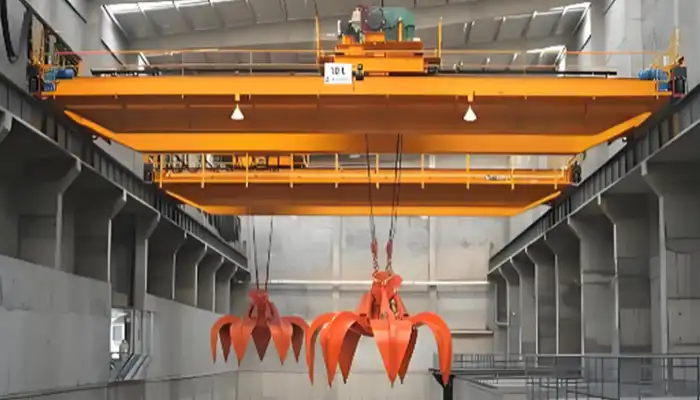
Waste Bunker Crane Layout: Full Grab Coverage Design
Content Quick Link
Waste Bunker Layout Design: Ensuring Full Grab Crane Coverage Without Dead Zones
Introduction
Designing an efficient waste bunker crane layout is a critical step in MSW handling. The crane's position directly impacts plant efficiency, operator workflow, and long-term reliability.
Why Crane Layout Matters
- Improper layout leads to dead zones, areas of the bunker that the crane cannot reach.
- Dead zones slow down waste processing and may require manual intervention.
- Over time, these inefficiencies increase labor costs and reduce overall plant throughput.
Crane Reach vs Bunker Geometry
- The bunker's width, length, and shape must align with the crane's span and trolley travel.
- A crane chosen only for lifting capacity might fail to cover the entire bunker area.
- Mapping the crane's grab envelope in advance helps prevent blind spots.
Who Needs to Care
- EPCs and plant designers: Plan layouts that maximize crane coverage.
- Operators: Benefit from layouts that reduce manual work and ensure smooth workflow.
- Maintenance teams: Well-planned layouts reduce unnecessary wear and tear.
Key Takeaways
- Full crane coverage eliminates operational bottlenecks.
- Planning should factor in future bunker expansion or changes in waste flow.
- Efficient layouts improve safety, reduce downtime, and support consistent MSW handling.
A carefully planned waste grab crane coverage design is not just a technical requirement—it directly affects the reliability and efficiency of the entire plant.
Bunker Geometry and Its Impact on Crane Coverage
The geometry of a waste bunker directly affects the efficiency and reach of a garbage bunker grab crane. Proper planning prevents dead zones and maximizes operational efficiency.
Bunker Shapes and Typical Dimensions
- Rectangular bunkers: Most common; allow predictable grab paths and full-length crane travel.
- Square bunkers: Compact, easier to cover, but trolley positioning is critical for corner access.
- Irregular or L-shaped bunkers: Pose challenges for coverage; may need multiple trolleys or cranes.
Design considerations:
- Bunker width vs crane span: Crane girder must span full bunker width.
- Bunker length vs trolley travel: Trolley must cover entire bunker length.
- Height and reach requirements: Ensure crane hoist can reach maximum stack height and all corners.
A mismatch between bunker size and crane span often creates operational dead zones.
How Geometry Affects Grab Crane Coverage
- Crane reach and trolley travel: The grab must access all bunker areas without obstruction.
- Grab envelope mapping: Visualizing reach in 3D helps identify dead zones before construction.
- Corner and edge access: Irregular shapes may need adjusted grab designs or trolley positions.
Practical tip: Use CAD simulations or reach diagrams to map every bunker zone. Identifying blind spots during design is far cheaper than retrofits during operation.
Common Mistakes in Early Design
- Oversized bunkers with undersized crane spans: Large bunkers are only effective if the crane can cover the full area.
- Incorrect crane positioning: Misaligned girders or trolley tracks create blind spots along edges or corners.
- Neglecting grab envelope height: Lateral reach is insufficient if crane cannot access full stack height.
These mistakes often reduce efficiency and increase retrofitting costs or the need for additional trolleys.
Crane Span vs. Bunker Geometry
Selecting the right crane span ensures full coverage of your MSW bunker. Even with sufficient lifting capacity, improper span alignment can leave areas inaccessible or reduce operational efficiency.
Determining Optimal Crane Span
- Crane girder length vs bunker width: Extend slightly beyond bunker walls to reach corners without obstruction.
- Trolley travel for full length coverage: Trolley must reach both ends of the bunker.
- Height and reach considerations: Hoist must access maximum stack height, especially in deeper areas.
Practical tip: Slightly oversize the girder rather than leaving dead zones, but avoid excessive oversizing to reduce cost and unnecessary trolley travel.
Avoiding Overlap and Underlap
- Reaching corners and edges: Ensure grab covers all points without hitting walls or supports.
- Minimizing wasted motion: Avoid overlapping travel that slows operations and wears the crane.
- Optimizing cycle times: Correct span helps operators complete grabs efficiently, saving energy and reducing wear.
Proper span design balances reach and efficiency, allowing smooth movement while covering all bunker zones.
Case Examples of Span Misalignment
- Undersized crane span: Bunker too wide for installed crane, leaving corners inaccessible; retrofit required additional trolley extensions.
- Excessively long span without adequate trolley speed: Slow trolley reduced cycle efficiency, creating bottlenecks.
- Misaligned girders: Incorrect rail positioning forced repeated operator adjustments, slowing operations and increasing maintenance.
Key takeaway: Matching crane span to bunker geometry affects coverage, cycle efficiency, operator workload, and maintenance costs. Early planning and precise measurements prevent costly retrofits.
Reach Envelope Analysis
Understanding the grab reach envelope ensures that your grab crane covers every part of the bunker, preventing hidden dead zones and improving operational efficiency.
Concept of Grab Reach Envelope
- Radius and height considerations: Grab must reach full width, length, and maximum stack height, accounting for variable waste piles.
- Swing and tilt limitations: Slight swings or tilts during operation can affect coverage, especially near corners or walls.
- Operator accessibility: Grab should operate without interference from structural supports or nearby equipment.
Practical tip: Plan for worst-case stack height and spread, not just average, to avoid inaccessible zones during peak operations.
Mapping Coverage in 3D
- Identifying potential dead zones: Use diagrams or 3D models to spot areas the grab cannot reach, especially corners or irregular bunkers.
- Using modeling software or CAD simulations: Simulate crane motion and grab operation to highlight conflicts before installation.
- Scenario testing: Model different grab positions, swing angles, and waste heights to ensure all zones are accessible.
Mapping coverage in 3D is more reliable than manual measurements alone, particularly for complex or irregular bunker geometries.
Practical Adjustments for Full Coverage
- Multiple trolley positioning: Move the trolley along the girder to reach previously inaccessible zones and eliminate dead spots.
- Variable boom or hoist lengths: Adjust reach of hoist or use extendable grabs to cover all areas safely.
- Fine-tuning crane placement: Minor adjustments to girder alignment can reduce blind spots and improve operator efficiency.
Key takeaway: Regularly reviewing the grab reach envelope during design and commissioning prevents blind spots, ensures safe crane operation, and maximizes MSW bunker handling efficiency.
Lessons from Commissioning and Operational Issues
Even well-designed waste bunker crane layouts can face challenges during commissioning. Learning from operational experience helps prevent recurring problems and ensures long-term plant performance.
Common Dead Zone Problems Observed in MSW Plants
- Inaccessible corners and bunker edges: Cranes sometimes cannot reach the farthest areas due to misjudged span or trolley travel.
- Interference with bunker walls or feeding equipment: Structural elements, conveyors, or installed equipment can restrict grab movement.
- Stack height variations: Uneven waste piles can make certain areas difficult for the grab to access without overextending the hoist.
These issues can slow operations, require manual workarounds, and increase crane wear if not addressed early.
Solutions Implemented in the Field
- Crane re-positioning or additional trolleys: Adjusting girder placement or adding trolleys can eliminate coverage gaps.
- Adjusted grab dimensions and reach: Modifying grab size or extending reach ensures all bunker areas are accessible.
- Operational adjustments: Changing grab sequences or stacking methods reduces the impact of minor dead zones.
Proactive design adjustments and flexible crane features are key to avoiding long-term operational bottlenecks.
Design Checklist for EPCs and Plant Engineers
- Confirm crane span and trolley travel: Ensure full coverage of bunker dimensions, including corners.
- Validate reach envelopes for all bunker sections: Map horizontal and vertical reach to identify potential dead zones.
- Include contingency for future bunker expansion: Plan for increases in bunker size, stack height, or layout changes.
- Check for structural and equipment interference: Ensure grab motion is unobstructed by walls, conveyors, or other installations.
- Simulate operational scenarios: Test waste stacking patterns and crane sequences to confirm full coverage.
Following this checklist helps prevent commissioning issues and supports consistent, reliable waste grab crane operation.
Practical Recommendations
Integrating a well-designed garbage bunker grab crane layout with daily plant operations improves efficiency, reduces costs, and enhances long-term performance.
Guidelines for Integrating Crane Layouts with Plant Operations
- Align crane motion with material flow: Complement feeding systems and waste handling schedules to avoid bottlenecks.
- Plan for operator accessibility: Position control stations and emergency stops for safe and efficient operation.
- Account for maintenance access: Provide space for inspection, lubrication, and minor repairs without interrupting bunker operations.
- Coordinate with other equipment: Ensure cranes operate without interference from conveyors, shredders, or compactors.
Tip: Involve operators and maintenance teams early in the design—they often identify practical issues overlooked on paper.
Recommended Crane Specifications for Common MSW Bunker Sizes
- Small bunkers (width < 10 m): Single trolley, grab reach covering full width, lifting capacity 1–5 tons.
- Medium bunkers (width 10–20 m): Single or dual trolley cranes, adjustable grab reach, lifting capacity 5–10 tons.
- Large bunkers (width > 20 m): Dual trolley cranes with extendable grab arms, lifting capacity 10–20 tons.
These ranges help ensure full bunker coverage without dead zones or overextending the hoist.
Emphasis on Early-Stage Simulation
- 3D reach analysis: Simulate crane motion in CAD or plant software to identify potential blind spots before installation.
- Scenario testing: Model different waste stacking patterns and grab sequences to confirm full coverage.
- Iterative adjustments: Make minor changes to girder placement, trolley travel, or grab dimensions during design rather than after commissioning.
Practical takeaway: Early investment in simulation and reach analysis ensures smoother commissioning, higher efficiency, and fewer operational issues.
Key takeaway: Integrating crane layout with operations, choosing the right specifications for your bunker size, and performing early-stage simulations are critical steps to prevent dead zones and ensure long-term efficiency in waste grab crane coverage design.
Conclusion
Proper waste grab crane coverage design is more than a technical detail—it’s a key factor in smooth, efficient, and safe MSW plant operation. When the crane’s span, trolley travel, and grab reach are correctly aligned with the bunker geometry, dead zones are eliminated, maintenance demands are reduced, and overall plant throughput improves.
Key Takeaways
- Prevent dead zones: Careful planning of crane span, trolley travel, and grab envelope ensures every corner of the bunker is accessible.
- Reduce maintenance and operational issues: Full coverage reduces wear on the crane, avoids repeated manual interventions, and minimizes downtime.
- Improve plant efficiency: Optimized crane layout supports faster waste handling cycles, smoother material flow, and safer operations.
Recommendations for EPCs and Plant Operators
- Validate designs early: Use 3D modeling or CAD simulations to map grab reach and identify potential blind spots before construction.
- Learn from past commissioning: Apply lessons from other MSW plants to avoid common layout mistakes and dead zone issues.
- Plan for flexibility: Include contingencies for future bunker expansions, changes in waste flow, or operational adjustments.

Article by Bella ,who has been in the hoist and crane field since 2016. Bella provides overhead crane & gantry crane consultation services for clients who need a customized overhead travelling crane solution.Contact her to get free consultation.
Yuantai Cranes
Overhead Crane Manufacturer with CE, ISO, SGS, CNEX Certificates.
- Main Specifications - Capacity: 0.5–550 tons | Span: up to 40m | Speed: 0.8–12 m/min | Duty: A3–A7 | Power: 380–690V, 50/60Hz | Control: pendant/remote/cabin
- Full engineering: FEA/PLC/VFD + in-house build + global delivery + on-site support, for workshops, factories, EPC contractors, industrial projects, etc.
- Support: design, manufacturing, testing, service – end-to-end, customized lifting solutions worldwide.
How to Get an Accurate Crane Price for Your Application?
Tips: Copy the spec list, fill in your details, and paste it into the form on the right/ down-below for a quick price.
- Crane type:_____ . (e.g., overhead crane, gantry crane, jib crane)
- Max weight to lift:_____ tons. (e.g., 2t, 5t, 10t, 20t, 50t)
- Lifting height:_____ m. (How high does the hook need to reach?
- Workshop width (span):_____ m . (Distance between the two crane rails)
- Travel distance:_____ m . (How long does the crane need to move along the runway?)
- Control type:_____. (Pendant / remote / cabin Control)
- Power supply:_____. (Local voltage & frequency – e.g., 380V, 50Hz, 3-phase)
- What will it be used for?_____ (e.g., steel fabrication, concrete products, mold handling, general manufacturing, etc.)
- Any special requirements?_____ (e.g., extreme temperature, dusty or explosive environment, special paint color, etc.)
Just leave a message via the contact form and our hoist and crane engineer will contact you with in 24working hours.
Get Your Custom Quote–Quick & Easy
Fill in what you know. Skip what you don't – we'll help.Any question will be reply with 24 working hours