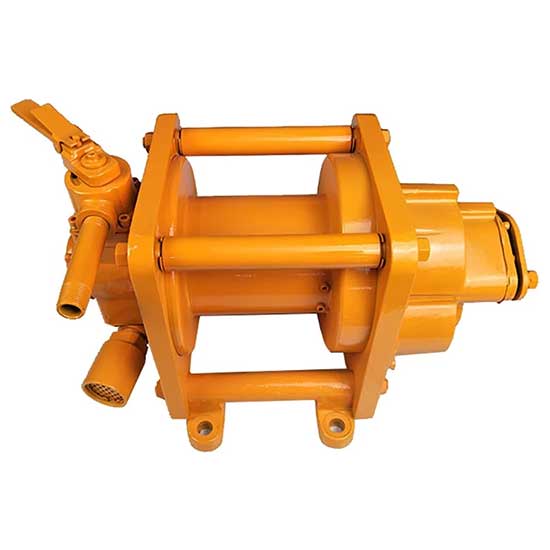
Blade pneumatic winch, explosion proof pneumatic winch
Blade pneumatic winch, powered by a vane pneumatic motor,manual control, efficient, small pneumatic winch & portable pneumatic winch. Blade pneumatic winch for sale.
| Crane Type | Winch Type:Blade Pneumatic Winch / Air Operated Winch / Pneumatic Lifting Winch, 7.5–60 kN Heavy-Duty Air Winch System, :0.6-0.69Mpa |
| Crane Capacity | Capacity: 0.75–6 Ton (Common: 1 Ton, 2 Ton, 3 Ton, 5 Ton, 6 Ton) Rated Pulling Force: 7.5–60 kN (Common: 10 kN, 20 kN, 30 kN, 50 kN) |
| Span Length | Wire Rope Capacity: 20–100 m (Customized according to lifting height and working conditions) |
| Lifting Height | Installation Type:Fixed, skid-mounted, or portable installation for oil & gas, mining, marine, offshore, chemical plants, and hazardous industrial environments. |
| Coverage Area Type | Linear (Pneumatic Straight-Line Operation) — performs controlled lifting or pulling along a single wire rope path, suitable for safe operation in explosive, flammable, or high-risk industrial zones. |
| Application | Used in oil & gas, offshore platforms, chemical plants, mining, and hazardous environments for lifting, pulling, and positioning heavy loads where electric sparks must be avoided and compressed air is available. |
| Certifications | CE / ISO / SGS / Other third-party inspection |
| Customization | Options include CNEX explosion-proof design, remote pneumatic control, stainless steel components, corrosion protection, customized rope length, brake systems, overload protection, and special air winch solutions. |
Crane Manufacturer: Yuantai Cranes – 30+ Years Professional Crane Manufacturer from China
Category: Winch
Tags: airwinch
Your Trusted Pneumatic Winch Manufacturer & Supplier
Small, Portable & Explosion Proof
Blade Pneumatic Winch
The blade pneumatic winch one type of pneumatic winch which is made of aluminium alloy and powered by compressed air. Usually, the blade pneumatic winch is with manual control operation and driven by a vane pneumatic motor. The blade pneumatic winch is widely used in fire resistant situations such as oil fields, drilling platforms, mining, workshops, cargo handling, engineering sites, etc.
Main parameters of blade pneumatic winch
- Model :AW
- Lifting capacity of blade pneumatic winch: 0.75t to 6t
- Rope capacity of blade pneumatic winch:80m to 100m
- Rope speed of blade pneumatic winch:7~45m/min
- Air pressure of blade pneumatic winch:0.6-0.69Mpa
- Tailored blade air pneumatic winch are available.
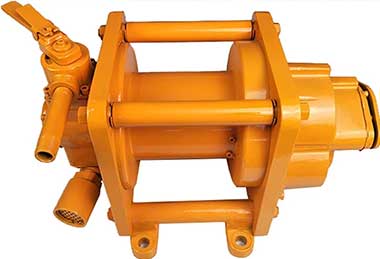
Blade pneumatic winch / Pneumatic Winch
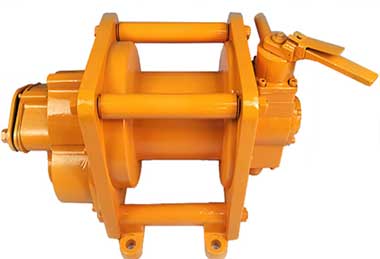
Blade pneumatic winch / Pneumatic Winch
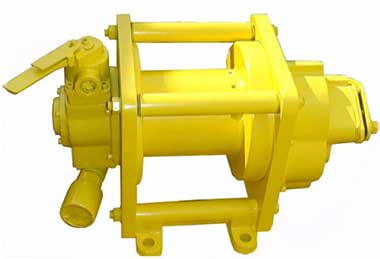
Blade pneumatic winch / Pneumatic Winch
Blade pneumatic winch for sale.Tailored blade pneumatic winch are available. Contact us to get your blade pneumatic winch design & specific blade pneumatic winch price.
Main Features of blade pneumatic winch
- High safety and reliable - With air powered motor, the blade pneumatic winch is explosion proof, spark proof and insulated in wet and damp application.
- Automatic braking -The pneumatic winch will stop automatically when air power is off to prevent the happening of error operation to ensure safety.
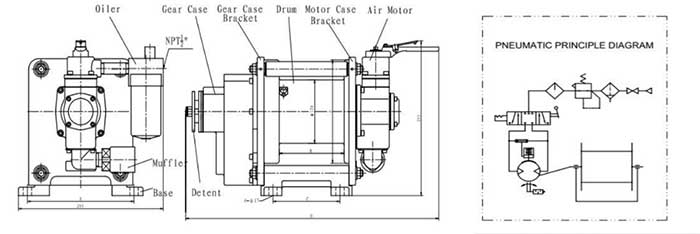
- Easy operation, high efficiency -With the control valve and air motor combined together, the control of pneumatic winch can be operated by one control handle which can be operated to change the speed of air motor, direction of rotation and the braking of air chamber.
- Small size & light weight -The main parts of the blade pneumatic winch is made of aluminum alloy, with adequate strength and rigid but lighter dead weight which make transportation and installation of air winch convenient.
Main components & features of blade pneumatic winch
Air motor
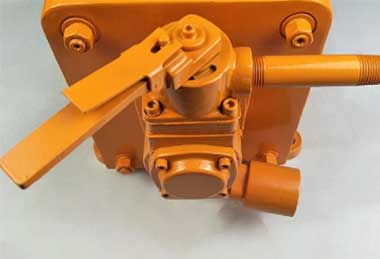
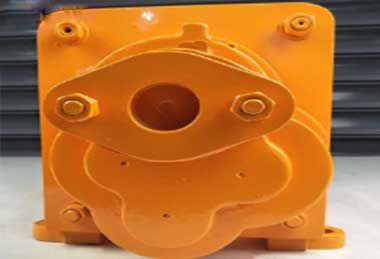
Vane air motor of blade pneumatic winch is made of motor case , cylinder, rotor, rotor vane , top bearing case ,and bottom bearing case, etc. After compressed air enter motor, the blade air winch will start to work. The controlling of compressed air inlet may change the revolving direction of air motor and the changing of current and pressure of compressed air will manage to get the suitable revolving speed and output torque.
Gear box
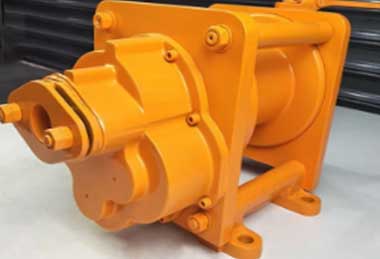
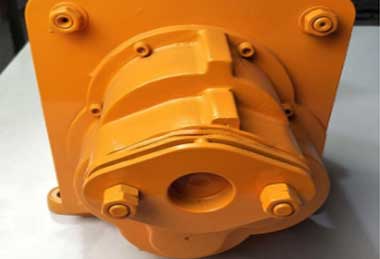
Gear box of blade pneumatic winch is made up gear case , deceleration gears, and gear bracket etc. Four levels of deceleration includes the first level of 22:70, second level of 26:62, third level of 16:100, the last internal gear , the internal gear key connect with drum .
Braking system
The braking system of blade pneumatic winch is made up bearing plate, brake plate, rubber diaphragm, and brake spring etc. When the air pipe is in "open" position, the blade pneumatic winch release brake plate, and the winch drum start to rotate . When the air line is closed, the brake systems of the blade pneumatic winch brakes the drum tightly and efficiently.
Industrial Applications of Air Powered Winches / Pneumatic Winches
This section outlines real-world industrial applications of air powered winches across different sectors, focusing on typical capacities, loads handled, working environments, and practical use scenarios for buyers evaluating equipment selection.
Due to the unique features,the air operated pneumatic winches are widely used in various industrial sectors and especially suitable for applications of oilfields, geological drilling, natural gas, coal mine, metal mine, ocean exploration, shipbuilding, and many other occasions with potential existence of inflammable and explosive elements, etc.
Offshore Platform Equipment Handling (10–50 ton range)
Air winches are widely used offshore for safely lifting and positioning heavy equipment where explosion-proof operation is required.
Typical loads: valves, drilling tools, subsea components, pipe sections
Environment: saltwater exposure, high humidity, hazardous gas zones
Benefit: reliable performance without spark risk in continuous-duty marine operations
Shipyard and Marine Mooring Operations (5–30 ton range)
Pneumatic winches are essential for mooring, towing, and handling heavy marine components in shipyards.
Typical loads: anchor chains, ship components, hull sections
Environment: wet, corrosive, outdoor dock conditions
Benefit: stable pulling force and durability under constant exposure to water and corrosion
Oil & Gas Pipeline Installation (3–20 ton range)
Air powered winches are used for controlled pulling and positioning of pipelines in remote or hazardous oilfield environments.
Typical loads: steel pipes, pipeline sections, welding assemblies
Environment: remote sites, uneven terrain, explosive atmospheres
Benefit: operates without electricity, ensuring safe and flexible field deployment
Mining and Tunneling Operations (2–25 ton range)
Pneumatic winches support material transport and equipment positioning in underground mining where ventilation and safety are critical.
Typical loads: ore carts, drilling rigs, conveyor components
Environment: confined underground spaces, dust, moisture
Benefit: continuous operation without overheating and safe use in low-visibility conditions
Construction Material Lifting and Positioning (1–15 ton range)
Air winches provide reliable lifting and pulling for heavy construction materials on job sites without stable power supply.
Typical loads: steel beams, precast concrete panels, formwork
Environment: outdoor construction sites, variable weather conditions
Benefit: portable operation with precise load control for structural positioning
Chemical Plant Equipment Maintenance (1–10 ton range)
Pneumatic winches are used for maintenance lifting tasks in chemical plants where safety and non-sparking operation are critical.
Typical loads: pumps, reactors, piping systems
Environment: corrosive chemicals, explosive gases
Benefit: minimizes ignition risk while enabling precise handling in tight plant layouts
Power Plant Maintenance and Turbine Handling (5–40 ton range)
Air powered winches assist in lifting and positioning heavy components during maintenance in power generation facilities.
Typical loads: turbine parts, generators, maintenance equipment
Environment: indoor industrial facilities with high safety requirements
Benefit: controlled lifting with smooth speed adjustment for sensitive equipment
Warehouse and Industrial Yard Heavy Handling (1–10 ton range)
Air winches are used in industrial yards and warehouses for pulling and positioning heavy materials over short distances.
Typical loads: machinery, pallets, steel coils
Environment: indoor and outdoor mixed-use spaces
Benefit: reduces manual labor and improves workflow efficiency
Railway Maintenance and Equipment Handling (3–15 ton range)
Pneumatic winches are applied in railway yards for moving heavy components and maintenance equipment.
Typical loads: rail sections, bogies, maintenance tools
Environment: outdoor rail yards with limited power access
Benefit: flexible deployment and reliable pulling force
Forestry and Logging Operations (2–10 ton range)
Air powered winches are used for pulling logs and clearing operations in remote forestry environments.
Typical loads: timber logs, debris, equipment
Environment: rugged terrain, remote areas without electricity
Benefit: strong pulling capability with portability for off-grid applications
Heavy Equipment Assembly and Workshop Use (1–20 ton range)
Pneumatic winches assist in assembling and positioning large machinery in fabrication workshops.
Typical loads: machine parts, frames, industrial assemblies
Environment: indoor workshops with compressed air systems
Benefit: precise control for alignment and installation tasks
Emergency Recovery and Industrial Rescue (1–8 ton range)
Air winches are deployed for controlled pulling and lifting during industrial recovery and rescue operations.
Typical loads: vehicles, trapped equipment, structural debris
Environment: hazardous or unstable conditions
Benefit: reliable operation without reliance on electrical systems
Due to the excellent explosion proof feature, the pneumatic winch is among the best explosion-proof equipment which is an ideal selection when an explosion-proof pulling winch or explosion proof hoisting winch is needed. Based on your requirements and applications conditions, pneumatic winches with process winch designs are available to meet your needs satisfactorily.
FAQs of Air Powered Winches / Air Winch / Pneumatic Winch
This FAQ section covers air powered winches, air winches, and pneumatic winch systems, including applications, capacities, advantages, and industrial use cases in hazardous and heavy-duty environments.
What is an air powered winch and how does a pneumatic winch work?
An air powered winch, also known as an air winch or pneumatic winch, is a lifting and pulling device driven by compressed air. It uses an air motor to convert air pressure into mechanical motion, rotating a drum to wind or unwind a wire rope. This makes it ideal for industrial lifting, heavy-duty pulling, and controlled load handling in hazardous environments.
What is the difference between an air winch, air powered winch, and pneumatic winch?
There is no technical difference between these terms. "air winch," "air powered winch," and "pneumatic winch system" are commonly used interchangeably in industries such as oil and gas, marine operations, and construction lifting applications.
What are the typical capacities of air powered winches for industrial use?
Industrial air powered winches are available in a wide capacity range, typically from 0.5 ton to over 50 ton. Smaller units are suitable for light-duty pulling and vehicle recovery, while larger models are designed for heavy-duty lifting, offshore winch operations, and mining applications.
What are the advantages of using a pneumatic winch in hazardous environments?
A pneumatic winch for hazardous environments offers several key benefits: explosion-proof operation with no electrical sparks, safe use in oil refineries, offshore platforms, and chemical plants, reliable performance in dusty, wet, or extreme temperature conditions, and suitability for ATEX-rated zones and confined spaces.
Where are air powered winches commonly used in industry?
Air winches for industrial applications are widely used in offshore and marine winching operations, oil and gas lifting equipment systems, mining and tunneling projects, construction material handling, and remote job sites without electricity. These winches are especially valuable where electric power is unavailable or unsafe.
What air supply is required for a pneumatic winch system?
A pneumatic winch system typically requires compressed air at 6–8 bar (90–120 psi). The required airflow depends on the winch capacity, load weight, and duty cycle, making proper air compressor selection critical for optimal performance.
How is speed controlled on an air powered winch?
An air powered winch with variable speed control allows operators to regulate speed by adjusting airflow through control valves. This enables precise load positioning, smooth acceleration, and safe lifting operations in heavy-duty industrial environments.
What type of rope is used with an air winch for lifting and pulling?
Most air winches for lifting applications use high-strength steel wire rope for durability and load capacity. In some cases, synthetic rope winch systems are used for lighter loads or applications requiring flexibility and reduced weight.
How does a pneumatic winch compare to an electric winch for industrial use?
When comparing a pneumatic winch vs electric winch, air winches are better for hazardous, explosion-prone, and continuous-duty environments, while electric winches are more suitable for general-purpose indoor applications with stable power supply. The choice depends on safety requirements, work environment, and operational intensity.
Do air powered winches require maintenance for long-term performance?
Yes, air powered winch maintenance is essential and includes regular lubrication of the air motor system, inspection of wire rope, drum, and braking system, and checking air filters, regulators, and lubrication units. Proper maintenance ensures safe operation, extended service life, and consistent performance.
Can pneumatic winches be used for continuous operation in heavy-duty applications?
Yes, heavy-duty pneumatic winches are designed for continuous operation without overheating, making them ideal for high-frequency lifting tasks, industrial production lines, and offshore winch systems.
Are portable air powered winches suitable for remote job sites?
Portable air winches for field operations are highly effective in remote construction sites, mining areas, and offshore environments. As long as a compatible mobile air compressor is available, they provide reliable lifting and pulling capability without electrical infrastructure.
How do air powered winches improve efficiency in industrial lifting operations?
Air powered winches for material handling improve efficiency by reducing manual labor, providing consistent and controllable lifting power, minimizing downtime in harsh environments, and supporting safe, precise, and repeatable load handling processes.
Get your customized pneumatic winch, cost-effective crane winch solution
To meet the various industrial needs and your particular application, the tailored pneumatic winch design and fabrication services are available. To provide your the specific pneumatic winch, please help us to confirm the following information of the pneumatic winch you need, which including the following;- Loading capacity of pneumatic winch: _____________?(Ton/kN)
- Working speed of pneumatic winch: _____________?(m/min)
- Wire rope length of pneumatic winch: _____________?(m)
- Functions or usages of pneumatic winch: _____________? For horizontally pulling or vertically hoisting?
- Specialized requirements to get tailored pneumatic winch design.
Send us a inquiry to get your tailored pneumatic winch design and pneumatic winch price.

Yuantai Cranes
Overhead Crane Manufacturer with CE, ISO, SGS, CNEX Certificates.
- Main Specifications - Capacity: 0.5–550 tons | Span: up to 40m | Speed: 0.8–12 m/min | Duty: A3–A7 | Power: 380–690V, 50/60Hz | Control: pendant/remote/cabin
- Full engineering: FEA/PLC/VFD + in-house build + global delivery + on-site support, for workshops, factories, EPC contractors, industrial projects, etc.
- Support: design, manufacturing, testing, service – end-to-end, customized lifting solutions worldwide.
How to Get an Accurate Crane Price for Your Application?
Tips: Copy the spec list, fill in your details, and paste it into the form on the right/ down-below for a quick price.
- Crane type:_____ . (e.g., overhead crane, gantry crane, jib crane)
- Max weight to lift:_____ tons. (e.g., 2t, 5t, 10t, 20t, 50t)
- Lifting height:_____ m. (How high does the hook need to reach?
- Workshop width (span):_____ m . (Distance between the two crane rails)
- Travel distance:_____ m . (How long does the crane need to move along the runway?)
- Control type:_____. (Pendant / remote / cabin Control)
- Power supply:_____. (Local voltage & frequency – e.g., 380V, 50Hz, 3-phase)
- What will it be used for?_____ (e.g., steel fabrication, concrete products, mold handling, general manufacturing, etc.)
- Any special requirements?_____ (e.g., extreme temperature, dusty or explosive environment, special paint color, etc.)
Just leave a message via the contact form and our hoist and crane engineer will contact you with in 24working hours.
Get Your Custom Quote–Quick & Easy
Fill in what you know. Skip what you don't – we'll help.Any question will be reply with 24 working hours