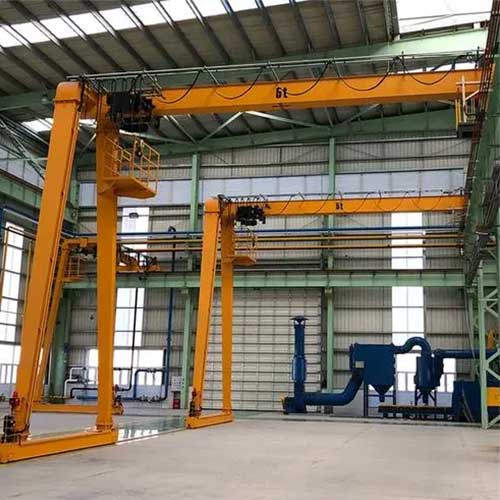
Semi-Gantry Cranes for Large-Span Workshops | Efficient & Flexible
Why are semi-gantry cranes ideal for large workshops? Save space, reduce costs, and handle heavy loads safely and efficiently.
| Crane Type | Single- or double-girder semi-gantry crane; one side runs on an elevated runway and the other on a floor rail; 3–32 ton; ISO A3–A6 / FEM 1Am–3M typical; 380/400/415V, 50Hz, 3Ph; pendant, radio remote, or cabin control. |
| Crane Capacity | 3–32 ton typical |
| Span Length | 7.5–25 m typical, with larger spans available based on structural design |
| Lifting Height | 4–18 m typical, customized according to building height and required hook height |
| Coverage Area Type | Large or long-span rectangular workshop areas served by one elevated runway and one floor-running side |
| Application | Workshops, warehouses, fabrication plants, machinery manufacturing, assembly areas, maintenance bays, loading and unloading areas, concrete plants, and production facilities |
| Certifications | CE / ISO / SGS / Other third-party inspection |
| Customization | Customized crane travel length, hook approach, leg height, workshop layout; single- or double-girder structure; electric wire rope hoist or trolley, rail-mounted or rail-free floor travel; VFD, anti-collision, positioning, weighing, automation options |
Crane Manufacturer: Yuantai Cranes – 30+ Years Professional Crane Manufacturer from China
Category: Featured
Tags: semigantry
Your Trusted Gantry Crane Manufacturer & Supplier
Semi Gantry Crane for Sale 3 Ton to 32 Ton & Tailored Solutions
Semi-Gantry Cranes for Large-Span Workshops | Efficient & Flexible
Introduction: Why Large-Span Workshops Need Efficient Material Handling
semi gantry crane for sale, all types of semi frame gantry crane for sale
The Challenge of Moving Heavy Materials
In large workshops, moving heavy loads isn't simple. Wide floors and long spans make it hard to transport materials efficiently. Using multiple hoists, forklifts, or carts can lead to traffic, delays, and even accidents.
Key Issues:
- Heavy items are difficult to position safely over long distances.
- Congested workflows slow down production.
- Multiple lifting methods increase the risk of collisions or damage.
- Repeated manual handling causes worker fatigue and safety concerns.
Semi-Gantry Cranes as a Practical Solution
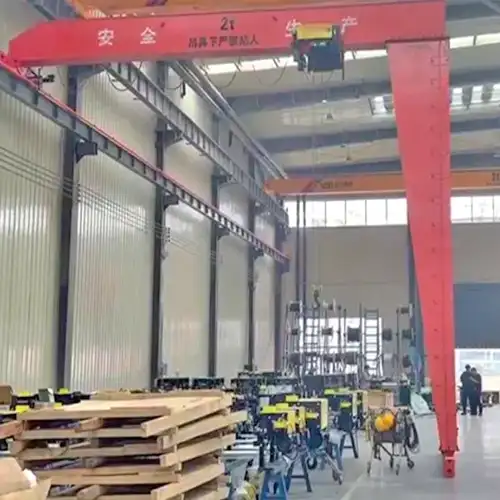
Semi-gantry cranes are designed to make material handling in large workshops easier. One side of the crane is supported by a runway beam, while the other side runs on wheels along the floor. This setup allows long-span lifting without the cost and complexity of full gantry systems.
Practical Advantages:
- Move heavy loads efficiently across wide workshop areas.
- Reduce the need for multiple hoists or forklifts.
- Flexible enough to operate in workshops with partial obstructions.
Why Semi-Gantry Cranes Work Well for Large Workshops
These cranes are more than just equipment—they are practical tools that solve everyday challenges in big workshops.
Benefits at a glance:
- Cost-Effective: Lower installation and structural support costs compared to full gantry or overhead cranes.
- Space-Saving: One-sided floor support frees up space for machinery and workflow.
- Flexible: Adjustable spans, lifting heights, and layouts to fit different workshop needs.
- Safe and Reliable: Reduces accidents from manual handling or crowded floor operations.
In short, semi-gantry cranes address the real-world problems of large workshops: moving heavy materials safely, efficiently, and without unnecessary costs.
What is a Semi-Gantry Crane? Understanding the Basics
Definition and Structure
A semi-gantry crane is a type of overhead crane designed for lifting and moving heavy loads in large workshops. Its main feature is its hybrid support system:
- One side is supported by a fixed runway beam attached to the building structure.
- The other side runs on wheels along the workshop floor.
This design allows the crane to cover long spans without requiring a full-length runway on both sides, which reduces installation costs and floor space usage. It's particularly suitable for workshops where one side of the building can support a runway while the floor must remain open for operations.
Key Components
Understanding the main parts of a semi-gantry crane helps buyers know what to inspect and maintain:
- Bridge Girder: The horizontal beam that spans the lifting area, supporting the hoist and distributing the load evenly.
- Hoist and Trolley: The hoist lifts the load, and the trolley moves it along the bridge, enabling precise positioning.
- Rails and Wheels: Wheels run along the floor track on one side, while the fixed runway on the other guides the crane along the building.
These components work together to ensure safe, efficient, and smooth material handling in large workshops.
Types of Semi-Gantry Cranes
Semi-gantry cranes come in two main configurations depending on the load and workshop requirements:
Single Girder Semi-Gantry Crane:
- Has one main bridge girder.
- Suitable for lighter to medium loads.
- Simple installation and lower cost.
Double Girder Semi-Gantry Crane:
- Has two parallel bridge girders.
- Can handle heavier loads and larger spans.
- Offers better stability and durability for continuous operations.
Choosing the right type depends on the workshop's lifting needs, span, and floor layout.
Top Advantages of Semi-Gantry Cranes for Large Workshops
Cost Efficiency
Semi-gantry cranes are often more budget-friendly than full gantry or bridge cranes. Since only one side requires a fixed runway and floor support is minimal, installation costs drop significantly. This makes them a practical option for workshops looking to reduce upfront investment without compromising safety or performance.
Key Points:
- Lower purchase and installation costs than full gantry cranes.
- Reduced structural support needed for building or floor.
- Less time and expense spent on foundations or runway beams.
Space Optimization
In large workshops, space is valuable. Semi-gantry cranes take up less floor space than full gantry systems, leaving room for machinery, storage, and workflow. This improves material handling efficiency without crowding the workshop floor.
Key Points:
- One-sided floor support maximizes usable space.
- Easier to plan workshop layout and movement paths.
- Minimizes obstacles, reducing the risk of collisions.
Ease of Installation & Maintenance
Installing a semi-gantry crane is simpler than a full gantry system. Maintenance is also easier because most components are accessible without special equipment, reducing downtime and repair costs.
Key Points:
- Requires simpler foundations and runway beams.
- Easy access to hoist, trolley, and electrical systems for inspection.
- Shorter installation time compared to full gantry cranes.
High Load Capacity
Despite a simpler design, semi-gantry cranes can handle medium to heavy loads, making them suitable for most large workshop operations. They can lift steel, machinery parts, or other heavy items efficiently.
Key Points:
- Supports medium to heavy weights reliably.
- Ideal for continuous operation in heavy-duty environments.
- Reduces the need for multiple lifting devices.
Flexibility & Customization
Semi-gantry cranes can be adjusted to fit different workshop layouts and operational needs. They can work around obstacles and accommodate variable lifting heights and spans.
Key Points:
- Adjustable span and lifting height for different workshop layouts.
- Can operate in partially obstructed spaces.
- Available in single or double girder versions to suit load and span requirements.
Energy Efficiency
These cranes generally consume less power than full overhead cranes due to lighter structure and optimized design. This translates to lower operating costs over time.
Key Points:
- Smaller motors use less electricity.
- Less energy wasted during lifting operations.
- Helps reduce overall workshop operating costs.
Typical Applications in Large Workshops
Steel Fabrication and Assembly Plants
Steel workshops often handle long beams, heavy sheets, and large components that require careful positioning. Semi-gantry cranes allow operators to lift and move these materials across wide spans safely and efficiently.
Key Benefits:
- Move long or heavy steel beams accurately.
- Support welding, cutting, and assembly operations.
- Reduce manual handling and improve workflow.
Machinery Manufacturing Workshops
Workshops producing industrial machinery deal with bulky components like motors, frames, and assemblies. Semi-gantry cranes make it easier to position heavy parts precisely without interfering with other equipment.
Key Benefits:
- Lift and position heavy machinery components safely.
- Facilitate assembly line operations.
- Reduce the risk of damaging delicate or complex parts.
Automotive and Heavy Equipment Maintenance
Maintenance shops for vehicles, construction equipment, or agricultural machinery require lifting large assemblies such as engines or gearboxes. Semi-gantry cranes provide flexible movement across the workshop while keeping floors clear.
Key Benefits:
- Handle engines, transmissions, and large assemblies.
- Speed up service and repair operations.
- Adapt to irregular workshop layouts or limited overhead support.
Warehouses with Large Spans and Irregular Floor Layouts
In warehouses or storage facilities, moving heavy pallets, containers, or oversized inventory can be challenging. Semi-gantry cranes maximize usable space while transporting materials efficiently.
Key Benefits:
- Navigate around obstacles and irregular layouts.
- Improve material flow across wide storage areas.
- Reduce reliance on multiple forklifts or hoists.
Semi-Gantry vs Other Crane Types: Which is Right for You?
When selecting a crane for a large workshop, it's important to understand how semi-gantry cranes compare with other common types, such as full gantry cranes and overhead (EOT) cranes. Each has its strengths, but for wide spans and flexible operations, semi-gantry cranes often provide the best balance of cost, space, and functionality.
Comparison Table
| Feature | Semi-Gantry | Full Gantry | Overhead EOT |
|---|---|---|---|
| Installation Cost | Lower | Higher | Medium |
| Space Efficiency | High | Medium | Medium |
| Load Capacity | Medium–High | High | Medium |
| Flexibility | High | Low | Medium |
| Maintenance Access | Easy | Harder | Moderate |
Practical Differences for Large Workshops
- Installation Cost: Semi-gantry cranes require only one runway and simpler floor support, making them cheaper to install than full gantry cranes. Overhead EOT cranes fall somewhere in between.
- Space Efficiency: One-sided floor support keeps the workshop floor open, which is useful for large machinery or complex layouts. Full gantry cranes need more floor space, while EOT cranes rely on a fixed runway above.
- Load Capacity: Full gantry cranes handle the heaviest loads, but semi-gantry cranes cover most medium to heavy lifting needs in workshops efficiently. EOT cranes are suitable for moderate loads.
- Flexibility: Semi-gantry cranes can adapt to irregular layouts and partial obstructions, giving them an advantage in dynamic workshop environments. Full gantry cranes are more rigid, and EOT cranes need precise alignment.
- Maintenance Access: Semi-gantry cranes allow easier access to the hoist, trolley, and electrical components, reducing downtime compared to full gantry systems.
Why Semi-Gantry Cranes Often Work Best
For large workshops with wide spans, semi-gantry cranes combine practical benefits:
- Cost-effective: Lower installation and structural requirements save money upfront.
- Space-saving: Frees up floor area for workflow and equipment.
- Flexible and adaptable: Can handle a range of layouts and lifting tasks.
- Easier to maintain: Components are accessible, reducing downtime.
In many large workshops, semi-gantry cranes strike the right balance between performance, cost, and operational flexibility, making them a practical choice for buyers who want reliable material handling without overspending.
Key Considerations for Buyers
Floor Strength and Runway Alignment
The floor where the crane wheels run must support heavy loads. Misaligned runways or weak floors can affect crane performance and safety.
Key Points:
- Verify floor load-bearing capacity for maximum crane weight.
- Ensure runway rails or tracks are level and properly aligned.
- Check floor conditions for cracks, uneven surfaces, or obstacles.
Workshop Layout and Obstructions
Even though semi-gantry cranes are flexible, layout planning is critical. Columns, machinery, or other obstacles can interfere with movement if not considered in advance.
Key Points:
- Measure crane span and lifting height carefully.
- Plan paths to avoid obstructions and ensure smooth operation.
- Maintain sufficient clearance for safe crane travel.
Load Types and Lifting Frequency
Different materials and lifting patterns affect crane selection. Heavy, irregular, or frequent loads require more robust hoists and possibly a double girder setup.
Key Points:
- Identify average and maximum load weights.
- Determine lifting frequency and operational cycles.
- Match crane design to load characteristics and workflow demands.
Future Expansion and Workflow Planning
Workshops grow and change over time. Planning for future needs ensures the crane remains useful as operational requirements evolve.
Key Points:
- Anticipate increases in load size or weight.
- Consider additional lifting points or coverage areas for future workflow.
- Choose cranes that allow adjustments or relocation if needed.
5. Safety Features and Compliance
Safety is critical in large workshops. Semi-gantry cranes must comply with local and international standards and include features to prevent accidents.
Key Points:
- Ensure overload protection, limit switches, and emergency stops are included.
- Confirm compliance with industry safety regulations.
- Train operators on proper handling and routine inspection procedures.
Installation and Maintenance Tips
Installing and maintaining a semi-gantry crane properly is just as important as choosing the right model. Careful planning ensures safety, smooth operation, and long-term reliability.
Planning the Foundation and Runway Beam
A strong foundation and properly aligned runway are critical for safe crane operation. Even small misalignments can cause uneven movement or excessive wear.
Key Points:
- Ensure the floor can bear the full crane weight plus maximum load.
- Verify runway beam alignment and levelness before installation.
- Consider future expansions or heavier loads when designing the foundation.
Choosing the Right Hoist and Trolley for Your Load
The hoist and trolley must match your workshop's lifting requirements. Selecting the wrong type can reduce efficiency and increase wear.
Key Points:
- Match the hoist capacity to the heaviest expected load.
- Choose a trolley that moves smoothly and covers the required span.
- For frequent heavy lifting, consider more durable components or a double girder design.
Scheduling Routine Inspections for Reliability
Regular maintenance prevents downtime and extends the crane's lifespan. It's easier and safer to address minor issues before they become major problems.
Key Points:
- Inspect hoist, trolley, wheels, and rails regularly.
- Check electrical systems and safety devices like limit switches.
- Lubricate moving parts and tighten bolts as needed.
- Keep a maintenance log to track inspections and repairs.
Avoiding Common Installation Mistakes
Even experienced teams can make errors during installation that affect crane performance or safety. Avoid these common pitfalls:
Key Points:
- Skipping precise alignment of floor rails or runway beams.
- Using a hoist or trolley rated for lower loads than needed.
- Neglecting proper electrical connections or grounding.
- Ignoring manufacturer guidelines for installation and inspection.
Future-Proofing Your Workshop with Semi-Gantry Cranes
Investing in a semi-gantry crane isn't just about solving today's material handling needs. Planning for the future ensures that your crane continues to support your workshop as workloads, layouts, or lifting requirements change.
Planning for Higher Loads or Workflow Changes
Workshops grow, and operational demands evolve. A crane that only meets today's needs may quickly become insufficient.
Key Points:
- Consider potential increases in maximum load weight or frequency.
- Anticipate changes in workflow that may require longer spans or higher lifting heights.
- Choose a crane design that can handle both current and future requirements.
Modular Designs and Adjustable Spans
Many semi-gantry cranes are built with flexibility in mind. Modular components and adjustable spans allow the crane to adapt as your workshop changes.
Key Points:
- Adjustable spans let you cover more of the floor without replacing the crane.
- Modular designs make it easier to upgrade components like hoists, trolleys, or girders.
- Flexibility allows operation in partially obstructed areas or irregular layouts.
Long-Term Cost Savings Through Flexible Solutions
A crane that can adapt to changing needs reduces the need for future investments. By selecting a flexible semi-gantry crane, buyers save money over the long term while maintaining safe and efficient operations.
Key Points:
- Avoids costly replacements when workflow or load requirements change.
- Minimizes downtime by allowing gradual upgrades rather than full crane replacement.
- Improves overall return on investment (ROI) by combining durability with adaptability.
Conclusion: Why Semi-Gantry Cranes Make Sense for Large Workshops
Choosing the right crane for a large workshop is about more than just lifting capacity. Semi-gantry cranes offer a practical balance of cost, space, flexibility, and safety, making them an ideal solution for many industrial operations.
Key Benefits at a Glance
- Cost-Effective: Lower installation and structural requirements save money upfront.
- Space-Saving: One-sided floor support frees up valuable workshop space.
- Flexible: Adjustable spans and layouts adapt to changing workflow needs.
- Safe and Reliable: Reduced risk of accidents and easier maintenance keeps operations running smoothly.
Assess Your Workshop Needs Before Purchasing
Every workshop is different. Before deciding, buyers should evaluate:
- Floor strength and runway conditions.
- Layout and potential obstacles.
- Typical load types and lifting frequency.
- Future expansion or workflow changes.
Practical Reminder for Buyers
Investing in the right crane is not just a purchase—it's an investment in workflow efficiency, safety, and long-term ROI. A semi-gantry crane can streamline material handling, reduce costs, and provide reliable service for years.
In short, for large-span workshops, semi-gantry cranes offer a combination of practicality, flexibility, and efficiency that few other solutions can match. Choosing wisely today means smoother, safer, and more productive operations tomorrow.

Yuantai Cranes
Overhead Crane Manufacturer with CE, ISO, SGS, CNEX Certificates.
- Main Specifications - Capacity: 0.5–550 tons | Span: up to 40m | Speed: 0.8–12 m/min | Duty: A3–A7 | Power: 380–690V, 50/60Hz | Control: pendant/remote/cabin
- Full engineering: FEA/PLC/VFD + in-house build + global delivery + on-site support, for workshops, factories, EPC contractors, industrial projects, etc.
- Support: design, manufacturing, testing, service – end-to-end, customized lifting solutions worldwide.
How to Get an Accurate Crane Price for Your Application?
Tips: Copy the spec list, fill in your details, and paste it into the form on the right/ down-below for a quick price.
- Crane type:_____ . (e.g., overhead crane, gantry crane, jib crane)
- Max weight to lift:_____ tons. (e.g., 2t, 5t, 10t, 20t, 50t)
- Lifting height:_____ m. (How high does the hook need to reach?
- Workshop width (span):_____ m . (Distance between the two crane rails)
- Travel distance:_____ m . (How long does the crane need to move along the runway?)
- Control type:_____. (Pendant / remote / cabin Control)
- Power supply:_____. (Local voltage & frequency – e.g., 380V, 50Hz, 3-phase)
- What will it be used for?_____ (e.g., steel fabrication, concrete products, mold handling, general manufacturing, etc.)
- Any special requirements?_____ (e.g., extreme temperature, dusty or explosive environment, special paint color, etc.)
Just leave a message via the contact form and our hoist and crane engineer will contact you with in 24working hours.
Get Your Custom Quote–Quick & Easy
Fill in what you know. Skip what you don't – we'll help.Any question will be reply with 24 working hours