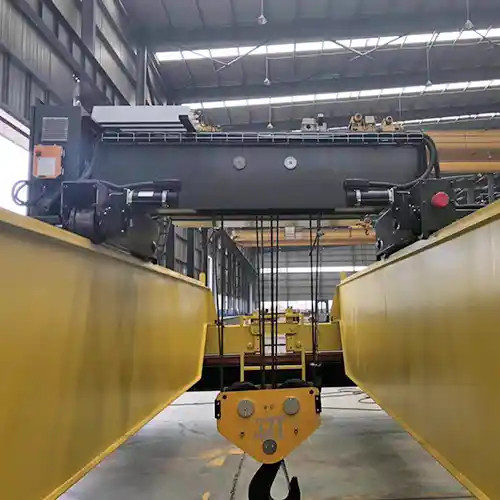
15T vs 25T vs 32T Coil Handling Cranes: Choosing the Right Capacity
Compare 15-ton, 25-ton, and 32-ton coil handling cranes. Learn how to select the right capacity to ensure safety, efficiency, and long-term crane performance.
| Crane Type | Single Girder / Double Girder Overhead Crane / Gantry Crane, configured with a C Hook, coil clamp or other dedicated steel coil lifting device |
| Crane Capacity | 15 ton / 25 ton / 32 ton; selected according to maximum coil weight, lifting attachment weight and required safety margin |
| Span Length | 6–30 m; common spans 10 m, 15 m, 20 m and 25 m |
| Lifting Height | 3–20 m; common lifting heights 4 m, 6 m, 8 m, 10 m and 12 m |
| Coverage Area Type | Rectangular working area covered by overhead or gantry cranes; travelling distance customized according to the plant layout and coil storage area |
| Application | Steel mills, cold rolling mills, hot rolling plants, coil processing lines, steel service centers and coil warehouses for lifting, transporting, loading, unloading and stacking steel coils |
| Certifications | CE / ISO / SGS / Other third-party inspection |
| Customization | C Hook, mechanical coil clamp, hydraulic coil clamp, electromagnetic coil lifter, permanent magnet lifter; customized span, lifting height, travelling distance, speeds, control system and power supply |
Crane Manufacturer: Yuantai Cranes – 30+ Years Professional Crane Manufacturer from China
Category: Coil Handling
Tags: coilhandling
Your Trusted Coil Handling Overhead Crane Manufacturer & Supplier
15 Ton vs 25 Ton vs 32 Ton Coil Handling Cranes
Which Capacity Do You Really Need?
Choosing the correct coil handling crane capacity is critical: under-sizing can cause unsafe operation, damage expensive coils, increase maintenance costs, and reduce productivity. The right capacity balances coil weight, clamp weight, dynamic load, and future expansion.
Key Takeaways & Questions Solved
True Load
Question solved: How do I know the actual weight my crane needs to lift?
- Includes coil weight + clamp + dynamic factors
- Apply a safety margin of 10–25% to account for start/stop, load swing, and operational variability
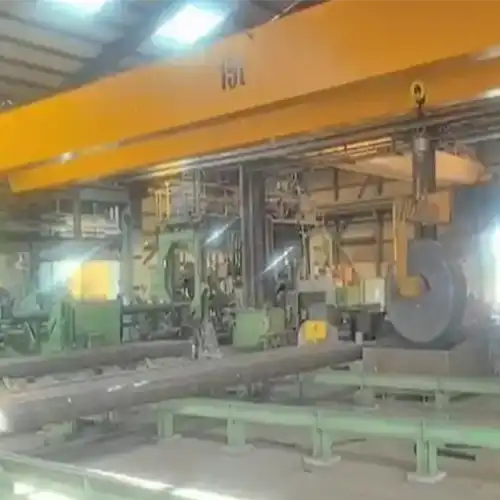
Question solved: When is a 15-ton crane sufficient?
- Ideal for light coils (<12 tons)
- Suitable for low-to-medium frequency operations
- Best for small service centers or aluminum/narrow steel coils
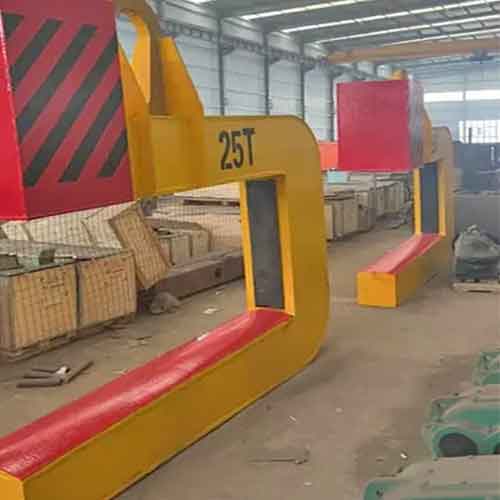
25 Ton Overhead Cranes with C hook
Question solved: Why is 25-ton the most popular choice?
- Handles standard steel coils (12–22 tons) safely
- Provides margin for clamp weight and dynamic loads
- Balances cost, capability, and operational flexibility
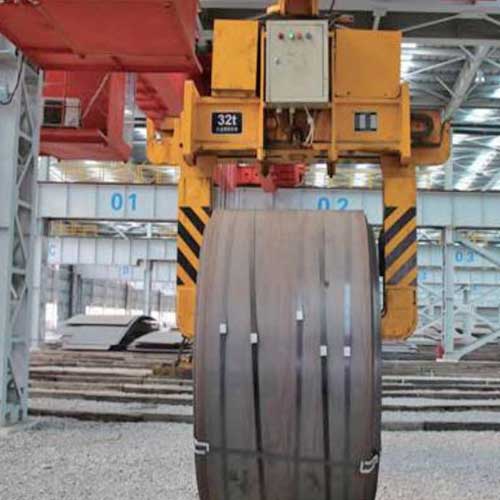
32 Ton Overhead Cranes with coil grab for horizonal coil handling
Question solved: When should I consider 32 tons?
- Necessary for heavy coils (20–30+ tons)
- Handles large-diameter coils, high-density stacking, and future upgrades
- Ensures safety and long-term operational flexibility
Avoiding Under-Sizing Mistakes
Question solved: What happens if my crane is under-rated?
- Frequent overload alarms and restricted lifting speed
- Higher mechanical stress leading to accelerated wear
- Increased maintenance, downtime, and accident risk
Practical Buyer Checklist
Question solved: What should I check before selecting capacity?
- Maximum coil weight (current and future)
- Clamp type and weight
- Required safety margin
- Duty class and lifts per shift
- Workshop span and lifting height
Introduction: Why Capacity Selection Is the Most Critical Decision
Choosing the right coil handling crane capacity is more than just picking a number from a catalog. Many buyers make the mistake of assuming that if a crane can lift the average coil in their warehouse, it will handle all their operations. In reality, coil handling cranes are frequently under-sized, and this can create hidden problems that only show up after installation.
One key thing to understand is that coil weight alone does not equal the crane's required lifting capacity. The total load includes not only the coil itself but also the weight of the clamp or lifting attachment, plus the dynamic forces created during lifting, acceleration, and movement. Ignoring these factors can leave your crane struggling and your operation exposed to unnecessary risks.
Real Risks of Under-Sized Coil Handling Cranes
Using a crane that is too small may not cause an immediate failure, but over time it can lead to serious issues:
- Reduced safety margin: If the crane is too close to its rated load, there is little room for error, increasing the risk of accidents or dropped loads.
- Accelerated component wear: Motors, gearboxes, brakes, and wire ropes are stressed more than intended. This leads to more frequent maintenance, downtime, and shorter equipment life.
- Operational restrictions: Operators may need to slow down lifting, limit the number of coils per day, or avoid certain areas of the workshop. This reduces productivity and workflow efficiency.
- Safety incidents: Overloaded or under-rated cranes are more prone to swinging loads, misalignment, or uncontrolled motion, which can endanger personnel and damage expensive steel coils.
Purpose of This Guide
This article is designed to help buyers understand the practical capacity selection for coil handling cranes. We'll cover the most common capacities—15 ton, 25 ton, and 32 ton cranes—and explain how to choose the right one based on your coil weights, clamp types, lifting height, duty frequency, and future operational needs.
True Load in Coil Handling Operations
When selecting a coil handling crane, many buyers make the mistake of looking only at the coil's weight. In reality, the crane carries more than just the steel coil. Understanding the true load is critical for safety, efficiency, and long-term equipment life.
What the Crane Actually Lifts
The weight you see on the coil's label is only part of the story. A crane must lift the total weight imposed on the hoist and structure, which includes:
- Net steel coil weight: This is the actual weight of the coil itself, usually ranging from 5 tons for small coils up to 30+ tons for heavy industrial coils.
- Coil clamp weight (mechanical or motorized): Clamps add additional load to the crane. A standard mechanical clamp can weigh 1–2 tons, while motorized or adjustable clamps may reach 3 tons or more.
- Hoisting accessories and rigging components: This includes hooks, shackles, lifting chains, slings, or spreaders used to secure the coil. Even small rigging components contribute to the total working load.
Practical insight: Always add the clamp and rigging weight to the coil's weight before choosing your crane capacity. Ignoring this is one of the most common causes of under-sized cranes.
Dynamic and Operational Load Factors
Lifting a coil isn't static. Every movement introduces dynamic forces that increase the effective load on the crane. These include:
- Start/stop inertia: When the crane starts or stops, motors and mechanical components experience extra stress. The heavier the coil, the greater the impact.
- Travel and positioning forces: Moving the load across the workshop or positioning it onto racks adds lateral forces that the crane must handle safely.
- Load swing and braking forces: Even a small swing can create a spike in load weight. Proper deceleration and anti-sway measures are crucial for safe placement.
- Recommended safety margin (10–25%): Experts generally recommend adding a 10–25% safety factor above the total calculated load. This ensures the crane handles occasional heavier coils, uneven loads, or unexpected operational forces without risk.
Key Takeaway
The rated capacity of your coil handling crane must cover the total working load, not just the nominal coil weight. Failing to account for clamps, rigging, and dynamic factors can lead to unsafe operations, excessive wear, and reduced crane lifespan.
Common Steel Coil Weight Ranges in Practice
Understanding the typical weights of steel coils is essential when selecting a coil handling crane. Many buyers make the mistake of focusing only on average coil weights, without considering the heavier or oversized coils that occasionally appear. This can lead to under-sized cranes, operational delays, and even safety hazards.
Light Coils: 5–10 Tons
- Typically found in small service centers, light cold-rolled coils, aluminum coils, or narrow steel strips.
- Easy to handle, but cranes must still account for clamp and rigging weight.
- Often suitable for 15-ton coil handling cranes, assuming moderate duty and lifting height.
Medium Coils: 10–20 Tons
- Common in mid-size steel service centers, slitting lines, and finishing operations.
- Includes standard cold-rolled and hot-rolled coils used in general fabrication.
- Most facilities use 25-ton cranes for these coils to cover clamp weight and provide a safety margin.
Heavy Coils: 20–30+ Tons
- Found in hot rolling mill output yards, heavy-gauge steel production, and export storage yards.
- Often require 32-ton cranes, particularly when handling wide or thick coils with motorized clamps.
- Critical to plan for dynamic loads and potential coil weight increases over time.
Common Buyer Mistakes
Many buyers focus only on the average coil weight in their current operation, which can create problems:
Designing for average weight only
- The crane may perform well most of the time, but heavy or unusual coils can overload it.
- This leads to slowed operations, increased wear, or even forced downtime.
Ignoring peak or future coil sizes
- Coil dimensions and weights often change with new production orders.
- Facilities that don't plan for maximum load risk frequent under-capacity scenarios and safety issues.
Practical insight: Always consider both current and potential future coil weights, plus clamp and dynamic load, when selecting crane capacity. This ensures your investment remains safe and effective for years.
When a 15 Ton Coil Handling Crane Makes Sense
Not every facility needs a massive crane. In some operations, a 15-ton coil handling crane is perfectly adequate. Choosing the right crane size saves both upfront cost and ongoing maintenance, but it's important to understand its limits and the situations where it works best.
15 ton steel coil handling crane with c hook project for your referneceTypical Applications
A 15-ton crane is most suitable for light-duty coil handling operations where the coils are relatively small or light:
- Light-duty coil service centers: Small-scale facilities with moderate coil throughput and limited lifting requirements.
- Cold rolling and slitting lines: Handling thinner, narrow coils that rarely exceed 12 tons.
- Aluminum or narrow steel coils: Materials that are lighter by nature and require gentle handling to avoid deformation.
Practical tip: If your operations primarily handle light coils, a 15-ton crane can provide efficient lifting without overinvesting in heavier machinery.
Practical Capacity Window
The 15-ton crane works well when your lifting requirements are consistent and predictable:
- Coil weight usually below 12 tons: Leaves a small but acceptable safety margin for clamp and rigging weight.
- Limited lift height and moderate frequency: Ideal for operations where coils are not stacked too high and the number of lifts per shift is moderate.
Remember: The rated capacity should always exceed the total working load, including clamps and dynamic forces.
Risks of Choosing a 15 Ton Crane Incorrectly
Selecting a 15-ton crane outside its practical window can lead to problems that affect both safety and productivity:
- No margin for heavier coils: A heavier coil than expected can overload the crane, triggering alarms or causing unsafe conditions.
- Clamp weight consumes available capacity: Mechanical or motorized clamps add significant weight, which reduces the effective lifting margin.
- Shortened equipment lifespan: Constantly lifting near maximum capacity accelerates wear on motors, brakes, wire ropes, and other mechanical components.
Practical insight: A 15-ton crane is best for light-duty, predictable operations. If your coil weights occasionally exceed 12 tons or the workflow is heavy, it's safer and more efficient to consider a 25-ton crane instead.
Why 25 Ton Is the Most Common Choice for Coil Handling
When it comes to coil handling cranes, the 25-ton capacity strikes the right balance between safety, flexibility, and cost. Many steel mills and service centers find this capacity fits most of their needs without overinvesting in larger cranes.
20 ton overhead crane with magnetic spreader for vertical steel coil handling for your referneceTypical Applications
The 25-ton crane is ideal for operations with medium to mixed coil loads, including:
- Mixed coil inventories: Facilities that handle a variety of coil weights and sizes benefit from the extra capacity margin.
- Hot and cold rolled steel coils: Standard steel production often produces coils in the 12–22 ton range, making a 25-ton crane the perfect fit.
- Centralized storage warehouses: When coils are stored at multiple levels or need to be moved frequently, the 25-ton crane handles both weight and operational frequency reliably.
Practical insight: The 25-ton crane provides a flexible solution for facilities where coil weights vary and precise handling is required.
Capacity Logic
Choosing 25 tons is not arbitrary—it's based on real operational factors:
- Handles 18–22 ton coils comfortably: Provides enough room above the average coil weight for safe lifting.
- Allows clamp weight and dynamic load allowance: Mechanical or motorized clamps, plus inertia and travel forces, are easily managed within the 25-ton rating.
- Balanced cost vs. capability: Avoids overspending on heavier cranes while still accommodating most medium-to-heavy coils in daily operations.
Pro tip: Many facilities initially plan for a 20-ton crane but upgrade to 25 tons for practical safety margins.
Buyer Reality
In practice, the 25-ton crane has become the industry standard because it avoids common operational headaches:
- Many 25T buyers originally planned for 20T: They realized 20 tons left little margin for clamps, dynamic loads, or heavier-than-average coils.
- 25T avoids immediate upgrades and restrictions: Investing in 25 tons from the start allows a facility to handle a wider range of coil sizes and future production increases without downtime.
Key takeaway: The 25-ton crane offers versatility, safety, and operational efficiency, making it the most widely chosen capacity for general steel coil handling.
Why 32 Ton Is Increasingly Preferred for Heavy Coil Operations
In many modern steel facilities, heavier coils and high-density storage require a crane that can handle more than the average load. The 32-ton coil handling crane is increasingly chosen to meet these demanding operations, offering both safety and flexibility.
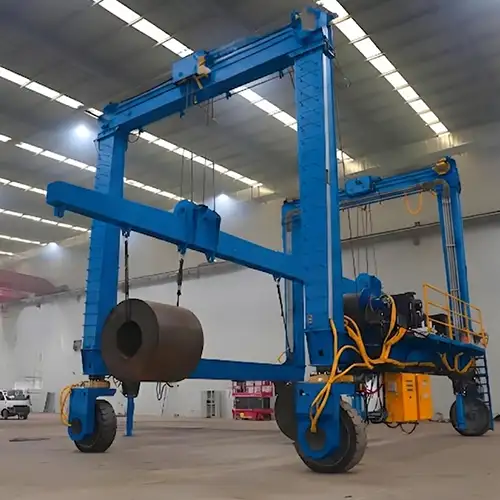
35 ton gantry crane for outdoor steel coil storage yard coil handlingTypical Applications
A 32-ton crane is ideal for facilities handling heavy or oversized coils, including:
- Hot rolling mill output yards: These operations frequently produce coils in the 20–30+ ton range that need safe, reliable handling.
- Thick, wide steel coils: Heavy-gauge steel or large-diameter coils require additional lifting capacity due to both weight and size.
- Export and high-density stacking areas: Cranes need to lift coils from storage or onto transport vehicles without compromising safety.
Practical insight: If your facility deals with heavier coils regularly, a 32-ton crane ensures smooth workflow and reduces the risk of overloading.
Capacity Logic
The choice of 32 tons is based on practical operational needs, not simply on the heaviest coil produced:
- Covers 25–30+ ton coils safely: Provides a sufficient safety margin above typical maximum coil weight.
- Necessary when clamp weight exceeds 2–3 tons: Motorized or adjustable clamps add significant weight to the total load, which a 25-ton crane may not handle comfortably.
- Supports higher duty classes and future expansion: Facilities planning for higher lifting frequency, future production increases, or larger coils benefit from the extra capacity.
Pro tip: Oversizing slightly is better than under-sizing. A 32-ton crane can handle heavier loads safely without being constantly stressed.
Common Misunderstanding
Many buyers assume that a 32-ton crane is only needed if coils weigh 32 tons. In reality:
- Safety margin is often the main reason: The crane handles dynamic loads, clamp weight, and occasional heavier coils.
- Future-proofing is key: Selecting 32 tons allows flexibility for heavier or wider coils in future operations without downtime or equipment upgrades.
Key takeaway: The 32-ton crane is about confidence and long-term operational safety, not just matching the exact coil weight.
Side-by-Side Comparison: 15T vs 25T vs 32T
Selecting the right coil handling crane can be tricky. Instead of relying on a single data point, buyers benefit from seeing each capacity broken down with practical operating logic. Below is a clear, side-by-side comparison of 15-ton, 25-ton, and 32-ton coil handling cranes.
15 Ton Coil Handling Crane
Ideal for: Light-duty operations with small, predictable coil weights.
- Typical coil weight: 5–12 tons
- Clamp suitability: Mechanical or light motorized clamps
- Safety margin: Low; crane often operates near rated capacity
- Upgrade flexibility: Limited if coil weights increase
- Long-term risk: Higher wear if used frequently near maximum load
Practical tip: Choose 15T only when coil weights are consistently light and operations remain stable.
25 Ton Coil Handling Crane
Ideal for: Most steel service centers and medium-weight, mixed coil inventories.
- Typical coil weight: 12–22 tons
- Clamp suitability: Mechanical or motorized clamps (~2.5 tons)
- Safety margin: Moderate and practical for daily operations
- Upgrade flexibility: Can handle moderate future increases
- Long-term risk: Balanced with proper maintenance
Practical tip: 25T is the most common choice because it balances cost, safety, and flexibility.
32 Ton Coil Handling Crane
Ideal for: Heavy-duty operations and high-density coil handling environments.
- Typical coil weight: 20–30+ tons
- Clamp suitability: Heavy motorized or adjustable clamps (2–3+ tons)
- Safety margin: High; handles dynamic and peak loads comfortably
- Upgrade flexibility: High; future-proof for expansion
- Long-term risk: Low; designed for frequent heavy-duty operation
Practical tip: 32T is often selected for safety margin and future growth—not because coils weigh exactly 32 tons.
Buyer Takeaways
- 15T: Suitable only for light coils with minimal variation
- 25T: Most versatile and widely adopted solution
- 32T: Best for heavy coils, high safety margin, and long-term confidence
Recommendation: Always size your crane based on the heaviest coil + clamp weight + dynamic load, not average daily weight.
Capacity Selection Mistakes Buyers Commonly Make
Even experienced buyers can make mistakes when selecting coil handling cranes. These errors often reduce safety, increase maintenance costs, and limit productivity. Below are the most common capacity-selection mistakes and how to avoid them.
Mistake 1: Sizing Based on Average Coil Weight Only
Many buyers assume that if a crane can handle the average coil, it is sufficient.
- Problem: Heavier or wider coils can overload the crane, increasing mechanical stress and slowing operations.
- Tip: Always design for maximum expected coil weight plus clamp and rigging weight, not the average.
Mistake 2: Ignoring Clamp and Attachment Weight
Lifting attachments are often overlooked during capacity calculation.
- Problem: A 1–3 ton clamp can consume a significant portion of crane capacity without operators realizing it.
- Tip: Include all clamps, hooks, spreaders, and rigging components in the total working load.
Mistake 3: Underestimating Working Frequency
Capacity alone does not define crane suitability—usage frequency matters.
- Problem: Cranes rated for occasional lifting wear rapidly when used continuously.
- Tip: Confirm duty class (ISO/FEM) based on lifts per hour, per shift, and per day.
Mistake 4: Focusing Solely on Initial Cost
Lowest purchase price does not equal lowest lifecycle cost.
- Problem: Budget cranes can result in higher maintenance, downtime, and early replacement.
- Tip: Evaluate total cost of ownership, including maintenance, energy, and upgrade costs.
Mistake 5: Not Planning for Future Product Upgrades
Coil sizes and production volumes often increase over time.
- Problem: A crane sized only for today's needs quickly becomes a bottleneck.
- Tip: Add a 10–25% safety margin to accommodate heavier coils and future expansion.
Key Takeaway for Buyers
- Always size cranes based on total working load, not nominal coil weight.
- Consider clamp weight, duty cycle, and long-term operational demands.
- A properly selected crane delivers higher safety, better efficiency, and longer service life.
How Under-Sizing Leads to Unsafe and Inefficient Operation
Selecting a crane that is too small for your coil handling needs doesn't usually cause instant failure. Instead, problems appear gradually, often during peak operations or when heavier coils are handled. Understanding these consequences helps buyers avoid hidden costs and safety risks.
Frequent overload alarms
Cranes constantly near or above capacity trigger warnings, interrupting workflow and reducing productivity.
Restricted lifting speed
Operators may need to slow down lifts to avoid overloading motors or gearboxes, which impacts cycle time and efficiency.
Higher mechanical stress
Components like wire ropes, brakes, gears, and hoists experience accelerated wear, shortening equipment life.
Increased maintenance and downtime
Frequent servicing is required to address wear and tear, leading to unexpected downtime and higher operational costs.
Elevated accident risk
Overloaded or stressed cranes are more likely to swing loads uncontrollably, misalign, or fail under stress, endangering personnel and damaging steel coils.
Key Message
Under-sized cranes do not fail immediately. They fail gradually over time and most often during peak operations when clamps, dynamic loads, and heavier-than-average coils combine. The result is inefficient operation, higher costs, and increased safety hazards.
Practical Takeaway for Buyers
• Always consider total working load: coil weight + clamp/rigging weight + dynamic factors.
• Include future-proofing: plan for heavier coils, higher lift frequency, and possible operational changes.
• Investing in the correct crane capacity from the start ensures safer operation, smoother workflow, and longer equipment life.
Practical Capacity Selection Checklist for Buyers
Before requesting a quote (RFQ) or confirming a purchase, buyers can use this practical checklist to verify that the crane capacity matches both current and future operational needs.
Maximum Coil Weight
Current and future heaviest coils. Include clamp and rigging weight; design for maximum, not average.
Clamp Type & Weight
Mechanical, motorized, or adjustable clamps. Motorized clamps may add 2–3+ tons, affecting total working load.
Safety Margin
Recommended 10–25% above total load. Covers dynamic forces, start/stop inertia, and occasional heavier coils.
Duty Class & Lifts per Shift
ISO/FEM duty rating. High-frequency lifting may require higher duty class to ensure longevity.
Workshop Span & Lifting Height
Crane span and maximum lifting height. Ensure proper coverage for storage areas, stacks, and future expansion.
Practical Tips for Buyers
• Always calculate total working load: coil weight + clamp + rigging + dynamic factors.
• Include a safety margin to avoid under-sizing and reduce long-term wear.
• Confirm duty class to match operational frequency and intensity.
• Check span and height to prevent operational restrictions and allow flexibility.
• Plan for future coil sizes or workflow changes to avoid premature crane replacement.
Final Recommendation: How Buyers Should Decide
Choosing the right coil handling crane is about matching capacity to actual operational needs, not just picking the largest crane. The right choice keeps operators safe, protects equipment, and ensures long-term productivity.
15 Ton Crane
• Suitable only when coil weights are consistently light (below 12 tons).
• Best for light-duty service centers, narrow steel coils, or aluminum coils.
25 Ton Crane
• Ideal for general-purpose steel coil handling.
• Handles medium-weight coils (12–22 tons) with a safe margin.
• Most common for mixed inventory and standard storage operations.
32 Ton Crane
• Recommended for heavy, wide, or high-density coils.
• Supports larger clamps, dynamic loads, and future upgrades.
• Ensures long-term flexibility and safe operation.
Key Takeaways
• A correctly sized crane protects people, products, and long-term productivity.
• Consider maximum coil weight, clamp weight, duty frequency, and future production changes before deciding.
Get Your Tailored Steel Coil Handling Cranes
Before buying or requesting a quote, verify crane capacity against real operational data to avoid costly mistakes and ensure safety and efficiency.
Practical Steps for Buyers
Verify with actual coil data
- Measure the heaviest coils currently handled.
- Include clamp and rigging weight in total working load.
Evaluate crane capacity before requesting a quotation
- Compare total load against available crane capacities (15T, 25T, 32T).
- Factor in safety margins, duty cycles, and future coil upgrades.
Tip: A quick capacity check before issuing an RFQ can save time, reduce risk, and prevent ordering an under-sized or over-specified crane.

Yuantai Cranes
Overhead Crane Manufacturer with CE, ISO, SGS, CNEX Certificates.
- Main Specifications - Capacity: 0.5–550 tons | Span: up to 40m | Speed: 0.8–12 m/min | Duty: A3–A7 | Power: 380–690V, 50/60Hz | Control: pendant/remote/cabin
- Full engineering: FEA/PLC/VFD + in-house build + global delivery + on-site support, for workshops, factories, EPC contractors, industrial projects, etc.
- Support: design, manufacturing, testing, service – end-to-end, customized lifting solutions worldwide.
How to Get an Accurate Crane Price for Your Application?
Tips: Copy the spec list, fill in your details, and paste it into the form on the right/ down-below for a quick price.
- Crane type:_____ . (e.g., overhead crane, gantry crane, jib crane)
- Max weight to lift:_____ tons. (e.g., 2t, 5t, 10t, 20t, 50t)
- Lifting height:_____ m. (How high does the hook need to reach?
- Workshop width (span):_____ m . (Distance between the two crane rails)
- Travel distance:_____ m . (How long does the crane need to move along the runway?)
- Control type:_____. (Pendant / remote / cabin Control)
- Power supply:_____. (Local voltage & frequency – e.g., 380V, 50Hz, 3-phase)
- What will it be used for?_____ (e.g., steel fabrication, concrete products, mold handling, general manufacturing, etc.)
- Any special requirements?_____ (e.g., extreme temperature, dusty or explosive environment, special paint color, etc.)
Just leave a message via the contact form and our hoist and crane engineer will contact you with in 24working hours.
Get Your Custom Quote–Quick & Easy
Fill in what you know. Skip what you don't – we'll help.Any question will be reply with 24 working hours