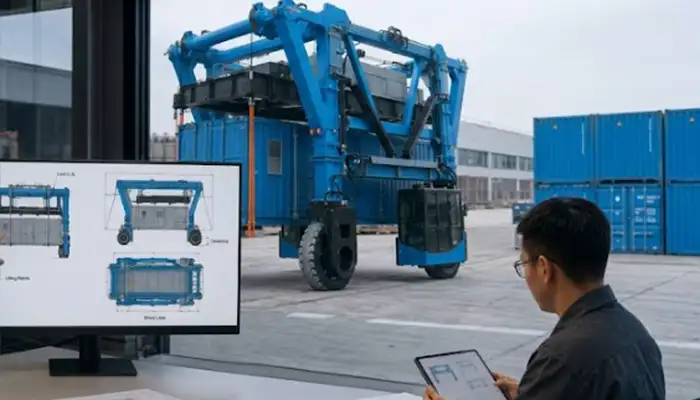
How Container Size & Weight Shape Straddle Carrier Design
Content Quick Link
Most Important Takeaway
Correctly designing a container straddle carrier based on container size, weight, and stacking height ensures maximum efficiency, safety, and long-term ROI in your yard operations.
Key Takeaways / Questions Solved Here:
- How container weight affects carrier frame strength and lifting systems.
- How container size determines span, clearance, and maneuverability.
- How multi-layer container stacking impacts stability and design.
- What practical adjustments make carriers safer and more future-proof.
- How to match yard layout and operational needs with carrier capabilities.
Introduction — Why This Matters for Buyers
A container straddle carrier is more than just lifting equipment—it's the backbone of container handling in a yard, port, or industrial facility. This guide helps you understand how container size, weight, and stacking patterns influence straddle crane design, helping you choose a carrier that works efficiently and safely in your operations.
Container Straddle Carrier and Operational Challenges
A container straddle carrier is more than just lifting equipment—it's the backbone of container handling in a yard, port, or industrial facility. But getting the right carrier is not as simple as picking one off a catalog.
- Containers vary widely in size and weight.
- Different stacking heights affect carrier stability.
- Yard layout, lane width, and ground conditions all influence performance.
Even small mismatches between the carrier and your containers can slow down operations and create safety concerns.
Risks of Choosing the Wrong Carrier
Selecting the wrong container straddle carrier can lead to problems that add up over time:
- Reduced efficiency: slower container moves and longer handling times.
- Safety hazards: tipping risks or accidental container damage.
- Higher operational costs: extra maintenance, repairs, or early replacement.
It's not just about lifting containers—it's about lifting them safely and efficiently, every single day.
Purpose of This Guide
This guide helps buyers understand how container size, weight, and stacking patterns influence straddle crane design. You'll learn:
- How container weight impacts carrier strength and hoist selection.
- How container dimensions affect width, span, and maneuverability.
- Why multi-layer stacking changes design and operational requirements.
- Practical questions to ask suppliers before making a purchase.
With the right knowledge, you can choose a carrier that works for your containers, your yard layout, and your workflow—without surprises.
Container Types and Sizes & Container Straddle Carriers
A container straddle carrier must match the types and sizes of containers in your yard. Understanding container variations helps ensure safe, efficient operations and reduces maintenance risks.
Container Straddle Carrier and Container Variations
A container straddle carrier needs to handle more than just the standard box. Containers come in different lengths, heights, and purposes, and these differences affect how the carrier performs on the yard floor. If the carrier isn't designed to match your container types, you may face slower operations, difficulty stacking, or extra maintenance.
Standard Containers:
- 20 ft: the most common, manageable size for most operations.
- 40 ft: longer, requires wider carrier span and more careful handling.
- 45 ft high-cube: taller containers, need extra lifting clearance.
Special Containers:
- Refrigerated containers: need a carrier that can connect or manage electrical power.
- Open-top or tank containers: require reinforced lifting points or adjustable handling mechanisms.
Practical Considerations for Buyers
When selecting a container straddle carrier, it's not enough to just look at standard specs. You need to think about:
- Handling mixed-length container fleets: Will your yard be moving 20 ft and 40 ft containers interchangeably? The carrier must adjust without slowing down operations.
- Accommodating high-cube or specialized containers: Some containers are taller or require power connections. The carrier must be able to lift them safely and efficiently.
Actionable Tip: Always plan for the largest and heaviest containers, not just the averages. This ensures your carrier works safely at all times and avoids unexpected downtime.
Buyer Checklist: Container Types and Carrier Features
| Container Type | Max Weight | Handling Challenge | Carrier Feature Needed |
|---|---|---|---|
| 20 ft standard | ~24t | Standard lift | Standard frame & spreader |
| 40 ft standard | ~30t | Longer span | Wider chassis & reinforced frame |
| High-cube 45 ft | ~28–30t | High clearance | Adjustable lifting height |
| Refrigerated | ~24–30t | Power required | Optional electrical connection |
Practical Note for Buyers:
Use this table as a reference when discussing specifications with suppliers. Make sure the carrier is rated not just for the average container, but for the largest, heaviest, or special containers your yard will handle.
How Container Weight Affects Straddle Carrier Design
When it comes to a container straddle carrier, container weight is one of the most critical design factors. It influences not only lifting height, but also frame strength, wheel system, and overall operational safety.
Container Straddle Carrier and Weight Considerations
When it comes to a container straddle carrier, the weight of the containers you plan to handle is one of the most critical factors. It doesn't just affect how high the carrier lifts—it impacts the strength of the frame, the wheels, and the entire lifting system. A carrier designed for lighter containers may struggle or even fail when handling heavier loads.
- Frame and chassis strength: Heavier containers require reinforced steel frames to prevent bending or structural failure.
- Wheel and suspension requirements: Proper wheels and suspension ensure smooth travel, even with full loads, and reduce wear over time.
- Lifting mechanism type: Single hoist systems may be enough for lighter containers, but dual hoists are often required for heavier loads or multi-layer stacking.
Safety Margin
Even if your heaviest container weighs 30 tons, it's wise to specify the carrier with a 10–20% safety margin. This extra capacity protects against:
- Unexpected load variations
- Dynamic forces during lifting, acceleration, and braking
- Long-term wear on structural components
Tip: Overestimating slightly ensures safety, prevents costly retrofits, and allows your carrier to handle unexpected situations without stress.
Practical Buyer Checklist
Before ordering or specifying a carrier, fill in these details:
- Maximum container weight: _______
- Frequency of heavy lifts (daily/weekly): _______
- Future weight increases expected? Yes / No
- Load margin included in specifications: _______
This checklist helps suppliers design a carrier that's strong enough for your current containers and ready for future demands.
How Container Size Affects Carrier Design
A container straddle carrier is not one-size-fits-all. Container dimensions directly influence lifting stability, maneuverability, and stacking efficiency in real yard operations.
Container Straddle Carrier and Size Considerations
A container straddle carrier isn't one-size-fits-all. The length, width, and height of the containers you move directly affect carrier design and yard operations. If you overlook these factors, even a well-built carrier can struggle to maneuver safely or stack efficiently.
- Width and span adjustments: Longer containers like 40 ft or 45 ft high-cube require a wider carrier span to lift safely without tipping.
- Height and multi-layer stacking: Taller containers and multiple stack layers demand extra lifting clearance and sometimes reinforced structures to maintain stability.
- Turning radius and lane width: Longer containers need more space to turn and travel. Narrow lanes or congested areas may limit the carrier's effectiveness if it isn't properly sized.
Practical Buyer Questions for Suppliers
Here are common questions buyers ask, with simple, practical answers:
Can one carrier handle multiple container lengths?
- Answer: Yes, if the carrier has an adjustable or telescopic spreader. This allows it to safely lift 20 ft, 40 ft, and sometimes even 45 ft containers without swapping equipment.
Is the carrier compatible with narrow or congested lanes?
- Answer: Check the carrier's chassis width and turning radius. Some carriers are designed with tighter turning capabilities, but very narrow lanes may still require custom adjustments.
Can it safely reach maximum stacking heights in the yard?
- Answer: Only if the lifting mechanism is tall enough and the frame is reinforced for stability. Most suppliers provide height ratings and stacking capacity—always verify against your yard's highest stack.
Tip for Buyers
Always plan for the largest and tallest containers in your yard. If your carrier can safely handle the extremes, it will manage smaller containers with ease and reduce the risk of accidents.
Multi-Layer Container Stacking Considerations
A container straddle carrier is often used for multi-layer stacking in modern yards. The number of stack layers directly affects stability, safety systems, and overall carrier design.
Container Straddle Carrier and Stacking Heights
A container straddle carrier must handle more than just lifting a single container. Many yards stack containers in multiple layers to maximize space. The number of layers changes how the carrier behaves and what features it needs.
Common stacking: 2–4 layers depending on container type and yard layout.
Design implications:
- Higher stacks raise the center of gravity, which can make the carrier less stable. Reinforced chassis and load-sensing systems are often required.
- Dynamic forces from starting, stopping, or turning, as well as wind on taller stacks, affect stability and safety.
Practical Guide for Buyers
When planning for multi-layer stacking, consider these steps:
- Ask suppliers for stability calculations: These show how the carrier will behave at full load and maximum stacking height.
- Ensure spreader bar height adjusts automatically: This allows safe handling of different stack layers without manual adjustments.
- Match stacking strategy to lifting capacity and yard layout: Don't exceed the carrier's maximum rated height or weight per stack.
Simple Reference Table for Buyers
| Stack Height | Container Type | Recommended Carrier Feature | Simple Explanation |
|---|---|---|---|
| 2 layers | 20 ft | Standard chassis, normal stability | Basic lifting, low center of gravity |
| 3 layers | 40 ft | Reinforced chassis, dual hoist, load sensors | Extra stability for taller stacks and heavier containers |
| 4 layers | Mixed | Adjustable spreader, anti-tilt, dynamic load management | Handles varying sizes and weights safely, compensates for wind and movement |
Tips for Buyers
- Always check the maximum stack height your yard uses and ensure the carrier can reach it safely.
- Multi-layer stacks require more stability features, so don't assume a standard carrier is sufficient.
- If mixing container sizes in stacks, request adjustable spreaders and anti-tilt systems.
Straddle Carrier Design Adjustments for Varied Loads
A container straddle carrier must adapt to different container types, weights, and stacking demands. Proper design adjustments ensure safe lifting, stable operation, and long-term flexibility in real yard conditions.
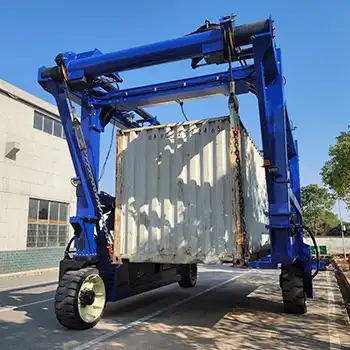
chain type container straddle carrier
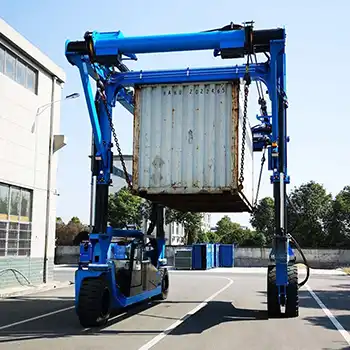
Telescopic Chain Container Straddle Carrier
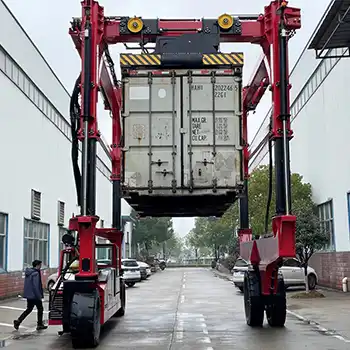
Telescopic Toplift Container Straddle Carrier
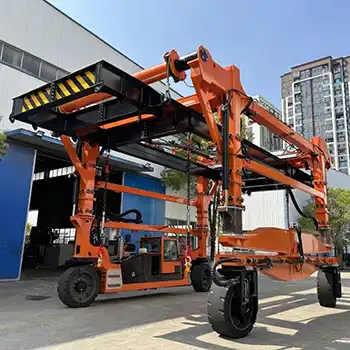
Multifunctional straddle carrier
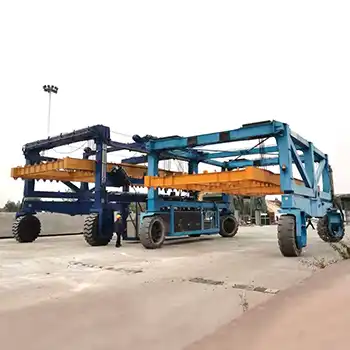
Multifunctional straddle carrier
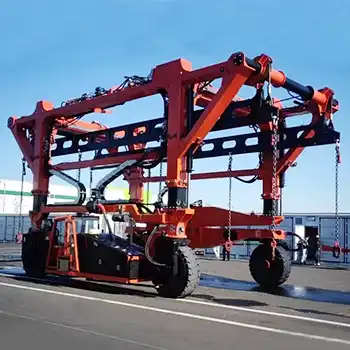
Multifunctional straddle carrier
Container Straddle Carrier and Load Variations
A container straddle carrier doesn't handle every load the same way. The type, weight, and size of containers, plus stacking requirements, can require specific design adjustments. Making the right choices ensures safe, efficient, and flexible operations.
- Adjustable spreaders: Ideal for yards handling mixed container lengths (20 ft, 40 ft, high-cube). They allow the carrier to lift different sizes without changing equipment or slowing down operations.
- Chassis reinforcement: Heavier containers or multi-layer stacks put extra stress on the frame. Reinforced chassis prevent bending or structural failure over time.
- Load-sensing and anti-tilt systems: These features detect uneven loads or leaning containers, automatically adjusting to reduce the risk of tipping. They also improve operator confidence and safety.
Future-Proofing Questions for Buyers
Before purchasing, consider these practical points:
Can the carrier handle heavier or larger containers in the future?
- Choose a carrier with extra lifting capacity or modular options so you're not limited if container sizes increase.
Are modular upgrades available for hoists, spreaders, and control systems?
- Some carriers allow retrofits, such as adding dual hoists, telescopic spreaders, or advanced load management systems, which saves time and cost down the line.
Tip for Buyers
Balance initial cost, operational efficiency, and flexibility. A slightly higher upfront investment in a carrier designed for mixed loads and future growth can prevent expensive modifications or replacements later.
Practical Buyer Considerations
Selecting a container straddle carrier requires more than checking lifting capacity. Yard conditions, operational frequency, and long-term cost all directly affect performance and safety in real operations.
Yard Layout
A container straddle carrier needs room to operate efficiently. Even the strongest carrier can run into trouble if your yard isn't suitable. Consider:
- Lane width: Make sure there's enough space for the carrier to travel safely with fully loaded containers.
- Turning radius: Longer containers need more room to turn; tight corners can slow operations or cause collisions.
- Ground stability: Uneven or soft ground can stress the chassis and wheels, increasing wear and maintenance.
Operational Frequency
Think about how often containers are moved and how high you stack them. This affects carrier requirements:
- Daily moves: High-frequency operations may need carriers with reinforced frames or dual hoists.
- Multi-layer stacking: Taller stacks require carriers with enough lifting clearance and stability features.
Cost vs Performance
It's tempting to go for the cheapest option, but total operational efficiency matters more in the long run:
- Higher capacity carriers: More expensive upfront, but improve throughput and reduce downtime.
- Lower cost carriers: May save money initially, but risk higher maintenance costs and slower operations.
Supplier Discussion Checklist
Before committing, make sure your supplier can address these points:
- Maximum lifting capacity and height
- Stackable container types and heights
- Options for non-standard containers (adjustable spreaders, anti-tilt, load sensors)
- Maintenance schedule and long-term operational cost
Quick Buyer Tip
A well-chosen container straddle carrier is not just about lifting containers—it's about running your yard safely, efficiently, and cost-effectively for years. Review yard layout, stacking requirements, and operational frequency before finalizing your choice.
Conclusion
Container Straddle Carrier: Why Design Matters
A container straddle carrier that’s properly designed for your containers and yard layout makes a big difference. It doesn’t just lift containers—it improves efficiency, safety, and long-term value. Choosing the right carrier upfront saves downtime, reduces accidents, and protects your investment.
Key Steps for Buyers
To make the best decision, focus on these practical steps:
- Assess your container fleet: Consider size, weight, handling frequency, and stacking patterns.
- Measure your yard layout: Check lane width, turning radius, and ground stability to ensure smooth operations.
- Specify carrier capacity: Make sure the carrier can handle the maximum load with a safety margin of 10–20%.
- Confirm stacking capabilities: Verify that the carrier can manage multi-layer stacks and any special container types.
- Consult suppliers about upgrades: Ask about modular options for hoists, spreaders, or load sensors to future-proof your investment.
Investing in the right container straddle carrier isn’t just a purchase—it’s a strategic decision. A well-designed carrier improves productivity, operational safety, and ROI for years to come. Taking the time to evaluate your containers, yard, and operational needs upfront ensures that your carrier works efficiently and reliably, from day one.

Article by Bella ,who has been in the hoist and crane field since 2016. Bella provides overhead crane & gantry crane consultation services for clients who need a customized overhead travelling crane solution.Contact her to get free consultation.
Yuantai Cranes
Overhead Crane Manufacturer with CE, ISO, SGS, CNEX Certificates.
- Main Specifications - Capacity: 0.5–550 tons | Span: up to 40m | Speed: 0.8–12 m/min | Duty: A3–A7 | Power: 380–690V, 50/60Hz | Control: pendant/remote/cabin
- Full engineering: FEA/PLC/VFD + in-house build + global delivery + on-site support, for workshops, factories, EPC contractors, industrial projects, etc.
- Support: design, manufacturing, testing, service – end-to-end, customized lifting solutions worldwide.
How to Get an Accurate Crane Price for Your Application?
Tips: Copy the spec list, fill in your details, and paste it into the form on the right/ down-below for a quick price.
- Crane type:_____ . (e.g., overhead crane, gantry crane, jib crane)
- Max weight to lift:_____ tons. (e.g., 2t, 5t, 10t, 20t, 50t)
- Lifting height:_____ m. (How high does the hook need to reach?
- Workshop width (span):_____ m . (Distance between the two crane rails)
- Travel distance:_____ m . (How long does the crane need to move along the runway?)
- Control type:_____. (Pendant / remote / cabin Control)
- Power supply:_____. (Local voltage & frequency – e.g., 380V, 50Hz, 3-phase)
- What will it be used for?_____ (e.g., steel fabrication, concrete products, mold handling, general manufacturing, etc.)
- Any special requirements?_____ (e.g., extreme temperature, dusty or explosive environment, special paint color, etc.)
Just leave a message via the contact form and our hoist and crane engineer will contact you with in 24working hours.
Get Your Custom Quote–Quick & Easy
Fill in what you know. Skip what you don't – we'll help.Any question will be reply with 24 working hours