Industrial Crane Supplier Evaluation: Certifications, Factory Assessment & Buyer Checklist
Content Quick Link
Industrial Crane Supplier Evaluation: Certifications, Factory Assessment & Buyer Checklist
Key Takeaways for Crane Buyers
This guide helps industrial buyers, project managers, and crane dealers quickly assess crane suppliers and make informed decisions:
- Verify the manufacturer's legal qualifications for crane production.
- Identify which certifications and quality systems matter.
- Understand ISO management systems' impact on crane reliability and safety.
- Evaluate engineering strength through patents and technical documents.
- Assess factory and warehouse capacity for timely delivery and long-term support.
- Learn from real project cases instead of relying on brochures.
- Reduce procurement risk with structured supplier evaluation.
- Compare bridge crane and gantry crane factories efficiently.
Introduction: Why Factory Evaluation Matters for Industrial Crane Buyers
When most industrial crane buyers start looking for a supplier, they usually check crane lifting capacity, bridge crane span, or price per ton first. That's understandable, but these numbers alone don't guarantee a crane will perform reliably on your site. The real question is whether the overhead crane manufacturer can deliver a safe, durable, and fully operational crane for your working conditions.
Why is factory evaluation important for industrial crane buyers?
In real industrial projects, cranes are more than just lifting machines. They are part of the daily material handling system, and any failure can cause major delays or safety incidents. A thorough crane factory evaluation is essential to avoid costly mistakes.
Overhead cranes, gantry cranes, and industrial bridge cranes are widely used in:
- Steel plants and steel mills – lifting heavy steel slabs, coils, and billets; precise load handling is critical.
- Machinery manufacturing workshops – transporting large machine parts and assemblies; smooth operation reduces production downtime.
- Wind turbine assembly plants – handling long, heavy blades and nacelles with stability and precision.
- Infrastructure and construction projects – ports, bridges, and civil works where crane downtime can disrupt schedules.
Risks of selecting an unqualified crane manufacturer include:
- Delivery delays for industrial cranes – slow production or limited capacity can delay your project.
- Installation and commissioning problems – poorly manufactured cranes are harder to assemble and adjust on-site.
- Safety hazards during crane operation – low-quality welding, weak structures, or faulty electrical systems put workers at risk.
- High maintenance costs for overhead cranes – frequent breakdowns and repairs can increase operational costs.
- Limited spare parts availability – downtime extends if the manufacturer doesn't maintain sufficient inventory or support.
Pro Tip: Before even looking at crane prices or technical specifications, check the industrial crane manufacturer itself. Walk the factory if possible, ask about production processes, quality control measures, and testing procedures. Buyers who do this can reduce the risk of crane procurement issues, improve project timelines, and ensure safe crane operation.
What Buyers Check Before Technical Discussions in Crane Procurement
Before diving into crane specifications, most experienced industrial crane buyers focus on the supplier first. Why? Because a bridge crane or gantry crane can look perfect on paper, but if the manufacturer or supplier cannot deliver on time, maintain quality standards, or support installation, it will cost your project in both time and money.
A practical crane procurement process usually follows this flow:
- Legal documents verification – Check the manufacturer's business license, special equipment manufacturing license, and construction qualification certificates. These confirm the company is legally authorized to manufacture and install overhead cranes.
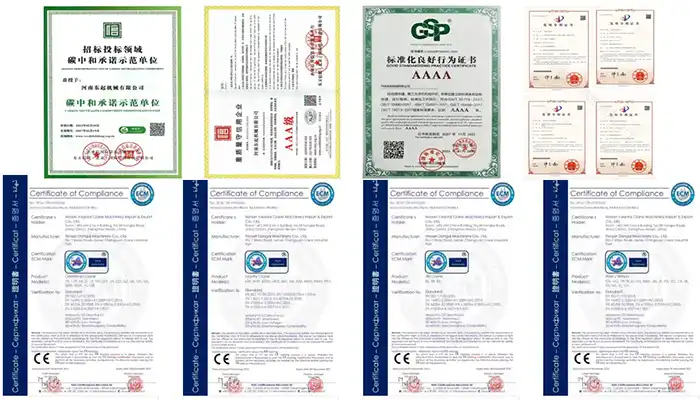
- Certifications and quality management systems – Review ISO 9001, ISO 14001, and ISO 45001 certificates, as well as production control systems. These show whether the manufacturer follows standard quality assurance processes for industrial cranes.
- Factory capability assessment – Evaluate the size of the factory, production equipment, machining precision, and monthly output. A factory with adequate bridge crane production capacity reduces the risk of delivery delays.
- Project experience and references – Look at past projects, including steel mill cranes, machinery workshop cranes, and wind turbine assembly cranes. Real project experience shows whether the supplier can handle the specific working conditions of your site.
- Technical proposal comparison – Only after verifying the manufacturer and past performance should buyers compare technical specifications, lifting capacity, span, hoist options, and safety systems between suppliers.
Buyer goal: By following this step-by-step check, you avoid wasting time on suppliers that cannot meet your requirements for industrial crane procurement, overhead crane installation, or gantry crane projects. It also reduces risks related to delivery delays, installation issues, and long-term maintenance problems.
Pro Tip: Always request detailed evidence. Don't just take brochures or datasheets at face value. Ask for factory photos, production process documentation, and actual project performance records. This ensures you are evaluating a manufacturer that can actually deliver the crane your project needs.
EOTCRANEKIT'S Certifications Documents for Your Reference
Legal Documents: How to Verify a Crane Factory or Manufacturer
When sourcing a crane supplier or evaluating a crane factory, the first step is to check their legal documents. These documents prove that the overhead crane manufacturer or gantry crane supplier is legitimate, able to produce cranes that meet industrial standards, and capable of supporting your project safely and reliably.
Why check legal documents of a crane supplier or manufacturer?
For crane buyers, crane dealers, and project managers, reviewing legal documents helps avoid unqualified suppliers and reduces risks such as delivery delays, poor crane performance, or installation problems.
Business License
Every crane buyer or dealer should request the business license of a crane factory or manufacturer.
- Confirms the company is legally registered.
- Shows that the supplier is authorized to manufacture, trade, or distribute industrial cranes.
- Helps distinguish genuine crane manufacturers from trading-only companies.
Buyer focus:
- Avoid fake suppliers or factories that cannot legally produce cranes.
- Verify the company identity before requesting quotations or technical proposals.
Special Equipment Manufacturing License (Crane Production Approval)
A Special Equipment Manufacturing License is mandatory for any crane factory or manufacturer producing bridge cranes, overhead cranes, or gantry cranes.
- Confirms the supplier meets national industrial regulations for lifting equipment.
- Ensures the crane can pass inspection and meet project acceptance requirements.
Buyer focus:
- Only suppliers with this license can legally produce cranes for industrial use.
- Helps confirm that your crane dealer or factory is capable of delivering compliant, certified cranes.
Safety Production License
A Safety Production License indicates how the crane factory or manufacturer manages safety in production.
- Shows implementation of workshop safety systems.
- Confirms production control procedures are in place.
- Indicates whether cranes are produced consistently and safely.
Buyer benefit:
- Predictable, stable crane production.
- Reduced risk of defects or unsafe cranes being delivered.
Construction Qualification Certificate (Installation Ability)
If your project requires installation, commissioning, or turnkey crane solutions, this certificate is critical.
- Confirms the crane factory or manufacturer can perform on-site assembly, testing, and project support.
- Shows ability to coordinate complex installations and reduce subcontractor dependency.
Buyer benefit:
- Faster crane installation and commissioning.
- Better coordination between crane factory, dealer, and your project team.
- Lower risk of delays or errors during installation.
Pro Tip for Crane Buyers and Dealers
Always request verified copies of these legal documents before discussing price or technical details. Suppliers who provide transparent documentation demonstrate reliability and professionalism. A properly vetted crane factory or manufacturer ensures smoother industrial crane procurement, safer operations, and better project outcomes.
Quality System Certifications: How Crane Factories Ensure Reliable Production
When evaluating a crane factory or crane manufacturer, the manufacturer and supplier's certifications are more than just paperwork—they are proof that the supplier can produce overhead cranes, gantry cranes, and bridge cranes that meet industry standards. For crane buyers, dealers, and project managers, checking these certifications helps reduce the risk of quality problems, installation delays, and costly maintenance.
A well-certified crane factory demonstrates that it follows structured processes and can consistently deliver safe, durable cranes for industrial applications.
Why are ISO certifications important for crane manufacturers?
Most experienced buyers start by verifying whether the crane supplier holds ISO certifications. These include:
- ISO 9001: Quality Management – Ensures the crane factory maintains consistent production standards, reducing errors in welding, machining, and assembly. This guarantees that the overhead crane or gantry crane delivered matches specifications.
- ISO 14001: Environmental Management – Shows that the manufacturer manages environmental risks responsibly, which is increasingly important for international projects or environmentally regulated sites.
- ISO 45001: Occupational Health & Safety – Confirms the supplier follows strict safety protocols, protecting workers and ensuring cranes are manufactured under controlled conditions.
Buyer benefit:
- Consistent quality in every crane delivered.
- Reduced risk of defects and operational issues.
- Safe production practices that increase trust in the supplier.
What are measurement and production control systems in a crane factory?
A reputable crane factory goes beyond certifications and invests in precise measurement and production control systems. These systems ensure:
- Accurate machining and welding for structural components of bridge cranes and gantry cranes.
- Assembly precision so that cranes fit perfectly during installation on-site.
- Stability and smooth operation once the crane is in daily use.
Buyer benefit:
- Easier installation and commissioning for industrial projects.
- Reduced downtime due to fewer defects or misalignments.
- Reliable long-term performance, whether in a steel mill, machinery workshop, or wind turbine assembly plant.
Practical advice for crane buyers and dealers
When choosing a crane manufacturer or supplier, request proof of ISO certifications and examples of production control practices. A factory that maintains strong quality management systems consistently produces overhead and gantry cranes that operate safely and efficiently. Don't rely solely on brochures—look for documentation and evidence of the supplier's real-world capabilities.
Credit & Compliance Evaluation: Ensuring Your Crane Supplier is Reliable
When choosing a crane manufacturer, crane factory, or crane supplier, it's not enough to check technical capability and certifications. Financial stability and compliance are just as important, especially for large-scale overhead crane or gantry crane projects. Evaluating credit and compliance helps crane buyers and dealers reduce the risk of project delays, contract disputes, or supplier instability.
Why is an AAA Credit Rating important for a crane supplier?
A top-rated crane supplier with an AAA credit rating signals strong financial health.
- Demonstrates the supplier's ability to fund production for bridge cranes, overhead cranes, or gantry cranes without delays.
- Shows long-term reliability, so projects can continue smoothly over multiple phases.
Buyer benefit:
- Reduces risk of supplier bankruptcy or payment issues.
- Ensures the crane factory can handle large orders on time.
- Builds confidence in long-term collaboration with the manufacturer.
What does an Enterprise Credit Rating Certificate indicate?
This certificate evaluates a crane manufacturer or supplier beyond just financial numbers.
- Measures business consistency, contract fulfillment, and payment reliability.
- Assesses the supplier's risk level for industrial crane procurement, especially for international orders or large batch projects.
Buyer benefit:
- Helps identify suppliers who consistently deliver cranes without contractual disputes.
- Provides assurance when working with new crane dealers or manufacturers in unfamiliar regions.
Why consider sustainability and carbon commitment?
Modern crane factories and manufacturers are increasingly expected to demonstrate environmental responsibility.
- Indicates the supplier follows green manufacturing practices.
- Shows compliance with international standards for environmental protection.
- Important for industrial projects where sustainability is a requirement or for global crane buyers sourcing overseas.
Buyer benefit:
- Confirms the supplier can meet international procurement requirements.
- Supports your project's sustainability goals without compromising crane quality.
- Adds value when selecting a crane dealer or manufacturer for long-term partnerships.
Practical advice for crane buyers and dealers
When evaluating a crane supplier or manufacturer, request documentation of credit ratings and compliance certificates. A factory with verified financial stability, consistent business practices, and a commitment to sustainability is far more likely to deliver overhead cranes, gantry cranes, and bridge cranes reliably and on schedule.
Patent & Technical Capability: How Crane Manufacturers Prove Engineering Strength
For crane buyers, dealers, and project managers, the technical capability of a crane factory or crane supplier is just as important as certifications or production capacity. Patents provide clear evidence that the manufacturer can design and deliver overhead cranes, gantry cranes, and bridge cranes that are not only functional but optimized for efficiency and safety.
Why are patents important for crane manufacturers?
A crane manufacturer with patents demonstrates real engineering expertise rather than simply assembling standard components.
- Patents show the factory can innovate for custom crane projects, where off-the-shelf solutions might not fit.
- Indicates the supplier has technical ability to optimize cranes for safety, stability, and efficiency.
Buyer benefit:
- Confidence in the crane supplier's ability to deliver tailored solutions.
- Assurance of engineering strength and problem-solving capability for complex projects.
What types of patents do crane factories usually hold?
A credible crane factory may hold patents in areas such as:
- Structural optimization – reducing weight, improving stability, and enhancing crane performance.
- Hoisting mechanism design – ensuring smooth, precise lifting of heavy loads.
- Anti-sway systems – minimizing load swing during lifting and transport.
- Safety protection systems – built-in features for operator and material protection.
- Intelligent control systems – automation and monitoring for efficiency and crane longevity.
Buyer benefit:
- Flexibility to specify advanced features such as anti-sway, intelligent controls, or custom hoists.
- Confidence that the supplier can handle unique operational requirements safely.
Practical advice for crane buyers and dealers
When sourcing a crane manufacturer or supplier, ask for patent documentation and examples of past implementations. A factory that invests in R&D and protects its innovations is more likely to provide overhead, gantry, and bridge cranes that are safe, efficient, and tailored to industrial project needs.
Factory & Warehouse Capability: Ensuring Timely Delivery and Long-Term Support
For crane buyers, dealers, and project managers, evaluating a crane factory or crane manufacturer goes beyond certifications and technical expertise. Real-world industrial crane projects depend on whether the supplier can deliver cranes on time and support long-term operations with spare parts and maintenance. A factory's production and warehouse capabilities are critical indicators of reliability for overhead cranes, gantry cranes, and bridge cranes.
Production Capability
When assessing a crane manufacturer or crane supplier, check the following:
- Factory size and layout – Indicates the scale and capacity for large projects.
- Production equipment level – Modern machinery ensures precision in welding, machining, and assembly.
- Monthly output and batch capacity – Shows whether the factory can handle multiple cranes or large orders simultaneously.
Buyer question:
- Can this crane factory deliver your order on schedule?
- Are they capable of producing cranes that meet your specific lifting capacity, span, and safety requirements?
Buyer benefit:
- Reduced risk of delivery delays for your industrial crane projects.
- Greater confidence when planning installation and commissioning schedules.
- Assurance that the manufacturer can handle large or repeated orders.
Warehouse & Spare Parts System
Long-term crane operation depends on how the crane factory or supplier manages spare parts and inventory:
- Spare parts availability – Critical for fast repairs and minimizing downtime.
- Inventory management – Ensures parts for overhead cranes, gantry cranes, and bridge cranes are ready when needed.
- Packaging and delivery systems – Protects components during transport and simplifies logistics for global or local projects.
Buyer benefit:
- Faster maintenance and reduced crane downtime.
- Reliable long-term support for industrial operations.
- Smoother project execution when using a trusted crane dealer or supplier.
Practical Advice for Crane Buyers and Dealers
Before committing to a crane manufacturer or crane supplier, request evidence of production capacity and warehouse organization. Visit the factory if possible, and ask about their batch project handling, spare parts inventory, and delivery timelines. A strong factory and warehouse system ensures your overhead, gantry, or bridge cranes operate reliably from day one.
Project Experience: Evaluating a Crane Manufacturer's Track Record
When selecting a crane factory or crane supplier, nothing proves capability like real-world projects. Industrial crane buyers, dealers, and project managers often rely on past performance to gauge whether a manufacturer can deliver overhead cranes, gantry cranes, or bridge cranes that perform safely and reliably in demanding environments. Experience matters because each industry has unique challenges, from heavy steel handling to precise assembly operations.
Project Cases
Reviewing actual project cases shows whether the crane manufacturer or supplier has handled projects similar to yours. Examples include:
- Steel plants and steel mills – Lifting heavy slabs, coils, and billets safely and efficiently.
- Wind power manufacturing – Handling long, oversized components such as turbine blades and nacelles.
- Machinery workshops – Transporting large assemblies with precision and minimal downtime.
- Infrastructure projects – Ports, bridges, and industrial construction sites where crane reliability affects overall project schedules.
Buyer focus:
- Does this crane factory understand your specific industry and working conditions?
- Can the supplier provide solutions for unique project challenges or site constraints?
Project Performance List
A detailed project performance list provides proof of execution, beyond brochures and marketing claims:
- Number of overhead cranes, gantry cranes, or bridge cranes delivered.
- Range of lifting capacities handled and project scales.
- Industry coverage and experience with batch orders or multiple simultaneous installations.
Buyer benefit:
- Real delivery history confirms the supplier's ability to execute projects reliably.
- Reduces risk compared to relying solely on technical specifications or claims in brochures.
- Offers confidence when planning installation schedules and future maintenance support.
Practical Advice for Crane Buyers and Dealers
Ask the crane manufacturer or crane supplier for references, photos, or videos of completed projects. A factory that can show a diverse portfolio—from steel mills to wind turbine assembly—demonstrates both flexibility and reliability. Performance records are one of the strongest indicators that your overhead, gantry, or bridge crane project will run smoothly from delivery to daily operation.
Step-by-Step Crane Factory Evaluation: A Practical Guide for Crane Buyers
For crane buyers, crane dealers, and project managers, evaluating a crane factory or crane manufacturer is essential before making any technical or pricing decisions. Following a structured approach helps reduce risk and ensures you select a supplier who can reliably deliver overhead cranes, gantry cranes, or bridge cranes for your industrial projects.
Step 1: Verify Legal Documents
Start by checking the crane supplier's legal qualifications, including business license, special equipment manufacturing license, safety production certificate, and construction qualification.
- Confirms the manufacturer is legally authorized to produce industrial cranes.
- Helps avoid trading-only suppliers or unqualified factories.
Step 2: Assess ISO and Safety Management Systems
Next, review the crane factory's ISO certifications (ISO 9001, 14001, 45001) and production safety protocols.
- Ensures consistent quality and controlled manufacturing processes.
- Confirms the factory prioritizes worker safety and environmental compliance.
Step 3: Review Patents and Engineering Strength
Check whether the crane manufacturer or supplier holds patents for structural optimization, hoisting mechanisms, anti-sway systems, safety features, and intelligent controls.
- Shows capability for custom crane projects and innovative solutions.
- Confirms strong engineering background and flexibility to meet project-specific requirements.
Step 4: Check Similar Project Cases
Evaluate past projects handled by the crane factory:
- Industrial applications such as steel plants, wind power workshops, machinery workshops, and infrastructure projects.
- Project performance lists showing delivered crane capacities, industry coverage, and batch project capability.
Buyer benefit:
- Real project experience is more reliable than product brochures.
- Confirms the supplier understands your industry-specific working conditions.
Step 5: Evaluate Factory and Warehouse Capability
Assess production capacity and warehouse systems:
- Factory size, production equipment, monthly output, and batch handling capabilities.
- Spare parts availability, inventory management, packaging, and delivery processes.
Buyer benefit:
- On-time delivery and smooth installation.
- Faster maintenance and reduced downtime for your cranes.
Step 6: Assess Credit and Financial Stability
Review the supplier's financial standing and compliance:
- AAA credit rating and enterprise credit certificates confirm reliability.
- Sustainability and carbon commitments show long-term operational stability and environmental compliance.
Buyer benefit:
- Ensures the crane factory or crane supplier can complete long-term projects without risk.
Pro Tip for Crane Buyers and Dealers
Follow this evaluation sequence for steel mills, EPC projects, and heavy industrial procurement. A structured approach reduces risk, ensures delivery on time, and guarantees that the overhead cranes, gantry cranes, or bridge cranes meet your operational and safety requirements.
Frequently Asked Questions: Crane Factory & Supplier Evaluation
Answers to common questions from crane buyers, dealers, and project managers about evaluating crane manufacturers, suppliers, and factories for overhead, gantry, and bridge crane projects.
Why do crane buyers check certifications first?
Certifications prove the crane factory or manufacturer meets legal, quality, and safety standards.
- ISO certifications and manufacturing licenses confirm that the supplier follows structured processes.
- This helps buyers avoid unqualified suppliers and reduces the risk of downtime or unsafe crane operations.
What is the most important crane manufacturing license?
The Special Equipment Manufacturing License shows a factory is legally authorized to produce industrial cranes.
- It ensures the crane can pass inspection and comply with national standards.
- Essential for buyers sourcing overhead, gantry, or bridge cranes for steel mills, workshops, or infrastructure projects.
How do project cases reduce procurement risk?
Real project examples show the supplier's ability to deliver and support cranes in environments like yours.
- Seeing cranes installed in steel plants, wind turbine workshops, or machinery factories provides confidence in handling complex tasks.
- Buyers can check whether the supplier understands industry-specific challenges and operational conditions.
Do ISO certificates guarantee crane quality?
ISO certificates indicate structured production, but quality also depends on patents, process control, and past projects.
- ISO 9001 ensures quality management, ISO 14001 shows environmental control, and ISO 45001 confirms safety systems.
- Combine with project experience and technical capabilities for a complete picture of a crane supplier's reliability.
Why are patents important in crane selection?
Patents show real engineering ability and innovation.
- They demonstrate the crane manufacturer can design features like anti-sway systems, intelligent controls, and optimized hoists.
- Buyers gain confidence that custom solutions will meet operational requirements and safety standards.
How does factory size affect delivery time?
Larger, well-equipped crane factories can handle bigger orders and reduce lead times.
- Bigger workshops and advanced machinery mean multiple cranes can be produced simultaneously.
- Helps buyers and project managers plan schedules for industrial sites without delays.
What is the difference between project cases and performance lists?
Project cases show real installations, while performance lists summarize delivery history and capacity coverage.
- Project cases give insight into working conditions, crane application, and installation challenges.
- Performance lists help buyers quickly assess whether a supplier can handle batch orders or diverse industry needs.
How can buyers verify real crane manufacturing ability?
Combine checks of legal documents, certifications, patents, factory and warehouse capacity, and project references.
- Evaluating all these factors together shows if the crane supplier can reliably deliver and support overhead, gantry, or bridge cranes.
- Reduces the chance of surprises during installation or operation.
Should installation certificates matter if I only buy the crane?
Yes, because installation capability often reflects better crane quality and assembly fit.
- A crane manufacturer with certified installation experience ensures components fit precisely.
- Even without on-site installation, this reduces assembly issues and future maintenance problems.
How can buyers assess after-sales support?
Look at warehouse capacity, spare parts availability, delivery efficiency, and past project references.
- Suppliers with organized spare parts and fast logistics minimize downtime.
- Buyers and crane dealers can confirm reliability by checking long-term service and maintenance history from real projects.
Conclusion: Selecting a Reliable Crane Supplier
Reliable crane suppliers are confirmed by a combination of factors:
- Legal qualification documents that prove the crane factory or manufacturer is authorized to produce overhead cranes, gantry cranes, and bridge cranes.
- ISO and safety management systems that ensure consistent quality, safe production, and compliance with industrial standards.
- Engineering patents and technical capability demonstrating the supplier can handle custom crane solutions and complex industrial requirements.
- Production and warehouse strength supporting on-time delivery, spare parts availability, and smooth installation.
- Real industrial project experience in steel mills, machinery workshops, wind power plants, and infrastructure projects.
Evaluating all these elements together reduces procurement risks, ensures safe and efficient crane operation, and secures long-term success for industrial projects.

Article by Bella ,who has been in the hoist and crane field since 2016. Bella provides overhead crane & gantry crane consultation services for clients who need a customized overhead travelling crane solution.Contact her to get free consultation.
Yuantai Cranes
Overhead Crane Manufacturer with CE, ISO, SGS, CNEX Certificates.
- Main Specifications - Capacity: 0.5–550 tons | Span: up to 40m | Speed: 0.8–12 m/min | Duty: A3–A7 | Power: 380–690V, 50/60Hz | Control: pendant/remote/cabin
- Full engineering: FEA/PLC/VFD + in-house build + global delivery + on-site support, for workshops, factories, EPC contractors, industrial projects, etc.
- Support: design, manufacturing, testing, service – end-to-end, customized lifting solutions worldwide.
How to Get an Accurate Crane Price for Your Application?
Tips: Copy the spec list, fill in your details, and paste it into the form on the right/ down-below for a quick price.
- Crane type:_____ . (e.g., overhead crane, gantry crane, jib crane)
- Max weight to lift:_____ tons. (e.g., 2t, 5t, 10t, 20t, 50t)
- Lifting height:_____ m. (How high does the hook need to reach?
- Workshop width (span):_____ m . (Distance between the two crane rails)
- Travel distance:_____ m . (How long does the crane need to move along the runway?)
- Control type:_____. (Pendant / remote / cabin Control)
- Power supply:_____. (Local voltage & frequency – e.g., 380V, 50Hz, 3-phase)
- What will it be used for?_____ (e.g., steel fabrication, concrete products, mold handling, general manufacturing, etc.)
- Any special requirements?_____ (e.g., extreme temperature, dusty or explosive environment, special paint color, etc.)
Just leave a message via the contact form and our hoist and crane engineer will contact you with in 24working hours.
Get Your Custom Quote–Quick & Easy
Fill in what you know. Skip what you don't – we'll help.Any question will be reply with 24 working hours