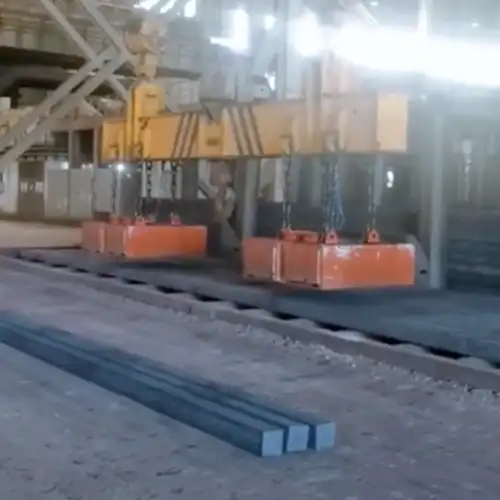
Handling 600°C Billets: Hot-Billet Crane Design Guide
Learn how 600°C billets affect crane design. Protect hoists, girders, clamps, and ensure safe, efficient high-temperature steel handling.
| Application | Material handling, lifting, positioning, assembly, maintenance, loading/unloading, |
| Certifications | CE / ISO / SGS / Other third-party inspection |
| Customization | Customized material handling cranes solutions available for indoor, outdoor, hazardous, corrosive, cleanroom, and heavy-duty industrial applications. |
Crane Manufacturer: Yuantai Cranes – 30+ Years Professional Crane Manufacturer from China
Category: Steel
Tags: billethandling
Your Trusted Billet Handling Overhead Crane Manufacturer & Supplier
Handling 600°C Billets: Hot-Billet Crane Design Guide
Handling 600°C Billets: Why Heat Changes Everything in Crane Design
Most Important Takeaway:
Handling hot billets is not just a matter of lifting capacity. Heat radically changes crane performance, safety, and lifespan. Without proper high-temperature design, insulation, and protective measures, cranes can fail, endangering personnel and halting production.
Key Takeaways (Buyer-Focused):
- Temperature Matters: Always verify the maximum billet temperature the crane is rated for. Hot billets (up to 600°C) can damage motors, wire ropes, clamps, and bridge girders.
- Heat Transfer Risks: Radiant and conductive heat affects hoists, trolleys, and cranes' electrical insulation. Ask how heat is mitigated.
- Protective Measures: Insulation, shields, heat-resistant materials, and cooling systems are critical for long-term operation.
- Material Selection: High-temperature steels, alloys, ceramics, and heat-resistant wire ropes ensure reliability and safety.
- Maintenance Planning: Hot-billet cranes need more frequent inspection cycles; thermal stress accelerates wear.
- Operational Safety: Adjust lifting cycles, consider thermal expansion, and implement emergency protocols for overheating.
Questions Solved in This Guide:
- What temperature is the crane truly designed to handle?
- How does heat transfer affect hoists, girders, and clamps?
- What protective measures should be in place for safe operation?
- Which materials and components are suitable for high-temperature use?
- How should maintenance and inspection change for hot-billet handling?
Hot Billets and Heat Effects
In steel mills, billets straight from the furnace are extremely hot, often reaching 500–600°C (930–1,110°F). At these temperatures, handling them is not the same as moving cold or room-temperature steel. Many standard overhead cranes or clamp cranes designed for normal workshop use simply cannot withstand the heat without special design considerations.
Why heat matters: Steel expands when hot. This expansion may seem small, but when you're dealing with long billets and tight tolerances in a steel mill, even a few millimeters can affect clamp alignment or trolley movement. Electrical components and insulation also face a higher risk of degradation, which can lead to motor failure, hoist overheating, or control system errors.
- Material expansion: Billets can elongate or warp slightly as they cool, creating extra tension on clamps and lifting devices.
- Clamp efficiency drops: Standard mechanical clamps or magnetic clamps lose part of their holding power under high temperatures.
- Electrical component stress: Motors, limit switches, wiring, and hoist controls may overheat if exposed directly to radiant heat without proper shielding.
Heat doesn't only act directly. Radiant heat and conduction can transfer to nearby crane components. For example, the trolley frame can become hot enough to affect bearings and wheels, increasing friction and accelerating wear. Similarly, bridge girders can absorb heat over time, leading to thermal expansion that changes runway alignment and wheel load distribution.
Practical Takeaways for Buyers:
- Check maximum operating temperature: Ask the manufacturer what temperature the crane is designed to handle continuously.
- Assess component protection: Look for cranes with heat shields, insulated hoists, or cooling systems for motors and controls.
- Plan for maintenance: High-temperature environments require more frequent inspections and preventive maintenance to avoid downtime.
- Select the right clamp or magnet: Ensure gripping devices are rated for 600°C operation and maintain holding force under heat.
Buyer Insight: Before investing in a billet handling crane, it's essential to know the exact operating temperature and how the crane design protects against heat. Neglecting this can lead to premature wear, safety risks, and unexpected maintenance costs.
Heat's Impact on Crane Components: Buyer Considerations
Handling billets at 500–600°C introduces hidden risks for crane components. Buyers must understand heat effects and mitigation strategies to ensure safe, reliable operation.
Hoists and Trolleys
Hoists and trolleys are sensitive to heat. Insulation, wiring, and motor windings degrade quickly under radiant or conductive heat, potentially causing operational delays.
- Temperature limits: Use Class H/N insulation rated for 180–200°C or higher.
- Protective shields: Reduce radiant heat exposure by 50–70%.
- Active cooling: Fans or forced air reduce motor temperatures by 15–25°C.
- Inspection frequency: Every 2–3 months for hot-billet operations.
Bridge Girders and Runways
Bridge girders and runways absorb heat, causing thermal expansion and misalignment, affecting wheel load distribution.
- Material selection: Use high-temperature steel alloys (e.g., ASTM A514 or EN 10025 S355NL).
- Thermal expansion management: Include expansion joints or adjustable wheels.
- Inspection frequency: Check alignment every 3–6 months.
Wire Ropes, Chains, and Slings
Standard wire ropes lose about 30% of SWL at 400°C; losses are higher near 600°C.
- Use ceramic-coated or heat-resistant ropes rated for 600°C, retaining up to 90% load capacity.
- Chains: grade 80 or 100 heat-resistant alloys.
- Factor in load derating: reduce SWL by 20–30% for 600°C billets.
Clamps and Magnets
Grip efficiency drops 15–40% at 600°C, and magnets weaken without thermal protection.
- Thermal shields or protective covers reduce direct exposure by 50–60%.
- Cooling systems maintain clamp performance.
- High-temp rated clamps/magnets with heat-resistant steel or ceramics.
- Inspection frequency: monthly under continuous hot-billet operation.
Heat Impact Summary Table
| Crane Component | Heat Effect at 500–600°C | Practical Solutions / Recommendations | Inspection Frequency |
|---|---|---|---|
| Hoists & Trolleys | Electrical insulation degrades; motors and gears overheat | Class H/N insulation, heat shields, forced air cooling | Every 2–3 months |
| Bridge Girders & Runways | Thermal expansion 12–15 mm; misalignment; uneven wheel load | High-temp steel/alloys, expansion joints, adjustable wheels | Every 3–6 months |
| Wire Ropes & Chains | SWL decreases 20–30%; elongation; premature wear | Heat-resistant ropes/chains, ceramic-coated wire ropes | Monthly or per load cycles |
| Clamps & Magnets | Grip efficiency drops 15–40%; magnets weaken | Thermal shields, cooling systems, high-temp rated clamps/magnets | Monthly |
Protective Measures for Hot-Billet Cranes
Handling billets at 500–600°C stresses all crane components. Proper protective measures ensure long-term reliability, safety, and operational efficiency.
Thermal Insulation and Shields
Radiant and conductive heat can raise motor, hoist, trolley, and cabin temperatures quickly, causing insulation degradation or unsafe conditions.
- Install heat shields or thermal barriers around hoists, motors, and control panels; reduces temperature by 50–70%.
- Use operator cabin insulation to maintain safe working conditions; unprotected cabins may reach 60–70°C.
- Apply reflective coatings on nearby metal surfaces to deflect radiant heat.
Material Selection
Choosing appropriate materials prevents deformation and maintains component performance under high temperatures.
- High-temperature steels/alloys (ASTM A514, EN 10025 S355NL) for girders and runways.
- Ceramic-coated components for clamps, gripping devices, and wire ropes.
- Heat-resistant wiring and insulation (Class H or N) for motors, hoists, and electrical systems rated 180–200°C+
- High-temperature lubricants to protect bearings and gears from seizing.
Cooling Systems
Active cooling protects sensitive components even when insulation and heat-resistant materials are used.
- Air fans or forced air circulation for hoists and motor housings; reduces temperature 15–25°C.
- Water cooling for cranes with continuous hot-billet exposure, especially magnets or hydraulic clamps.
- Ventilation ducts along bridge girders and trolley frames to minimize heat accumulation.
Maintenance & Monitoring
Proactive monitoring prevents heat-induced failures.
- Install temperature sensors on motors, trolleys, and critical electrical components for real-time alerts.
- Perform regular inspections: hoists every 2–3 months, girders 3–6 months, clamps and wire ropes monthly.
- Adjust component replacement schedules for heat exposure; 25–40% more frequent than standard cranes.
- Keep detailed logs of thermal cycles and operational conditions to anticipate fatigue.
Protective Measures Summary Table
| Measure | Purpose | Practical Details / Recommendations |
|---|---|---|
| Thermal Insulation & Shields | Protect motors, hoists, and cabins | Heat shields reduce temperature by 50–70%; reflective coatings on nearby surfaces |
| Material Selection | Maintain structural and mechanical integrity | High-temp steels/alloys for girders, ceramic-coated clamps, Class H/N insulation |
| Cooling Systems | Prevent overheating of sensitive components | Fans reduce temp by 15–25°C, water cooling for magnets, ventilation ducts along bridge girders |
| Maintenance & Monitoring | Detect and prevent heat-related failures | Install sensors, frequent inspections (hoists 2–3 months, clamps monthly), adjust replacement schedule 25–40% more often |
Operational Considerations for Hot-Billet Cranes
Handling hot billets at 500–600°C requires careful operational planning. Safe lifting practices, accurate load calculations, and emergency protocols prevent equipment damage and ensure personnel safety.
Safe Lifting Practices
Hot-billet handling requires slower, deliberate lifting cycles to prevent heat buildup in hoists, trolleys, and motors.
- Extend cycle times to avoid rapid lifts or sudden movements that increase friction and heat.
- Minimize trolley travel above hot billets to reduce exposure to radiant heat.
- Pre-position the crane to reduce time hovering over hot loads.
- Operator training: Ensure staff understand heat-specific risks and protocols.
Dynamic Load Calculations
Hot billets differ from cold steel in expansion, weight, and clamp efficiency. Calculations must account for these changes.
- Clamp force reduction: Mechanical clamps may lose 15–40% grip at 600°C.
- Weight distribution: Billet elongation affects center of gravity and balance.
- Safety margins: Include 20–30% additional capacity for temperature-related performance drops.
- Multiple lifts/bundles: Consider dynamic forces and potential shifting during transport.
Emergency Protocols
Even with protective measures, overheating or component failure can occur. A clear emergency plan is essential.
- Automated/manual shutdown if motor or hoist temperatures exceed limits.
- Fire safety measures: Install suppression systems and maintain clear escape routes.
- Regular drills: Train staff to respond to high-temperature emergencies.
- Monitoring systems: Use temperature sensors and alarms on critical components.
Operational Considerations Summary Table
| Consideration | Risk / Effect | Practical Recommendations |
|---|---|---|
| Safe Lifting Practices | Overheating, clamp failure | Longer cycle times, minimize hover over billets, pre-position crane, operator training |
| Dynamic Load Calculations | Reduced clamp force, uneven load | Factor grip reduction 15–40%, include safety margin 20–30%, account for billet elongation and bundles |
| Emergency Protocols | Equipment damage, fire, safety hazards | Automated/manual shutdown, fire suppression, training drills, temperature sensors and alarms |
Buyer Questions to Ask (FAQ)
When handling hot billets at 500–600°C, buyers often focus on crane capacity but may overlook heat-related risks. Use this FAQ to evaluate cranes for high-temperature operations.
What is the maximum billet temperature the crane can handle?
Answer: Confirm the highest billet temperature the crane can handle continuously. Standard cranes for room-temperature steel are not safe for 600°C billets. Ensure all components—hoists, trolleys, clamps, magnets, and bridge girders—are rated for high-temperature operation to prevent motor overheating, insulation failure, or grip loss.
How is heat transferred to hoists, girders, and clamps managed?
Answer: Effective heat management protects sensitive components. Ask about:
- Thermal shields for hoists, girders, and control panels.
- Insulation for operator cabins to maintain safe working conditions.
- Methods to prevent radiant and conductive heat from affecting critical components.
What protective measures are implemented for hot-billet operation?
Answer: Effective hot-billet protection combines multiple strategies:
- Insulation and thermal shields around motors, hoists, and trolleys.
- Cooling systems such as fans, forced air, or water cooling for heat-exposed components.
- Reflective coatings or ceramic covers on clamps and magnets to reduce heat exposure.
Are the materials and electrical components rated for prolonged high-temperature exposure?
Answer: Verify that all components are designed for continuous heat exposure:
- Bridge girders made from high-temperature steel alloys.
- Hoists, motors, and wiring with Class H or N insulation rated 180–200°C or higher.
- Clamps, magnets, wire ropes, and chains must be heat-resistant for 600°C operation.
How will maintenance frequency change under hot-billet operation?
Answer: Hot-billet cranes require more frequent inspections:
- Hoists, trolleys, and electrical systems: every 2–3 months.
- Clamps, magnets, wire ropes, and chains: monthly.
- Wear-part replacement cycles: 25–40% more often than standard cranes to account for heat degradation.
Pratical Lessons
Handling hot billets at 500–600°C in steel mills presents challenges often underestimated. Cranes not designed for high temperatures can fail prematurely, causing insulation breakdown, clamp failure, and serious safety hazards. Learning from real-world operations helps buyers make informed decisions.
Lessons from High-Temperature Operations
Cranes exposed to hot billets without thermal shields, heat-resistant materials, or cooling systems experience accelerated degradation. Hoists overheat, electrical insulation fails, clamps lose grip, and bridge girders can deform over time.
Standard cranes used in hot-billet environments often require replacement of critical components 25–40% sooner than cranes built for high-temperature operation.
Successful crane designs combine multiple protective measures and careful operational planning to maintain performance and safety over time.
Key Features of Successful Hot-Billet Cranes
Heat-resistant hoists and trolleys with Class H/N insulation and cooling systems.
High-temperature steel or alloy girders designed to withstand thermal expansion without structural deformation.
Shielded controls and operator cabins to protect electrical components and personnel.
Ceramic-coated or heat-resistant clamps, magnets, and wire ropes for reliable gripping.
Regular maintenance schedules with more frequent inspections for hoists, clamps, girders, and electrical systems.
Standard vs Hot-Billet Crane Design Solutions
| Feature | Standard Crane | Hot-Billet Crane |
|---|---|---|
| Maximum Operating Temperature | Room temperature | 500–600°C or more |
| Hoists & Trolleys | Standard insulation (Class B/F) | Class H/N insulation, shields, cooling systems |
| Bridge Girders & Runways | Mild steel | High-temperature steel/alloys, expansion joints |
| Clamps & Magnets | Standard mechanical or magnetic grip | Heat-resistant clamps/magnets, ceramic coatings |
| Electrical Components | Standard wiring | Heat-resistant wiring, shielded control panels |
| Maintenance Frequency | 6–12 months | Hoists every 2–3 months, clamps/wires monthly |
| Operator Cabin | Standard | Insulated and heat-protected |
Buyer Insight: Real-world experience shows that ignoring heat-specific design requirements leads to operational hazards, shorter crane lifespan, and unexpected costs. Choosing a crane engineered for hot-billet handling ensures long-term reliability, safety, and efficiency.
Conclusion
Handling hot billets is not just about lifting capacity; heat is an invisible threat that affects every crane component. Buyers must carefully evaluate crane temperature ratings, protective measures, material selection, and maintenance schedules. By asking the right questions and planning for heat effects upfront, steel mill operators can ensure safe, efficient, and long-lasting crane performance in high-temperature environments.
Related Products

Yuantai Cranes
Yuantai Cranes - Global Material Handling Crane Solution Provider & Manufacturer with CE, ISO, SGS, CNEX and other Third Party Certifications.
- Main Specifications - Capacity: 0.5–550 tons | Span: up to 40m | Speed: 0.8–12 m/min | Duty: A3–A7 | Power: 380–690V, 50/60Hz | Control: pendant/remote/cabin
- Full engineering: FEA/PLC/VFD + in-house build + global delivery + on-site support, for workshops, factories, EPC contractors, industrial projects, etc.
- Support: design, manufacturing, testing, service – end-to-end, customized lifting solutions worldwide.
Get Your Custom Quote – Quick & Easy
Fill in what you know. Skip what you don't – we'll help.
- Crane type:_____ . (e.g., overhead crane, gantry crane, jib crane)
- Max weight to lift:_____ tons. (e.g., 2t, 5t, 10t, 20t, 50t)
- Lifting height:_____ m. (How high does the hook need to reach?
- Workshop width (span):_____ m . (Distance between the two crane rails)
- Travel distance:_____ m . (How long does the crane need to move along the runway?)
- Control type:_____. (Pendant / remote / cabin Control)
- Power supply:_____. (Local voltage & frequency – e.g., 380V, 50Hz, 3-phase)
- What will it be used for?_____ (e.g., steel fabrication, concrete products, mold handling, general manufacturing, etc.)
- Any special requirements?_____ (e.g., extreme temperature, dusty or explosive environment, special paint color, etc.)
Just leave a message via the contact form and our hoist and crane engineer will contact you with in 24working hours.
Inquire Yuantai Cranes