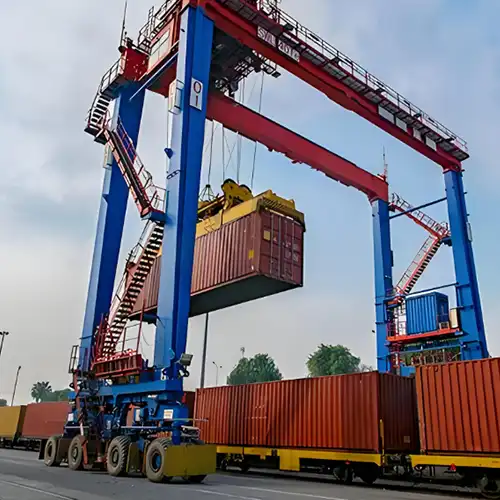
Heavy-Lift Cranes Qatar: Handling Containers, Steel Coils & Cargo
Check how heavy-lift cranes in Qatar safely move containers, steel coils, and project cargo. Learn crane types, safety practices, and operational tips.
| Crane Type | Qatar Heavy-Lift Crane Systems: RTG / RMG / Double Girder Overhead / Goliath / Portal / Semi-Gantry / Specialized Heavy-Lift · Capacity: 20–50 ton / 50–150 ton / 150+ ton project-specific ·Power : 380/400/415/440/480V, 3 Ph, 50/60Hz or customized |
| Crane Capacity | Heavy-Lift Range: 20–50 ton / 50–150 ton / 150+ ton depending on cargo and crane type; |
| Coverage Area Type | Large Industrial Working Areas: Ports and container terminals · Logistics parks · Distribution hubs · Steel processing yards · Fabrication yards · Prefabrication yards · Energy project sites · Industrial plants · Outdoor storage areas · Intermodal transfe |
| Application | Container Loading & Unloading / Heavy Cargo Lifting / Yard Transfer / Storage & Retrieval / Steel Coil Handling / Project Cargo Positioning / Module Handling / Assembly / Maintenance / Loading & Unloading · |
| Certifications | CE / ISO / SGS / Other third-party inspection |
| Customization | Configuration: Double Girder Overhead / Goliath / Portal / Gantry / Semi-Gantry / Rail-Mounted Gantry / Rubber-Tyred Gantry. Site: Port / Container Terminal / Steel Yard / Fabrication Yard / Logistics Hub / Energy Project / Industrial Plant · |
Crane Manufacturer: Yuantai Cranes – 30+ Years Professional Crane Manufacturer from China
Category: Qatar
Tags: heavylifting
Your Trusted Overhead Crane Manufacturer & Supplier
Heavy-Lift Cranes in Qatar
Handling Containers, Steel Coils, and Project Cargo Safely
Key Takeaways
- Heavy-lift cranes in Qatar are essential for ports, logistics parks, and industrial facilities, enabling safe handling of containers, steel coils, and project cargo.
- Choosing the right crane depends on cargo type, lifting capacity, environmental conditions, and operational workflow.
- Safety is paramount — compliance with ISO, FEM, and Qatar safety regulations ensures risk mitigation during heavy lifts.
- Integration of automation, crane monitoring systems, and remote operation technologies increases efficiency and reduces operational costs.
Introduction
High-capacity cranes are essential equipment in Qatar’s expanding logistics, industrial, and construction sectors. Whether it’s a container terminal at Hamad Port, a steel coil processing plant, or a project cargo yard, these cranes are the backbone of moving heavy, oversized loads safely and efficiently. Getting the right crane for the job isn’t just about picking the biggest one—it’s about matching capacity, reach, and functionality to the type of cargo and operational environment.
Using the wrong crane or ignoring operational best practices can lead to serious consequences: damage to cargo, costly downtime, and even workplace accidents. That’s why understanding both the types of cranes and their practical applications is critical for any logistics, industrial, or port operator in Qatar.
Why this matters for operators and buyers:
- Match the crane to your cargo: Containers, steel coils, and project modules all require different lifting attachments and capacities.
- Prevent accidents: Correct crane selection and operator training reduce risks in busy industrial environments.
- Optimize workflow: Choosing the right crane saves time, avoids unnecessary moves, and increases productivity.
- Reduce long-term costs: Proper maintenance and the right crane type reduce downtime and repair expenses.
Practical experience in Qatar shows that planning crane operations early in the project, including evaluating lift paths, ground conditions, and power supply requirements, makes a noticeable difference in safety and efficiency. For example, at Hamad Port, well-planned crane deployment allows faster container turnaround while minimizing wear on equipment. Similarly, in steel processing yards, using cranes with specialized coil grabs and proper span reduces handling time and prevents damage to high-value cargo.
High-capacity cranes are not one-size-fits-all. Understanding the environment, cargo type, and operational workflow is the first step toward safe, efficient, and cost-effective lifting operations in Qatar’s ports and industrial facilities.
Heavy-Lift Crane Types in Qatar
In Qatar, heavy-lift cranes vary by port, industrial facility, and cargo type. Selecting the right crane ensures safe, efficient, and cost-effective operations.

Port Cranes
Ports handle heavy and time-sensitive cargo such as containers, project modules, and oversized goods. The cranes must combine reach, lifting capacity, and operational reliability.
Ship-to-shore (STS) cranes:
- Primarily used for loading and unloading containers from deep-sea vessels.
- Offer high lifting capacities, long outreach, and precise positioning.
- Commonly found at Hamad Port and other container terminals, where turnaround time is critical.
- Practical tip: Operators should coordinate STS cranes with yard logistics to minimize idle time.
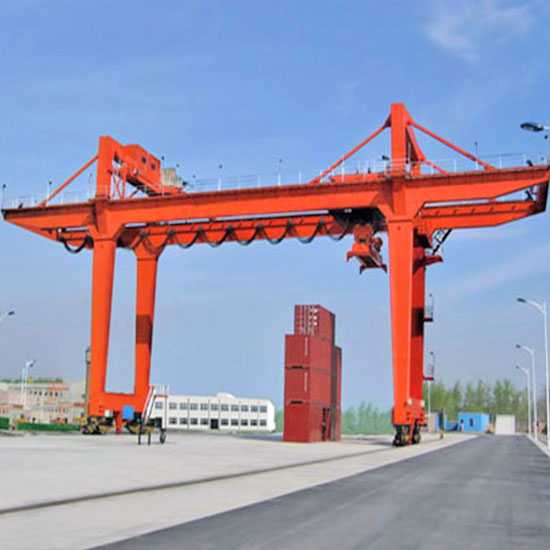
Rubber-tyred gantry (RTG) cranes:
- Mobile cranes that move containers within the port yard.
- Flexible stacking and retrieval without fixed rails across the terminal.
- Useful for managing high-density container storage and temporary stacking areas.
- Practical tip: RTG cranes require well-maintained ground surfaces and clear pathways to avoid delays or accidents.
Industrial Cranes
Industrial facilities, including steel processing plants, fabrication yards, and energy project sites, rely on cranes to lift heavy, irregular, and bulky items safely.
- Available in single or double girder designs, depending on load requirements.
- Ideal for moving steel coils, project cargo, and large modules across workshops.
- Single girder cranes work well for lighter loads or shorter spans, while double girder cranes handle higher tonnage.
- Practical tip: Ensure proper span coverage and rail alignment to reduce wear and operational issues.
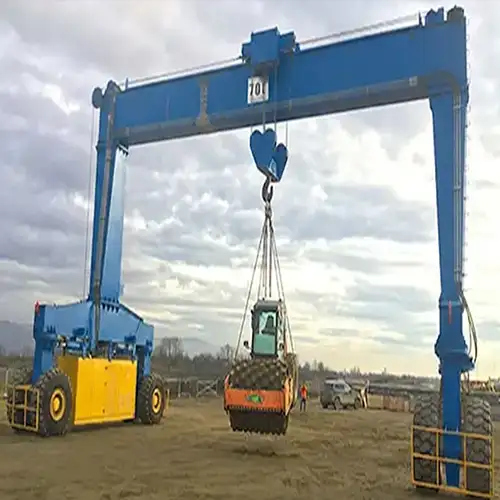
- Frame cranes suitable for yards or outdoor fabrication areas.
- Can lift heavy steel structures or modular components efficiently.
- Often used in pre-fabrication and assembly yards for construction projects.
- Practical tip: Consider environmental factors like wind load and ground stability for outdoor use.
Specialized attachments:
- Coil grabs for steel coils.
- Modular lifting slings for irregular project cargo.
- Beam clamps for structural steel handling.
- Practical tip: Matching attachments to cargo type increases efficiency and prevents damage.
Practical takeaway: Ports need STS and RTG cranes for containers, industrial facilities rely on bridge and portal cranes for steel and modular loads, and mobile or hydraulic solutions are essential for flexible and precise lifting in tight spaces. Matching the crane type to the cargo, site conditions, and workflow ensures safe, efficient, and cost-effective operations.
Practical Use Cases in Qatar
Heavy-lift cranes in Qatar are essential for smooth operations in ports, logistics hubs, and industrial facilities. Using the right crane type improves efficiency and safety.
Ports & Container Terminals
Ports handle thousands of containers daily. Heavy-lift cranes streamline operations, reduce turnaround times, and minimize cargo damage.
Container stacking and yard optimization:
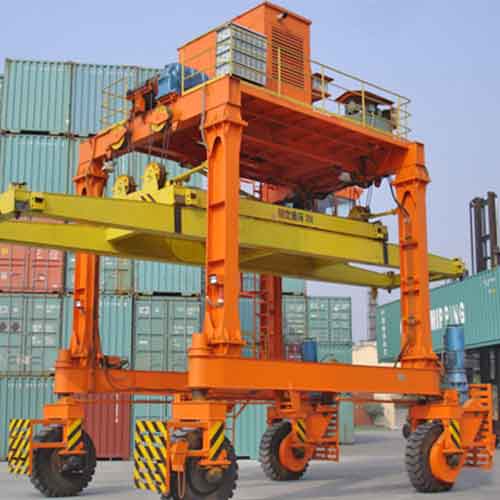
- RTG cranes and semi-gantry cranes maximize yard space.
- Proper stacking reduces unnecessary container reshuffling.
- Practical tip: Track container movements with yard management systems to ensure efficient crane use.
Ship unloading/loading efficiency:
- STS cranes transfer containers quickly and safely from vessels to the yard.
- Coordinating STS cranes with RTG operations minimizes idle time and prevents bottlenecks.
Selecting cranes by span, outreach, and capacity:
- Consider vessel sizes, quay length, and maximum container weight when choosing crane capacity.
- Practical tip: Avoid overestimating span to save space and costs; underestimating can slow operations and increase risk.
Logistics Parks & Distribution Hubs
Logistics hubs handle diverse cargo, from heavy parcels to modular units. Cranes ensure smooth and safe material flow.
Heavy parcel and modular cargo handling:
- Overhead bridge cranes or mobile cranes move large shipments between storage, loading docks, and staging areas.
- Practical tip: Use attachments suitable for irregular or oversized loads to prevent accidents.
Integration with automated storage/retrieval systems (AS/RS):
- Cranes can work with AS/RS to reduce human intervention and speed inventory movement.
Coordination for intermodal transfers (sea, road, rail):
- Cranes facilitate efficient transfer between containers, trucks, and railcars.
- Practical tip: Plan lift paths to avoid congestion and collisions in shared spaces.
Industrial Facilities
Industrial plants often handle heavy, irregular, or hazardous materials. Proper crane use ensures safety, cargo integrity, and efficiency.
Steel coil storage and processing:
- Overhead bridge cranes with coil grabs handle steel coils safely.
- Practical tip: Correct load calculation reduces wear and ensures safety.
Handling petrochemical modules and skids:
- Project cargo like chemical modules or skid-mounted equipment requires specialized attachments.
- Practical tip: Verify crane capacity and lifting points before complex lifts.
Pre-fabrication yards for structural steel:
- Goliath or portal cranes move steel beams and assembled modules efficiently.
- Reduces handling time and prevents deformation of steel sections.
Practical takeaway: Matching crane type, attachments, and capacity to cargo type and workflow is critical for safety, efficiency, and cost savings. Careful planning, coordination, and regular inspection ensure smooth operations.
Safety and Operational Best Practices
Heavy-lift cranes are powerful tools. Following the right safety and operational practices keeps workers safe, cargo secure, and operations efficient.
Step 1: Ensure Regulatory Compliance
Compliance protects your team, your equipment, and operations.
Local regulations:
- Follow Qatar Civil Defence rules for industrial lifting and workplace safety.
- Keep permits and approvals up to date for all heavy-lift operations.
International standards:
- ISO standards for crane design, manufacturing, and operation.
- FEM guidelines for material handling and crane performance.
- OSHA rules for worker safety and operational procedures.
Pro tip: Maintain a compliance folder or digital record—it saves time during audits or inspections.
Step 2: Implement Operational Safety
Even a compliant crane can be unsafe if operational practices are ignored. Focus on planning, verification, and skilled handling.
Check load charts and safety margins:
- Verify the crane's rated load capacity.
- Apply safety margins for uneven or dynamic loads.
Train your rigging team:
- Slingers and riggers must understand load attachment points, proper slings, and load behavior.
- Hands-on practice is critical—knowledge alone isn't enough.
Perform risk assessments for each lift:
- Look for overhead obstacles, ground instability, and environmental factors.
- Update assessments if conditions change during operations.
Pro tip: Use a pre-lift checklist for every job to prevent mistakes and accidents.
Step 3: Follow Maintenance Protocols
Well-maintained cranes last longer, work reliably, and reduce downtime. Maintenance is an investment, not an expense.
Daily inspections:
- Check ropes, hooks, brakes, and control systems for wear or damage.
- Look for corrosion, loose components, or irregularities.
Periodic testing:
- Non-Destructive Testing (NDT) for structural components.
- Electrical system checks including limit switches and control panels.
Preventive maintenance:
- Follow manufacturer recommendations for lubrication, motor checks, and hydraulics.
- Replace worn parts before failure occurs.
Safety audits:
- Audit lifting operations regularly and document findings.
- Fix any gaps immediately to maintain safe operations.
Pro tip: Keep a digital log of inspections and maintenance for trend tracking and regulatory compliance.
Step 4: Key Takeaways
- Regulatory compliance with Qatar Civil Defence, ISO, FEM, and OSHA is mandatory.
- Safety starts with verified load charts, trained riggers, and thorough risk assessments.
- Maintenance and safety audits prevent downtime, equipment damage, and accidents.
- Document every inspection, maintenance task, and lift for accountability and trend analysis.
Technological Enhancements for Heavy-Lift Cranes
Modern cranes are part of a connected, intelligent system that improves safety, efficiency, and reliability. In Qatar, ports, logistics hubs, and industrial facilities are increasingly adopting automated crane systems for heavy containers, steel coils, and project cargo.
Step 1: Crane Monitoring Systems
Monitoring systems help operators stay informed about every lift and prevent accidents before they happen.
Load indicators and overload prevention devices:
- Show real-time load data to ensure cranes are never overloaded.
- Prevent structural damage and extend crane component life.
- Practical tip: Calibrate sensors and indicators according to manufacturer specifications.
Wireless condition monitoring:
- Tracks health of motors, brakes, cables, and other critical components.
- Enables predictive maintenance—issues can be detected before downtime occurs.
- Practical tip: Integrate alerts with maintenance teams for quick response.
Keywords: automated crane systems Qatar, predictive maintenance cranes, high-capacity crane monitoring
Step 2: Remote Operation and Assistance
Remote operation technologies allow operators to control cranes from a safe distance, especially for hazardous or precision lifts.
Remote control for hazardous lifts:
- Operators can work safely without exposure to moving cargo or confined spaces.
- Useful for project modules, heavy skids, or chemical plant components.
Anti-sway and positioning assist technologies:
- Minimize load swing for precise placement.
- Reduces material damage and speeds up lifting operations.
- Practical tip: Combine with camera systems for maximum visibility in blind spots.
Step 3: Integration with Logistics Software
Cranes are most effective when connected to broader logistics and maintenance systems.
Yard management systems (YMS):
- Coordinate crane operations with storage, retrieval, and transportation schedules.
- Optimize workflow to reduce idle times and prevent congestion.
Predictive maintenance and performance optimization:
- Software collects data from monitoring systems to predict maintenance needs.
- Improves equipment lifespan and reduces unplanned downtime.
- Practical tip: Review software dashboards daily to track performance trends.
Step 4: Key Practical Takeaways
- Monitoring systems and overload prevention devices increase safety and extend crane life.
- Remote operation and anti-sway technology allow precise and safe handling of hazardous or oversized cargo.
- Integration with yard management and predictive maintenance software streamlines workflow, reduces downtime, and improves efficiency.
- In Qatar, adopting these technologies is increasingly essential for ports, logistics hubs, and industrial sites handling heavy containers and project cargo.
Key Factors for Selecting Heavy-Lift Cranes
Choosing the right crane in Qatar isn't just about picking the one with the highest lifting capacity. The best choice depends on cargo type, environmental conditions, operational workflow, and cost considerations.
Step 1: Duty Cycle & Lifting Requirements
Understand what the crane will lift and how often. Over-specifying adds cost, under-specifying can slow operations or create safety risks.
- Match crane capacity with cargo type: containers, steel coils, project modules, etc.
- Consider maximum weight per lift and frequency of lifts per day.
Practical tip: Calculate expected daily lifting load and add a 20–30% safety margin for uneven or unpredictable loads.
Step 2: Environmental Conditions
Qatar's climate and industrial environments can be harsh. Cranes must perform reliably under local conditions.
Coastal and port areas:
- High humidity and salt exposure can accelerate corrosion.
- Choose cranes with protective coatings and weatherproof components.
Industrial environments:
- Heat, dust, and abrasive materials can affect motors, brakes, and wire ropes.
- Look for dust-sealed motors, high-temperature lubricants, and reinforced structural components.
Practical tip: Check that the supplier provides environment-specific design recommendations and preventive maintenance plans.
Step 3: Total Cost of Ownership (TCO)
The purchase price is only part of the story. A crane that's cheap upfront but costly to maintain can become expensive over time.
- Balance capital investment with operational efficiency: energy, maintenance, spare parts.
- Factor in downtime costs—delays in ports or industrial sites are expensive.
Practical tip: Request a lifecycle cost analysis from the manufacturer before buying.
Step 4: Key Practical Takeaways
- Understand lifting needs: Match crane type and capacity to cargo weight, size, and lift frequency.
- Design for the environment: Coastal, heat, and dust-resistant designs prolong crane life and reliability.
- Think beyond the purchase price: Include maintenance, energy, downtime, and spare parts in total cost.
- Plan for flexibility: Choose cranes that can adapt to slightly higher capacities or different cargo types if operations change.
Frequently Asked Questions (FAQ)
Q1: What types of heavy-lift cranes are most suitable for Qatar's ports and industrial facilities?
- Ports and container terminals: Ship-to-shore (STS) cranes for vessel loading/unloading; RTG or semi-gantry cranes for yard stacking.
- Industrial facilities: Overhead bridge cranes (single/double girder) for steel coils and project cargo; Goliath/portal cranes for yard and pre-fabrication operations.
- Mobile or auxiliary cranes: All-terrain, crawler, or hydraulic gantries for flexibility in tight or uneven spaces.
Q2: How can ports, logistics hubs, and steel plants handle oversized or heavy cargo safely?
- Plan lift paths: Avoid obstacles, overhead hazards, and congested areas.
- Use the right attachments: Coil grabs, modular slings, beam clamps for different cargo types.
- Coordinate operations: Synchronize STS cranes with yard cranes or integrate with automated storage systems to reduce delays and accidents.
Q3: What safety and maintenance protocols are critical for high-capacity cranes?
- Regulatory compliance: Follow Qatar Civil Defence, ISO, FEM, and OSHA standards.
- Operational safety: Verify load charts, apply safety margins, train riggers, and conduct risk assessments.
- Maintenance protocols: Daily inspections, NDT checks, electrical reviews, preventive maintenance, and periodic safety audits.
Q4: How do technological enhancements improve crane operations?
- Monitoring systems: Load indicators and wireless condition monitoring enable predictive maintenance and prevent overloads.
- Remote operation: Anti-sway and positioning assist technologies allow precise handling in hazardous or confined environments.
- Software integration: Yard management systems (YMS) and performance dashboards optimize scheduling and maintenance planning.
Q5: What factors should buyers consider when selecting heavy-lift cranes in Qatar?
- Duty cycle & lifting requirements: Match crane capacity with cargo type and lift frequency.
- Environmental conditions: Ensure cranes are heat, dust, and corrosion-resistant for local port or industrial conditions.
- Total cost of ownership: Include initial investment, maintenance, energy use, and downtime.
- Practical tip: Request a lifecycle cost analysis from certified suppliers to make informed decisions.
Conclusion
Heavy-lift cranes are a critical part of Qatar's ports, logistics hubs, and industrial facilities. Choosing the right crane isn't just about lifting capacity—it's about matching the crane to cargo, environment, and operational workflow. Proper selection, combined with robust safety protocols and modern technological enhancements, ensures that operations run smoothly while protecting both personnel and equipment.
When planning crane investments, buyers and operators should carefully consider:
- Lifting requirements: Know the weight, dimensions, and frequency of the loads.
- Environmental conditions: Factor in heat, dust, coastal corrosion, or industrial exposure.
- Total lifecycle costs: Include purchase price, maintenance, energy consumption, and downtime.
With these considerations, moving containers, steel coils, and project cargo becomes safer, more efficient, and cost-effective.

Yuantai Cranes
Overhead Crane Manufacturer with CE, ISO, SGS, CNEX Certificates.
- Main Specifications - Capacity: 0.5–550 tons | Span: up to 40m | Speed: 0.8–12 m/min | Duty: A3–A7 | Power: 380–690V, 50/60Hz | Control: pendant/remote/cabin
- Full engineering: FEA/PLC/VFD + in-house build + global delivery + on-site support, for workshops, factories, EPC contractors, industrial projects, etc.
- Support: design, manufacturing, testing, service – end-to-end, customized lifting solutions worldwide.
How to Get an Accurate Crane Price for Your Application?
Tips: Copy the spec list, fill in your details, and paste it into the form on the right/ down-below for a quick price.
- Crane type:_____ . (e.g., overhead crane, gantry crane, jib crane)
- Max weight to lift:_____ tons. (e.g., 2t, 5t, 10t, 20t, 50t)
- Lifting height:_____ m. (How high does the hook need to reach?
- Workshop width (span):_____ m . (Distance between the two crane rails)
- Travel distance:_____ m . (How long does the crane need to move along the runway?)
- Control type:_____. (Pendant / remote / cabin Control)
- Power supply:_____. (Local voltage & frequency – e.g., 380V, 50Hz, 3-phase)
- What will it be used for?_____ (e.g., steel fabrication, concrete products, mold handling, general manufacturing, etc.)
- Any special requirements?_____ (e.g., extreme temperature, dusty or explosive environment, special paint color, etc.)
Just leave a message via the contact form and our hoist and crane engineer will contact you with in 24working hours.
Get Your Custom Quote–Quick & Easy
Fill in what you know. Skip what you don't – we'll help.Any question will be reply with 24 working hours