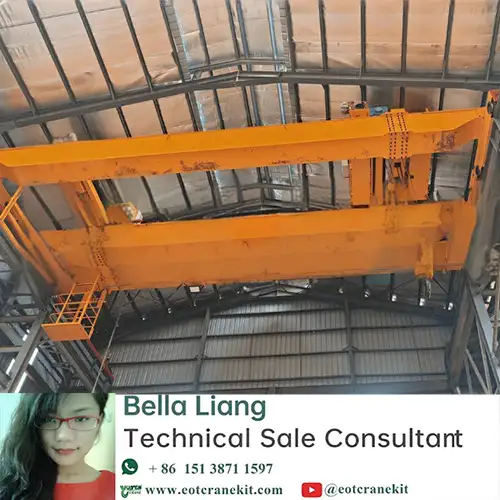
40 Ton Overhead Crane with Tandem Lifting for Hydropower
Check 40 ton overhead crane with tandem lifting and double trolley design for African hydropower projects. Customized for heavy equipment handling.
| Crane Type | Double Girder Overhead Crane with Double Trolleys for Tandem Lifting |
| Crane Capacity | 40Ton/10 Ton, 40 Ton/15 Ton |
| Span Length | 12 m |
| Lifting Height | 12 m |
| Coverage Area Type | Rectangular |
| Application | Overhead cranes in hydropower stations are mainly used for installing, maintaining, and replacing heavy equipment such as turbines, generators, transformers, and mechanical components inside the powerhouse. |
| Certifications | CE / ISO / SGS / Other third-party inspection |
| Customization | Customized material handling cranes solutions available for indoor, outdoor, hazardous, corrosive, c |
Crane Manufacturer: Yuantai Cranes – 30+ Years Professional Crane Manufacturer from China
Category: 40 Ton Overhead Crane
Tags: 40ton
Your Trusted 40 Ton Overhead Crane Manufacturer & Supplier
40 Ton Overhead Cranes with Double Trolley with Tandem Lifting for an African Hydropower Project
Project Overview
An engineering contractor for a hydropower project in Africa required two heavy-duty overhead cranes for turbine installation, equipment maintenance, and large component handling. The project demanded 40 ton overhead cranes equipped with double trolley (tandem lifting hoist) configurations to safely lift oversized and heavy loads while providing flexible lifting during equipment assembly.
Yuantai Crane supplied two customized QE double trolley double girder overhead cranes, designed specifically for hydropower applications and adapted to the project's local power supply and humid operating environment.
Customer Requirements
- 40 ton overhead crane for heavy-duty lifting
- Double trolley (tandem lifting hoist) for synchronized lifting of large components
- Reliable operation during turbine installation and maintenance
- Customized span and lifting height
- Smooth load positioning for precision assembly
- Corrosion-resistant design for humid power plant environments
- Local power supply compatibility
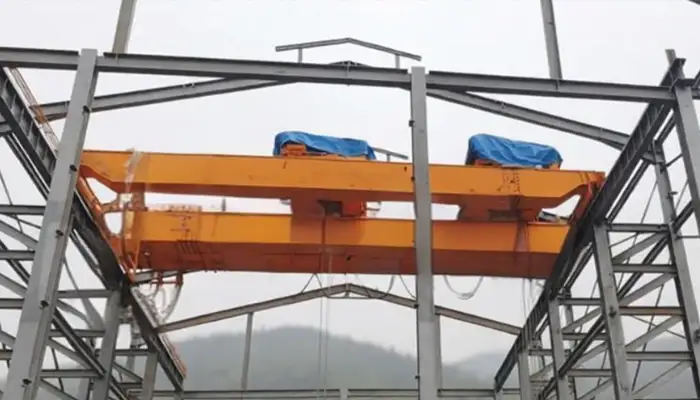
Customized Crane Solution
40 Ton Double Girder Overhead Crane
Two customized QE double girder overhead cranes were supplied with rated capacities of:
- 40 + 15 tons
- 40 + 10 tons
Each crane features two independently operated wire rope hoists, allowing operators to perform either independent lifting or coordinated tandem lifting depending on the application.
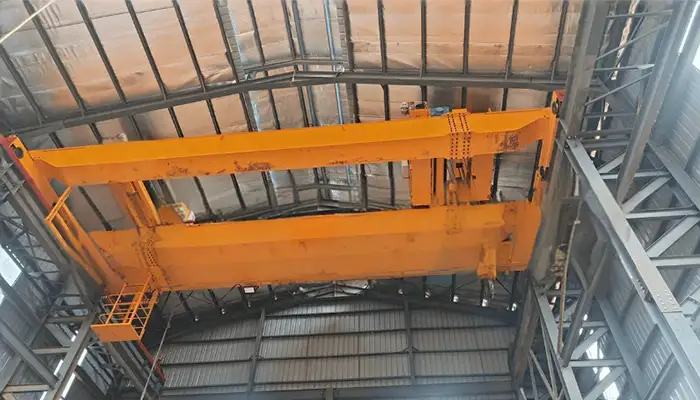
Double Trolley (Tandem Lifting Hoist)
The double trolley design offers greater flexibility than a conventional single-hoist crane.
Key advantages include:
- Tandem lifting of long or oversized equipment
- Independent operation for assembly work
- Better load balance during installation
- Higher lifting efficiency
- Improved operational safety
- Flexible handling of turbines, generators, transformers, and large mechanical components
Technical Features
- Heavy-duty QE double girder overhead crane
- Double trolley wire rope hoist configuration
- Variable frequency drives (VFD) for smooth lifting and travel
- Precision positioning for equipment installation
- Modular drive system for simplified maintenance
- Anti-corrosion coating system for humid environments
- IP54 protected motors with Class F insulation
- Designed for continuous industrial service (A5 duty class)
Technical Specifications
| Item | Specification |
|---|---|
| Crane Type | QE Double Girder Overhead Crane |
| Hoist Configuration | Double Trolley (Tandem Lifting Hoist) |
| Quantity | 2 Sets |
| Main Capacity | 40 Ton |
| Auxiliary Capacity | 15 Ton / 10 Ton |
| Span | 12.8 m |
| Lifting Height | 12 m |
| Duty Class | A5 |
| Control | Pendant + Wireless Remote |
| Power Supply | Customized to Local Standard |
| Application | Hydropower Plant |
Project Results
The two customized 40 ton overhead cranes were manufactured and prepared for shipment within approximately two months. The cranes successfully met the project's heavy-duty lifting requirements while providing stable tandem lifting performance, precise load control, and reliable operation in humid environments.
The customer highly appreciated the customized engineering solution, manufacturing quality, and complete export service. The project further demonstrated Yuantai Crane's expertise in supplying 40 ton overhead cranes, double trolley overhead cranes, and tandem lifting hoist solutions for demanding industrial applications across the African market.
40 Ton Overhead Crane FAQ for Hydropower Stations
Learn about 40 ton overhead crane selection, double trolley design, tandem lifting systems, technical requirements, and practical solutions for hydropower station applications. These FAQs are based on real project experience and common questions from EPC contractors, engineers, and purchasing managers.
1. Is a 40 ton overhead crane suitable for a hydropower station?
Direct answer:
Yes. A 40 ton overhead crane is one of the most common solutions for small and medium-sized hydropower stations.
It can lift turbine components, generator rotors, pumps, valves, transformers, and maintenance equipment.
The right capacity depends on the heaviest lift, not the average load. Engineers also include lifting beams, slings, and safety factors before selecting the crane.
At Yuantai Crane, we review the customer's equipment list and lifting process before recommending a crane. In many hydropower projects, a customized 40 ton overhead crane provides the right balance between lifting capacity and investment cost.
2. Why do hydropower stations choose a double trolley overhead crane?
Direct answer:
A double trolley overhead crane offers more flexibility, better load balance, and safer lifting for large equipment.
A single hoist works well for routine maintenance. But it has limits when lifting long or oversized components.
A double trolley crane provides two independent lifting points on one bridge. Operators can use one trolley for daily work or both trolleys together for tandem lifting.
This makes heavy equipment easier to control during installation and maintenance.
At Yuantai Crane, we often recommend a double trolley design for turbine halls. One African hydropower project used 40+15T and 40+10T cranes to improve lifting efficiency and reduce installation time.
3. What is tandem lifting on a 40 ton overhead crane?
Direct answer:
Tandem lifting means two hoists lift one load together to improve balance and positioning.
This method is common when installing turbine runners, generator rotors, or other large components.
Instead of relying on one hook, two hoists share the load. This reduces stress on the rigging and helps operators keep the equipment level.
In most projects, both hoists work independently during normal operation and switch to tandem lifting only when needed.
Yuantai Crane can integrate synchronized controls and VFD technology to make tandem lifting smoother and safer.
4. Should I choose a single trolley or a double trolley crane?
Direct answer:
It depends on your lifting process.
A single trolley is suitable for standard maintenance work.
A double trolley is a better choice when you need to:
- Lift long equipment.
- Rotate heavy components.
- Handle turbines or generators.
- Improve positioning accuracy.
- Perform tandem lifting.
Many customers first consider two separate cranes. After reviewing the lifting sequence, they often find that one double trolley crane completes the same work with lower installation cost.
Yuantai Crane helps customers compare both options before the crane is designed.
5. What components does a 40 ton overhead crane lift in a hydropower station?
Direct answer:
A 40 ton overhead crane can lift most major equipment used inside a hydropower station.
Typical applications include:
- Turbine runners.
- Generator rotors.
- Stator sections.
- Guide vanes.
- Main shafts.
- Pumps.
- Transformers.
- Valves.
- Gearboxes.
- Maintenance platforms.
Every project is different. The equipment list should always be reviewed before selecting the crane.
Yuantai Crane customizes every crane according to the actual lifting requirements instead of using a standard configuration.
Learn about 40 ton overhead crane selection, double trolley design, tandem lifting systems, technical requirements, and practical solutions for hydropower station applications. These FAQs are based on real project experience and common questions from EPC contractors, engineers, and purchasing managers. Direct answer: It can lift turbine components, generator rotors, pumps, valves, transformers, and maintenance equipment. The right capacity depends on the heaviest lift, not the average load. Engineers also include lifting beams, slings, and safety factors before selecting the crane. At Yuantai Crane, we review the customer's equipment list and lifting process before recommending a crane. In many hydropower projects, a customized 40 ton overhead crane provides the right balance between lifting capacity and investment cost. Direct answer: A single hoist works well for routine maintenance. But it has limits when lifting long or oversized components. A double trolley crane provides two independent lifting points on one bridge. Operators can use one trolley for daily work or both trolleys together for tandem lifting. This makes heavy equipment easier to control during installation and maintenance. At Yuantai Crane, we often recommend a double trolley design for turbine halls. One African hydropower project used 40+15T and 40+10T cranes to improve lifting efficiency and reduce installation time. Direct answer: This method is common when installing turbine runners, generator rotors, or other large components. Instead of relying on one hook, two hoists share the load. This reduces stress on the rigging and helps operators keep the equipment level. In most projects, both hoists work independently during normal operation and switch to tandem lifting only when needed. Yuantai Crane can integrate synchronized controls and VFD technology to make tandem lifting smoother and safer. Direct answer: A single trolley is suitable for standard maintenance work. A double trolley is a better choice when you need to: Many customers first consider two separate cranes. After reviewing the lifting sequence, they often find that one double trolley crane completes the same work with lower installation cost. Yuantai Crane helps customers compare both options before the crane is designed. Direct answer: Typical applications include: Every project is different. The equipment list should always be reviewed before selecting the crane. Yuantai Crane customizes every crane according to the actual lifting requirements instead of using a standard configuration.40 Ton Overhead Crane FAQ for Hydropower Stations
1. Is a 40 ton overhead crane suitable for a hydropower station?
Yes. A 40 ton overhead crane is one of the most common solutions for small and medium-sized hydropower stations.2. Why do hydropower stations choose a double trolley overhead crane?
A double trolley overhead crane offers more flexibility, better load balance, and safer lifting for large equipment.3. What is tandem lifting on a 40 ton overhead crane?
Tandem lifting means two hoists lift one load together to improve balance and positioning.4. Should I choose a single trolley or a double trolley crane?
It depends on your lifting process.5. What components does a 40 ton overhead crane lift in a hydropower station?
A 40 ton overhead crane can lift most major equipment used inside a hydropower station.

Free consultation to Confirm Parameters & Specifications and Get
Latest Crane Price & Crane Rate.
- Types of overhead cranes : _______?
- Optional: Overhead travelling crane, goliath gantry crane,Slewing jib crane, Single girder or double girder crane,small portable crane or kbk crane, etc.
- Capacity of overhead crane: _______?
- Optional: 0.25ton, 0.5 ton, 1 ton, 2 ton, 3ton, 5 ton, 10 ton,15ton, 20ton, 25 ton, 30ton,35ton, up to 550ton, etc.
- Crane span & lifting height : _______?
- Crane travelling length : _____?
- Control of overhead crane:_______?
- Optional: pendant/ remote/cabin control
- Voltage supply of overhead crane:_____?
- Eg,: 380V50/60HZ,3Phase or others,etc.
- Application/usage of crane:_______?
- Eg,: Steel mill, ,injection mold, cement,stone, concrete,granite, general manufacturing, etc.
Just leave a message via the contact form and our hoist and crane engineer will contact you with in 24working hours.
Get In Touch