What Light-Duty Crane to Choose for Your Needs
Learn how to select the right light-duty crane for your workshop or production line, comparing ergonomic, jib, and conventional cranes effectively.
| Crane Type | Light-duty overhead/EOT crane, jib crane, portable gantry crane, or other compact lifting system; typically 125 kg–10 ton; electric chain/wire rope hoist or manual hoist; ISO A3–A5 / FEM 1Am–3M duty class; 380/400/415V, 50Hz, 3Ph for electric systems; |
| Crane Capacity | Typically 125 kg–10 ton; customized according to load weight, handling frequency, and application requirements. |
| Span Length | Typically 2–15 m depending on crane type; customized according to the required lifting coverage and workspace. |
| Lifting Height | Typically 2–10 m; customized according to building height, equipment clearance, and lifting requirements. |
| Coverage Area Type | Localized or rectangular lifting coverage; workstations, machine areas, workshops, assembly stations, maintenance areas, warehouses, loading zones, and designated lifting points. |
| Application | Light material handling, machine loading and unloading, equipment maintenance, assembly, workstation lifting, warehouse handling, repair, and production-line support. |
| Certifications | CE / ISO / SGS / Other third-party inspection |
| Customization | Customized capacity, span, lifting height, duty class, overhead/EOT, jib or portable gantry configuration, electric chain or wire rope hoist, manual/electric trolley, pendant or radio remote control, and application-specific lifting attachments. |
Crane Manufacturer: Yuantai Cranes – 30+ Years Professional Crane Manufacturer from China
Category: Featured
Tags:
Your Trusted Light Duty Overhead Crane Manufacturer & Supplier
What Light-Duty Crane to Choose for Your Needs
Most Important Takeaway
Choosing the right light-duty crane is not just about lifting capacity — it impacts efficiency, operator safety, workspace layout, and long-term maintenance. The best choice depends on your workflow, lifting frequency, available headroom, and the size of your coverage area.
Key Takeaways
- Understand your lifting needs: weight, frequency, span, and height.
- Compare crane types: ergonomic overhead, jib, or conventional overhead.
- Evaluate installation constraints: ceiling height, floor space, and infrastructure.
- Balance cost vs. productivity: upfront investment vs. long-term efficiency.
- Ensure operator safety and ease of handling: manual vs. motorized travel.
Light-Duty Cranes
Light-duty cranes are designed for smaller, more frequent lifts where precision, flexibility, and operator efficiency are key. They handle lighter loads than heavy industrial cranes and are suited to workshops, assembly areas, and maintenance facilities.
What Is a Light-Duty Crane?
In industrial settings, a light-duty crane is any lifting device designed to handle smaller loads, typically ranging from a few hundred kilograms up to around two tons. These cranes focus on moving items such as machine parts, assembly components, tooling, or packaged goods rather than massive steel beams or containers.
Common characteristics include:
- Typical lifting capacity: 250 kg – 2 000 kg
- Coverage: small to medium spans (usually up to 30 feet)
- Travel options: manual, semi-motorized, or fully motorized
Light-duty cranes are ideal for workshops, assembly lines, maintenance shops, and small production areas where quick, precise movement is needed. Their lighter structure makes installation faster and less costly compared to heavy-duty cranes.
Why Choosing the Right Crane Matters
Selecting the correct crane impacts workflow efficiency, safety, and operational cost. A crane that is undersized or ill-suited can slow production, increase accident risk, and accelerate equipment wear. Oversizing wastes money and space while increasing maintenance demands.
Key considerations include:
- Frequency and speed of crane use
- Load type, weight, and dimensions
- Available headroom and workspace layout
- Operator ergonomics and ease of maneuvering
Choosing wisely upfront ensures smooth operations, reduces worker strain, and minimizes downtime.
Industries and Applications for Light-Duty Lifting
Light-duty cranes are particularly effective in environments where frequent, precise lifting is part of daily operations. Common applications include:
- Workshops and machine shops: Moving parts, dies, or tools between stations
- Manufacturing and assembly lines: Feeding machines or positioning components for assembly
- Maintenance and repair shops: Lifting engines, gearboxes, or machinery for service
- Warehousing and compact storage areas: Transferring packaged goods or pallets efficiently
In these settings, a well-chosen light-duty crane improves lifting efficiency, reduces physical strain on workers, and keeps projects on schedule without compromising safety.
Light-Duty Crane Options and Their Applications
Light-duty cranes come in several types, each suited to different work environments and lifting tasks. Picking the right one can boost safety, efficiency, and operator comfort, especially in small-to-medium industrial spaces.
Ergonomic Overhead Crane
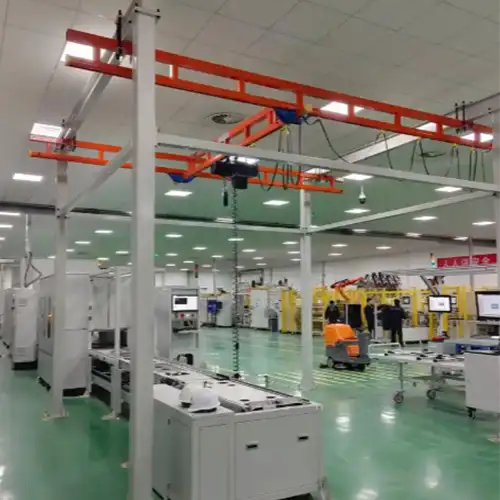
Ergonomic overhead cranes are perfect for workspaces with low ceilings or where operators need precise control over smaller loads. The hoist is usually electric, while horizontal travel is manual push-to-move. This lets the operator guide the load exactly where it's needed without extra strain.
Advantages:
- Lower initial investment than fully motorized systems.
- Excellent precision for delicate or small loads.
- Great for repetitive lifting tasks without fatiguing operators.
Limitations:
- Span and coverage are limited, making them best for small to medium areas.
- Maximum lifting height is lower than conventional overhead cranes.
Recommended Scenarios:
- Feeding machines with parts or materials.
- Handling components at individual workstations.
- Assembly lines where frequent, accurate lifting is essential.
Jib Crane
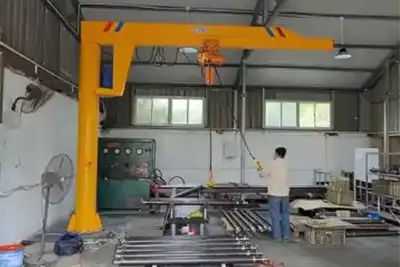
Jib cranes feature a horizontal boom mounted on a vertical pillar or wall and can rotate around their base. The hoist travels along the boom, giving access to a specific workspace without needing full overhead coverage. This makes them compact, flexible, and easy to install.
Advantages:
- Small footprint and highly flexible in a local area.
- Perfect for lifting within a single workstation or cell.
- Rotation allows multiple positions without moving the base.
Limitations:
- Cannot cover large spans.
- Rotation may be limited near walls or obstacles.
Best Use Cases:
- Localized lifting in machine shops or repair cells.
- Positioning tools or parts for assembly or maintenance.
- Handling small loads where a bigger crane isn't necessary.
Conventional Overhead Crane
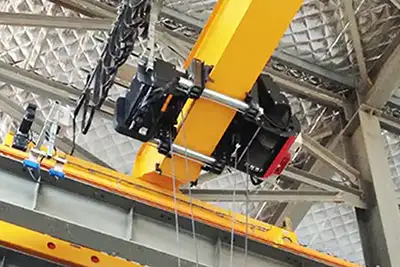
Conventional overhead cranes are fully motorized, with a bridge on elevated runways, a motorized trolley, and an electric hoist. They can move loads in all directions across the workspace and are ideal for large areas, tall lifts, or frequent heavy handling.
Advantages:
- High lifting height and broad coverage for larger spaces.
- Motorized travel reduces physical strain on operators.
- More efficient and safer for frequent or heavy lifts.
Limitations:
- Higher installation cost due to infrastructure and runway needs.
- Requires more planning to fit into existing buildings or areas with limited height.
Recommended Scenarios:
- Large factories or workshops where loads travel long distances.
- Production lines requiring repetitive lifting across multiple stations.
- Warehouses that need reliable movement of parts or packaged goods.
Match Your Lifting Needs
Choosing the right crane starts with understanding the specific requirements of your operation. Load weight, frequency, dimensions, workspace layout, and operator handling all play a critical role in selecting a light-duty crane that is safe, efficient, and cost-effective.
Assess Weight, Frequency, and Size of Loads
Before choosing a crane, examine the actual loads you'll lift. Not all "light-duty" items behave the same; for example, a 500 kg gearbox is different from a stack of smaller parts weighing the same. Frequency also matters—occasional lifts versus continuous operation require different durability and maintenance considerations.
- Determine the maximum weight per lift and include a 20–30% safety margin.
- Consider load dimensions; bulky or uneven items may need special hooks, slings, or attachments.
- Evaluate lifting frequency to match crane durability and operator efficiency.
Consider Reach, Span, and Lifting Height
Next, examine the operating area. How far and how high do loads need to move? Limited span or hook height can force manual handling, reducing efficiency and increasing risk.
- Reach (span): Horizontal distance the crane must cover.
- Lifting height: Vertical clearance needed to handle the tallest load safely.
- Workspace layout: Obstacles, low ceilings, or machine placement may influence crane type.
For instance, an assembly line may need a 20–30 ft horizontal span, while a maintenance shop may require taller clearance but shorter horizontal travel.
Evaluate Operator Handling: Manual vs. Motorized Travel
Consider how operators will move the crane. Manual push-to-move cranes are fine for short distances with light loads, while motorized travel eases movement of heavier loads over longer spans.
- Manual travel: Low cost, simple installation, suitable for light, short-span applications.
- Motorized travel: Reduces operator fatigue, improves handling of frequent or heavier lifts, ideal for longer spans or taller work areas.
If operators show signs of fatigue after moving loads a few meters, motorized travel is strongly recommended.
Address Safety and Ergonomics
Even light loads can cause injury if handled poorly. Ergonomic design is essential for operator comfort, safe lifting, and reduced strain. Consider hook placement, travel speed, and ease of load control. Safety features like limit switches, overload protection, and anti-sway mechanisms prevent accidents.
- Ensure smooth load movement without awkward postures.
- Verify weight limits and safety features match actual lifting needs.
- Plan for regular inspection and preventive maintenance to avoid downtime.
Installation and Operational Considerations
Getting a light-duty crane installed properly isn't just about bolting it up. Ceiling height, structural support, power supply, and maintenance planning all affect safety, efficiency, and long-term reliability.
Ceiling Height, Headroom, and Runway Requirements
Even for smaller cranes, vertical clearance matters. Hoist, trolley, and hook all need room to move freely. If your ceiling is too low, the crane may need a custom design or reduced lifting height. Don't underestimate how a few inches can affect operations.
Runway rails are just as important. Misaligned runways can make travel jerky, wear out wheels faster, and put stress on the hoist mechanism. Smooth, level rails are key to keeping the crane running safely and quietly over time.
- Measure clearances carefully to ensure unobstructed lifting and travel.
- Check for overhead beams, lighting, or equipment that might interfere.
- Evaluate whether structural modifications are necessary for proper runway installation.
Floor Space, Load Distribution, and Structural Support
Where the crane sits is just as critical as where it lifts. Pillar-mounted or wall-mounted cranes transfer loads to the floor or supporting structure. If that support isn't strong enough, it can cause sagging, vibration, or even structural damage.
Planning proper load distribution ensures the weight is spread safely. Don't forget to leave enough room for operators to move around without putting themselves at risk.
- Verify that floors or foundations can handle concentrated loads.
- Ensure proper weight distribution to protect columns and supports.
- Leave ample space for operator access and safe movement.
Power Supply Compatibility and Motor Type
Light-duty cranes come with a variety of power options — from simple electric hoists to fully motorized travel. Knowing the voltage, phase, and motor type needed is essential to avoid costly surprises during installation.
Some setups may need inverter-rated motors for smooth variable-speed operation, especially if lifts are frequent or require precise positioning. Always double-check your workshop's electrical capacity before committing.
- Confirm voltage and phase compatibility for all crane components.
- Choose between standard motors and inverter-rated units based on operational needs.
- Plan for additional circuits or power upgrades if the existing capacity is limited.
Long-Term Maintenance and Safety Inspections
Even small cranes need care. A quick daily inspection can prevent minor issues from turning into major downtime. Check hooks, wire ropes, and limit switches before every shift. Consistent maintenance is the difference between a crane that runs smoothly and one that surprises you with costly repairs.
- Follow the manufacturer's guidelines for inspections and lubrication schedules.
- Look for wear, cracks, or corrosion on structural components.
- Test safety devices like overload protection, limit switches, and emergency stops regularly.
Potential for Future Expansion and Flexibility
Think beyond today. You might need higher lifting capacity, additional cranes, or longer travel in the future. Planning ahead saves time and money later. Modular designs and flexible layouts make it easier to adapt without ripping everything out.
- Consider modular cranes that allow upgrades to motorized travel or hoist capacity.
- Leave extra workshop space for additional cranes or expansions.
- Ensure your system can adapt if production lines or workflows change.
Decision-Making Checklist for Buyers
Picking the right light-duty crane isn't just about the model or brand — it's about fitting the crane to your actual operational needs. Use this checklist to make sure you cover all the essentials before making your decision.
1. Weight and Dimensions of Typical Loads
Start by looking closely at what you'll actually lift every day. Don't just think about the average load — consider the heaviest items and awkwardly shaped pieces too. Some loads might need special hooks or slings.
- Identify maximum load weight and include a 20–30% safety margin.
- Measure length, width, and height of both typical and oversized items.
- Check whether the load is uniform or irregular — it impacts hoist selection and attachments.
2. Travel Distances (Span and Reach) Needed
Think about where your crane has to go. The span — horizontal distance covered — and lifting height will determine what crane types actually work in your space.
- Measure the span from start to end of the lifting area.
- Confirm the hook height accommodates the tallest load.
- Map out the workspace layout to avoid obstacles and ensure smooth travel.
3. Frequency and Intensity of Lifting Operations
How often the crane will be used really matters. A crane running a few lifts a day has different wear and power requirements than one that's working constantly. Frequent lifts need more durable hoists, motorized travel, and ergonomic operation.
- Assess daily, weekly, and monthly lift counts.
- Consider whether operators handle repetitive or heavy motions.
- Decide if manual push-to-move is enough or if motorized travel is necessary.
4. Budget Constraints and ROI Considerations
It can be tempting to grab the cheapest crane, but investing a bit more in the right crane often pays off in less downtime, easier maintenance, and reduced worker fatigue. Think about long-term ROI, not just upfront cost.
- Compare initial cost vs. expected lifetime and maintenance needs.
- Include installation and any building modifications in your budget.
- Factor in energy efficiency and operational savings from motorized options.
5. Safety Standards, Ergonomics, and Operator Comfort
Safety isn't optional — even light loads can cause injuries if handled poorly. Ergonomics matter for operator comfort and safe, efficient lifting over long periods.
- Check compliance with local and industry safety standards.
- Evaluate ergonomic features like smooth trolley travel, adjustable hook height, and easy push-to-move.
- Ensure operators can handle the crane comfortably without awkward postures or strain.
Following this checklist gives buyers a clear, practical framework for choosing a crane that matches real-world workflow, safety, and cost requirements. It helps prevent mistakes like over-buying or selecting a crane that's undersized for daily operations.
Conclusion
Selecting the right light-duty crane is more than just picking a model from a catalog. It's about matching the crane to your actual operational needs — considering load weight, lifting frequency, travel distance, coverage, and installation constraints. A well-chosen crane can make work smoother, safer, and more efficient.
Choosing the wrong crane, on the other hand, can slow production, increase operational risk, and create unexpected costs. A crane that's too small may wear out quickly or require manual handling that puts strain on workers. One that's oversized could take up unnecessary space, increase installation complexity, and waste money.
Key Takeaways:
- Crane selection should be based on real workflow needs, not just specs or price.
- Consider load characteristics, frequency, workspace layout, and safety before deciding.
- Plan for future expansion or workflow changes to avoid unnecessary upgrades later.
- Consulting a crane supplier or lifting specialist can ensure you get a tailored solution that fits your facility, budget, and operational goals.
By approaching your crane purchase thoughtfully, you'll maximize efficiency, reduce risks, and ensure a safer work environment for your team.
FAQ – Buyer-Focused
Light-duty crane buyers often have practical questions about capacity, workflow, and safety. These FAQs address the most common concerns to help you choose the right crane for your workspace and lifting needs.
Q1. Can a light-duty crane handle different load sizes on a production line?
Yes, light-duty cranes are versatile, but it's essential to match the crane's capacity to the heaviest items you plan to lift. Smaller ergonomic cranes excel at precise manual positioning of light parts, while conventional overhead cranes are better suited if you need to move heavier or bulkier loads across longer spans. Choosing the right hoist type and ensuring adequate hook height will make your workflow smoother and safer.
Q2. Which crane is better for a small workshop: a jib crane or an ergonomic overhead crane?
It depends on your workflow and space. Jib cranes are compact, flexible, and quick to install, ideal for lifting within a single workstation or cell. Ergonomic overhead cranes, on the other hand, provide smoother, more controlled handling for repetitive lifts along short spans. Consider how much travel your operators need and the frequency of lifts before making a choice.
Q3. How can I tell if my ceiling or building can support an overhead crane?
Start by evaluating structural support and headroom. Lightweight ergonomic cranes usually need minimal infrastructure and can fit under existing beams. Conventional overhead cranes, however, often require reinforced runways and strong columns to safely carry both the crane and the load. Measuring available space and consulting a structural engineer early on can prevent costly mistakes later.
Q4. Are motorized cranes safer than manual push-to-move cranes?
Motorized cranes reduce operator strain, improve precision over longer distances, and handle heavier loads more safely. That said, manual ergonomic cranes are often sufficient for short spans and lighter loads, and they require minimal electrical infrastructure. Ultimately, safety depends on proper operation, regular maintenance, and trained personnel.
Q5. Can a jib crane be upgraded to motorized travel later on?
Some jib cranes allow retrofitting motorized travel, but planning for upgrades during installation is best. If you anticipate heavier loads, higher lifting frequency, or workflow expansion, leaving space and infrastructure for future motorization can save both time and cost down the line.
Q6. How often should a light-duty crane be inspected or maintained?
Even small cranes need regular maintenance to stay safe. Daily checks should include hooks, wire ropes, limit switches, and moving parts. A more detailed inspection every few months helps catch wear early. Following manufacturer guidelines and proper lubrication extends the crane's life and ensures safe operation.
Q7. What's the difference between manual and semi-motorized ergonomic cranes?
Manual push-to-move cranes rely entirely on the operator for horizontal travel, which works well for short spans and light loads. Semi-motorized or fully motorized versions add powered movement for either the trolley or bridge, making it easier to move heavier items over longer distances with less strain on the operator. This can improve efficiency and reduce fatigue in busy workshops.


Yuantai Cranes
Overhead Crane Manufacturer with CE, ISO, SGS, CNEX Certificates.
- Main Specifications - Capacity: 0.5–550 tons | Span: up to 40m | Speed: 0.8–12 m/min | Duty: A3–A7 | Power: 380–690V, 50/60Hz | Control: pendant/remote/cabin
- Full engineering: FEA/PLC/VFD + in-house build + global delivery + on-site support, for workshops, factories, EPC contractors, industrial projects, etc.
- Support: design, manufacturing, testing, service – end-to-end, customized lifting solutions worldwide.
How to Get an Accurate Crane Price for Your Application?
Tips: Copy the spec list, fill in your details, and paste it into the form on the right/ down-below for a quick price.
- Crane type:_____ . (e.g., overhead crane, gantry crane, jib crane)
- Max weight to lift:_____ tons. (e.g., 2t, 5t, 10t, 20t, 50t)
- Lifting height:_____ m. (How high does the hook need to reach?
- Workshop width (span):_____ m . (Distance between the two crane rails)
- Travel distance:_____ m . (How long does the crane need to move along the runway?)
- Control type:_____. (Pendant / remote / cabin Control)
- Power supply:_____. (Local voltage & frequency – e.g., 380V, 50Hz, 3-phase)
- What will it be used for?_____ (e.g., steel fabrication, concrete products, mold handling, general manufacturing, etc.)
- Any special requirements?_____ (e.g., extreme temperature, dusty or explosive environment, special paint color, etc.)
Just leave a message via the contact form and our hoist and crane engineer will contact you with in 24working hours.
Get Your Custom Quote–Quick & Easy
Fill in what you know. Skip what you don't – we'll help.Any question will be reply with 24 working hours