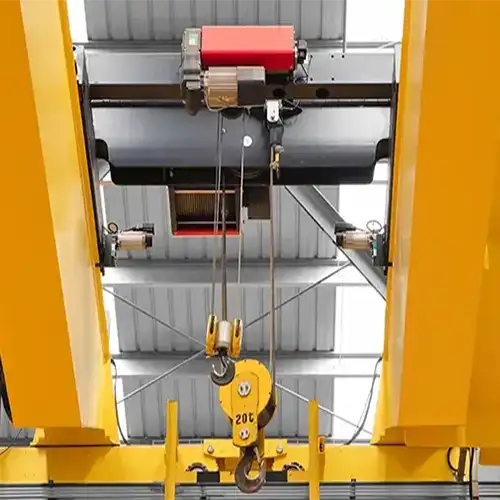
VFD vs 2-Speed Overhead Cranes: Guide to Precision & Efficiency
Check VFD overhead eot crane vs 2-speed overhead crane control systems. Improve load handling, reduce brake wear, and boost efficiency for overhead cranes.
| Crane Type | Overhead/EOT crane with VFD or 2-speed motion control; single-girder or double-girder configuration;VFD recommended for smoother acceleration, precise positioning, and frequent handling, while 2-speed control provides a simpler& more economical solution. |
| Crane Capacity | Typically 1–50 ton; higher capacities available with double-girder configurations and application-specific engineering. ISO A3–A8 / FEM 1Am–5M duty class; 380/400/415V, 50Hz, 3Ph; |
| Span Length | Typically 7.5–30 m; customized according to building dimensions and required lifting coverage. |
| Lifting Height | Typically 6–20 m; customized according to building height, load path, storage height, and handling requirements. |
| Coverage Area Type | Rectangular crane-bay coverage; workshops, warehouses, production lines, assembly areas, machine zones, maintenance areas, storage bays, and loading zones. |
| Application | General material handling, machine loading and unloading, steel handling, fabrication, assembly, equipment installation, maintenance, warehouses, and production lines requiring controlled or economical crane motion. |
| Certifications | CE / ISO / SGS / Other third-party inspection |
| Customization | Customized capacity, span, lifting height, duty class, single- or double-girder overhead/EOT crane, wire rope hoist or open winch, VFD or 2-speed motors, electric trolley, pendant, radio remote or cabin control, and application-specific lifting attachment |
Crane Manufacturer: Yuantai Cranes – 30+ Years Professional Crane Manufacturer from China
Category: Featured
Tags:
Your Trusted Overhead Crane Manufacturer & Supplier
VFD vs. 2-Speed Control for Overhead Cranes
A Buyer's Complete Guide to Speed, Precision, and Efficiency
Most Important Takeaway
Choosing the right crane speed control system—standard VFD, advanced VFD, or 2-speed contactor—directly impacts your crane’s precision, efficiency, safety, and long-term operational costs. For high-duty cycles, precise load positioning, and reduced maintenance, a VFD provides clear advantages over traditional 2-speed control.
Key Takeaways for Crane Buyers:
- Precise Load Handling: Smooth acceleration and deceleration prevent load swing, improving safety and productivity.
- Reduced Brake and Component Wear: VFD systems minimize mechanical brake usage, extending brake and motor lifespan.
- Energy Efficiency: Drives consume only the required power, reducing energy costs.
- Flexible Speed Control: Fine-tune bridge, trolley, and hoist speeds to match production needs, from very slow to high-speed operation.
- Duty Cycle Optimization: Ideal for high-capacity, Class D and E cranes, enabling continuous, high-frequency lifting without overheating.
- Simplified Troubleshooting: Digital diagnostics allow quick identification and resolution of faults, reducing downtime.
Questions This Guide Solves:
- Which crane control system best matches my load type and facility?
- How can I minimize wear on brakes, motors, and gearboxes?
- Is VFD control worth the investment for precision and high-duty-cycle applications?
- What practical factors should I consider before upgrading my crane system?
Introduction
Overhead cranes are at the heart of many industrial operations, moving everything from heavy steel plates to delicate machinery. How your crane handles speed directly affects not just productivity, but also safety, energy use, and maintenance costs.
For years, 2-speed contactor systems were the go-to solution. They’re simple, reliable, and low-cost. But modern production demands more precision. Fixed “low” and “high” speeds often aren’t enough when you need delicate positioning, smooth acceleration, or high-speed travel with minimal wear on components.
Variable Frequency Drives (VFDs) bring that extra control. By adjusting motor speed and acceleration electronically, a VFD allows:
- Smooth starts and stops that reduce brake and gearbox wear
- Precise load positioning for delicate or oversized loads
- Flexibility to match different production requirements and load types
- Reduced downtime and maintenance needs
Choosing the right speed control system—whether 2-speed, standard VFD, or advanced/exclusive VFD—is more than a technology choice. It’s about matching your crane to your facility, your loads, and your workflow. The right system can save maintenance costs, improve safety, and extend the life of your crane for years to come.
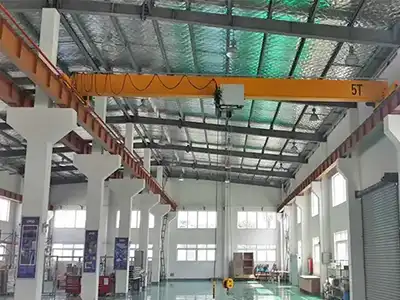
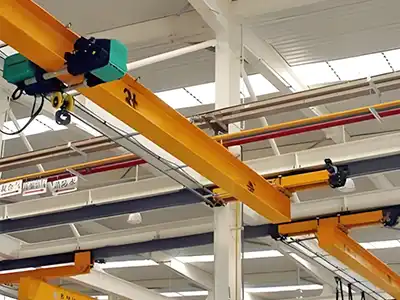
Speed Control Technologies
When buying an overhead crane, understanding how the crane's speed is controlled can save you headaches later. Speed control affects not only how efficiently your crane moves, but also brake wear, motor life, and overall safety. Let's look at the two main systems used today.
2-Speed Contactor System
The 2-speed contactor system is the older, more traditional approach. It provides two fixed speeds—usually "low" and "high"—through motor windings activated by contactors. Acceleration is controlled mechanically using the motor's inertia.
Key Points:
- Simplicity: Easy to operate and maintain, with widely available spare parts.
- Cost: Lower initial investment compared to VFD systems.
Limitations:
Only two speeds available—hard to fine-tune load placement.
- Less smooth operation, causing more stress on brakes and mechanical parts.
- Can lead to faster wear on motors and drivetrain components.
Best Use Cases:
- Simple lifting tasks
- Light-duty operations
- Budget-conscious facilities
Variable Frequency Drive (VFD)
A VFD allows you to control motor speed electronically. By adjusting voltage and frequency, it provides smooth acceleration and deceleration, precise positioning, and the ability to handle delicate or heavy loads safely.
Key Points:
Low-Speed Precision: Move heavy or delicate loads slowly and accurately.
Standard VFD:
- Wide speed range (commonly 10:1 ratio)
- Programmable ramps for acceleration and deceleration
- Suitable for high-duty-cycle cranes, Class D+ operations
Exclusive/Restricted VFD:
- Reduced speed range (around 4:1 ratio)
- Less suited for high-precision or heavy-duty tasks
- May have lower duty cycle due to motor ventilation limits
Think of it like a dimmer switch for your crane. Instead of just "off" or "on," you can adjust speed smoothly to fit the load and task.
Benefits for Buyers:
- Minimizes brake wear and maintenance
- Reduces load swing for safer handling
- Extends motor, gearbox, and structural life
- Provides flexibility across different crane capacities and load types
VFD systems are especially useful in modern facilities where cranes handle variable loads, operate at high duty cycles, or need precise positioning. For simpler, low-duty operations, a 2-speed contactor system may still work—but you give up the efficiency, precision, and reduced maintenance that VFDs offer.
Key Benefits Comparison
Choosing the right speed control system directly affects how well your overhead crane performs and how long it lasts. Let's break down the main advantages of using a VFD compared to traditional 2-speed systems.
Precision Load Handling
Moving a load smoothly isn't just about comfort—it prevents accidents and protects expensive materials. VFDs allow controlled acceleration and deceleration, so loads don't swing unexpectedly. This is especially important when handling:
- Steel plates or beams that need precise alignment
- Machinery components that can't tolerate sudden stops
- Delicate or fragile items that require careful positioning
With a 2-speed motor, abrupt starts and stops make exact placement tricky, often requiring manual corrections or slower operation.
Brake Life Extension
Mechanical brakes take a beating in traditional 2-speed systems, wearing out quickly and requiring frequent replacement. VFDs reduce the reliance on these brakes by controlling the crane's deceleration electronically.
- Brakes mainly act as parking or emergency stops
- Reduces replacement frequency and downtime
- Cuts maintenance costs while improving safety
Over time, this can save weeks of labor and thousands in replacement parts.
Energy Efficiency
VFDs only draw the power needed for the load being lifted or moved. Unlike 2-speed motors, which often run at full power regardless of the load:
- Energy consumption is reduced, lowering electricity bills
- Less heat is generated, protecting motors and reducing cooling needs
- Supports sustainability goals for industrial facilities
This makes VFDs particularly cost-effective in operations with frequent starts, stops, or varying loads.
Motor & Component Longevity
The way a crane starts and stops has a big impact on wear and tear. VFDs use soft-start and ramp-to-stop methods, easing stress on critical components. This means:
- Motors experience less thermal shock
- Gearboxes and couplings last longer
- Wheels, rails, and structural supports see less impact
- Overall, your crane stays in service longer with fewer unexpected failures
Flexibility & Duty Cycle
VFDs are adaptable. They can operate at a wide range of speeds and handle heavy-duty, high-frequency lifting without overloading the system. This makes them ideal for:
- Class D or high-duty-cycle overhead cranes
- Facilities with variable production speeds
- Operations requiring precise or delicate placement of heavy materials
In contrast, 2-speed systems are limited to low and high settings, which can force operators to compromise between speed and control.
VFDs aren't just a "nice-to-have" feature—they directly improve accuracy, reduce maintenance, save energy, and extend the life of your crane. For buyers managing high-capacity, precision, or high-frequency operations, the benefits are clear.
Practical Considerations for Buyers
When selecting between VFD and 2-speed control for your overhead crane, the right choice depends on how and where the crane will operate. Understanding your crane type, capacity, loads, and facility setup helps ensure you get the most out of your investment.
Crane Type
Different cranes face different operational challenges. The type of vfd overhead cranes and hoists determines how speed control affects performance, precision, and safety.
- Top-running bridge cranes: Often high-capacity and heavy-duty; precise speed control reduces stress on the structure and improves load positioning.
- Underhung cranes: Typically operate in low-clearance spaces; smooth acceleration prevents load swing in tight areas.
- Gantry cranes: Large-span or outdoor cranes benefit from controlled motion to handle heavy loads over long distances.
- Workstation cranes: Small cranes for precise lifting; adjustable speeds are essential for delicate or repetitive tasks.
Selecting the proper control system for your crane type ensures smoother operation and less wear on mechanical components.
Typical Capacities
Crane capacity directly affects motor requirements and drive selection. Different loads and workflows demand different levels of speed control.
- Common capacities: 2–50 tons, covering small workshop cranes to full-size production cranes.
- Consider hoist and trolley speed requirements to match your workflow; slower, precise lifts reduce risk of load swing.
- High-capacity cranes often need VFDs to protect structural components while providing smooth acceleration and deceleration.
Choosing a control system suited to your crane's capacity protects both the crane and the load, and reduces downtime.
Load Types
The materials your crane lifts determine the precision and speed control you'll need. Some loads tolerate abrupt movement, others don't.
- Steel plates, billets, and containers: Heavy and dense loads benefit from gradual acceleration to prevent damage and reduce stress on the crane.
- Machinery and equipment: Require controlled movement for accurate placement and safe handling.
- Fragile or delicate parts: Slow, adjustable speeds are critical to prevent shaking or damage.
Facility Factors
The environment where your crane operates can impact performance and safety. Planning around your facility's layout helps avoid operational problems.
- Runway alignment: Misaligned rails can increase wear on wheels and gearboxes; smooth speed ramps help reduce this risk.
- Headroom: Low-clearance areas may limit hoist or encoder installation, affecting VFD compatibility.
- Existing motor compatibility: VFD systems require inverter-rated motors for proper operation.
- Ventilation: Motors in high-duty cycles need sufficient airflow; limited ventilation can cause overheating.
Factoring in facility conditions ensures your crane operates efficiently and safely for years.
Maintenance Considerations
Ongoing maintenance influences the total cost of ownership and long-term reliability. Choosing the right system reduces repairs and extends component life.
- Ease of replacement: VFD systems reduce wear on brakes and motors but may need trained technicians for certain components.
- Spare parts availability: Ensure local suppliers can provide fast replacements to minimize downtime.
- Operator training: Proper use of VFD controls ensures smooth operation and prevents unnecessary wear.
- Integration with existing cranes: Compatibility avoids costly rewiring or additional modifications during installation.
Planning for maintenance from the start keeps your crane running smoothly, safely, and efficiently.
Common Misconceptions
To well understand what a VFD can and cannot do helps crane buyers avoid mistakes and choose the right system for their facility. Let's clear up some common misunderstandings.
Minimum Speed Limitations
It's easy to think a VFD can run all the way from 0 m/min up to the top speed. In reality, every VFD has a minimum operating speed determined by the motor and its design.
- The crane will start at this minimum speed, not from complete zero.
- Operators cannot fine-tune motion below this limit, so delicate lifts require planning around the motor's minimum speed.
- Standard VFDs allow much lower speeds than exclusive or restricted VFDs, which matters for precision handling of steel plates, machinery, or fragile components.
Knowing the true speed range prevents frustration and ensures accurate positioning.
Duty Cycle and Crane Class Compatibility
Not every VFD/motor combination is built for heavy-duty work. Some are designed only for light to medium loads.
- High-duty cranes (Class D or above) need drives rated for continuous operation.
- Using a VFD designed for lower duty cycles can lead to overheating, motor strain, and premature failure.
- Always check the crane's duty cycle requirements and match the VFD to your specific lifting frequency and load type.
Choosing the right VFD protects your investment and keeps production running smoothly.
Limitations of Exclusive or Restricted VFDs
Some VFDs are marketed as "exclusive" or "restricted" versions. They may seem similar to standard VFDs, but their capabilities are limited.
- These drives often have reduced speed ratios (e.g., 4:1 instead of 10:1) and shorter duty cycles.
- Less suitable for high-frequency or precision lifts, where smooth acceleration and exact positioning are critical.
- May be adequate for simple, low-duty applications, but not ideal for cranes moving steel plates, containers, or delicate machinery.
Decision Guide
Choosing between a 2-speed control and a standard VFD doesn't have to be confusing. The key is matching your crane's duty, loads, and operational needs with the right system. Let's break it down.
When to Choose 2-Speed Control
For some operations, simple is better. If your crane mostly handles straightforward lifting tasks without the need for precise speed adjustments, a 2-speed system can do the job efficiently.
- Budget-sensitive projects where initial cost is a priority.
- Low-duty-cycle cranes that are not running continuously or under heavy loads.
- Simple load handling where extreme positioning precision is not critical, such as moving containers or standard steel plates.
A 2-speed system keeps maintenance simple and spare parts easy to source.
When to Choose Standard VFD
If your crane faces heavy use, delicate loads, or production demands that require smooth, adjustable motion, a standard VFD is the better choice.
- High-duty-cycle cranes (Class D and above) that operate frequently or carry heavy loads.
- Applications requiring precise load positioning, like machinery components or fragile equipment.
- Operations that need flexible speed adjustments to match production cycles and improve efficiency.
A VFD reduces brake wear, minimizes load swing, and gives operators more control over crane motion.
Buyer Checklist
Before making a decision, assess your facility and operations carefully to ensure you pick the right control system.
- Evaluate the types of loads and weight ranges your crane will handle.
- Define the level of speed flexibility needed to match your production cycle.
- Determine the crane's duty cycle and lifting frequency.
- Check facility constraints: available headroom, runway alignment, and existing motor compatibility.
- Ensure operators and maintenance staff are prepared to manage programmable VFD features, including acceleration/deceleration ramps and diagnostics.
FAQ – Overhead Crane Buyers' Top Concerns
Common questions and concerns from crane buyers about VFD systems, motor compatibility, and operational benefits.
Q1. Will a VFD work with my current crane motor?
Most VFD systems need an inverter-rated motor to operate safely and precisely. Standard motors can sometimes be adapted, but often require replacement or rewiring to handle the variable voltage and frequency. Skipping this step can lead to poor performance or even motor damage.
Q2. How much brake wear can a VFD actually prevent?
Because VFDs control deceleration electronically, mechanical brakes are mostly used just for parking or emergency stops. On a high-use crane, this can extend brake life from months to years compared to traditional 2-speed systems.
Q3. Can I move and position heavy or delicate loads accurately with a VFD?
Yes. With programmable acceleration and deceleration, plus low-speed control, you can gently nudge even oversized or delicate loads into place. This is especially helpful when handling steel plates, machinery, or sensitive components that can't tolerate sudden stops.
Q4. Will a VFD save energy?
Definitely. VFDs supply only the power needed for the load, unlike 2-speed or contactor systems that constantly draw full current. For high-duty-cycle cranes, this can add up to significant electricity savings over time.
Q5. Are VFDs difficult for operators to use?
There's a learning curve, yes. Operators need to get used to ramped acceleration, deceleration, and digital controls. With proper training and setup from a qualified service team, most crews adjust quickly and gain better load control.
Q6. Which cranes benefit most from VFDs?
High-duty-cycle cranes—Class D/E—get the most advantage. That includes top-running bridge cranes, gantry cranes, and hoists that handle steel plates, billets, machinery, or delicate industrial loads. VFDs improve precision, reduce wear, and extend crane life in these applications.
Conclusion
Upgrading your overhead crane to a standard VFD isn't just a technical change—it affects daily operations, maintenance, and long-term performance. Here's what you gain by making the switch:
- Smoother Operations: Precise acceleration and deceleration reduce load swing and make positioning delicate or heavy loads easier.
- Reduced Wear & Maintenance: Brakes, motors, and mechanical components experience less stress, lowering downtime and replacement costs.
- Energy Efficiency: The crane only uses the power needed for the load, saving on electricity and operating costs.
- Extended Equipment Life: Reduced mechanical strain keeps your crane functioning reliably for years, even under high-duty-cycle use.
- Improved Safety: Controlled motion and minimized load swing help protect operators and materials.
Even if a VFD system costs more upfront than a traditional 2-speed setup, the long-term savings in maintenance, downtime, and energy make it a practical investment for modern industrial operations.
Next Step: Consult with a crane specialist to evaluate your facility layout, lifting requirements, and duty cycle. They can recommend the optimal speed control system to maximize efficiency, precision, and crane lifespan.




Yuantai Cranes
Overhead Crane Manufacturer with CE, ISO, SGS, CNEX Certificates.
- Main Specifications - Capacity: 0.5–550 tons | Span: up to 40m | Speed: 0.8–12 m/min | Duty: A3–A7 | Power: 380–690V, 50/60Hz | Control: pendant/remote/cabin
- Full engineering: FEA/PLC/VFD + in-house build + global delivery + on-site support, for workshops, factories, EPC contractors, industrial projects, etc.
- Support: design, manufacturing, testing, service – end-to-end, customized lifting solutions worldwide.
How to Get an Accurate Crane Price for Your Application?
Tips: Copy the spec list, fill in your details, and paste it into the form on the right/ down-below for a quick price.
- Crane type:_____ . (e.g., overhead crane, gantry crane, jib crane)
- Max weight to lift:_____ tons. (e.g., 2t, 5t, 10t, 20t, 50t)
- Lifting height:_____ m. (How high does the hook need to reach?
- Workshop width (span):_____ m . (Distance between the two crane rails)
- Travel distance:_____ m . (How long does the crane need to move along the runway?)
- Control type:_____. (Pendant / remote / cabin Control)
- Power supply:_____. (Local voltage & frequency – e.g., 380V, 50Hz, 3-phase)
- What will it be used for?_____ (e.g., steel fabrication, concrete products, mold handling, general manufacturing, etc.)
- Any special requirements?_____ (e.g., extreme temperature, dusty or explosive environment, special paint color, etc.)
Just leave a message via the contact form and our hoist and crane engineer will contact you with in 24working hours.
Get Your Custom Quote–Quick & Easy
Fill in what you know. Skip what you don't – we'll help.Any question will be reply with 24 working hours